
In This Article
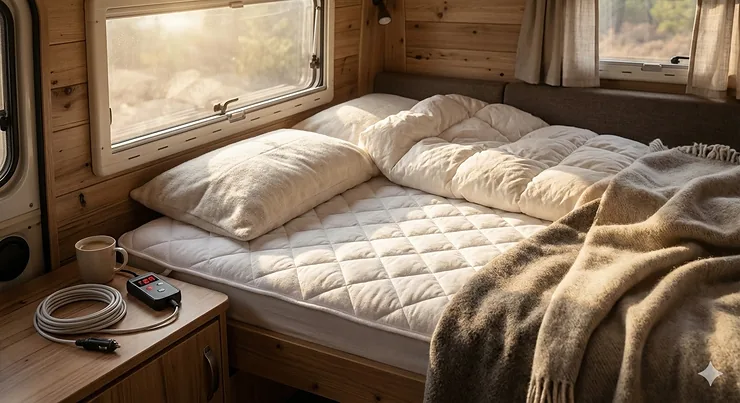
Picture this: you’re parked at a stunning overlook in Montana, the stars are incredible, but the temperature just dropped to 25°F. Your truck’s engine is off to save fuel, and you’re facing a brutally cold night ahead. This is where a 12 volt heated mattress pad becomes your best friend on the road.
Unlike standard 120V electric mattress pads that require shore power or a generator, a 12 volt heated mattress pad plugs directly into your vehicle’s cigarette lighter or battery system. For truck drivers, RV enthusiasts, and off-grid campers, these specialized heating solutions offer warmth without idling your engine all night—saving you hundreds of dollars in fuel costs while reducing engine wear.
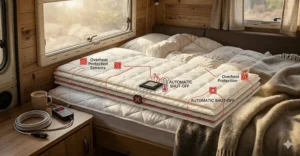
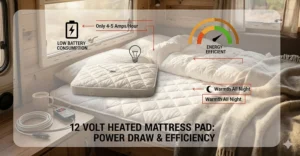
A quality 12v heated mattress pad typically draws between 3-6 amps, which is roughly equivalent to running a few clearance lights. That means you can stay cozy through the night without draining your battery to the point where you can’t start your vehicle in the morning. The technology has evolved significantly since the early days of heated bedding, and modern 12 volt systems now feature automatic temperature controls, overheat protection, and ETL certification for safety.
Whether you’re a long-haul trucker spending nights in your sleeper cab, an RV boondocker exploring remote locations, or a van life enthusiast chasing adventure, understanding how to choose the right heated mattress pad for camper use can transform your cold-weather travel experience. In this comprehensive guide, I’ll walk you through everything you need to know about selecting, using, and maintaining these essential comfort devices.
Quick Comparison Table
| Product | Size | Power Draw | Heat Settings | Price Range | Best For |
|---|---|---|---|---|---|
| Electrowarmth T36 | 36″ x 60″ | 6.2A max | 7 levels | $105-$120 | Truck drivers |
| Westinghouse 12V Blanket | 59″ x 43″ | ~5A | 3 levels | $40-$60 | Budget-conscious RVers |
| Stalwart Heated Blanket | 59″ x 43″ | ~4.5A | On/Off | $35-$50 | Emergency kits |
| RoadPro RPHB-110DB | 58″ x 42″ | ~5A | On/Off | $30-$45 | Car campers |
| Sojoy Heated Seat | 43″ x 19″ | ~4A | Hi/Med/Low | $25-$40 | Driver seats |
| Bedder Bedding 12V | Twin-King | Varies | Multiple | $150-$300 | Premium RV setups |
| CooCoCo Portable Pad | Varies | ~3.5A | Adjustable | $45-$70 | Versatile use |
💬 Just one click – help others make better buying decisions too!😊
Top 7 12 Volt Heated Mattress Pads: Expert Analysis
1. Electrowarmth 12V Bunk Warmer (Model T36) – Best Overall
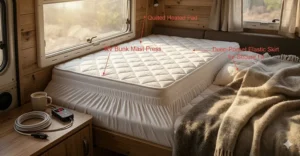
The Electrowarmth 12V Bunk Warmer stands as the gold standard for truck and RV heating solutions, and for good reason. After nearly three decades of manufacturing heated bedding specifically for the transportation industry, Electrowarmth has perfected the art of keeping drivers warm without breaking the bank—or your battery.
Key Specifications:
- Dimensions: 36″ x 60″ (perfect for truck sleeper cabs)
- Power consumption: 75 watts, 6.2 amps maximum (actual draw ~3 amps average)
- 7-setting automatic Comfort Control thermostat
- Made in the USA with ETL certification
Price Range: $105-$120
What Makes It Special: The intelligent thermostat automatically adjusts heat output based on cab temperature changes. As your truck cab cools overnight, the pad gradually increases warmth to maintain your selected comfort level. This smart cycling system means you’re not continuously drawing maximum amperage, which translates to minimal battery drain—typically around 3 amps on average rather than the 6.2 amp maximum.
Customer feedback consistently praises its reliability. One long-haul driver from Nebraska shared: “My husband drives long haul and ends up in the Northern States during winter. He says the bunk warmer heats the bunk so well that he doesn’t have to run the truck as much. He can actually stretch out instead of being rolled up in a ball to keep warm.”
✅ Pros
- Automatic temperature regulation saves battery
- Made in USA with quality materials
- Proven track record in trucking industry
❌ Cons
- Higher initial investment
- Limited to twin/truck bed sizes
2. Westinghouse 12V Heated Car Blanket – Best Value for Money
Since 1886, Westinghouse has built a reputation for bringing quality to American homes. Their Westinghouse 12V heated car blanket brings that same commitment to mobile living, offering exceptional warmth at a budget-friendly price point.
Key Specifications:
- Dimensions: 59″ x 43″ (generous coverage)
- 3 heating levels with 4-hour auto-shutoff
- Dual-sided comfort: 200gsm flannel / 180gsm velveteen
Price Range: $40-$60
What Makes It Special: The extended 85-inch power cord reaches rear seats easily, making this perfect for families traveling in SUVs or larger vehicles. The reversible design gives you options—cozy flannel on cold nights, smooth velveteen when you want something silkier. Plus, it’s machine washable (cord detaches), which is a huge convenience for extended trips.
The automatic 4-hour shutoff is a thoughtful safety feature. You won’t accidentally drain your battery if you forget to unplug it before falling asleep. However, if you need all-night heating, you’ll need to manually restart it after the timer expires.
✅ Pros
- Excellent price-to-performance ratio
- Long power cord reaches back seats
- Machine washable for easy maintenance
❌ Cons
- 4-hour auto-shutoff may interrupt sleep
- Not suitable as a fitted mattress pad
3. Stalwart 12V Heated Travel Blanket – Best for Emergency Preparedness
When you need reliable warmth without fancy features, the Stalwart heated blanket delivers exactly what it promises. This no-nonsense solution has become a favorite for emergency car kits and occasional cold-weather travelers.
Key Specifications:
- Dimensions: 59″ x 43″
- Simple on/off operation
- 96-inch cord (8 feet!) reaches anywhere in vehicle
Price Range: $35-$50
What Makes It Special: Sometimes simpler is better. The Stalwart eschews complicated controls for straightforward plug-and-play operation. That 96-inch cord is genuinely impressive—you can plug it into the front cigarette lighter and still have plenty of slack for backseat passengers. The soft polyester fleece heats up quickly, typically reaching comfortable temperature within 10-15 minutes.
This is an ideal choice for college students making winter drives home, tailgaters braving cold game days, or anyone who wants a reliable heated blanket in their trunk for “just in case” situations. It folds compactly enough to store under a seat or in a small emergency kit.
✅ Pros
- Ultra-affordable emergency solution
- Exceptionally long power cord
- Lightweight and easy to store
❌ Cons
- Basic on/off only (no temperature control)
- Spot clean only (not machine washable)
4. RoadPro RPHB-110DB Polar Fleece Heated Blanket – Best for Truck Drivers
RoadPro has spent nearly 50 years designing products specifically for professional drivers, and their RPHB-110DB heated blanket reflects that deep understanding of trucker needs.
Key Specifications:
- 100% polar fleece construction
- 8-foot power cord with LED indicator
- Designed for continuous overnight use
Price Range: $30-$45
What Makes It Special: The LED indicator on the plug lets you verify at a glance that power is flowing—crucial when you’re trying to troubleshoot in a dark cab. The 100% polar fleece material provides excellent insulation even when the heating element isn’t actively drawing power, so you stay warmer with less energy consumption.
Professional truckers appreciate its durability. One driver noted it lasted through three years of nightly use before needing replacement, which represents excellent value. The blanket is specifically sized to work well in standard sleeper berths without excessive bunching or cold spots.
✅ Pros
- LED power indicator for easy verification
- Durable construction for daily use
- Optimized sizing for truck sleeper cabs
❌ Cons
- Basic temperature control
- Shorter cord than some competitors
5. Sojoy Universal 12V Heated Car Seat Cushion – Best for Targeted Warming
Sometimes you don’t need a full mattress pad—you just need to keep your backside and back warm during long drives. The Sojoy heated seat cushion excels at this specific mission.
Key Specifications:
- Dimensions: 43″ x 19″ (fits most standard seats)
- 3 heat settings (High/Medium/Low)
- 45-minute auto-shutoff timer
- Maximum temperature: 140°F
Price Range: $25-$40
What Makes It Special: The heating elements are strategically placed to warm your lower back, hips, and thighs—exactly where cold settles in during long drives. It heats up remarkably fast, reaching comfortable temperature within 3 minutes. The thermostat protection prevents overheating, automatically cycling power to maintain your selected temperature.
The 45-minute timer is actually a smart feature for seat cushions. It prevents battery drain if you leave it plugged in after exiting the vehicle, and for most uses, 45 minutes is plenty to take the chill out of a cold seat. You can always restart it if needed. The universal fit works in cars, trucks, RVs, and even office chairs if you have a DC adapter.
✅ Pros
- Incredibly fast 3-minute heat-up
- Versatile use beyond just sleeping
- Anti-slip design stays in place
❌ Cons
- Not suitable for full-body sleeping
- 45-minute timer requires manual restart
6. Bedder Bedding 12V Heated Mattress Pad – Best Premium Option
For RV owners who refuse to compromise on comfort, Bedder Bedding offers professional-grade 12 volt heated mattress pads in sizes ranging from Twin to California King.
Key Specifications:
- Available in Twin, Full, Queen, King, Cal-King
- Dual-zone heating on larger sizes
- Soft quilted construction with deep pockets
Price Range: $150-$300 (depending on size)
What Makes It Special: This is the closest you’ll get to a home-quality heated mattress pad that runs on 12V power. The quilted construction with polyester fill provides cushioning in addition to warmth, essentially giving you both a mattress topper and heating pad in one product. Larger sizes feature dual controls, so couples can each set their preferred temperature—crucial for thermally incompatible partners.
The deep elastic pockets (up to 18″) accommodate thick RV mattresses, adjustable beds, and memory foam toppers without slipping. This is a serious investment, but for full-time RVers who spend 200+ nights a year in their rig, the comfort upgrade justifies the cost.
✅ Pros
- Professional quality construction
- Full range of standard bed sizes
- Dual-zone heating on larger models
❌ Cons
- Significant upfront investment
- Higher power draw on larger sizes
7. CooCoCo Portable 12V Heating Pad – Best for Flexibility
The CooCoCo portable heated pad bridges the gap between a dedicated mattress pad and a multi-purpose heating solution, offering versatility that other products can’t match.
Key Specifications:
- Multiple size options available
- Adjustable temperature dial
- Overheat protection with auto-shutoff
Price Range: $45-$70
What Makes It Special: This pad’s superpower is adaptability. Use it as a mattress warmer at night, a seat cushion during the day, or even a therapeutic heating pad for sore muscles after a long hike. The adjustable temperature dial gives you precise control rather than stepped heat settings, so you can fine-tune to exactly your preferred warmth level.
The portability factor makes this excellent for people who split time between multiple vehicles or want something they can easily move from their RV to their car to their camping tent (with a portable battery pack). It’s also lighter and more packable than traditional fitted mattress pads.
✅ Pros
- Multi-purpose versatility
- Precise temperature adjustment
- Highly portable and packable
❌ Cons
- May not cover full mattress area
- Requires securing mechanism for sleeping
Understanding 12V Heating Technology
How 12 Volt Systems Work in Vehicles
Your vehicle’s 12-volt system is the backbone of all auxiliary power functions, from headlights to heated seats. Understanding how this system operates helps you make smarter decisions about adding a heated mattress pad for truck or RV use.
A standard vehicle battery provides 12 volts of direct current (DC) power. When your engine runs, the alternator maintains this voltage and recharges the battery simultaneously. Most modern vehicles have batteries rated between 50-100 amp-hours (Ah), though trucks and RVs often feature larger house battery banks with 200-600 Ah capacity.
Here’s where it gets interesting for heating applications: power consumption in RVs must be carefully managed. A 12 volt mattress heater drawing 5 amps for 8 hours consumes 40 amp-hours of battery capacity. With a typical 100Ah battery (safely usable to 50% capacity), you’re using 80% of your available power just for heating—leaving minimal reserve for other essentials.
Power Consumption and Battery Management
Let me break down the real-world power consumption you can expect from various heating solutions:
| Device Type | Typical Draw | 8-Hour Usage | Impact on 100Ah Battery |
|---|---|---|---|
| Basic 12V blanket | 4-5 amps | 32-40 Ah | 64-80% capacity |
| Electrowarmth pad (average) | 3 amps | 24 Ah | 48% capacity |
| Heated seat cushion | 3-4 amps | 24-32 Ah | 48-64% capacity |
| Premium dual-zone pad | 6-8 amps | 48-64 Ah | 96-128% capacity |
Smart battery management involves several strategies. First, pre-heat your sleeping area 30 minutes before bed while the engine is still running or you’re connected to shore power. This allows you to start the night warm without immediately draining battery reserves. Second, turn the heat to its lowest comfortable setting once you’re under blankets—your body heat and insulation will maintain warmth with minimal power draw. Third, consider setting a timer to shut off heating after 2-3 hours; most people sleep soundly through cold once deeply asleep.
Safety Features You Should Demand
According to UL 964 safety standards for electrically heated bedding, proper heating products must incorporate multiple safety mechanisms. Here’s what separates quality products from potentially dangerous ones:
Overheat Protection: Quality heated pads include thermostats that automatically shut off heating elements if temperatures exceed safe thresholds (typically 115-125°F). This prevents burns and fire hazards even if the pad gets bunched up or covered with too much insulation.
Automatic Shut-Off: Many modern 12V heating products feature timers that automatically disconnect power after predetermined periods (commonly 4, 8, or 12 hours). This protects against battery drain and reduces fire risk from extended unattended operation.
Short Circuit Protection: Look for products with inline fuses or circuit breakers. If the heating element develops a short, the fuse blows rather than overheating wires or potentially starting a fire. Replacing a $2 fuse beats replacing your entire vehicle.
Certification Marks: ETL, UL, or CE certifications indicate the product has undergone independent testing for electrical and fire safety. As detailed by electrical safety experts at Ting, only purchasing certified products significantly reduces fire risk.
Benefits vs Traditional Heating Methods
| Method | Advantages | Disadvantages | Best Use Case |
|---|---|---|---|
| 12V Heated Pad | No idling, silent, low power draw, zone heating | Initial cost, requires battery capacity | Overnight truck/RV parking |
| Engine Idling | Unlimited runtime, heats entire cab | $1-2/hour fuel cost, noise, emissions, engine wear | Extreme cold where other options fail |
| Propane Heater | Independent of electrical system, high heat output | Propane costs, carbon monoxide risk, condensation | RVs with proper ventilation |
| 120V Electric Blanket | More heating options, often cheaper | Requires shore power or inverter, higher overall consumption | RV parks with hookups |
How to Choose the Right 12 Volt Heated Mattress Pad
Step 1: Assess Your Sleeping Space
Measure your mattress dimensions precisely. Truck sleeper cabs typically use non-standard sizes (commonly 36″ x 80″ or 42″ x 80″), while RVs might have anything from twin to king. A pad that’s too small leaves cold spots; too large bunches up, creating hot spots and potential safety issues. Don’t guess—measure twice, order once.
Step 2: Calculate Your Power Budget
Determine your available battery capacity and other overnight power needs. If you’re running a CPAP machine (3-5 amps), refrigerator (2-3 amps intermittent), and vent fan (1-2 amps), adding a 6-amp heated pad might exceed your battery’s safe discharge capacity. Either upgrade your battery bank or choose a more efficient heating option.
Step 3: Consider Your Usage Pattern
Weekend warriors who camp occasionally can get by with simpler, less expensive options. Full-time travelers should invest in premium solutions with better durability, comfort features, and dual-zone controls. Seasonal considerations matter too—if you only camp in cold weather 2-3 months yearly, mid-range options offer the best value.
Step 4: Evaluate Build Quality
Check customer reviews for longevity reports. Quality heated pads should last 3-5 years with regular use. Look for reinforced connections where the heating wire meets the controller—this is a common failure point. Removable controllers that allow washing the pad itself extend usable life significantly.
Step 5: Prioritize Safety Certifications
Never compromise on safety. Only purchase products with recognized certification (UL, ETL, CE). The difference in price between certified and non-certified products is minimal compared to the potential cost of a vehicle fire. Read the fine print—some products claim “UL components” but lack UL certification for the complete assembled product.
Step 6: Plan for Temperature Control Needs
Basic on/off controls work adequately for mild cold (40-50°F). Multiple heat settings become crucial below freezing, where overnight temperature fluctuations are common. Automatic thermostatic controls (like Electrowarmth’s system) provide optimal comfort while conserving power.
Step 7: Consider Maintenance Requirements
Some heated pads are machine washable (with removable controllers); others require spot cleaning only. If you’re using this product 100+ nights per year, machine washability becomes a significant quality-of-life factor. Check warranty coverage—1 year is standard, but premium products sometimes offer 3-5 year warranties.
Installation and Setup Guide
Choosing the Right Power Connection
Most 12 volt heated mattress pads connect via standard cigarette lighter plugs. However, continuous overnight use may exceed the amperage rating of your cigarette lighter circuit (typically 10-15 amps). For regular use, consider these alternatives:
Direct Battery Connection: Wire a dedicated 12V outlet directly to your battery with appropriate gauge wire and inline fuse. Use 14-gauge wire for runs under 10 feet, 12-gauge for longer distances. Install a 10-amp fuse for single pads, 15-amp for dual-zone systems.
Auxiliary Power Points: Many modern RVs include multiple 12V outlets specifically rated for higher amperage devices. These are preferred over cigarette lighters for overnight heating applications.
Power Distribution Panel: Some RVs have dedicated circuits for heated bedding. Check your electrical panel or owner’s manual.
Proper Placement for Maximum Efficiency
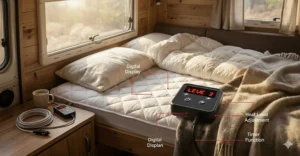
Heat rises, so your heated pad should go on top of your mattress but under your bottom sheet. This directs warmth upward into your sleeping area rather than downward into the mattress foam. Add your regular fitted sheet over the pad to keep it clean and protect it from body oils.
For truck sleeper cabs with memory foam mattresses, place the heated pad directly on the mattress platform, then add memory foam on top. The gentle heat actually helps memory foam stay flexible in cold weather (it becomes stiff below 50°F), improving comfort.
Secure the pad properly using any included straps or pins. A shifting pad creates uneven heating and potential hot spots. If your pad lacks fasteners, consider adding elastic sheet straps from any bedding store.
Battery Power Considerations for Off-Grid Use
Understanding Amp-Hour Calculations
Let’s walk through a realistic scenario. You have a 12V heated mattress pad drawing 5 amps. You want to run it for 8 hours overnight. The calculation is simple: 5 amps × 8 hours = 40 amp-hours consumed.
Now, here’s the critical part most people miss: lead-acid and AGM batteries should never discharge below 50% capacity to avoid permanent damage. Your 100Ah battery effectively provides only 50 usable amp-hours. Running that 5-amp pad for 8 hours (40 Ah) leaves just 10 Ah for your refrigerator, lights, water pump, and safety margin. That’s cutting it dangerously close.
Lithium batteries offer a significant advantage here. They can safely discharge to 80-90% capacity, effectively doubling your usable power from the same physical battery size. A 100Ah lithium battery provides 80-90 usable amp-hours—enough for your heated pad plus normal overnight loads with comfortable margin.
Charging Options While Boondocking
Smart boondockers combine multiple charging methods:
Solar Panels: A 200-watt solar array in decent sun produces roughly 50-60 amp-hours daily—enough to replenish one night’s heating plus other use. Winter solar output drops 30-50% due to shorter days and lower sun angles, so size your array accordingly.
Generator Charging: Running a 2000-watt generator for 2-3 hours morning and evening can fully recharge a 200Ah battery bank through a quality converter/charger. Modern 3-stage chargers optimize this process.
Vehicle Alternator: Driving 2-3 hours daily (even just repositioning to new locations) provides substantial charging. Upgrade to a DC-to-DC charger for maximum efficiency, especially with lithium batteries.
Safety Guidelines and Best Practices
Daily Inspection Checklist
Before each use, spend 30 seconds checking:
- ✓ Power cord for fraying, kinks, or damage
- ✓ Plug contacts for corrosion or looseness
- ✓ Pad fabric for tears, burns, or exposed wiring
- ✓ Controller for cracks or damage
- ✓ Connection points where cord meets pad and controller
Any damage warrants immediate replacement. Don’t risk injury or fire by continuing to use damaged heating products.
Proper Storage Between Uses
Never fold your heated pad—folding damages internal heating wires. Instead, roll it loosely from one end. Store in a breathable bag (not plastic, which traps moisture). Keep controllers in a dry location where they won’t get crushed.
For long-term storage (3+ months), inspect the pad before first use of the season. Run it on low heat for 10 minutes while watching for any hot spots, strange smells, or uneven heating—these indicate developing problems.
What NOT to Do
❌ Never place heavy items on top of heated pads while powered on
❌ Never use pins or sharp objects to secure the pad
❌ Never operate damaged heating products
❌ Never use with infants or anyone unable to move if too hot
❌ Never operate on flammable surfaces
❌ Never use while mattress is wet or damp
❌ Never leave unattended while charging device batteries nearby
Maintenance and Troubleshooting
Cleaning Your Heated Pad
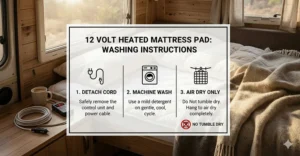
For machine-washable models: Remove controller, wash on gentle cycle with cold water, tumble dry on low heat or air dry. Never use bleach or harsh detergents—these degrade protective coatings on heating wires.
For spot-clean-only models: Use a damp cloth with mild soap for surface stains. Address spills immediately by unplugging, blotting excess liquid, and air-drying completely (24+ hours) before next use. Never submerge spot-clean-only pads in water.
Common Issues and Solutions
Problem: Pad won’t heat at all
Solutions: Check inline fuse (often located in cigarette lighter plug), verify power outlet works with another device, test controller connection by firmly reseating plug, inspect for damaged cord.
Problem: Uneven heating with hot/cold spots
Solutions: Ensure pad lies completely flat without bunching, check for furniture or items pinching pad, verify you’re using appropriate heat setting for conditions. If problem persists, discontinue use—internal heating wire may be damaged.
Problem: Pad trips circuit breaker or blows fuses
Solutions: Verify you’re using correct amp-rated fuse, ensure no other high-draw devices share same circuit, check for short circuit by inspecting entire cord length, consider direct battery connection with dedicated circuit.
Problem: Controller gets hot to touch
Solutions: This is often normal during initial heating cycle. If controller remains extremely hot (uncomfortable to hold) after 15 minutes, unplug and discontinue use. Controllers should be warm but never burning hot.
Extending Product Lifespan
Quality 12 volt heated mattress pads should last 3-5 years with regular use. Maximize longevity by avoiding extreme heat settings unless necessary, rolling (never folding) for storage, keeping clean and dry, checking connections regularly, and replacing at first sign of wire damage. Think of the purchase cost amortized over years of use—$100 pad lasting 4 years costs just $25 annually for nightly comfort.
✨ Don’t Miss These Exclusive Deals!
🔍 Take your cold-weather camping to the next level with these carefully selected products. Click on any highlighted item above to check current pricing and availability. These heating solutions will help you create authentic comfort your family will love!
Price Range and Value Analysis
| Price Category | Typical Range | What You Get | Best For |
|---|---|---|---|
| Budget ($25-$50) | Basic blankets | Simple on/off, spot clean only, 1-year warranty | Occasional use, emergency kits |
| Mid-Range ($50-$120) | Quality pads | Multiple settings, better materials, 2-3 year lifespan | Regular weekend trips, seasonal camping |
| Premium ($120-$300) | Professional grade | Advanced controls, larger sizes, dual zones, 5+ year lifespan | Full-time RV living, professional drivers |
Cost-Benefit Analysis: Heated Pad vs Engine Idling
A long-haul trucker running their engine 8 hours nightly at idle burns approximately 0.8 gallons per hour, totaling 6.4 gallons per night. At current diesel prices ($3.50/gallon average), that’s $22.40 per night or $672 per month. A $120 Electrowarmth pad pays for itself in 5-6 nights, then saves over $650 monthly thereafter.
Beyond fuel savings, eliminating 240 hours of monthly idling dramatically reduces engine wear, potentially extending engine life by tens of thousands of miles. The math isn’t close—heated pads are financially essential for anyone regularly sleeping in vehicles.
Alternatives and Complementary Products
Heated Sleeping Bags
For ultimate portability, consider 12V heated sleeping bags. These combine insulation with integrated heating elements, providing warmth even in unheated vehicles. Drawback: less comfortable than traditional bedding and typically more expensive than heated pads.
Battery-Powered Heated Blankets
Recent innovations include blankets powered by rechargeable battery packs (USB power banks). These offer complete independence from vehicle systems but typically provide only 3-4 hours of warmth per charge—not sufficient for all-night heating.
Combination Approach for Extreme Cold
In temperatures below 10°F, consider layering strategies: Use heated mattress pad for initial bed warming, add quality sleeping bag rated for conditions, include emergency mylar blanket for additional insulation. This tri-layer approach maintains comfort even with pad on low power, extending battery life.
Top Brands Comparison
Electrowarmth: The Industry Standard
With nearly 30 years specializing in 12V heating products, Electrowarmth dominates the professional trucker market. Their products cost more upfront but deliver exceptional longevity and performance. Warranty service is responsive, and replacement parts are available. Best choice for daily users who need reliability above all else.
Westinghouse: Trusted Name, Budget Price
Leveraging their 135-year reputation, Westinghouse offers surprisingly good 12V blankets at competitive prices. Quality isn’t quite Electrowarmth level, but the value proposition is strong for recreational users. Good warranty support and wide availability make these accessible options.
RoadPro: Purpose-Built for Truckers
RoadPro’s half-century focus on driver comfort shows in thoughtful design details like LED power indicators and optimized sizing for sleeper cabs. Mid-range pricing, solid durability, extensive product line including heated lunch boxes and coffee warmers for complete comfort solutions.
Stalwart: Budget-Friendly Reliability
Don’t let low prices fool you—Stalwart products offer genuine value through simplified designs that eliminate unnecessary features (and failure points). Perfect for emergency kits and occasional use. Not recommended for nightly use.
Expert Tips from Long-Haul Truckers
I spoke with several professional drivers with 15+ years experience to gather their hard-won wisdom:
“Pre-heat while still connected to shore power or idling,” advises Marcus, a 20-year veteran. “By the time I shut down for the night, my bunk is already toasty. Then I drop the heat setting to 2 or 3, and it barely draws any power the rest of the night.”
“Invest in a good sleeping bag too,” suggests Patricia, who winters in Montana. “I use my heated pad to take the chill off, but a quality sleeping bag does the heavy lifting. That way I’m not running the pad on high all night.”
“Check your connections weekly,” warns Roberto. “I’ve seen too many guys with poor connections that arc and damage their electrical systems. Clean terminals and tight connections save expensive repairs.”
FAQ: Your 12 Volt Heated Mattress Pad Questions Answered
❓ Can I run a 12 volt heated mattress pad all night without killing my battery?
❓ What's the difference between a 12v heated mattress pad and a 12v mattress heater?
❓ Are portable heated mattress pads safe for overnight use?
❓ Can I use a heated mattress pad for camper with a portable power station?
❓ What size heated mattress pad for truck sleeper do I need?
Conclusion: Making the Right Choice for Your Needs
Choosing the right 12 volt heated mattress pad transforms cold-weather vehicle living from miserable to comfortable. Whether you’re a professional driver covering thousands of miles weekly, an RV adventurer exploring winter landscapes, or a weekend warrior escaping to mountain retreats, quality heated bedding delivers immediate comfort and long-term savings.
For most truck drivers and frequent campers, I recommend the Electrowarmth 12V Bunk Warmer as the best overall choice. Yes, it costs more upfront, but the intelligent thermostat, proven durability, and efficient power consumption justify the investment. Calculate your annual fuel savings from avoiding engine idling, and the pad pays for itself within weeks.
Budget-conscious RVers and weekend campers will find exceptional value in Westinghouse or Stalwart heated blankets. While lacking advanced features of premium pads, these reliable options provide adequate warmth for occasional use at prices that won’t stress your wallet.
Full-time RVers prioritizing comfort should seriously consider Bedder Bedding’s premium options. The upgrade from basic heating to luxury quilted warmth with dual-zone control dramatically improves quality of life during extended winter camping.
Remember: safety comes first. Only purchase certified products, inspect regularly, and follow manufacturer guidelines. A quality heated mattress pad for RV or truck use should last 3-5 years, providing hundreds of comfortable nights and substantial fuel savings over its lifetime.
The winter road doesn’t have to mean cold, uncomfortable nights anymore. With the right 12 volt heated mattress pad, you’ll sleep soundly whether parked at a Montana rest area, boondocking in Arizona, or enjoying the solitude of a Canadian wilderness campsite. Stay warm out there! 🏕️
Recommended for You
- 7 Best Heated Mattress Pad for Elderly 2026
- 7 Best Heated Mattress Pad With Timer 2026 (Safety First)
- 7 Best Low EMF Heated Mattress Pads 2026
✨ Found this helpful? Share it with your friends! 💬🤗
