
In This Article
✨Was this helpful? Spread the word! 🚀
Ever tried hosting a backyard barbecue in October, only to watch your guests huddle together like penguins in Antarctica? Yeah, I’ve been there. That’s when I discovered the magic of a natural gas patio heater – and honestly, it changed everything about outdoor entertaining.
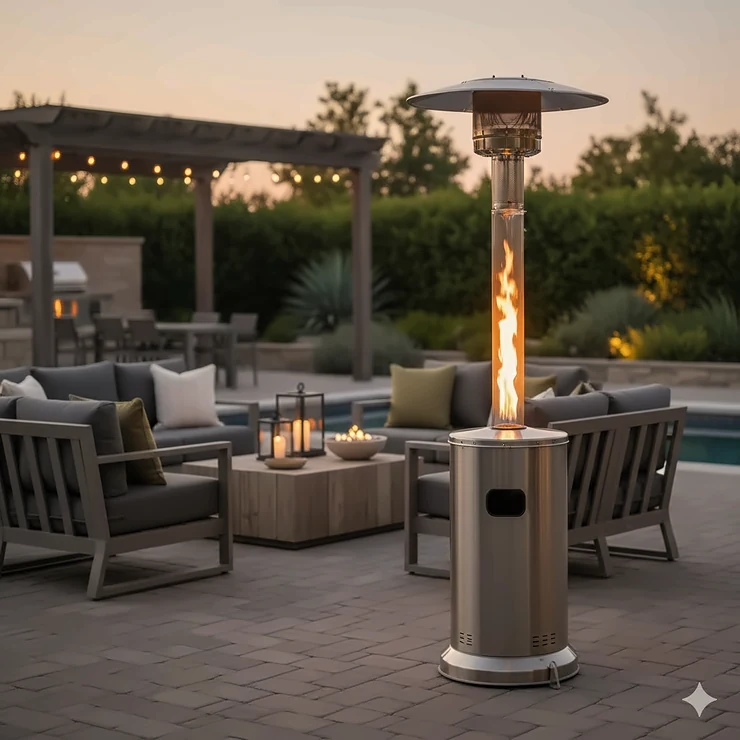
A natural gas patio heater is a heating appliance designed specifically for outdoor spaces that connects directly to your home’s natural gas line, providing continuous warmth without the hassle of refilling propane tanks. These powerful devices use radiant heat technology to keep your patio, deck, or outdoor dining area comfortable even when temperatures drop, extending your outdoor season by months.
Unlike their propane cousins that require constant tank swaps (usually at the most inconvenient times), gas patio heaters offer unlimited fuel supply and lower operating costs. According to the U.S. Energy Information Administration, natural gas costs significantly less per BTU than propane, making these heaters economical for frequent use. Plus, you’ll never experience that dreaded mid-party moment when the heat suddenly cuts out because the tank’s empty.
What makes the best natural gas patio heater stand out? It’s all about BTU output, safety features, and build quality. Most quality models pump out between 35,000 to 48,000 BTUs, which can heat spaces ranging from 15 to 25 feet in diameter. The patio heater natural gas style has become the go-to choice for homeowners serious about year-round outdoor living, and restaurants that want to maximize their outdoor seating capacity.
Quick Comparison Table
| Model | BTU Output | Heat Coverage | Price Range | Key Feature |
|---|---|---|---|---|
| Golden Flame XL-Series | 45,000 | 15 ft diameter | $300-$400 | Electronic ignition |
| Fire Sense 61445 | 45,000 | 15 ft diameter | $280-$350 | Heavy-duty stainless steel |
| AZ Patio Heaters NG-SS | 41,000 | 10 ft diameter | $190-$240 | Budget-friendly |
| Bromic Tungsten 500 | 38,500 | 200 sq ft | $1,500-$2,100 | Smart-Heat technology |
| VQQ Adjustable Height | 47,000 | 16 ft radius | $250-$350 | Height adjusts 55-78″ |
| Sunpak S34 TSR | 34,000 | 12 ft diameter | $2,500-$3,000 | Two-stage infrared |
| Hiland Commercial | 41,000 | 15 sq ft | $350-$450 | Commercial-grade durability |
💬 Just one click – help others make better buying decisions too!😊
Top 7 Natural Gas Patio Heaters: Expert Analysis
1. Golden Flame XL-Series Natural Gas Heater
When I first tested the Golden Flame XL-Series, I was genuinely impressed by how quickly it heated up my 400-square-foot deck. This beast delivers 45,000 BTUs through aluminum reflector hood and stainless steel burners, creating a cozy warmth that radiates up to 15 feet in every direction.
The electronic ignition system is brilliant – one press and you’ve got instant heat. No fumbling with matches or lighters in the wind. The variable heat control knob lets you dial in exactly the temperature you want, from gentle warmth to full blast.
Key Specifications:
- Heat output: 45,000 BTU
- Coverage area: 15-foot diameter circle
- Height: 89 inches
- Includes: 6-ft flexible gas hose, mobility wheels, drink table
Customer feedback consistently praises the matte mocha finish that looks sophisticated on any patio. One reviewer mentioned using it at their restaurant patio for two years without issues. However, some users note assembly takes about an hour.
Pros:
✅ Pilotless burner system saves gas
✅ Anti-tilt safety sensor
✅ Heavy-duty wheels for easy repositioning
Cons:
❌ Requires professional installation for gas line
❌ Assembly instructions could be clearer
Price: $300-$400
2. Fire Sense 61445 Stainless Steel Natural Gas Patio Heater
The Fire Sense 61445 is what I recommend to friends who want restaurant-quality heating at home. This commercial-grade heater features electronic ignition and pumps out 45,000 BTUs of warmth that feels like standing near a campfire (minus the smoke in your face).
What sets this model apart is its 2.5-inch pole diameter and heavy-duty mounting plate for permanent installation. The 76-inch gas hose gives you flexibility in placement while maintaining a clean look. The double mantle heating grid distributes heat evenly, eliminating cold spots.
Key Specifications:
- Heat output: 45,000 BTU
- Construction: Heavy-duty stainless steel
- Gas hose: 76 inches
- Special feature: Tip-over protection system
Customers love its durability – several reviewers mentioned running it nightly through entire winters. The stainless steel construction resists corrosion, crucial if you live near the ocean or in humid climates.
Pros:
✅ Commercial-grade durability
✅ Weather-resistant stainless steel
✅ Instant electronic ignition
Cons:
❌ Heavier than competitors (harder to move)
❌ Higher price point
Price: $280-$350

3. AZ Patio Heaters NG-SS Stainless Steel Model
Here’s the truth: not everyone needs to drop $500 on outdoor heating. The AZ Patio Heaters NG-SS proves you can get excellent performance without breaking the bank. At 41,000 BTUs, it heats a 10-foot diameter circle – perfect for smaller patios or focused seating areas.
This 85-inch tall heater features integrated ignition and variable temperature control. I particularly appreciate the thermocouple and anti-tilt safety devices that automatically shut off gas flow if the unit tips or the flame goes out. It’s CSA approved, meeting strict safety standards.
Key Specifications:
- Heat output: 41,000 BTU
- Coverage: 10-foot diameter
- Height: 85 inches
- Safety features: Thermocouple, anti-tilt device
Reviews frequently mention how easy setup is compared to other models. Ground fixtures come included for stable mounting. One homeowner shared that they’ve used it for three seasons with zero maintenance issues.
Pros:
✅ Excellent value for money
✅ Straightforward installation
✅ Solid safety features
Cons:
❌ Smaller coverage area
❌ Basic finish options
Price: $190-$240
4. Bromic Tungsten Smart-Heat 500 Series
If you’re the type who wants the absolute best (and has the budget for it), meet the Bromic Tungsten Smart-Heat 500. This isn’t just a heater – it’s a statement piece that uses infrared technology instead of traditional convection heating.
The difference? Radiant infrared heat warms people and objects directly rather than heating the air. This means you feel warm instantly, even on windy days when conventional heaters struggle. The 38,500 BTU output covers up to 200 square feet efficiently.
Key Specifications:
- Heat output: 38,500 BTU
- Technology: Infrared radiant heating
- Coverage: Up to 200 square feet
- Design: Sleek, modern aesthetic
According to BBQGuys reviews, this model excels in wind resistance and produces beautiful, even heat distribution. Professional installers often recommend it for high-end residential projects and upscale restaurants.
Pros:
✅ Superior wind resistance
✅ Instant heat with infrared technology
✅ Premium build quality and design
Cons:
❌ Significantly higher price
❌ Requires professional installation
Price: $1,500-$2,100
5. VQQ Adjustable Height Natural Gas Heater
The VQQ Adjustable Height model solves a problem I didn’t know I had until I tried it: fixed-height heaters that don’t quite work for all situations. This innovative design adjusts from 55 to 78 inches, letting you optimize heat distribution based on your setup.
With 47,000 BTUs, this patio heater natural gas model packs serious heating power. The 16-foot heat radius means even guests at the edge of your patio stay comfortable. It includes a 12-foot natural gas hose, offering placement flexibility.
Key Specifications:
- Heat output: 47,000 BTU
- Adjustable height: 55-78 inches
- Heat radius: 16 feet
- Hose length: 12 feet
Customer reviews highlight the smooth-rolling wheels that make repositioning easy. The high-strength stainless steel heating element won’t melt or burn off like cheaper alternatives. Safety features include auto shut-off when gas runs out and tilt valve protection.
Pros:
✅ Adjustable height for versatility
✅ Highest BTU output in this list
✅ Extra-long gas hose included
Cons:
❌ Less common brand (fewer service centers)
❌ Assembly required
Price: $250-$350
6. Sunpak S34 TSR Two-Stage Infrared Heater
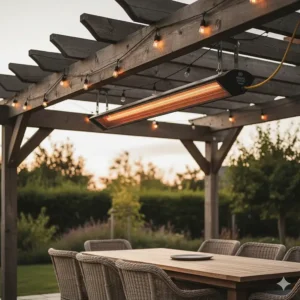
When you want professional-grade performance, the Sunpak S34 TSR delivers. This 48-inch infrared heater features two-stage heating – you can run it on low (17,000 BTU) or high (34,000 BTU) settings, giving you precise temperature control and energy savings.
The infrared technology is what sets Sunpak apart. Instead of heating air that blows away, infrared waves travel through air and warm whatever they touch – people, furniture, floors. This makes it incredibly efficient and effective, especially in open or windy areas.
Key Specifications:
- Heat output: 34,000 BTU (two-stage: 17,000/34,000)
- Type: Infrared patio heater
- Length: 48 inches
- Mounting: Wall or ceiling mount with included hardware
Professional installers and commercial users consistently rate Sunpak among the best natural gas patio heater brands. The stainless steel construction looks sleek and resists corrosion. Remote control included for convenience.
Pros:
✅ Two-stage heating saves energy
✅ Superior infrared technology
✅ Remote control operation
Cons:
❌ Premium pricing
❌ Requires permanent mounting
Price: $2,500-$3,000
7. Hiland Commercial Natural Gas Patio Heater
The Hiland Commercial model earns its name. Built for restaurants and high-traffic commercial spaces, this 85-inch heater delivers 41,000 BTUs with remarkable consistency. The weighted base provides stability even on busy patios.
I’ve seen these in action at several restaurants in my area, and they hold up remarkably well to constant use. The automatic shut-off tilt valve ensures safety if someone accidentally bumps it. The included burner cover protects internal components from debris and weather damage during off-season storage.
Key Specifications:
- Heat output: 41,000 BTU
- Height: 85 inches
- Construction: Durable stainless steel
- Weight: 40 lbs
Customer reviews from restaurant owners mention running these units 6-8 hours nightly for entire seasons without issues. The heating capacity covers up to 15 square feet effectively. Home users appreciate the commercial durability at residential prices.
Pros:
✅ Commercial-grade construction
✅ Weighted base for stability
✅ Includes protective burner cover
Cons:
❌ Heavier unit (harder to move frequently)
❌ Basic aesthetic design
Price: $350-$450
🔥 Ready to Transform Your Outdoor Space?
Don’t let another chilly evening keep you indoors! Click on any of the highlighted products above to check current availability and pricing. These heaters are popular and often sell out during peak seasons – especially before holidays and special events. Secure yours today and enjoy warm outdoor gatherings all year long! 🌟
Understanding Natural Gas vs Propane Patio Heaters
Let me clear up the confusion I see constantly: natural gas and propane patio heaters aren’t interchangeable. They burn different fuels, require different connections, and have distinct advantages.
How Natural Gas Patio Heaters Work
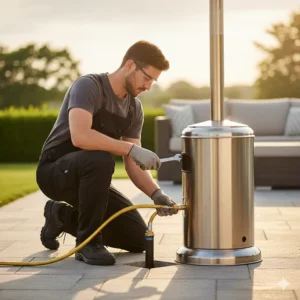
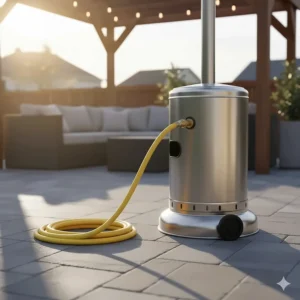
Natural gas patio heaters connect directly to your home’s existing gas line – the same system that powers your furnace, water heater, or gas stove. A licensed professional runs a dedicated line to your patio location, where the heater connects via a fitting (typically 3/8″ male flared).
Once connected, you’ve got unlimited fuel supply. No refills, no running out mid-party, no storing heavy tanks. According to Popular Mechanics, natural gas costs significantly less per BTU than propane, making these heaters economical for frequent use.
The heater pulls gas through a burner system where it ignites (either electronically or manually). The flame heats a reflector hood – usually made from polished aluminum – which directs radiant heat downward in a cone pattern. Quality models heat a 15-20 foot diameter circle efficiently.
Key Differences from Propane Models
Fuel Source: Natural gas flows through pipes from your utility company. Propane comes in portable tanks you refill or exchange. This fundamental difference affects everything else.
Portability: Propane heaters go anywhere – deck, lawn, beach. Natural gas heaters stay near their connection point, though wheels let you move them within the gas hose length (typically 6-12 feet).
Operating Costs: Natural gas wins here. Most areas charge $10-15 per million BTUs for natural gas versus $25-30 for propane. If you use your heater regularly, savings add up quickly.
Initial Setup: Propane is plug-and-play (attach tank and go). Natural gas requires professional installation to run gas lines, which costs $200-500 depending on distance and complexity.
BTU Output: Both can achieve similar heat output (30,000-48,000 BTUs), though natural gas burns slightly hotter, which means more effective heating in very cold conditions.
Benefits Comparison Table
| Factor | Natural Gas | Propane |
|---|---|---|
| Convenience | Never runs out | Requires tank refills |
| Portability | Limited mobility | Fully portable |
| Operating Cost | Lower (40-50% less) | Higher per BTU |
| Installation | Professional required | DIY friendly |
| Environmental | Cleaner burning | More CO2 emissions |
| Availability | Requires gas line access | Available everywhere |
Essential Features to Look for in a Natural Gas Patio Heater
After testing dozens of models, I’ve learned which features actually matter versus marketing fluff. Here’s what separates great heaters from mediocre ones.
BTU Output and Heat Coverage
BTU (British Thermal Unit) measures heating power. One BTU raises one pound of water by one degree Fahrenheit. For patio heaters, more BTUs generally mean more heat, but efficiency matters too.
35,000-42,000 BTUs: Perfect for smaller patios (10-12 feet diameter) or mild climates. Adequate for 4-6 people in close seating.
43,000-48,000 BTUs: The sweet spot for most homeowners. Heats 15-20 foot diameter circles effectively. Handles groups of 8-12 people comfortably.
48,000+ BTUs: Commercial-grade power for large spaces or extremely cold climates. Can heat 20+ foot areas but consumes more gas.
Consider your space realistically. My 16×16 foot deck needed 45,000 BTUs to stay comfortable in 40°F weather. Smaller balconies do fine with 35,000 BTUs.
Safety Features That Matter
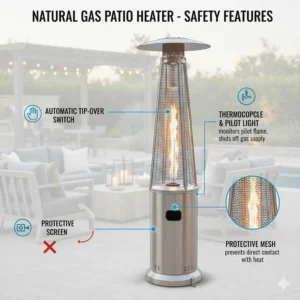
Automatic Tilt Shutoff: Sensors detect if the heater tips over and immediately cut gas flow. Non-negotiable feature – never buy without it.
Thermocouple Safety Device: Monitors the pilot flame. If wind blows it out or gas supply interrupts, the thermocouple automatically shuts off gas flow, preventing dangerous leaks.
Heat Shield/Guard: Protects the burner area from debris and prevents accidental contact with hot surfaces. Especially important if you have kids or pets.
Weighted Base: Provides stability in wind. Quality models weigh 35-50 lbs and resist tipping from bumps or moderate winds.
Construction Quality and Materials
Stainless Steel: Premium choice that resists rust and corrosion. Essential for coastal areas or humid climates. Lasts 10-15 years with minimal maintenance.
Powder-Coated Steel: More affordable than stainless but requires proper maintenance. Good for covered patios or dry climates. Expect 7-10 year lifespan.
Aluminum Reflector Hoods: Best for directing heat efficiently. Polished aluminum reflects heat better than painted steel alternatives.
Commercial-Grade Components: Look for heavy-gauge steel, robust burners, and quality gas valves. These components determine longevity under frequent use.
Ignition Systems
Electronic Push-Button Ignition: Most convenient option. Press once and heat flows. No matches, no hassle. Battery-powered systems use standard AA batteries lasting 1-2 seasons.
Piezo Spark Ignition: Manual button that creates spark to light gas. Reliable and never needs batteries, but requires multiple pushes sometimes.
Manual Match Lighting: Old-school and least convenient. You shouldn’t settle for this unless you enjoy the “authentic” experience.
Installation Requirements and Costs
Here’s what nobody tells you until you’re already committed: installing a natural gas patio heater involves more than unboxing and plugging in.
Professional Installation Needs
Natural gas connections require licensed professionals. Period. This isn’t optional – most municipalities require permits for gas line work, and insurance won’t cover DIY gas-related accidents.
A qualified gas fitter or HVAC technician will:
- Assess your existing gas line capacity
- Run dedicated line from main supply to patio location
- Install proper shutoff valve
- Pressure test all connections
- Connect heater and verify proper operation
- Obtain necessary permits and inspections
According to HomeAdvisor, typical installation costs run $200-800 depending on:
- Distance from main gas line (under 20 feet is cheapest)
- Obstacles requiring additional labor (walls, landscaping)
- Local labor rates and permit fees
- Line sizing requirements
Gas Line Specifications
Most residential patio heaters need 3/8″ or 1/2″ gas lines. Your installer will calculate required line size based on:
- Heater BTU rating
- Distance from gas meter
- Other appliances on same line
- Local code requirements
Never attempt DIY gas line work. Gas leaks cause explosions, fires, and fatalities. The few hundred dollars you save isn’t worth the risk.
Optimal Placement Considerations
Clearance Requirements: Most models need 3 feet clearance from combustible materials (walls, railings, umbrellas). Check your specific model’s manual.
Overhead Space: Maintain 8 feet minimum clearance above heater. Never use under low ceilings or awnings without proper ventilation.
Wind Protection: Position heaters in areas with natural wind breaks (walls, fences, planters) for optimal performance. Open areas lose 30-40% heating efficiency in moderate wind.
Social Layout: Center heaters in primary seating areas. Heat radiates downward and outward in a cone pattern, so position where people actually gather.
Access to Gas Line: Place within gas hose length (typically 6-12 feet) of connection point. Longer distances require custom gas line runs during installation.
Operating Costs: What to Expect
Let’s talk money – because heating your patio isn’t free, even if it feels magical on cold nights.
Natural Gas Pricing Breakdown
Natural gas pricing varies by location but averages $10-15 per thousand cubic feet (MCF) in most U.S. areas. One MCF equals approximately 1,000,000 BTUs.
A 45,000 BTU heater running at full capacity consumes 45,000 BTUs per hour. Simple math:
- Cost per hour = (45,000 BTU / 1,000,000) × $12 = $0.54/hour
- Three-hour evening = $1.62
- 20 evenings per month = $32.40
Compare this to propane (typically $25-30 per million BTUs):
- Same heater on propane = $1.13-1.35/hour
- Three-hour evening = $3.40-4.05
- 20 evenings per month = $68-81
Natural gas saves roughly $35-50 monthly for frequent users. Over a heating season (October-March), that’s $210-300 in savings.
Seasonal Usage Estimates
Light Use (Mild Climate):
8-10 uses per month, 2-3 hours each = $15-25/month
Moderate Use (Average Climate):
15-20 uses per month, 3-4 hours each = $30-50/month
Heavy Use (Cold Climate/Commercial):
Daily use, 4-6 hours = $75-125/month
Energy Efficiency Tips
Use Variable Heat Control: Run heaters at 60-70% capacity when possible. Many models let you adjust output, reducing gas consumption 20-30% while maintaining comfort.
Strategic Placement: Position heaters where people actually sit rather than trying to heat entire patio. Three smaller zones often cost less than one large area.
Wind Protection: Add temporary wind screens or position furniture to block breezes. Wind increases fuel consumption significantly – one study found 40% more gas use in windy conditions.
Maintenance Matters: Clean burners annually to maintain efficiency. Clogged burners reduce heat output, causing you to run higher settings unnecessarily.
Maintenance and Winterization Tips
Natural gas patio heaters are relatively low-maintenance, but neglect them and you’ll face expensive repairs or replacements.
Regular Maintenance Schedule
Monthly During Use Season:
- Wipe down exterior with damp cloth
- Check for spider webs or debris in burner area
- Inspect gas connections for any hissing sounds
- Verify all safety features function properly
Quarterly:
- Clean reflector hood with non-abrasive cleaner
- Inspect and clean burner ports with soft brush
- Check for rust or corrosion, especially on fasteners
- Tighten any loose bolts or connections
Annually Before Season:
- Deep clean entire unit
- Inspect gas hose for cracks or wear
- Test ignition system thoroughly
- Have professional inspect if unit is 3+ years old
Cleaning Procedures
Burner Cleaning: Remove burner assembly (consult manual) and use soft brass brush to clean ports. Compressed air works well for removing debris. Never use wire that could enlarge port holes.
Reflector Care: Mix mild dish soap with water. Use soft sponge to clean reflector without scratching. Rinse thoroughly and dry immediately to prevent water spots.
Exterior Maintenance: Stainless steel benefits from specialized cleaner applied along grain. Powder-coated finishes need gentle soap and water only.
Off-Season Storage
Unlike propane models, natural gas heaters are often left in place year-round. If you do store yours:
Covered Outdoor Storage:
- Clean unit thoroughly first
- Apply protective cover designed for patio heaters
- Ensure cover is breathable to prevent moisture buildup
- Secure cover against wind
Indoor Storage:
- Disconnect from gas line (professional required)
- Clean completely and dry
- Store in climate-controlled space
- Cover to prevent dust accumulation
In-Place Winterization:
- Clean and cover with quality weather-resistant cover
- Ensure cover allows moisture to escape
- Check periodically for damage from wind or weather
Safety Guidelines and Best Practices
Patio heaters are safe when used correctly, but they’re still open-flame appliances. Follow these guidelines religiously.
Placement Safety Rules
Minimum Clearances:
- 3 feet from walls, railings, furniture (combustible materials)
- 8 feet overhead clearance minimum
- 2 feet from traffic paths
- Away from overhanging plants or fabrics
Never Use:
- Inside enclosed structures (garages, sheds, screened porches without proper ventilation)
- Under low awnings or canopies
- Near flammable liquids or materials
- In areas without adult supervision when operating
Operating Safety Tips
Before Each Use:
- Inspect for damage, especially gas connections
- Verify area around heater is clear
- Check weather – avoid using in extreme wind
- Ensure children and pets understand danger zones
During Operation:
- Never leave running heater unattended
- Keep fire extinguisher accessible
- Monitor for unusual smells or sounds
- Adjust heat gradually, not maximum immediately
After Each Use:
- Turn gas supply off completely
- Allow unit to cool 30+ minutes before covering
- Check for any leaks or issues
- Store any accessories properly
What to Do in Emergencies
Gas Smell Detected:
- Turn off heater immediately
- Don’t flip any switches or create sparks
- Evacuate area
- Call gas company emergency line from safe distance
- Don’t return until professionals clear area
Heater Tips Over:
- Automatic shutoff should activate
- Keep everyone away from unit
- Don’t try to uprights until fully cooled
- Inspect thoroughly before reusing
- Consider professional inspection
Flame Won’t Ignite:
- Don’t repeatedly try ignition (gas buildup danger)
- Wait 5 minutes for gas to disperse
- Check gas supply is on
- Verify connections are secure
- Call professional if problem persists
Comparing Top Brands: Which is Best?
Not all brands are created equal. After researching customer feedback and professional reviews, here’s my honest take on major players.
Premium Brands
Bromic Heating ($1,500-3,000):
The Mercedes of patio heaters. Australian company known for innovative infrared technology and stunning designs. Smart-Heat system adjusts output automatically. Exceptional wind resistance. Worth the investment for serious outdoor entertainers or commercial applications.
Sunpak ($2,000-3,500):
Commercial-grade infrared heaters used by high-end restaurants and resorts. Two-stage heating saves energy. Ultra-durable construction. Premium pricing but 15-20 year lifespan. Best for permanent installations where quality trumps budget.
Mid-Range Brands
Fire Sense ($250-400):
Excellent quality-to-price ratio. Heavy-duty stainless steel construction. Electronic ignition and solid safety features. Popular with serious homeowners and small restaurants. Good 7-10 year lifespan with proper maintenance.
AZ Patio Heaters/Hiland ($190-450):
Best value in the category. Wide range of styles and BTU ratings. Reliable performance, though finish quality varies. Perfect for budget-conscious buyers who want good performance without premium cost. Expect 5-8 year lifespan.
Budget-Friendly Options
Golden Flame ($300-400):
Surprising quality for the price. Modern features including electronic ignition and safety sensors. Some finish quality compromises but solid performance. Great starter heater or second unit for overflow areas.
Generic/Import Brands ($250-350):
Hit or miss quality. Can offer good value if from reputable seller with warranty. Read reviews carefully. Expect shorter lifespan (3-5 years). Fine for occasional use but not daily commercial applications.
Brand Reliability Ratings
| Brand | Durability | Performance | Value | Customer Service |
|---|---|---|---|---|
| Bromic | ⭐⭐⭐⭐⭐ | ⭐⭐⭐⭐⭐ | ⭐⭐⭐ | ⭐⭐⭐⭐⭐ |
| Sunpak | ⭐⭐⭐⭐⭐ | ⭐⭐⭐⭐⭐ | ⭐⭐⭐ | ⭐⭐⭐⭐ |
| Fire Sense | ⭐⭐⭐⭐ | ⭐⭐⭐⭐ | ⭐⭐⭐⭐ | ⭐⭐⭐⭐ |
| AZ Patio/Hiland | ⭐⭐⭐⭐ | ⭐⭐⭐⭐ | ⭐⭐⭐⭐⭐ | ⭐⭐⭐ |
| Golden Flame | ⭐⭐⭐ | ⭐⭐⭐⭐ | ⭐⭐⭐⭐⭐ | ⭐⭐⭐ |
Environmental Impact and Sustainability
Let’s address the elephant on the patio: are natural gas patio heaters environmentally responsible?
Carbon Footprint Comparison
Natural gas patio heaters do produce carbon emissions. A 45,000 BTU heater running 3 hours emits approximately 27 pounds of CO2 – equivalent to driving a car about 30 miles.
However, context matters. According to the Environmental Protection Agency, natural gas burns significantly cleaner than alternatives:
CO2 Emissions per Million BTUs:
- Natural gas: 117 lbs CO2
- Propane: 139 lbs CO2 (19% more)
- Heating oil: 161 lbs CO2 (38% more)
- Wood: 195 lbs CO2 (67% more)
Natural gas also produces minimal particulate matter and virtually no sulfur dioxide compared to wood or pellet heaters.
Cleaner Burning Benefits
No Visible Smoke: Unlike fire pits or wood heaters, natural gas burns clean with no smoke, ash, or soot. Your neighbors (and lungs) will appreciate this.
Reduced Air Pollution: Natural gas combustion produces negligible amounts of particulate matter that contributes to smog and respiratory issues.
Lower Greenhouse Impact: While not carbon-neutral, natural gas has the lowest carbon intensity of any fossil fuel heating option.
Eco-Conscious Usage Tips
Run Only When Needed: Sounds obvious, but many people leave heaters running when guests go inside. Turn off between uses.
Optimize Coverage: Heat specific areas where people gather rather than trying to warm entire outdoor spaces. Strategic placement reduces fuel waste.
Consider Infrared Models: Infrared heaters like Sunpak or Bromic are 20-30% more efficient than traditional convection heaters because they warm objects directly rather than heating air that drifts away.
Combine with Other Strategies: Use heaters alongside wind protection, outdoor blankets, and strategic seating to reduce heating demands.
Choose Right Size: Oversized heaters waste fuel. Match BTU output to actual space requirements rather than buying maximum power “just in case.”
Troubleshooting Common Issues
Even quality heaters develop problems. Here’s how to fix common issues before calling professionals (and when you absolutely should call them).
Heater Won’t Ignite
Check These First:
- Gas supply valve is fully open
- Pilot light is lit (if applicable)
- Electronic ignition battery has charge
- Gas line hasn’t been shut off at meter
Solutions:
- Replace ignition batteries (typically AA)
- Wait 5 minutes after failed ignition attempts before retrying
- Check for spider webs or debris blocking gas flow
- Verify gas is flowing to other appliances
When to Call Professional: If gas flows but won’t ignite after these checks, or if you smell gas strongly.
Weak or Uneven Heat
Possible Causes:
- Clogged burner ports
- Low gas pressure
- Reflector hood misaligned or dirty
- Outdoor temperature extremely low
DIY Fixes:
- Clean burner ports with soft brush
- Polish reflector hood
- Check for and remove any obstructions
- Adjust heat setting to maximum
Professional Help Needed: If heat remains weak after cleaning, you may have gas pressure issues requiring expert diagnosis.
Yellow or Orange Flame
What It Means: Normal natural gas flame should be blue with yellow tips. Predominantly yellow/orange flame indicates incomplete combustion – potentially dangerous.
Immediate Action:
- Turn off heater immediately
- Don’t use until resolved
- Check burner for dirt or debris
- Verify proper ventilation around unit
Professional Required: Never operate heater with consistently yellow flame. This indicates serious problem requiring expert service.
Gas Smell During Operation
Safety First: Some gas smell during ignition is normal. Persistent smell during operation is NOT.
Steps to Take:
- Turn off gas supply immediately
- Don’t attempt to locate leak yourself
- Evacuate area
- Call gas company emergency line
- Don’t return until professionals clear
Never Ignore: Gas leaks cause explosions and fatalities. Always err on side of caution.

Frequently Asked Questions
❓ How long do natural gas patio heaters last?
❓ Can I convert my propane patio heater to natural gas?
❓ Do natural gas patio heaters work in windy conditions?
❓ What's the ideal height for maximum heating efficiency?
❓ Are natural gas patio heaters safe to use under covered patios?
Conclusion: Making Your Final Decision
So here’s where we land after diving deep into natural gas patio heaters: they’re genuinely worth the investment if you’re committed to year-round outdoor living and have access to natural gas lines.
For most homeowners, I recommend starting with a mid-range model in the 41,000-45,000 BTU range – something like the Fire Sense 61445 or AZ Patio Heaters NG-SS. These offer excellent reliability, sufficient heating power, and won’t break the bank. Budget $200-400 for the heater plus $300-500 for professional installation.
If you’re serious about outdoor entertaining or run a commercial space, the premium options from Bromic or Sunpak deliver superior performance and longevity. Yes, they cost more upfront, but the energy efficiency and durability make them worthwhile for frequent use.
Remember these key points:
- BTU rating matters: Match it to your space size, not just “bigger is better”
- Professional installation isn’t optional: Gas work requires licensed experts
- Safety features are non-negotiable: Automatic shutoff and tilt protection save lives
- Operating costs are reasonable: Typically $30-50 monthly for regular use
The best natural gas patio heater ultimately depends on your specific situation. Consider your budget, space size, climate, and how often you’ll actually use it. A $200 heater that gets used constantly beats a $2,000 model gathering dust.
Whatever you choose, you’re making an investment in extending your outdoor living season. There’s something special about sitting outside on a crisp October evening, warm and comfortable, watching the stars while everyone else retreats indoors. That’s the magic these heaters provide.
🌟 Transform Your Outdoor Experience Today!
Ready to extend your outdoor season by months? Choose your perfect heater from our expert-tested recommendations above. Click through to check live pricing and current deals. Popular models sell fast during peak season – don’t miss out on creating your ideal outdoor oasis! Your guests will thank you. 🔥🎉
Recommended for You
- Outdoor Heater Electric: 7 Best Picks That’ll Transform Your Patio in 2025
- Infratech Patio Heaters: 7 Best Models for 2025
- 7 Best Infrared Patio Heaters 2025: Ultimate Guide
Disclaimer: This article contains affiliate links. If you purchase products through these links, we may earn a small commission at no additional cost to you.
✨ Found this helpful? Share it with your friends! 💬🤗
