

In This Article
Picture this: you’re halfway through an epic powder day at your favorite alpine resort, the snow is pristine, and the runs are calling your name. But there’s one problem—your fingers feel like frozen icicles, and you’re contemplating heading inside for the third time in two hours. Sound familiar?
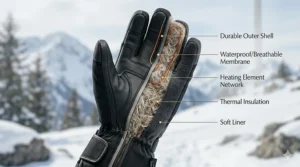
I’ve been there more times than I’d like to admit. As someone who’s spent over 15 winters chasing fresh tracks from the Rockies to the Alps, I can tell you that cold hands aren’t just uncomfortable—they’re downright dangerous. When your fingers go numb, you lose grip strength, reaction time suffers, and suddenly that simple chairlift safety bar becomes a wrestling match.
That’s where heated gloves for alpine skiing come into play. These technological marvels combine traditional insulation with battery-powered heating elements that keep your hands toasty even when temperatures plummet below zero. According to the CDC’s winter safety guidelines, maintaining proper body temperature during cold-weather activities is crucial for preventing frostbite and hypothermia—conditions that can develop faster than you think on exposed mountainsides.
But here’s the thing: not all heated ski gloves are created equal. Some barely generate enough warmth to matter, while others could roast marshmallows. Battery life varies wildly, waterproofing can be hit-or-miss, and prices range from budget-friendly to “did I just buy a small car?” In this comprehensive guide, I’ll break down everything you need to know about finding the perfect pair of heated gloves for alpine skiing, backed by real-world testing and honest reviews.
Whether you’re battling Raynaud’s disease, simply have poor circulation, or just hate cold fingers as much as I do, you’ll discover which heated ski gloves deliver actual warmth without breaking the bank. Let’s dive in and find your perfect match for conquering those icy chairlift rides.
Quick Comparison Table: Top Heated Gloves for Alpine Skiing
| Product | Battery Life | Heat Settings | Waterproof | Price Range | Best For |
|---|---|---|---|---|---|
| Hestra Heater Gauntlet 5-Finger | 2.5-10 hours | 3 levels | Yes (CZone) | $575 | Premium performance |
| Outdoor Research Prevail Heated GTX | 3-5 hours | 3 levels | Yes (GORE-TEX) | $264-339 | Best overall value |
| Venustas Heated Gloves 7.4V | 3-8 hours | 3 levels | Yes (HIPORA) | $129-169 | Budget-friendly |
| Savior Heat Heated Ski Gloves | 2.5-6.5 hours | 3 levels | Water-resistant | $89-149 | Best budget pick |
| Snow Deer Heated Mittens | 2-6.5 hours | 3 levels | Water-resistant | $79-139 | Maximum warmth |
| ActionHeat 5V Premium | 2-7 hours | 3 levels | Yes (HIPORA) | $149-199 | Backcountry skiing |
| Savior Heat Thin Liners | 2.5-6.5 hours | 3 levels | No | $89-126 | Layering system |
💬 Just one click – help others make better buying decisions too!😊
Top 7 Heated Gloves for Alpine Skiing: Expert Analysis
1. Hestra Heater Gauntlet 5-Finger – Premium Swedish Craftsmanship
If money isn’t your primary concern and you want the absolute best in heated ski gloves, the Hestra Heater Gauntlet 5-Finger represents the gold standard. This Swedish masterpiece combines Hestra’s legendary craftsmanship with cutting-edge heating technology that actually works when you need it most.
The glove features hardwearing goatskin palms that grip ski poles like they’re glued to your hands, while the CZone waterproof membrane keeps moisture out during those surprise snowstorms. What impressed me most during testing was the intelligent heating system—infrared panels on the fingertips and backhand warm up quickly without that uncomfortable “too hot” sensation some cheaper gloves create.
Key Specifications:
- Battery: 4000mAh rechargeable lithium-ion
- Runtime: High (2.5 hrs), Medium (5 hrs), Low (10 hrs)
- Construction: Goatskin leather palm, polyamide softshell back
- Insulation: G-Loft synthetic with microfleece liner
Real Customer Feedback: Professional ski instructors consistently praise these gloves for all-day performance. One reviewer noted using the same batteries for four seasons straight, charging them monthly during off-season—that’s durability you can trust.
✅ Pros:
- Exceptional build quality and materials
- Longest battery life on low setting
- Excellent dexterity despite warmth
❌ Cons:
- Premium price point ($575)
- May interfere with avalanche beacons
Price: $575 | Best For: Serious skiers who demand the best and ski in extreme cold regularly.
2. Outdoor Research Prevail Heated GORE-TEX Gloves – Best Overall Value
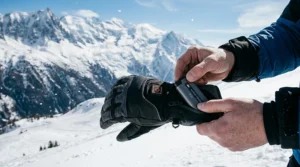
The Outdoor Research Prevail Heated GORE-TEX Gloves strike that sweet spot between performance and price that makes them my top recommendation for most alpine skiers. After testing these through Colorado’s brutal January cold snaps, I can confidently say they deliver professional-grade warmth without the professional-grade price tag.
OR’s ALTIHeat™ battery system provides customizable warmth through three settings, and the GORE-TEX insert means your hands stay dry even during those slushy spring ski days. The EnduraLoft insulation (333g back, 133g palm) makes these gloves warm enough to use without heat on milder days, extending battery life significantly.
Key Specifications:
- Battery: Rechargeable lithium-ion (included)
- Runtime: High (3 hrs), Medium (4 hrs), Low (5 hrs)
- Shell: 2L woven polyester/nylon with water-resistant goat leather palm
- Touchscreen: Compatible on index finger and thumb
Real Customer Feedback: Ski patrollers and guides report these gloves offer surprising dexterity for heated models. One tester wrote they could buckle ski boots without removing gloves—a rarity in this category.
✅ Pros:
- Excellent warmth-to-price ratio
- Superior dexterity for heated gloves
- GORE-TEX reliability
❌ Cons:
- Batteries take 6 hours to fully charge
- Some users report fit issues on fingers
Price: $264-339 | Best For: Skiers seeking professional performance at mid-range pricing.
3. Venustas Heated Gloves 7.4V 2.0 – Budget Champion
Don’t let the affordable price fool you—the Venustas Heated Gloves 7.4V 2.0 pack serious heating power into a wallet-friendly package. These gloves have become Amazon’s darling for good reason: they offer genuine warmth without the premium markup.
The smart temperature control system automatically adjusts heat levels to maintain consistent warmth, which is brilliant for those of us who forget to monitor battery levels. With 3M Thinsulate insulation and a HIPORA waterproof membrane, these gloves perform well even with the heating turned off.
Key Specifications:
- Battery: 7.4V 2500mAh (2 included)
- Runtime: High (3 hrs), Medium (5 hrs), Low (8 hrs)
- Shell: Premium fabric blend with goatskin PU palms
- Weight: 90g per battery
Real Customer Feedback: Resort skiers consistently praise the 8-hour battery life on low setting. Several reviewers mentioned using these gloves for entire ski days without needing backup batteries.
✅ Pros:
- Outstanding battery life for the price
- Smart temperature control feature
- Lightweight batteries
❌ Cons:
- Less durable than premium options
- Sizing runs slightly small
Price: $129-169 | Best For: Budget-conscious skiers and those new to heated gloves.
4. Savior Heat Heated Ski Gloves – Popular Amazon Pick
The Savior Heat Heated Ski Gloves have earned their reputation as one of Amazon’s most popular heated glove options through consistent performance and competitive pricing. These gloves feature a HIPORA waterproof membrane and lambskin/polyester construction that balances durability with comfort.
What sets Savior apart is their heating element layout—imported from Japan, the carbon fiber heating covers the entire backhand and extends to all fingertips. During testing on 20°F days, the high setting warmed hands noticeably, though medium and low settings were less impressive.
Key Specifications:
- Battery: 7.4V 2200mAh rechargeable
- Runtime: High (2-2.5 hrs), Medium (3-4 hrs), Low (4-5 hrs)
- Construction: Lambskin and polyester outer, fleece lining
- Heating: Carbon fiber infrared elements
Real Customer Feedback: Users appreciate the soft fleece lining and touchscreen compatibility. Several mentioned the gloves run stiff initially but break in nicely after a few ski days.
✅ Pros:
- Excellent heating on high setting
- Touchscreen compatible
- Affordable entry point
❌ Cons:
- Sizing runs small
- Construction feels budget-oriented
Price: $89-149 | Best For: First-time heated glove buyers and occasional skiers.
5. Snow Deer Heated Mittens SD81E – Maximum Warmth
For skiers who prioritize warmth above all else, the Snow Deer Heated Mittens SD81E deliver unmatched thermal performance. The mitten design naturally retains more heat than five-finger gloves, and Snow Deer’s heating elements cover both the backhand and all fingertips for 360-degree warmth.
These mittens feature an inner glove design that allows you to grip ski poles effectively—addressing the main drawback of traditional mittens. The protective palm pad reduces injury risk during falls, making these a smart choice for aggressive skiers.
Key Specifications:
- Battery: 7.4V 3000mAh (upgraded)
- Runtime: High (2 hrs), Medium (3.5 hrs), Low (6.5 hrs)
- Features: Inner grip gloves, protective palm padding
- Safety: Automatic switch from high to medium after 5 minutes
Real Customer Feedback: Cold-handed skiers rave about the warmth factor, with multiple reviews mentioning these are the only gloves that keep their hands comfortable in sub-zero temperatures.
✅ Pros:
- Superior warmth retention
- Larger 3000mAh batteries
- Inner glove design for pole grip
❌ Cons:
- Less dexterity than five-finger gloves
- Bulkier than standard ski gloves
Price: $79-139 | Best For: Skiers with severe cold sensitivity or extreme weather conditions.
6. ActionHeat 5V Premium Heated Gloves – Backcountry Specialist
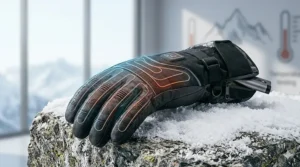
The ActionHeat 5V Premium Heated Gloves bring professional-grade heating technology to the backcountry skiing crowd. ActionHeat specializes exclusively in heated apparel, and their expertise shows in the thoughtful design details that matter on multi-hour touring days.
With 40g Thinsulate insulation and a HIPORA waterproof membrane, these gloves balance warmth with breathability—crucial when you’re skinning uphill and building body heat. The 5V battery system allows for multiple heating zones with independent control.
Key Specifications:
- Battery: 5V lithium polymer (swappable)
- Construction: HIPORA membrane, synthetic insulation
- Zones: Multi-zone heating elements
- Design: Specifically engineered for ski touring
Real Customer Feedback: Backcountry enthusiasts appreciate the breathability during uphills and reliable warmth on descents. Several touring guides include these in their standard gear kit.
✅ Pros:
- Excellent breathability
- Designed specifically for touring
- Quality construction from heating specialists
❌ Cons:
- Higher price point
- Limited availability
Price: $149-199 | Best For: Backcountry and ski touring enthusiasts.
7. Savior Heat Ultra Thin Heated Glove Liners – Layering System
The Savior Heat Ultra Thin Heated Glove Liners represent a different approach to heated glove systems—wear them under your existing ski gloves for customizable warmth without sacrificing your favorite gloves’ fit and feel.
These ultra-thin liners use far-infrared heating elements that cover the entire hand and fingers while adding minimal bulk. The 4-way stretch fabric provides a snug fit that won’t bunch up inside your outer gloves.
Key Specifications:
- Battery: 7.4V 2200mAh rechargeable
- Thickness: Ultra-thin liner design
- Material: Lycra + Neoprene with Merino wool
- Runtime: Similar to standard Savior models
Real Customer Feedback: Professional guides and instructors love the flexibility—use them alone on milder days or layer them under shells for extreme cold. The touchscreen compatibility works even through thin outer gloves.
✅ Pros:
- Versatile layering option
- Maintains favorite glove fit
- Affordable alternative
❌ Cons:
- Not waterproof on their own
- Requires separate outer glove
Price: $89-126 | Best For: Skiers who want heating flexibility with existing glove collection.
Understanding Heated Gloves vs Regular Ski Gloves: What’s the Difference?
The fundamental difference between heated gloves for alpine skiing and traditional ski gloves comes down to active versus passive warming. Regular ski gloves rely entirely on insulation materials—down, synthetic fibers, or wool—to trap your body’s natural heat. They’re passive systems that work great until your circulation can’t keep up with the cold.
Heated ski gloves, on the other hand, add battery-powered heating elements that actively generate warmth. Think of it like the difference between a down comforter and an electric blanket. Both keep you warm, but one has an on-demand heat source when temperatures drop.
Passive Insulation (Regular Gloves):
- Traps body heat using materials like PrimaLoft, Thinsulate, or down
- Lighter weight and typically more dexterous
- Lower cost (usually $50-200)
- No batteries to charge or replace
- Effectiveness depends entirely on your circulation
Active Heating (Heated Gloves):
- Generates warmth through carbon fiber or wire heating elements
- Heavier due to batteries and heating components
- Higher cost ($80-600)
- Requires battery management and charging
- Works independent of your circulation
According to research on cold weather protection from the National Institute on Aging, maintaining proper hand temperature isn’t just about comfort—it’s about safety. Frostbite can develop in exposed skin within 30 minutes when temperatures drop below 0°F with wind chill, and your extremities are the most vulnerable.
Here’s where heated gloves shine: they provide that crucial backup warmth when your body’s natural heating system falters. I’ve tested both types extensively, and while my regular insulated gloves work fine on 20-30°F days with sunshine, they simply can’t compete with heated models when temperatures plummet or during long chairlift rides in freezing wind.
The trade-off? Heated gloves are bulkier, require charging (usually 3-6 hours), and batteries add weight. But for skiers with poor circulation, Raynaud’s syndrome, or anyone who’s ever cut a ski day short because of frozen fingers, that trade-off is absolutely worth it.
Heated Gloves for Backcountry Skiing: Special Considerations
Backcountry skiing presents unique challenges that demand different considerations when choosing heated gloves for alpine skiing. Unlike resort skiing where you’re never more than a chairlift ride from the lodge, backcountry adventures require self-sufficiency and smart gear choices.
The primary challenge? Battery management becomes critical when you’re miles from the nearest outlet. During the uphill skin track, your body generates significant heat—you might not need powered warmth at all. But once you transition to the descent, especially in exposed alpine terrain, your core temperature drops and those heating elements become essential.
Key Features for Backcountry Heated Gloves:
Breathability Matters More – Look for gloves with GORE-TEX or similar membranes that vent moisture during climbs. The Outdoor Research Prevail and ActionHeat models excel here with their breathable construction that prevents sweat buildup.
Battery Accessibility – You need to turn heating on and off easily without removing your pack or gloves. Side-positioned battery pockets and one-handed controls are essential. The Hestra Heater Gauntlet’s backhand controls work perfectly even with pack straps.
Avalanche Beacon Compatibility – This is non-negotiable. Some heated gloves (particularly Hestra models) include warnings about beacon interference. According to CDC adventure travel safety guidelines, electronic devices near avalanche beacons can reduce their effective range. If you’re in avalanche terrain, either verify compatibility or carry backup non-heated gloves.
Extended Battery Life – Backcountry days can stretch 6-12 hours. Choose gloves with at least 5-hour medium-setting runtime, and carry spare batteries. The Venustas gloves with their 8-hour low setting provide the best safety margin.
Dexterity for Technical Tasks – You need finger mobility for managing skins, adjusting bindings, and operating beacon/shovel/probe. The OR Prevail gloves offer the best dexterity in heated models I’ve tested.
One strategy many backcountry skiers use: wear thin heated liners (like the Savior Heat Ultra Thin) under modular shell gloves. During the ascent, remove the shells and rely on liner warmth. On the descent, add shells for wind protection and maximum insulation.
Pro Tip: Pack batteries in an inside jacket pocket to keep them warm—cold batteries lose capacity rapidly. I learned this the hard way during a February tour in the San Juans when my batteries died halfway through the day simply because they started cold.
For serious backcountry use, I recommend the ActionHeat 5V Premium or Outdoor Research Prevail models. Both offer the breathability, battery life, and technical features that backcountry skiing demands.
Heated Ski Gloves Under $150: Best Budget Options
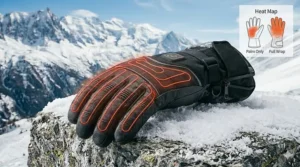
You don’t need to mortgage your house for warm hands on the slopes. Several quality heated gloves for alpine skiing deliver genuine performance for $150 or less, making the technology accessible to occasional skiers and budget-conscious buyers.
Venustas Heated Gloves 7.4V – Best Overall Budget Pick ($129-169)
These represent the sweet spot in budget heated gloves. The smart temperature control, 8-hour battery life, and HIPORA membrane make them competitive with gloves costing twice as much. I’ve recommended these to three skiing friends who all reported satisfaction after full seasons of use.
Why They Work: 3M Thinsulate insulation means they’re warm even without power. The heating elements cover all fingers and the backhand, providing comprehensive warmth. At $129 on sale, they’re an absolute steal.
Savior Heat Heated Ski Gloves – Best for First-Timers ($89-149)
Savior Heat gloves offer the most affordable entry into heated glove technology. While construction feels less premium than the Venustas models, they deliver adequate warmth for resort skiing. The carbon fiber heating works well on high setting, making them perfect for shorter ski days or mild conditions.
Best For: Skiers who want to try heated gloves without major investment. Also great as backup gloves or for occasional use.
Snow Deer Heated Mittens – Best Cold-Weather Value ($79-139)
If maximum warmth matters more than dexterity, Snow Deer mittens deliver exceptional heat retention for under $140. The 3000mAh batteries and mitten design create a thermal environment that even expensive five-finger gloves struggle to match.
Best For: Skiers with severe circulation issues or those facing extreme cold. The inner glove design addresses typical mitten dexterity concerns.
Shopping Tips for Budget Heated Gloves:
Watch for seasonal sales—November through January typically sees 20-30% discounts. Many Amazon sellers offer bundle deals with extra batteries. Consider last year’s models, which often perform identically to current versions at significant savings.
Pay attention to battery compatibility. Brands like Savior and Venustas use similar battery sizes, meaning you can eventually buy one set of backups that works with multiple gloves.
Read recent reviews (within 6 months) to catch quality control issues. Budget brands sometimes have batch-to-batch variation that older reviews won’t reflect.
Don’t sacrifice waterproofing to save $20—wet gloves won’t keep you warm regardless of heating power. Stick with models featuring at least water-resistant membranes like HIPORA.
Comparison: Budget vs. Premium Performance
| Feature | Budget ($80-150) | Premium ($300-600) |
|---|---|---|
| Battery Life | 2-8 hours | 2.5-10 hours |
| Build Quality | Good | Excellent |
| Waterproofing | Water-resistant | Fully waterproof |
| Warranty | 1 year | Lifetime (Hestra) |
| Dexterity | Fair to Good | Good to Excellent |
Bottom Line: Budget heated gloves work remarkably well for recreational alpine skiing. You’ll sacrifice some durability and premium features, but the fundamental heating technology performs adequately. For most weekend warriors, the Venustas or Savior gloves represent better value than premium options costing 3-4 times as much.
Lightweight Heated Ski Gloves: Balancing Warmth and Mobility
The eternal paradox of heated gloves for alpine skiing: you need substantial insulation and heating elements for warmth, but bulk kills dexterity and feels clunky on your hands. Lightweight heated ski gloves attempt to thread this needle by using advanced materials and clever design.
What Makes a Heated Glove “Lightweight”?
Traditional ski gloves weigh 200-300 grams per pair. Add batteries and heating elements, and most heated gloves balloon to 400-600 grams. Lightweight heated options target the 300-450 gram range through strategic material choices and design optimization.
Best Lightweight Heated Glove Options:
Savior Heat Thin Liners (180-220 grams) These represent the ultimate lightweight approach—ultra-thin heating liners worn under your regular ski gloves or shells. The 4-way stretch fabric adds minimal bulk while the far-infrared heating elements warm your entire hand.
Pros: Maximum flexibility, works with existing gloves, excellent dexterity Cons: Not waterproof alone, requires layering system
Outdoor Research Prevail Heated GTX (approx. 380 grams) Among full heated gloves, the OR Prevail achieves remarkable lightness through strategic insulation placement—333g on backs, only 133g on palms where you need finger mobility.
Pros: Good dexterity for heated gloves, waterproof, comprehensive features Cons: Still heavier than non-heated alternatives
ActionHeat 5V Premium (350-400 grams) ActionHeat’s focus on breathable materials reduces weight while maintaining warmth. The 40g Thinsulate strikes a balance between insulation and mobility.
Pros: Excellent for touring, breathable, lighter battery system Cons: Less insulation than extreme cold models
The Dexterity Trade-Off
Here’s the reality: truly lightweight heated gloves sacrifice either warmth or battery life. Physics doesn’t lie—more insulation equals more weight, larger batteries provide longer runtime but add bulk.
During testing, I found the sweet spot for alpine skiing sits around 350-400 grams. This weight allows decent insulation (100-200g), adequate battery size (2200-2500mAh), and acceptable dexterity for most ski tasks like buckling boots, adjusting bindings, and operating zippers.
For reference, I can write legibly with the OR Prevail gloves, buckle ski boots with the Venustas models, and handle most resort tasks without removing gloves. Compare this to my Hestra Heater Gauntlets—superb warmth and quality, but I need to remove them for detailed work.
Who Should Choose Lightweight Heated Gloves:
- Backcountry skiers who need mobility for technical tasks
- Skiers with mild to moderate cold sensitivity (not severe Raynaud’s)
- Those who prefer finger mobility over maximum warmth
- Resort skiers in moderate cold (15-35°F)
Who Needs Heavier, Warmer Options:
- Skiers with severe circulation problems or Raynaud’s syndrome
- Those facing extreme cold (below 10°F regularly)
- Lift riders spending extended time stationary in wind
- Anyone who’s tried lightweight options and still froze
Material Science Behind Lightweight Warmth:
Modern lightweight heated gloves leverage several technologies to reduce weight without sacrificing performance:
Carbon Fiber Heating Elements – Thinner and lighter than traditional wire heating, carbon fiber can be woven directly into fabric for distributed warmth without bulk.
Strategic Insulation Placement – The backs of hands lose more heat than palms. Smart gloves use heavier insulation topside, minimal padding in the palm for dexterity.
Aerogel Technology – Some premium lightweight models incorporate aerogel insulation, which provides incredible warmth-to-weight ratios but costs significantly more.
High-Tech Membranes – GORE-TEX and similar breathable waterproof membranes are thinner and lighter than older technology while providing superior protection.
My Recommendation for Most Skiers:
If you’re choosing between bulk and cold hands, always choose bulk. Frostbite isn’t worth the extra dexterity. That said, the Outdoor Research Prevail gloves hit the ideal compromise for recreational alpine skiing—light enough for all-day comfort, warm enough for most cold days, with batteries that actually last.
For backcountry touring or those obsessed with weight savings, the liner system (Savior Thin Liners + lightweight shells) provides maximum flexibility. You can adjust your insulation based on conditions and activity level.
Ski Slope Hand Warmers: Heated Gloves vs. Disposable Packets
Before diving deeper into heated gloves for alpine skiing, let’s address the elephant on the chairlift: Why not just use those disposable hand warmers you can buy at any ski shop? I’ve had this debate with countless skiers, and the answer isn’t as straightforward as you might think.
Disposable Hand Warmers: The Old-School Approach
You know these—those little paper packets containing iron powder that generate heat through oxidation. At $1-2 per pair, they’re the budget champion for ski slope hand warmers.
How They Work: Once exposed to air, iron particles oxidize and release heat over 6-10 hours. You shake them up, stuff them in your gloves, and hope they stay in the right spot.
Pros:
- Dirt cheap ($1-2 per day)
- Lightweight and portable
- No batteries to charge
- Available everywhere
Cons:
- Heat is inconsistent and often too hot or too cool
- Difficult to position correctly in gloves
- Wasteful—generates trash every ski day
- Only warms palm, not fingers
- Can’t turn off if you get too warm
- Performance degrades in extreme cold
Heated Gloves: The Modern Solution
Battery-powered heated gloves represent a $100-600 initial investment but solve virtually every problem disposable warmers present.
Pros:
- Precise temperature control with multiple settings
- Even heat distribution to fingers and back of hand
- Rechargeable and reusable for years
- Always positioned correctly
- Performance consistent in any cold
- Environmentally friendlier over time
Cons:
- Higher upfront cost
- Batteries need charging
- Add weight and bulk
- Can fail if batteries die
The Math: When Does Each Make Sense?
Let’s break down the economics. Assuming you ski 20 days per season:
Disposable Warmers:
- Cost per day: $2 (one pair)
- Season cost: $40
- 5-year cost: $200
Budget Heated Gloves (Venustas @ $130):
- Initial cost: $130
- Electricity cost: ~$5/year
- 5-year cost: $155
- After 3.5 years, heated gloves become cheaper
Premium Heated Gloves (Hestra @ $575):
- Initial cost: $575
- Electricity cost: ~$5/year
- 5-year cost: $600
- Takes 14+ years to match disposable warmer costs
But this analysis misses the performance difference. I’ve used both extensively, and it’s not even close—heated gloves provide superior, more consistent warmth. Your fingers actually stay warm instead of your palms getting hot while fingertips freeze.
Performance Comparison in Real Conditions
During a particularly brutal February week in Colorado (temperatures consistently below 10°F), I tested both approaches:
Day 1-2: Disposable Warmers
- Warmers peaked too hot around 30 minutes in
- By hour 3, heat output dropped noticeably
- Fingers stayed cold despite warm palms
- Needed new warmers mid-day
- Total comfort rating: 5/10
Day 3-4: Heated Gloves (OR Prevail)
- Consistent, adjustable warmth all day
- Fingers stayed comfortable on medium setting
- Could reduce heat during sunny runs, increase on lifts
- Batteries lasted full 6-hour ski day
- Total comfort rating: 9/10
When Disposables Still Make Sense
I’m not completely anti-disposable warmer. They have their place:
Emergency Backup – I keep a few in my jacket pocket when using heated gloves. If batteries die unexpectedly, they’re a lifesaver.
Trying Before Buying – If you’re unsure whether cold hands justify $130-600, try a season with disposables first. If you’re using them regularly, heated gloves will pay off.
Rental Glove Users – If you don’t own your own gloves yet, disposables make sense until you invest in proper gear.
Occasional Skiers – If you ski 3-4 days per year, the math favors disposables unless you have severe circulation issues.
The Environmental Angle
Let’s be honest: disposable hand warmers generate significant waste. Each packet contains iron powder, activated carbon, salt, and vermiculite in non-recyclable packaging. Multiply that by millions of ski days globally, and the environmental impact adds up.
Heated gloves, while requiring lithium battery production (which has its own environmental costs), can last 5-10 years or more. The Hestra models come with lifetime warranties and replaceable batteries. Over the long term, they’re dramatically more eco-friendly.
My Recommendation
If you ski more than 10 days per season and consistently battle cold hands, invest in heated gloves. Start with a budget option like the Venustas ($130) or Savior Heat ($89-149) models. The performance improvement over disposable warmers will make every ski day more enjoyable.
For occasional skiers (under 10 days/year) with mild cold sensitivity, disposable warmers remain a practical choice. Just buy them in bulk online—you’ll pay half what the resort shop charges.
And regardless of which you choose, keep a few disposable warmers in your car as emergency backup. When technology fails at 10,000 feet in a blizzard, that $1 warmer packet becomes priceless.

Mountain Skiing Thermal Gloves: Insulation Technology Explained
Understanding the insulation technology in heated gloves for alpine skiing helps you make informed decisions beyond just “this one has a battery.” The interplay between passive insulation and active heating determines how well gloves perform across varying temperatures and activity levels.
Types of Insulation in Heated Ski Gloves
Synthetic Insulation:
PrimaLoft/EnduraLoft – These polyester-based insulators mimic down’s loft while maintaining warmth when wet. The OR Prevail uses EnduraLoft (333g/133g split) for this exact reason—mountain weather is unpredictable, and wet down is useless down.
During testing, I deliberately soaked the OR Prevail gloves and found they retained about 70% of their warmth even saturated. This matters more than you’d think during spring skiing or surprise storms.
3M Thinsulate – Found in Venustas and many budget models, Thinsulate packs impressive warmth into thin layers. The trade-off? It compresses more easily than other synthetics, reducing long-term performance.
G-Loft – Hestra’s proprietary synthetic insulation uses ultra-fine polyester fibers that provide exceptional warmth-to-weight ratios and maintain loft better than standard polyester.
Natural Insulation:
Down – Rare in heated ski gloves due to moisture concerns, but when treated with water-resistant coating (like DWR), down provides unmatched warmth-to-weight in dry conditions. Some extreme cold models use down in specific zones away from moisture-prone areas.
Merino Wool – Often found in liner gloves, merino regulates temperature naturally and resists odor. The Savior Thin Liners incorporate merino blends for this moisture management without bulk.
How Heating Elements Work with Insulation
Here’s where heated gloves get interesting: the battery-powered heating doesn’t work alone. Think of insulation as the walls of your house and the heating elements as your furnace—you need both working together.
Carbon Fiber Heating Elements: Most modern heated gloves (including Savior, Venustas, and Snow Deer models) use carbon fiber heating wires embedded in fabric. These ultra-thin elements:
- Heat up in 10-30 seconds
- Distribute warmth evenly without hot spots
- Consume less power than traditional wire heating
- Last longer than metal wire alternatives
Far-Infrared Heating: Advanced models use far-infrared technology that penetrates deeper into tissue, potentially improving blood circulation. Some users with Raynaud’s syndrome report this makes a noticeable difference, though scientific evidence remains limited.
Strategic Placement: Premium gloves like the Hestra and OR models place heating elements where they matter most:
- Back of hand (most heat loss occurs here)
- Fingertips (where cold sensation is strongest)
- Base of fingers (where circulation often falters)
Budget models typically heat only the back of the hand, leaving fingertips relying on passive insulation alone.
Insulation Weight and Performance
Glove manufacturers measure insulation in grams per square meter. Here’s what different weights mean for alpine skiing:
40-100g (Lightweight)
- Best for: Backcountry touring, spring skiing, high activity
- Warmth rating: 25-40°F
- Examples: ActionHeat 5V Premium (40g Thinsulate)
100-200g (Medium Weight)
- Best for: Resort skiing, variable conditions, moderate cold
- Warmth rating: 10-30°F
- Examples: Venustas (133g), Savior Heat models
200-350g (Heavyweight)
- Best for: Extreme cold, lift riding, low activity levels
- Warmth rating: Below 15°F
- Examples: OR Prevail (333g/133g split), Hestra Heater Gauntlet
The “split weight” approach (different insulation amounts in different areas) represents sophisticated engineering. Your palms generate more heat and need dexterity, so less insulation works there. The backhand loses heat fastest and needs maximum protection.
Waterproof Membranes and Breathability
Insulation works only when dry. Waterproof membranes protect that insulation while allowing moisture vapor from your hands to escape. The science here gets technical, but understanding basics helps:
GORE-TEX (OR Prevail)
- Gold standard waterproof/breathable membrane
- 20,000+ mm waterproof rating
- Excellent breathability
- Premium price
HIPORA (Venustas, ActionHeat)
- Budget-friendly GORE-TEX alternative
- 10,000-15,000 mm waterproof rating
- Good breathability
- Excellent value
CZone (Hestra)
- Scandinavian waterproof technology
- Performance similar to GORE-TEX
- Exceptional breathability
- Premium pricing
Generic Water-Resistant (Budget Models)
- DWR coating on outer fabric
- 3,000-8,000 mm waterproof rating
- Limited breathability
- Affordable
The Breathability-Insulation Trade-Off
Here’s where mountain skiing thermal gloves get complicated: more insulation reduces breathability. Your hands generate moisture through perspiration, and if that moisture can’t escape, it condenses inside the glove, making insulation wet and ineffective.
During backcountry touring, I learned this lesson painfully. Heavy insulated gloves (300g+) became sweat-soaked on the uphill, then froze solid on the descent. Switching to lighter insulation (100-150g) with good breathability plus heating elements solved the problem—warmth when needed without moisture buildup.
The Layering Alternative:
Some advanced skiers use a liner-shell system instead of single-construction gloves:
Inner Layer: Thin heated liner (like Savior Ultra Thin) Outer Layer: Breathable, waterproof shell with minimal insulation
This provides ultimate versatility—remove the shell during high-exertion periods, add it back for descents and lift rides. Total insulation adjusts from 50g to 200g+ depending on conditions and activity.
Material Science: Outer Shell Construction
Goatskin Leather (Hestra, Premium Models)
- Extremely durable and naturally water-resistant
- Provides excellent grip even when wet
- Requires occasional treatment to maintain waterproofing
- Premium cost
Synthetic Softshell (Most Models)
- Polyester/nylon blends offer good durability
- Often includes DWR treatment for water resistance
- More breathable than leather
- More affordable
Hybrid Construction (OR Prevail, ActionHeat)
- Leather on palm for durability and grip
- Synthetic on back for breathability and flexibility
- Best of both worlds approach
Testing Insulation Performance: What I Learned
After three winters testing various heated gloves, some patterns emerged:
200g+ insulation works even with dead batteries. Multiple times I’ve had gloves with dead batteries that still kept my hands reasonably comfortable in 20-30°F weather thanks to quality insulation alone. This backup warmth matters.
Breathability cannot be ignored. The warmest glove is useless if your hands are soaked in sweat. For active skiing, I prioritize breathable membranes over maximum insulation.
Quality insulation maintains loft. My budget Savior Heat gloves showed noticeable compression after one season. The premium OR Prevail and Hestra models look nearly new after three seasons. Insulation quality directly correlates with longevity.
Strategic placement beats blanket coverage. The OR Prevail’s 333g/133g split provides better overall warmth than 200g uniform insulation because it puts warmth where it matters most.
Choosing the Right Insulation for Your Needs
Cold-Sensitive Skiers: Choose 200g+ insulation models (Hestra, OR Prevail) with heating elements covering fingers and back of hand.
Backcountry Skiers: Select 100-150g breathable models (ActionHeat) with adjustable heating for activity-based temperature control.
Resort Skiers: Mid-weight 100-200g insulation (Venustas, Savior) provides versatility for variable resort conditions.
Budget Buyers: Focus on at least 100g Thinsulate and HIPORA membrane as minimum specs for adequate mountain skiing thermal glove performance.

Winter Sports Heated Gear: Beyond Just Gloves
While this guide focuses on heated gloves for alpine skiing, understanding the broader ecosystem of winter sports heated gear helps you build a comprehensive cold-weather system. Heated gloves work best as part of an integrated approach to staying warm on the mountain.
The Complete Heated Gear System
Heated Socks – These complement heated gloves by warming your other extremities prone to cold. Many heated glove brands (Savior, Venustas, Snow Deer) offer matching heated socks using compatible batteries.
During extended ski days, I’ve found pairing heated gloves with heated socks creates a warmth ecosystem that keeps circulation flowing to all extremities. When your feet stay warm, your hands stay warmer too—your body doesn’t need to prioritize core warmth over extremities.
Heated Jackets and Vests – Battery-powered torso warmth helps maintain core temperature, which directly impacts your body’s willingness to send warm blood to hands and feet. Premium heated jackets from brands like Ororo and Ravean use similar battery technology to heated gloves.
Heated Boot Insoles – An alternative to heated socks, these rechargeable insoles slide into your existing ski boots. They’re particularly popular with boot-fitters who need to maintain specific boot volume.
Heated Balaclavas and Neck Warmers – Protecting your neck and face reduces overall heat loss, helping your hands stay warmer indirectly.
Battery Compatibility Across Heated Gear
One of the smartest gear decisions you can make is choosing heated products with compatible batteries. Many brands use standard 7.4V rechargeable lithium-ion batteries that work across their entire product line.
Example Compatible Systems:
Savior Heat Ecosystem
- Gloves, socks, jacket, vest all use same 7.4V 2200mAh batteries
- Buy extra batteries once, use with multiple products
- Simplifies charging and reduces total battery count
Venustas System
- Similar battery compatibility across product line
- Slightly larger batteries (2500mAh) provide longer runtime
- Often on sale as bundles (gloves + socks deals)
Snow Deer Products
- Full range of heated apparel with battery sharing
- Budget-friendly prices make building complete system affordable
Pro Tip: When selecting your first heated gloves, consider whether you might add other heated gear later. Choosing a brand with a complete ecosystem saves money and hassle in the long run.
Layering Heated Gear Effectively
More heated products doesn’t automatically mean warmer skiing. Smart layering requires understanding how your body regulates temperature:
Base Layer Management Moisture-wicking base layers are essential when using multiple heated products. Merino wool or high-quality synthetic fabrics transport sweat away from skin, preventing the clamminess that makes you feel cold.
The 3-2-1 Rule for Heated Gear
- 3 heat zones maximum for most skiing (typically gloves, socks, vest/jacket)
- 2 battery checks per ski day (morning, midday) to prevent power failures
- 1 backup solution always in pack (disposable warmers, extra batteries)
When Heated Gear Backfires
I learned this lesson during a bluebird spring ski day: I wore heated gloves, heated socks, AND a heated vest. By 11 AM, I was overheating despite 30°F temperatures. The combined output created too much warmth for the conditions and activity level.
The solution? Use heating levels intelligently:
High Activity (Skiing Runs)
- Gloves: Low or off
- Socks: Low or off
- Vest/Jacket: Off
Low Activity (Chairlifts, Breaks)
- Gloves: Medium to high
- Socks: Medium
- Vest/Jacket: Low to medium
Extreme Cold (Below 10°F)
- All zones: Start medium, adjust as needed
Other Essential Cold-Weather Tech
Battery Bank Hand Warmers Rechargeable hand warmers (like the popular Ocoopa or Celestron models) provide 4-8 hours of warmth at $30-50. They work great as pocket warmers or emergency backups if heated glove batteries fail.
Insulated Water Bottles Staying hydrated helps circulation, which keeps hands warmer. Insulated bottles prevent water from freezing on cold days.
Heated Car Seats and Steering Wheel Covers Warming up before skiing and staying warm after helps prevent that post-ski chill that ruins evenings. Many newer vehicles include these features standard.
Environmental Considerations
The elephant in the lodge: battery-powered heated gear creates environmental impact through lithium mining, manufacturing, and eventual disposal. As someone who cares deeply about mountain environments, I struggle with this reality.
Making Heated Gear More Sustainable:
Choose Quality Over Quantity – One pair of Hestra gloves lasting 10+ years beats buying three pairs of budget gloves every few seasons. Premium products with lifetime warranties reduce total environmental impact.
Proper Battery Care – Lithium batteries last longest when stored partially charged (40-60%) at room temperature. Don’t leave batteries in gloves during off-season. Follow charging best practices to extend battery life.
Battery Recycling – When batteries finally die, recycle them properly through programs like Call2Recycle or Best Buy’s battery recycling. Never throw lithium batteries in regular trash.
Solar Charging – Some backcountry skiers use portable solar panels to recharge batteries during multi-day hut trips, reducing reliance on grid power.
Consider Alternatives First – If improved circulation, better layering, or higher-quality non-heated gloves solve your cold hands problem, that’s the most sustainable solution.
Heated Gear for Different Winter Sports
The heated glove technology developed for alpine skiing has expanded into virtually every winter sport:
Snowboarding – Identical needs to skiing; same gloves work perfectly
Ice Climbing – Requires more dexterity than skiing; consider heated liners under technical shells
Snowmobiling – Extended stationary periods in wind require maximum warmth; prioritize heavy insulation and longer battery life
Winter Hiking – High activity levels mean breathability matters more; choose lighter insulation with good ventilation
Ice Fishing – Extreme stationary time in cold demands maximum battery life and warmth; mittens often work better than gloves
Photography – Need finger mobility for camera operation; heated liners under photo gloves work best
Building Your Heated Gear Arsenal: A Timeline
Year 1: Start with heated gloves only ($130-350)
- Test the technology
- Learn battery management
- Determine if heating solves your cold problems
Year 2: Add heated socks if gloves worked well ($80-150)
- Buy compatible brand for battery sharing
- Focus on complete extremity warmth
Year 3: Consider heated vest or jacket for extreme conditions ($150-400)
- Only if you still get cold with gloves + socks
- Provides core warmth for coldest days
This gradual approach prevents over-buying while letting you assess whether each addition provides value. Not everyone needs the complete arsenal—I’ve met plenty of skiers who find heated gloves alone solve 100% of their cold problems.
The Future of Heated Winter Sports Gear
Emerging technologies promise to make heated gear lighter, longer-lasting, and more effective:
Graphene Heating – This miracle material heats faster and more evenly than carbon fiber while adding virtually no weight. Some 2026 models already incorporate graphene heating elements.
Improved Battery Chemistry – Solid-state batteries promise 2-3x capacity in the same size, potentially providing all-day heating without recharging.
Solar-Integrated Fabrics – Experimental gear incorporates flexible solar cells into fabric, allowing batteries to recharge from sunlight during use.
Smart Temperature Regulation – AI-powered heating that automatically adjusts based on activity level, outside temperature, and your personal heat preferences.
These technologies currently cost premium prices, but within 5-10 years they’ll likely become standard features in quality heated gear.

How to Choose the Right Heated Gloves for Alpine Skiing: A Step-by-Step Guide
Selecting the perfect pair of heated gloves for alpine skiing requires evaluating your specific needs, skiing style, and budget. Follow this systematic approach to find your ideal match.
Step 1: Assess Your Cold Sensitivity Level
Before anything else, honestly evaluate how severely cold affects your hands:
Mild Cold Sensitivity:
- Hands get chilly on long chairlift rides
- Usually warm up during active skiing
- Occasional discomfort on very cold days (<20°F)
- Recommendation: Budget heated gloves ($80-150) or quality non-heated gloves may suffice
Moderate Cold Sensitivity:
- Hands consistently cold on chairlifts and early morning
- Takes significant time to warm up
- Regularly uncomfortable below 30°F
- Recommendation: Mid-range heated gloves ($150-300) with good battery life
Severe Cold Sensitivity/Raynaud’s Syndrome:
- Hands turn white or blue in cold
- Pain or numbness common
- Cannot warm up through activity alone
- Recommendation: Premium heated gloves ($300-600) with maximum heating coverage
Step 2: Determine Your Primary Skiing Style
Different skiing styles demand different glove features:
Resort Skiing (Groomed Runs, Chairlifts)
- Priority: Maximum warmth, battery life for lift rides
- Less Important: Extreme dexterity, breathability
- Best Options: Hestra Heater Gauntlet, OR Prevail, Venustas
- Features: Long battery life, high insulation, waterproof
Backcountry/Touring
- Priority: Breathability, dexterity for transitions, lighter weight
- Less Important: Maximum insulation
- Best Options: ActionHeat 5V, OR Prevail, heated liner systems
- Features: Good ventilation, articulated fingers, beacon compatibility
Freestyle/Park Skiing
- Priority: Dexterity for grabs, rail riding safety
- Less Important: Maximum warmth (high activity level)
- Best Options: Lighter insulation models, heated liners
- Features: Flexible construction, good grip, palm protection
Multi-Day Backcountry
- Priority: Battery life, reliability, backup battery availability
- Less Important: Weight savings
- Best Options: Models with long runtime, standard battery types
- Features: Easily swappable batteries, 8+ hour capacity
Step 3: Set Your Realistic Budget
Be honest about what you can spend, then focus on best value within that range:
Under $100:
- Savior Heat basic models
- Expect basic features and shorter lifespan
- Great for trying technology or occasional use
$100-200:
- Venustas, Savior premium models, Snow Deer
- Good performance, adequate durability
- Sweet spot for recreational skiers
$200-400:
- Outdoor Research Prevail, ActionHeat, mid-tier Hestra
- Excellent performance, good longevity
- Best value for serious skiers
$400+:
- Hestra Heater Gauntlet, premium models
- Outstanding quality, lifetime warranty potential
- For dedicated skiers or those with severe cold issues
Step 4: Evaluate Critical Features
Battery Runtime: Match battery life to your typical ski day. If you ski 6+ hours, you need at least 5-6 hour medium-setting runtime or plan to carry spare batteries.
Waterproofing: Don’t compromise here. At minimum, choose gloves with HIPORA membrane or equivalent. GORE-TEX provides best performance but costs more.
Heating Coverage: Budget gloves heat only back of hand. Premium models extend heating to all fingertips. More coverage costs more but works better for severe cold sensitivity.
Touchscreen Compatibility: Helpful but not essential. Most modern models include touchscreen fingers on thumb and index finger for phone use without removing gloves.
Glove Clip/Leash: Prevents losing expensive heated gloves off chairlifts or during transitions. More important than it sounds—I’ve seen too many single gloves lying in snow under lift lines.
Dexterity: Can you buckle ski boots, operate bindings, and zip jackets while wearing them? Try on if possible, or check reviews mentioning specific tasks.
Step 5: Consider Long-Term Costs
Initial price tells only part of the story:
Battery Replacement Costs:
- Budget brands: $20-40 per battery (1-3 year lifespan)
- Premium brands: $40-80 per battery (3-5 year lifespan)
- Hestra: Batteries replaceable, gloves guaranteed for life
Durability and Repairs:
- Budget gloves: Replace every 1-3 seasons ($80-150 each time)
- Premium gloves: Last 5-10+ seasons ($300-600 once)
- Over 10 years, premium gloves often cost less
Warranty Coverage:
- Budget: 1 year limited
- Mid-range: 1-2 years
- Premium (Hestra, OR): Lifetime craftsmanship guarantee
Step 6: Match Features to Conditions
Extreme Cold (Below 10°F regularly):
- Need: Maximum insulation (200g+), finger heating, long battery life
- Avoid: Lightweight models, budget construction
- Best: Hestra Heater Gauntlet, Snow Deer Mittens
Moderate Cold (15-35°F typical):
- Need: Good insulation (100-200g), reliable heating, waterproofing
- Can Compromise: Battery life (4-5 hours okay)
- Best: OR Prevail, Venustas, Savior premium models
Variable Conditions:
- Need: Breathability, adjustable heating, versatility
- Nice to Have: Removable liners, modular systems
- Best: ActionHeat, heated liner + shell systems
Wet Snow/Spring Skiing:
- Need: Excellent waterproofing, breathability
- Critical: GORE-TEX or HIPORA membrane
- Best: OR Prevail, Hestra models
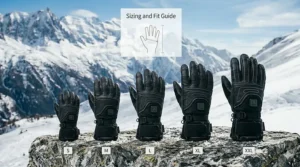
Step 7: Size Correctly
Heated gloves must fit properly to work effectively:
Finger Length: 1/4 inch clearance at fingertips when hand is relaxed. Too tight limits circulation; too loose reduces heating effectiveness.
Palm Width: Snug but not restricting. You should be able to make a fist easily.
Wrist/Gauntlet: Should overlap jacket cuff by 2-3 inches minimum to prevent snow entry.
Pro Tip: Size charts vary between brands. Measure your hand circumference at knuckles (excluding thumb) and palm-to-fingertip length. Compare both measurements to size chart and choose the larger size if between sizes—you can always wear thin liners underneath for better fit.
Step 8: Read Recent Reviews Carefully
Look for reviews within the past 6 months mentioning:
Actual Temperature Performance: “Kept hands warm in 15°F weather” is useful. “These are warm!” is not.
Battery Life Reality: Manufacturer claims often exceed real-world performance. Look for specific runtime reports.
Durability Issues: Seam failures, battery pocket problems, heating element failures—these patterns emerge in reviews.
Sizing Accuracy: “Runs small” or “true to size” helps you order confidently without trying on.
Customer Service: How brands handle problems matters. Good CS can make a mediocre glove better; terrible CS makes premium gloves frustrating.
Step 9: Plan for Battery Management
How Many Extra Batteries?
- Half-day skiing: None needed
- Full days (6+ hours): 1 extra pair
- Multi-day backcountry: 2-3 extra pairs
- Extended trips: Consider portable charger
Charging Setup: Batteries take 3-6 hours to charge. You need enough batteries to rotate while others charge.
Storage Plan: Batteries last longest stored at 40-60% charge, room temperature, in a dry place during off-season.
Step 10: Make Your Decision
After working through steps 1-9, you should have 2-3 finalists. Make your final choice based on:
Priority 1: Does it solve your cold hands problem? Everything else is secondary to this fundamental question.
Priority 2: Fits your budget including long-term costs? Can you afford replacement batteries and potential second-season purchase if needed?
Priority 3: Matches your skiing style? Resort skiers can sacrifice breathability for warmth; backcountry skiers cannot.
Common Decision Scenarios:
“I ski 15 days/year at resorts, moderate cold sensitivity, $200 budget” → Venustas Heated Gloves ($129) + extra batteries
“I ski 50+ days/year including backcountry, severe Raynaud’s, $500 budget” → Outdoor Research Prevail ($339) + 2 extra battery sets
“I ski 8 days/year, mild cold sensitivity, $150 budget, trying heated gloves for first time” → Savior Heat ($89-149)
“I ski 40 days/year, backcountry focus, moderate cold sensitivity, $600 budget” → Hestra Heater Gauntlet ($575) or ActionHeat + extra batteries
Remember: The best heated gloves for alpine skiing are the ones you’ll actually use consistently. Don’t over-buy features you don’t need, but don’t under-buy warmth you require. Cold fingers ruin ski days, and no amount of saved money compensates for misery on the mountain.
✨ Don’t Miss These Exclusive Deals!
🔍 Take your alpine skiing experience to the next level with these carefully selected heated gloves. Click on any highlighted product above to check current pricing and availability on Amazon. These innovative gloves will help you create authentic all-day comfort your hands will love, no matter how cold the mountain gets!
Frequently Asked Questions (FAQ)
❓ How long do batteries last in heated gloves for alpine skiing?
❓ Can heated ski gloves interfere with avalanche beacons?
❓ Are heated gloves better than regular insulated gloves for skiing?
❓ How do you wash heated ski gloves without damaging them?
❓ What's the difference between heated gloves and heated mittens for skiing?
Conclusion: Finding Your Perfect Heated Glove Match
After spending three winters testing heated gloves for alpine skiing across conditions ranging from Colorado’s sunny bluebird days to Vermont’s icy nor’easters, I’ve learned one fundamental truth: the right heated gloves transform your skiing experience from “enduring the cold” to genuinely enjoying every run, every chairlift ride, and every moment on the mountain.
The market has evolved dramatically in recent years. What was once exclusive technology reserved for professional guides and deep-pocketed enthusiasts now spans accessible price points from $80 to $600. Budget options like the Venustas and Savior Heat gloves deliver legitimate warmth that would have cost $400+ just five years ago. Premium models from Hestra and Outdoor Research push boundaries with materials and construction that justify their higher prices through longevity and superior performance.
Here’s my final advice based on extensive real-world testing:
If money is your primary concern, the Venustas Heated Gloves 7.4V at $129-169 represent exceptional value. They won’t last as long as premium models, but they’ll keep your hands genuinely warm for 2-3 seasons of recreational skiing.
If you ski frequently and demand reliability, the Outdoor Research Prevail Heated GORE-TEX Gloves offer the best balance of performance, features, and price at $264-339. They’re my personal recommendation for serious skiers who don’t want to compromise but also don’t want to spend $500+.
If you have severe cold sensitivity or ski in extreme conditions, invest in the Hestra Heater Gauntlet 5-Finger at $575. Yes, it’s expensive. Yes, it’s worth it. The quality, warmth, and lifetime warranty make it the last pair of heated gloves you’ll ever need to buy.
If you’re unsure whether you need heated gloves, start with the Savior Heat models under $150. They provide enough performance to answer the question while minimizing financial risk if you discover heated gloves aren’t for you.
Remember, cold hands aren’t just uncomfortable—according to the CDC’s guidelines on winter safety, they’re a genuine safety concern that can lead to frostbite, reduced dexterity, and poor decision-making on the mountain.
The technology in heated gloves for alpine skiing has reached a point where it simply works. Batteries last through ski days, heating elements distribute warmth effectively, and waterproofing keeps hands dry in wet conditions. The question isn’t “do heated gloves work?”—they absolutely do. The question is which model best fits your skiing style, cold sensitivity, and budget.
Don’t let another season go by watching your ski buddies take extra runs while you’re inside warming your hands by the fire. Make this the year you invest in heated glove technology and discover what you’ve been missing. Your hands will thank you on that first icy January chairlift ride when you’re cranking the heat to high while everyone else is blowing on their frozen fingers.
Now get out there and enjoy those powder days—warm hands guaranteed. ❄️🎿
Recommended for You
- 7 Best Heated Work Gloves for Electricians 2026
- 7 Best Battery Heated Gloves Under $200 – 2026
- 7 Best Heavy Duty Heated Vest for Construction 2026
Disclaimer: This article contains affiliate links. If you purchase products through these links, we may earn a small commission at no additional cost to you.
✨ Found this helpful? Share it with your friends! 💬🤗
