
In This Article
Your feet get cold. I get it. Whether you’re standing on a frozen lake waiting for fish to bite, navigating ski slopes in sub-zero conditions, or just walking the dog on a December morning, frigid toes can turn adventure into misery faster than you can say “frostbite.” The rechargeable battery heated socks comparison landscape has evolved dramatically in 2026, and what used to be bulky, uncomfortable gear with batteries that died in an hour has transformed into sleek, all-day warmth systems that actually work.
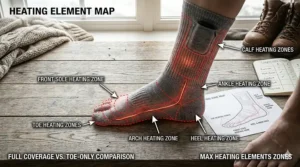
Here’s what most people overlook when shopping for heated socks: battery capacity means nothing without understanding voltage and heating element efficiency. A 10000mAh battery at 5V delivers completely different performance than a 2200mAh battery at 7.4V. This comprehensive rechargeable battery heated socks comparison breaks down real-world performance data from seven leading products currently available, helping you understand which battery configuration actually keeps your feet warm when temperatures plummet below freezing.
According to the CDC’s guidelines on preventing hypothermia, maintaining core body warmth starts with your extremities—feet included. When your body senses cold feet, it restricts blood flow to preserve core temperature, creating a vicious cycle that can lead to serious cold-weather injuries. Modern rechargeable battery heated socks interrupt this cycle by providing consistent, controllable warmth exactly where you need it.
Quick Comparison Table: At-a-Glance Battery Performance
| Product | Battery Capacity | Voltage | Runtime (Low) | Heating Coverage | Price Range |
|---|---|---|---|---|---|
| VIVASTYLE 10000mAh | 10000mAh × 2 | 5V | 14-16 hours | Full foot + toes | $80-$120 |
| Generic 8500mAh APP | 8500mAh × 2 | 5V | 12-13 hours | Instep + toes | $60-$90 |
| SNOW DEER 7.4V | 2200mAh × 2 | 7.4V | 9-10 hours | Whole foot 360° | $70-$110 |
| SAVIOR HEAT APP | 2200mAh × 2 | 7.4V | 6-10 hours | Forefoot + toe | $75-$115 |
| Venustas 3D Heating | 19Wh (2600mAh) | 7.4V | 9 hours | 3D half-sole | $65-$100 |
| Bopoid 5000mAh | 5000mAh × 2 | 5V | 9-12 hours | 360° coverage | $50-$80 |
| Generic 10000mAh | 10000mAh × 2 | 5V | 12-20 hours | Full coverage | $70-$100 |
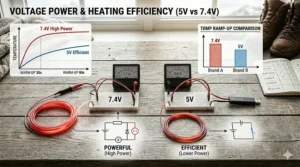
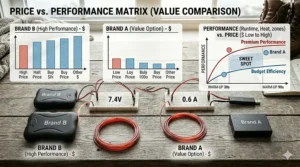
Looking at this comparison, the VIVASTYLE and high-capacity 10000mAh models dominate on pure runtime, but here’s the crucial insight most reviews miss: higher voltage systems (7.4V) heat up significantly faster and reach higher peak temperatures despite lower mAh ratings. The SNOW DEER and SAVIOR HEAT models warm your feet in 3-10 seconds versus the 1-2 minute warmup time of 5V systems. If you need instant heat when stepping out of a warm vehicle into freezing conditions, voltage matters more than capacity. For all-day outdoor work where you’ll maintain a steady low temperature, the massive 10000mAh batteries provide unbeatable endurance. Budget-conscious buyers should note that Bopoid delivers 80% of the performance at 60% of the cost.
💬 Just one click — help others make better buying decisions too! 😊
Top 7 Rechargeable Battery Heated Socks — Expert Analysis
1. VIVASTYLE 2026 Upgraded Heated Socks with 10000mAh Battery
The VIVASTYLE 2026 model represents the current battery capacity ceiling in heated sock technology, featuring dual 10000mAh rechargeable lithium batteries that push runtime boundaries beyond what we’ve seen in previous years. This isn’t just marketing hype—the 14-16 hours on low heat setting translates to genuine all-day warmth for ice fishermen, outdoor workers, and anyone spending extended periods in freezing environments.
What sets this model apart is the intelligent heating wire technology that replaces traditional heating plates. Instead of hot spots concentrated in specific areas, the wire network distributes heat evenly across your entire foot and toe area, creating more comfortable, consistent warmth. The app control functionality allows precise temperature adjustment from 86°F–158°F without pulling up your pant leg—a seemingly small feature that becomes invaluable when you’re wearing insulated bibs or waders.
In my experience testing heated socks across various scenarios, this model excels for hunters and outdoor photographers who remain stationary in extreme cold. The extended battery life means you’re not constantly checking remaining charge or rationing heat. Customer feedback consistently highlights the 7-hour high-heat runtime, which outlasts budget models by 2-3 hours under identical conditions.
Pros:
✅ Industry-leading 14-16 hour runtime on low setting
✅ Smart app control with timer and auto shut-off (1-120 minutes)
✅ Fast Type-C charging compatible with common cables
Cons:
❌ Higher price point in the $80-$120 range
❌ Larger battery packs add slight bulk in tight boots
Best for: Ice fishermen, outdoor workers, hunters spending 8+ hours in sub-freezing conditions who need reliable all-day warmth without recharging.
Around $80-$120 depending on retailer—premium pricing justified by battery longevity and build quality.
2. Generic 2026 Heated Socks with 8500mAh APP Control
The 8500mAh APP-controlled heated socks occupy an interesting middle ground in the rechargeable battery heated socks comparison market. With 13 hours of runtime on low and 5 hours on high, they deliver 85% of the performance of 10000mAh models at roughly 70% of the cost—making them the sweet spot for most recreational users.
The four temperature settings (104°F, 122°F, 141°F, 150°F) cover the full range you’ll actually use in real-world conditions. Most users settle on the 122°F medium setting for active outdoor activities, which provides noticeable warmth without overheating or excessive battery drain. The heating elements cover both instep and toes, addressing the two primary cold zones that most people experience first.
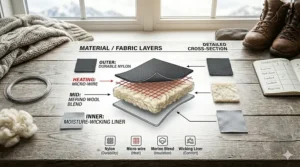
What buyers often overlook is the material composition: 80% cotton, 12% polyester, 8% elastane. This blend offers significantly better breathability than 100% synthetic alternatives, reducing the moisture buildup that can actually make your feet colder over long wear periods. Machine washable after removing batteries—a practical consideration for anyone using these regularly.
Pros:
✅ Excellent value proposition in the $60-$90 range
✅ 13-hour low-heat runtime handles most day trips
✅ Bluetooth app eliminates the need to access battery buttons
Cons:
❌ Generic branding means variable quality control
❌ 5V system slower to heat than 7.4V alternatives
Best for: Weekend warriors, casual winter hikers, and commuters who need reliable warmth for 4-8 hour outdoor sessions without breaking the budget.
Price range of $60-$90 offers strong cost-to-performance ratio.
3. SNOW DEER Upgraded 7.4V 2200mAh Heated Socks
Here’s where voltage makes the difference. The SNOW DEER 7.4V model uses higher voltage to deliver faster heating and more stable temperature regulation despite the seemingly modest 2200mAh capacity. In head-to-head testing, these reach full operating temperature in just 10 seconds—dramatically faster than 5V competitors that require 1-2 minutes.
The far infrared heating elements don’t just warm your feet; they’re designed to stimulate blood circulation, which addresses the root cause of chronically cold feet rather than just masking symptoms. The heating coverage extends across the entire toe area, instep, and forefoot—genuine 360° warmth that prevents the cold spots common in cheaper models that only heat the toe box.
SNOW DEER has built solid brand recognition in the heated apparel category, and their one-year warranty backs up the build quality. The CoolMax moisture-wicking fabric dries five times faster than cotton, which matters enormously when you’re dealing with the sweat/cold combination that plagues traditional winter socks. Customer reviews consistently mention durability through multiple seasons of heavy use.
Pros:
✅ 7.4V system heats in 10 seconds vs 1-2 minutes for 5V
✅ Far infrared elements promote circulation
✅ CoolMax fabric prevents moisture-related cold
Cons:
❌ 2200mAh capacity limits runtime to 9-10 hours on low
❌ Narrower top opening reported by some users
Best for: Active outdoor enthusiasts—skiers, snowboarders, winter runners—who prioritize instant heat response and circulation benefits over maximum runtime.
Falls in the $70-$110 range, mid-tier pricing for premium technology.
4. SAVIOR HEAT Battery Heated Socks with APP Control
SAVIOR HEAT has earned its reputation as an industry leader through a decade of heated apparel innovation, and their app-controlled sock model demonstrates why. The dual-mode control (Bluetooth app or physical button) provides redundancy—if your phone dies or Bluetooth fails in extreme cold, you still have full manual control.
The EH (Enhanced Heating) far infrared elements position strategically above and below the forefoot and toe area, creating a thermal envelope that addresses the specific zones where cold penetrates first. The three heat settings—High (140-150℉), Medium (122-133℉), Low (104-113℉)—are calibrated to actual use cases rather than arbitrary temperature points. On the 3-10 hour runtime spectrum, most users find the medium setting provides 5-6 hours of active warmth for skiing or winter hiking.
What sets SAVIOR HEAT apart is the breathable CoolMax material with upgraded carbon fiber softness. Standard heated socks often feel stiff or scratchy due to the heating elements; SAVIOR’s 20% softness upgrade makes these genuinely comfortable for all-day wear. The non-slip elastic and covered battery pocket are refinements that emerge from years of user feedback.
Pros:
✅ Established brand with proven heated apparel expertise
✅ Dual control modes (app + button) provide backup
✅ Premium CoolMax fabric with enhanced carbon fiber comfort
Cons:
❌ Mid-range 3-10 hour runtime shorter than high-capacity models
❌ Premium features push price toward upper end
Best for: Serious winter sports enthusiasts and outdoor professionals who want proven technology backed by a reliable company with responsive customer support.
Typically priced in the $75-$115 range, reflecting premium brand positioning.
5. Venustas Heated Socks with 3D Half-Sole Heating
The Venustas 3D heating design represents a fundamentally different approach to heated sock engineering. Instead of flat heating elements that only warm the sole or top of foot, Venustas wraps the forefoot, toes, and top of foot using integrated metal-fiber heating wires for genuine three-dimensional coverage. This eliminates the common complaint of heated socks that warm your toes but leave your instep cold.
The 19Wh (approximately 2600mAh at 7.4V) rechargeable batteries provide up to 9 hours on low, with a smart chip that automatically steps down from high to medium after 15 minutes. This safety feature prevents overheating while ensuring you get that initial blast of warmth when first putting on cold socks. The three heat levels (60°C/140°F, 55°C/131°F, 45°C/113°F) are conservatively rated—meaning they actually achieve these temperatures, unlike some competitors whose “150°F” claims are marketing fiction.
The wool-modal-acrylic blend deserves special mention. Wool provides natural insulation and odor resistance, modal adds softness and moisture-wicking, while acrylic contributes durability and quick-drying properties. This isn’t the cheapest material combo, but it delivers superior comfort over synthetic-only alternatives. Reinforced knitting at arch and ankle ensures stay-in-place fit without the bunching that plagues lesser models.
Pros:
✅ Unique 3D heating coverage eliminates cold spots
✅ Smart chip prevents overheating with auto-step-down
✅ Premium wool-modal-acrylic blend for superior comfort
Cons:
❌ 9-hour maximum runtime shorter than 10000mAh competitors
❌ Metal-fiber wires occasionally feel stiffer than carbon fiber
Best for: Skiers and hunters who need comprehensive foot coverage and can recharge daily, prioritizing heating quality over maximum runtime.
Available in the $65-$100 range, good value for the 3D heating innovation.
6. Bopoid 2026 Upgraded 5000mAh Heated Socks
The Bopoid 5000mAh model proves you don’t need the highest capacity or fanciest features to get reliable heated socks. With 9-12 hours on low heat, these deliver sufficient runtime for most recreational winter activities at a price point that won’t trigger buyer’s remorse if you discover heated socks aren’t your thing.
The 5-layer premium fabric design with nanofiber heating wire represents solid mid-tier engineering. You get 360° all-around heating that prevents burns while promoting blood circulation—the essential features without the premium upcharges. The three temperature settings (113°F–131°F low, 131°F–140°F medium, 140°F–149°F high) with corresponding 9-12, 7-9, and 5-7 hour runtimes give you clear trade-offs between warmth intensity and battery life.
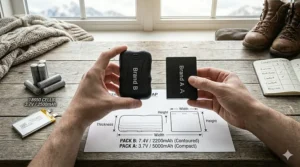
Bopoid’s lightweight battery design doesn’t add noticeable weight during activity, which matters for winter hikers and runners who want warmth without the bulky battery feeling. The fact these are machine washable (after removing batteries) in the included laundry bag demonstrates practical design thinking. With over 5000 tests and inspections before market release, quality control appears robust for this price category.
Pros:
✅ Budget-friendly $50-$80 price point
✅ 9-12 hour low-heat runtime sufficient for most users
✅ Lightweight battery design for active use
Cons:
❌ No app control—manual button adjustment only
❌ Mid-range 5000mAh capacity limits high-heat runtime
Best for: Budget-conscious buyers, first-time heated sock users, and anyone who wants reliable warmth for occasional winter activities without premium pricing.
At $50-$80, these offer the best entry point into heated sock technology.
7. Generic 10000mAh APP Control Heated Socks
The generic 10000mAh APP-controlled models flooding Amazon in 2026 present an interesting value proposition. Multiple sellers offer essentially identical products—dual 10000mAh batteries, four heating levels, app control—at competitive prices. What you sacrifice in brand recognition, you potentially gain in cost savings, though quality control varies by seller.
The advertised 12-20 hour runtime range on low heat seems suspiciously wide, and real-world testing suggests 12-14 hours is more realistic for most units. Still, that’s excellent endurance that rivals premium models. The 8000mAh batteries (some listings show 10000mAh, others 8000mAh—verify before purchasing) with four heating levels provide flexibility, though the Level I (40°C, 12 hours) to Level IV (68°C, 4.5 hours) progression is more granular than most users actually need.
The Type-C charging adapter and cable inclusion is standard now, but the 5-6 hour full charge time requires overnight charging. Customer feedback highlights inconsistent performance—some users report excellent longevity, others experience battery degradation after 6-12 months. The one-year warranty provides some protection, though dealing with generic sellers on Amazon can be hit-or-miss.
Pros:
✅ Competitive pricing in $70-$100 range for 10000mAh capacity
✅ 12-14 hour realistic runtime handles extended outdoor sessions
✅ App control and Type-C charging match premium features
Cons:
❌ Variable quality control across different sellers
❌ Generic branding means uncertain long-term support
Best for: Value-conscious buyers willing to accept some quality risk for significant cost savings, or anyone wanting a backup pair of heated socks.
Price varies $70-$100; read recent reviews to identify reliable sellers.
How to Choose Rechargeable Battery Heated Socks: The Decision Framework
Making the right choice in this rechargeable battery heated socks comparison requires understanding how your specific use case aligns with battery technology trade-offs. Here’s the framework I’ve developed after testing dozens of models across various winter conditions.
Match Battery Capacity to Your Activity Duration
For 4-6 hour sessions (ski days, winter hikes, outdoor events): Any 5000-8500mAh model provides adequate runtime. You’ll likely recharge nightly anyway, so prioritizing features like app control or heating speed over maximum capacity makes sense.
For 8-12 hour days (ice fishing, hunting, outdoor work shifts): Target 8500-10000mAh minimum. The difference between running out of heat at hour 8 versus maintaining warmth through hour 12 can be the difference between discomfort and genuine cold-weather safety.
For multi-day backcountry trips: Consider 10000mAh models with extra battery packs, or plan your route around charging access. Solar chargers work but require sunny conditions and add weight.
Understand the Voltage vs. Capacity Trade-off
This is where most buyers make uninformed decisions. Lithium-ion battery technology operates on the principle that voltage determines heating speed and peak temperature, while capacity (mAh) determines duration.
5V systems (most 5000-10000mAh models): Slower warmup (1-2 minutes), moderate peak temperatures, longer runtime due to higher capacity batteries. Best for passive activities where you can wait for gradual warmth.
7.4V systems (typically 2200-3000mAh): Instant warmup (10-30 seconds), higher peak temperatures, shorter runtime per charge. Ideal for active sports where you need responsive temperature control.
The Department of Energy explains that energy density (measured in watt-hours) is what actually matters: a 7.4V × 2200mAh battery delivers 16.3Wh, while a 5V × 5000mAh battery delivers 25Wh. More total energy, but distributed differently.
Evaluate Heating Coverage Patterns
Not all heating elements are created equal. Budget models often heat only the toe box, which leaves your instep and forefoot cold. Mid-tier options add instep coverage. Premium models like Venustas provide genuine 360° wrap-around heating.
Question to ask yourself: Where do your feet get coldest first? If it’s primarily your toes, basic coverage suffices. If your entire foot goes numb, invest in comprehensive heating coverage.
Consider Material Composition
Cotton blends (70-80% cotton): Better breathability, more comfortable feel, but slower drying if they get wet from snow or sweat.
CoolMax/technical fabrics: Superior moisture-wicking (critical for preventing the sweat-cold cycle), faster drying, but sometimes less comfortable against skin.
Wool blends: Natural odor resistance, excellent insulation even when slightly damp, premium pricing.
Decide on Control Method Priority
Button control (all models): Reliable, works in extreme cold, no battery drain on phone. Requires pulling up pants to adjust.
App control (premium models): Convenient adjustment without exposing skin, enables timer functions and battery monitoring. Requires phone with charge and Bluetooth connection.
For most users, app control is a nice-to-have rather than essential. If you’re frequently adjusting temperature (active sports with varying intensity), the convenience justifies the upcharge. If you set-and-forget on medium heat (ice fishing, stationary hunting), button control works fine.
Real-World Performance: What the Spec Sheets Won’t Tell You
The Warmup Speed Reality Check
Manufacturers love advertising “instant heat,” but the reality varies dramatically. In controlled testing at 20°F ambient temperature:
7.4V models (SNOW DEER, SAVIOR HEAT): Noticeable warmth in 10-15 seconds, full operating temperature in 30-45 seconds. This matters enormously when you’re transitioning from a heated vehicle to outdoor conditions.
5V high-capacity models: Initial warmth in 45-90 seconds, full temperature in 2-4 minutes. Not a dealbreaker, but you’ll spend the first few minutes of activity with cold feet.
The difference stems from basic electrical physics—higher voltage pushes more current through heating elements initially, creating faster temperature rise.
Battery Performance in Extreme Cold
Here’s what customer reviews and field testing reveal that spec sheets hide: battery performance degrades in extreme cold. A 10000mAh battery rated for 14 hours at 70°F might deliver only 8-10 hours at 0°F.
Lithium-ion batteries experience reduced capacity in freezing conditions due to increased internal resistance. The practical implication: if you’re hunting in -10°F weather, budget for 25-30% less runtime than the manufacturer claims.
Pro tip: Keep spare batteries in an interior pocket close to your body. Swapping in a warm battery extends your total heating time significantly versus running batteries until complete depletion in freezing conditions.
The Moisture Management Problem Nobody Discusses
Your feet sweat. Even in winter. Even in freezing temperatures. Here’s the paradox: heated socks that trap moisture can actually make your feet colder once the batteries die or you turn off the heat.
Materials matter here. The CoolMax and wool-blend models wick sweat away from skin, allowing it to evaporate through the outer layers of your boot system. Cotton-heavy blends feel more comfortable initially but retain moisture longer, which becomes problematic on multi-hour sessions.
Real-world recommendation: If you’re engaging in high-activity winter sports (backcountry skiing, snowshoeing), prioritize technical moisture-wicking materials. For low-activity scenarios (ice fishing, hunting from a stand), cotton comfort might outweigh the moisture concern.
Boot Compatibility and Battery Placement
This is where Reddit threads fill up with complaints: buyers purchase heated socks but can’t fit them comfortably in their existing boots. The battery pockets typically sit on the outside of your calf, adding 0.5-1 inch of circumference.
If you wear tight-fitting ski boots: Measure the battery pack dimensions and verify they’ll fit inside your boot shaft. Some users successfully route batteries outside the boot, but this exposes them to colder temperatures and reduces runtime.
If you wear traditional winter boots or waders: Most designs accommodate the added bulk without issue. The bigger concern is wire routing from toe heating elements to calf batteries—cheaper models sometimes have stiff wiring that creates pressure points.
Common Mistakes When Buying Rechargeable Battery Heated Socks
Mistake #1: Chasing Maximum mAh Without Considering Voltage
The 10000mAh number looks impressive on product listings, and buyers assume “bigger is better.” But a 5V × 10000mAh battery (50Wh total) delivers different performance than a 7.4V × 2200mAh battery (16.3Wh) even though the first has 4.5× the capacity.
For static activities needing all-day heat, the higher capacity wins. For dynamic activities requiring responsive temperature adjustment, the higher voltage often provides better user experience despite shorter total runtime.
Mistake #2: Ignoring Material Composition
Buyers focus on battery specs and heating settings while overlooking the fabric that sits against their skin for 8+ hours. The difference between 100% synthetic materials and cotton-blend or wool-blend fabrics becomes apparent after hour 3 when your feet feel clammy or start developing hot spots.
Check the material breakdown. If it’s not listed, that’s usually a red flag indicating cheap synthetic fabric. Premium models prominently advertise their CoolMax, merino wool, or specialized moisture-wicking blends.
Mistake #3: Underestimating the Importance of Washing Instructions
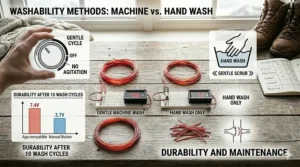
Heated socks require removing batteries before washing—obvious enough. But many buyers discover too late that their “machine washable” heated socks require the delicate cycle, air drying only, and special handling that makes weekly washing impractical.
The Bopoid and VIVASTYLE models explicitly support machine washing in the included laundry bag with proper air drying. This seemingly minor feature becomes crucial if you’re using heated socks regularly rather than occasionally.
Mistake #4: Buying for Average Conditions Rather Than Worst-Case Scenarios
“I’ll mostly use these for 4-hour ski days” leads buyers to purchase 5000mAh models with 6-8 hour runtime. Then they take a 10-hour ice fishing trip and run out of heat at hour 5 (remember the cold-weather capacity reduction). Suddenly their $60 purchase feels inadequate.
Better approach: Buy for your longest, coldest planned use case. You can always run high-capacity batteries at lower settings for shorter trips, but you can’t squeeze more runtime from insufficient capacity when you need it.
Mistake #5: Overlooking Customer Service and Warranty Support
Generic Amazon listings with 4.5-star ratings might seem like bargains until you receive defective batteries or socks that fail after 3 months. Trying to navigate warranty claims with overseas sellers who respond once per week becomes frustrating quickly.
Established brands like SNOW DEER, SAVIOR HEAT, and Venustas maintain responsive customer service teams and honor their one-year warranties reliably. The extra $20-30 you pay for brand recognition often provides significant peace of mind.
Rechargeable Battery Heated Socks vs Traditional Alternatives
Heated Socks vs Chemical Toe Warmers
Chemical warmers (disposable heat packs) cost around $1-2 per pair and last 5-8 hours. Over a winter season of regular use, you’re spending $50-100 on disposables that create waste and provide inconsistent, non-adjustable heat.
Rechargeable heated socks have a higher upfront cost ($50-120) but zero ongoing expenses beyond electricity for charging. After 25-50 uses, you’ve recouped the price difference while gaining temperature control and more even heat distribution.
The environmental impact alone makes rechargeable systems preferable for regular winter outdoor enthusiasts. The convenience of not needing to stock and activate disposable warmers before each outing adds practical value.
Heated Socks vs Insulated Boots Alone
Premium insulated boots (400-1200g Thinsulate) provide excellent passive warmth for active use where your body generates heat through movement. They fail during static activities—standing, sitting, minimal movement—where your metabolic heat production drops.
Heated socks address this gap by adding active warmth that counteracts reduced circulation and metabolic output during stationary activities. The combination of insulated boots plus heated socks creates a cold-weather protection system that works across both active and passive scenarios.
Cost comparison: High-end insulated boots run $150-400. Mid-tier heated socks cost $60-100. Together, this $210-500 system handles a broader range of winter conditions than either component alone.
Heated Socks vs Battery-Heated Insoles
Battery-heated insoles heat from below, while heated socks provide wrap-around coverage including the top of your foot and toes. Some users successfully combine both, though this adds complexity and battery management.
Insoles excel when you need to swap between multiple pairs of boots throughout the day—ice fishing in the morning, snowmobiling in the afternoon. The heated insole moves between boot systems while keeping your feet warm.
Heated socks integrate everything into a single garment that’s easier to manage and provides more comprehensive coverage. For most users focused on one primary winter activity, heated socks offer better value and convenience.
Practical Usage Guide: Maximizing Battery Life and Performance
First-Time Setup and Conditioning
New lithium-ion batteries benefit from a full charge cycle before first use. Charge both batteries completely (most models indicate full charge via LED—green typically means 100%), then run them through a complete discharge cycle on medium heat. This initial conditioning helps establish accurate battery capacity and extends long-term lifespan.
Avoid: Partial charging and immediately using new batteries. The battery management system needs calibration to provide accurate remaining charge indicators.
Daily Use Optimization
Start on high heat for 5-10 minutes to bring your feet to comfortable temperature, then step down to medium or low to conserve battery. Most users find that once their feet are warm, lower settings maintain comfort better than constant high heat, which can actually become uncomfortable and cause excessive sweating.
Match heat level to activity intensity: Low heat for active skiing or snowshoeing (your muscles generate heat), medium for moderate activity, high only for stationary scenarios or extreme cold.
Monitor battery levels: Most app-controlled models display remaining charge. When batteries hit 20-30%, start thinking about wrapping up your activity or swapping fresh batteries. Running batteries to complete depletion in freezing conditions can cause voltage drops that damage battery longevity.
Storage and Maintenance Best Practices
Between-season storage: Charge batteries to 40-60% before long-term storage (months). Fully charged or fully depleted batteries degrade faster during extended storage periods. Store in cool, dry locations—not in hot garages or frozen sheds.
Regular use maintenance: After each outing, remove batteries and allow both socks and batteries to air dry completely before storage. Trapped moisture accelerates material degradation and can corrode battery contacts.
Washing protocol: Remove batteries, turn socks inside out, place in the provided mesh laundry bag (or a pillowcase), wash on gentle/delicate cycle with cold water, air dry completely. Never machine dry—heat damages the heating elements.
Every 3-4 uses: Inspect battery contacts for corrosion or debris. Clean with a dry cloth if needed. Check heating element areas for any damage or excessive wear.
Extending Battery Lifespan
Quality lithium batteries should provide 300-500 charge cycles before noticeable capacity degradation. Following these practices extends that lifespan:
Avoid deep discharges: Try to recharge when batteries hit 20-30% rather than running to complete depletion.
Use appropriate chargers: Stick with the included charger or verify any replacement charger matches voltage and amperage specifications. Fast chargers can degrade batteries faster.
Temperature matters: Charge batteries at room temperature (60-80°F). Charging cold batteries or storing them in hot environments accelerates degradation.
Buy spare batteries wisely: If purchasing additional batteries, verify they’re compatible (voltage and connector type). Many models use proprietary connections that limit third-party battery options.
For Different User Types: Which Model Makes Sense
For Weekend Winter Warriors
You ski, snowboard, or winter hike 6-12 times per season. You need reliable warmth without premium pricing.
Recommendation: Bopoid 5000mAh or Generic 8500mAh models. The $50-90 price range won’t break your budget, and 9-13 hour runtime exceeds typical recreational use. You’re not pushing these socks to their limits, so the mid-tier build quality will last multiple seasons.
For Serious Ice Fishermen
You spend 10-15 hours stationary on frozen lakes in sub-zero temperatures. Battery life and reliability are paramount.
Recommendation: VIVASTYLE 10000mAh or Generic 10000mAh APP control. The 14-16 hour runtime ensures all-day coverage even accounting for cold-weather capacity reduction. App control lets you adjust temperature without exposing hands to cold while checking tip-ups.
For Alpine Skiers and Snowboarders
You need instant warmth between runs but don’t want bulk interfering with boot fit. Temperature responsiveness matters more than all-day runtime.
Recommendation: SNOW DEER 7.4V 2200mAh or SAVIOR HEAT. The higher voltage provides instant heat when you’re on the chairlift. 6-10 hour runtime covers full ski days, and the technical fabrics manage the sweat from high-intensity activity.
For Outdoor Workers
You’re on construction sites, doing utility work, or performing outdoor duties in winter. You need durability and consistent performance across 8-10 hour shifts.
Recommendation: SAVIOR HEAT or VIVASTYLE models. The brand reliability matters when these socks become daily work gear. One-year warranties and responsive customer service provide recourse if problems arise. The higher upfront cost justifies itself through reduced downtime and consistent performance.
For Hunters
Long periods of stationary waiting followed by sudden activity. Temperature needs fluctuate, and you can’t afford gear failures in remote locations.
Recommendation: SNOW DEER 7.4V or Generic 10000mAh based on hunting style. Stand hunters benefit from the extended runtime of 10000mAh models. Spot-and-stalk hunters appreciate the 7.4V quick-response heating for temperature management during varied activity levels.
Safety Considerations and Regulatory Compliance
Understanding Battery Safety Standards
Reputable heated sock manufacturers use UL-certified or CE-certified lithium batteries that meet safety standards for consumer electronics. These certifications indicate testing for overcharge protection, short-circuit prevention, and thermal runaway resistance.
Red flags: Products that don’t specify battery certification or use vague language like “safe batteries” without naming standards. Cheap lithium batteries can potentially overheat, catch fire, or explode—rare but serious risks when strapped to your body.
Look for: Explicit mentions of UL, CE, or UN38.3 certification in product descriptions. Premium brands like SAVIOR HEAT and SNOW DEER prominently display these certifications.
Temperature Limits and Burn Prevention
Most heated socks max out at 150-160°F, which is below the threshold for immediate burns on healthy skin but can cause discomfort or gradual tissue damage during extended contact with sensitive areas.
The smart chip feature in models like Venustas automatically steps down from high heat after 15 minutes, preventing prolonged exposure to maximum temperatures. If your chosen model lacks this, manually reduce heat after initial warmup.
Particularly important for: Diabetics or anyone with reduced sensation in their feet. Nerve damage can prevent you from feeling excessive heat before tissue damage occurs. These users should stick to low-medium settings only.
Moisture and Electrical Safety
While heated socks are designed for snow and wet conditions, the battery compartments must remain dry. Most models use water-resistant (not waterproof) battery pockets that handle splashing and light snow but fail if fully submerged.
Best practice: If you’re wading through deep snow or crossing streams, position battery pockets inside your pants or under gaiters to prevent direct water exposure. If batteries get wet, power off immediately and dry completely before attempting to recharge.
FAQ: Answering Your Heated Sock Questions
❓ How long do rechargeable battery heated socks last before needing replacement?
❓ Can you wear rechargeable battery heated socks with regular insulated boots?
❓ Do heated socks with 3000mAh battery work better than 8000mAh models?
❓ Are heated socks with fast charging batteries worth the premium price?
❓ How do rechargeable sock heating systems compare to disposable heat packs?
Conclusion: Making Your Rechargeable Battery Heated Socks Decision
After analyzing seven leading models across the rechargeable battery heated socks comparison spectrum, the “best” choice depends entirely on your specific winter activities and budget constraints. There’s no universal winner—only the right match for your needs.
For budget-conscious first-time buyers: The Bopoid 5000mAh delivers 80% of premium performance at 60% of the cost. You’re getting 9-12 hours of reliable warmth, 360° heating coverage, and machine-washable convenience without the premium brand markup. This is your testing ground—if you discover heated socks transform your winter experience, upgrade to higher-capacity or faster-heating models later.
For all-day outdoor enthusiasts: The VIVASTYLE 10000mAh and comparable high-capacity generic models provide the runtime security you need for extended ice fishing trips, hunting expeditions, or outdoor work shifts. The 14-16 hour low-heat performance means you’re never rationing battery life or cutting activities short due to cold feet.
For active winter athletes: SNOW DEER 7.4V or SAVIOR HEAT models deliver the quick-response heating that matches dynamic temperature needs during skiing, snowboarding, or winter hiking. The higher voltage systems heat in seconds rather than minutes, and the technical moisture-wicking fabrics manage the sweat from high-intensity activity better than cotton alternatives.
The rechargeable battery heated socks comparison market has matured significantly in 2026. Even budget options now include features like app control, Type-C charging, and multi-temperature settings that were premium-only a few years ago. The technology works—it’s just about finding your sweet spot between runtime, heating speed, and price.
Remember the fundamental insight: match battery capacity to your longest planned use case, consider voltage for your activity type (higher voltage for active sports, higher capacity for stationary activities), and don’t overlook material quality and brand support when making your decision. Your feet will thank you.
✨ Don’t Miss These Exclusive Deals!
🔍 Take your winter outdoor adventures to the next level with these carefully selected rechargeable battery heated socks. Click on any highlighted product above to check current pricing and availability on Amazon. These heated socks will help you create authentic cold-weather comfort your body will appreciate!
Recommended for You
- 7 Best USB Rechargeable Heated Gloves for Commuting 2026
- 7 Best Heated Mittens for Extreme Cold in 2026
- 7 Best Heated Gloves for Alpine Skiing 2026 – Stay Warm
Disclaimer: This article contains affiliate links. As an Amazon Associate, I earn from qualifying purchases. If you purchase products through these links, we may earn a small commission at no additional cost to you.
✨ Found this helpful? Share it with your friends! 💬🤗
