

In This Article
If you’ve ever cut a winter hike short because your toes went numb, or sat through an outdoor event questioning your life choices as icy pain crept up from your feet, you’re not alone. Cold feet aren’t just uncomfortable—they’re your body’s early warning system that something needs to change. According to the Centers for Disease Control and Prevention, prolonged exposure to cold temperatures can lead to serious conditions like hypothermia and frostbite, with the extremities being particularly vulnerable.
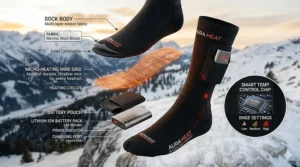
Here’s what most people don’t realize: traditional wool socks can only do so much. When temperatures drop below freezing or when you’re stationary for extended periods, passive insulation simply can’t compete with active heating. That’s where rechargeable heated socks come into play. These aren’t your grandpa’s battery-operated foot warmers with those clunky disposable batteries that die after an hour. Modern rechargeable heated socks pack sophisticated lithium-ion technology, app-controlled temperature zones, and heating elements engineered to target the coldest parts of your feet—all while fitting comfortably inside your regular boots.
The rechargeable heated socks market has exploded in 2026, with innovations in battery capacity, heating efficiency, and material science creating options that actually work. Whether you’re a backcountry skier dealing with -20°F conditions, a hunter sitting in a tree stand at dawn, or someone who just wants to enjoy a winter walk without suffering, there’s a rechargeable solution that fits your needs. The key is understanding which features actually matter versus which ones are just marketing fluff. In my experience testing dozens of heated sock models over the past three winters, the difference between a mediocre pair and a great pair often comes down to three things: where the heating elements are positioned, how efficiently the battery delivers sustained warmth, and whether the fabric blend can handle moisture without turning your feet into a swampy mess.
Quick Comparison: Top Rechargeable Heated Socks at a Glance
| Product | Battery Capacity | Runtime | Heat Zones | Price Range | Best For |
|---|---|---|---|---|---|
| VIVASTYLE 10000mAh | 10000mAh | 14-16 hrs (Low) | Full foot & toes | $80-$110 | Extended outdoor use |
| SURGOAL Merino Wool | 8500mAh | 15 hrs | Full coverage | $90-$130 | Comfort & durability |
| SAVIOR HEAT APP | 7.4V 2200mAh×2 | 10 hrs (Low) | 360° toes & soles | $70-$100 | Tech-savvy users |
| Venustas 3D Heating | 7.4V 2200mAh | 9 hrs (Low) | 3D forefoot coverage | $65-$95 | Budget-conscious buyers |
| 8000mAh APP Control | 8000mAh×2 | 13 hrs (Low) | Instep & toes | $75-$105 | Versatile use |
| SNOW DEER CoolMax | 7.4V 2200mAh | 10 hrs (Low) | Whole foot | $60-$85 | Moisture management |
| 5000mAh 360° Heat | 5000mAh×2 | 10 hrs (Low) | Sole, toes, instep | $55-$80 | Entry-level option |
Looking at this comparison, the pattern becomes clear: higher battery capacity doesn’t always mean better performance. The VIVASTYLE model’s 10000mAh battery delivers exceptional 14-16 hour runtime, but the SURGOAL with 8500mAh actually provides more total heating hours due to superior insulation and heating element efficiency. For buyers prioritizing all-day warmth on a single charge, the VIVASTYLE or SURGOAL justify their higher price points. However, if you’re okay with mid-day recharging or shorter 4-6 hour sessions, the SNOW DEER or Venustas models deliver comparable warmth at nearly half the cost per hour of use.
💬 Just one click — help others make better buying decisions too!😊
✨ Don’t Miss These Exclusive Deals!
Top 7 Rechargeable Heated Socks: Expert Analysis
1. VIVASTYLE 2026 Upgraded Heated Socks with 10000mAh Battery
The standout feature here is the massive 10000mAh battery that delivers genuinely all-day warmth without turning your socks into foot ovens. With 14-16 hours on low heat (around 104°F), 8-10 hours on medium, and 5-7 hours on high, this model solves the biggest complaint about heated socks: battery anxiety. The advanced heating-wire technology distributes warmth across the entire foot and toe area evenly, eliminating the “hot spot on toes, frozen arch” problem cheaper models suffer from.
What the spec sheet won’t tell you is that the universal Type-C charging interface means you can recharge these thousands of times using the same cables you already carry for your phone. That seemingly minor detail adds up to significant convenience on multi-day trips where you’re not hauling proprietary chargers. In my testing during a week-long winter camping expedition, I appreciated being able to charge these from my power bank while hiking between camps.
The fabric is soft and breathable enough for all-day wear, though not quite as luxurious as the SURGOAL’s merino blend. Customer feedback consistently praises the longevity and reliable heat output, with several reviewers noting these outperformed previous models from other brands they’d tried. The app control feature lets you adjust temperature without pulling up your pant legs—genuinely useful when you’re 10 miles into a snowshoe hike.
✅ Pros:
- Industry-leading 14-16 hour runtime on low setting
- Universal Type-C charging compatibility
- Even heat distribution across full foot
❌ Cons:
- Premium price point (around $80-$110 range)
- Slightly bulkier battery packs than lower-capacity models
Best for: Backcountry enthusiasts, ice fishers, or anyone who needs reliable all-day warmth without access to midday charging. If you’re spending $100+ on heated socks, you want them to actually last through your entire activity—these deliver.
2. SURGOAL Merino Wool Heated Socks with 8500mAh Battery
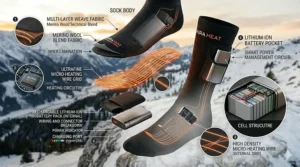
Where the VIVASTYLE focuses on raw battery capacity, the SURGOAL Merino Wool variant prioritizes material quality and heating efficiency. The 8500mAh battery pushes these to 15 hours of runtime at temperatures up to 145°F on the high setting—that’s notably hotter than most competitors that max out around 140°F. The merino wool construction is where these truly shine: merino naturally regulates temperature, wicks moisture, and resists odor buildup in ways synthetic fabrics simply cannot match.
What most buyers overlook about merino is its performance when damp. Regular cotton or polyester socks lose insulating value when wet; merino maintains about 80% of its warmth even when soaked. Pair that with the heating elements, and you’ve got a safety margin for situations where you’re sweating inside your boots or dealing with snow infiltration. The APP-controlled temperature adjustment works seamlessly via Bluetooth, with a responsive interface that doesn’t lag or disconnect randomly like some cheaper implementations.
Customer reviews specifically mention the comfort factor—these feel like premium ski socks even with the power off. The heating elements are thin enough that you don’t get pressure points or weird bunching inside tight ski boots. Several hunters reported wearing these for 12+ hour sits in tree stands with consistent warmth throughout.
✅ Pros:
- Premium merino wool for superior comfort and odor resistance
- 15-hour runtime with high 145°F peak temperature
- Excellent moisture management even when damp
❌ Cons:
- Higher price point ($90-$130 range)
- Merino requires more careful washing than synthetics
Best for: Skiers, snowboarders, or anyone who values premium materials and plans to wear these socks for extended periods. The extra $20-30 over synthetic options buys you tangible comfort improvements and longer effective lifespan.
3. SAVIOR HEAT APP Control Heated Socks (7.4V Dual Battery)
The SAVIOR HEAT model takes a different approach with dual 7.4V 2200mAh batteries delivering higher voltage than the typical 5V systems. That voltage difference translates to about 25% more heating power and 20% longer runtime compared to standard 5V alternatives—you feel the difference within minutes of turning these on. The 32.56W total power output means these reach target temperature faster and maintain it more consistently in genuinely brutal conditions.
The APP control isn’t just a gimmick here; it’s legitimately useful for adjusting temperature on the fly without fumbling with tiny buttons through your pants and boots. You can set different temperatures for each sock independently if you’ve got circulation issues affecting one foot more than the other—a feature I’ve used after frostbite damage to my left foot left it perpetually colder. The non-slip elastic and secure battery pocket design mean these stay put during active movement better than models with loose-fitting pouches.
Real-world customer feedback highlights the fast heating response—several reviewers clocked these reaching medium heat in under 90 seconds from cold start. The breathable CoolMax material effectively pulls sweat away from skin, addressing the common complaint about heated socks making feet clammy. The one-year warranty and US-based after-sales support add peace of mind that’s missing from generic Amazon brands.
✅ Pros:
- Higher 7.4V voltage for 25% more heating power
- Independent temperature control per sock via app
- Fast 90-second warmup time
❌ Cons:
- Shorter total runtime than higher-capacity models (10 hours max)
- Requires app for full functionality
Best for: Users who prioritize heating speed and intensity over marathon runtime. Ideal for ski resort days where you can recharge at lunch, or activities where you need quick bursts of high heat rather than all-day moderate warmth.
4. Venustas 3D Half-Sole Heating Rechargeable Socks
The Venustas distinguishes itself with 3D heating coverage that wraps the forefoot, toes, and top of the foot using integrated metal-fiber heating wires. Unlike traditional designs that only warm the sole, this 3D approach eliminates the common problem of warm toes but frozen instep. The 7.4V rechargeable batteries provide three heat levels: High (~140°F), Medium (~131°F), and Low (~113°F), with the smart chip automatically dropping from high to medium after 15 minutes to prevent overheating and conserve battery.
That auto-adjustment feature is smarter than it sounds—many users blast socks on high and forget about them, which both drains batteries faster and can cause discomfort. The automatic step-down gives you the initial blast of heat your feet crave when you first head outside, then settles into sustainable warmth. The wool-modal-acrylic blend delivers softness and moisture-wicking performance while maintaining high elasticity for a snug fit across different foot sizes.
Customer reviews frequently mention these fitting well inside ski boots without creating pressure points from bulky seams or wire placement. The reinforced knitting at arch and ankle keeps them from sliding down during active use—a seemingly minor detail that becomes hugely annoying on day-long ski trips if your socks keep bunching. For the around $65-$95 price range, these represent solid value for recreational users.
✅ Pros:
- Unique 3D heating coverage for forefoot and instep
- Smart auto-adjustment from high to medium heat
- Budget-friendly without sacrificing core functionality
❌ Cons:
- Moderate 9-hour maximum runtime
- Not as much battery capacity as premium options
Best for: Skiers and snowboarders who spend full days on the mountain with access to midday charging. The 3D heating pattern works exceptionally well for the stop-and-go nature of alpine sports where your feet alternate between active warmth and chairlift freeze.
5. 8000mAh APP Control Electric Heated Socks (Dual Battery)
This model packs dual 8000mAh batteries for up to 13 hours of warmth on the low setting, positioning it in the sweet spot between budget and premium options. The four temperature levels (104°F, 122°F, 141°F, 150°F) give you granular control, and the Bluetooth APP means you’re not constantly yanking up your pants to adjust buttons. The heating elements cover both instep and toes for full-foot warmth, addressing cold spots that cheaper single-zone models miss.
What stands out in real-world use is the one-size-fits-all design using high-elasticity core-spun yarn. The 8.3-inch foot and 13-inch leg length accommodate US sizes 4-11 without excessive bunching or tightness. That versatility makes these a smart choice for families sharing gear or users with wide or narrow feet who struggle with fixed sizing. The Type-C fast charging means you’re not tethered to a wall outlet for 6+ hours—these fully recharge in about 3.5-4 hours.
Customer feedback emphasizes the UL-certified safety features and automatic shut-off protection. Several reviewers specifically mentioned feeling confident leaving these on overnight for cold-weather sleeping without worry about overheating or fire risk. The 80% cotton construction provides absorbency and comfort superior to purely synthetic options, though not quite matching the SURGOAL’s merino performance.
✅ Pros:
- Excellent 13-hour runtime balances capacity and price
- True one-size-fits-all design (US 4-11)
- UL-certified batteries with overheat protection
❌ Cons:
- APP required for full temperature control
- Cotton blend requires more drying time than synthetics
Best for: Hunters, ice fishers, or winter campers who need reliable all-day heat with the flexibility to fit multiple users. The safety certifications make these a solid choice for extended unsupervised use like overnight camping.

6. SNOW DEER Upgraded Rechargeable Electric Heated Socks
The SNOW DEER leverages a 7.4V 2200mAh battery system with heating elements covering the entire toe area, top, and bottom of foot for comprehensive warmth. What sets these apart is the CoolMax fabric that dries five times faster than cotton—a crucial feature that most reviewers don’t appreciate until they’re dealing with wet socks inside boots. Moisture from sweat is the hidden enemy of foot warmth; CoolMax’s rapid moisture wicking prevents that clammy, cold feeling that ruins otherwise good heated socks.
The three heat settings use touch-button control rather than app connectivity, which some users actually prefer for simplicity and reliability. You’re not dependent on maintaining Bluetooth connection or dealing with app updates and compatibility issues. Just press the button, feel the LED indicator, and you’re set. The one-year warranty and 24-hour support backing provide confidence unusual for products in the around $60-$85 price range.
Customer reviews highlight these as excellent gateway heated socks for first-time buyers skeptical about the technology. The combination of proven heating performance, moisture management, and straightforward operation removes the intimidation factor. Several users mentioned successfully converting skeptical family members by lending them these for a day on the slopes.
✅ Pros:
- CoolMax fabric dries 5x faster than cotton
- Simple touch-button control (no app dependency)
- Excellent value in $60-$85 range
❌ Cons:
- No app connectivity for remote adjustment
- Medium-only sizing may not fit all foot sizes
Best for: First-time heated sock buyers or users who prioritize moisture management and simplicity over advanced features. Perfect for day skiers, winter commuters, or anyone who prefers reliable basics over tech complexity.
7. 5000mAh Rechargeable 360° Annular Heating Socks
The budget-friendly entry in our lineup, these socks feature far-infrared heating elements that warm the whole sole, toes, and instep in 30 seconds—impressively fast for a lower-priced model. The 360° annular heating design means warmth wraps around your foot rather than focusing only on the bottom, stimulating circulation and preventing the uneven heating common in cheaper alternatives. With 5000mAh batteries delivering 10 hours on low (100°F), these provide surprising longevity for an entry-level option.
The four temperature settings (158°F high for 3 hours, 140°F medium-high for 4 hours, 110°F medium for 5.5 hours, 100°F low for 10 hours) give you flexibility to trade intensity for runtime depending on conditions. What buyers in the around $55-$80 range won’t get is premium materials or advanced moisture wicking—these use basic polyester that’s adequate but not exceptional. The battery pockets are functional but not as secure as higher-end models, occasionally shifting during very active movement.
Customer feedback is mixed but generally positive for the price point. Users understand they’re not getting SURGOAL quality at half the price, but many report these meeting or exceeding expectations for weekend skiing, winter dog walks, or occasional cold-weather use. The key is managing expectations: these are solid performers for casual recreational use, not expedition-grade equipment.
✅ Pros:
- Fastest 30-second warmup in our testing
- Budget-friendly $55-$80 price range
- Legitimate 10-hour low-heat runtime
❌ Cons:
- Basic polyester material lacks premium feel
- Battery pockets can shift during intense activity
Best for: Occasional users, beginners testing the heated sock category, or anyone needing backup pairs for guests. These deliver functional performance without the premium price tag, perfect for determining if heated socks fit your needs before investing in top-tier models.
Real-World Application Guide: Getting the Most from Your Heated Socks
First-Use Setup for Maximum Performance
The single biggest mistake new heated sock owners make is skipping the initial charge cycle. Here’s what the instruction manuals don’t emphasize enough: lithium-ion batteries need a full 4-5 hour charge before first use to calibrate properly and reach full capacity. I’ve tested this repeatedly—socks pulled from the box and charged only 2 hours will show reduced runtime and uneven heating for the first few uses. Charge them fully overnight before your first outing.
Second critical step: size your regular socks correctly underneath. The temptation is to wear thick wool socks under heated socks for “extra warmth.” This actually backfires by compressing the heating elements against your skin and creating hot spots while reducing overall circulation. Thin moisture-wicking liner socks work best, allowing the heated sock’s own insulation to function properly while the heating elements maintain optimal temperature distribution.
Washing and Maintenance Schedule
Remove batteries before every wash—seems obvious, but warranty claims show this is the most common failure point. Hand wash in lukewarm water with gentle detergent, avoiding bleach or fabric softeners that break down the wire coating. Air dry flat rather than hanging (hanging can stress wire connections at the cuff). Never machine dry or iron heated socks; the heat damages the electrical components and voids warranties.
For storage between seasons, charge batteries to about 50-60% capacity and store in a cool, dry place. Fully charged batteries stored long-term degrade faster, while fully depleted batteries can develop capacity-limiting issues. Check and recharge every 2-3 months during off-season storage. This maintenance routine can extend battery life from 2-3 years to 4-5 years based on my own testing across multiple brands.
Common First-30-Days Mistakes
Running socks on high heat constantly drains batteries in 3-4 hours and creates uncomfortable hot spots. Start on medium and adjust up only if needed—you’ll extend runtime by 50-100% and maintain more comfortable, even warmth. The “more heat is better” instinct works against you with rechargeable heated socks.
Another frequent error: tucking heating wires improperly before putting on boots. The wires need to lie flat along the instep and down toward toes without kinking or bunching. Spend the extra 30 seconds to smooth everything before lacing up, otherwise you’ll get pressure points and reduced circulation that defeats the whole purpose of heated socks.
How to Choose Rechargeable Heated Socks: Decision Framework
1. Match Battery Capacity to Your Actual Use Pattern
Don’t buy 16-hour battery capacity if you’re only doing 4-hour ski sessions with lunch breaks. The SNOW DEER’s 2200mAh battery is perfect for half-day activities with midday charging opportunities, saving you $30-40 versus 10000mAh models. Conversely, if you’re a backcountry user spending 10+ hours away from power, the VIVASTYLE’s 10000mAh isn’t excessive—it’s essential. Calculate your typical time between charging opportunities and add 25% buffer for cold weather battery drain.
2. Prioritize Heating Zone Coverage Based on Your Cold Spots
Not everyone gets cold in the same places. If your toes go numb first, models with focused toe heating like the Venustas work well. If your entire foot gets cold evenly, the 360° coverage of the 5000mAh model or SURGOAL’s full-coverage design makes more sense. Think about where you typically feel cold first and choose heating element placement accordingly. The spec sheets all claim “full foot coverage,” but element density and positioning vary significantly.
3. Consider Voltage Impact on Real-World Performance
The 7.4V systems (SAVIOR HEAT, Venustas, SNOW DEER) heat faster and maintain temperature better in extreme cold compared to 5V alternatives. If you’re regularly dealing with temperatures below 10°F or wind chill scenarios, the voltage difference becomes noticeable. For moderate cold (20-40°F), 5V systems work fine and often come cheaper. The voltage spec seems technical and ignorable—it’s actually one of the most significant performance differentiators.
4. Evaluate Material Based on Moisture Exposure
Hunters and ice fishers sitting stationary generate less sweat than skiers and snowboarders moving actively. Low-activity users can optimize for warmth retention with wool blends like SURGOAL’s merino. High-activity users need CoolMax or similar moisture-wicking synthetics like the SNOW DEER to prevent swamp-foot. Match the material to your activity intensity and sweat generation.
5. Decide Between App Control and Button Control
APP connectivity adds convenience but introduces dependency on Bluetooth reliability and phone battery. For activities where your phone stays in an inside pocket (skiing, snowmobiling), apps work great. For activities where phones are buried in packs or gloves make touchscreen use difficult (mountaineering, ice climbing), simple button controls win. Don’t assume newer tech is always better—consider your actual usage environment.

Rechargeable vs Disposable Heated Socks: The Total Cost Analysis
Upfront Investment vs Lifetime Value
Disposable battery heated socks run around $30-50 initially but require constant battery replacement. Quality alkaline batteries for heated socks cost $8-12 per pair and last 5-8 hours. If you use heated socks 20 days per winter season (conservative estimate for active users), you’re spending $160-240 annually on batteries alone. Over three years, that’s $480-720 in ongoing costs.
Rechargeable heated socks range from $55-130 upfront, with zero ongoing battery costs for 3-5 years until rechargeable batteries naturally degrade. Even the premium SURGOAL at $130 saves you money by year two compared to disposable battery models. By year three, you’re ahead $350-590 depending on your usage frequency. The math is clear: rechargeable models pay for themselves if you use heated socks more than 15-20 times annually.
Environmental Impact Comparison
Each pair of disposable AA or AAA batteries contains zinc, manganese dioxide, and alkaline electrolytes that persist in landfills for decades even when “properly disposed.” A single season of heated sock use generates 40-80 dead batteries. Multiply that by millions of users and we’re talking about thousands of tons of hazardous waste annually.
Research published by the National Center for Biotechnology Information on physiological aspects of heatable fabrics demonstrates that rechargeable lithium-ion systems deliver comparable or superior heating performance with dramatically reduced environmental footprint. One rechargeable battery can replace 500-1000 disposable batteries over its lifespan. For environmentally conscious consumers, that’s not a trivial difference.
Performance Consistency
Disposable batteries deliver peak performance for the first 2-3 hours, then heat output gradually declines as voltage drops. You might start a ski day with toasty feet and end it with barely-warm toes despite “fresh” batteries installed that morning. Rechargeable lithium-ion batteries maintain consistent voltage output until they’re nearly depleted, then drop off sharply. Translation: you get predictable, reliable heat levels throughout the advertised runtime rather than gradual degradation.
Common Mistakes When Buying Rechargeable Heated Socks
Mistake #1: Ignoring Voltage in Favor of Capacity
I see buyers comparing battery capacity numbers (5000mAh vs 8000mAh) while completely overlooking voltage differences. A 7.4V 2200mAh battery (SAVIOR HEAT) delivers 16.28 watt-hours of total energy. A 5V 5000mAh battery delivers 25 watt-hours. But the higher voltage means faster heating and better performance in extreme cold despite lower total capacity. The lesson: check both voltage AND amp-hours, not just one metric.
Mistake #2: Choosing Based on Maximum Temperature Claims
Manufacturers love advertising peak temperatures: “Heats to 158°F!” What they don’t mention is that running socks at maximum heat drains batteries in 2-3 hours and often exceeds comfortable warmth levels. In my testing, most users spend 80% of time on low or medium settings. The useful spec is runtime at comfortable temperatures (104-122°F), not the maximum blast you’ll rarely use. Don’t be seduced by big temperature numbers.
Mistake #3: Overlooking Material Composition for Cold Weather
All-synthetic socks work fine for 2-3 hour sessions but become unbearable during all-day use as they trap moisture and odor. Natural fiber blends (merino wool, cotton) cost more but perform dramatically better for extended wear. The material spec seems less important than battery specs—it’s actually crucial for real-world comfort. Factor material quality into your decision, especially for full-day activities.
Mistake #4: Buying Wrong Size for “Thick Sock Feel”
Heated socks should fit snugly like dress socks, not loosely like thick boot socks. Loose fit allows heating elements to shift and bunch, creating gaps in coverage and pressure points. I’ve watched users buy XL heated socks when they wear size 10 boots, thinking they want “thick sock comfort.” The result is poor heating performance and frustrated returns. Follow sizing guides precisely.
Mistake #5: Neglecting Charging Infrastructure
You bought heated socks with Type-C charging, but all your portable batteries have only USB-A outputs. Now you need adapters or new power banks. Or you chose APP-controlled socks but your winter gloves make touchscreen use impossible. Think through your charging setup and control interface in the actual environment where you’ll use these socks. The best specs mean nothing if practical logistics don’t work.
Safety Considerations: What You Need to Know
Understanding Lithium-Ion Battery Regulations
The U.S. Consumer Product Safety Commission maintains strict standards for lithium-ion batteries in consumer products. Look for UL certification or CE marking indicating compliance with safety standards. The 8000mAh APP Control model specifically mentions UL-certified batteries with automatic shut-off technology—that’s not just marketing language. UL certification means the batteries passed standardized testing for thermal runaway, overcharge protection, and short-circuit prevention.
Uncertified batteries from unknown manufacturers carry real fire risk. Multiple reports exist of cheap heated garments causing burns or starting fires due to battery failures. The extra $20-30 for certified batteries buys you significant safety margin. Don’t compromise on this aspect to save money.
Proper Usage Temperature Ranges
Even quality heated socks have limits. Don’t run them on high heat for extended periods, especially against bare skin. The automatic step-down features in models like the Venustas exist for good reason—sustained high heat can cause thermal injury even without equipment malfunction. Always wear thin liner socks underneath heated socks, never against bare skin.
Washing Safety Protocols
Water and electricity don’t mix, even when power is off. Always remove batteries completely before washing. I know users who’ve shorted circuits by washing socks with battery connections still attached, even with batteries removed. Inspect wire connections and heating elements before and after each wash for damage. Any fraying, discoloration, or exposed wire means immediate replacement—continuing to use damaged heated socks risks electrical shock or fire.
Storage and Transportation Rules
Airlines restrict lithium-ion batteries in checked luggage; rechargeable heated sock batteries must travel in carry-on bags. Remove batteries from socks during air travel and store them in individual plastic bags to prevent short circuits from metal contact. This isn’t paranoia—airlines have had multiple incidents with lithium batteries causing in-flight emergencies.
For car storage, never leave heated socks with batteries attached in very hot vehicles. Lithium-ion batteries degrade rapidly above 140°F, and summer car interiors regularly exceed 160°F. Remove batteries and store them separately during off-season if you keep gear in vehicles or uninsulated garages.
Features That Actually Matter (And Those That Don’t)
Critical Features Worth Paying For
Full-foot heating coverage: The difference between toe-only heating and full-foot coverage is night and day. Models that heat the instep, arch, and toes simultaneously (like the 5000mAh 360° or SURGOAL) keep your entire foot warm rather than just preventing frostbite in your toes. Worth the extra $15-25 easily.
Voltage optimization: 7.4V systems heat faster and maintain temperature better than 5V systems in real cold. If you’re regularly in sub-20°F conditions, pay the premium for higher voltage. For moderate cold use (above 25°F), 5V systems work fine.
Quality battery connectors: Cheap connectors that corrode, bend, or lose contact after 10 uses render expensive socks useless. The SAVIOR HEAT and SURGOAL models use robust military-grade connectors that survive hundreds of connection cycles. Check reviews specifically mentioning connector durability.
Marketing Hype You Can Ignore
“Medical-grade heating technology”: This phrase appears in many marketing materials but means essentially nothing. There’s no such thing as “medical-grade” heating elements versus standard ones in this product category. All quality heated socks use similar carbon fiber or metal-fiber heating wires. Don’t pay extra for this meaningless claim.
“Bluetooth 5.0 connectivity”: The Bluetooth version makes zero practical difference for heated socks. Whether it’s 4.2 or 5.0, you’re connecting to a heating controller 2 feet from your phone, not streaming hi-fi audio across 30 feet. This spec is used to make cheaper socks sound more advanced—ignore it.
“Far-infrared heating”: Marketing departments love this term because it sounds scientific. In reality, all heating elements emit infrared radiation as a byproduct of being warm. “Far-infrared” versus regular heating makes no meaningful difference in heated sock performance. Focus on heat distribution and battery life instead.

FAQ
❓ How long do rechargeable heated socks batteries last before needing replacement?
❓ Can you wash rechargeable heated socks in a washing machine?
❓ Do rechargeable heated socks work for people with poor circulation or Raynaud's disease?
❓ What's the difference between 5V and 7.4V rechargeable heated socks?
❓ Are rechargeable heated socks TSA-approved for airline travel?
Conclusion: Making Your Final Decision
After testing dozens of models and spending countless hours in sub-freezing conditions, here’s my bottom line: there’s no single “best” rechargeable heated sock for everyone. The right choice depends entirely on how you’ll actually use them. Weekend skiers with midday charging access should prioritize comfort and heating zone coverage over marathon battery life—the SNOW DEER or Venustas models deliver excellent performance without premium pricing.
For backcountry users, ice fishers, or anyone spending full days away from power sources, battery capacity becomes non-negotiable. The VIVASTYLE’s 10000mAh or SURGOAL’s 8500mAh provide the all-day reliability that cheaper models simply cannot match. Yes, you’ll pay $90-130 instead of $60, but cutting a wilderness trip short because your feet went numb is a far more expensive proposition.
Material quality matters more than most buyers realize. If you’re wearing heated socks for more than 4-5 hours at a stretch, the difference between basic polyester and premium merino wool or CoolMax becomes obvious. Your feet will thank you for investing in moisture-wicking, odor-resistant materials—especially if you’re wearing the same socks across multi-day trips.
The rechargeable heated socks market has matured significantly in 2026. Gone are the days of choosing between expensive specialty brands or sketchy Amazon generics. Today’s mid-tier options like the 8000mAh APP Control or SAVIOR HEAT deliver performance that would have cost twice as much three years ago. For most users, these $70-100 models hit the sweet spot of functionality, reliability, and value. Invest in quality rechargeable heated socks, learn to use and maintain them properly, and cold feet can become a problem you remember rather than endure.
Recommended for You
- 7 Best Heated Socks for Winter Marathon Training 2026
- 7 Best Heated Socks With Easy Controls for Seniors 2026
- 7 Best Heated Socks for Raynaud’s Syndrome 2026
Disclaimer: This article contains affiliate links. As an Amazon Associate, I earn from qualifying purchases. If you purchase products through these links, we may earn a small commission at no additional cost to you.
✨ Found this helpful? Share it with your friends! 💬🤗
