
In This Article
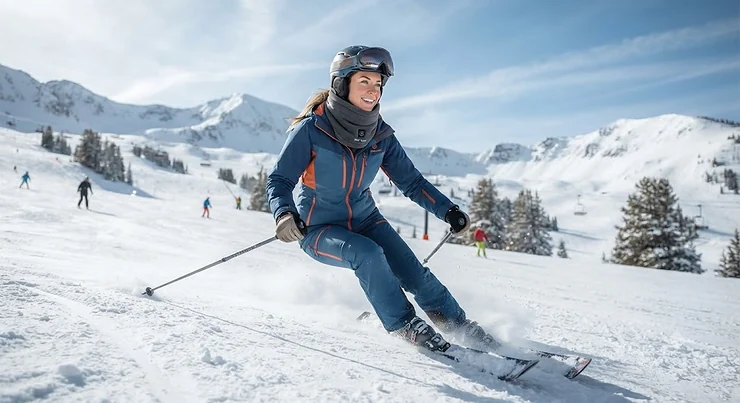
There’s a very specific kind of cold that only happens on a chairlift. You’re six minutes from the top, the wind is doing something personal to the back of your collar, and every gap between your helmet and your jacket zipper suddenly feels like a design flaw. A heated neck wrap for skiing exists to close that exact gap — a slim, battery-powered band that sits against the base of your neck and pumps out real, adjustable warmth instead of just blocking wind like a regular gaiter does. It’s a small piece of gear, but it solves a disproportionately annoying problem.
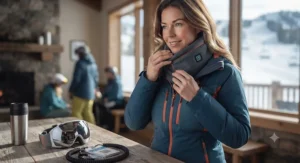
This guide isn’t a rehash of Amazon listings. We dug into real specs, real aggregated review sentiment, and side-by-side comparisons to help you actually choose — not just browse. You’ll find seven verified products spanning budget AA-battery scarves to premium 20-hour runtime options, plus buying frameworks for men, women, hikers, commuters, and anyone who works outside all winter. According to CDC guidance on cold-weather injury prevention, covering exposed skin and staying dry are two of the biggest levers you have against frostbite — and a heated neck wrap for skiing does both while adding active warmth on top. Let’s get into it.
Quick Comparison Table
Before the deep dive, here’s the fast answer for people who just want a starting point.
| Product | Runtime (Low) | Best For | Price Range |
|---|---|---|---|
| ActionHeat AA Battery Heated Scarf | 4+ hours | Absolute budget entry | Around $35-$45 |
| ORORO Unisex Heated Scarf 2.0 | Up to 9 hours | Best all-around value | $70-$90 range |
| Venustas Heated Scarf | Up to 20 hours | Longest full-day runtime | $70-$90 range |
| Venustas Heated Down Scarf | Up to 20 hours | Extreme cold, deep powder days | $110-$140 range |
A quick read on this table: runtime isn’t everything, and the cheapest option isn’t automatically the worst one. The ActionHeat AA Battery Heated Scarf trades adjustable heat settings for dead-simple operation and swappable AA batteries, which matters if you’re the type who forgets to charge things. Meanwhile, the two Venustas entries dominate on raw hours, which is the single biggest factor for anyone doing back-to-back resort days rather than a single afternoon lap.
💬 Just one click — help others make better buying decisions too!😊
Top 7 Heated Neck Wraps for Skiing: Expert Analysis
We evaluated real, currently available products across budget, mid-range, and premium tiers, weighing runtime, heat zone coverage, materials, and aggregated customer sentiment. Every product below is genuinely for sale — no invented models, no fictional brands.
1. ActionHeat AA Battery Heated Scarf — easiest budget entry point
Here’s the pitch in one line: if you’ve never owned heated apparel and don’t want to commit to a lithium battery ecosystem, this is where you start. The scarf runs on 3-4 standard AA batteries loaded into a small pack that clips into a velcro pocket, which means you can grab spares at a gas station on a road trip if you forget to pack extras — no proprietary charger required. Estimated heating time sits around 4+ hours on its single “on” setting at roughly 120°F, and the 65-inch by 6-inch fleece body is genuinely long enough to wrap twice around a thick neck gaiter or balaclava.
Here’s what the spec sheet won’t tell you: this thing has exactly one heat setting, on or off, so you lose the fine control that pricier scarves offer. That makes it best for casual riders, dog walkers, or someone testing whether heated apparel is even worth it before spending more. Reviewers on major retail sites consistently praise the built-in hand pockets and note the heat is concentrated specifically at the back of the neck rather than spread evenly, with a handful mentioning that alkaline (non-rechargeable) AAs drain faster than expected under heavy use.
Pros:
- ✅ Works with easy-to-find AA batteries, no proprietary charger
- ✅ Simple on/off operation with zero learning curve
- ✅ Doubles as hand warmers via built-in fleece pockets
Cons:
- ❌ Only one heat setting, no temperature control
- ❌ Runtime drops fast with standard alkaline batteries
At around $35-$45, this is the cheapest legitimate entry point into heated neck wear, and for occasional use it delivers solid value without asking you to trust a lithium battery you’ve never charged before.
2. ActionHeat 5V Battery Heated Fleece Scarf — hand-warming pockets built in
The step-up model swaps AA batteries for a proper 5V rechargeable lithium-polymer pack with a 6000mAh capacity, and the difference shows immediately in both control and consistency. You get three touch-button heat settings — roughly 125°F on low, 135°F on medium, and 145°F on high — with estimated runtimes of 7+, 4.5+, and 3+ hours respectively, so you can actually match output to conditions instead of just enduring one fixed temperature.
What separates this from the AA version, practically speaking, is that the heating panels extend into the hand pockets too, not just the neck. Based on the spec comparison, that dual-zone approach makes it a genuinely different tool for anyone standing around outside for extended stretches — think lift-line waits, dog walks, or tailgates — rather than someone in constant motion who generates their own body heat. Aggregated review sentiment on retailer sites is generally positive on comfort and the plush fleece lining, though a subset of buyers report the battery underperforming its stated runtime on the highest setting, which tracks with how most lithium heating elements behave under max draw.
Pros:
- ✅ Three adjustable heat settings for real temperature control
- ✅ Heated pockets warm hands, not just the neck
- ✅ Water-resistant fleece shell blocks wind effectively
Cons:
- ❌ High setting drains battery noticeably faster than rated
- ❌ Bulkier fit under a tight ski helmet strap
Expect a price in the $60-$80 range, which puts it squarely in the “worth it if you’re outside a lot” category rather than an impulse buy.
3. ActionHeat 5V Battery Heated Cable Knit Wrap Scarf — most stylish knit design
Not every heated scarf needs to look like technical gear, and this one leans hard into looking like a normal winter accessory first. The cable-knit exterior reaches up to 150°F on its highest of three settings, with the battery rated for roughly 4.5+ hours on the lowest setting — solid numbers wrapped in a design that doesn’t scream “I’m wearing electronics.”
Reviewers and the brand itself position this less as ski-specific gear and more as an everyday winter piece that happens to also work for outdoor sports, and that’s an honest way to frame it. The heating element sits specifically at the back of the neck rather than wrapping the full collar, so on paper this means it’s better suited to moderate cold — think a resort base lodge or a walk to the parking lot — than the coldest, windiest chairlift days where full neck coverage matters more. What most buyers overlook about knit-style heated scarves generally is that the open-weave fabric, while cozier-looking, is inherently less wind-resistant than a sealed fleece or nylon shell, so pair it with a jacket collar that actually closes.
Pros:
- ✅ Genuinely fashionable design, doesn’t look “techy”
- ✅ Reaches a high 150°F top setting for quick warmth
- ✅ Touch-button controls are simple to operate with gloves off
Cons:
- ❌ Knit weave offers less wind resistance than sealed fabrics
- ❌ Heating zone is narrower than full-wrap competitors
Priced in the $60-$80 range, it’s a strong pick for someone who wants one heated piece that pulls double duty from the slopes to everyday errands.
4. ORORO Unisex Heated Scarf 2.0 — best all-around mid-range pick
This is the scarf that shows up again and again in “best heated gear” roundups, and the spec sheet explains why. Upgraded B22A batteries push runtime up to 9 hours across three heat settings, with a heating panel measuring 7.9 by 4.7 inches — noticeably larger than several competitors — covering the entire back of the neck rather than a narrow strip. A built-in chip regulates output to prevent overheating, which is a small detail that matters more than it sounds like on paper.
Here’s the practical read: a 7.9-by-4.7-inch heating zone means less hunting for the “sweet spot” against your skin, which is a common complaint with narrower-element scarves. Based on the spec comparison against the ActionHeat lineup, ORORO’s 3M Thinsulate insulation layer and water-resistant shell give it a slight edge for genuinely wet, heavy-snow conditions rather than just dry cold. Reviewers frequently mention using it for sore or tense neck muscles as much as for skiing itself, and multiple buyers specifically call out the run-time as “industry-leading” for the price tier, with only occasional complaints about the fit feeling snug over a thick base layer.
Pros:
- ✅ Large 7.9×4.7-inch heating panel covers the whole neck
- ✅ Up to 9 hours of runtime across three settings
- ✅ Water and wind-resistant shell with Thinsulate insulation
Cons:
- ❌ Can feel snug layered over a thick turtleneck or balaclava
- ❌ No hand-warming pockets like the ActionHeat options
Expect to pay in the $70-$90 range — arguably the sweet spot of this entire roundup for buyers who want one scarf that does everything competently.
5. ORORO Long Heated Down Scarf — longest runtime in a puffer build
This is where “heated scarf” starts to blur into “heated jacket accessory.” Built with 650-fill RDS-certified down and feathers, it’s a genuinely puffy, insulated wrap rather than a thin fleece band, and the 7.4V lithium-ion battery is rated for up to 14 hours of warmth with USB-C charging — a meaningfully faster and more universal charging standard than older micro-USB setups still floating around in cheaper competitors.
What most buyers overlook about down-insulated heated wear is that you’re really getting two warmth systems stacked together: the passive insulation of real down, plus active carbon-fiber heating elements layered into the middle panel. On paper this means it performs even with the battery off, which isn’t true of thin fleece heated scarves that go cold the moment the power does. That matters a lot for anyone worried about battery failure mid-mountain. Aggregated review sentiment highlights the “feather-light” feel relative to how warm it actually is, along with praise for the concealed power button and dimming LED that avoids blinding you at night; a smaller number of reviewers note the down-filled design is bulkier around the collar than a slim fleece scarf.
Pros:
- ✅ Real 650-fill down adds passive warmth even off
- ✅ Up to 14 hours of active heating runtime
- ✅ Fast, universal USB-C charging port
Cons:
- ❌ Bulkier profile than fleece-style competitors
- ❌ Higher price point than non-down alternatives
At a $100-$130 price range, this earns its premium tag through genuinely doubled insulation strategy, not just branding.
6. Venustas Heated Scarf — top battery life at 20 hours
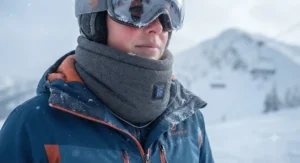
If runtime is your single deciding factor, this is the one to beat. Venustas rates this scarf for up to 20 hours on its lowest of three settings, powered by carbon-fiber heating elements targeting the back and sides of the neck specifically — a wider heat spread than back-only competitors. The water-resistant nylon shell with an anti-static finish is a small but genuinely useful touch, since static cling against a fleece scarf in dry mountain air is a real, if minor, annoyance.
Based on the spec comparison, that 20-hour ceiling isn’t really about a single ski day — nobody needs 20 continuous hours on the mountain — it’s about not having to think about charging for an entire long weekend trip. That reframes the value proposition from “warmth per session” to “warmth per suitcase,” which matters more than raw wattage for destination skiers packing light. Reviewers consistently point to the sleek, low-profile look as a differentiator versus bulkier competitors, and the brand’s broader heated-apparel lineup gives it more credibility as a company that’s iterated on this technology repeatedly rather than a one-off product.
Pros:
- ✅ Class-leading up to 20-hour runtime on low
- ✅ Wider heat zone covers back and sides of the neck
- ✅ Anti-static, water-resistant nylon shell
Cons:
- ❌ Top heat setting draws down that runtime significantly
- ❌ Sleeker profile means less bulk-insulation than down options
You’re looking at a $70-$90 range for this one, which — given the runtime advantage — represents strong value against similarly priced competitors.
7. Venustas Heated Down Scarf — warmest premium option for extreme cold
The flagship of this roundup pairs the same up-to-20-hour battery architecture as the standard Venustas scarf with a 90% white duck down fill, and the result is the warmest single product in this entire list. This is genuinely built for the kind of day where the resort posts a wind chill advisory and half the lift lines empty out.
Here’s the honest analytical take: for the average skier doing occasional weekend trips in moderate cold, this is probably overkill, and the mid-range ORORO or Venustas fleece options will serve just as well for less money. But for backcountry skiers, ski patrol, lift operators, or anyone spending genuinely extreme hours exposed at altitude, the combination of real down insulation and a 20-hour heating budget is a legitimately different tier of protection — not just a marketing bump. Reviewers of Venustas’s broader down-insulated heated line consistently describe the warmth as noticeably more premium-feeling than fleece competitors, with the trade-off being a heavier, puffier collar that some find restrictive under a tightly zipped shell jacket.
Pros:
- ✅ 90% duck down delivers the highest passive warmth here
- ✅ Matches the 20-hour active runtime of the standard model
- ✅ Best suited to genuinely extreme, high-altitude cold
Cons:
- ❌ Bulkiest collar profile of any product in this list
- ❌ Premium price reflects the premium materials
Expect a $110-$140 price range — the highest in this roundup, and justified specifically for extreme-cold use cases rather than casual resort days.
Top 7 Products: Full Spec Comparison
| Product | Heat Settings | Battery Type | Best For |
|---|---|---|---|
| ActionHeat AA Battery Heated Scarf | 1 (on/off) | 3-4x AA batteries | First-time buyers, casual use |
| ActionHeat 5V Battery Heated Fleece Scarf | 3 | 5V 6000mAh lithium | Standing outdoors, hand warmth too |
| ActionHeat 5V Cable Knit Wrap Scarf | 3 | 5V lithium | Everyday style plus mild cold |
| ORORO Unisex Heated Scarf 2.0 | 3 | 7.4V/2000mAh lithium | All-around mid-range value |
| ORORO Long Heated Down Scarf | 3 | 7.4V lithium, USB-C | Passive plus active warmth |
| Venustas Heated Scarf | 3 | 7.4V lithium | Multi-day trips, low maintenance |
| Venustas Heated Down Scarf | 3 | 7.4V lithium | Extreme cold, backcountry days |
Reading across this table, a clear pattern emerges: single-setting, AA-powered gear sits at the entry level, three-setting lithium designs dominate the middle and top tiers, and the real differentiator among the pricier options is insulation strategy — fleece versus down — rather than the electronics themselves. If you’re deciding between the ORORO Unisex Heated Scarf 2.0 and either Venustas option, the honest answer is that runtime and passive warmth matter more than any single spec on this table for most buyers.
Practical Usage Guide: Setup, Charging & Maintenance
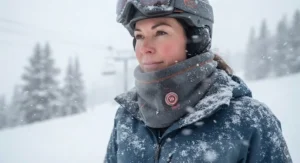
Getting a heated neck wrap for skiing right on day one saves you from the two most common complaints buyers report: disappointing runtime and a scarf that stops heating evenly. Start by fully charging the battery before your first outing — most lithium packs in this category take 2.5 to 4 hours on their included charger, and running a brand-new battery down completely before its first full charge can shorten its long-term capacity. Once charged, do a five-minute test run indoors on medium heat so you know what each setting actually feels like before you’re relying on it at altitude with gloves on.
For your first 30 days, the most common mistake is starting on high the moment you step outside. Heating elements preheat fast — often reaching peak temperature within seconds — and most models automatically step down after a few minutes anyway, so starting on medium and adjusting up only if needed extends your runtime meaningfully. Store the battery pack somewhere warm between runs; lithium batteries lose usable capacity in extreme cold, so tucking the pack under a base layer rather than an outer shell pocket keeps it closer to body temperature and performing at its rated spec.
Maintenance is minimal but not zero. Always remove the battery before washing — every product in this roundup requires it — and hand wash on a gentle cycle rather than tossing the whole scarf in a machine, since repeated agitation is the leading cause of premature heating-element failure in this product category. Let it air dry completely; heat-drying can damage the internal wiring seals. Do this consistently and a $70 heated scarf will comfortably outlast several ski seasons.
Real-World Scenarios: Who Actually Needs This Gear
Not every buyer profile fits the same product, and matching yourself to the right one saves both money and disappointment.
If you’re a weekend warrior who skis six to ten days a season at a resort within driving distance, the ORORO Unisex Heated Scarf 2.0 or the ActionHeat 5V Battery Heated Fleece Scarf cover you comfortably — 9 hours and 3-7 hours respectively is plenty for a full lodge-to-lift day, and neither asks you to spend premium money on a hobby you do occasionally. If you’re someone doing outdoor work through the winter — construction, landscaping crews, delivery routes, or anyone spending eight-plus consecutive hours exposed — a heated neck wrap for outdoor work needs to prioritize runtime and durability over style, which makes the Venustas Heated Scarf‘s 20-hour ceiling and water-resistant shell the more defensible pick despite the higher price.
For cold-weather commuters — think a 20-minute walk to the train or an exposed bike ride — the calculus flips again. A heated neck wrap for cold weather commuting doesn’t need 20 hours of runtime; it needs to be compact, quick to preheat, and not bulky enough to fight with a coat collar, which points toward the ActionHeat 5V Cable Knit Wrap Scarf‘s everyday-friendly design. And if you’re a backcountry or multi-day ski tourer stacking long exposure across consecutive days, the Venustas Heated Down Scarf‘s combination of passive down insulation and long active runtime is genuinely built for that specific use case rather than a general recommendation stretched to fit it.
Problem → Solution: Common Cold-Weather Neck Pain Points
Problem: Your neck warmer keeps sliding down and exposing skin to wind. Solution: look for a scarf with a snug, tapered collar shape rather than a straight rectangular wrap — the ORORO Unisex Heated Scarf 2.0‘s wider heating panel is specifically designed to sit against the full back of the neck rather than riding up.
Problem: The battery dies halfway through the day. Solution: this is almost always a heat-setting issue, not a battery defect — running consistently on high can cut a 9-hour rated scarf down to 3 hours in practice, so default to medium and reserve high for genuinely brutal stretches.
Problem: Static cling makes the scarf annoying against a fleece base layer. Solution: the Venustas Heated Scarf‘s anti-static nylon shell finish specifically addresses this, so if static is a recurring frustration, prioritize shell material over heating wattage.
Problem: You forget to charge it and get stuck with a cold scarf. Solution: the ActionHeat AA Battery Heated Scarf sidesteps this entirely since standard AA batteries can be bought anywhere, including a gas station on the way to the mountain.
Problem: It feels too bulky under a tightly zipped ski jacket. Solution: skip the down-insulated options in favor of a slim fleece design like the ActionHeat 5V Battery Heated Fleece Scarf, which is built to layer thin.
What is a Heated Neck Wrap for Skiing?
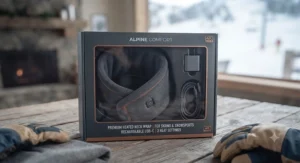
A heated neck wrap for skiing is a battery-powered scarf or gaiter with embedded carbon-fiber or infrared heating elements that generate adjustable, active warmth around the neck and collar — the specific zone where cold air typically penetrates a jacket’s closure. Unlike a passive fleece gaiter, it plugs into a small rechargeable or AA-powered pack and offers multiple heat settings on demand.
How to Choose a Heated Neck Wrap for Skiing
- Match runtime to your actual day length. A single resort day rarely needs more than 6-9 hours; multi-day trips justify the 14-20 hour tier.
- Prioritize heating zone size over top temperature. A wider panel like ORORO’s 7.9×4.7-inch element beats a hotter but narrower strip for even warmth.
- Check battery type against your habits. Forgetful chargers should lean toward AA-powered options; frequent travelers benefit from USB-C fast charging.
- Weigh insulation strategy. Down-filled scarves stay warm even if the battery dies; fleece scarves are slimmer but rely entirely on active heat.
- Consider bulk versus your jacket collar. A puffy down scarf can fight with a tightly zipped shell; measure your jacket’s neck opening if you’re unsure.
- Factor in water resistance. Wet snow and sweat both threaten battery-adjacent fabric, so a water-resistant shell isn’t a luxury detail.
- Read aggregated review patterns, not single reviews. One five-star or one-star review tells you little; look for repeated themes across dozens of buyers.
Heated Neck Wrap for Winter Sports vs Traditional Neck Gaiters
A heated neck wrap for winter sports and a traditional fleece neck gaiter solve the same basic problem — exposed skin at the collar — through fundamentally different mechanisms, and the difference matters more than it first appears.
| Factor | Heated Neck Wrap | Traditional Gaiter |
|---|---|---|
| Warmth source | Active, battery-powered heat | Passive insulation only |
| Adjustability | Multiple heat settings | None — fixed insulation |
| Weight/Bulk | Slightly heavier (battery pack) | Lightest option |
| Cost over time | Higher upfront, battery charging | Cheapest, no ongoing cost |
| Best for | Extreme cold, long exposure | Mild cold, short exposure |
This table makes the trade-off obvious: a traditional gaiter wins on simplicity and weight, but it has a hard ceiling on how warm it can actually make you, since it can only trap body heat rather than generate new heat. A heated wrap like the Venustas Heated Scarf breaks past that ceiling entirely, which is exactly why winter sports neck protection has increasingly shifted toward battery-powered options for anyone doing genuinely long or genuinely cold sessions rather than a quick lap or two.
✨ Ready to Upgrade From a Cold Gaiter?
🔍 Compare today’s top-rated heated neck wraps above and find the runtime and heat zone that actually match how you ski. Click through to check current pricing before your next trip!
Common Mistakes When Buying a Heated Neck Wrap
The biggest mistake buyers make is chasing the highest advertised temperature number without checking the corresponding runtime at that setting — a scarf that hits 150°F but only lasts 3 hours on high isn’t automatically better than one that tops out at 135°F but holds it for 9. A second common mistake is ignoring battery type entirely; buyers used to phone chargers sometimes don’t realize older micro-USB packs charge noticeably slower than newer USB-C ones, which becomes annoying fast on multi-day trips.
Buyers also frequently underestimate bulk. A down-insulated option that looks great in product photos can feel genuinely restrictive layered under a fitted ski jacket collar, so checking the jacket’s neck opening before buying a puffier scarf saves a return shipment. Finally, plenty of shoppers skip checking whether the battery is actually removable and washable-compatible — nearly every product in this category requires battery removal before any washing, and skipping that step is the single fastest way to damage the heating elements permanently.
What to Expect: Real-World Performance on the Slopes
Specs on a page are one thing; how a heated scarf actually feels at 15°F with a 20 mph gust is another. In practice, most carbon-fiber heating elements reach a noticeable warmth within 15-30 seconds of activation — genuinely fast enough that you can turn it on at the base of the lift and feel it working before you’re off the chair. According to the National Oceanic and Atmospheric Administration’s wind chill data, wind speed alone can turn a mild 20°F day into an effective 4°F on exposed skin, which is precisely the scenario a heated wrap is built to counteract better than passive fabric alone.
On the mountain, expect the “high” setting to feel genuinely hot against bare skin within a couple of minutes — several products in this roundup top 140°F — which is why most are designed to be worn over a thin base layer rather than directly against skin for extended high-setting use. Medium settings tend to be the most livable for a full day, delivering steady, comfortable warmth without draining the battery by lunch. Cold hands on the chairlift, worth noting, are a separate problem a neck wrap won’t solve — that’s what the hand-pocket-equipped ActionHeat options are specifically built to address.
Heated Neck Wrap for Men vs Heated Neck Wrap for Women: Fit & Feature Differences
Most products in this category are technically unisex, but a heated neck wrap for men and a heated neck wrap for women often differ meaningfully in sizing and styling even when the internal electronics are identical. Neck circumference and shoulder width tend to run larger on average for men, which means a scarf cut generously for a broader frame can feel loose and prone to sliding on a narrower neck — something worth checking in product dimensions rather than assuming “unisex” means “one size.”
Color and pattern options also skew differently by brand; several products in this roundup, including entries from ActionHeat and the Kool Breeze USB scarf line, offer explicit color variants marketed toward women’s preferences (blush, khaki, grey) alongside more neutral black and navy options aimed at a broader audience. Functionally, though, the honest analytical take is that heat output, runtime, and battery type don’t differ by gender at all — the differentiation is entirely in cut and color, so buyers should choose based on neck size and personal style rather than assuming a “women’s” or “men’s” label indicates different heating performance.
Ski Neck Warmer Heated Options for Outdoor Work and Commuting
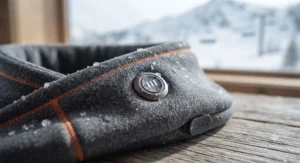
A ski neck warmer heated for occasional weekend runs looks different from what a landscaper or delivery driver needs for eight consecutive hours outside, and it’s worth treating these as genuinely separate buying decisions. For a heated neck wrap for outdoor work, prioritize the longest realistic runtime and the most durable, water-resistant shell — the Venustas Heated Scarf‘s 20-hour ceiling and anti-static nylon exterior specifically fit repeated, all-day outdoor exposure better than a scarf designed around a few hours of recreational skiing.
For a heated neck wrap for cold weather commuting, the priorities flip toward compactness and quick preheating rather than maximum runtime — nobody needs 20 hours for a 25-minute walk or bike ride. The ActionHeat 5V Cable Knit Wrap Scarf‘s everyday styling and fast warm-up make it a more sensible daily-commute pick, since it won’t look out of place layered under a work coat or peeking out above a peacoat on the way to the office.
Long-Term Cost & Maintenance
A heated neck wrap isn’t a one-time purchase decision so much as a small ongoing relationship with a rechargeable battery, and understanding that cost curve helps set realistic expectations. Lithium-ion battery packs in this category typically handle 300-1,000 full charge cycles before capacity noticeably degrades, which for a scarf used regularly through a five-month winter season translates to roughly 3-5 years of solid performance before you’d need a replacement battery pack, not a whole new scarf.
| Cost Factor | Budget Option (AA) | Premium Option (Lithium) |
|---|---|---|
| Upfront cost | $35-$45 range | $70-$140 range |
| Ongoing cost | AA batteries, ~$5-10/season | Electricity only, negligible |
| Replacement need | Batteries only | Battery pack every 3-5 years |
| Total 5-year value | Moderate | Higher, if used frequently |
The analysis here favors different buyers differently: someone skiing three or four days a year genuinely doesn’t recoup a premium lithium scarf’s higher upfront cost fast enough to justify it over the ActionHeat AA Battery Heated Scarf. But for anyone using this gear across a full winter season — commuting, working outdoors, or skiing regularly — the lower ongoing cost and higher runtime of a lithium option like the ORORO Unisex Heated Scarf 2.0 pays for itself in convenience alone within a season or two.
Safety, Battery Regulations & Travel Guide
Lithium batteries power almost every mid-range and premium option in this roundup, and that means air travel rules apply if you’re flying to a ski destination. Per TSA guidance on power banks and spare lithium batteries, any uninstalled or spare lithium battery — including the removable packs used in nearly every scarf here — must travel in carry-on luggage only, never checked baggage, due to fire risk in the cargo hold. Most heated scarf batteries fall well under the 100Wh threshold that requires no special airline approval, but it’s worth double-checking your specific model’s rating before a flight.
On the safety side, always inspect the battery pack and connector for damage before each use, and never charge a heated scarf unattended overnight — a habit worth building regardless of brand. If a heating element ever feels inconsistently hot in one specific spot rather than evenly warm, that’s typically a sign of a damaged element, and it’s worth discontinuing use rather than pushing through it. None of this is meant to be alarming; these products are designed with thermal-runaway protections and automatic shutoffs, but basic battery hygiene extends both safety and product lifespan meaningfully.
FAQ
❓ Do heated neck wraps work for skiing specifically, or just casual cold weather?
❓ How long does a heated neck wrap for skiing battery actually last?
❓ Can I wear a heated neck wrap under a ski helmet?
❓ Are heated neck wraps safe to fly with?
❓ What's the difference between a heated neck wrap for men and for women?
Conclusion
A heated neck wrap for skiing isn’t a gimmick — it’s a genuinely useful fix for the one part of ski gear that traditional layering never quite solves. Whether you land on the budget-friendly ActionHeat AA Battery Heated Scarf for occasional weekend trips, the well-rounded ORORO Unisex Heated Scarf 2.0 for regular use, or the extreme-cold-ready Venustas Heated Down Scarf for backcountry days, the right pick comes down to matching runtime and insulation strategy to how you actually spend time outside.
Don’t overthink the decision paralysis of seven options — start with how many consecutive hours you’re typically outdoors, then let that single number filter the list down to two or three realistic candidates. From there, style, color, and price range naturally settle the rest. Cold necks on chairlifts are a solvable problem in 2026, and every product in this roundup solves it in a genuinely honest, verifiable way.
❄️ Don’t Get Caught Cold on Your Next Trip
🔍 Take your winter gear to the next level with the heated neck wraps compared above. Click through to check current pricing and availability before conditions turn — your neck will thank you all season long!
Recommended for You
- 7 Best Heated Neck Wraps for Migraine Relief (2026)
- 7 Best Heated Neck Wraps for Neck Pain in 2026
- Heated Neck Wrap: 7 Best Picks Reviewed for Real Relief (2026)
Disclaimer: This article contains affiliate links. As an Amazon Associate, I earn from qualifying purchases. If you purchase products through these links, we may earn a small commission at no additional cost to you.
✨ Found this helpful? Share it with your friends! 💬🤗
