
In This Article
October arrives all at once. One night your sheets feel fine, and the next they feel like a lake in Minnesota. A twin heated mattress pad fixes that with a simple trick: it warms the bed itself instead of the whole house. If you’re shopping for a kid’s room, a dorm, a guest bed, or your own single bed, this guide covers seven real options and what their specs mean once the lights go out.
What Is a Twin Heated Mattress Pad?
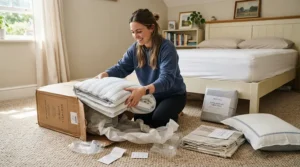
A twin heated mattress pad is a fitted, washable layer that sits on top of your mattress and under your sheet, with thin wires or low-voltage heating elements running through it. A plug-in controller sets the warmth and an auto shut-off timer. It’s sized for a standard twin bed, roughly 39 by 75 inches.
That size matters more than you’d think. The Sleep Foundation lists a standard twin at 38 inches wide and 75 inches long, while a Twin XL adds five inches of length. Most twin pad listings I found follow the same footprint, with pockets between 15 and 18 inches deep. A twin pad also needs less heating wire than a queen or king, which is why this size tends to be the cheapest way into heated bedding.
One honest note before we start. Everything below comes from spec sheets, retailer listings, safety agencies, and aggregated review sentiment. Nobody here is claiming to have slept on these pads. Prices are ranges as of late October 2026, so check current pricing before you buy.
Quick Comparison: Twin Heated Mattress Pad Picks at a Glance
| Product | Standout Trait | Price Range | Best For |
|---|---|---|---|
| Sunbeam Water-Resistant Heated Mattress Pad | Water-resistant top, trusted brand | $50-$75 range | Parents, guest rooms |
| Sunbeam Connected Wi-Fi Heated Mattress Pad | App and Wi-Fi control | $35-$70 range, deal-dependent | Tech-friendly schedulers |
| Bwarm Electric Heated Mattress Pad | 18″ deep pockets, memory function | Low-to-mid $40s | Thick mattresses |
| Bigleap Heated Mattress Pad | ETL-certified, 12-hour timer | Mid-$30s | Tightest budgets |
| CONCETTA Heated Mattress Pad | 12 heat settings, overheat protection | $30-$45 range | Fussy temperature tuners |
| Comfytemp Heated Mattress Pad | Non-slip base, dual-zone control | Mid-$40s | Restless sleepers |
| Soft Heat Safe & Warm Low-Voltage Mattress Pad | Under-25-volt heating system | Mid-$50s to mid-$60s | Safety-first households |
Looking at the table, Bigleap and CONCETTA deliver the lowest entry price with certification claims, which makes them the sensible starting point for most budgets. Soft Heat costs the most because its low-voltage design addresses the core safety worry directly. Sunbeam Connected is the wildcard, since its price swings with retailer deals more than any other pad here.
💬 Just one click — help others make better buying decisions too!😊
Top 7 Twin Heated Mattress Pad Picks: Expert Analysis
Each pick below gets the same treatment: what the specs mean in practice, who it suits, what reviewers keep saying, and where it falls short. Ratings and review themes come from public listings, and where real reviews were too thin to summarize, I say so instead of inventing sentiment.
1. Sunbeam Water-Resistant Heated Mattress Pad — the brand-name safety net
The headline perk is a water-resistant top layer, which is unusual at this price. The twin version measures 39 by 75 inches, and listings describe ten heat settings, a 10-hour auto shut-off, and machine-washable construction. In practice, you get a familiar brand, a standard timer, and a surface that buffers a tipped water glass or a kid’s nighttime mishap. Water-resistant isn’t waterproof, so read the manual before treating it like a plastic sheet.
Based on the spec comparison, this is the “buy it and forget it” pick for parents and guest rooms. A recognized brand matters most when something goes wrong, because warranty and support outweigh a flashy feature list. Reviewers of Sunbeam twin pads generally praise easy controls and durability, with mixed reports on how warm the pad gets. One retailer listing also carried a complaint about a unit that never heated and a dead QR code in the box, so test it the day it arrives. Listings also disagree on whether the twin ships with one controller or two, so confirm before ordering.
Pros:
- ✅ Water-resistant top adds a spill buffer
- ✅ Familiar brand with accessible support
- ✅ Easy dial or digital controls
Cons:
- ❌ Warmth reports are mixed among reviewers
- ❌ Controller count varies by listing
Expect roughly $50-$75 at the time of research. Solid mid-range value if peace of mind beats bargain-bin pricing.
2. Sunbeam Connected Wi-Fi Heated Mattress Pad — schedule the warmth from your phone
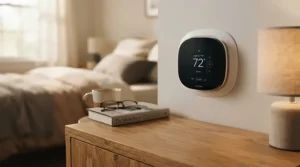
Wi-Fi control sets this pad apart. The twin measures 39 by 75 inches, and the pitch is simple: preheat the bed from your phone, then let the timer do the rest. That feature matters for anyone who forgets to flip a switch, like a college student buried in finals or a parent juggling bedtime. Scheduling also trims wasted run time, which is the quiet way to lower your electric bill.
Here’s what the spec sheet won’t tell you: more connectivity means more things that can break. If your router drops or the app updates badly, a plain dial would have served you better. This pad suits tech-comfortable buyers who value routine over simplicity. Verifiable review depth for the twin version is thin, so I won’t pretend to summarize it. One deal-thread commenter said they loved the queen version, which is encouraging but anecdotal. Deal posts have also shown this pad dropping to unusually low prices, though that varies by retailer and week.
Pros:
- ✅ App scheduling means a warm bed on cue
- ✅ Well-known heated-bedding brand
- ✅ Deal-friendly pricing at times
Cons:
- ❌ Depends on Wi-Fi and an app
- ❌ Twin-specific review data is limited
Typically $35-$70 depending on retailer deals. Worth it only if you’ll actually use the scheduling.
3. Bwarm Electric Heated Mattress Pad — deep pockets for thick mattresses
Bwarm’s twin pad measures 39 by 75 inches with 18-inch elastic pockets, which handles thicker mattresses and pillow tops that shorter skirts can’t. The listing advertises nine heat settings, a timer running 1 to 12 hours, a memory function that remembers your last setting, and a one-year guarantee. The memory feature sounds minor until you’re half-asleep and the pad has forgotten your preferred setting.
My read: this is the most practical twin heated mattress pad here for anyone with a mattress over 12 inches. The 360-degree elastic corners should stop the bunching that plagues loose-fit pads. The retailer listing I found showed 4.3 stars across about 42 ratings, a small sample but a decent one. Buyers mentioned a snug fit on a 14.5-inch twin mattress and relief for back pain, and one suggested running it under the mattress protector and fitted sheet. Polyester feels soft rather than luxurious, which is typical at this price.
Pros:
- ✅ 18-inch pockets fit thick mattresses
- ✅ Memory function remembers settings
- ✅ Washable with a one-year guarantee
Cons:
- ❌ Small review pool, so patterns are tentative
- ❌ Basic polyester feel
Around the low-to-mid $40s. Strong value for a deep-pocket fit.
4. Bigleap Heated Mattress Pad — the ETL-listed budget floor
Bigleap is the cheapest certified-looking option I found. The twin listing shows ten heat settings, a 12-hour auto shut-off, and an ETL certification claim. ETL is a third-party testing mark, and on a bargain pad that mark is the difference between “cheap” and “mystery.” The 12-hour timer is the longest here, but longer isn’t better, since you probably don’t need heat for twelve hours.
Think of this one as the guest-room workhorse. You don’t need it to be fancy, you need it to warm a bed twice a month without drama. Detailed review themes weren’t something I could verify, as the twin listing carried a modest number of ratings. That’s reason to inspect it carefully on arrival, not to dismiss it. Always confirm the ETL or UL mark on the actual label and controller, not only the product title, because some listings repeat certification language loosely.
Pros:
- ✅ ETL-certified claim at a low price
- ✅ Ten heat settings for tuning
- ✅ Many size variants available
Cons:
- ❌ Review themes were hard to verify
- ❌ Timer runs longer than most need
Around the mid-$30s. Excellent entry price if the label checks out.
5. CONCETTA Heated Mattress Pad — twelve settings and overheat protection
CONCETTA’s twin pad measures 39 by 75 inches and lists twelve heat settings, overheat protection, machine-washable construction, and an ETL certification claim. Twelve levels give you finer steps between “barely warm” and “toasty,” which helps if you share a house with someone who runs hot. Overheat protection is a built-in cutoff meant to prevent a runaway hot spot, so it matters.
For the shopper who hates being locked into a coarse low-medium-high choice, this is the budget tuner’s pick. I couldn’t verify a clean summary of review themes, so treat it as a promising spec sheet rather than a proven winner. That caution applies to any pad whose listing is mostly marketing copy. If the pad arrives and the stitching looks uneven or the controller feels flimsy, return it within the retailer’s window rather than hoping for the best.
Pros:
- ✅ Twelve heat settings for fine-tuning
- ✅ Overheat protection built in
- ✅ Machine-washable and affordably priced
Cons:
- ❌ Review themes weren’t verifiable
- ❌ Little brand track record
Roughly $30-$45 at the time of research. A cheap electric mattress pad twin size option with surprisingly modern features.
6. Comfytemp Heated Mattress Pad — non-slip base for restless sleepers
Comfytemp’s twin pad is listed at 40 by 75 inches with a non-slip underside, twelve heat and timer settings, and dual-zone control. That non-slip base is the sleeper feature here: pads that creep toward the foot of the bed are a common complaint, and gripping fabric helps. The extra inch of width is also useful, because a stretchy skirt should sit tight on a 39-inch mattress.
One caution: “dual zone” on a twin can mean different things. It could mean separate heating areas rather than two sleepers’ controls, so confirm how the zones are divided before you buy. For people who sleep hot up top and cold at the feet, that split could be genuinely useful. Review data was limited, with only a dozen reviews on the listing I found, so I’d treat it as promising but unproven. Clearance-style pricing appeared on some listings, but those fluctuate, so check what you’re actually paying.
Pros:
- ✅ Non-slip base reduces creeping
- ✅ Dual-zone control for custom warmth
- ✅ Twelve heat and timer settings
Cons:
- ❌ Zone layout needs verifying
- ❌ Few reviews to judge from
Typically in the mid-$40s. Good for restless sleepers who’ve fought sliding pads before.
7. Soft Heat Safe & Warm Low-Voltage Mattress Pad — the safety-first premium pick
Soft Heat is the one pad here built around a safety idea. A small power supply converts household 120-volt current into under 25 volts of low-voltage DC, and the manufacturer says the thin wires sit about three inches apart for even heat. The twin listing shows 38 by 75 inches, ten heat settings, a 10-hour auto shut-off, and over-temperature protection. Low voltage is meant to reduce shock and fire concerns, and the brand’s related pages describe the technology as UL Listed.
Because of that design, it’s the one I’d put in a child’s room or a home with pets. Reviewers of the Safe & Warm line often describe the warmth as comfortable rather than scorching, and mention that the pad stays put and fits deep mattresses. The tradeoff is intensity. A consumer columnist who tried a similar low-voltage pad described the warmth as subtle, so cold sleepers may crave more. Treat the “emits no EMFs” language as manufacturer marketing, and judge the pad on the safety certification instead.
Pros:
- ✅ Under-25-volt low-voltage design
- ✅ Ultra-thin wires you barely feel
- ✅ Pre-heat and hold function
Cons:
- ❌ Gentler warmth than high-wattage pads
- ❌ Costs more than other twin options
Around the mid-$50s to mid-$60s. Worth the premium if safety tops your list.
| Product | Heat Settings | Auto-Off | Safety Claim | Price Range | Best For |
|---|---|---|---|---|---|
| Sunbeam Water-Resistant | 10 | 10 hours | Confirm label mark | $50-$75 | Families |
| Sunbeam Connected | App-based | Check listing | Confirm label mark | $35-$70 | Schedulers |
| Bwarm | 9 | Up to 12 hours | One-year guarantee | Low-to-mid $40s | Thick mattresses |
| Bigleap | 10 | 12 hours | ETL claim | Mid-$30s | Tightest budgets |
| CONCETTA | 12 | Overheat protection | ETL claim | $30-$45 | Temperature tuners |
| Comfytemp | 12 (heat and timer) | Timer settings | Check label | Mid-$40s | Restless sleepers |
| Soft Heat | 10 | 10 hours | UL Listed tech | Mid-$50s to mid-$60s | Safety-first homes |
The pattern is clear: paying more mostly buys brand support or low-voltage design, not warmth. Bigleap and CONCETTA give you the most features per dollar, while Soft Heat gives you the strongest safety story. If you can only spend once, Bwarm hits the middle ground of fit, features, and price.
How to Choose a Twin Heated Mattress Pad in 7 Steps
- Measure your mattress depth. Most pads advertise 15 to 18-inch pockets. A pad that’s too shallow will pop off its corners and bunch, and a bunched pad creates hot spots.
- Check the safety mark on the label. Look for UL or ETL on the pad and controller, not only in the product title. Certified products have been tested to recognized standards, which untested clones skip.
- Confirm auto shut-off and overheat protection. A 10 to 12-hour timer is standard, and it’s your backup for the nights you forget.
- Pick a controller you’ll actually use. Dials are simple, digital controllers are precise, and Wi-Fi is convenient only if you’ll open the app.
- Check washability. A detachable controller makes machine washing realistic, which matters for kids’ beds.
- Look at the warranty. One to five years is typical, and a longer warranty usually signals the maker expects the pad to last.
- Decide on Twin or Twin XL. Dorm beds and tall sleepers often need XL, and sizing mistakes are the most common return reason.
One more rule: age matters. The Electrical Safety Foundation International says almost all of the roughly 500 yearly fires tied to heating pads and electric blankets involve units more than ten years old. So if your old pad shows scorched, frayed, or cracked spots, replace it instead of testing your luck.
Cheap Electric Mattress Pad Twin Size: What Your Money Actually Buys
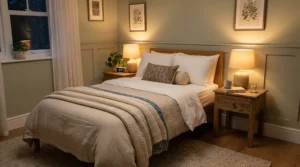
The price band for a cheap electric mattress pad twin size spans roughly $30 to $75. What changes between the low and high ends is less about warmth and more about fit, fabric, and support. Under about $45, you’re typically getting polyester, a basic controller, and a short warranty. Above that, you start seeing quilted tops, longer guarantees, or low-voltage systems.
That doesn’t make cheap pads bad. A cheap electric mattress pad twin size is a perfectly reasonable answer for a guest bed that sees thirty nights of use a year. It just means you should spend your effort on verification instead of features. Check the label for a safety mark, confirm the auto shut-off, read the first-night behavior closely, and keep the box for returns. If the pad smells odd, runs uneven, or feels hot in one spot, stop using it and return it.
Where cheap pads cut corners tells you a lot. Expect thinner stitching, a shorter cord, a simpler controller, and a smaller review pool. Those are inconveniences. Missing safety certification is different, and that’s the one place you shouldn’t compromise.
Affordable Single Bed Heated Pad: Who Benefits Most
An affordable single bed heated pad isn’t just for people who feel the cold. Different buyers get different returns from the same product.
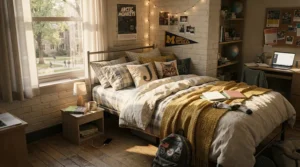
Kids and teens are the biggest audience, because twin beds dominate children’s rooms. For them, low-voltage designs like Soft Heat make the most sense, with adults controlling the settings. College students usually sleep on Twin XL, so they need XL-sized pads, and they should check campus housing rules first, since some restrict heated bedding.
Guest rooms are the sweet spot for the cheapest options like Bigleap, since the pad sees limited use and a lower price is easy to justify. People with chronic stiffness or back discomfort often like pre-warming the bed, as one buyer of Bwarm noted, though anyone with a medical condition should check with a clinician before relying on heat. Finally, renters in drafty rooms can lower the thermostat a notch instead of heating a whole apartment.
The common thread is control. An affordable single bed heated pad works best when someone, not just the timer, decides how long it runs.
Budget Twin Bed Warmer: What to Expect in Real-World Performance
A budget twin bed warmer won’t turn your bed into a sauna, and that’s fine. The point is to create a pocket of warmth around you instead of fighting an entire cold room. A twin pad draws roughly 60 to 85 watts, so it behaves more like a very patient reading lamp than a space heater.
Warm-up time varies. Some low-voltage makers advertise about fifteen minutes, while basic pads can take longer to feel noticeable through a thick sheet set. The practical trick is to switch it on thirty minutes before bed, climb into pre-warmed sheets, then dial it down. Buyers of the Safe & Warm line describe exactly that: turning their side to low about half an hour before bed, then shutting it off.
Layering matters. Putting the pad under a mattress protector and a fitted sheet, as a Bwarm buyer suggested, helps the heat stay where you are. Placing a thick topper above it blunts the warmth. The best budget twin bed warmer is the one placed correctly, not the one with the biggest wattage number.
Budget Heating Features That Actually Matter (And Those That Don’t)
Budget heating features are easy to oversell, so here’s the filter.
Features that matter:
- Auto shut-off, because it covers forgetful nights
- A visible safety certification mark
- Overheat protection, like the cutoff on CONCETTA
- A detachable controller for washing
- Pocket depth that fits your mattress
Features that mostly don’t:
- Twelve settings versus nine, since most people live on two or three
- Wi-Fi, unless you’ll truly schedule
- Marketing phrases like “skin-friendly” or “premium”
The exception is fit. A pad that slides around forces you to readjust constantly, so features like the elastic corners on Bwarm or the non-slip base on Comfytemp quietly decide whether you keep using the thing.
Among budget heating features, safety ones deserve your money first. Everything else is polish. If you’re torn between a fancy controller and a better certification, the certification wins every time.
Twin vs Twin XL: Which Heated Pad Size Should You Buy?
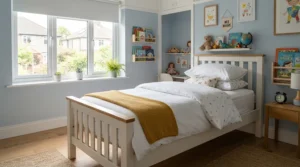
Twin vs Twin XL comes down to length. Both are about 38 to 39 inches wide, but Twin XL runs 80 inches long versus 75 for a standard twin. Sizing mistakes cost real money, because bedding isn’t interchangeable and a twin pad on an XL mattress leaves five inches uncovered at the foot.
| Factor | Twin | Twin XL |
|---|---|---|
| Typical dimensions | 38-39″ x 75″ | 38-39″ x 80″ |
| Best for | Kids, average-height adults, guest rooms | Tall sleepers, many college dorms |
| Pad availability | Widely available | Fewer options |
| Pad price tendency | Lower | Noticeably higher |
| Fits a twin frame? | Yes | No |
Twin XL heated pads exist, with listings like Gotcozy advertising up to 15-inch fit and others at 39 by 80 inches, but I found fewer of them and at higher prices. Accessories for XL beds are generally less available and pricier, which echoes broader mattress shopping advice.
Between Twin vs Twin XL, the rule is simple: measure the actual mattress, not the bed name. If you’re over six feet tall or buying for a college dorm, lean XL. Otherwise, a standard twin saves money and offers more choices, including every pad profiled above.
Are Cheap Heated Pads Safe?
Are cheap heated pads safe? The honest answer is “it depends on what’s missing.” Price isn’t the danger. Missing certification and poor wiring are.
Consider the recent record. The CPSC announced a recall of about 195,000 JKMAX heated blankets and heating pads sold on Amazon between September 2022 and July 2026, after 577 reports of smoking, melting, or burning and 53 burn injuries. Separately, the agency warned consumers to stop using Melinora electric heated blankets because internal wires could overheat and melt through polyester fabric. Those items were blankets rather than mattress pads, but the failure mode is the same: cheap wiring overheating.
So how do you stay safe? Verify the UL or ETL mark on the label, search the CPSC site for recalls, avoid unbranded listings with no model number, and stop using any pad that smells burnt, feels uneven, or shows scorched spots. Insurance guidance also warns against using an electric blanket and a heated mattress pad at the same time, and against tucking heated bedding around the mattress.
Are cheap heated pads safe? Often, yes, when certified and used properly. Skip the mystery brands, and a $35 pad can be a sensible buy.
Twin Heated Mattress Pad vs Electric Blanket vs Space Heater
Which warms a single bed best? The answer changes depending on whether you want warm sheets, a warm sleeper, or a warm room.
| Factor | Twin Heated Mattress Pad | Electric Blanket | Space Heater |
|---|---|---|---|
| Heat location | Under you | Over you | Whole room |
| Typical power draw | About 60-85 watts | Similar | About 1,500 watts |
| Fire-risk note | Don’t cover or fold | Don’t tuck or fold | Keep clear of bedding |
| Best for | Warm sheets, pre-heating | Cold shoulders | Chilly rooms |
| Best pick | Soft Heat for safety | Pairs poorly with a pad | Last resort |
The numbers tell the story. A space heater draws roughly twenty times the power of a twin pad, because it fights the whole room while a pad warms only the bed. Electric blankets and heated pads shouldn’t run together, so choose one.
If your room is chilly but not frozen, a Bwarm or Bigleap pad is far cheaper to run than any heater. For a truly cold house, heat the room first and use the pad as a bonus.
Long-Term Cost and Maintenance of a Twin Heated Mattress Pad
The real cost of a twin heated mattress pad is tiny. Running 75 watts for eight hours uses 0.6 kilowatt-hours, which at 15 cents per kWh is around nine cents if it stayed on full blast all night. In reality, thermostats cycle and most people preheat then lower the setting, so typical estimates land closer to two or three cents per night.
A rough ownership picture over five years: purchase price plus a few dollars of electricity each winter. Even a $60 pad becomes cheap per use after a few seasons. That’s the real value math, because a pad that replaces a degree or two of thermostat is arguably paying you back.
Maintenance extends life. Unplug and detach the controller before washing, use a gentle cycle, and dry on low or as the label directs. Store the pad loosely rolled instead of sharply folded, since creases can fray wiring. Replace any pad that shows burn marks, discoloration, or frayed cords, and treat ten years as an absolute ceiling, not a goal.
Practical Usage Guide: Setting Up Your Twin Heated Mattress Pad
Day one. Unpack the pad, inspect the cord and controller for damage, and read the manual. Lay it flat on the mattress with the controller end near the head of the bed, then stretch the skirt over the corners. Don’t tuck the pad around the mattress, because State Farm advises keeping heated bedding flat and never using an electric blanket together with a heated pad.
First-use test. Switch it to a low setting for ten minutes and check for even warmth. Then run a longer test while you’re awake and nearby.
Nightly routine.
- Turn the pad on 30 minutes before bed.
- Start on a medium setting.
- Drop to low before you fall asleep, or switch it off if you prefer.
Cord care. Route the cord away from foot traffic and don’t let the bed frame pinch it.
First 30 days. Watch for slipping, hot spots, and a controller that won’t respond. Most early problems show up quickly, which is why keeping the packaging matters.
Real-World Scenarios: Matching Twin Pads to Real Buyers
Scenario 1: The dorm sophomore. A student sleeping on a Twin XL in a drafty building needs XL sizing, a simple dial, and a modest budget. She should check campus rules first, then look at XL-sized pads such as the Gotcozy style listings, since standard twin pads leave her feet bare.
Scenario 2: The parent of an eight-year-old. A parent wants a nighttime bed warmer without safety anxiety. Soft Heat fits best, thanks to low-voltage heating, and the parent should operate the controller, since labels typically warn against children controlling heated bedding. Heating before bedtime, then switching off, matches ESFI-style advice.
Scenario 3: The guest-room host. Used maybe twenty nights a year, this bed needs low cost and decent safety. Bigleap or CONCETTA works, with a quick label check on arrival.
Scenario 4: The thick-mattress sleeper. A 14-inch pillow-top calls for deep pockets. Bwarm with its 18-inch skirt handles it, and its stretchy corners should stay put.
Problem → Solution Guide: Fixing the Common Annoyances
Problem: The pad creeps and bunches. Try a deeper pocket like Bwarm or a non-slip base like Comfytemp, and make sure the corners are fully seated.
Problem: You can feel the wires. Some buyers noted feeling wires through thinner setups. Add a thin mattress protector, or choose thinner-wire designs like Soft Heat.
Problem: It’s not warm enough. Preheat on high, then lower the setting. Remove thick toppers above the pad. If the pad still never warms, the unit may be defective, as one Sunbeam listing complaint described, so return it.
Problem: One side gets hot. Stop using it, unplug it, and replace it. Uneven heating can signal damaged wiring, so don’t try to repair it.
Problem: The controller is confusing. Pick simpler dial controllers like those on Sunbeam Water-Resistant, or keep the manual handy.
Twin Heated Mattress Pad FAQ
❓ How long does a twin heated mattress pad take to warm up?
❓ Can a twin heated mattress pad go under a mattress protector?
❓ Does a twin heated mattress pad work on an adjustable bed?
❓ Can I wash a twin heated mattress pad in the machine?
❓ How long does a twin heated mattress pad last?
Conclusion
A twin heated mattress pad is one of the cheapest ways to make a cold bed feel civilized. The seven picks above cover every sensible budget, from the mid-$30s to the mid-$60s, and the safest strategy is simple: verify certification, match the pad to your mattress depth, and treat cheap as fine but uncertified as risky.
If you want a safety-first design, Soft Heat earns its premium. If you want the best mix of fit and features, Bwarm is the balanced choice. For rock-bottom pricing with a certification claim, Bigleap and CONCETTA lead the way. Parents who want a familiar brand should look at Sunbeam Water-Resistant, while schedulers can try Sunbeam Connected. And restless sleepers should look hard at Comfytemp for its non-slip base.
Whatever you choose, check the label, read the manual, and replace old pads promptly. A warm bed shouldn’t come with a side of worry.
✨ Ready for warmer nights?
Click on any highlighted product name above to check current pricing and availability, pick the pad that matches your mattress, and make this the winter your sheets are never cold again!
Recommended for You
- Full Size Heated Mattress Pad For Guest Rooms: 7 Best Picks 2026
- Twin XL Heated Mattress Pad For College Dorm Beds: 7 Best (2026)
- Heated Mattress Pad For Lower Back Pain: 7 Soothing Picks 2026
Disclaimer: This article contains affiliate links. As an Amazon Associate, I earn from qualifying purchases. If you purchase products through these links, we may earn a small commission at no additional cost to you.
✨ Found this helpful? Share it with your friends! 💬🤗
