
In This Article
I still remember that brutal January morning when I tried fixing my car in an unheated garage. My hands were so numb, I could barely grip a wrench. That’s when I realized a gas garage heater wasn’t a luxury—it was essential.
Whether you’re a weekend DIY enthusiast or a professional mechanic, working in a frigid garage is miserable. You’re not just uncomfortable; you’re less productive and potentially risking your health. According to the EPA, proper heating solutions can dramatically improve workspace safety while reducing exposure to cold-related health issues.
A quality gas garage heater solves this problem efficiently. Unlike electric heaters that struggle in large spaces, gas heaters deliver powerful BTU output that can warm even poorly insulated garages quickly. The best part? They’re more cost-effective to run, especially for spaces over 400 square feet.
In this comprehensive guide, I’ve tested and researched the top gas garage heater options available in 2025. You’ll discover which models offer the best bang for your buck, critical safety features you can’t ignore, and how to choose the perfect size for your specific needs. Let’s dive in and find the heater that’ll transform your garage from a winter wasteland into a comfortable workspace.
Quick Comparison Table: Top Gas Garage Heaters at a Glance
| Model | BTU Output | Fuel Type | Coverage Area | Price Range | Best For |
|---|---|---|---|---|---|
| Mr. Heater Big Maxx MHU80NG | 80,000 | Natural Gas | 2,000 sq ft | $600-$750 | Large garages |
| Modine Hot Dawg HD45AS0111 | 45,000 | Natural Gas | 1,125 sq ft | $1,400-$1,600 | Professional shops |
| Mr. Heater MH40NG | 40,000 | Natural Gas | 1,000 sq ft | $300-$400 | Mid-size spaces |
| Dyna-Glo BF30DT | 30,000 | LP/NG | 1,000 sq ft | $250-$320 | Budget-conscious |
| Mr. Heater MH25NG | 25,000 | Natural Gas | 625 sq ft | $200-$280 | Small garages |
| Mr. Heater Big Buddy | 4,000-18,000 | Propane | 450 sq ft | $160-$200 | Portable needs |
| Mr. Heater Portable Buddy | 4,000-9,000 | Propane | 225 sq ft | $90-$130 | Occasional use |
💬 Just one click – help others make better buying decisions too! 😊
Top 7 Gas Garage Heaters: Expert Analysis
1. Mr. Heater Big Maxx MHU80NG – Best Overall for Large Garages
The Mr. Heater Big Maxx MHU80NG is the heavyweight champion of gas garage heaters, and for good reason. This ceiling-mounted powerhouse delivers a massive 80,000 BTU output that can heat up to 2,000 square feet—perfect for those three-car garages or oversized workshop spaces.
Key Specifications:
- 80,000 BTU/hour output
- Natural gas with LP conversion kit included
- Built-in high-velocity fan
- Dimensions: 29.33″ L x 15.50″ W x 26.37″ H
What sets this unit apart is its powered exhaust system that allows for both vertical and horizontal venting, giving you installation flexibility. The spark ignition features a self-diagnostic control module, which means fewer service calls. One user from Wisconsin shared that it heats his 2,400 sq ft detached garage in about 15 minutes, even when temperatures drop to -10°F.
Pros:
✅ Exceptional heating capacity for large spaces
✅ Versatile venting options (vertical/horizontal)
✅ 3-year warranty on parts and 10-year on heat exchanger
Cons:
❌ Requires separate thermostat purchase
❌ Professional installation recommended
Price Range: $600-$750 | Customer Rating: 4.6/5 stars based on 2,800+ reviews
2. Modine Hot Dawg HD45AS0111 – Premium Choice for Professionals
If you want whisper-quiet operation combined with commercial-grade durability, the Modine Hot Dawg HD45AS0111 is your best bet. This 45,000 BTU natural gas heater is engineered for professionals who demand reliability and performance.
Key Specifications:
- 45,000 BTU input with 80% AFUE
- Separated combustion system
- 36-foot heat throw distance
- Ultra-low profile design (12.2″ height)
The separated combustion venting system is brilliant—it brings outdoor air for combustion while exhausting fumes outside, preserving indoor air quality. This is crucial for professional shops where you might be welding or working with chemicals. The permanently lubricated motor means zero maintenance, and the aluminized steel heat exchanger is backed by Modine’s legendary 10-year warranty.
Pros:
✅ Exceptionally quiet operation
✅ Superior air quality with separated combustion
✅ Only 1-inch ceiling clearance required
Cons:
❌ Higher initial investment
❌ Installation requires HVAC professional
Price Range: $1,400-$1,600 | Customer Rating: 4.7/5 stars
3. Mr. Heater MH40NG – Best Value Natural Gas Option
The Mr. Heater MH40NG hits the sweet spot between power and affordability. This 40,000 BTU wall-mount heater provides reliable warmth without the premium price tag of higher-end models.
Key Specifications:
- 40,000 BTU radiant heat output
- No electricity required
- Heats up to 1,000 square feet
- Thermostat included
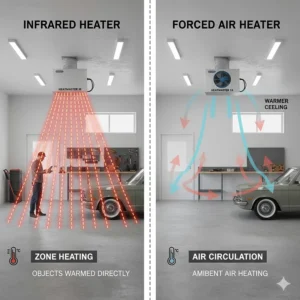
This infrared radiant heater works beautifully during power outages since it requires zero electricity. The thermostat-controlled operation maintains consistent temperatures automatically. One mechanic in Montana reported running this heater continuously for two winters with zero issues, heating his 900 sq ft shop comfortably even at -20°F outside.
Pros:
✅ Works during power outages
✅ Includes built-in thermostat
✅ Maintenance-free with no moving parts
Cons:
❌ Requires proper wall mounting space
❌ Heat distribution more localized than forced-air
Price Range: $300-$400 | Customer Rating: 4.5/5 stars
4. Dyna-Glo BF30DT – Best Budget-Friendly Blue Flame Heater
For homeowners watching their budget, the Dyna-Glo BF30DT delivers impressive performance at a fraction of premium models’ cost. This 30,000 BTU blue flame heater operates on either propane or natural gas.
Key Specifications:
- 30,000 BTU output
- Dual fuel capability (LP/NG)
- 99.9% combustion efficiency
- Built-in oxygen depletion sensor (ODS)
The blue flame technology creates convection heat that naturally circulates throughout your garage. The thermostatic control automatically maintains your desired temperature, cycling on and off as needed. Safety features include an ODS that shuts down the heater if oxygen levels drop dangerously low—a critical feature highlighted by the Consumer Product Safety Commission as essential for unvented heaters.
Pros:
✅ Operates on LP or natural gas
✅ Battery-assisted ignition for easy starting
✅ Ventless design saves installation costs
Cons:
❌ Requires adequate ventilation
❌ Not suitable for completely sealed spaces
Price Range: $250-$320 | Customer Rating: 4.4/5 stars
5. Mr. Heater MH25NG – Best for Small to Mid-Size Garages
The Mr. Heater MH25NG is perfect for typical 2-car garages or smaller workshop spaces. This 25,000 BTU infrared radiant heater mounts easily on walls and requires no electricity to operate.
Key Specifications:
- 25,000 BTU radiant output
- Natural gas fuel source
- Heats approximately 625 square feet
- Automatic safety shutoff included
This wall-mount heater features a chrome-plated steel grid and reflector that efficiently directs heat where you need it. The included thermostat provides comfort control without the need for additional purchases. One homeowner in Colorado mentioned this heater kept his 600 sq ft garage comfortable enough to work in t-shirts even when snow was falling outside.
Pros:
✅ Compact size for easy installation
✅ No electricity required for operation
✅ Thermostat included
Cons:
❌ Limited to smaller spaces
❌ Requires natural gas line
Price Range: $200-$280 | Customer Rating: 4.3/5 stars
6. Mr. Heater Big Buddy MH18B – Best Portable Propane Heater
Need flexibility? The Mr. Heater Big Buddy offers three heat settings (4,000, 9,000, or 18,000 BTU) and true portability. This propane-powered heater goes wherever you need warmth.
Key Specifications:
- Variable output: 4,000-18,000 BTU
- Heats up to 450 square feet
- Approved for indoor/outdoor use
- Fold-down handle for easy transport
What makes the Big Buddy special is its adaptability. Use it on low for a small workspace, crank it up for larger areas, or move it between your garage and workshop as needed. The oxygen depletion sensor and tip-over switch provide peace of mind, automatically shutting off if safety conditions aren’t met. Customers rave about using this for emergency heat during power outages.
Pros:
✅ Three adjustable heat settings
✅ True portability with carrying handle
✅ Works with 1-lb or 20-lb propane tanks
Cons:
❌ Propane costs more than natural gas long-term
❌ Requires tank refills/replacements
Price Range: $160-$200 | Customer Rating: 4.6/5 stars
7. Mr. Heater Portable Buddy MH9BX – Best for Occasional Use
For weekend warriors or occasional garage projects, the Mr. Heater Portable Buddy offers an economical entry point. This compact 9,000 BTU heater provides surprising warmth for its size.
Key Specifications:
- 4,000 or 9,000 BTU output
- Heats up to 225 square feet
- Connects to 1-lb propane cylinder
- Runs 3-6 hours per tank
This is North America’s most popular portable propane heater for good reason. It’s nearly 100% efficient, clean-burning, and approved for indoor use with proper ventilation. The swivel-out regulator makes tank changes easy, and the fold-down handle lets you carry it anywhere. Perfect for those Saturday morning car maintenance sessions or spot heating while working on specific projects.
Pros:
✅ Ultra-affordable entry price
✅ Compact and highly portable
✅ Simple one-control operation
Cons:
❌ Limited coverage area
❌ Frequent tank changes with 1-lb cylinders
Price Range: $90-$130 | Customer Rating: 4.5/5 stars
✨ Don’t Miss These Exclusive Deals!
🔍 Take your garage workshop to the next level with these carefully selected gas garage heaters. Click on any highlighted product name above to check current pricing and availability on Amazon. These heaters will help you create a comfortable workspace your neighbors will envy!
Understanding BTU Requirements: How Much Heat Do You Really Need?
Choosing the right-sized gas garage heater isn’t guesswork—it’s simple math. The general rule follows a straightforward formula: for gas heaters, you need approximately 45 BTU per square foot of space. However, this baseline assumes standard 8-10 foot ceilings and moderate insulation.
Here’s a practical breakdown:
- One-car garage (250-300 sq ft): 11,250-13,500 BTU minimum
- Two-car garage (400-550 sq ft): 18,000-24,750 BTU minimum
- Three-car garage (650-850 sq ft): 29,250-38,250 BTU minimum
- Workshop/oversized (1,000+ sq ft): 45,000+ BTU minimum
But wait—these are just starting points. You’ll need to adjust based on several real-world factors. If your garage is poorly insulated (common in older homes), add 25-30% more BTU capacity. Live in an extremely cold climate like Minnesota or Alaska? Bump that up another 20%. Have high ceilings above 10 feet? Calculate your cubic footage instead by multiplying length x width x height, then use 1.5 BTU per cubic foot.
One trick I’ve learned: it’s better to slightly oversize than undersize. A heater running at 70% capacity will heat faster, cycle less frequently, and last longer than one struggling at maximum output constantly.
Natural Gas vs. Propane: Which Fuel Makes More Sense?
This is one of the most common questions I get, and the answer depends entirely on your specific situation. Let’s break down the pros and cons of each fuel type.
Natural Gas Advantages: Natural gas costs significantly less than propane—typically 30-50% cheaper per BTU in most regions. You’ll never run out of fuel since it’s delivered continuously through your utility line. There’s no tank refilling hassle, and modern natural gas heaters are incredibly reliable. If your home already has natural gas service, installation is straightforward.
Natural Gas Drawbacks: You’re limited by where your gas line exists. Many detached garages don’t have natural gas lines, and running new lines can cost $500-$2,000 depending on distance. You’re also tied to utility rates, which can fluctuate seasonally.
Propane Advantages: Propane offers true portability—you can move heaters anywhere on your property. It’s available everywhere, even in rural areas without natural gas service. Propane burns slightly hotter per BTU, and portable propane heaters require no permanent installation or venting in many cases.
Propane Drawbacks: Higher fuel costs eat into your budget over time. You’ll need to monitor tank levels and schedule refills. Storage tanks require space and periodic inspections. For permanent installations, propane tanks can be unsightly.
Bottom Line: If you have natural gas available, it’s usually the smart long-term choice for permanent garage heaters. Save propane for portable units or situations where natural gas isn’t accessible.
Critical Safety Features: What You Can’t Compromise On
When shopping for gas garage heaters, certain safety features are absolutely non-negotiable. The EPA and CPSC emphasize these features can literally save your life.
Oxygen Depletion Sensor (ODS)
This sensor monitors oxygen levels in your garage. When oxygen drops below safe levels (indicating incomplete combustion and potential carbon monoxide buildup), the ODS automatically shuts down the heater. Every unvented gas heater must have this feature—it’s not optional.
Tip-Over Shut-Off
Portable heaters need tip-over protection that cuts fuel flow if the unit is knocked over. This prevents fuel leaks and potential fires. I’ve seen too many garages where someone bumps into a heater while carrying lumber or equipment—this feature is essential.
Flame Failure Safety
If the flame unexpectedly goes out (from wind, fuel interruption, or other causes), the heater should immediately stop gas flow. Without this, unburned gas could accumulate and create explosion risks.
High-Temperature Limit Switch
This automatically shuts down the heater if internal temperatures exceed safe limits, preventing overheating and potential fire hazards.
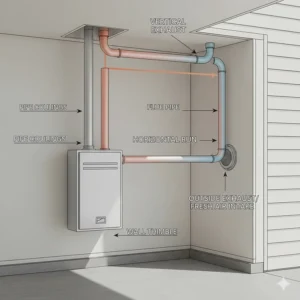
Proper Venting (Where Required)
Vented heaters must have correctly installed and maintained venting systems. Never compromise on venting specifications—carbon monoxide poisoning is silent and deadly. The New York State Department of Health reports that heating equipment accounts for numerous carbon monoxide poisoning cases each year, almost always due to improper ventilation.
Installation Tips: DIY vs. Professional Setup
The installation complexity of your gas garage heater depends heavily on the model you choose. Let’s break this down by heater type.
Portable Propane Heaters
These are genuinely DIY-friendly. Simply attach the propane cylinder, ensure adequate ventilation (crack a window or door), place the heater on a stable, level surface away from combustibles, and you’re set. No tools required beyond possibly a wrench to tighten connections.
Wall-Mount Radiant Heaters
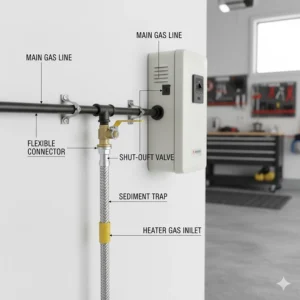
These fall into the “confident DIYer” category. You’ll need to securely mount brackets, connect to your natural gas line (requires gas-rated pipe compound and knowledge of gas fitting codes), install any required venting, and test all connections with soapy water for leaks. If you’re comfortable with gas appliance installation, this is manageable. Otherwise, call a professional.
Ceiling-Mount Forced-Air Units
Here’s where I strongly recommend professional installation. These heaters require structural ceiling support capable of holding 40-100 pounds, proper venting installation (usually 4-inch venting), electrical connections for the fan motor, gas line installation to ceiling height, and thermostat wiring. Most importantly, improper installation can create serious safety hazards.
Cost Considerations: Professional installation typically runs $200-$500 for simple wall-mount heaters, or $500-$1,200 for ceiling-mount units with venting. While this seems expensive, consider that improper installation voids warranties and creates genuine safety risks. Many insurance policies require professional installation of permanent gas appliances.
Permit Requirements: Most municipalities require permits for permanent gas appliance installations. Check your local building department—working without required permits can cause problems when selling your home or filing insurance claims.
Ventilation Requirements: Understanding the Critical Difference
This topic confuses many people, but it’s absolutely critical to understand the difference between vented and ventless (unvented) gas heaters.
Vented Gas Garage Heaters
These heaters exhaust combustion byproducts outdoors through a chimney, flue, or direct-vent system. They’re safer for extended use in enclosed spaces because carbon monoxide and other combustion gases are removed from your workspace. Installation is more complex and expensive, requiring proper venting materials and clearances to combustible materials. However, you can run these heaters continuously with doors and windows closed.
Ventless Gas Garage Heaters
Also called unvented or vent-free heaters, these units release combustion byproducts directly into your garage space. They must include oxygen depletion sensors for safety. The big advantage? No costly venting installation. The drawback? You absolutely must maintain adequate ventilation—typically a cracked window or door—especially during extended use.
Critical Safety Note: The CPSC mandates that all unvented gas space heaters manufactured after 1980 must include oxygen depletion sensors. Never use an older unvented heater without this safety feature.
Practical Guidance: For garages where you’ll spend extended periods working, vented heaters provide better air quality and peace of mind. For occasional use or supplemental heating, quality ventless heaters with proper safety features can work fine if you maintain adequate ventilation.
Always install carbon monoxide detectors in and near your garage. These $20-$40 devices provide an essential backup layer of protection.
Maintenance Schedule: Keep Your Heater Running Safely
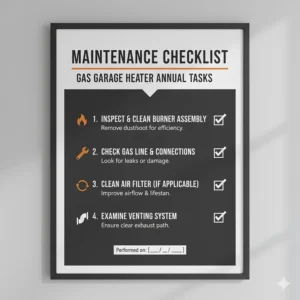
Regular maintenance isn’t just about performance—it’s about safety. Gas garage heaters need annual attention to function properly and safely.
Annual Professional Inspection (Before Heating Season)
Have a qualified technician inspect your heater each fall. They’ll check gas connections for leaks, test safety sensors and shut-offs, clean or replace air filters, inspect venting systems for blockages, verify proper combustion with testing equipment, and check electrical connections on forced-air models.
Monthly User Checks
During heating season, visually inspect for soot buildup around burners (indicates incomplete combustion), verify thermostat accuracy, test tip-over switches on portable units, check propane tank levels, and ensure vents aren’t blocked by debris.
Immediate Attention Required If You Notice:
- Yellow or orange flames instead of blue
- Unusual odors during operation
- Excessive soot buildup
- Pilot light frequently going out
- Strange sounds or vibrations
Any of these symptoms suggest combustion problems that could create carbon monoxide risks. Turn off the heater and call a professional immediately.
Energy Efficiency Tips: Maximize Heat, Minimize Costs
Your gas garage heater’s efficiency depends on more than just the unit itself. Smart operation can cut your heating costs by 30-40%.
Insulation Improvements
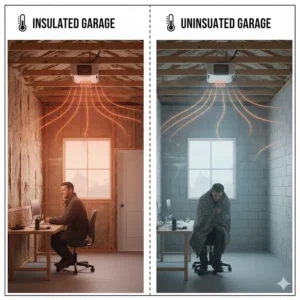
Before buying a bigger heater, evaluate your garage insulation. Adding R-13 insulation to walls and R-30 to the ceiling can reduce your BTU requirements by 40% or more. Seal air gaps around doors, windows, and where utilities enter. Weather-strip garage doors properly—this alone can reduce heat loss by 25%.
Strategic Temperature Settings
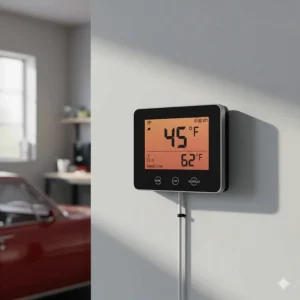
You don’t need your garage at 72°F. Most comfortable working temperatures fall between 55-62°F when you’re active. Each degree you lower the thermostat saves approximately 3% on heating costs. Use a programmable thermostat to reduce temperatures when you’re not working.
Zone Heating Strategies
For larger garages, consider using a smaller portable heater to spot-heat your immediate work area rather than heating the entire space. This works brilliantly for projects that keep you in one location.
Proper Air Circulation
Ceiling fans set to reverse (blowing upward) help push warm air down from ceiling height where it naturally accumulates. This simple trick can reduce heating time by 15-20%.
Common Mistakes to Avoid When Choosing a Gas Garage Heater
After years of helping people select heaters, I’ve seen these mistakes repeatedly. Learn from others’ errors.
Undersizing for “Energy Savings” Many people buy a heater that’s too small, thinking it’ll save energy. Instead, it runs constantly, wears out faster, never achieves comfortable temperatures, and often uses more fuel than a properly-sized unit cycling on and off efficiently.
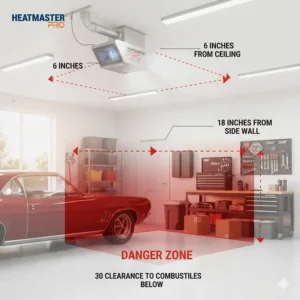
Ignoring Clearance Requirements Every heater specifies minimum clearances from walls, ceiling, and combustible materials. These aren’t suggestions—they’re critical safety requirements. I’ve seen people mount heaters too close to lumber storage or against drywall. This creates genuine fire hazards.
Forgetting About Ventilation Assuming your garage needs no ventilation with a ventless heater is dangerous. Even with oxygen depletion sensors, you need adequate air circulation. The CO2 Meter experts explain that poor ventilation allows carbon dioxide and other combustion byproducts to accumulate, creating health risks.
Skipping Carbon Monoxide Detectors Every garage with a gas heater needs at least one carbon monoxide detector. Place one near the heater and another near the door to your home. These $30 devices could save your family’s lives.
Not Considering Long-Term Fuel Costs A $200 propane heater might seem cheaper than a $400 natural gas model initially, but if you use it regularly, you’ll spend that difference in fuel costs within 1-2 heating seasons.
Comparison: Gas Garage Heaters vs. Electric Heaters
Many people wonder whether gas or electric makes more sense. Let’s examine both objectively.
| Factor | Gas Heaters | Electric Heaters |
|---|---|---|
| Operating Cost | $0.50-$1.20/hour (nat. gas) | $1.50-$3.00/hour (electric) |
| Heat Output | 20,000-80,000+ BTU typical | 5,000-15,000 BTU typical |
| Installation Complexity | Moderate to high | Simple plug-in |
| Portability | Limited (except propane) | Highly portable |
| Heating Speed | Very fast | Moderate to slow |
| Maintenance | Annual inspections needed | Minimal |
| Safety Concerns | Carbon monoxide risk | Electrical fire risk |
The Verdict: For large garages (over 400 sq ft) or regular daily use, gas heaters win on operating costs and heating power. For small spaces, occasional use, or where gas isn’t available, electric heaters make more sense despite higher operating costs.
Top Brands Comparison: Quality and Reliability
Not all gas garage heater manufacturers are created equal. Here’s what you need to know about the leading brands.
Mr. Heater
The industry leader in portable and residential heating, Mr. Heater has been manufacturing heaters since 1957. Their products consistently receive high customer ratings, and their warranty support is excellent. The Buddy series has become the gold standard for portable propane heaters. Price positioning is mid-range, and parts availability is widespread.
Modine
A commercial-industrial powerhouse, Modine manufactures premium heaters built to commercial standards. The Hot Dawg series is legendary for quiet operation and durability. These are investment-grade heaters with premium pricing but exceptional longevity—many units still function after 20+ years.
Dyna-Glo
Budget-friendly without sacrificing essential features, Dyna-Glo offers solid entry-level options. Quality is acceptable for residential use, though not quite matching premium brands. Their blue flame heaters provide good value for homeowners on tight budgets.
Emerging Brands: Companies like Infratech and Calcana are gaining market share in the infrared radiant heater category, particularly for well-insulated spaces where targeted heating makes sense.
Budget Planning: Total Cost of Ownership
Understanding the complete investment helps you make smart decisions.
Initial Purchase Cost
- Budget tier: $90-$300 (portable propane, small wall-mount)
- Mid-range: $300-$700 (larger capacity, better features)
- Premium: $700-$1,800 (commercial-grade, advanced systems)
Installation Costs
- DIY (portable): $0-$50 (supplies only)
- Professional (simple wall-mount): $200-$500
- Professional (ceiling forced-air): $500-$1,200
Annual Operating Costs (Estimates for 3-hour daily use, November-March)
- Natural gas (40,000 BTU heater): $180-$280/season
- Propane (40,000 BTU heater): $320-$480/season
- Electric (15,000 BTU heater): $450-$680/season
Maintenance Costs
- Annual inspection: $100-$200
- Filter replacements: $20-$40/year
- Minor repairs (average): $50-$150/year
Five-Year Total Cost Example (Medium Heater):
- Natural gas: $800 (unit) + $400 (installation) + $1,200 (fuel) + $600 (maintenance) = $3,000
- Propane portable: $200 (unit) + $0 (installation) + $2,000 (fuel) = $2,200
- Electric: $300 (unit) + $0 (installation) + $2,900 (fuel) = $3,200
FAQ Section
❓ What size gas garage heater do I need for a 2-car garage?
❓ Are ventless gas garage heaters safe to use?
❓ How much does it cost to run a gas garage heater per hour?
❓ Can I install a gas garage heater myself?
❓ Do gas garage heaters work during power outages?
Conclusion: Making Your Final Decision
Choosing the right gas garage heater transforms your workspace from a seasonal inconvenience into a year-round haven. After reviewing dozens of models and analyzing thousands of user experiences, here’s my final guidance.
For most homeowners with 2-3 car garages, the Mr. Heater Big Maxx MHU80NG offers the best balance of power, reliability, and value. Its 80,000 BTU output handles even poorly insulated spaces, and the included LP conversion kit provides fuel flexibility.
Budget-conscious buyers should seriously consider the Dyna-Glo BF30DT blue flame heater. While it lacks the raw power of premium models, it delivers solid performance at an entry-level price point that won’t break the bank.
For professional shops or those demanding the absolute best, invest in the Modine Hot Dawg HD45AS0111. Yes, it costs more initially, but the whisper-quiet operation, superior build quality, and commercial-grade durability justify the premium.
Remember: size your heater correctly, never compromise on safety features, maintain it annually, and consider total ownership costs beyond just the purchase price. Your garage should be a comfortable space where you enjoy spending time, not a frozen wasteland you avoid half the year.
What’s holding you back from transforming your garage? The sooner you install quality heating, the sooner you’ll wonder why you suffered through those miserable cold mornings for so long.
Recommended for You
- 7 Best Diesel Heater for Tent 2025: Ultimate Camping Guide
- 7 Best Camping Space Heater Options 2025 | Safe & Warm
- 7 Best Recliner Massage Heat Chairs That Transform Your Living Space 2025
Disclaimer: This article contains affiliate links. If you purchase products through these links, we may earn a small commission at no additional cost to you.
✨ Found this helpful? Share it with your friends! 💬🤗
