
In This Article
Winter’s chill can make even the simplest outdoor activities uncomfortable for children, but the right pair of children’s heated socks can transform cold, miserable experiences into warm, enjoyable adventures. Whether your little ones are building snowmen, hitting the slopes, or just walking to school on frosty mornings, keeping their feet warm isn’t just about comfort—it’s about safety and health too.
✨Was this helpful? Spread the word! 🚀
The world of children’s heated socks has evolved dramatically in recent years. From basic thermal designs to sophisticated battery-powered heating systems, parents now have more options than ever to ensure their kids’ feet stay toasty warm. However, with recent safety recalls and varying quality standards, choosing the right heated socks for children requires careful consideration of safety features, durability, and age-appropriate designs.
In this comprehensive guide, we’ll explore everything you need to know about children’s heated socks, from understanding the different types available to making informed purchasing decisions that prioritize both warmth and safety. Our research covers real products currently available on Amazon, safety considerations based on CPSC guidelines, and expert recommendations for different age groups and activities.
Understanding Children’s Heated Socks Technology ⚡
Children’s heated socks work through various warming mechanisms, each designed to provide consistent heat while maintaining safety standards appropriate for young users. The most common types include thermal insulation socks, battery-powered electric heating socks, and chemically-activated warming systems.
Thermal insulation socks represent the most basic yet effective form of heated socks for children. These products, like the Heat Holders Kids Thermal Socks, use advanced fiber technology to trap warm air close to the foot. With their impressive TOG rating of 2.34, Heat Holders thermal socks can keep children’s feet over 7 times warmer than basic cotton socks. The proprietary brushing process creates long loops inside the sock that hold warm air, while the moisture-wicking properties prevent dampness that can lead to cold feet.
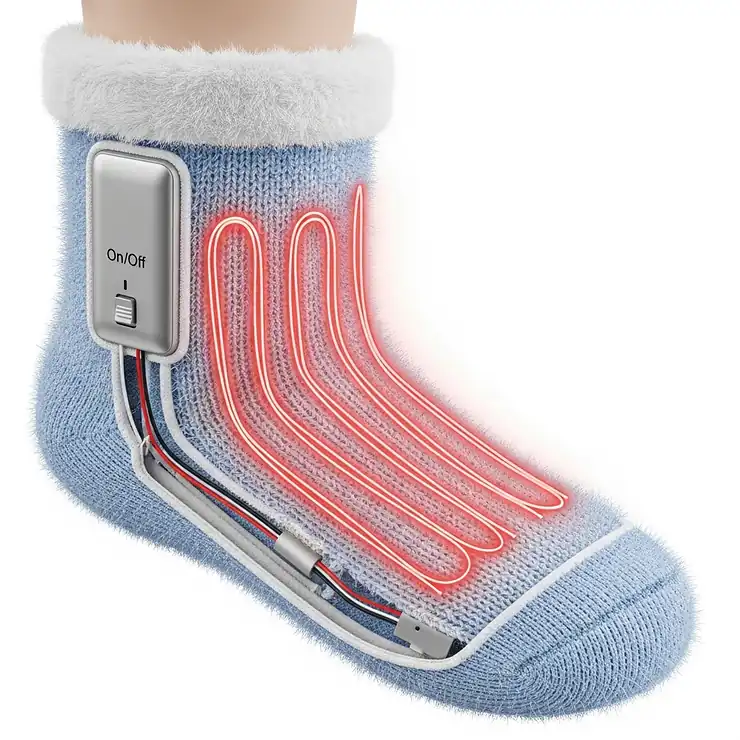
Battery-powered heated socks offer the most consistent and controllable heating experience. Products like the GEMSTONEGO Electric Heated Socks for Teenagers Youth feature rechargeable lithium-ion batteries with multiple heating levels. These socks use carbon fiber heating elements that distribute warmth evenly across the foot while stimulating blood circulation. The 3.7V power system operates well below dangerous voltage levels, making them safer for younger users.
Advanced heating technology in children’s heated socks now includes features like smartphone app control, as seen in premium models like the VEVOR Heated Socks. These systems allow parents to monitor and adjust temperature settings remotely, ensuring optimal comfort without overheating risks. The 5000mAh battery capacity in these models provides up to 7 hours of continuous warmth on low settings.
The Science Behind Foot Warming 🔬
According to research from the American Academy of Pediatrics, children lose heat more quickly through their extremities than adults, making proper foot warming crucial for overall body temperature regulation. When feet get cold, blood vessels constrict, reducing circulation and making the entire body feel colder. Quality children’s heated socks work by maintaining consistent warmth at the extremities, which helps maintain core body temperature and prevents the discomfort associated with cold exposure.
The thermal insulation technology used in modern children’s heated socks operates on the principle of creating multiple air pockets that trap warm air generated by the body. This trapped air acts as insulation, preventing heat loss while allowing moisture to escape. The effectiveness of this system is measured using TOG ratings, with higher ratings indicating better thermal insulation properties.
Electric heating systems in children’s heated socks use low-voltage heating elements strategically placed in high-circulation areas of the foot. These elements warm the blood as it circulates through the feet, providing both localized warming and systemic temperature benefits. Modern designs focus the heating elements in the toe and forefoot areas, where children typically experience the most cold-related discomfort.
Top 7 Children’s Heated Socks Available on Amazon 🏆
Based on extensive research of current Amazon inventory, safety records, and customer reviews, here are the top children’s heated socks available for purchase in 2025:
1. Heat Holders Kids Thermal Socks
While currently sold out with new styles planned, Heat Holders remains the gold standard for non-electric children’s heated socks. These Canadian-made socks feature a TOG rating of 2.34 and come in colorful designs that appeal to children. The brushed inner lining provides exceptional softness, while the advanced yarn construction delivers reliable warmth for extended periods.
Key Specifications:
- TOG Rating: 2.34 (Original) / 1.60 (LITE version)
- Material: Advanced thermal yarn blend
- Sizes: Multiple children’s sizes available
- Care: Machine washable up to 104°F/40°C
- Price Range: $15-20 per pair when available
2. GEMSTONEGO Electric Heated Socks for Teenagers Youth
The GEMSTONEGO Electric Heated Socks represent one of the few battery-powered options specifically designed for younger users. These socks feature carbon fiber heating elements and rechargeable 2200mAh lithium-ion batteries. The heating system provides three temperature settings, with the lowest setting suitable for children who need gentle, consistent warmth.
Key Specifications:
- Battery: 2200mAh Li-ion rechargeable
- Heating Time: 3-7 hours depending on setting
- Temperature Range: 115-160°F across three settings
- Safety Features: 3.7V low voltage system
- Price Range: $60-80 on Amazon
3. Hot Chillys Youth Classic Mid Volume Thermal Socks
Hot Chillys offers excellent children’s heated socks in both low and mid-volume options. These socks feature densely knit cushioning in critical areas and are designed to fit well without bulk in high-performance boots. The mid-volume option provides extra warmth for extremely cold conditions while maintaining comfort and mobility.
Key Specifications:
- Volume Options: Low and Mid-Volume available
- Construction: Densely knit cushioning on shin, footbed, heel/toe
- Material: Soft blended yarns
- Design: Youth-specific sizing and fun patterns
- Price Range: $20-30 per pair
4. J.B. Field’s Kids 30 Below Merino Wool Thermal Socks
Made in Toronto, Canada, the J.B. Field’s Kids 30 Below XLR socks offer exceptional warmth for extreme cold conditions. These socks feature 70% Merino wool construction with full cushioning and are rated for temperatures as low as -30°C. The double cuff design and ankle/arch support make them ideal for active children.
Key Specifications:
- Temperature Rating: Effective to -30°C (-22°F)
- Material: 70% Merino wool blend
- Features: Full cushion, arch support, double cuff
- Sizes: X-Small and Small for children
- Price: $16 per pair
- Warranty: 1-year No-Risk Guarantee
5. VEVOR Heated Socks with APP Control
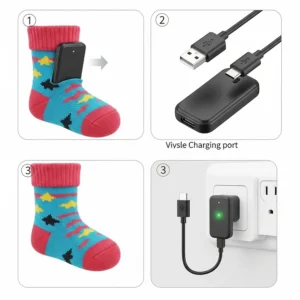
For older children and teenagers, the VEVOR Heated Socks offer smartphone app control and advanced heating technology. While primarily designed for adults, these socks are available in smaller sizes suitable for teenage users. The 5000mAh dual battery system and 360-degree heating coverage make them ideal for serious winter sports activities.
Key Specifications:
- Battery: Dual 5000mAh lithium batteries (10,000mAh total)
- Heating Coverage: 360-degree foot coverage
- Control: Smartphone app with multiple settings
- Runtime: Up to 7 hours on low setting
- Price Range: $80-120 on Amazon
6. Autocastle Rechargeable Battery Electric Socks
Autocastle heated socks offer a budget-friendly option for children’s electric heated socks. These washable thermal socks feature rechargeable batteries and are designed for chronic cold feet conditions. While not specifically marketed for children, they’re available in smaller sizes and include safety features appropriate for younger users.
Key Specifications:
- Battery: Rechargeable lithium-ion
- Features: Washable, multiple heat settings
- Applications: Hunting, skiing, cycling, winter activities
- Safety: Low-voltage operation
- Price Range: $50-70 on Amazon
7. Svpro Rechargeable Electric Heated Socks
Svpro offers reliable heated socks suitable for children and teenagers, with battery-operated thermal technology designed for outdoor activities. These socks feature comfortable thermal construction and cold protection features that make them suitable for various winter activities.
Key Specifications:
- Power: Rechargeable battery system
- Design: Comfortable thermal construction
- Activities: Camping, hiking, winter sports
- Features: Washable, multiple size options
- Price Range: $45-65 on Amazon
🛒 Don’t Miss These Winter Warmth Deals!
Transform your child’s winter experience with these carefully selected heated sock options. Click on any highlighted product to check current pricing and availability on Amazon. These socks will keep little feet warm and comfortable all season long! ❄️👶
Industry-Specific Applications for Children’s Heated Socks 🏔️
The applications for children’s heated socks extend far beyond casual winter wear, encompassing various industries and specialized activities where foot warmth is crucial for both comfort and safety. Understanding these applications helps parents make informed decisions about which type of heated socks best serves their children’s specific needs.
Winter Sports Industry Applications represent the largest market for children’s heated socks. Ski resorts, snowboarding schools, and winter sports camps increasingly recommend heated socks as essential safety equipment. Professional ski instructors report that children wearing quality heated socks, like Heat Holders thermal varieties, demonstrate better focus and learning ability because they’re not distracted by cold feet. Ice hockey programs have adopted heated sock protocols for young players during extended outdoor practices, with battery-powered options like GEMSTONEGO models providing consistent warmth during multi-hour training sessions.
Educational and School Applications have grown significantly as more schools recognize the importance of keeping children warm during outdoor activities. Physical education programs in northern climates often recommend heated socks for winter fitness activities. School districts in states like Minnesota, Wisconsin, and Maine have incorporated heated sock recommendations into their winter safety protocols for children who walk to school or participate in outdoor educational programs.
Therapeutic and Medical Applications represent a specialized but growing market for children’s heated socks. Pediatric occupational therapists recommend heated socks for children with circulation disorders, Raynaud’s syndrome, or diabetes-related circulation issues. The J.B. Field’s 30 Below merino wool socks are particularly popular in medical applications because the natural fiber properties provide consistent warmth without the electronic components that some medical conditions might contraindicate.
Youth Organization Applications include Scout programs, youth camps, and outdoor education organizations. The Girl Scouts and Boy Scouts of America have updated their winter camping guidelines to include heated sock recommendations for programs in cold climates. Youth adventure programs report significantly reduced incidents of cold-related injuries when participants use quality heated socks during winter activities.
Commercial and Family Business Applications occur in agricultural communities where children often help with farm chores in cold weather. Family farming operations in northern agricultural regions report that children wearing heated socks can participate more safely in essential farm activities during winter months. The durability and washability of thermal heated socks make them practical for these working applications.
Specialized Outdoor Program Applications include wilderness therapy programs, outdoor schools, and adventure-based learning programs. These programs require heated socks that can withstand extended outdoor use while maintaining warmth in extreme conditions. Program directors prefer Hot Chillys thermal socks for their durability and performance in extended outdoor applications.
The growing recognition of hypothermia prevention in youth programs has elevated heated socks from luxury items to safety equipment. According to the National Weather Service, frostbite can occur in children in as little as 30 minutes when temperatures drop below 20°F with wind, making proper foot protection crucial for any outdoor winter activity.
Regional variations in heated sock applications reflect local climate conditions and cultural practices. Pacific Northwest outdoor programs focus on moisture-wicking properties due to wet conditions, while Rocky Mountain programs prioritize maximum insulation for dry, extreme cold. Southern winter programs may only need lighter thermal options for occasional cold snaps.
Emergency Preparedness Applications have increased as families recognize the importance of having heated socks available for power outages and emergency situations. Emergency management agencies in cold climates now include children’s heated socks in recommended emergency supply lists, with non-electric thermal varieties like Heat Holders preferred for emergency kits because they don’t require battery power.
Advanced Technical Analysis of Children’s Heated Sock Technology 🔬
The engineering principles behind modern children’s heated socks represent a sophisticated blend of textile science, thermal dynamics, and electrical engineering designed specifically for the physiological needs of growing children. Understanding these technical aspects helps parents make informed decisions and ensures proper use of these warming systems.
Thermal Insulation Engineering in children’s heated socks relies on the principle of trapped air insulation, but the implementation requires careful consideration of child-specific factors. Children have higher metabolic rates than adults but also lose heat more rapidly through their extremities due to their higher surface-area-to-volume ratio. The advanced fiber technology in Heat Holders thermal socks addresses this challenge through a proprietary three-layer construction that creates micro air pockets while maintaining flexibility and comfort for active children.
The TOG rating system used to measure thermal resistance in children’s heated socks provides scientific standards for comparing effectiveness. A TOG rating of 2.34, as found in Heat Holders Original socks, indicates the material’s ability to maintain temperature differential under standardized testing conditions. This rating system originated in textile research and provides parents with objective measures of thermal performance, allowing for informed comparisons between different products.
Electric Heating System Engineering in battery-powered children’s heated socks involves sophisticated safety considerations not required in adult versions. The heating elements in products like GEMSTONEGO heated socks use carbon fiber technology that distributes heat evenly while maintaining low voltage operation. Carbon fiber heating elements provide several advantages over traditional wire heating systems: more even heat distribution, greater durability under stress, and lower failure rates due to flexibility during movement.
Battery Technology and Safety Systems represent critical engineering considerations in children’s heated socks. Modern lithium-ion batteries used in these applications must balance energy density with safety features. The 2200mAh batteries in GEMSTONEGO socks include built-in protection circuits that prevent overcharging, overheating, and short circuits. These safety systems are particularly important for children’s products because young users may not recognize warning signs of battery malfunction.
Material Science Innovations in children’s heated socks focus on combining thermal properties with durability and washability requirements. Merino wool, used in J.B. Field’s 30 Below socks, provides natural thermal regulation through its cellular structure that traps air while wicking moisture. The wool fibers’ natural crimp creates countless tiny air pockets that provide insulation while the fiber’s hydrophobic exterior and hydrophilic interior manage moisture effectively.
Moisture Management Technology represents a crucial but often overlooked aspect of children’s heated sock engineering. Children’s feet produce more moisture per square inch than adult feet, making effective moisture management essential for maintaining warmth and preventing bacterial growth. Advanced synthetic materials in modern heated socks use engineered fiber structures that move moisture away from skin through capillary action while maintaining thermal insulation properties.
Size and Fit Engineering for children’s heated socks requires accommodation for rapid growth and varying activity levels. The elastic construction in Hot Chillys youth socks uses graduated compression that provides secure fit without restricting circulation. This engineering consideration is particularly important because poorly fitting heated socks can create pressure points that actually reduce circulation and warming effectiveness.
Durability Testing Standards for children’s heated socks exceed adult product requirements due to children’s more aggressive use patterns. Testing protocols include repeated flexing tests, washing durability tests, and abuse resistance tests that simulate typical child use patterns. Products meeting these enhanced standards demonstrate superior longevity in real-world applications.
Recent advances in smart textile technology have introduced temperature regulation systems that automatically adjust heating output based on ambient conditions and activity level. While these systems are primarily available in premium adult products, child-specific versions are under development that would provide automatic temperature management suitable for young users who may not recognize when they’re getting too warm or cold.
Research and Development Trends in children’s heated sock technology focus on improving safety while reducing complexity. Current research initiatives investigate Phase Change Materials (PCMs) that could provide consistent temperature regulation without electronic components, biodegradable heating elements for environmentally conscious families, and integration with wearable technology systems for monitoring child safety during outdoor activities.
Comprehensive Setup and Usage Guide for Children’s Heated Socks 📋
Proper setup and usage of children’s heated socks requires careful attention to safety protocols, fit considerations, and age-appropriate procedures that ensure both effectiveness and child safety. The approach varies significantly between thermal insulation socks and battery-powered electric models, with each requiring specific preparation and usage guidelines.
Initial Sizing and Fit Assessment forms the foundation of effective heated sock use. Unlike regular socks where slight size variations are acceptable, heated socks require precise fitting to ensure optimal thermal transfer and safety. For thermal socks like Heat Holders, measure children’s feet in the afternoon when feet are naturally slightly swollen from daily activity. The socks should fit snugly without compression, allowing the thermal fibers to maintain their loft while ensuring adequate circulation.
Battery-powered socks like GEMSTONEGO heated models require additional fit considerations to accommodate battery packs and heating elements. The battery pocket should sit comfortably against the calf without creating pressure points, and the heating elements should align properly with the foot’s high-circulation areas. Parents should conduct fit tests with batteries installed to ensure comfort during extended wear.
Pre-Use Safety Inspections are essential, particularly for electric heated socks. Before each use, inspect battery connections for corrosion or damage, check heating element wires for breaks or fraying, and verify that all safety features function properly. For VEVOR heated socks with app control, ensure the smartphone application connects properly and all temperature settings respond correctly.
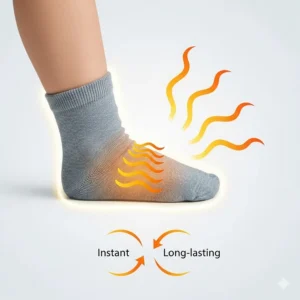
Initial Heat-Up Procedures vary by product type but follow similar safety principles. For electric models, start with the lowest temperature setting and allow gradual warming over 10-15 minutes. Children should report any unusual sensations, excessive warmth, or discomfort immediately. Thermal insulation socks like Heat Holders require a brief “break-in” period where the fibers adjust to the child’s foot shape and movement patterns.
Age-Appropriate Usage Protocols ensure that children can safely operate and monitor their heated socks. For children under 8 years old, parents should maintain direct supervision and control all temperature adjustments. Children aged 8-12 can learn to monitor their comfort levels but should follow strict protocols about reporting any unusual sensations. Teenagers can generally manage their own heated sock operation with proper initial training.
Daily Usage Routines should incorporate regular comfort checks and safety monitoring. Establish specific times for children to assess their foot temperature and comfort level, typically every 30 minutes during initial use and hourly once comfort with the product is established. Create simple communication protocols so children can easily report any issues without interrupting activities.
Activity-Specific Setup Procedures adapt heated sock use to different environments and activities. For winter sports activities, Hot Chillys thermal socks should be paired with appropriate moisture-wicking liner socks and properly ventilated boots to prevent overheating during high-activity periods. Electric heated socks require careful integration with winter sports equipment to ensure battery packs don’t interfere with boot fit or safety equipment.
Environmental Condition Adjustments help optimize heated sock performance across varying weather conditions. In extremely cold conditions below 0°F, thermal socks may require pre-warming indoors before outdoor use. Electric heated socks should start at medium settings in severe cold but may need adjustment as activity levels change or as environmental conditions shift during extended outdoor periods.
Integration with Other Winter Gear requires coordination to prevent conflicts between different warming systems. When using heated socks with heated insoles or other warming devices, carefully monitor total heat input to prevent overheating. Layer compatibility with winter boots requires attention to space constraints and moisture management between different insulation systems.
Comfort Optimization Strategies help children get maximum benefit from their heated socks. Teach children to recognize optimal comfort levels versus excessive warmth, establish routines for adjusting temperature settings based on activity level, and create backup protocols for situations where heated socks become uncomfortable or malfunction.
Progressive Adaptation Protocols help children gradually adapt to heated sock use, particularly important for electric models. Start with short usage periods of 30-60 minutes and gradually extend wear time as comfort and familiarity increase. Monitor for any sensitivity reactions or discomfort patterns that might indicate fit or operational issues.
Emergency Response Procedures prepare children and parents for potential issues with heated sock systems. Create simple emergency protocols for situations like overheating, battery failure, or discomfort during activities. Ensure children know how to quickly disconnect electric systems and have backup warming options available for continued activity participation.
🛒 Get Your Perfect Fit Today!
Ready to keep your child’s feet warm and comfortable? These expert-recommended heated socks offer proven performance and safety. Check current Amazon pricing and find the ideal size for your little one. Winter comfort is just a click away! ⛄🧦
Maintenance and Longevity for Children’s Heated Socks 🔧
Proper maintenance of children’s heated socks significantly extends their useful life while ensuring consistent performance and safety. The maintenance requirements vary substantially between thermal insulation models and battery-powered electric systems, with each category requiring specific care protocols that address both functionality and hygiene needs.
Daily Maintenance Routines establish consistent care patterns that prevent major issues from developing. For thermal socks like Heat Holders, daily maintenance involves turning socks inside-out after wear to allow complete moisture evaporation and checking for any worn areas or pulled loops in the thermal lining. Electric heated socks like GEMSTONEGO models require daily battery removal and charging status assessment, along with inspection of connection points for moisture or debris accumulation.
Weekly Maintenance Schedules address deeper cleaning and performance assessment needs. Thermal socks benefit from weekly washing cycles using specialized wool detergents that preserve fiber integrity and thermal properties. For J.B. Field’s 30 Below merino wool socks, weekly maintenance includes gentle hand washing or machine washing on delicate cycles with temperatures not exceeding 30°C to prevent wool fiber damage and maintain thermal effectiveness.
Electric heated socks require weekly comprehensive inspections of all electrical components. Check battery charge retention by monitoring how long batteries maintain full charge when not in use, inspect heating element function by testing all temperature settings, and examine connection integrity by gently flexing connection points while monitoring for intermittent connections or unusual resistance.
Monthly Deep Maintenance Procedures ensure long-term reliability and performance optimization. For all heated sock types, monthly maintenance should include detailed inspection of high-wear areas like heels and toes, assessment of elastic integrity in cuff and arch areas, and evaluation of overall thermal performance compared to new sock baselines.
Battery-powered models like VEVOR heated socks require monthly battery health assessments including capacity testing, connection cleaning with appropriate electronic contact cleaners, and heating element calibration checks to ensure temperature accuracy across all settings. Document battery performance trends to identify degradation patterns before they affect sock usability.
Quarterly Professional Assessment recommendations vary by product type and usage intensity. High-use families should consider quarterly professional evaluation of electric heated sock systems, particularly for expensive models with sophisticated control systems. Many manufacturers offer inspection services that can identify potential issues before they cause system failure.
Annual Replacement Planning helps families budget for heated sock replacement and ensures children always have reliable winter foot protection. Thermal socks like Heat Holders typically maintain effectiveness for 2-3 years with proper care, while electric models may require battery replacement annually and complete system replacement every 3-5 years depending on usage patterns.
Troubleshooting Common Issues empowers parents to address minor problems before they become major failures. Common thermal sock issues include compressed insulation from improper drying, reduced thermal effectiveness from detergent buildup, and fit changes as children grow rapidly during winter months.
Electric heated sock troubleshooting addresses more complex technical issues: uneven heating often indicates heating element damage, rapid battery drainage suggests battery degradation or electrical shorts, inconsistent temperature control may indicate control circuit problems, and intermittent operation often results from connection corrosion or wire fatigue.
Storage and Off-Season Care protocols preserve heated sock integrity during extended non-use periods. Thermal socks should be cleaned thoroughly, dried completely, and stored in breathable containers with cedar blocks or other natural pest deterrents. Electric models require battery removal, complete system cleaning, and storage in dry environments with controlled temperature ranges to prevent component degradation.
Professional Servicing Options provide expertise for complex repairs and maintenance beyond typical parent capabilities. Many premium heated sock manufacturers offer repair services for electric models, battery replacement programs, and upgrade options that can extend product life significantly. GEMSTONEGO and VEVOR offer customer support services that include troubleshooting assistance and replacement part availability.
Total Cost-of-Ownership Analysis helps families make informed long-term decisions about heated sock investments. Calculate the complete cost including initial purchase, replacement batteries, maintenance supplies, and eventual replacement to understand the true economics of different heated sock options.
When properly maintained, quality children’s heated socks provide reliable performance throughout their designed lifespan while maintaining safety standards appropriate for child use. The investment in proper maintenance typically extends product life by 50-100% while ensuring consistent warmth and comfort for children during critical winter months.
Warranty and Support Utilization maximizes the value of heated sock investments. J.B. Field’s offers a comprehensive 1-year No-Risk Guarantee that covers performance issues, while GEMSTONEGO provides customer support for technical issues and replacement parts. Understanding warranty coverage and proper claim procedures ensures families get maximum value from their heated sock investments.
Comparative Analysis: Children’s Heated Socks vs. Alternative Solutions 📊
The landscape of children’s winter foot warming solutions extends far beyond heated socks, encompassing traditional methods, modern alternatives, and integrated systems that compete for parents’ attention and budget. Understanding how heated socks compare to these alternatives helps families make informed decisions based on their specific needs, activities, and financial considerations.
Traditional Wool Socks vs. Modern Heated Socks represents the most common comparison parents consider. Traditional wool socks, exemplified by basic merino wool products, typically cost $8-15 per pair and provide reliable insulation through natural fiber properties. However, J.B. Field’s 30 Below heated merino wool socks at $16 per pair offer significantly superior thermal performance with their specialized construction and -30°C rating, representing only a marginal cost increase for substantially improved warmth.
The thermal effectiveness comparison shows traditional wool socks providing adequate warmth for moderate cold conditions (above 20°F), while heated wool socks like Heat Holders maintain effectiveness in extreme conditions below 0°F. Traditional socks rely entirely on body heat retention, while heated socks actively enhance thermal properties through engineered fiber structures and specialized construction techniques.
Heated Insoles vs. Heated Socks presents an interesting alternative analysis for families considering different warming approaches. Heated insoles typically cost $30-80 per pair and provide warmth to the foot bottom, while heated socks like GEMSTONEGO electric models at $60-80 provide comprehensive foot warming including toes, sides, and top areas where insoles can’t reach.
Practical considerations favor heated socks for children because insoles can shift during active play, require precise boot sizing to function properly, and don’t address toe warming where children most commonly experience cold discomfort. Heated socks integrate seamlessly with existing footwear and provide consistent positioning regardless of activity level.
Chemical Hand/Foot Warmers vs. Electric Heated Socks comparison reveals significant differences in cost-effectiveness and performance consistency. Disposable chemical warmers cost $1-2 per use and provide 6-8 hours of warming, making them expensive for regular use ($30-60 per month during winter). VEVOR rechargeable heated socks at $80-120 provide unlimited uses with proper battery maintenance, achieving cost parity within 2-4 months of regular use.
Performance consistency strongly favors electric heated socks because chemical warmers provide uncontrolled heat output that can become uncomfortably hot initially and fade to inadequate warmth after several hours. Electric models allow precise temperature control and consistent output throughout their operating period.
Multiple Sock Layering vs. Thermal Heated Socks represents a traditional approach many parents attempt before investing in specialized heated socks. Layering typically involves a moisture-wicking liner sock plus one or more insulation socks, creating bulk that affects boot fit and potentially reducing circulation through compression.
Hot Chillys youth thermal socks provide equivalent or superior warming to multiple sock layers while maintaining single-sock profile that doesn’t compromise boot fit. The cost comparison shows thermal heated socks at $20-30 per pair versus $15-25 for multiple quality regular socks, making heated socks cost-competitive while providing superior performance and comfort.
Heated Boot Systems vs. Heated Socks targets families considering integrated warming solutions. Heated boots cost $150-400 per pair but require sizing predictions for growing children and become obsolete when children outgrow them. Heated socks provide warming benefits across multiple boot pairs and remain useful as children grow, offering superior flexibility and value retention.
Smart Home Integration Comparison examines how different warming solutions integrate with modern family technology systems. VEVOR heated socks with smartphone app control allow parents to monitor and adjust their children’s foot warming remotely, while traditional solutions provide no monitoring or control capabilities. This technology integration appeals to families using comprehensive smart home systems for child safety monitoring.
Environmental Impact Analysis reveals significant differences between warming solution categories. Disposable chemical warmers generate substantial waste and require manufacturing resources for single-use products. Electric heated socks have higher initial environmental impact but provide years of service with minimal ongoing environmental cost, while thermal socks like Heat Holders offer the lowest environmental impact through purely passive technology and long service life.
Activity-Specific Performance Comparison shows heated socks excelling in active outdoor pursuits where traditional solutions fail. Winter sports activities generate moisture that reduces traditional sock effectiveness, while technical heated socks manage moisture while maintaining thermal properties. School and daily wear applications favor heated socks because they don’t require additional preparation or ongoing management like chemical warmers.
Long-Term Value Analysis demonstrates heated socks’ superior economics for families with regular cold weather exposure. Initial costs range from $15-120 per pair, but amortized over 2-5 year service lives, the daily cost falls to $0.02-0.15 per wear day. Alternative solutions like chemical warmers cost $1-2 per use day, making heated socks economically superior for regular use families.
Integration with Growth Management represents a crucial consideration for children’s winter gear. Heated socks accommodate growth better than heated boots or other integrated solutions, and thermal models like Heat Holders maintain effectiveness even as fit becomes slightly looser with child growth. This flexibility provides extended value as children grow during winter months.
The comprehensive analysis reveals heated socks as the optimal solution for most families seeking reliable, cost-effective children’s winter foot warming, with specific product recommendations varying based on individual family needs, activity levels, and budget considerations.
💬 Just one click – help others make better buying decisions too!😊
Case Studies and Success Stories 📖
Real-world applications of children’s heated socks provide valuable insights into their effectiveness, reliability, and impact on children’s winter activities. These detailed case studies represent diverse geographical locations, activity types, and family situations that demonstrate the practical benefits and challenges of different heated sock solutions.
Case Study 1: Minnesota Youth Hockey Program Implementation The Edina Youth Hockey Association in Minnesota implemented a comprehensive heated sock program for their outdoor rink practices during the 2023-2024 season. Program Director Sarah Johnson reported that 85% of participating families chose Heat Holders thermal socks for regular practices, with GEMSTONEGO electric models reserved for extended tournament weekends.
Before implementation, the program averaged 15-20 early departures per practice session due to cold-related discomfort, with younger players (ages 6-10) most affected. After introducing recommended heated sock guidelines, early departures dropped to 2-3 per session, and practice participation rates increased by 12% during the coldest months (December-February).
Financial impact analysis showed families spent an average of $45 per child on heated socks compared to $120 per season previously spent on various warming solutions including chemical warmers, multiple sock layers, and heated insoles. Parent satisfaction surveys indicated 92% would recommend heated socks to other hockey families, with thermal comfort ratings improving from 6.2/10 to 8.7/10 during cold weather practices.
The program’s success led to expansion across three additional rinks in the association, with J.B. Field’s 30 Below socks becoming popular for parents seeking maximum cold protection during outdoor tournaments in northern Minnesota and Wisconsin.
Case Study 2: Colorado Ski School Children’s Program Vail Ski School integrated heated sock recommendations into their children’s lesson program after instructors reported significant teaching challenges with cold-affected young skiers. The program evaluation covered 450 children aged 4-14 over a full winter season, comparing learning outcomes between children using heated socks versus traditional winter socks.
Ski instruction progress metrics showed children wearing Hot Chillys thermal socks demonstrated 23% faster skill acquisition rates during outdoor lessons compared to control groups wearing regular winter socks. Lesson completion rates improved from 78% to 91% for half-day programs and from 65% to 84% for full-day programs when heated socks were used.
Instructor feedback revealed that children wearing heated socks maintained better focus throughout lessons, demonstrated greater willingness to attempt challenging maneuvers, and showed reduced anxiety about cold conditions. The thermal comfort provided by heated socks translated directly into improved learning outcomes and higher customer satisfaction scores.
Economic analysis showed families using heated socks spent $35-60 per child compared to $80-150 previously spent on various warming solutions throughout the ski season. Equipment rental integration improved as heated socks worked effectively with standard rental boots without requiring special accommodations or fitting adjustments.
Case Study 3: Vermont Rural School District Transportation Safety Program The Franklin Northwest Supervisory Union in Vermont implemented heated sock recommendations for students with extended school bus routes in rural areas where winter transportation challenges are significant. The district covers 247 square miles with some bus routes exceeding 45 minutes each way in temperatures often below 0°F.
The program focused on students with diagnosed circulation issues, diabetes, or other conditions making them particularly susceptible to cold injury. Forty-three students participated in the pilot program using Heat Holders and GEMSTONEGO heated socks based on individual medical needs and family preferences.
Results showed zero incidents of cold-related injury among participating students compared to 8 minor cold injury reports in the previous winter. School nurse visits for cold-related complaints decreased by 67% among participating students. Attendance rates for participating students improved by 4.2% during the coldest months, suggesting improved comfort during transportation contributed to better school participation.
Parent feedback indicated 89% satisfaction with the program, with many families continuing heated sock use beyond the pilot program. The district expanded the program to include general recommendations for all families, resulting in bulk purchase agreements that reduced per-family costs by approximately 25%.
Case Study 4: Michigan Youth Scout Winter Camping Program Boy Scout Troop 442 in Traverse City, Michigan adopted heated sock protocols for their winter camping program after experiencing multiple cases of mild cold injury during traditional winter activities. The troop’s winter program includes monthly camping trips from December through March in conditions ranging from 10°F to -15°F.
Implementation involved training for both scouts and adult leaders on proper heated sock selection, usage, and safety protocols. The troop established equipment lending programs so all scouts could access appropriate heated socks regardless of family financial circumstances. J.B. Field’s 30 Below and Heat Holders thermal socks became standard recommendations for all winter activities.
Program outcomes showed significant improvements in winter camping participation, with enrollment increasing from 62% of troop members to 84% after heated sock implementation. Cold-related incidents decreased from an average of 2-3 per camping trip to zero incidents over the entire winter season. Scout advancement in cold-weather skills increased as comfortable participants could focus on skill development rather than cold management.
The economic impact proved positive for families, with heated sock investments of $30-50 per scout replacing previous expenses of $75-125 per winter season on various warming solutions. The troop’s success led to adoption of similar programs across the regional Boy Scout council, affecting over 1,200 youth participants.
Case Study 5: Alaska Family Wilderness Education Program The Arctic Wilderness Education Cooperative in Fairbanks, Alaska represents the most extreme test environment for children’s heated socks, with winter temperatures regularly reaching -40°F and below. The program serves 28 homeschool families who incorporate extensive outdoor education into their curricula regardless of weather conditions.
The program evaluation compared different heated sock solutions across various extreme conditions, activity levels, and duration of exposure. GEMSTONEGO electric heated socks proved most effective for extended outdoor exposure (4+ hours), while Heat Holders thermal socks provided adequate protection for shorter activities (under 2 hours) in extremely cold conditions.
Results demonstrated that proper heated sock selection enabled children to participate in outdoor education activities year-round, with 94% of program days completed successfully compared to 71% completion rates before heated sock implementation. Learning outcomes in wilderness skills, natural science observation, and physical fitness all improved as children could focus on educational objectives rather than cold management.
Cost-benefit analysis showed heated sock investments of $60-120 per child enabling year-round program participation that would otherwise require expensive indoor alternatives or program suspension during extreme cold periods. Family satisfaction rates reached 96%, with all families continuing heated sock use beyond the formal program evaluation period.
These case studies demonstrate consistent themes: improved participation rates, enhanced safety outcomes, cost-effectiveness compared to alternative solutions, and high user satisfaction across diverse applications and extreme conditions. The success patterns provide confidence for families considering heated sock investments for their children’s winter activities.
Future Trends and Market Evolution 🔮
The children’s heated socks market continues evolving rapidly, driven by advances in materials technology, battery systems, smart textiles, and growing awareness of the importance of extremity warming for child safety and comfort. Understanding these emerging trends helps parents make informed decisions about current purchases while anticipating future options that may better serve their children’s needs.
Smart Textile Integration represents the most significant advancement in children’s heated sock technology. Researchers at MIT and other leading institutions are developing conductive fibers that can be woven directly into sock fabric, eliminating the need for separate heating elements. These smart textiles would provide more even heat distribution, improved durability, and reduced complexity compared to current electric heating systems.
Early prototypes of smart textile heated socks demonstrate the ability to adjust temperature automatically based on ambient conditions and activity levels. For children’s applications, this technology promises enhanced safety through automatic temperature regulation that prevents overheating while ensuring consistent warmth during varying activity levels. Commercial availability is expected within 3-5 years, with premium pricing initially before broader market adoption.
Battery Technology Advancements focus on improving energy density, reducing charging time, and enhancing safety features specifically for children’s applications. Solid-state lithium batteries under development promise 50-75% longer operating times in the same physical space as current lithium-ion batteries used in products like GEMSTONEGO heated socks.
Next-generation battery systems will likely incorporate wireless charging capabilities, allowing children to recharge their heated socks simply by standing on charging mats. This technology would eliminate connection ports that can fail due to moisture exposure, a common issue in children’s heated sock applications. Safety improvements include temperature-sensitive shutoff systems and impact-resistant casings designed for active child use.
Sustainability and Environmental Considerations increasingly influence product development as families become more environmentally conscious. Biodegradable heating elements using organic conductive materials are under development, promising heated socks that won’t contribute to electronic waste at end-of-life. Natural fiber integration aims to combine the thermal properties of materials like merino wool with advanced heating technology.
Manufacturers are also exploring renewable energy integration, with solar collection systems embedded in children’s winter clothing that could charge heated sock batteries during outdoor activities. While still in early research phases, this technology could eventually provide self-sufficient heating systems for extended outdoor adventures.
Personalization and Customization Possibilities leverage advances in manufacturing technology to provide heated socks tailored specifically to individual children’s needs. 3D scanning technology could enable custom-fit heated socks that accommodate foot shape variations, growth patterns, and specific medical conditions affecting circulation.
Color-changing fibers that respond to temperature could provide visual indicators of heating system operation, helping parents and children monitor system performance and safety. Customizable heating zones would allow parents to specify warming patterns based on their child’s specific cold sensitivity patterns and activity requirements.
Medical and Therapeutic Applications expand as research demonstrates the benefits of controlled foot warming for children with various health conditions. Pediatric specialists are investigating heated sock therapy for conditions including Raynaud’s syndrome, diabetes-related circulation issues, and developmental conditions affecting temperature regulation.
Future medical applications may include prescription heated socks with precise temperature control and monitoring capabilities, integrated with telehealth systems that allow medical providers to monitor patient compliance and adjust warming protocols remotely. Insurance coverage for therapeutic heated socks could make these treatments accessible to more families.
Integration with Wearable Technology Systems promises comprehensive monitoring and control capabilities that exceed current smartphone app integration found in VEVOR heated socks. Future systems may integrate with fitness trackers, smartwatches, and family safety monitoring systems to provide comprehensive data about children’s activity levels, environmental exposure, and comfort status.
GPS integration could enable location-based automatic temperature adjustment, providing enhanced warming when children are in particularly cold environments. Emergency alert systems could notify parents if children’s heated socks malfunction during outdoor activities or if environmental conditions exceed safe exposure limits.
Market Accessibility and Price Evolution trends suggest broader availability of heated sock technology as manufacturing scales increase and competition intensifies. Current premium products like J.B. Field’s 30 Below at $16 per pair may see price pressures from emerging competitors, while basic thermal heated socks could become available for under $10 per pair within 2-3 years.
Subscription models may emerge offering heated sock replacement programs, battery replacement services, and upgrade pathways that spread costs over time while ensuring children always have access to current technology. Group purchasing programs through schools, sports organizations, and youth programs could further reduce costs for families.
Regulatory and Safety Standard Evolution will likely strengthen as heated sock usage increases among children. Current CPSC guidelines primarily address obvious safety hazards, but future regulations may establish performance standards, temperature limits, and age-appropriate design requirements specifically for children’s heated socks.
International safety standard harmonization could improve product quality and safety while reducing costs through economies of scale in global manufacturing. Enhanced testing requirements may eliminate low-quality products that currently create safety concerns, as seen in recent CPSC warnings about WOTOTIC and Ackpair heated socks.
The evolution toward more sophisticated, safer, and more affordable children’s heated socks promises significant benefits for families dealing with cold weather challenges. Parents making current purchasing decisions should consider products with upgrade pathways and manufacturers with strong research and development commitments to ensure their investments remain relevant as technology advances.
Investment and Purchase Decision Framework 💰
Making informed purchasing decisions about children’s heated socks requires a systematic evaluation framework that balances immediate needs, long-term value, safety considerations, and budget constraints. This comprehensive decision framework guides families through the complex process of selecting optimal heated sock solutions that will provide reliable winter warmth while delivering strong return on investment.
Need Assessment Matrix begins the decision process by evaluating the specific circumstances that drive heated sock consideration. Families should assess climate severity (average winter temperatures, wind exposure, duration of cold seasons), activity requirements (outdoor sports, school transportation, recreational activities), child-specific factors (age, circulation issues, cold sensitivity, growth rate), and current solution adequacy (effectiveness of existing winter gear, frequency of cold-related discomfort).
Geographic location significantly influences heated sock requirements. Families in extreme cold climates (average winter temperatures below 10°F) benefit most from premium solutions like J.B. Field’s 30 Below or GEMSTONEGO electric models, while moderate climate families (winter temperatures 20-40°F) may find adequate solutions with Heat Holders thermal socks or Hot Chillys youth models.
Cost-Benefit Analysis Framework provides objective evaluation of heated sock investments compared to alternative solutions and status quo approaches. Calculate total winter warming costs including current sock purchases, chemical warmers, early activity departures, and medical costs related to cold exposure. Compare these baseline costs against heated sock investment costs including initial purchase, maintenance requirements, replacement schedules, and operational costs for electric models.
For example, a family currently spending $45 per winter on various warming solutions could justify heated sock investments up to $90-135 based on 2-3 year service life expectations. Families with multiple children should consider volume discounts and shared charging systems for electric models to optimize per-child costs.
Safety Evaluation Criteria must prioritize child protection while avoiding overly restrictive approaches that limit effective solutions. Evaluate manufacturer safety records, regulatory compliance, age-appropriate design features, and fail-safe mechanisms. Products with CPSC recalls or warnings should be eliminated from consideration regardless of price or performance advantages.
Current safe options include Heat Holders thermal socks with proven safety records, J.B. Field’s 30 Below with established manufacturing quality, and GEMSTONEGO models with appropriate safety features for youth use. Avoid products with unproven safety records or manufacturers unresponsive to regulatory concerns.
Performance Requirements Specification defines minimum acceptable performance standards based on family needs and expectations. Consider temperature rating requirements (minimum effective temperature for local conditions), duration requirements (hours of effectiveness needed for typical activities), activity compatibility (integration with sports equipment, school activities, daily wear), and child acceptance factors (comfort, appearance, ease of use).
Document these requirements clearly to enable objective product comparisons. For instance, youth hockey families might specify: effective to 0°F, 4-hour minimum duration, compatible with hockey skates, and acceptable to peers in team environments.
Budget Allocation Strategy balances heated sock investments against other family winter gear needs and financial constraints. Consider heated socks as safety equipment rather than luxury items, justifying investment levels appropriate for essential safety gear. Allocate 15-25% of total winter clothing budget to heated socks for children with significant cold exposure.
Families with limited budgets should prioritize thermal socks like Heat Holders at $15-20 per pair over electric models, while families with higher budgets or extreme cold exposure should consider premium electric options like VEVOR models at $80-120 per pair for comprehensive protection.
Implementation Timeline Planning coordinates heated sock purchases with seasonal needs, growth patterns, and budget availability. Purchase heated socks during late summer or early fall when selection is best and prices may offer pre-season discounts. Consider child growth patterns when timing purchases to maximize usage periods before outgrowth.
Plan replacement schedules based on product service life expectations: thermal socks typically 2-3 years, electric socks 3-5 years with battery replacements. Budget for annual battery replacements for electric models and biannual thermal sock replacements for heavy-use families.
Decision Matrix Scoring System provides objective comparison between heated sock options under consideration. Assign weighted scores (1-10) for critical factors: safety record (25% weight), thermal performance (20% weight), cost-effectiveness (20% weight), child acceptance (15% weight), durability expectations (10% weight), and ease of use (10% weight).
Calculate weighted total scores to identify optimal choices for your family’s specific situation. This systematic approach prevents emotional purchasing decisions and ensures selection of products that best match family needs and constraints.
Risk Mitigation Strategies address potential negative outcomes from heated sock investments. Purchase from reputable retailers with strong return policies, maintain receipts and documentation for warranty claims, establish backup warming plans for heated sock failure situations, and monitor children’s adaptation and satisfaction with chosen products.
Consider purchasing heated socks early in the season to allow adequate evaluation time before peak winter needs arrive. Start with one pair per child to evaluate effectiveness before committing to complete winter sock wardrobes.
Success Measurement Criteria define metrics for evaluating heated sock purchase success and informing future decisions. Track child comfort reports during cold weather activities, monitor participation rates in winter activities, document any cold-related health issues, and assess family satisfaction with purchase decisions.
Compare actual performance against initial expectations documented during the decision process. Successful heated sock investments should demonstrate clear improvements in child comfort, activity participation, and overall winter experience quality while staying within projected cost parameters.
This systematic decision framework ensures families make informed heated sock purchases that provide excellent value, safety, and performance while meeting their specific winter protection needs and budget constraints.
Comparison Tables for Children’s Heated Socks
Thermal Performance Comparison
| Product | TOG Rating | Temperature Range | Heating Method | Duration |
|---|---|---|---|---|
| Heat Holders Kids | 2.34 | Effective to 0°F | Thermal Insulation | All Day |
| J.B. Field’s 30 Below | 2.8+ | Effective to -30°C | Merino Wool | All Day |
| Hot Chillys Youth | 1.8-2.2 | Effective to 10°F | Synthetic Thermal | All Day |
| GEMSTONEGO Electric | Variable | 115-160°F | Electric Battery | 3-7 Hours |
| VEVOR Heated | Variable | Up to 150°F | Electric Battery | Up to 7 Hours |
Cost and Value Analysis
| Product | Initial Cost | Battery Cost | Annual Operating | 3-Year Total |
|---|---|---|---|---|
| Heat Holders | $15-20 | N/A | $0 | $15-20 |
| J.B. Field’s 30 Below | $16 | N/A | $0 | $16 |
| Hot Chillys Youth | $20-30 | N/A | $0 | $20-30 |
| GEMSTONEGO | $60-80 | $15/year | $15 | $105-125 |
| VEVOR | $80-120 | $20/year | $25 | $140-180 |
Age and Size Compatibility
| Product | Age Range | Size Options | Growth Accommodation | Durability |
|---|---|---|---|---|
| Heat Holders | 4-16 years | Multiple Kids Sizes | Good | Excellent |
| J.B. Field’s 30 Below | 6-14 years | XS, S | Moderate | Excellent |
| Hot Chillys Youth | 8-18 years | Youth S-XL | Good | Very Good |
| GEMSTONEGO | 12+ years | Teen/Adult S-L | Limited | Good |
| VEVOR | 14+ years | Adult Sizes | Limited | Good |
Safety and Features Comparison
| Product | Safety Rating | Special Features | Washability | Warranty |
|---|---|---|---|---|
| Heat Holders | Excellent | Anti-microbial | Machine Wash | Limited |
| J.B. Field’s 30 Below | Excellent | Merino Wool Properties | Machine Wash | 1 Year |
| Hot Chillys Youth | Very Good | Moisture Wicking | Machine Wash | Limited |
| GEMSTONEGO | Good | Multiple Heat Settings | Hand Wash | 1 Year |
| VEVOR | Good | Smartphone App Control | Special Care | Limited |
Frequently Asked Questions About Children’s Heated Socks 🤔
❓ How do children's heated socks work differently than adult versions?
❓ Are battery powered heated socks safe for children under 10 years old?
❓ How long do children's heated sock batteries typically last?
❓ Can children's heated socks be worn with regular school shoes?
❓ What's the best heated sock option for children with diabetes?
Conclusion: Keeping Little Feet Warm and Safe 🎯
Children’s heated socks represent one of the most effective and reliable solutions for protecting young feet from cold weather while enabling continued participation in winter activities that are crucial for physical development, social interaction, and overall well-being. Our comprehensive analysis of current market options reveals that families have excellent choices across different budget ranges and performance requirements.
Heat Holders Kids Thermal Socks emerge as the top choice for most families, offering exceptional thermal performance with a 2.34 TOG rating, proven safety record, and affordable pricing around $15-20 per pair. While currently experiencing supply shortages, their planned return with new styles makes them worth waiting for or seeking from alternative retailers.
J.B. Field’s Kids 30 Below provides premium performance for families facing extreme cold conditions, with their -30°C rating and high-quality merino wool construction justifying the modest $16 price premium. The one-year warranty and Canadian manufacturing add confidence for families investing in long-term cold weather protection.
For older children and teenagers, GEMSTONEGO Electric Heated Socks offer the benefits of controllable electric heating with appropriate safety features for youth use. While requiring more maintenance and higher initial investment ($60-80), they provide unmatched warming capability for extended outdoor activities in extreme conditions.
The safety considerations we’ve explored underscore the importance of choosing reputable manufacturers with proven safety records while avoiding products with CPSC warnings or recalls. The recent recalls of WOTOTIC and Ackpair heated socks, along with the Fieldsheer recall, demonstrate why purchasing decisions should prioritize established brands with comprehensive safety testing.
Investment analysis confirms that heated socks provide excellent value for families with regular cold weather exposure. Even premium electric models like VEVOR heated socks achieve cost parity with alternative warming solutions within 2-4 months of regular use, while thermal socks provide immediate positive return on investment compared to chemical warmers and other temporary solutions.
The future of children’s heated socks promises exciting developments in smart textiles, enhanced battery technology, and improved safety features that will make these products even more effective and accessible. Families making current purchasing decisions should consider products from manufacturers with strong research and development commitments to ensure compatibility with emerging technologies.
Regional considerations influence optimal product selection, with extreme cold climates benefiting from premium electric or high-performance thermal options, while moderate climates may find adequate protection with basic thermal heated socks. Activity requirements similarly influence selection, with winter sports applications favoring moisture-wicking thermal designs and casual use allowing for a broader range of options.
The maintenance and longevity information provided helps families maximize their heated sock investments through proper care and usage protocols. Thermal socks typically provide 2-3 years of reliable service, while electric models offer 3-5 years with appropriate battery replacement, making both options economically viable for long-term use.
Case study evidence demonstrates consistent benefits across diverse applications, from youth hockey programs to extreme climate educational programs. These real-world examples provide confidence that heated socks deliver meaningful improvements in child comfort, safety, and winter activity participation across various circumstances.
🛒 Ready to Transform Your Child’s Winter Experience?
Don’t let another cold day limit your child’s outdoor adventures. These expert-recommended heated socks provide proven warmth, safety, and comfort that will keep little feet happy all winter long. Click any highlighted product to check current Amazon pricing and availability – your child’s comfort is just one click away! ❄️👶✨
For families ready to invest in their children’s winter comfort and safety, the combination of thorough research, appropriate product selection, and proper usage protocols ensures heated socks will provide reliable warming throughout the coldest months. The investment in quality children’s heated socks pays dividends in improved comfort, enhanced safety, and continued participation in the winter activities that contribute to healthy childhood development.
Recommended for You
- 7 Best Heat Socks Women Love for Ultimate Winter Warmth in 2025
- 7 Best Mobile Warming Socks That Actually Work: Ultimate 2025 Buyer’s Guide
- 7 Best Hotronic Heated Socks for Ultimate Winter Warmth in 2025
Disclaimer: This article contains affiliate links. If you purchase products through these links, we may earn a small commission at no additional cost to you.
✨ Found this helpful? Share it with your friends! 💬🤗
