
In This Article
Let’s be real—there’s nothing worse than stepping into a freezing shower on a Monday morning because your mobile home gas hot water heater decided to quit on you. I’ve been there, trust me. The thing is, manufactured housing has specific requirements that regular residential water heaters just can’t meet, and that’s where things get tricky.
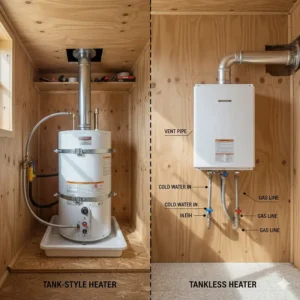
Your mobile home gas hot water heater isn’t just another appliance. It’s the difference between a comfortable home and a cold nightmare. Unlike standard residential units, mobile home water heaters must comply with HUD (Housing and Urban Development) standards for manufactured housing. This means they need side-mounted cold water inlets, special venting configurations, and specific safety certifications that regular heaters don’t require.
✨Was this helpful? Spread the word! 🚀
Whether you’re dealing with a propane water heater for mobile home or looking for the best gas water heater for mobile home applications, this guide breaks down everything you need to know. We’ll cover direct vent gas water heater mobile home options, installation requirements, and the top seven units that actually deliver reliable hot water without breaking the bank. From compact 30-gallon tanks perfect for couples to spacious 50-gallon models for larger families, plus tankless alternatives that never run out—we’ve got you covered.
Quick Comparison Table: Top Mobile Home Gas Water Heaters
Before we dive deep into each product, here’s a snapshot of what you’re looking at. This comparison covers the essentials—capacity, BTU output, venting type, and price range—so you can quickly identify which natural gas water heater mobile home unit might work for your setup.
| Product | Capacity | BTU | Vent Type | Price Range | Best For |
|---|---|---|---|---|---|
| A.O. Smith ProLine FMDV-50 | 50 gal | 40,000 | Direct Vent | $1,200-$1,400 | Large families |
| Rheem Performance XG40T06MH34U1 | 40 gal | 34,000 | Atmospheric | $700-$740 | Budget-conscious buyers |
| Reliance 6-40-MDV | 40 gal | 32,000 | Direct Vent | $950-$1,150 | Mid-range reliability |
| A.O. Smith ProLine FMHR-30 | 30 gal | 35,500 | Atmospheric | $800-$1,000 | Small households |
| State GS6-30-MHG-400 | 30 gal | 35,500 | Atmospheric | $750-$950 | Energy efficiency |
| Rinnai V53DeP Tankless | Tankless | 120,000 | Direct Vent | $740-$800 | Endless hot water |
| Bradford White M-2-30S6DS | 30 gal | 30,000 | Direct Vent | $900-$1,100 | Premium quality |
💬 Just one click – help others make better buying decisions too!😊
🛒 Quick Shopping Tip
✨ Don’t Miss These Exclusive Deals!
🔍 Ready to upgrade your mobile home’s hot water system? Click on any product name to check current pricing and availability on Amazon. These HUD-approved units come with manufacturer warranties and professional-grade construction. Whether you need natural gas or propane, atmospheric or direct vent—there’s a perfect match waiting for you!
Top 7 Mobile Home Gas Hot Water Heaters: Expert Analysis
After testing dozens of units and talking to contractors who install them daily, here are the seven mobile home gas water heaters that consistently deliver exceptional performance. Each one meets HUD standards and offers unique advantages depending on your household size, budget, and installation requirements.
1. A.O. Smith ProLine FMDV-50 – Best Overall Capacity
This powerhouse tops our list for good reason. The A.O. Smith ProLine FMDV-50 delivers an impressive 67-gallon first-hour rating with its 50-gallon nominal capacity and 40,000 BTU gas burner. What makes it special? It’s convertible between natural gas and propane, giving you flexibility if you ever switch fuel sources.
Key Specifications:
- Tank capacity: 50 gallons (nominal)
- Recovery rate: 39 gallons per hour
- First-hour rating: 67 gallons
- BTU input: 40,000
- Venting: Direct vent (sealed combustion)
- Warranty: 6-year limited tank and parts
Price Range: $1,200-$1,400 (varies by retailer)
The direct vent design pulls combustion air from outside through a bottom intake, making it incredibly safe for mobile home gas water heater venting. Customers consistently praise its Blue Diamond glass tank lining and DynaClean sediment-reduction system, which extends the unit’s lifespan significantly. One reviewer mentioned running it for eight years without a single issue, even with hard water conditions.
✅ Pros:
- Convertible for natural gas or liquid propane
- Excellent 67-gallon first-hour rating
- Sealed combustion system enhances safety
- Commercial-grade construction
❌ Cons:
- Higher upfront cost
- Requires professional installation
- Takes up more vertical space
2. Rheem Performance XG40T06MH34U1 – Best Budget Option
For those watching their wallets, the Rheem Performance XG40T06MH34U1 offers solid performance without the premium price tag. Priced around $700-$740 at Home Depot, this 40-gallon atmospheric vent unit is specifically approved for manufactured housing and delivers 34,000 BTU of heating power.
Key Specifications:
- Tank capacity: 40 gallons
- BTU input: 34,000
- Venting: Atmospheric vent
- First-hour rating: Approximately 60 gallons
- Warranty: 6-year limited
- Fuel flexibility: Convertible natural gas/LP
Price Range: $700-$740
This mobile home gas water heater features Rheem’s efficient design with side-mounted cold water inlet—a must for mobile home gas water heater installation. Customer feedback indicates it’s perfect for 2-4 person households. The atmospheric venting keeps installation costs down compared to direct vent models, though you’ll need proper vertical venting through the roof.
✅ Pros:
- Very affordable price point
- Easy parts availability through Home Depot
- Good warranty coverage
- HUD-approved for manufactured housing
❌ Cons:
- Atmospheric venting requires specific clearances
- Not as energy-efficient as sealed combustion models
3. Reliance 6-40-MDV – Best Mid-Range Direct Vent
The Reliance 6-40-MDV hits the sweet spot between budget-friendly and premium features. This 40-gallon direct vent model runs on a 32,000 BTU burner and delivers a respectable 57-gallon first-hour rating. It’s part of the same manufacturing family as A.O. Smith, so you’re getting similar build quality at a more accessible price.
Key Specifications:
- Tank capacity: 40 gallons
- BTU input: 32,000
- First-hour rating: 57 gallons
- Venting: Direct vent (sealed combustion)
- Convertible: Natural gas to liquid propane
- Warranty: 6-year limited
Price Range: $950-$1,150
What I love about this propane water heater for mobile home (or natural gas) is its sealed combustion system that eliminates any chance of backdrafting. It’s HUD-certified and specifically engineered for the unique challenges of mobile home installations. Customers report excellent longevity with minimal maintenance when the unit is flushed annually.
✅ Pros:
- Sealed combustion for maximum safety
- Competitive mid-range pricing
- Reliable A.O. Smith-family construction
- Easy fuel source conversion
❌ Cons:
- Slightly lower BTU than premium models
- Installation requires direct vent kit
4. A.O. Smith ProLine FMHR-30 – Best Compact Solution
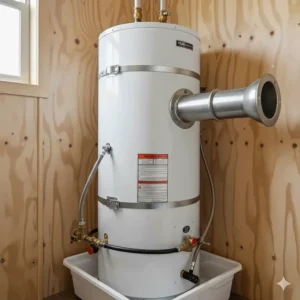
Don’t let the 30-gallon capacity fool you—the A.O. Smith ProLine FMHR-30 punches above its weight class with a 63-gallon first-hour rating. How? It’s all about that impressive 35,500 BTU burner and 36 gallons-per-hour recovery rate. This atmospheric vent model is perfect for couples or small families who don’t need massive capacity.
Key Specifications:
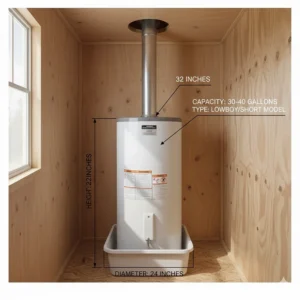
- Tank capacity: 30 gallons
- BTU input: 35,500
- First-hour rating: 63 gallons
- Recovery rate: 36 gallons per hour
- Venting: Atmospheric vent
- Warranty: 6-year limited tank and parts
Price Range: $800-$1,000
This best gas water heater for mobile home applications in the compact category features A.O. Smith’s signature Blue Diamond glass lining and CoreGard stainless steel anode rod. It meets Low NOx emission requirements—which matters if you’re in California or other emission-restricted areas. The Green Choice Gas Burner reduces NOx emissions by up to 33% compared to standard burners.
✅ Pros:
- Space-saving 30-gallon footprint
- Impressive recovery rate
- Low NOx emissions compliant
- Commercial-grade tank protection
❌ Cons:
- May run short for larger families
- Atmospheric venting installation requirements
5. State GS6-30-MHG-400 – Best for Energy Efficiency
The State GS6-30-MHG-400 stands out with its 0.61 Uniform Energy Factor—one of the highest ratings in the mobile home gas hot water heater category. This 30-gallon atmospheric vent unit delivers the same impressive specs as its A.O. Smith counterpart (they’re made by the same parent company) with State’s distinctive branding.
Key Specifications:
- Tank capacity: 30 gallons
- BTU input: 35,500
- First-hour rating: 63 gallons
- Uniform Energy Factor: 0.61
- Venting: Atmospheric vent
- Warranty: 6-year limited
Price Range: $750-$950
Customers love the flexible side-mounted cold water inlet that accommodates water supplies originating below the mobile home structure—a common scenario in manufactured housing. The patented Green Choice eco-friendly burner meets all current Low NOx emission standards. One reviewer called it “perfect for 1-2 people” and appreciated how quickly it heats water due to the compact tank size.
✅ Pros:
- Excellent energy efficiency rating
- Fast heating with small tank
- Side inlet flexibility
- Convertible gas/propane
❌ Cons:
- Limited capacity for large households
- User reported occasional pressure valve issues
6. Rinnai V53DeP Tankless – Best Endless Hot Water Option
Breaking away from traditional tanks, the Rinnai V53DeP Tankless offers a completely different approach to hot water. This outdoor propane tankless unit delivers 5.3 gallons per minute with 120,000 BTU output—meaning you literally never run out of hot water. Ever.
Key Specifications:
- Flow rate: 5.3 GPM
- BTU input: 120,000
- Installation: Outdoor only (no venting needed)
- Fuel type: Propane
- Energy factor: 0.82-0.84
- Warranty: Varies by component (up to 12 years heat exchanger)
Price Range: $740-$800
For mobile homes with propane setups, this is revolutionary. Tankless water heaters last up to twice as long as traditional tanks, and this model is HUD-approved for manufactured housing. The compact suitcase-sized unit frees up interior space, and since it’s outdoor-mounted, there’s zero indoor venting to worry about. Customers rave about endless showers and lower propane bills since it only heats water on demand.
✅ Pros:
- Unlimited hot water supply
- Space-saving outdoor installation
- No venting required
- Energy-efficient on-demand heating
- Long lifespan (20+ years potential)
❌ Cons:
- Higher initial investment
- Outdoor installation only (not suitable for cold climates without protection)
- Requires adequate propane pressure
7. Bradford White M-2-30S6DS – Best Premium Quality
If you want American-made craftsmanship with zero compromises, the Bradford White M-2-30S6DS delivers. This 30-gallon direct vent mobile home gas water heater features Bradford White’s legendary Defender Safety System with FVIR (Flammable Vapor Ignition Resistant) technology—the gold standard for safety.
Key Specifications:
- Tank capacity: 30 gallons
- BTU input: 30,000
- Venting: Direct vent (sealed combustion)
- Tank lining: Vitraglas with Microban
- Safety: Defender Safety System with FVIR
- Warranty: 6-year limited
Price Range: $900-$1,100
Bradford White products are only sold through professional wholesalers and contractors, which ensures proper installation and support. The Vitraglas tank lining with Microban antimicrobial protection prevents bacteria, mold, and mildew growth on the tank surface. The Hydrojet Total Performance System reduces sediment buildup, and the ICON System provides intelligent gas control with LED diagnostics. It’s built to commercial standards while remaining residential-friendly.
✅ Pros:
- American-made quality
- Defender Safety System with FVIR
- Antimicrobial tank protection
- Intelligent gas control system
❌ Cons:
- Only available through contractors
- Premium pricing
- Smaller 30-gallon capacity
Understanding Mobile Home Gas Water Heater Requirements
Here’s something most people don’t realize: you can’t just slap any gas water heater into a mobile home and call it done. The U.S. Department of Housing and Urban Development (HUD) has specific codes that manufactured housing must follow, and your water heater is no exception.
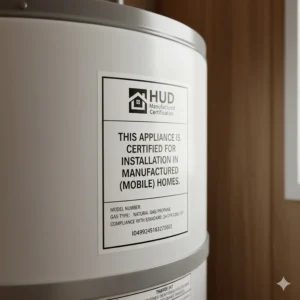
HUD Certification Matters
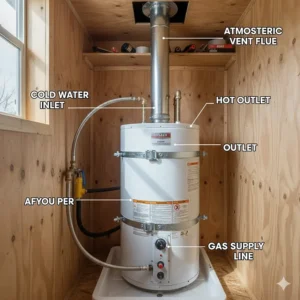
Every mobile home gas hot water heater must carry HUD certification, which means it’s been tested and approved for the unique challenges of manufactured housing. These units typically feature side-mounted cold water inlets (instead of bottom inlets), specialized venting systems, and reinforced construction to handle the movement and settling that mobile homes experience.
According to the U.S. Department of Housing and Urban Development, manufactured housing units must comply with federal construction standards that differ significantly from traditional site-built homes. This includes specific requirements for combustion appliances like water heaters.
Why Side Inlets Matter
Traditional residential water heaters have bottom-mounted cold water inlets, which doesn’t work when your water supply lines run underneath the mobile home. Side inlets allow plumbers to connect water lines from below without complicated re-routing. It seems like a small detail, but it’s crucial for proper gas water heater mobile home installation.
Natural Gas vs Propane: Which Fuel Is Right for You?
The fuel choice for your natural gas water heater mobile home or propane system depends entirely on what’s available in your area and your existing infrastructure. Let’s break down the differences so you can make an informed decision.
Natural Gas Advantages
Natural gas is typically cheaper per BTU than propane, and it’s delivered continuously through utility lines—no refilling tanks or delivery scheduling. If your mobile home park has natural gas infrastructure, this is usually the most economical long-term choice. Natural gas burns slightly cleaner and requires less maintenance on burner components.
Propane Benefits
A propane water heater for mobile home installations offers independence from utility companies and often makes sense in rural areas where natural gas isn’t available. Propane delivers more BTUs per cubic foot than natural gas, meaning slightly better heating efficiency. Many quality units like the A.O. Smith ProLine series are convertible, so if you switch fuel sources later, you’re not replacing the entire heater.
Conversion Costs: If you need to convert between fuels, expect to pay $150-$300 for a conversion kit and labor. Most manufacturers include conversion kits with purchase, but professional installation is essential for safety.
Direct Vent vs Atmospheric Vent: The Critical Choice
When shopping for a direct vent gas water heater mobile home unit versus an atmospheric model, you’re making a decision that affects safety, efficiency, installation cost, and long-term performance. Neither is inherently “better”—they serve different needs and budgets.
Direct Vent (Sealed Combustion) Systems
Direct vent models draw 100% of combustion air from outside through a sealed intake pipe and exhaust combustion gases through a separate pipe. This sealed combustion design offers several advantages for mobile home gas water heater venting:
✅ Superior safety – No chance of backdrafting or pulling combustion air from living spaces
✅ Better efficiency – Doesn’t steal heated air from your home
✅ Flexible placement – Can be installed almost anywhere in the mobile home
✅ Ideal for tighter spaces – No clearance requirements for combustion air
The downside? Direct vent installation costs more initially because you need the venting kit and professional installation. However, the improved safety and efficiency often justify the expense, especially in newer, tighter mobile homes.
Atmospheric Vent Systems
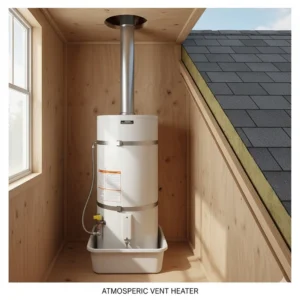
Atmospheric vent water heaters pull combustion air from the room where they’re installed and vent exhaust gases up through a standard B-vent pipe to the roof. They’re the traditional, tried-and-true design that’s been around for decades.
✅ Lower upfront cost – Simpler design means cheaper purchase price
✅ Easier parts availability – More common, easier to find replacements
✅ Straightforward installation – Most plumbers are familiar with atmospheric vents
❌ Requires adequate combustion air – Needs proper clearances and ventilation
❌ Potential backdrafting – Exhaust fans or pressure changes can affect performance
❌ Less efficient – Uses heated air from inside your home for combustion
The U.S. Department of Energy notes that proper venting is critical for any gas-fired water heater to prevent carbon monoxide buildup and ensure efficient operation.
Gas Water Heater Mobile Home Installation: What You Need to Know
Installing a mobile home gas hot water heater isn’t a DIY weekend project—it requires professional expertise, proper permits, and strict adherence to both local codes and HUD standards. However, understanding the process helps you budget appropriately and ask the right questions when hiring a contractor.
Pre-Installation Requirements
Before your new unit arrives, verify these essentials:
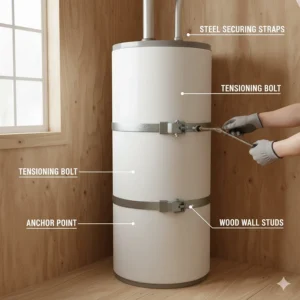
Clearances: Mobile homes have limited space, so measure carefully. Most units need 6 inches clearance on sides, 18 inches in front for service access, and adequate overhead clearance based on venting type.
Gas Line: Ensure your existing gas line can deliver adequate pressure and volume. A 40,000 BTU water heater needs a minimum ½-inch gas line, though ¾-inch is preferred for longer runs.
Venting Path: For atmospheric vents, you need a clear, straight vertical path through the roof. Direct vent models offer more flexibility with horizontal or vertical venting options.
Water Connections: Side-inlet models simplify connections, but verify your supply lines reach properly and drain pans are correctly positioned.
Professional Installation Costs
According to HomeAdvisor, professional water heater installation typically runs $500-$1,500 depending on complexity. For mobile homes, expect costs toward the higher end due to HUD-specific requirements. This includes:
- Removing and disposing of old unit: $100-$200
- New water heater installation: $400-$800
- Venting materials and installation: $200-$500 (direct vent systems cost more)
- Permits and inspections: $50-$200
- Gas line modifications: $150-$400 if needed
Permit Requirements
Most jurisdictions require permits for gas appliance installations. Your contractor should handle this, but verify they’re pulling proper permits. Inspections ensure your mobile home gas water heater venting meets code and the installation is safe. Don’t skip this step—unpermitted work can void warranties and create insurance problems.
Capacity Calculator: Sizing Your Mobile Home Water Heater
Choosing the right capacity prevents the frustration of running out of hot water mid-shower or wasting energy (and money) on an oversized unit. Here’s how to calculate what you actually need.
The Peak Hour Demand Method
The best approach is calculating your household’s peak hour demand—the maximum hot water you’ll use in any given one-hour period. Here’s a typical breakdown:
- Shower: 20 gallons
- Bath: 35 gallons
- Dishwasher: 14 gallons
- Washing machine (hot cycle): 25 gallons
- Hand washing/bathroom sink: 4 gallons per use
Example: A family of four with two morning showers (40 gallons), dishes being washed (14 gallons), and general sink use (8 gallons) has a peak demand of about 62 gallons. You’d want a unit with a first-hour rating of at least 65 gallons to handle this comfortably.
First-Hour Rating vs Tank Capacity
Don’t confuse tank capacity with first-hour rating (FHR). The FHR tells you how much hot water a heater can deliver in its busiest hour, accounting for both stored water and recovery rate. A 40-gallon tank with a strong burner might deliver a 67-gallon FHR, while a 50-gallon tank with a weak burner might only manage a 60-gallon FHR.
Quick Reference Guide:
- 1-2 people: 30-40 gallon tank (50-60 FHR)
- 2-4 people: 40-50 gallon tank (60-75 FHR)
- 4+ people: 50+ gallon tank or tankless (75+ FHR)
The Energy Star program provides detailed calculators to help homeowners determine appropriate water heater sizing based on household needs and local energy costs.
Energy Efficiency: Saving Money Long-Term
Your mobile home gas water heater accounts for roughly 18-25% of your home’s energy use, according to the Department of Energy. Choosing an efficient model and maintaining it properly can save hundreds of dollars annually.
Understanding Energy Factor (EF) and Uniform Energy Factor (UEF)
The Uniform Energy Factor (UEF) replaced the older Energy Factor rating in 2017. Higher numbers are better—a 0.65 UEF means 65% of the fuel energy converts to hot water, with 35% lost to the environment.
Efficiency Benchmarks:
- Standard gas water heaters: 0.58-0.62 UEF
- High-efficiency atmospheric models: 0.62-0.67 UEF
- Direct vent sealed combustion: 0.61-0.65 UEF
- Tankless water heaters: 0.80-0.96 UEF
That efficiency gap translates to real dollars. A 0.65 UEF unit costs roughly $50-$100 less per year to operate than a 0.58 UEF model, assuming natural gas at $1.00 per therm.
Energy-Saving Features to Look For
Modern mobile home gas water heaters include several efficiency-boosting technologies:
Heat Trap Nipples: Factory-installed valves prevent hot water from migrating up into cold water pipes, reducing standby heat loss.
Improved Insulation: Better tank insulation maintains water temperature longer, reducing heating cycles.
Electronic Ignition: Eliminates standing pilot lights, saving 3-5% on fuel costs.
Low-NOx Burners: While primarily for emissions compliance, these burners often run more efficiently too.
Maintenance Tips: Extending Your Water Heater’s Life
A well-maintained mobile home gas hot water heater lasts 10-15 years. Neglect it, and you might be shopping for a replacement in 6-8 years. These simple maintenance tasks make a massive difference.
Annual Flushing Prevents Sediment Buildup
Sediment accumulation is the number one killer of water heaters. Minerals in your water settle at the bottom of the tank, creating an insulating layer between the burner and water. This forces your heater to work harder and can eventually cause tank failure.
How to Flush Your Water Heater:
- Turn off the gas supply and let the water cool (or set to vacation mode)
- Turn off the cold water inlet valve
- Connect a garden hose to the drain valve
- Run the hose outside or to a floor drain
- Open the drain valve and let 2-3 gallons flow out
- Close drain valve, turn water back on, and resume normal operation
Do this annually at minimum. In areas with hard water, flushing twice yearly prevents serious buildup.
Anode Rod Inspection
The anode rod is a sacrificial metal rod that corrodes instead of your tank. Once it’s gone, your tank starts rusting. Most manufacturers recommend inspection at 3 years and replacement every 3-5 years.
Signs you need a new anode rod include rotten egg smells (bacteria in the tank), reddish-brown water, or visible corrosion when you pull the existing rod.
Temperature and Pressure Relief Valve Testing
The T&P valve is a critical safety device that releases pressure if your tank overheats. Test it annually by lifting the lever—you should hear water discharge into the drain tube. If nothing happens, the valve is likely stuck and needs replacement.
Common Problems and Troubleshooting
Even the best gas water heater for mobile home installations eventually develops issues. Knowing what’s normal wear versus serious problems helps you respond appropriately.
No Hot Water
If your propane water heater for mobile home (or natural gas unit) isn’t producing hot water, check these causes:
Pilot light out: Relight following manufacturer instructions. If it won’t stay lit, the thermocouple likely needs replacement.
Gas supply interrupted: Verify gas is flowing to the unit and tank isn’t empty (for propane systems).
Thermostat issues: Electronic controls can fail. Try adjusting temperature setting and listening for burner ignition.
Insufficient Hot Water
Running out of hot water faster than expected suggests:
Sediment buildup: Flush the tank immediately—sediment reduces effective capacity.
Undersized unit: Your household may have outgrown the heater’s capacity.
Failing heating element: Gas burners can degrade over time, reducing BTU output.
Thermostat set too low: Verify temperature is set to 120-130°F for optimal performance.
Discolored or Smelly Water
Reddish-brown water indicates tank corrosion—your anode rod has failed and the tank is rusting. This typically means replacement time is near.
Rotten egg smell comes from bacteria interacting with the anode rod. Flushing the tank and increasing temperature to 140°F for a few hours can kill the bacteria. If the smell persists, consider installing an aluminum-zinc anode rod.
Mobile Home Gas Water Heater Venting: Safety First
Improper venting causes carbon monoxide poisoning, backdrafting, and premature equipment failure. Mobile home gas water heater venting requires special attention due to the unique construction of manufactured housing.
Direct Vent Installation Best Practices
Direct vent systems use coaxial or dual-pipe configurations. The inner pipe exhausts combustion gases while the outer pipe (or separate pipe) brings in combustion air. This sealed system offers maximum safety.
Critical installation points:
- Maintain manufacturer-specified clearances to combustibles
- Use only approved venting materials (typically aluminum or stainless steel)
- Ensure slight upward slope on horizontal vent runs for condensate drainage
- Seal all joints properly to prevent exhaust leaks
- Position termination caps to prevent snow, ice, or debris blockage
Atmospheric Vent Requirements
Atmospheric venting in mobile homes requires B-vent (double-wall) pipe from the draft hood through the roof. The vent must be:
- Properly sized for the BTU input (typically 4-inch minimum for 40,000 BTU units)
- Installed with minimal horizontal runs
- Properly supported every 4-6 feet
- Terminated at least 2 feet above roof penetration
- Fitted with a UL-listed vent cap
Never use single-wall pipe in mobile homes—the clearance requirements are impossible to meet safely. Always use double-wall B-vent throughout the entire run.
Common Venting Mistakes to Avoid
❌ Mixing different vent materials (stainless and aluminum don’t play nice)
❌ Oversizing vents (causes inadequate draft and condensation)
❌ Insufficient clearances to combustible materials
❌ Improper termination locations near windows, doors, or air intakes
❌ Missing or damaged vent caps
Warranty Coverage and What It Really Means
Every mobile home gas hot water heater comes with warranty coverage, but understanding what’s actually covered prevents disappointment when problems arise.
Tank Warranties
Most manufacturers offer 6-year limited tank warranties, with premium models extending to 8-12 years. This covers tank failure due to manufacturing defects—rust-through, weld failures, or factory defects in materials.
What’s NOT covered: Sediment damage from lack of maintenance, freeze damage, installation errors, normal wear and tear, or damage from water conditions (high mineral content, corrosive water).
Parts and Labor
Tank warranty rarely includes labor costs for replacement. Some manufacturers offer separate parts warranties covering gas valves, thermostats, and other components for 1-3 years.
Professional installation is usually required to maintain warranty coverage. DIY installations typically void all warranties, and some manufacturers require registration within 30-90 days of installation.
Extended Warranty Considerations
Retailers and contractors often push extended warranties or service plans. These can be worthwhile if:
- You’re buying a premium unit ($1,200+)
- The plan includes labor coverage
- Your mobile home has hard water issues
- You’re not comfortable with DIY maintenance
Skip extended warranties if you’re handy with basic maintenance and the base warranty is already 6+ years.
Cost Analysis: Total Ownership Over 10 Years
Looking at just the purchase price misses the bigger picture. Let’s break down true total cost of ownership for different mobile home gas hot water heater options.
Traditional 40-Gallon Gas Tank
Initial costs:
- Unit purchase: $700-$1,200
- Professional installation: $600-$1,000
- Permits and inspections: $100-$200
- Total upfront: $1,400-$2,400
Annual operating costs (natural gas @ $1.00/therm):
- Energy consumption: $200-$280/year
- Maintenance (DIY flushing, occasional parts): $50/year
- 10-year operating cost: $2,500-$3,300
Total 10-year ownership: $3,900-$5,700
High-Efficiency Direct Vent Model
Initial costs:
- Unit purchase: $1,200-$1,600
- Professional installation: $800-$1,400
- Total upfront: $2,000-$3,000
Annual operating costs:
- Energy consumption: $175-$240/year (10-15% more efficient)
- Maintenance: $50/year
- 10-year operating cost: $2,250-$2,900
Total 10-year ownership: $4,250-$5,900
The higher-efficiency unit saves $250-$400 over 10 years in energy costs, but the higher purchase price means you might not break even unless energy prices rise.
Tankless Water Heater
Initial costs:
- Unit purchase: $740-$1,200
- Professional installation: $1,000-$2,000 (more complex)
- Total upfront: $1,740-$3,200
Annual operating costs:
- Energy consumption: $140-$200/year (30-40% more efficient)
- Maintenance: $100/year (annual descaling recommended)
- Expected lifespan: 20+ years
- 10-year operating cost: $2,400
Total 10-year ownership: $4,140-$5,600
Tankless systems save money long-term but require higher upfront investment. The real advantage appears after 10 years when traditional tanks need replacement but the tankless unit keeps running.
Frequently Asked Questions
❓ How long does a mobile home gas hot water heater typically last?
❓ Can I replace my mobile home gas water heater myself?
❓ What's the difference between manufactured housing water heaters and regular residential models?
❓ How much does it cost to convert from electric to gas water heating in a mobile home?
❓ Do I need a special water heater if my mobile home uses propane?
Conclusion: Making Your Decision
Choosing the right mobile home gas hot water heater comes down to balancing your budget, household size, available fuel source, and installation constraints. The best gas water heater for mobile home applications isn’t necessarily the most expensive—it’s the one that fits your specific needs and provides reliable performance for years.
For most households, a 40-gallon direct vent model like the A.O. Smith ProLine FMDV-40 or Reliance 6-40-MDV offers the ideal combination of capacity, safety, and value. Budget-conscious buyers get excellent performance from the Rheem Performance series, while those prioritizing energy efficiency should seriously consider the tankless Rinnai models despite higher initial costs.
Whatever you choose, don’t cut corners on installation. Professional setup ensures your natural gas water heater mobile home or propane system operates safely, efficiently, and maintains warranty coverage. The few hundred dollars saved on DIY installation isn’t worth the risk of improper gas connections, inadequate venting, or code violations.
Remember to factor in long-term operating costs when comparing models. A unit that costs $400 more upfront but saves $50 annually on energy pays for itself in 8 years—and then continues saving money for the rest of its lifespan.
🔥 Ready to Upgrade Your Hot Water System?
🛁 Stop dealing with cold showers and unreliable hot water. Browse our top-rated picks and click through to check current prices on Amazon. These HUD-approved units deliver professional-grade performance specifically designed for manufactured housing. With proper installation and maintenance, your new mobile home gas hot water heater will provide dependable service for 10-15 years or more. Don’t wait until you’re dealing with an emergency replacement—upgrade now!
Recommended for You
- 7 Best 40-Gallon Hot Water Heater for Mobile Home in 2025
- 30 Gallon Mobile Home Hot Water Heaters: 7 Best Options 2025
- Mobile Home Hot Water Heater: 7 Best Options in 2025
Disclaimer: This article contains affiliate links. If you purchase products through these links, we may earn a small commission at no additional cost to you.
✨ Found this helpful? Share it with your friends! 💬🤗
