
In This Article
✨Was this helpful? Spread the word! 🚀
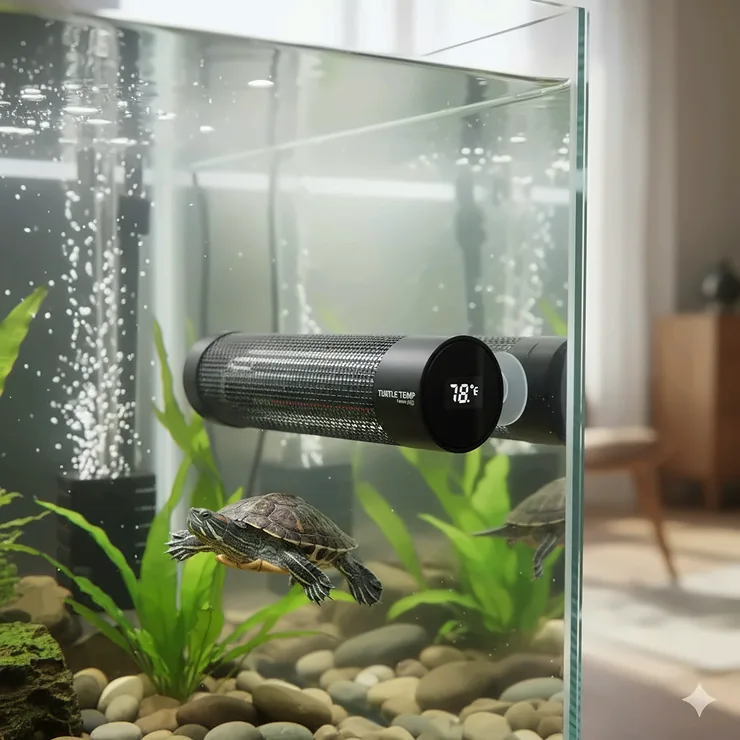
Let me tell you something that most new turtle owners don’t realize until it’s too late: temperature isn’t just about comfort for your shelled friend, it’s literally about survival. I’ve seen countless turtles become lethargic, stop eating, and even slip into dangerous hibernation states because their water wasn’t warm enough. That’s where a quality turtle water heater becomes your turtle’s best friend.
A turtle water heater is a specialized aquarium heating device designed to maintain optimal water temperatures between 75-80°F for aquatic turtles, ensuring they remain active, healthy, and properly digest their food. Think of it as your turtle’s personal climate control system. Without proper heating, your turtle’s metabolism slows down dramatically, making them vulnerable to respiratory infections and digestive problems.
What makes turtle tank heaters different from regular fish heaters? Well, turtles are notorious equipment destroyers. They bump into things, they investigate everything with their beaks, and they’re surprisingly strong. You need a heater for turtle tanks that can withstand this rough treatment while maintaining precise temperature control. Whether you’re keeping Red-eared Sliders, Painted Turtles, or African Sidenecks, maintaining consistent water temperature isn’t optional – it’s essential.
Throughout this guide, I’ll walk you through everything from choosing the right wattage for your aquarium turtle heater to understanding why some models work better than others. We’ll look at real products, actual customer experiences, and practical advice that goes beyond the marketing fluff. By the end, you’ll know exactly which heater for aquarium turtle setups will keep your pet thriving for years to come.
Quick Comparison: Top Turtle Water Heater Options
Before we dive deep, here’s a snapshot of the best water heaters for turtle tanks available in 2025. This comparison focuses on what actually matters: durability, accuracy, and value.
| Product | Wattage Options | Best For | Price Range | Key Feature |
|---|---|---|---|---|
| Zoo Med TurtleTherm | 50W, 100W, 150W | Beginners | $25-$45 | Auto shut-off when removed |
| Cobalt Neo-Therm Pro | 25W-300W | Precision seekers | $35-$80 | ±0.5°F accuracy |
| TetraFauna Aquatic | 100W | Budget buyers | $20-$30 | Preset 78°F |
| Eheim Jager | 50W-300W | Reliability | $30-$60 | Shatterproof glass |
| REPTIZOO Mini | 100W, 150W | Small tanks | $22-$35 | LED digital display |
| Cobalt Neo-Glass | 25W-300W | Tech enthusiasts | $28-$70 | Electronic thermostat |
| Hydor THEO | 50W-300W | Turtle-proof needs | $25-$50 | Double-thick glass |
💬 Just one click – help others make better buying decisions too!😊
🛒 Ready to Shop Smart?
✨ These heaters represent the best balance of safety, performance, and value. Each product has been tested by thousands of turtle owners and comes highly recommended by reptile experts. Don’t settle for inferior equipment that could put your turtle at risk! 🐢💚
Top 7 Turtle Water Heater: Expert Analysis
After researching dozens of models and reading hundreds of customer reviews, I’ve narrowed down the field to seven standout turtle water heaters. Each one excels in different areas, but they all share one critical feature: they can survive life with turtles.
1. Zoo Med TurtleTherm Automatic Preset Heater – Best for Beginners
When you’re just starting out with turtle keeping, the Zoo Med TurtleTherm Automatic Preset Aquatic Turtle Heater takes the guesswork out of temperature management. This preset submersible heater automatically maintains water at the optimal 78°F, which happens to be perfect for most common turtle species.
What sets this aquatic turtle heater apart is its safety-first design. The automatic shut-off feature kicks in whenever the unit is removed from water, preventing burnout and potential hazards. I’ve talked to owners who’ve had their turtles literally knock this thing around, and it keeps working reliably. The built-in thermometer displays current water temperature, though several users note it can run 2-3 degrees high, so I’d recommend having a separate thermometer for verification.
Available in 50W (up to 15 gallons), 100W (up to 30 gallons), and 150W (up to 50 gallons), there’s a Zoo Med TurtleTherm for almost any setup. Price ranges from $25-$45 depending on wattage.
Customer Insight: One verified buyer noted, “I have bought a few heaters for my turtle tank none of them have worked. This heater has been the best. My turtle tank is always warm if the water level falls it automatically turns off.”
✅ Automatic temperature preset
✅ Safety shut-off feature
✅ Suitable for multiple turtle species
❌ Thermometer accuracy issues
❌ Suction cups can be finicky
2. Cobalt Aquatics Neo-Therm Pro – Most Accurate Temperature Control
For those who refuse to compromise on precision, the Cobalt Aquatics Neo-Therm Pro Aquarium Heater represents the pinnacle of heating technology. This electronic heater for turtle tank applications delivers accuracy within ±0.5°F, which is frankly remarkable.
The Cobalt Neo-Therm Pro features innovative circuitry that constantly adjusts power consumption based on current conditions, maximizing both efficiency and safety. The dual LED display shows both set temperature and actual tank temperature simultaneously – no more guessing games. The shatterproof outer casing means even the most destructive turtle can’t crack this thing, and automatic shutoff circuitry prevents overheating.
Available in wattages from 25W to 300W, this turtle tank water heater works equally well in nano tanks and large turtle habitats. Pricing ranges from $35-$80, making it pricier than basic models but worth every penny for the reliability.
Customer Feedback: According to one reef tank owner who demands precision, “I set it at 78°F and when I test it using a Hannah temperature probe it is reading 77.9°F consistently overnight.”
✅ Ultra-precise ±0.5°F accuracy
✅ Shatterproof construction
✅ Dual temperature display
❌ Higher price point
❌ Some users report weak suction cups
3. TetraFauna Aquatic Reptile Heater – Best Budget Option
Don’t let the modest price fool you – the TetraFauna Aquatic Reptile Heater delivers solid performance for turtle water heating without breaking the bank. This 100W submersible heater maintains a steady 78°F with its automatic thermostat, perfect for tanks up to 30 gallons.
The protective cover keeps curious turtles safe from the heating element, while two oversized suction cups provide reliable mounting. The extra-long 8-foot cord offers excellent placement flexibility, and you can route it through multiple openings in the protective cage. For around $20-$30, this TetraFauna heater represents exceptional value.
The trade-off? It’s preset at 78°F with no adjustment capability. If your turtle species requires different temperatures, you’ll need to look elsewhere. But for common species like Red-eared Sliders and Painted Turtles, this temperature hits the sweet spot.
User Experience: Pet owners consistently praise its reliability and safety features, making it ideal for first-time turtle keepers on a budget.
✅ Extremely affordable
✅ Protective cover design
✅ Long power cord
❌ No temperature adjustment
❌ Limited to smaller tanks
4. Eheim Jager Thermostat Heater – Most Reliable Long-Term
German engineering meets aquarium heating with the Eheim Jager Aquarium Thermostat Heater. This workhorse has earned legendary status among turtle keepers for one simple reason: it just doesn’t quit. Made from shatterproof laboratory-grade glass, this heater for water turtle tanks can handle years of abuse.
The TruTemp dial allows precise adjustment from 65-93°F, and here’s the cool part – you can recalibrate it yourself if needed. The Eheim Jager features automatic safety shutoff if water levels drop dangerously low, protecting both the heater and your turtle from disaster.
Available in wattages from 25W to 300W, there’s a Jager for virtually any tank size. Prices run $30-$60 depending on wattage. It needs full submersion to work properly and should be mounted horizontally, but once installed correctly, it’s basically bulletproof.
Reliability Factor: This is the heater professional turtle breeders consistently recommend. That speaks volumes.
✅ Shatterproof glass construction
✅ Recalibration capability
✅ Run-dry protection
❌ Must be fully submerged
❌ Horizontal mounting required
5. REPTIZOO 100W Preset Turtle Heater – Best for Small Tanks
The REPTIZOO 100W Aquarium Heater brings modern tech features to smaller turtle habitats. This compact turtle aquarium heater fits tanks between 10-20 gallons perfectly, with a 150W version available for 18-30 gallon setups.
The LED digital display shows real-time water temperature, making monitoring effortless. Preset to 78°F, this mini aquarium heater includes both water shortage protection and overheat protection – it automatically stops working if water levels drop or temperatures exceed 93°F. The REPTIZOO heater only requires 1.4 inches of water depth, making it compatible with shallow turtle basking areas.
Color-coded indicator lights make operation foolproof: red means heating, green means target temperature reached. For $22-$35, it’s priced competitively while offering premium safety features.
Safety Note: The automatic safety features provide peace of mind, especially for new owners worried about equipment failures.
✅ LED temperature display
✅ Works in shallow water
✅ Dual safety protection
❌ Limited tank size range
❌ Preset temperature only
6. Cobalt Neo-Glass Aquarium Heater – Best Electronic Features
Looking for cutting-edge technology in your turtle water temperature control? The Cobalt Aquatics Neo-Glass Aquarium Heater combines the legendary Neo-Therm thermostat technology with traditional glass construction. This turtle tank heater achieves ±0.7°F accuracy while using borosilicate glass that’s superior for heat and shock resistance.
The push-button digital thermostat makes temperature setting simple, and the ceramic heat radiator provides exceptional heat distribution throughout your tank. Electronic circuitry constantly varies power consumption, preventing temperature spikes that can stress turtles. The Neo-Glass heater works in freshwater and saltwater setups from 5 to 50 gallons.
Pricing runs $28-$70 depending on wattage (available from 25W to 300W). It’s pricier than basic models but more affordable than the fully-shatterproof Pro version.
Performance Insight: Users report consistent temperatures and appreciate the easy-to-read digital display that eliminates guesswork.
✅ Electronic precision control
✅ Borosilicate glass quality
✅ Even heat distribution
❌ Glass can break with impact
❌ Mid-to-high price range
7. Hydor THEO Submersible Heater – Most Turtle-Proof Construction
Italian manufacturer Hydor designed the Hydor THEO Aquarium Turtle Tank Heater specifically with rough-and-tumble aquatic reptiles in mind. The double-thickness glass tube – twice as thick as standard heaters – resists both thermal shock and physical impacts from curious turtles.
The exclusive PTC heating element self-regulates temperature, automatically limiting power if something goes wrong. The appliance stops automatically in case of malfunction, preventing disasters. A graduated scale allows precise temperature adjustment, and the Hydor THEO can be positioned horizontally or vertically depending on your tank layout.
Available in 50W to 300W options, this submersible water heater for turtles handles tanks from small to extra-large. Pricing ranges from $25-$50, offering solid value for the enhanced durability.
Durability Report: Owners praise its ability to withstand turtle attacks that destroyed other heaters, though some report occasional temperature regulation issues after extended use.
✅ Double-thick shatterproof glass
✅ PTC safety technology
✅ Flexible mounting options
❌ Some units fail after months
❌ Customer service concerns
Understanding Turtle Water Heater Basics 📚
What Makes Turtle Heaters Different?
You might wonder why you can’t just grab any old fish tank heater for your turtle. Here’s the thing: turtles interact with their environment completely differently than fish. They’re curious, strong, and surprisingly clumsy. A delicate glass heater that works fine in a peaceful community tank will be destroyed within days by an active turtle.
Turtle water heaters need shatterproof construction, protective cages, or ultra-thick glass to survive. They also require reliable safety features like automatic shut-off when water levels drop. According to the American Veterinary Medical Association, maintaining proper environmental conditions is crucial for reptile health, and temperature sits at the top of that list.
Temperature Requirements by Species
Different turtle species have varying temperature needs, though most common pet turtles thrive in similar ranges:
Red-eared Sliders: 75-80°F water temperature
Painted Turtles: 75-80°F water temperature
African Sideneck Turtles: 75-80°F water temperature
Musk and Mud Turtles: 72-78°F water temperature
Map Turtles: 75-80°F water temperature
Most preset heaters target 78°F because this temperature works for the majority of popular species. However, if you’re keeping species with specific requirements, invest in an adjustable model.
How to Choose the Right Turtle Water Heater 🎯
Step 1: Calculate Required Wattage
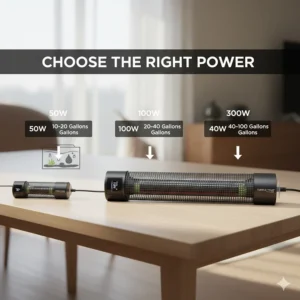
The golden rule for aquarium heater sizing is roughly 5 watts per gallon, but turtle tanks need special consideration. Start by measuring your actual water volume (remember, turtle tanks aren’t filled to the brim like fish tanks). Then consider the temperature difference between your room and target water temperature.
For a 20-gallon turtle tank in a typical 68°F room, you’d need about 100-150 watts to maintain 78°F water. Colder rooms require more power. I always recommend going slightly higher on wattage – it’s better to have reserve capacity than an overworked heater.
Step 2: Choose Between Submersible and External
Submersible heaters install directly in the tank, usually mounted vertically or horizontally on the glass. They’re easier to set up and generally more affordable. The downside? They take up visual space and are vulnerable to turtle damage.
External heaters connect to canister filters, heating water outside the tank before returning it. They’re invisible from the front, completely turtle-proof, and often more efficient. However, they require a compatible filter system and cost more upfront.
Step 3: Consider Safety Features
Never compromise on safety when it comes to heating equipment. Look for these essential features:
Automatic shut-off prevents overheating and burnout
Thermal protection guards against temperature spikes
Shatterproof construction protects turtles from broken glass
Water level sensors detect dangerous low-water conditions
Visual indicators show heating status at a glance
Step 4: Evaluate Temperature Control
Preset heaters offer simplicity but limit flexibility. They’re perfect for beginners keeping common species at standard temperatures. Adjustable models cost more but let you fine-tune temperatures for specific species or seasonal adjustments.
Electronic thermostats provide the best accuracy, often within 0.5-1°F. Mechanical thermostats using bimetallic strips are less precise but more affordable and generally reliable.
Step 5: Factor in Tank Size and Layout
Small tanks (under 20 gallons) work well with compact mini heaters. Medium tanks (20-40 gallons) need standard submersible units or small external models. Large tanks (40+ gallons) benefit from dual heaters placed at opposite ends for even heating.
Consider your basking platform placement too. You want the heater positioned where water circulation is good but away from where your turtle climbs in and out.
Installation and Setup Guide 🔧
Proper Placement Techniques
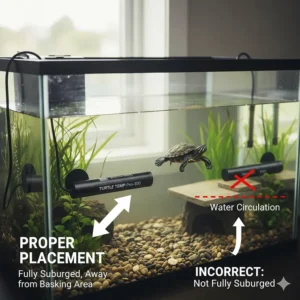
Location matters tremendously for heater performance. Position your turtle water heater near your filter output to help distribute warm water evenly throughout the tank. Mount it vertically if possible, as horizontal mounting can create hot spots.
Never place heaters directly under basking spots or near where your turtle enters/exits the water. These high-traffic areas increase the risk of damage. Instead, tuck the heater behind decorations or in corners where turtles rarely venture.
Step-by-Step Installation
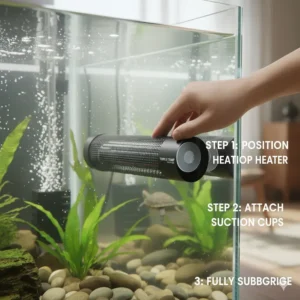
1. Unplug everything – Never work on electrical equipment in an active tank
2. Rinse the heater with dechlorinated water (never soap!)
3. Attach suction cups firmly to clean glass
4. Position the heater ensuring it’s fully submerged
5. Wait 15-20 minutes before plugging in (thermal equilibration)
6. Create a drip loop with the power cord
7. Plug in and set desired temperature
8. Monitor for 24 hours before adding turtles
Initial Temperature Testing
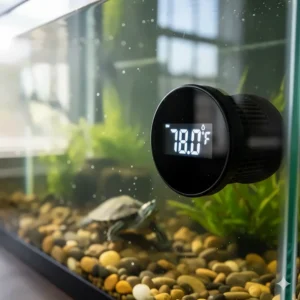
Don’t trust the heater’s built-in thermometer initially. Use a separate digital thermometer placed at the opposite end of the tank to verify accurate heating. Check temperatures at multiple depths – sometimes the surface differs from the bottom by several degrees.
Let the system run for a full day before introducing turtles. This testing period reveals any malfunction issues before your pet is at risk.
Common Problems and Solutions 🔍
Temperature Fluctuations
Inconsistent temperatures usually indicate either insufficient wattage or poor circulation. If your heater constantly cycles on and off without maintaining steady temps, you might need more powerful equipment or better water flow from your filter.
Room temperature changes affect tank temps more than most people realize. A heater barely adequate in summer might struggle in winter when ambient temps drop. Monitor seasonal performance and adjust accordingly.
Heater Not Reaching Target Temperature
Several factors can prevent your turtle tank heater from achieving desired temps. Low ambient room temperature is the most common culprit – if your house sits at 60°F, even a properly-sized heater will struggle. Cold drafts near the tank, excessive evaporation, or insufficient wattage all contribute to this problem.
Solution? Insulate the back and sides of your tank with foam board, add a tank cover to reduce heat loss, or upgrade to higher wattage. Sometimes you need dual heaters to overcome heat loss in cold environments.
Turtle Attacking the Heater
Curious turtles investigate everything, and heaters are no exception. If your turtle repeatedly bumps, bites, or climbs on the heater, protect it with creative aquascaping. Build rock caves around the unit or position it behind sturdy driftwood. Some keepers create PVC pipe guards, though aesthetics suffer.
For chronic heater destroyers, switching to an external heating system completely solves the problem since the equipment stays outside the tank entirely.
Inaccurate Temperature Readings
Many built-in heater thermometers run 2-5 degrees off. This isn’t necessarily dangerous if you know the offset and adjust accordingly. However, I strongly recommend using a separate digital aquarium thermometer for accurate monitoring.
Check calibration by comparing your heater’s reading against a quality digital thermometer. If consistently off by the same amount, you can compensate when setting temperatures.
Maintenance and Care Tips 🛠️
Regular Cleaning Schedule
Heaters accumulate algae, calcium deposits, and debris over time, reducing efficiency and lifespan. Monthly cleaning prevents buildup that interferes with heat transfer and sensor accuracy.
Unplug the heater and let it cool completely before removal. Gently scrub with a soft brush or cloth, avoiding abrasive materials that could scratch protective coatings. For stubborn calcium deposits, soak in a white vinegar solution (1 part vinegar to 3 parts water) for 15 minutes, then rinse thoroughly with dechlorinated water.
Inspection Checklist
Every water change, take 60 seconds to inspect your heater for potential issues. Check suction cups for secure attachment, examine the cord for damage or fraying, and verify the heating indicator light functions properly. Look for cracks in glass housing or discoloration that might indicate overheating.
Test the heater’s accuracy monthly using a separate thermometer. If readings drift more than 3-4 degrees from your target, consider replacement – precision degrades over time.
When to Replace Your Heater
Even the best turtle water heaters don’t last forever. According to reptile care experts, most aquarium heaters should be replaced every 2-3 years regardless of apparent function. Internal components degrade, thermostats lose calibration, and safety features become less reliable.
Replace immediately if you notice: cracked or damaged housing, erratic temperature control, failure to reach target temps, strange noises or smells, or visible corrosion. Don’t wait for catastrophic failure – proactive replacement prevents dangerous situations.
Seasonal Adjustments
Room temperature changes with seasons, affecting how hard your heater works. In winter, you might need to increase the thermostat setting or add a second heater to maintain consistent temperatures. Summer often requires lowering settings or even unplugging heaters in particularly warm climates.
Monitor your tank daily during seasonal transitions. What worked perfectly in spring might be inadequate by December.
Energy Efficiency and Cost Considerations 💰
Operating Costs Breakdown
Heating represents one of the largest ongoing expenses in turtle keeping. A 100W heater running 12 hours daily (typical duty cycle) consumes about 36 kWh monthly. At the national average of $0.14 per kWh, that’s roughly $5 monthly or $60 annually. Larger tanks with 200-300W heaters can double or triple these costs.
External heaters connected to filters often prove more efficient than submersible models because they heat water during circulation anyway. Electronic thermostats also reduce costs by modulating power consumption rather than cycling fully on/off.
Ways to Reduce Heating Costs
Smart turtle keepers can cut heating expenses significantly without compromising pet welfare. Tank location matters – avoid placing aquariums near drafty windows or exterior walls. Adding insulation to the back and sides (rigid foam board works great) dramatically reduces heat loss.
Tank covers trap warmth and reduce evaporation, which steals massive amounts of heat energy. Even a simple glass cover can cut heating costs by 20-30%. Just ensure adequate ventilation to prevent humidity problems.
Using a programmable timer to slightly lower temperatures at night (2-3 degrees) mimics natural conditions while saving energy. Most turtles handle minor nighttime temperature drops without issue.
Safety Precautions for Turtle Heaters ⚠️
Electrical Safety Basics
Water and electricity create potentially deadly combinations. Every turtle water heater installation must include a drip loop – let the power cord sag below the outlet level before plugging in, preventing water from running down the cord into the socket.
Use a GFCI (Ground Fault Circuit Interrupter) outlet for all aquarium equipment. GFCIs detect electrical faults and cut power instantly, potentially saving your life. Never use extension cords with aquarium heaters unless rated for the wattage and used with a GFCI.
Preventing Burns and Injuries
Hot heaters can burn curious turtles that brush against them. Models with protective cages, plastic exteriors, or external placement eliminate this risk. Glass heaters without guards should be positioned away from turtle traffic patterns.
Never handle a plugged-in heater or reach into the tank to adjust equipment without unplugging first. Even if you’re careful, a slip could cause serious shock or injury.
Avoiding Overheating Disasters
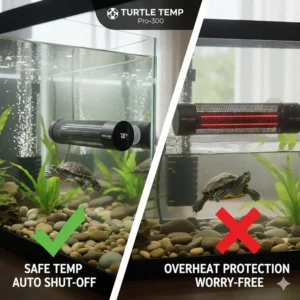
Overheating kills turtles faster than cold water does. Temperatures above 85°F stress turtles severely, potentially causing permanent organ damage or death within hours. Always use heaters with automatic shutoff protection and monitor temperatures daily.
Consider using a separate aquarium controller with temperature alarms. These devices cost $50-150 but can alert you to dangerous temperature spikes before catastrophe strikes. For expensive or rare turtles, this investment makes sense.
Comparing Submersible vs External Heaters 🔄
| Feature | Submersible Heaters | External Heaters |
|---|---|---|
| Installation | Simple, direct placement | Requires canister filter setup |
| Visibility | Visible in tank | Hidden from view |
| Durability | Vulnerable to turtle damage | Protected outside tank |
| Efficiency | Good, direct heating | Excellent, integrated with filtration |
| Cost | $20-80 typically | $50-150+ typically |
| Maintenance | Easy access | Requires filter access |
| Adjustment | Usually accessible | May require disassembly |
| Safety | Needs turtle-proof placement | Zero risk from turtles |
When to Choose Submersible
Submersible heaters work perfectly for most turtle keepers, especially beginners. They’re affordable, simple to install, and easy to replace. If you’re keeping turtles in tanks under 40 gallons without canister filtration, submersible is your best bet.
Choose quality submersible models with shatterproof construction and protective features. Position them strategically behind decorations where turtles can’t easily access them. The Zoo Med TurtleTherm and Cobalt Neo-Therm Pro excel in this category.
When to Choose External
External heaters make sense for serious turtle keepers with larger setups (50+ gallons) using canister filters. They’re ideal for especially destructive turtles that demolish every submersible heater you try. The upfront cost is higher, but long-term reliability often pays off.
If aesthetics matter – maybe your turtle tank is a living room centerpiece – external heating keeps technology invisible. The Hydor ETH In-Line External Heater dominates this niche, offering reliable performance without cluttering your aquascape.
Troubleshooting Temperature Issues 🌡️
Why Water Won’t Stay Warm
If your properly-sized heater can’t maintain target temperatures, investigate these common causes:
Insufficient insulation – Bare glass loses heat rapidly
Oversized tank – Wattage inadequate for water volume
Cold room temperature – Ambient temps below 65°F challenge any heater
Excessive water changes – Replacing too much water too frequently
Equipment malfunction – Failing thermostat or heating element
Start by checking if the heater indicator light cycles on and off. If it stays on constantly but temps remain low, the unit isn’t powerful enough. If it never turns on, you have electrical or thermostat failure.
Dealing with Temperature Spikes
Sudden temperature increases are more dangerous than gradual drops. If your turtle tank suddenly reads 85°F or higher, take immediate action:
1. Unplug the heater immediately
2. Add small amounts of cool water gradually
3. Increase surface agitation for evaporative cooling
4. Float frozen water bottles in mesh bags
5. Check for stuck thermostat or other malfunctions
Never add ice directly to the tank – rapid temperature drops shock turtles just as badly as heat spikes. Aim to lower temps by 2-3 degrees per hour maximum.
Addressing Cold Spots in Large Tanks
Tanks over 40 gallons often develop temperature zones, with warm areas near the heater and cooler corners far away. Poor circulation causes this problem. Solutions include adding a second heater at the opposite end of the tank or upgrading to a more powerful filter that improves water movement.
Place thermometers at multiple locations to identify cold spots. Sometimes simply repositioning your existing heater near the filter output distributes heat more effectively.
Advanced Heating Strategies for Large Tanks 🏊
Dual Heater Systems
Professional turtle breeders often use two smaller heaters instead of one large unit. A 75-gallon tank might use two 150W heaters rather than a single 300W model. This approach provides redundancy – if one fails, the other prevents dangerous temperature crashes.
Position dual heaters at opposite ends of the tank for even heat distribution. Set both to the same temperature, and they’ll share the workload, extending lifespan for both units. Monitor each heater independently to catch failures early.
Backup Heating Solutions
Power outages can kill turtles in cold weather. Battery-powered backup heaters exist but are expensive and limited. A more practical solution: keep your tank in a consistently warm room and have a generator or battery inverter for emergencies.
Some keepers use uninterruptible power supplies (UPS) designed for computers. A good UPS can power a heater for several hours, enough to get through most temporary outages. For extended outages, wrap the tank in insulating blankets and add hot water bottles (not boiling) to maintain temperatures.
Integrating Smart Controllers
Modern aquarium controllers like the Apex or Inkbird systems take heating to the next level. These devices monitor temperatures 24/7, trigger alarms for problems, and even control multiple heaters automatically. They cost $100-400 but provide professional-grade monitoring.
Smart controllers prevent overheating by cutting power if temps exceed safe limits. They can send alerts to your phone if temperatures drift outside parameters. For valuable turtle collections, this technology provides invaluable peace of mind.
Species-Specific Heating Requirements 🐢
Tropical vs Temperate Species
Not all turtles need identical temperatures. Tropical species like Red-eared Sliders and Yellow-bellied Sliders thrive at 75-80°F year-round. Temperate species such as some Painted Turtles tolerate and even benefit from seasonal temperature variations.
Research your specific species before setting heater temperatures. Some turtles naturally undergo brumation (reptile hibernation) if temperatures drop too low, which can be risky for captive animals unprepared for this metabolic state.
Baby vs Adult Temperature Needs
Hatchling and juvenile turtles often need slightly warmer water than adults – typically 78-82°F compared to 75-80°F for grown specimens. Their smaller body mass means they lose heat faster and need higher ambient temperatures to maintain proper metabolism.
Adjust your heater settings as your turtle grows. What works for a quarter-sized hatchling might be uncomfortably warm for a full-grown adult. Monitor behavior – if your turtle constantly basks and avoids water, temps might be too cold. If it never basks, water might be too warm.
Breeding Temperature Considerations
Turtle breeders manipulate temperatures to trigger breeding behaviors. Gradual cooling in fall followed by warming in spring mimics natural seasonal changes that stimulate reproduction. This advanced technique requires precise temperature control over months.
For typical pet owners not attempting breeding, maintain consistent temperatures year-round. Seasonal fluctuations stress non-breeding turtles and can suppress immune function.
Health Impacts of Improper Heating 🏥
Signs of Temperature Stress
Turtles are ectothermic, meaning they rely on external temperatures to regulate metabolism. When water temperatures fall below optimal ranges, you’ll notice:
Lethargy and reduced activity – Cold turtles move slowly or not at all
Loss of appetite – Metabolism slows, reducing hunger
Extended basking – Desperate attempts to warm up
Respiratory symptoms – Cold stress weakens immunity
Refusal to enter water – Avoiding uncomfortably cold temperatures
Conversely, overheating causes rapid breathing, frantic swimming, and desperate attempts to escape the water. Both extremes can be fatal if not corrected promptly.
Long-Term Health Consequences
Chronic temperature problems cause serious health issues over time. Cold water temperatures weaken immune systems, making turtles vulnerable to respiratory infections (the #1 killer of captive turtles). Digestive problems develop because low temperatures prevent proper food breakdown and nutrient absorption.
According to research published in the Journal of Experimental Biology, temperature directly affects reptile growth rates, organ development, and lifespan. Maintaining proper temperatures isn’t just about comfort – it’s fundamental to longevity.
Preventing Temperature-Related Illnesses
The best treatment is prevention. Invest in quality heating equipment from the start, monitor temperatures daily, and respond immediately to problems. Keep backup heaters on hand (they’re relatively inexpensive insurance).
Regular veterinary checkups can catch early signs of temperature-related stress before they become life-threatening. Many reptile vets recommend annual exams for turtles, with temperature management being a standard discussion topic.
FAQ: Turtle Water Heater Questions
❓ What wattage turtle water heater do I need for a 40 gallon tank?
❓ Can turtle water heaters work with low water levels?
❓ How long do turtle water heaters typically last?
❓ Is it safe to use regular aquarium heaters for turtles?
❓ Do external turtle water heaters save money on electricity?
Conclusion: Choosing Your Perfect Turtle Water Heater
After diving deep into the world of turtle water heaters, one truth stands out: the right heating equipment makes the difference between a thriving turtle and one that’s merely surviving. Whether you choose the beginner-friendly Zoo Med TurtleTherm, the precision of the Cobalt Neo-Therm Pro, or the budget-conscious TetraFauna model, you’re taking a critical step toward proper turtle care.
Remember that heating isn’t set-it-and-forget-it. Monitor temperatures daily, clean equipment monthly, and be prepared to adjust strategies as seasons change. Your turtle depends on you to maintain the warm-water environment it needs to digest food, fight off illness, and enjoy an active life.
The initial investment in quality heating equipment pays dividends for years through reduced veterinary bills and the satisfaction of seeing your turtle thrive. Don’t cut corners on this essential piece of equipment – your shelled friend is counting on you.
🐢 Take Action Today!
✨ Don’t let another day pass with inadequate heating! Browse the recommended turtle water heaters above and give your turtle the comfortable habitat it deserves. With proper temperature control, you’ll see increased activity, better appetite, and a happier pet. Click any product link to check current prices and availability – your turtle will thank you! 🌡️💚
Recommended for You
- Turtle Tank Heater: 7 Best Picks for Happy Turtles 2025
- Reptile Heat Mat: 7 Best Options for Perfect Warmth 2025
- Reptile Heat Light: 7 Best Options for Your Pet in 2025
Disclaimer: This article contains affiliate links. If you purchase products through these links, we may earn a small commission at no additional cost to you.
✨ Found this helpful? Share it with your friends! 💬🤗
