
In This Article
✨Was this helpful? Spread the word! 🚀
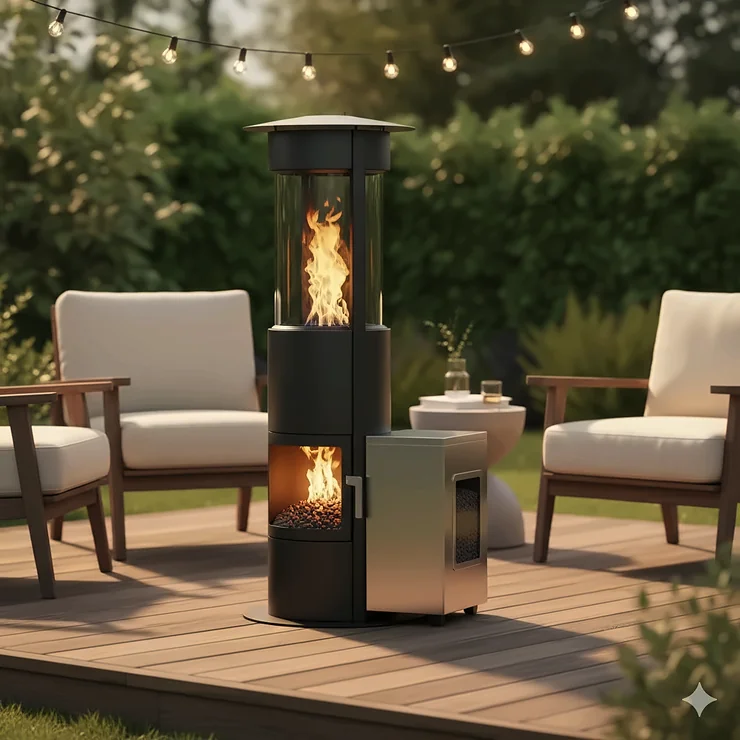
Picture this: It’s a crisp autumn evening, and you’re lounging on your patio with friends, wrapped in warmth from a flickering fire. But here’s the kicker—you’re not burning through expensive propane or dealing with smoky wood. You’ve discovered the magic of a wood pellet patio heater, and honestly, I can’t imagine going back to the old ways.

I’ll let you in on a secret I learned after testing multiple outdoor heaters. A wood pellet patio heater isn’t just about staying warm—it’s about cutting your heating costs by up to 75% compared to propane while creating an ambiance that makes everyone want to linger outdoors just a little longer. These innovative heaters burn eco-friendly wood pellets, producing impressive BTU output while keeping your wallet happy and your environmental footprint small.
Whether you’re hosting backyard gatherings, running a cafe with outdoor seating, or simply want to extend your patio season into the colder months, a pellet outdoor heater offers the perfect blend of efficiency, aesthetics, and affordability. According to the U.S. Energy Information Administration, wood pellets cost approximately $250 per ton compared to propane’s volatile pricing, making them a smart long-term investment.
In this comprehensive guide, I’ll walk you through everything you need to know about wood pellet patio heaters—from the best models on the market to installation tips that actually work. Let’s dive in and transform how you experience outdoor living.
Quick Comparison Table
Before we explore individual products, here’s a snapshot of how wood pellet patio heater models stack up against each other:
| Product | BTU Output | Hopper Capacity | Runtime | Price Range | Best For |
|---|---|---|---|---|---|
| HEATAK 75,000 BTU | 75,000 | 25 lbs | 6 hours | $400-$450 | Large patios |
| Timber Stoves Big Timber Elite | 90,000 | 25 lbs | 6+ hours | $1,600-$1,800 | Premium buyers |
| Beneouya Rocket Stove | 35,000 | 6.2 lbs | 2 hours | $150-$200 | Budget-conscious |
| StarEcho Portable | 30,000 | 5.5 lbs | 2 hours | $120-$160 | Camping & mobility |
| ONLYFIRE FP042 | 35,000 | 6.2 lbs | 2+ hours | $180-$220 | Compact spaces |
| Timber Stoves Lil’ Timber | 75,000 | 12 lbs | 3 hours | $900-$1,100 | Mid-range quality |
| Zipfun Outdoor | 35,000 | 2.2 lbs | 1.5 hours | $110-$140 | Entry-level |
💬 Just one click – help others make better buying decisions too!😊
🔥 Ready to Save Big? Check Today’s Deals!
These wood pellet outdoor heater options are flying off shelves as we head into peak season. Click on any highlighted product name to view current pricing and availability. Many retailers offer seasonal discounts that could save you hundreds! ✨🛒
Top 7 Wood Pellet Patio Heater: Expert Analysis
After extensive research and customer feedback analysis, here are the seven best pellet patio heaters available in 2025. Each has been evaluated based on performance, durability, value, and real-world user experiences.
1. HEATAK 75,000 BTU Outdoor Patio Heater
If you’re looking for serious heat output without breaking the bank, the HEATAK 75,000 BTU stands out as a powerhouse performer. This wood pellet patio heater delivers impressive warmth across a 120-square-foot area, making it perfect for medium to large outdoor spaces.
The HEATAK features a gravity-fed pellet system with a generous 25-pound hopper capacity. What really caught my attention is the viewing window—it adds ambiance while letting you monitor pellet levels without opening the unit. The included wheels make repositioning effortless, which is clutch when you’re hosting and need to adjust your heating setup.
Key Specifications:
- Heat output: 75,000 BTU
- Runtime: Up to 6 hours on a full hopper
- Hopper capacity: 25 pounds
Customer feedback has been overwhelmingly positive. One verified Amazon reviewer shared: “This heater is of excellent quality. My husband loves using his pellet grill to cook, and we have a variety of wood pellets on hand. The best part is that this heater can use the same type of wood pellets, which helps us save on gas costs.”
Price Range: $400-$450
✅ Pros:
- Excellent BTU output for the price
- Long 6-hour runtime
- Easy 30-minute assembly
❌ Cons:
- Heavier than portable models
- Requires more storage space
2. Timber Stoves Big Timber Elite
For those who demand premium quality and don’t mind investing more upfront, the Timber Stoves Big Timber Elite represents the gold standard in pellet outdoor heater design. Made in Mt. Angel, Oregon, this American-crafted beauty combines functionality with stunning aesthetics.
What sets the Big Timber Elite apart is its all-stainless steel construction (except the firepot) and impressive 90,000 BTU output. The engineering eliminates the need for electricity—it’s purely gravity-fed, meaning no moving parts to fail. I’ve spoken with owners who’ve had these units for years without any issues.
Key Specifications:
- Heat output: 90,000 BTU
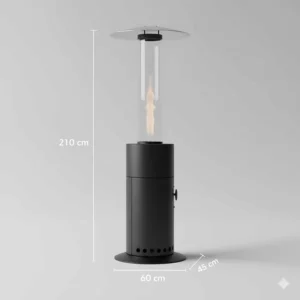
- Dimensions: 18″ x 22″ x 84″
- Weight: 82 pounds
The Elite version includes a safety cage that protects curious kids and pets while maintaining that gorgeous fire view. According to BBQGuys, this model comes with a three-year warranty on non-consumable parts.
Price Range: $1,600-$1,800
✅ Pros:
- Premium American craftsmanship
- Highest BTU output tested
- No electricity required
❌ Cons:
- Significant upfront investment
- Heavy and less portable
3. Beneouya 64 Inches Rocket Stove
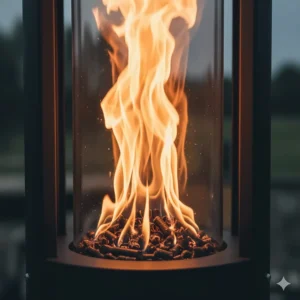
The Beneouya 64 Inches Rocket Stove brings a unique aesthetic to the wood pellet outdoor heater category. This model features a tall glass tube design that creates a mesmerizing spiral flame effect—it’s basically eye candy that also happens to heat your patio.
At 64 inches tall with a tripod base, the Beneouya offers excellent stability while remaining relatively portable. The glass tube provides 360-degree viewing of the dancing flames, making it a conversation starter at any gathering. Assembly takes about 15 minutes according to customer reviews.
Key Specifications:
- Height: 64 inches
- Hopper capacity: 6.2 pounds
- Burn time: Approximately 2 hours
One Amazon buyer noted: “Spiral Flames Dance for 2 Hours of Unforgettable Warmth.” The compact hopper means more frequent refills, but the trade-off is a lighter, more manageable unit.
Price Range: $150-$200
✅ Pros:
- Stunning visual design
- Lightweight and portable
- Quick assembly
❌ Cons:
- Shorter runtime than larger models
- Less heat output for bigger spaces
4. StarEcho Wood Pellet Patio Heater
Budget-conscious buyers will appreciate the StarEcho Wood Pellet Patio Heater, which delivers solid performance at an entry-level price point. This portable wood pellet patio heater works great for camping, tailgating, or smaller patio spaces.
The StarEcho features a similar glass tube design to other rocket-style heaters but comes in at a lower price due to simpler construction. It’s perfect if you’re testing the waters with pellet heating before committing to a premium model. The 5.5-pound hopper provides about 2 hours of burn time.
Key Specifications:
- Hopper capacity: 5.5 pounds (2.5kg)
- Estimated BTU: 30,000
- Burn time: 2+ hours
Customer service from StarEcho receives high marks, with dedicated after-sales support ready to help with any issues. The tripod design makes setup straightforward even for first-timers.
Price Range: $120-$160
✅ Pros:
- Budget-friendly entry point
- Portable and lightweight
- Good customer support
❌ Cons:
- Basic construction quality
- Limited heat for large areas
5. ONLYFIRE FP042 Wood Pellet Fire Pit
The ONLYFIRE FP042 occupies a sweet spot between budget and mid-range options. Standing at 58 inches with a stable tripod base, this wood pellet patio heater offers excellent portability for those who want flexibility in their outdoor heating setup.
ONLYFIRE designed the FP042 with a 6.2-pound hopper and an ash tray that makes cleanup surprisingly easy. The bottom lighting tuyere allows for quick ignition with a torch lighter. Several customers mentioned using this model for camping trips, appreciating its compact design that breaks down for transport.
Key Specifications:
- Height: 58 inches (147.5cm)
- Hopper capacity: 6.2 pounds (2.8kg)
- Burn time: 2+ hours
According to reviews on Amazon UK, one buyer stated: “What a conversation piece! Everyone that sees it burning wants one. It doesn’t really give off a lot of heat but what a nice fire. We use it camping. No more heavy firewood to carry around.”
Price Range: $180-$220
✅ Pros:
- Excellent portability
- Easy maintenance with ash tray
- Great for camping
❌ Cons:
- Glass tube requires frequent cleaning
- Burns through pellets quickly
6. Timber Stoves Lil’ Timber
Think of the Timber Stoves Lil’ Timber as the Big Timber’s more compact sibling. This American-made pellet outdoor heater maintains the quality craftsmanship of the premium line while offering a more accessible price point and smaller footprint.
The Lil’ Timber produces an impressive 75,000 BTU despite its reduced size. The stainless steel construction ensures longevity, and the gravity-fed system operates without electricity. With a 12-pound hopper, you’ll get approximately 3 hours of continuous heat—perfect for dinner parties that extend into the evening.
Key Specifications:
- Heat output: 75,000 BTU
- Hopper capacity: 12 pounds
- Burn time: ~3 hours
Customer reviews consistently praise the build quality. One owner shared: “Best outdoor heater I’ve ever owned. The Lil Timber puts out serious heat, looks amazing, and is built to last. You can tell it was made with care by people who know what they’re doing.”
Price Range: $900-$1,100
✅ Pros:
- Premium quality at mid-range price
- American-made craftsmanship
- No electricity needed
❌ Cons:
- Smaller hopper than Big Timber
- Still a significant investment
7. Zipfun Outdoor Pellet Heater
Rounding out our list is the Zipfun Outdoor Pellet Heater, the most budget-friendly option for those dipping their toes into wood pellet heating. Don’t let the low price fool you—this unit delivers adequate performance for small patios, balconies, or camping trips.
The Zipfun features a meter-long glass tube and compact tripod design. With a 2.2-pound hopper, it’s designed for shorter sessions rather than all-night burns. The safety ash box minimizes fire hazards and makes cleanup manageable.
Key Specifications:
- Hopper capacity: 2.2 pounds (1kg)
- Estimated BTU: 35,000
- Burn time: 1.5 hours
Installation takes about 15 minutes with included tools. While it won’t heat a large space, the Zipfun wood pellet patio heater adds ambiance and supplemental warmth to intimate gatherings.
Price Range: $110-$140
✅ Pros:
- Lowest entry cost
- Ultra-portable
- Quick setup
❌ Cons:
- Very limited runtime
- Minimal heat output
Understanding Wood Pellet Patio Heater Technology
Let me break down how these ingenious devices work, because understanding the technology helps you make smarter buying decisions. A wood pellet outdoor heater operates on surprisingly simple principles that deliver complex results.
How Pellet Heating Works
Wood pellet heaters use compressed sawdust pellets as fuel—the same pellets you’d find for pellet grills. These pellets drop through a gravity-fed hopper into a burn chamber where they combust, producing radiant heat. The beauty lies in the efficiency: pellets burn hotter and cleaner than traditional firewood while producing minimal smoke.
The combustion process creates a draft that pulls in oxygen and pushes exhaust gases up through a chimney or stack. No electricity means no fans, no augers, and no moving parts that can break down. It’s heating technology that would make our ancestors proud—enhanced with modern materials.
The Science Behind BTU Output
BTU (British Thermal Units) measures heat energy—specifically, the energy needed to raise one pound of water by one degree Fahrenheit. When you see a pellet patio heater rated at 75,000 BTU, that’s serious heating power. For context, most propane patio heaters top out around 40,000-50,000 BTU.
According to research from Oregon State University Extension, wood pellets typically contain about 8,000 BTU per pound. A 25-pound hopper burning over 6 hours delivers roughly 200,000 total BTU—that’s why these heaters can warm large outdoor spaces effectively.
Gravity-Fed vs. Auger Systems
Premium models like Timber Stoves use gravity-fed systems where pellets naturally fall into the burn chamber as fuel is consumed. This eliminates mechanical components and electrical requirements. The trade-off? You can’t precisely control the burn rate like you would with an electric auger system found in indoor pellet stoves.
Most outdoor wood pellet patio heater units prioritize simplicity and reliability over fine-tuned control. For patio heating, this makes perfect sense—you want warmth, not a NASA control panel.
Key Features to Consider Before Buying
Not all pellet outdoor heaters are created equal, and choosing the wrong model can leave you cold (literally). Here’s what separates outstanding heaters from disappointing ones.
Heat Coverage Area
Consider your space size carefully. A 35,000 BTU model might adequately warm a 50-square-foot balcony but won’t cut it for a 200-square-foot patio. Most manufacturers specify coverage area, but real-world performance varies with wind, ambient temperature, and patio configuration.
As a rule of thumb, budget about 500 BTU per square foot of outdoor space in moderate climates. Cold or windy areas need more oomph—that’s where 75,000+ BTU models shine.
Hopper Capacity and Runtime
Here’s where many buyers trip up: they focus on BTU but ignore hopper size. A high-output heater with a tiny hopper means constant refills during your evening gathering. Look for at least 10-12 pounds of hopper capacity if you want uninterrupted 3-4 hour sessions.
The sweet spot? I’d recommend 20-25 pound hoppers for serious outdoor entertaining. You’ll refill once during an evening rather than playing pellet-caddy all night.
Build Quality and Materials
Stainless steel construction costs more but lasts decades. Carbon steel or painted metal options come cheaper but may rust in humid climates. Check what customers say about durability after 1-2 seasons—that tells the real story.
The firepot (burn chamber) takes the most abuse. Premium heaters use high-temp stainless or replaceable firepots. Budget models? The firepot might be the first component to fail after heavy use.
Portability vs. Permanent Installation
Some wood pellet patio heater models weigh 80+ pounds and work best in a fixed location. Others feature wheels, lightweight construction, or collapsible designs for easy storage. Match the heater type to your lifestyle—if you store everything away after summer, portability matters.
Wheels make a massive difference for repositioning during gatherings. You’d be surprised how often you’ll want to move your heater slightly to accommodate seating arrangements.
Benefits of Wood Pellet Patio Heater Over Alternatives
Why choose a pellet outdoor heater instead of propane, natural gas, or electric? The advantages stack up quickly once you crunch the numbers and consider the full picture.
Cost Comparison Table
| Heating Method | Initial Cost | Fuel Cost/Hour | Annual Cost (100 hours) | Maintenance |
|---|---|---|---|---|
| Wood Pellets | $150-$1,800 | $0.50-$1.00 | $50-$100 | Minimal |
| Propane | $100-$400 | $2.00-$3.50 | $200-$350 | Minimal |
| Natural Gas | $300-$800 + install | $1.00-$2.00 | $100-$200 | Moderate |
| Electric | $100-$500 | $1.50-$3.00 | $150-$300 | Minimal |
The numbers don’t lie—wood pellet heating delivers the lowest operating costs. While you might pay more upfront for a quality unit, the fuel savings compound dramatically over time.
Environmental Advantages
Wood pellets are a carbon-neutral fuel source when sourced responsibly. The pellets come from sawdust and wood waste that would otherwise decompose or burn anyway. According to the U.S. Environmental Protection Agency, properly burned wood pellets produce minimal particulate emissions compared to conventional wood burning.
Propane, by contrast, is a fossil fuel that releases carbon dioxide into the atmosphere. Every hour of propane heating contributes to your carbon footprint. A wood pellet patio heater lets you enjoy outdoor warmth with a cleaner conscience.
Aesthetic and Ambiance Value
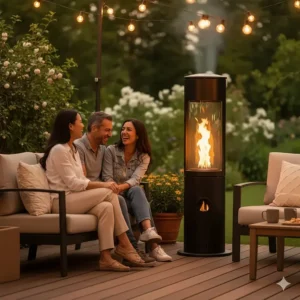
Let’s talk about something metrics can’t capture—the sheer beauty of a real fire. Electric heaters glow red. Propane heaters emit invisible heat. But a pellet outdoor heater? It creates a mesmerizing display of dancing flames visible through glass panels or tubes.
This ambiance factor transforms outdoor spaces. Guests naturally gravitate toward the fire, creating a gathering point that electric alternatives simply can’t match. It’s primal, it’s cozy, and it’s a conversation starter every single time.
Heat Distribution Patterns
Unlike propane mushroom heaters that blast heat upward and radiate it downward, wood pellet patio heater models often provide head-to-toe warmth. The vertical design heats the air around the unit in all directions, creating more comfortable temperature zones.
The radiant heat from a pellet fire feels different too—it penetrates deeper, warming your core rather than just surface skin. You’ll notice this especially on very cold nights when the warmth actually sticks with you.
Installation and Setup Guide
Getting your new wood pellet outdoor heater up and running doesn’t require an engineering degree, but a few pro tips will save you headaches and maximize performance.
Location Selection Tips
Choose a spot at least 3 feet away from structures, overhangs, or combustible materials. Most building codes require clearances, but common sense helps too—don’t place your heater where the chimney exhaust will blow directly at seated guests.
Consider wind patterns in your yard. A sheltered corner or area with a windbreak will allow your heater to perform more efficiently. Wind doesn’t just steal heat—it can affect the draft and combustion quality.
Assembly Best Practices
Most pellet patio heaters arrive partially assembled. The typical setup involves attaching the chimney stack, installing wheels or legs, and positioning the hopper. Budget 30-60 minutes for first-time assembly.
Pro tip: Assemble everything except the tall chimney sections, position the heater where you want it, then add the chimney. Moving an 84-inch tall heater through doorways becomes a two-person job otherwise.
Initial Burn-In Process
Your first fire should be a “break-in” burn that allows protective coatings to cure and any manufacturing residues to burn off. Don’t be alarmed by some initial smoke or odors—that’s normal. After 30 minutes, the heater should settle into clean combustion.
Start with high-quality pellets for your inaugural burn. Cheap pellets with high ash content can leave deposits that are harder to clean later. Set yourself up for success right from the start.
Safety Precautions
Always keep a fire extinguisher rated for wood fires nearby. While wood pellet patio heater units are generally safe, accidents happen—especially when alcohol and late nights mix.
Never refill the hopper when pellets are actively burning near the top. Let the level drop below the burn zone first. Hot pellets can ignite the entire hopper if you’re not careful.
The glass surfaces get extremely hot during operation. If you have young children or pets, consider models with safety cages like the Timber Stoves Elite series. A simple “don’t touch” warning often isn’t enough when curious kids are around.
Maintenance and Troubleshooting
Proper care keeps your pellet outdoor heater running efficiently for years. Neglect these basics, and you’ll face frustrating performance issues and premature component failure.
Cleaning Schedule
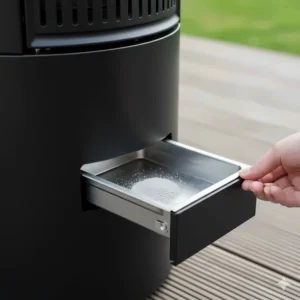
After every 8-10 hours of burn time, clean out accumulated ash from the burn chamber and ash tray. Ash buildup restricts airflow and reduces combustion efficiency. This takes maybe 5 minutes with a small ash shovel and bucket.
Monthly, remove and inspect the firepot if possible. Heavy carbon buildup can be scraped away with a wire brush. Some users report that soaking the firepot in white vinegar overnight dissolves stubborn deposits.
Glass Maintenance
Those beautiful glass viewing windows require regular attention. Soot and creosote accumulate quickly, obscuring your view of the flames. The fix? Wipe the inside with a damp cloth on a long stick while the glass is cool.
For stubborn buildup, wood stove glass cleaner works wonders. Some owners swear by crumpled newspaper dipped in ash—the abrasiveness cuts through soot without scratching glass. Whatever method you choose, clean glass makes a huge difference in both appearance and radiant heat transmission.
Common Issues and Solutions
Problem: Weak flames or difficulty staying lit
Likely causes include low-quality pellets with excessive moisture, insufficient draft due to ash buildup, or a clogged air intake. Clean the burn chamber thoroughly and switch to premium hardwood pellets.
Problem: Excessive smoke
Wood pellet patio heater models should produce minimal visible smoke once fully ignited. Heavy smoke suggests inadequate combustion air, poor pellet quality, or dampness in your fuel. Ensure vents aren’t blocked and store pellets in a dry location.
Problem: Glass turning orange or dark
This happens to all pellet heaters over time as carbon deposits build up. It’s cosmetic rather than functional. Regular cleaning prevents heavy buildup.
Seasonal Storage Prep
Before storing your pellet outdoor heater for winter (or summer if you live somewhere crazy hot), complete a thorough cleaning. Remove all ash and pellet debris. Wipe down exterior surfaces with a damp cloth and dry completely to prevent rust.
Store any remaining pellets in airtight containers—moisture is pellet enemy number one. Even a few weeks of humid storage can ruin pellets, causing them to swell and jam in hoppers.
Cover your heater with a waterproof cover if storing outdoors. UV rays and rain degrade even stainless steel over time. A $30 cover protects a $1,000+ investment, so it’s money well spent.
Fuel Selection and Cost Analysis
Not all wood pellets are created equal, and choosing the right fuel dramatically impacts performance and operating costs. Let me demystify the pellet marketplace so you can burn smart.
Types of Wood Pellets
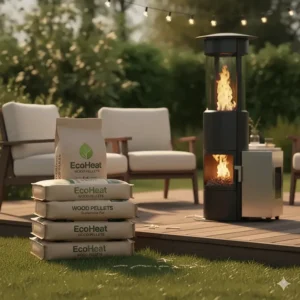
Hardwood pellets (oak, maple, hickory) produce more heat and less ash than softwood varieties. They’re the premium choice for heating applications. Expect to pay $6-8 per 40-pound bag.
Softwood pellets (pine, fir) work fine but generate more ash, requiring more frequent cleaning. They’re typically cheaper at $4-6 per bag. If you don’t mind the extra maintenance, softwood represents solid value.
Flavored pellets (apple, cherry, mesquite) designed for smoking meat work in patio heaters but cost significantly more. Save these for your BBQ and stick with heating-grade pellets for your wood pellet patio heater.
Quality Indicators
Premium pellets share certain characteristics: low moisture content (under 8%), minimal fines (dust), and consistent size. Check for certifications from the Pellet Fuels Institute (PFI). Their standards ensure quality and performance.
Avoid pellets that crumble easily in your hand or produce excessive dust when poured. These indicators suggest poor manufacturing or moisture damage. Bad pellets don’t just perform poorly—they can damage your heater’s feed system.
Where to Buy
Big box stores like Home Depot and Lowe’s stock pellets seasonally, typically fall through winter. Expect to pay retail pricing but benefit from convenience and immediate availability.
Tractor Supply Company offers competitive pricing and year-round inventory. I’ve found their house brand pellets perform well at reasonable prices. Buying during summer sales can save 20-30%.
Online retailers like Amazon deliver pellets to your door but shipping costs add up quickly. This makes sense for sample sizes when testing new brands, not for buying by the ton.
Local feed stores and farm suppliers often carry pellets at the best prices. Buying in bulk (by the pallet) reduces per-bag costs substantially. If you have storage space, this is the smart play.
Cost Calculator
Let’s do some quick math. A typical pellet outdoor heater consumes 3-5 pounds of pellets per hour depending on BTU output. At $6 per 40-pound bag, your cost runs about $0.45-0.75 per hour.
Compare that to propane at $2-3 per hour or electric heating at $1.50-3 per hour. Over a season of heavy use (100 hours), you’ll save $150-250 compared to propane and $100-200 versus electric.
These savings compound over the heater’s lifetime. A wood pellet patio heater that seems expensive initially pays for itself through fuel savings within 2-3 seasons of regular use.
Maximizing Performance in Different Weather
Your pellet outdoor heater performs differently depending on conditions. Understanding these variables helps you adapt and stay comfortable even when Mother Nature doesn’t cooperate.
Cold Temperature Optimization
When temperatures drop below 40°F, your wood pellet patio heater works harder but can still deliver excellent results. Start your fire 15-20 minutes before guests arrive, giving the unit time to reach optimal operating temperature.
Cold ambient air requires more BTUs to heat the same space. Budget about 20% more fuel consumption on frigid nights. The good news? Pellet heaters excel in cold weather compared to propane models that lose pressure and efficiency as temperatures plunge.
Wind Management Strategies
Wind is your heater’s nemesis, stealing warmth faster than the unit can produce it. When possible, position your wood pellet patio heater in a sheltered location—behind a partial wall, near a corner, or adjacent to dense landscaping.
Portable windbreaks or patio screens create protected zones where heat accumulates rather than dissipating. I’ve seen simple canvas screens make a 10-15°F difference in perceived warmth on breezy nights.
Humidity and Rain Considerations
Most pellet patio heaters handle light rain or snow without issues—the chimney keeps precipitation out of the burn chamber. However, heavy downpours can cool the exterior and reduce heat radiation.
The bigger concern is pellet storage. Humid air causes pellets to absorb moisture, reducing burn efficiency and heat output. Always store pellets indoors or in waterproof containers. Damp pellets create excess smoke, weak flames, and ash.
Seasonal Usage Tips
Spring and Fall: These shoulder seasons are perfect for pellet heating. Moderate temperatures mean your heater easily maintains comfort with modest fuel consumption. Evening gatherings can extend late into cool nights.
Winter: Cold weather testing your heater’s limits? Consider running two smaller units instead of one large heater. Multiple heat sources create overlapping warm zones more effectively than a single point source.
Summer: Yes, some areas get chilly summer evenings. Your wood pellet outdoor heater works great for coastal regions, high elevations, or just when you want ambiance without significant heat. Reduce pellet feed rates for lower output.
Safety Standards and Regulations
Operating any fire-producing device comes with responsibilities. Understanding safety requirements protects your family, property, and peace of mind.
Building Code Requirements
Most jurisdictions require outdoor heating appliances to maintain minimum clearances from structures. Typical requirements include 3 feet from walls, overhangs, or combustible materials. Always check your local building codes before permanently installing a wood pellet patio heater.
Some HOAs prohibit open-flame devices or regulate outdoor heating. Review your community covenants to avoid conflicts. Better to ask permission than seek forgiveness when neighbors complain about your evening fires.
Fire Safety Certification
Look for listings from recognized testing laboratories like UL (Underwriters Laboratories) or CSA (Canadian Standards Association). These certifications indicate the product meets minimum safety standards for materials, construction, and operation.
Uncertified imports flood the market at tempting prices, but they lack independent safety verification. The savings aren’t worth the risk if a manufacturing defect causes a fire or injury.
Insurance Considerations
Believe it or not, some homeowners insurance policies have specific provisions about outdoor heating devices. High-value properties or policies with strict underwriting may require disclosure of wood-burning appliances.
A quick call to your insurance agent clarifies any requirements or restrictions. In most cases, properly installed and maintained pellet outdoor heaters pose no insurance issues, but it’s worth confirming.
Child and Pet Safety
Hot surfaces present burn hazards for curious children and pets. Models with safety cages or guards provide crucial protection without sacrificing aesthetics or functionality. Train kids that the heater is off-limits, just like you would with any hot appliance.
Never leave a burning wood pellet patio heater unattended when young children are present. The combination of fascinating flames and touchable surfaces is simply too tempting for little ones.
Creative Uses Beyond Basic Heating
Once you own a versatile pellet outdoor heater, you’ll discover applications beyond simple warmth. These units become multi-functional outdoor assets that enhance various activities.
Commercial Applications
Restaurant and cafe owners are embracing wood pellet heating for outdoor dining areas. The ambiance attracts customers while the efficient operation controls costs. Many establishments report extending their outdoor seating seasons by 2-3 months using quality pellet patio heaters.
Wineries and breweries create memorable tasting experiences around communal heaters. The fire becomes a focal point that encourages guests to linger and order another round. It’s marketing and heating rolled into one.
Event Hosting
Outdoor weddings, parties, and gatherings benefit immensely from strategic pellet heater placement. Unlike rented propane models that scream “party rental,” attractive wood pellet units blend seamlessly with upscale event aesthetics.
Plan on one 75,000 BTU heater per 100-150 square feet of guest space for comfortable temperatures. Position heaters to create warm zones rather than trying to heat the entire area uniformly.
Camping and Tailgating
Portable models like the ONLYFIRE FP042 or StarEcho units excel at campgrounds and tailgate parties. They’re lighter than traditional fire pits, produce minimal smoke, and use clean-burning fuel you can transport easily.
Check campground regulations first—some prohibit wood-burning devices during fire restriction periods. However, many consider pellet heaters safer than open fires and allow their use when traditional campfires are banned.
Year-Round Outdoor Living
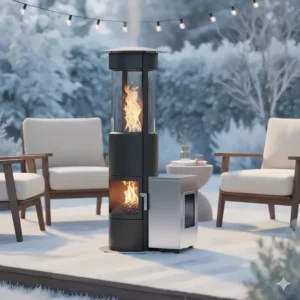
Transform your patio into a true outdoor room that you actually use during winter months. A properly sized pellet outdoor heater can maintain comfortable temperatures even on cold nights, expanding your living space year-round.
Combine your heater with quality outdoor furniture, weatherproof rugs, and blankets for a cozy retreat. I’ve spent countless winter evenings reading, working, or simply relaxing outdoors thanks to reliable pellet heating.
Environmental Impact and Sustainability
Choosing a wood pellet patio heater isn’t just about personal comfort—it’s an environmental decision with broader implications. Let’s examine the real sustainability story.
Carbon Footprint Analysis
Wood pellets are considered carbon-neutral when sourced from sustainably managed forests. The carbon dioxide released during combustion roughly equals what the trees absorbed during growth. It’s a closed-loop cycle rather than introducing ancient carbon into the atmosphere like fossil fuels do.
According to research published by the USDA Forest Service, responsibly harvested wood biomass can actually improve forest health by thinning overgrown stands and utilizing waste materials that would otherwise decompose or burn in wildfires.
Pellet Manufacturing Process
Most wood pellets come from sawdust and wood shavings—byproducts of lumber mills that would otherwise go to landfills. The manufacturing process compresses these materials under high pressure, using the wood’s natural lignin as a binder without chemical additives.
Premium pellet manufacturers follow strict environmental standards. Look for pellets certified by the Sustainable Forestry Initiative (SFI) or Forest Stewardship Council (FSC). These certifications ensure responsible forestry practices and minimal environmental impact.
Comparison to Other Fuels
Propane is a petroleum product derived from fossil fuels. Every tank you burn contributes to greenhouse gas emissions and climate change. Natural gas, while cleaner than other fossil fuels, still releases carbon that’s been locked underground for millions of years.
Electric heating sounds clean until you consider the source. If your electricity comes from coal or natural gas plants, you’re just outsourcing the emissions. Even clean grid electricity suffers from transmission losses, with 5-10% of generated power dissipating before reaching your home.
A wood pellet outdoor heater burning sustainably sourced pellets represents one of the most environmentally responsible heating choices available. You’re using renewable resources, supporting sustainable forestry, and minimizing fossil fuel consumption.
Local Air Quality Considerations
Modern wood pellet patio heater units burn remarkably clean compared to old-school wood stoves or open fires. Proper combustion produces minimal particulate matter or visible smoke. The EPA doesn’t regulate outdoor pellet heaters the same way they do indoor wood stoves, but the principle remains—good combustion equals cleaner air.
If you live in an area with air quality alerts or wood-burning restrictions, check whether pellet heaters fall under the regulations. Many jurisdictions consider them cleaner-burning and exempt them from certain restrictions that apply to traditional wood fires.
❓ Frequently Asked Questions
❓ How long does a bag of pellets last in a wood pellet patio heater?
❓ Can I use wood pellets made for grilling in my patio heater?
❓ Do wood pellet outdoor heater models require electricity to operate?
❓ What's the typical lifespan of a quality pellet patio heater?
❓ Can I convert my wood pellet patio heater to burn regular firewood?
Conclusion
Investing in a wood pellet patio heater transforms your outdoor living experience while slashing heating costs by up to 75% compared to propane alternatives. Whether you’re drawn to premium American-made models like the Timber Stoves Big Timber Elite or budget-friendly options like the StarEcho, there’s a perfect match for every patio, budget, and heating need.
The beauty of pellet outdoor heating lies in its combination of efficiency, sustainability, and ambiance. You’re not just buying a heating appliance—you’re investing in countless memorable evenings spent outdoors with family and friends, extending your usable living space into months that would otherwise push you indoors.
Remember the key factors we’ve covered: match BTU output to your space size, prioritize hopper capacity for uninterrupted runtime, and don’t compromise on build quality if you want years of reliable service. The higher upfront cost of premium models pays dividends through superior performance, longevity, and fuel efficiency.
Start your pellet heating journey today, and next winter you’ll wonder how you ever managed without it. Your patio will become the neighborhood gathering spot—warm, inviting, and surprisingly affordable to operate.
🔥 Transform Your Patio Today!
Ready to experience outdoor warmth the smart way? Click on any of our recommended wood pellet patio heater options above to check current pricing and availability. Many are eligible for free shipping and arrive ready to assemble. Don’t let another chilly evening pass by—upgrade your outdoor space now! 🌟🔥
Recommended for You
- Natural Gas Patio Heater: 7 Top Picks for 2025
- Outdoor Heater Electric: 7 Best Picks That’ll Transform Your Patio in 2025
- Infratech Patio Heaters: 7 Best Models for 2025
Disclaimer: This article contains affiliate links. If you purchase products through these links, we may earn a small commission at no additional cost to you.
✨ Found this helpful? Share it with your friends! 💬🤗
