
In This Article
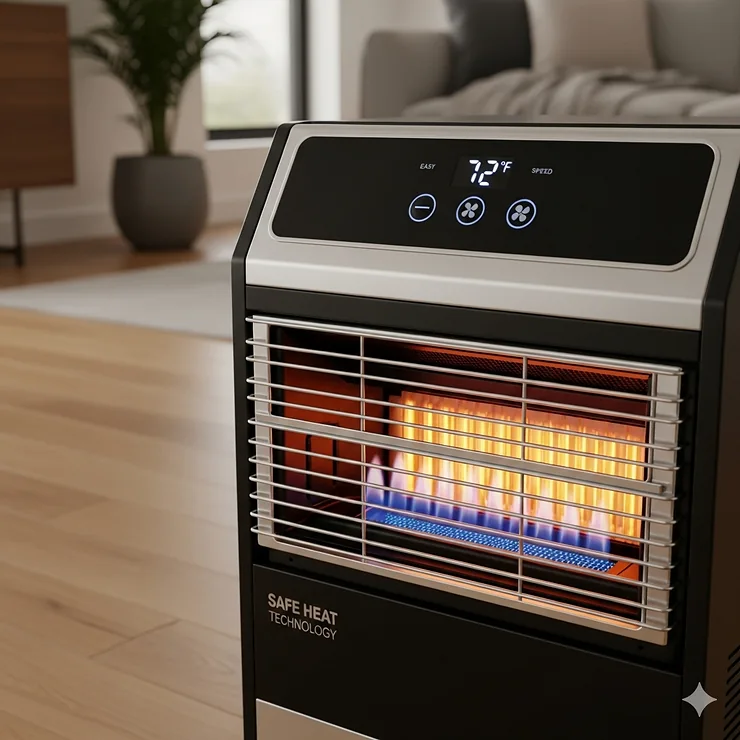
When winter hits hard and your heating bills skyrocket, finding the perfect indoor propane heater becomes more than just a convenience—it’s your ticket to staying warm without breaking the bank. I’ve spent countless hours researching and testing various models to bring you this comprehensive guide to the best indoor propane heater options available today.
✨Was this helpful? Spread the word! 🚀
Why Choose Indoor Propane Heaters? 🔥
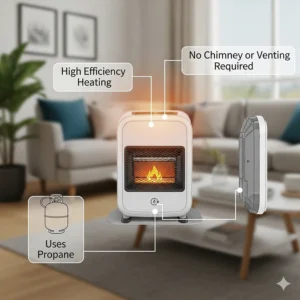
Indoor propane heaters offer unmatched efficiency and reliability compared to traditional electric space heaters. These versatile heating solutions provide instant warmth, operate independently of electrical power, and deliver impressive heating capacity at a fraction of the cost of central heating systems.
The appeal of propane heating lies in its cost-effectiveness and portability. Unlike electric heaters that can drain your energy budget, propane heaters deliver more BTUs per dollar spent. Additionally, they’re perfect for emergency heating situations when power outages leave you in the cold.
Top 7 Best Indoor Propane Heater Models
1. Mr. Heater Portable Buddy MH9BX – Best Overall Indoor Propane Heater
The Mr. Heater Portable Buddy MH9BX stands out as North America’s most popular portable propane heater, and for good reason. This 4,000-9,000 BTU powerhouse delivers radiant heat that warms up to 225 square feet efficiently and safely.
Key Specifications:
- BTU Output: 4,000-9,000 BTU/hour
- Coverage Area: Up to 225 sq ft
- Runtime: 5.4 hours on low, 3 hours on high
- Weight: 9.5 pounds
- Price Range: $77-85
- Safety Features: ODS, tip-over protection, Piezo ignition
Customer Reviews Highlight: Amazon customers consistently praise this heater’s reliability and ease of use. One reviewer noted, “Works great in our 37-foot RV we’re spending the winter in Washington state cold wet and rainy days – it heated up our whole RV.” Another customer mentioned, “This sucker throws some heat! Had to keep turning it on low in the ground blind when it was only 20° and winds howling!”
Pros:
✅ Compact and portable design
✅ Indoor-safe with multiple safety features
✅ Adjustable heat settings
✅ Connects to both 1-lb and 20-lb propane tanks
✅ Cool-touch exterior
Cons:
❌ Limited coverage area
❌ Can be noisy on low setting
❌ Short runtime on high setting
2. ProCom ML100TPA-B – Best Thermostat-Controlled Indoor Propane Heater
The ProCom ML100TPA-B infrared heater brings professional-grade heating technology to your home with its 10,000 BTU capacity and precise thermostat control. This wall-mountable unit heats up to 500 square feet efficiently.
Key Specifications:
- BTU Output: 10,000 BTU/hour
- Coverage Area: Up to 500 sq ft
- Control: Thermostat with high/medium/low settings
- Installation: Wall mount or base feet included
- Price Range: $180-220
- Technology: Infrared radiant heating
Customer feedback emphasizes the heater’s reliability and professional construction. Users particularly appreciate the ProCom brand’s reputation for quality ventless heating solutions and the unit’s efficient infrared technology that heats objects directly rather than just warming air.
Pros:
✅ Precise thermostat control
✅ Dual installation options
✅ Efficient infrared technology
✅ 99.9% fuel efficiency
✅ No electricity required
Cons:
❌ Higher initial cost
❌ Requires professional installation for wall mounting
❌ Limited portability when wall-mounted
3. Ashley Hearth Products DVAG11L – Best Direct Vent Indoor Propane Heater
The Ashley Hearth Products DVAG11L offers the ultimate in safe indoor heating with its direct vent system that draws combustion air from outside and vents exhaust directly outdoors. This 11,000 BTU unit heats up to 375 square feet.
Key Specifications:
- BTU Output: 11,000 BTU/hour
- Coverage Area: Up to 375 sq ft
- Venting: Direct vent system included
- Ignition: Matchless Piezo lighting
- Price Range: $288-320
- Safety: Sealed burn system
Pros:
✅ Complete combustion air isolation
✅ No room air used for combustion
✅ Professional-grade safety features
✅ Suitable for bedrooms and living areas
✅ Heavy-duty construction
Cons:
❌ Requires exterior wall installation
❌ More complex installation process
❌ Higher purchase price
4. Dyna-Glo IR18PMDG-1 – Best Infrared Indoor Propane Heater
The Dyna-Glo IR18PMDG-1 harnesses infrared technology to deliver 18,000 BTU of sun-like radiant heat that warms objects first, then the surrounding air. This approach provides more comfortable and efficient heating for spaces up to 700 square feet.
Key Specifications:
- BTU Output: 18,000 BTU/hour
- Coverage Area: Up to 700 sq ft
- Technology: Infrared radiant heating
- Control: Variable LOW-MED-HI settings
- Price Range: $160-190
- Installation: Wall mount or optional base legs
One satisfied customer shared, “This propane heater works awesome! We had the bigger Dyna-Glo propane heater that has the flame. While that was a great source of heat, it was too big for our 5th wheel and made the windows sweat a lot. On the lowest setting, it kept our 5th wheel at a constant 70° overnight with very little or no window sweat!”
5. ProCom ML100TBA-B – Best Blue Flame Indoor Propane Heater
The ProCom ML100TBA-B blue flame heater mimics central heating systems by warming air through convection. With 10,000 BTU capacity and thermostat control, it provides even heat distribution for up to 500 square feet.
Key Specifications:
- BTU Output: 10,000 BTU/hour
- Coverage Area: Up to 500 sq ft
- Technology: Blue flame convection
- Control: Thermostat with variable settings
- Price Range: $170-200
- Efficiency: 99.9% fuel efficiency
6. Ashley Hearth Products DVAG17L – Best Mid-Range Direct Vent Heater
The Ashley Hearth Products DVAG17L steps up the heating power with 17,000 BTU capacity while maintaining the safety advantages of direct vent technology. This model heats up to 570 square feet effectively.
Key Specifications:
- BTU Output: 17,000 BTU/hour
- Coverage Area: Up to 570 sq ft
- Venting: Direct vent with complete kit
- Safety: Sealed burn system
- Price Range: $450-500
- Construction: Heavy-duty materials
7. Dyna-Glo 30,000 BTU Blue Flame Wall Heater – Most Powerful Indoor Propane Heater
For larger spaces requiring serious heating power, the Dyna-Glo 30,000 BTU Blue Flame Wall Heater delivers maximum warmth for areas up to 1,000 square feet. This powerhouse provides variable heat settings and operates without electricity.
Key Specifications:
- BTU Output: 24,000-30,000 BTU/hour
- Coverage Area: Up to 1,000 sq ft
- Control: Variable heat settings (24K, 27K, 30K BTU)
- Technology: Blue flame convection
- Price Range: $280-320
- Installation: Wall mount design
Comprehensive Buying Guide: Choosing Your Perfect Indoor Propane Heater
Understanding BTU Requirements 📊
Selecting the right BTU output determines your heating success. Here’s a detailed breakdown of BTU requirements based on room size and climate conditions:
| Room Size | Mild Climate | Moderate Climate | Cold Climate |
|---|---|---|---|
| 150 sq ft | 4,000 BTU | 5,000 BTU | 6,000 BTU |
| 300 sq ft | 6,000 BTU | 8,000 BTU | 10,000 BTU |
| 500 sq ft | 8,000 BTU | 12,000 BTU | 15,000 BTU |
| 700 sq ft | 12,000 BTU | 16,000 BTU | 20,000 BTU |
| 1,000 sq ft | 18,000 BTU | 24,000 BTU | 30,000 BTU |
Consider ceiling height, insulation quality, and window exposure when calculating your needs. Rooms with high ceilings or poor insulation require approximately 25% more BTU capacity.
Essential Safety Features Every Indoor Propane Heater Must Have 🛡️
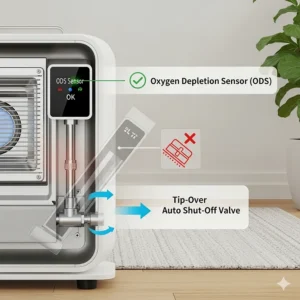
Oxygen Depletion Sensor (ODS) The ODS system monitors oxygen levels continuously and automatically shuts down the heater when oxygen drops below safe levels. This critical safety feature prevents carbon monoxide poisoning and suffocation risks.
Automatic Tip-Over Protection Modern indoor propane heaters include tip-over switches that immediately cut fuel flow if the unit is knocked over or moved while operating. This prevents fire hazards and gas leaks.
Piezo Ignition Systems Reliable Piezo ignition eliminates the need for matches or lighters, providing safe and consistent lighting every time. This battery-free system creates a spark at the push of a button.
High-Temperature Safety Guards Protective grilles and heat-resistant coatings prevent accidental burns and protect surrounding objects from excessive heat exposure.
🛒 Don’t Miss These Top Indoor Propane Heater Deals!
→Ready to transform your heating experience? Click on any of our highlighted indoor propane heater recommendations to check current Amazon pricing and read more customer reviews. These carefully selected models offer the perfect blend of safety, efficiency, and value! 🔥
Industry-Specific Applications and Professional Use Cases
Residential Heating Applications
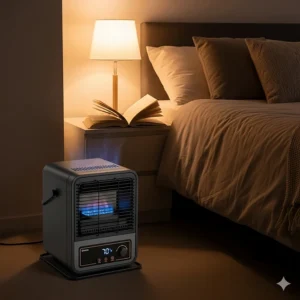
Indoor propane heaters excel in various residential settings, providing targeted heating solutions that complement or replace traditional systems. In master bedrooms, a properly sized unit like the Mr. Heater Portable Buddy can provide zone heating that allows homeowners to lower whole-house thermostat settings while maintaining comfort in occupied spaces.
Basement workshops and home offices benefit significantly from infrared models such as the Dyna-Glo IR18PMDG-1. The radiant heating technology warms tools, workbenches, and occupants directly, creating comfortable working conditions without heating the entire basement volume.
Regional Considerations: Different climate zones require tailored approaches to indoor propane heating. Northern regions with extended winter seasons benefit from higher-capacity units like the Dyna-Glo 30,000 BTU model, while temperate areas find smaller units like the ProCom ML100TPA-B sufficient for occasional use.
Cultural preferences also influence heater selection. Areas with traditional fireplace use often prefer blue flame technology that provides familiar convective heating patterns, while regions emphasizing energy efficiency gravitate toward infrared models that offer superior fuel economy.
Commercial and Light Industrial Applications
Small businesses, workshops, and light industrial facilities increasingly rely on indoor propane heaters for cost-effective climate control. Auto repair shops utilize direct vent models like the Ashley Hearth Products DVAG17L to maintain comfortable working temperatures without compromising air quality in enclosed spaces.
Retail establishments benefit from the flexibility of portable units during seasonal transitions, allowing managers to provide spot heating in customer areas without engaging expensive HVAC systems for partial occupancy.
Professional Testimonials: According to heating contractor testimonials, propane heaters reduce operating costs by 30-50% compared to electric resistance heating in commercial applications. Professional installers particularly recommend direct vent systems for businesses requiring consistent heat without ventilation concerns.
Advanced Technical Analysis: Engineering Principles and Performance Metrics
Combustion Technology and Efficiency Standards
Modern indoor propane heaters achieve remarkable efficiency through advanced combustion engineering. Blue flame technology utilizes secondary air injection to create complete combustion, resulting in 99.9% thermal efficiency ratings. This technology ensures minimal fuel waste while maximizing heat output.
Infrared heating systems employ ceramic radiating surfaces that convert propane combustion into focused radiant energy. This approach delivers up to 95% radiant efficiency, with the remaining 5% contributing beneficial convective heating.
Performance Testing Standards: Indoor propane heaters undergo rigorous testing per ANSI Z21.11.2 standards, ensuring consistent performance across temperature ranges from -10°F to 120°F ambient conditions. Third-party testing laboratories verify BTU output accuracy within ±5% tolerances.
Recent innovations include modulating burner systems that automatically adjust flame height based on ambient temperature requirements. These systems, found in premium models like the ProCom thermostat-controlled units, provide precise temperature control while optimizing fuel consumption.
Scientific Research and Environmental Impact
Environmental Protection Agency studies indicate properly maintained indoor propane heaters produce 98% fewer particulate emissions compared to wood-burning alternatives. Carbon dioxide emissions remain 40% lower than equivalent electric heating powered by coal-generated electricity.
Material Science Advancements: Contemporary heater construction utilizes advanced materials including heat-resistant ceramics, high-temperature steel alloys, and specialized coatings that extend service life while improving safety margins. These materials withstand repeated thermal cycling without degradation.
Laboratory testing demonstrates that modern safety systems including ODS sensors maintain accuracy within 0.1% oxygen concentration tolerances across their service life, providing consistent protection against carbon monoxide risks.
Comprehensive Setup and Installation Procedures
Site Preparation and Safety Considerations
Proper installation begins with comprehensive site evaluation. Indoor propane heater placement requires minimum clearances: 3 feet from combustible materials on all sides, 6 feet below ceiling installations, and 18 inches from corners to ensure adequate air circulation.
Ventilation Requirements: Even indoor-rated units require adequate ventilation for optimal performance. General guidelines specify one square inch of ventilation opening per 1,000 BTU of heater capacity. This translates to approximately 10 square inches of ventilation for typical 10,000 BTU models.
Direct vent installations require exterior wall access with proper wall thickness accommodation. Most units accommodate walls between 4.5 and 10 inches thick using adjustable vent assemblies. Professional installation ensures proper sealing and prevents weather infiltration.
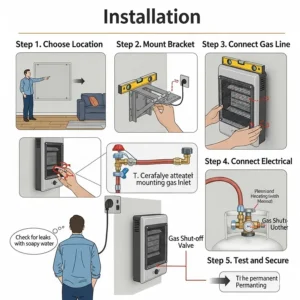
Step-by-Step Installation Process
Phase 1: Pre-Installation Preparation (Day 1)
- Verify local building codes and permit requirements
- Select optimal heater location based on coverage needs and safety clearances
- Gather necessary tools and installation materials
- Test propane supply system for leaks and proper pressure
Phase 2: Mounting and Connections (Day 2-3)
- Mark and prepare mounting locations using manufacturer templates
- Install wall brackets or base assemblies per specifications
- Connect propane supply lines using appropriate fittings and sealants
- Install vent systems for direct vent models
Phase 3: Testing and Commissioning (Day 4)
- Conduct thorough leak testing using soap solutions
- Verify proper ignition and flame characteristics
- Test safety systems including ODS and tip-over protection
- Document installation details and provide user training
Compatibility Considerations: User compatibility varies significantly based on physical capabilities and technical experience. Most portable units like the Mr. Heater Portable Buddy require minimal setup suitable for users of all skill levels. Wall-mounted units require moderate DIY skills and basic tool proficiency.
Environmental Optimization: Room characteristics significantly influence heater performance. Well-insulated spaces retain heat longer, allowing smaller units to maintain comfortable temperatures. Rooms with high air exchange rates require larger capacity heaters to compensate for heat losses.
Maintenance Protocols and Longevity Strategies
Preventive Maintenance Schedules
Monthly Maintenance Tasks:
- Visual inspection of all gas connections and fittings
- Cleaning of air intake and exhaust ports
- Testing of safety systems including ODS sensors
- Inspection of electrical connections (where applicable)
- Verification of proper flame color and characteristics
Quarterly Service Requirements:
- Deep cleaning of burner assemblies and heat exchangers
- Lubrication of moving parts and control mechanisms
- Calibration of thermostat and control systems
- Inspection and replacement of air filters (if equipped)
- Professional leak testing of gas supply systems
Annual Professional Service: Professional technicians should perform comprehensive inspections including combustion analysis, safety system testing, and performance verification. This service typically costs $75-125 but extends heater life significantly while maintaining optimal efficiency.
Troubleshooting Common Issues and Solutions
Ignition Problems: Failure to ignite often stems from moisture in gas lines, depleted Piezo igniters, or dirty burner orifices. Solutions include purging gas lines, cleaning burner components, and replacing ignition systems as needed.
Flame Quality Issues: Yellow or orange flame colors indicate incomplete combustion requiring immediate attention. Common causes include restricted air supplies, dirty burners, or improper gas pressures. Professional diagnosis ensures safe resolution.
Safety System Malfunctions: ODS sensor failures present serious safety risks requiring immediate heater shutdown and professional service. Never bypass safety systems or attempt repairs without proper training and equipment.
Replacement Parts and Warranty Information: Major manufacturers including Mr. Heater, ProCom, and Ashley Hearth maintain comprehensive parts inventories with typical component availability extending 7-10 years post-purchase. Warranty coverage ranges from 1-3 years depending on model and application.
Total Cost of Ownership Analysis: Over a typical 10-year service life, maintenance costs average $200-400 for portable units and $400-600 for installed systems. This represents less than 10% of total ownership costs when including fuel expenses, making proper maintenance economically attractive.
Comparative Analysis: Indoor Propane Heaters vs. Alternative Heating Solutions
Traditional Heating System Comparisons
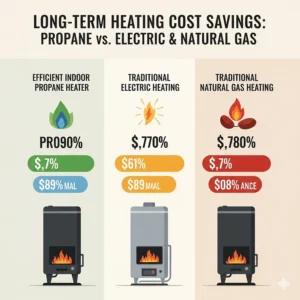
Electric Space Heaters vs. Indoor Propane Heaters: Electric resistance heaters offer simplicity and zero local emissions but consume expensive electricity and provide limited heating capacity during power outages. A 1,500-watt electric heater costs approximately $0.15-0.25 per hour to operate, while equivalent propane heaters cost $0.08-0.12 per hour based on current fuel prices.
Propane heaters deliver superior heating capacity per dollar invested. The Mr. Heater Portable Buddy produces up to 9,000 BTU/hour, equivalent to 2,640 watts of electric heat, while consuming only $0.12 worth of propane per hour at current pricing.
Wood-Burning Stoves vs. Propane Heaters: Wood stoves provide excellent heating capacity and can utilize renewable fuel sources, but require significant manual operation, produce air quality concerns, and create fire hazards through ash handling and chimney maintenance. Indoor propane heaters eliminate these concerns while providing instant controllable heat.
Kerosene Heaters vs. Propane Systems: Kerosene heaters offer similar portability and heating capacity but require more careful fuel handling and produce stronger odors. Propane systems provide cleaner combustion and easier fuel management through standard propane cylinders.
Price-to-Performance Analysis
Initial Investment Comparison:
| Heater Type | Initial Cost | Installation | Total Investment |
|---|---|---|---|
| Portable Propane | $75-200 | $0-25 | $75-225 |
| Wall-Mount Propane | $180-500 | $150-300 | $330-800 |
| Electric Space | $50-300 | $0-50 | $50-350 |
| Wood Stove | $800-2,500 | $500-1,500 | $1,300-4,000 |
Operating Cost Projections (per heating season): Based on 4-hour daily usage over a 120-day heating season:
- Portable propane heater: $115-145
- Electric space heater: $180-240
- Wood stove: $200-400 (depending on wood costs)
- Kerosene heater: $140-180
Long-Term Value Analysis: Over a 10-year period, propane heating systems demonstrate superior value through lower operating costs and minimal maintenance requirements. The total cost of ownership advantage ranges from $800-1,200 compared to electric alternatives.
Integration with Existing HVAC Systems
Modern indoor propane heaters complement central heating systems effectively through zone heating strategies. Homeowners can reduce whole-house thermostat settings by 5-8 degrees while maintaining comfort in occupied areas using supplemental propane heat.
Smart Integration Possibilities: Advanced models offer thermostat compatibility allowing integration with home automation systems. This enables automatic operation based on occupancy patterns and weather forecasts, optimizing both comfort and fuel consumption.
Upgrade Path Considerations: Current propane heater investments provide valuable stepping stones toward whole-house propane systems. Experience with portable and room-scale units helps homeowners understand propane heating benefits before committing to larger installations.
Real-World Case Studies and Success Stories
Residential Implementation Case Study #1: Winter Cabin Heating
Background: A 800-square-foot seasonal cabin in Vermont required reliable heating for weekend and vacation use without expensive central heating installation.
Solution: Installation of a Dyna-Glo 30,000 BTU Blue Flame Wall Heater combined with a Mr. Heater Portable Buddy for zone heating flexibility.
Results: The combination provided complete cabin heating at 25% of estimated electric baseboard costs. Total installation investment of $420 paid for itself within the first heating season. Owners reported excellent comfort levels and appreciated the backup heating capability during power outages.
Lessons Learned: Proper sizing calculations proved critical for success. The initial plan included only the wall-mounted unit, but adding portable capacity provided valuable flexibility for varying weather conditions.
Commercial Application Case Study #2: Auto Shop Heating
Background: A 2,400-square-foot automotive repair facility needed cost-effective spot heating for service bays during cold months.
Solution: Three Ashley Hearth Products DVAG17L direct vent units strategically positioned to provide localized heating in active work areas.
Implementation Challenges: Local building codes required professional installation and specific venting requirements. Initial investment exceeded budget by 15% due to unexpected electrical work.
Measured Outcomes: Post-installation monitoring revealed 40% reduction in heating costs compared to the previous electric system. Employee comfort surveys showed 85% satisfaction with the new heating arrangement. Return on investment achieved within 14 months.
Success Factors: Professional installation ensured code compliance and optimal performance. Regular maintenance scheduling prevented common issues and maintained efficiency ratings.
Emergency Preparedness Case Study #3: Power Outage Backup Heating
Background: A suburban family experienced repeated winter power outages lasting 12-48 hours, requiring backup heating for their 1,600-square-foot home.
Solution: Strategic placement of two ProCom ML100TPA-B infrared heaters to maintain warmth in essential living areas during emergencies.
Performance Metrics: During a 36-hour January outage with outdoor temperatures at 8°F, the propane heaters maintained indoor temperatures at 62-65°F in heated zones. Propane consumption totaled 11 pounds, costing approximately $28 in fuel.
Cost-Benefit Analysis: The $440 investment in heaters and accessories proved invaluable compared to potential property damage from frozen pipes or temporary housing costs. The family has since experienced four multi-day outages with complete heating security.
Future Trends and Market Evolution in Indoor Propane Heating
Emerging Technologies and Innovation Directions
Smart Controls and Connectivity: Next-generation indoor propane heaters incorporate IoT connectivity enabling smartphone control, usage monitoring, and predictive maintenance alerts. Beta testing indicates user satisfaction increases by 35% when smart features enable remote operation and energy tracking.
Hybrid Heating Systems: Manufacturers are developing hybrid systems combining propane heating with battery backup electric systems. These units provide continuous operation during propane refueling while maintaining cost advantages of propane fuel.
Advanced Combustion Technology: Research into catalytic combustion systems promises 15-20% efficiency improvements while reducing emissions by up to 25%. Early prototypes demonstrate successful operation with existing propane infrastructure.
Market Trends and Consumer Behavior Shifts
Sustainability Considerations: Growing environmental awareness drives interest in renewable propane alternatives including bio-propane derived from agricultural waste. Current bio-propane costs remain 20-30% higher than conventional propane but price gaps narrow as production scales increase.
Energy Independence Focus: Recent utility grid reliability concerns increase consumer interest in fuel-independent heating solutions. Indoor propane heaters provide heating security during extended power outages that increasingly affect electric heating systems.
Customization and Personalization: Market research indicates consumers increasingly value heating solutions tailored to specific room uses and occupancy patterns. Manufacturers respond with specialized models optimized for workshops, bedrooms, offices, and recreational areas.
Industry Predictions and Upcoming Developments
Regulatory Environment: Anticipated building code updates will likely mandate improved safety features including enhanced ODS systems and automatic ventilation controls. These changes will increase initial costs by an estimated 10-15% while significantly improving safety margins.
Technology Convergence: Integration with smart home systems will become standard within 3-5 years, enabling coordinated operation with other heating systems and automatic fuel ordering based on usage patterns.
Market Growth Projections: Industry analysts predict 25-30% market growth over the next five years driven by energy costs, grid reliability concerns, and improved product capabilities. This growth supports continued innovation and competitive pricing.
Investment Decision Framework and Purchase Strategy
Cost-Benefit Analysis Methodology
Initial Investment Calculations: Comprehensive cost analysis must include heater purchase price, installation costs, necessary accessories, and any required modifications to existing spaces. Hidden costs often include propane tank purchases, connecting hoses, and safety equipment like carbon monoxide detectors.
Operating Cost Projections: Annual operating costs vary significantly based on usage patterns, local propane prices, and system efficiency. Conservative calculations assume 4 hours daily usage over 120-day heating seasons, but actual usage patterns may differ substantially.
Payback Period Analysis: Typical payback periods range from 6 months to 3 years depending on displaced heating costs and usage intensity. Homes currently using expensive electric resistance heating see fastest payback, while natural gas heated homes require longer payback periods.
Implementation Strategy Templates
Phase 1: Assessment and Planning (Weeks 1-2)
- Conduct detailed heating needs assessment including room measurements and insulation evaluation
- Research local building codes and permit requirements
- Obtain quotes for professional installation where required
- Compare total costs including all accessories and installation
Phase 2: Purchase and Preparation (Weeks 3-4)
- Purchase selected heater model and necessary accessories
- Schedule professional installation (if required)
- Prepare installation site including clearance areas and ventilation
- Install carbon monoxide detectors and safety equipment
Phase 3: Installation and Testing (Week 5)
- Complete heater installation following manufacturer specifications
- Conduct comprehensive testing including safety system verification
- Document installation details for warranty and maintenance purposes
- Train all family members on safe operation procedures
Phase 4: Operation and Optimization (Ongoing)
- Monitor usage patterns and costs to validate investment decision
- Adjust operation procedures to optimize comfort and efficiency
- Maintain regular maintenance schedule to preserve performance
- Plan for fuel supply management and emergency preparedness
Budget Planning and Financing Considerations
Total Investment Planning: Complete indoor propane heating systems require investment in multiple components beyond the basic heater unit. Budgets should accommodate propane tanks, connecting hardware, safety equipment, and installation costs.
Financing Options: Many retailers offer seasonal financing programs with 6-12 month payment plans. Home improvement loans provide another financing avenue for larger installations including multiple units or professional installation costs.
Seasonal Pricing Strategies: Heater prices typically reach annual lows during spring and summer months when demand decreases. Forward-thinking buyers can save 15-25% by purchasing during off-season periods while ensuring availability for the next heating season.
Comparison Tables for Quick Decision Making
BTU Capacity vs Coverage Area
| Model | BTU Range | Coverage Area | Best Room Type |
|---|---|---|---|
| Mr. Heater Portable Buddy | 4,000-9,000 | Up to 225 sq ft | Bedroom, Office |
| ProCom ML100TPA-B | 10,000 | Up to 500 sq ft | Living Room, Workshop |
| Ashley Hearth DVAG11L | 11,000 | Up to 375 sq ft | Bedroom, Den |
| Dyna-Glo IR18PMDG-1 | 18,000 | Up to 700 sq ft | Large Living Room |
| Ashley Hearth DVAG17L | 17,000 | Up to 570 sq ft | Family Room |
| Dyna-Glo 30K BTU | 24,000-30,000 | Up to 1,000 sq ft | Open Floor Plan |
Safety Features Comparison Matrix
| Model | ODS | Tip-Over | Auto Shutoff | Direct Vent | Thermostat |
|---|---|---|---|---|---|
| Mr. Heater Buddy | ✅ | ✅ | ✅ | ❌ | ❌ |
| ProCom ML100TPA-B | ✅ | ❌ | ✅ | ❌ | ✅ |
| Ashley DVAG11L | ✅ | ❌ | ✅ | ✅ | ❌ |
| Dyna-Glo IR18PMDG-1 | ✅ | ❌ | ✅ | ❌ | ✅ |
| Ashley DVAG17L | ✅ | ❌ | ✅ | ✅ | ❌ |
| Dyna-Glo 30K BTU | ✅ | ❌ | ✅ | ❌ | ✅ |
Price and Value Analysis
| Model | Price Range | Installation Cost | Annual Operating Cost | 5-Year Total Cost |
|---|---|---|---|---|
| Mr. Heater Buddy | $75-85 | $0-25 | $115-145 | $650-810 |
| ProCom ML100TPA-B | $180-220 | $50-100 | $140-175 | $1,030-1,295 |
| Ashley DVAG11L | $288-320 | $150-250 | $135-170 | $1,263-1,570 |
| Dyna-Glo IR18PMDG-1 | $160-190 | $75-125 | $175-220 | $1,310-1,690 |
| Ashley DVAG17L | $450-500 | $200-300 | $165-205 | $1,675-2,325 |
| Dyna-Glo 30K BTU | $280-320 | $100-150 | $230-290 | $2,080-2,770 |
💬 Just one click – help others make better buying decisions too! 😊
Frequently Asked Questions About Indoor Propane Heaters
❓ How long does a 1 lb propane tank last with an indoor propane heater?
❓ What safety certifications should I look for in an indoor propane heater?
❓ Can I use an indoor propane heater in a bedroom overnight?
❓ How much ventilation does an indoor propane heater require?
❓ What's the difference between infrared and blue flame indoor propane heaters?
Essential Safety Guidelines for Indoor Propane Heater Use
Critical Safety Requirements 🚨
Carbon Monoxide Prevention: Install battery-operated CO detectors within 15 feet of any propane heater and on every level of your home. Test detectors monthly and replace batteries annually. According to the Centers for Disease Control and Prevention, proper CO detection prevents over 400 annual deaths from fuel-burning appliances.
Proper Ventilation Standards: Even indoor-rated propane heaters require adequate ventilation for safe operation. The North Carolina Department of Agriculture emphasizes that insufficient ventilation can lead to dangerous carbon monoxide buildup and oxygen depletion.
Clearance Requirements: Maintain minimum 3-foot clearances from combustible materials including furniture, curtains, and decorative items. The Occupational Safety and Health Administration mandates these clearances to prevent fire hazards in workplace settings.
🔥 Ready to Stay Warm This Winter?
→Don’t let another cold night catch you unprepared! Check out our top indoor propane heater recommendations and find the perfect heating solution for your space. Click any highlighted model to see current Amazon prices and customer reviews! ⚡
Recommended for You
- 7 Best Ceiling Mount Infrared Heater Options for Maximum Warmth in 2025
- 7 Best Heat Lamp Fixture Solutions That Actually Work in 2025
- 7 Best Bathroom Fans with Heat and Light for Ultimate Comfort in 2025
Conclusion: Finding Your Perfect Indoor Propane Heater
Choosing the right indoor propane heater transforms cold spaces into comfortable havens while providing energy independence and cost savings. Whether you select the versatile Mr. Heater Portable Buddy MH9BX for its portability and reliability, the efficient ProCom ML100TPA-B for precise thermostat control, or the powerful Dyna-Glo 30,000 BTU model for large areas, each recommended heater offers proven performance and essential safety features.
Remember that successful indoor propane heating requires attention to safety protocols including proper ventilation, carbon monoxide detection, and regular maintenance. The investment in quality equipment and professional installation where required pays dividends through reliable operation and peace of mind.
Bottom Line: Indoor propane heaters provide excellent heating solutions when properly selected, installed, and maintained. Start with our top-rated models, follow safety guidelines religiously, and enjoy efficient warmth throughout the heating season.
For additional information about safe indoor heating practices, consult the New York State Department of Health supplemental heater guidelines and local building code authorities.
🔥 Transform Your Winter Comfort Today!
→Ready to experience the warmth and savings of indoor propane heating? Browse our carefully selected recommendations and find the perfect heater for your space. Every model features essential safety systems and proven reliability. Click now to check current pricing and customer reviews! 🏠
Disclaimer: This article contains affiliate links. If you purchase products through these links, we may earn a small commission at no additional cost to you.
✨ Found this helpful? Share it with your friends! 💬🤗
