

In This Article
Let me tell you something that might save your home from disaster. That water heater sitting in your garage? It’s basically a ticking time bomb if it’s not elevated properly. I learned this the hard way when I walked into a friend’s garage and saw their water heater sitting directly on the floor—completely violating code requirements.
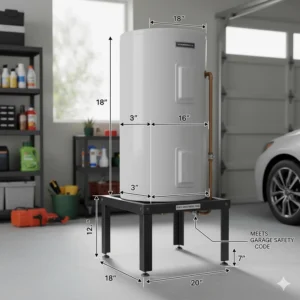
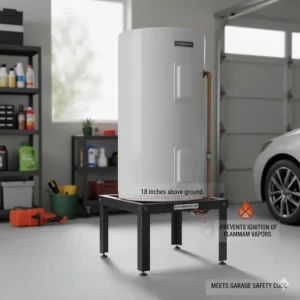
An 18 inch hot water heater stand isn’t just some random accessory plumbers try to sell you. It’s a critical safety component mandated by the National Fuel Gas Code and Uniform Plumbing Code. These stands elevate your gas water heater exactly 18 inches above the floor, keeping the ignition source away from flammable vapors that accumulate near ground level. Think gasoline, paint thinner, or any other volatile substance that might spill in your garage. Without proper elevation, one spark could turn your garage into an inferno.
✨Was this helpful? Spread the word! 🚀
Beyond safety compliance, a water heater stand 18 inches high protects your investment from ground moisture, makes maintenance easier, and provides proper airflow around your unit. Whether you’re installing a new heater or bringing an existing setup up to code, choosing the right stand matters more than you think. The market offers everything from budget-friendly galvanized steel options to heavy-duty commercial-grade platforms, each designed for different tank sizes and weight capacities.
In this comprehensive guide, I’ll walk you through the top seven stands available in 2025, break down code requirements, and help you select the perfect platform for your specific needs. We’re talking real products with actual specifications, not generic recommendations.
Quick Comparison Table: Top 18 Inch Hot Water Heater Stands
| Product | Size | Weight Capacity | Tank Size | Price Range | Best For |
|---|---|---|---|---|---|
| Camco 11231 | 21x21x18″ | 650 lbs | 30-50 gal | $50-$60 | Budget-conscious homeowners |
| Eastman 86278 | 21x21x18″ | 650 lbs | 30-60 gal | $40-$50 | Standard residential use |
| Eastman 86279 | 24x24x18″ | 1,200 lbs | 75-100 gal | $55-$65 | Large tanks |
| CMI Inc 21x21x18 | 21x21x18″ | 800 lbs | 30-50 gal | $45-$55 | Versatile applications |
| CMI Inc 24x24x18 | 24x24x18″ | 1,000 lbs | 50-100 gal | $70-$80 | Heavy-duty needs |
| Everflow GWHS21 | 21x21x18″ | 650 lbs | Up to 52 gal | $60-$70 | Code compliance focus |
| Oatey 34057 | 21x21x18″ | 600 lbs | 30-50 gal | $45-$55 | Reliable brand choice |
💬 Just one click – help others make better buying decisions too!😊
🛒 Ready to Secure Your Water Heater?
✨ These code-compliant stands protect your home and family. Click any product above to check current prices and customer reviews. Don’t wait until an inspector flags your setup—get the right stand today! 🔥
Top 7 18 Inch Hot Water Heater Stand Options: Expert Analysis
1. Camco 11231 Gas Water Heater Stand Kit
The Camco 11231 has been my go-to recommendation for years, and there’s a good reason it’s consistently Amazon’s top seller. This stand measures precisely 21 inches by 21 inches by 18 inches and handles water heaters up to 50 gallons with a 22-inch diameter or less.
Key Specifications:
- Constructed from durable 18-gauge galvanized sheet metal
- Designed specifically for gas water heaters requiring code-compliant elevation
- Minimal assembly required with straightforward instructions
- Rust-resistant finish for longevity
Priced between $50-$60, the Camco stand offers exceptional value. Customer feedback consistently praises its sturdiness, with one reviewer mentioning it easily supports 350-pound slot machines without wobbling. The galvanized finish isn’t painted, giving it an industrial aesthetic that some might find less appealing, but it’s built to last decades.
Pros:
✅ Excellent price-to-quality ratio
✅ Simple assembly process takes under 15 minutes
✅ Proven reliability with thousands of installations
Cons:
❌ Sharp edges require careful handling during installation
❌ Phillips head screws instead of hex bolts can make tightening more difficult
2. Eastman 86278 Water Heater Stand
If you’re looking for a hot water heater stand 18 inch that balances affordability with solid construction, the Eastman 86278 deserves serious consideration. This 21x21x18-inch platform supports water heaters ranging from 30 to 60 gallons.
Key Specifications:
- 18-gauge galvanized steel with aluminum finish
- 650-pound load capacity
- Includes safety clips for wall or floor mounting
- Meets Uniform Plumbing Code and International Plumbing Code requirements
At $40-$50, this is one of the most budget-friendly options that doesn’t compromise on quality. The aluminum finish provides excellent corrosion resistance, making it ideal for humid environments like basements. Eastman includes safety clips—a feature sometimes missing from competitors—which secure the stand to walls or floors for added stability.
Customers appreciate the straightforward installation, though some note the instructions could be clearer. One reviewer successfully used it for a water softener, demonstrating its versatility beyond just water heaters.
Pros:
✅ Includes safety clips for secure mounting
✅ Corrosion-resistant aluminum finish
✅ Affordable without sacrificing quality
Cons:
❌ Assembly instructions could be more detailed
❌ Some units arrive with minor shipping damage
3. Eastman 86279 Heavy-Duty Stand
When you’ve got a larger tank requiring a 18 inch stand for hot water heater with serious load capacity, the Eastman 86279 is your answer. This 24x24x18-inch platform is engineered for 75 to 100-gallon water heaters.
Key Specifications:
- Massive 1,200-pound load capacity
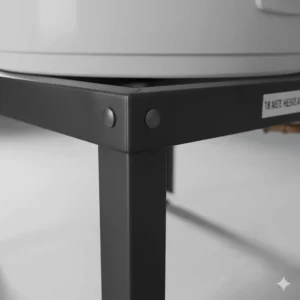
- X-bracing for enhanced structural integrity
- 18-gauge galvanized steel construction
- Safety clips included for secure installation
Priced at $55-$65, this stand costs slightly more than smaller options, but the increased capacity justifies the premium. The X-bracing design distributes weight more evenly, preventing the wobbling issues some users report with simpler stands. This is particularly important for larger tanks that, when full, can weigh upwards of 800 pounds.
One commercial property manager I know uses these exclusively for his rental units because they’ve never had a failure. The extra platform space also accommodates wider tank bases without overhang issues.
Pros:
✅ Exceptional 1,200-lb capacity for large tanks
✅ X-bracing provides superior stability
✅ Suitable for commercial and residential applications
Cons:
❌ Higher price point than smaller stands
❌ Larger footprint requires more floor space
4. CMI Inc Heavy-Duty 21x21x18 Stand
The CMI Inc 21x21x18 brings versatility to the water heater stand 18 inch market with its multi-purpose design. While rated for 30-50 gallon tanks, customers have successfully used it for rain barrels, washing machines, and even small kilns.
Key Specifications:
- 800-pound weight capacity
- Metal base construction with rust-resistant finish
- Suitable for both indoor and outdoor use
- Can be mounted on concrete or framed walls
At $45-$55, CMI delivers a robust platform that exceeds basic code requirements. The 800-pound capacity provides a comfortable safety margin for most residential applications. Installation flexibility allows mounting on various surface types, though some users report needing to purchase additional anchoring hardware for concrete floors.
Customer reviews highlight the stand’s surprising versatility. One homeowner elevated their water softener to improve drainage access, while another used it to raise a small kiln for better airflow and safety.
Pros:
✅ Higher 800-lb capacity than many competitors
✅ Versatile for multiple applications beyond water heaters
✅ Suitable for both indoor and outdoor installations
Cons:
❌ May require additional anchoring hardware
❌ Assembly instructions are somewhat basic
5. CMI Inc 24x24x18 Heavy-Duty Platform
For those needing an 18 inch water heater stand capable of handling the biggest residential tanks, the CMI Inc 24x24x18 model stands out with its impressive 1,000-pound capacity and larger platform.
Key Specifications:
- 24x24x18-inch dimensions
- 1,000-pound weight rating
- Designed for 50-100 gallon tanks
- Heavy-duty metal construction
Priced at $70-$80, this is definitely a premium option, but it’s engineered for demanding applications. The larger platform provides stability for wider tank bases and reduces stress concentration on the stand’s legs. I’ve seen these handle 100-gallon commercial tanks in restaurants without issue.
What sets this apart is the reinforced leg design that minimizes flexing under load. Unlike some stands where you can see slight movement when the tank is full, the CMI heavy-duty model stays rock-solid. It’s particularly well-suited for homes with large families requiring substantial hot water capacity.
Pros:
✅ Accommodates the largest residential water heaters
✅ Reinforced design minimizes flexing under load
✅ Suitable for light commercial applications
Cons:
❌ Higher price point may exceed budget constraints
❌ Heavier weight makes solo installation challenging
6. Everflow GWHS21 Galvanized Steel Stand
The Everflow GWHS21 offers a chrome-finished 18 inch high water heater stand that prioritizes code compliance and structural integrity. Measuring 21x21x18 inches, it’s designed for tanks up to 52 gallons.
Key Specifications:
- Chrome-plated galvanized steel construction
- 650-pound capacity
- Follows National Fuel Gas Code requirements
- Includes mounting hardware
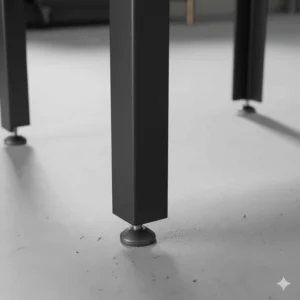
At $60-$70, Everflow positions this as a premium residential option. The chrome finish gives it a more polished appearance than bare galvanized steel, which might appeal if your water heater is in a visible location. However, customer reviews reveal mixed experiences with wobbling on certain floor types, particularly uneven surfaces.
One significant complaint involves missing seismic clips in some shipments, despite the product listing claiming they’re included. If you’re in an earthquake zone, verify the clips are present before installation or be prepared to purchase them separately.
Pros:
✅ Attractive chrome finish for visible installations
✅ Solid construction meets all code requirements
✅ Suitable for most residential tank sizes
Cons:
❌ Reports of missing seismic clips in some shipments
❌ Can wobble on uneven floors without proper leveling
7. Oatey 34057 Galvanized Water Heater Stand
Rounding out our list is the Oatey 34057, a tried-and-true option from a brand synonymous with plumbing excellence. This 21-inch square by 18-inch high stand supports water heaters up to 50 gallons.
Key Specifications:
- 18-gauge spangled galvanized steel
- 600-pound weight capacity
- Designed for National Fuel Gas Code compliance
- Simple four-leg design
Priced at $45-$55, Oatey offers solid value from a trusted manufacturer. The spangled galvanized finish provides excellent corrosion resistance, making it ideal for humid basement installations. While the 600-pound capacity is slightly lower than some competitors, it’s more than adequate for standard 40-50 gallon residential tanks.
Oatey’s reputation for quality control means you’re less likely to receive damaged or defective products. The company has been manufacturing plumbing components since 1916, bringing over a century of expertise to this seemingly simple product.
Pros:
✅ Trusted brand with century-long reputation
✅ Excellent corrosion resistance
✅ Reliable quality control
Cons:
❌ Lower capacity than some competitors
❌ Basic design lacks advanced features like X-bracing
Understanding Code Requirements for Water Heater Elevation 📋
Here’s something most homeowners don’t realize: the 18-inch requirement isn’t arbitrary. According to the National Fuel Gas Code and International Residential Code Section G2408.2, gas water heaters installed in garages must have their ignition source elevated at least 18 inches above the floor. This regulation exists because flammable vapors—like those from gasoline, paint thinner, or other chemicals commonly stored in garages—are heavier than air and accumulate near ground level.
The code specifically measures from the floor to the pilot light or ignition device, not to the bottom of the tank. For most water heaters, this means the entire unit needs to sit on an 18 inch platform for hot water heater installations. There’s an important exception: water heaters manufactured after 2003 are typically FVIR (Flammable Vapor Ignition Resistant) certified, which theoretically exempts them from the elevation requirement. However, many jurisdictions still require elevation regardless of FVIR status, and it’s generally wise to elevate anyway for moisture protection and easier maintenance.
Local Code Variations ⚖️
While the International Residential Code provides baseline requirements, your specific municipality might have additional stipulations. California, for instance, has stringent seismic strapping requirements for water heaters, mandating straps on the upper and lower thirds of the unit. Some areas require specific stand materials or anchoring methods.
Before purchasing any hot water heater stand 18 inch high, I strongly recommend calling your local building department to verify requirements. The $20 permit fee and 10-minute phone call could save you thousands in fines or insurance complications down the road. Most inspectors are helpful and will tell you exactly what they’re looking for during inspection.
Material Construction: What Makes a Quality Stand 🔨
Not all 18 inch hot water heater stands are created equal, and the material matters more than you might think. The overwhelming majority use 18-gauge galvanized steel, which offers an excellent strength-to-weight ratio. But here’s where manufacturers differentiate themselves:
Galvanized Steel Grades
Standard galvanized steel receives a zinc coating that protects against rust and corrosion. However, the coating thickness varies. Higher-quality stands use G90 galvanization, which applies 0.90 ounces of zinc per square foot of steel. Budget options might use G60 (0.60 oz/sq ft), which degrades faster in humid environments.
Coating Variations
Some manufacturers add an aluminum or chrome finish over the galvanized steel. Eastman’s aluminum finish provides superior aesthetics and marginally better corrosion resistance. Chrome finishes look more polished but can chip during installation if you’re not careful. For garages or utility rooms where appearance doesn’t matter, standard galvanized steel is perfectly adequate.
Structural Design Elements 🏗️
The physical design significantly impacts performance. X-bracing, found on premium models like the Eastman 86279, distributes weight across the entire frame, reducing stress on individual legs. Cheaper stands use simple cross-braces that, while adequate for lighter loads, can flex noticeably under heavy tanks.
Leg design matters too. Some stands use hollow tubing, while others employ solid steel bars. Hollow tubing is lighter and easier to ship but slightly less rigid. For tanks over 60 gallons, I prefer solid steel construction for the extra peace of mind.
Weight Capacity Considerations: Don’t Underestimate Your Tank ⚖️
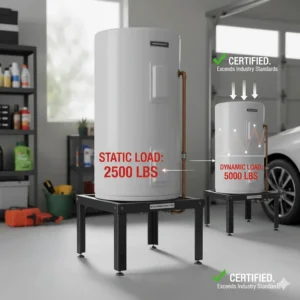
This is where people make critical mistakes. A 50-gallon water heater doesn’t weigh 50 gallons. You need to account for the tank weight itself, the water weight when full, and any additional components like expansion tanks or filtration systems.
A gallon of water weighs approximately 8.34 pounds. A 50-gallon tank holds about 417 pounds of water alone. Add the empty tank weight (typically 100-150 pounds for a 50-gallon unit), and you’re looking at 517-567 pounds total. Suddenly, that 600-pound capacity stand isn’t providing much safety margin.
Recommended Capacity Guidelines 📊
For optimal safety and longevity, choose a stand with at least 50% more capacity than your calculated total weight. If your full water heater weighs 550 pounds, aim for a stand rated at 825 pounds or higher. This buffer accounts for dynamic loads (water sloshing during earthquakes), structural degradation over time, and installation imperfections.
Here’s my rule of thumb:
- 30-40 gallon tanks: 650-800 lb capacity minimum
- 50-60 gallon tanks: 800-1,000 lb capacity minimum
- 75-100 gallon tanks: 1,200+ lb capacity minimum
Installation Best Practices: Getting It Right the First Time 🔧
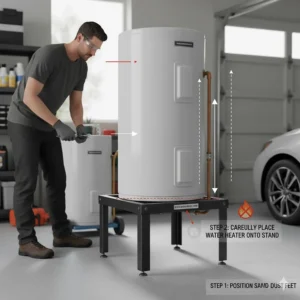
Installing an 18 in water heater stand seems straightforward, but I’ve seen enough botched jobs to know where people go wrong. Let’s walk through the process step-by-step.
Pre-Installation Preparation
First, verify your floor is level. Even a slight slope can cause stability issues. Use a 4-foot level and check multiple directions. If you discover unlevel areas, use shims under the stand legs to compensate. Never shim just one leg—this creates uneven stress distribution.
Measure your water heater’s base diameter carefully. Tanks are often wider than their rated gallon size suggests, especially models with enhanced insulation. Ensure your chosen stand provides adequate support with minimal overhang. Ideally, the tank base should sit fully on the platform with at least an inch of clearance on all sides.
Assembly Tips 🛠️
Most stands ship unassembled to reduce shipping costs. Assembly typically takes 15-30 minutes with basic tools. Here’s where people mess up: overtightening bolts. Yes, you want secure connections, but stripping threads or warping metal by over-torqueing creates weak points. Hand-tighten bolts until snug, then give them an additional quarter-turn with a wrench.
Pay attention to brace orientation. Some stands have specific top and bottom braces that aren’t interchangeable. Installing them incorrectly compromises structural integrity. Reference the instruction diagrams carefully, even if they seem obvious.
Securing the Stand
Once assembled and positioned, anchor the stand to the floor or wall using the included safety clips (if provided). For concrete floors, use concrete anchors rated for at least 500 pounds each. For wood floors, lag bolts into floor joists are essential—never just screw into subfloor plywood.
In seismic zones, additional strapping is mandatory. Install straps around the top third and bottom third of the water heater, securing them to wall studs. Each strap should handle horizontal forces equal to at least one-third of the full tank weight.
Maintenance and Longevity of Your Stand 🔍
An 18 inch stand for water heater isn’t something you install and forget. Regular inspection prevents catastrophic failures.
Annual Inspection Checklist ✅
Once yearly, perform these checks:
- Examine all bolts and connections for loosening
- Inspect for rust or corrosion, especially at stress points
- Verify the stand remains level (floors settle over time)
- Check for any bending or deformation of legs or braces
- Ensure safety clips and anchors remain secure
If you notice any rust, address it immediately with a wire brush and rust-inhibiting paint. Surface rust is normal, but deep pitting indicates structural compromise requiring stand replacement.
When to Replace Your Stand ⏰
Most quality stands last 20+ years with proper care, often outliving the water heater itself. However, replace your stand immediately if you observe:
- Severe rust with visible metal thinning
- Cracks in welds or metal
- Permanent deformation or bending
- Loose connections that won’t tighten
- After any significant impact or collision
Don’t gamble with a compromised stand. The cost of replacement ($50-80) is negligible compared to potential water damage, injuries, or code violations.
Alternatives to Traditional Stands: When to Consider Options 🤔
While dedicated stands are the standard solution, certain situations call for alternatives. Concrete blocks might seem like a budget-friendly option, but they’re explicitly prohibited by most codes because they can crumble under sustained load and don’t provide lateral stability during seismic events.
Custom-built wooden platforms can work if constructed properly, but must use pressure-treated lumber rated for ground contact and be engineered to handle the load. Most jurisdictions require engineered plans and inspections for custom platforms, negating any cost savings.
Platform Systems
Some manufacturers offer platform systems that mount directly to wall studs, suspending the water heater above the floor without floor-mounted legs. These work well in tight spaces or when floor mounting isn’t feasible, but require substantial wall structure to support the weight.
Cost-Benefit Analysis: Is the Investment Worth It? 💰
Let’s talk numbers. A quality 18 inch water heater stand costs $40-80. Compare this to potential costs of non-compliance:
- Code violation fines: $500-2,000 depending on jurisdiction
- Insurance claim denial due to non-compliant installation: $5,000-50,000+
- Property damage from a fire caused by ignited vapors: $10,000-100,000+
- Injury liability if someone is hurt: Potentially millions
Suddenly, that $60 stand looks like the bargain of the century, doesn’t it? Beyond avoiding catastrophe, proper elevation extends water heater lifespan by keeping it away from ground moisture and makes maintenance significantly easier. The ability to actually access the drain valve without contorting yourself is worth something.
Long-Term Value 📈
A quality stand lasts decades. Amortized over 25 years, you’re spending about $2-3 annually for code compliance and safety. That’s less than a fancy coffee. The peace of mind knowing your installation meets all safety standards and protects your family is genuinely priceless.
Common Mistakes to Avoid When Selecting a Stand ⚠️
I’ve seen enough DIY disasters to fill a book. Here are the top mistakes homeowners make:
Mistake #1: Choosing Based Solely on Price
The cheapest stand isn’t always the best value. A $35 stand might save you $15 initially but could fail prematurely, require replacement, or cause inspection problems. Invest in quality from reputable manufacturers like Eastman, Camco, or Oatey.
Mistake #2: Ignoring Weight Capacity
“It’s rated for 600 pounds, and my 50-gallon tank is only 500 pounds when full.” That logic ignores the importance of safety margins. Always exceed your calculated needs by at least 50%.
Mistake #3: Forgetting About Access ❌
Your stand needs to fit in the designated space, but you also need clearance around it for maintenance. Most codes require 12 inches of working space around the water heater. Factor this into your measurements before purchasing.
Mistake #4: DIY Platform Construction
Unless you’re a licensed contractor with engineering knowledge, don’t build your own platform. The liability and code compliance issues aren’t worth the marginal cost savings. Purchase a manufactured, code-compliant stand.
FAQ: Your Questions Answered ❓
❓ Can I use a 18 inch hot water heater stand for electric water heaters?
❓ How do I know if my water heater stand 18 inches meets local codes?
❓ What's the difference between a 21x21 and 24x24 inch platform?
❓ Do I need a professional to install my hot water heater stand 18 inch high?
❓ How often should I inspect my 18 inch stand for hot water heater?
Conclusion: Securing Your Home’s Safety and Compliance 🏡
Choosing the right 18 inch hot water heater stand isn’t just about checking a box on your inspection report—it’s about protecting your home, family, and investment. The seven options we’ve explored offer solutions for every budget and application, from the budget-friendly Eastman 86278 to the heavy-duty CMI Inc platforms built for the largest residential tanks.
Remember these key takeaways: always exceed your weight capacity needs by at least 50%, verify local code requirements before purchasing, and don’t skimp on quality to save a few dollars. The best stand is one that meets all safety codes, properly supports your specific water heater model, and comes from a reputable manufacturer with proven reliability.
Whether you’re bringing an existing installation up to code or planning a new water heater installation, investing in a proper stand provides peace of mind that’s worth far more than its modest cost. Your future self—and your insurance company—will thank you for making the right choice today.
🔥 Don’t Risk Your Safety—Get Your Code-Compliant Stand Today!
✨ Click on any of our recommended products to secure your water heater properly. These stands are in stock and ready to ship, giving you the protection and compliance you need. Your home deserves the best! 🛡️
Recommended for You
- AO Smith Water Heater Reviews: 7 Best Models 2025
- 7 Good Water Heater Brand Options: 2025 Expert Guide
- Condensing Water Heater: 7 Top Picks That Save 40% Energy
Disclaimer: This article contains affiliate links. If you purchase products through these links, we may earn a small commission at no additional cost to you.
✨ Found this helpful? Share it with your friends! 💬🤗
