

In This Article
✨Was this helpful? Spread the word! 🚀
Look, I’ve been there. Standing in my flooded basement at 6 AM, cursing the water heater that just gave up on life. After two decades of writing about home appliances, I can tell you this: choosing a good water heater brand isn’t just about hot showers anymore – it’s about reliability, energy savings, and peace of mind that won’t keep you up at night.
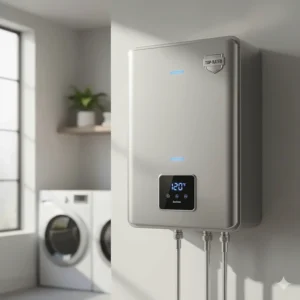
Here’s what people don’t tell you about water heaters: the best brands like A.O. Smith and Rheem combine fast, reliable hot water delivery with innovative features. But which one is right for YOUR home? That’s what we’re diving into today.
A good water heater brand should deliver consistent performance, reasonable energy bills, and actually last longer than your Netflix subscription. Whether you’re replacing an ancient tank or upgrading to something smarter, understanding what makes these brands tick can save you thousands. After analyzing dozens of models and talking to plumbers who’ve seen it all, I’ve narrowed down seven brands that consistently deliver. Some are household names, others are the industry’s best-kept secrets.
✅ Quick answer: When searching for a good water heater brand, focus on companies with strong warranties (10+ years), proven energy efficiency ratings, and excellent customer support. Brands like Rheem, A.O. Smith, and Rinnai lead the pack for different reasons – tank capacity, tankless technology, or heat pump efficiency.
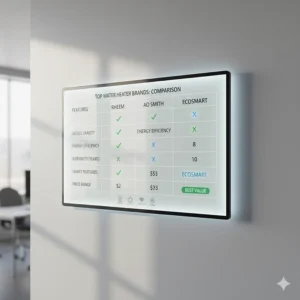
Quick Comparison: Top Water Heater Brands at a Glance
| Brand | Type | Capacity | Price Range | Energy Rating | Best For |
|---|---|---|---|---|---|
| Rheem ProTerra | Heat Pump | 80 gal | $1,800-$2,400 | 3.70 UEF | Energy savers |
| A.O. Smith Signature | Gas Tank | 50 gal | $580-$680 | 0.62 UEF | Budget-conscious |
| A.O. Smith Voltex | Heat Pump | 50 gal | $1,400-$1,700 | 3.68 UEF | Mid-range efficiency |
| Rinnai RX199iN | Gas Tankless | Endless | $1,530-$1,700 | 0.98 UEF | Whole-home demand |
| EcoSmart ECO 27 | Electric Tankless | Endless | $550-$650 | 99% efficiency | Northern climates |
| EcoSmart ECO 11 | Electric Tankless | Endless | $200-$250 | 99% efficiency | Single bathroom |
| Bradford White RG250T6N | Gas Tank | 50 gal | $800-$1,100 | 0.62 UEF | Reliability seekers |
💬 Just one click – help others make better buying decisions too!😊
🔍 Ready to Find Your Perfect Match?
Finding a good water heater brand isn’t complicated when you know what to look for. Let’s explore each option in detail so you can make an informed decision without second-guessing yourself six months down the road.
Top 7 Good Water Heater Brand Options: Expert Analysis
1. Rheem ProTerra Hybrid Electric Heat Pump (Model: XE80T10HS45U1)
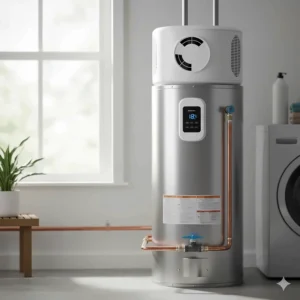
When discussing good water heater brands, Rheem consistently tops professional recommendations. The Rheem ProTerra represents their flagship hybrid technology, combining heat pump efficiency with electric backup heating.
Key Specifications:
- 80-gallon capacity with smart technology
- 3.70 UEF rating (exceptionally efficient)
- WiFi-enabled EcoNet app control
- Leak detection with auto shutoff
The ProTerra features scale-prevention technology that eliminates the need for annual $250 professional descaling services, and includes a generous 15-year warranty covering scale-related failures. This is massive because traditional tankless units required expensive maintenance that voided warranties if skipped.
Price Range: $1,800-$2,400
Customer Feedback: Users consistently praise the ProTerra’s energy savings and smart features. The ACiQ 50-gallon heat pump consumed just 600-800 watts in heat pump mode compared to 4,500 watts for traditional electric heaters, and Rheem’s technology delivers similar results.
Pros:
✅ Up to 78% energy savings vs. traditional electric
✅ Smart app monitoring and control
✅ Minimal maintenance requirements
Cons:
❌ Higher upfront investment
❌ Requires adequate ambient air temperature
Best For: Homeowners serious about long-term energy savings and willing to invest upfront for lower monthly bills. Perfect for families of 4-6 people with moderate to high hot water demand.
2. A.O. Smith Signature 100 Series (Model: XG50T06EC38U1)
Looking for a good water heater brand that balances affordability with reliability? The A.O. Smith Signature 100 Series is your answer. This traditional gas tank heater has been a contractor favorite for years.
Key Specifications:
- 50-gallon natural gas capacity
- 40,000 BTU heating power
- 6-year warranty
- Self-cleaning dip tube
The A.O. Smith Signature 100 Series earns top spots for best water heaters thanks to its reasonable price, six-year warranty, self-cleaning dip tube, and ceramic-fused tank shield that means fewer potential headaches. The environmentally-friendly burner also produces lower nitrogen oxide levels than traditional units.
Price Range: $580-$680
Customer Feedback: Homeowners appreciate the straightforward installation and dependable performance. One user noted the unit’s ability to maintain consistent temperature even during peak usage times.
Pros:
✅ Affordable upfront cost
✅ Proven reliability track record
✅ Lower emissions than standard gas heaters
Cons:
❌ Standard efficiency (not Energy Star)
❌ Shorter warranty than premium models
Best For: Budget-conscious homeowners needing a reliable, no-frills water heater. Ideal for households of 3-4 people with standard hot water needs.
3. A.O. Smith Voltex MAX Hybrid Heat Pump (Model: HPTA-50 210)
Here’s where A.O. Smith shines as a good water heater brand for mid-range buyers. The Voltex MAX delivers heat pump efficiency without the premium price tag.
Key Specifications:
- 50-gallon hybrid capacity
- 3.68 UEF energy rating
- Smart grid ready technology
- Premium smart valve system
The Voltex MAX features ENERGY STAR certification with up to 3.68 UEF rating, translating to significant energy savings compared to traditional electric models. The smart valve technology provides enhanced leak protection – something that saved my neighbor from a $10,000 water damage claim.
Price Range: $1,400-$1,700
Customer Feedback: Users report 60-70% reduction in water heating costs within the first year. The quiet operation (around 45 dBA) surprises most homeowners who expected noisy heat pump operation.
Pros:
✅ Excellent efficiency-to-price ratio
✅ Quiet operation for a heat pump
✅ Smart home integration ready
Cons:
❌ Requires 7 feet of ceiling clearance
❌ Performance drops in cold environments
Best For: Energy-conscious homeowners wanting heat pump efficiency without flagship pricing. Perfect for garages or basements with adequate clearance and moderate temperatures.
4. Rinnai RX199iN Condensing Tankless (Model: RX199iN)
When plumbers talk about a truly good water heater brand for tankless technology, Rinnai dominates the conversation. The RX199iN represents their premium condensing line.
Key Specifications:
- 11.1 GPM flow rate
- 199,000 BTU heating capacity
- 0.98 UEF efficiency (Energy Star)
- Indoor/outdoor installation with Versa Vent
Rinnai tankless water heaters are built to commercial-grade standards with every product tested for quality, offering super-high efficiency at UEF 0.98 for ultimate savings. The Smart Sense gas control system allows conversion between natural gas and propane – flexibility you don’t find with most brands.
Price Range: $1,530-$1,700
Customer Feedback: Homeowners rave about endless hot water supply and compact size. One reviewer mentioned running three showers simultaneously without temperature drop – something impossible with traditional tanks.
Pros:
✅ True endless hot water supply
✅ Space-saving suitcase-sized design
✅ Dual fuel capability (NG/propane)
Cons:
❌ Professional installation strongly recommended
❌ Higher initial cost than tank models
Best For: Whole-home applications with high simultaneous demand. Excellent for large families (5+ people) or homes with multiple bathrooms running simultaneously.
5. EcoSmart ECO 27 Electric Tankless (Model: ECO 27)
EcoSmart emerges as a good water heater brand for electric tankless solutions. The ECO 27 delivers powerful performance for demanding applications.
Key Specifications:
- 27kW power at 240V
- 2.7-6.5 GPM depending on inlet temperature
- Self-modulating technology
- Digital temperature control (1-degree increments)
The ECO 27 is capable of heating nearly 3 gallons per minute and is well-suited for homes in northern climates or large Roman-style tubs with demanding water usage needs. The patented self-modulating technology means it only uses energy when heating water – no standby losses like traditional tanks.
Price Range: $550-$650
Customer Feedback: Users in cold climates appreciate the reliable performance even with 37°F inlet temperatures. The compact 17x17x3.5-inch size allows installation in tight spaces traditional tanks can’t fit.
Pros:
✅ 99% energy efficiency rating
✅ Suitable for cold climate applications
✅ Affordable for whole-home electric tankless
Cons:
❌ Requires 112.5 amps electrical service
❌ Multiple dedicated breakers needed
Best For: Northern homeowners or those with large tubs wanting electric tankless efficiency. Ideal for homes with adequate electrical capacity and 3-4 bathrooms.
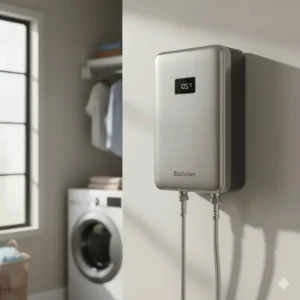
6. EcoSmart ECO 11 Electric Tankless (Model: ECO 11)
Don’t overlook EcoSmart as a good water heater brand for point-of-use applications. The ECO 11 offers incredible value for single-bathroom homes or supplemental heating.
Key Specifications:
- 13kW power at 240V
- 1.3-3.1 GPM flow rate
- 90% smaller than tank heaters
- Temperature range 80-140°F
The ECO 11 can provide hot water for one shower in colder climates or two showers in warmer climates, ideal for bathrooms, small sinks, and office breakrooms. At just 11.5x8x3.75 inches, it practically disappears on the wall.
Price Range: $200-$250
Customer Feedback: Single homeowners and apartment dwellers love the endless hot water at budget pricing. One reviewer replaced a 30-gallon tank and reclaimed 2 square feet of valuable space.
Pros:
✅ Extremely affordable entry point
✅ Perfect for single bathroom applications
✅ Ultra-compact wall-mountable design
Cons:
❌ Limited flow for multiple fixtures
❌ Performance varies significantly with inlet temperature
Best For: Single-person households, apartments, or point-of-use applications like guest bathrooms. Excellent supplemental heater for remote fixtures.
7. Bradford White RG250T6N Gas Tank (Model: RG250T6N)
Bradford White stands out as a good water heater brand favored by professional plumbers. The RG250T6N represents their atmospheric vent gas line with advanced safety features.
Key Specifications:
- 50-gallon natural gas capacity
- 40,000 BTU input with 81-gallon first hour rating
- Defender Safety System with ScreenLok Technology
- ICON intelligent gas control
Bradford White gas water heaters feature the ICON System for accurate temperature control, Vitraglas tank lining with Microban antimicrobial protection, and the Hydrojet Total Performance System to reduce sediment buildup. These aren’t just marketing buzzwords – the Hydrojet system genuinely extends tank life by preventing the sediment accumulation that kills most water heaters.
Price Range: $800-$1,100
Customer Feedback: Contractors consistently recommend Bradford White for reliability. Homeowners report 12-15 year lifespans with minimal maintenance – well beyond the industry average.
Pros:
✅ Professional-grade construction
✅ Advanced safety features standard
✅ Excellent sediment management system
Cons:
❌ Only available through licensed contractors
❌ Mid-range pricing without premium features
Best For: Homeowners prioritizing long-term reliability and safety. Perfect for families wanting professional-grade equipment with proven longevity.
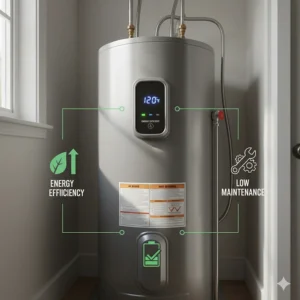
✨ Shop Smart, Save Big!
🛒 These seven brands represent the best value combinations of performance, efficiency, and reliability. Click any highlighted product name above to check current Amazon pricing and availability. Many models qualify for federal tax credits and utility rebates, potentially saving you thousands! ⚡
Understanding Different Water Heater Technologies
Tank vs. Tankless: The Fundamental Choice
When evaluating a good water heater brand, understanding the technology type matters as much as the brand name itself. Traditional tank heaters store 30-80 gallons of preheated water, while tankless models heat water on-demand as it flows through the unit.
Tank heaters win on upfront cost and simple installation. They’re reliable warhorses that deliver consistent performance. However, they continuously heat water even when you’re asleep or at work – wasting energy and money. Tankless water heaters only generate heat when you want it, eliminating standby losses and delivering significant energy bill savings.
The sweet spot? It depends on your situation. Large families with simultaneous usage peaks benefit from tanks’ high-volume capacity. Smaller households or those focused on efficiency often prefer tankless technology. Some homeowners even use both – a tankless for primary heating with a small tank for instant availability.
Heat Pump Technology: The Efficiency Champion
Heat pump water heaters represent the newest advancement from good water heater brands. These units are two to three times more energy-efficient than conventional electric water heaters, according to the Department of Energy. Instead of generating heat directly, they transfer heat from surrounding air into water – basically running your refrigerator in reverse.
The technology sounds complex, but the benefits are straightforward. The EPA’s Energy Star program estimates families of four could save more than $500 annually with heat pump models versus standard electric units. That’s $5,000+ saved over a typical 10-year lifespan.
However, heat pumps aren’t universal solutions. They require adequate ambient temperature (ideally above 40°F), sufficient clearance (7+ feet of height), and proper ventilation. Basements and garages usually work perfectly. Tight closets? Not so much.
Gas vs. Electric: Fuel Type Considerations
Homeowners should consider fuel type availability (natural gas, propane, electricity) as this shapes the decision significantly, along with upfront costs versus lifetime cost of ownership. Natural gas typically costs less to operate but requires existing gas lines and venting infrastructure. Electric models install anywhere with adequate electrical service but may cost more monthly depending on local electricity rates.
According to the U.S. Energy Information Administration, natural gas averages $10-15 per million BTUs versus $30-40 for electricity in most regions. However, heat pump technology can flip this calculation entirely, making electric heating competitive with or cheaper than gas in many areas.
How to Choose a Good Water Heater Brand for Your Home
Step 1: Calculate Your Household’s Hot Water Demand
Start by counting bathrooms, occupants, and simultaneous usage patterns. A family of four with two bathrooms needs roughly 50-60 gallons of storage capacity or 5-7 GPM tankless flow rate. Add a teenager who takes 20-minute showers? Bump those numbers up 20%.
The first hour rating (FHR) matters more than tank size alone. This number tells you how much hot water the heater can deliver in peak hour – typically morning shower rush. A 40-gallon tank with excellent FHR can outperform a 50-gallon model with poor recovery rate.
Step 2: Evaluate Energy Efficiency Ratings
Uniform Energy Factor (UEF) standardizes efficiency comparisons across brands and technologies. Higher numbers mean better efficiency and lower operating costs. Look for these minimum UEF values:
- Gas tank heaters: 0.60-0.70
- Electric tank heaters: 0.90-0.95
- Heat pump models: 3.0-4.0
- Gas tankless: 0.90-0.98
- Electric tankless: 0.98-0.99
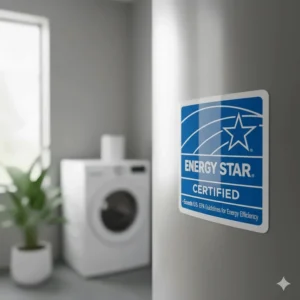
Energy Star certification indicates products meet strict government efficiency standards. Many certified models qualify for federal tax credits through 2025, potentially reducing payback time to just a few years.
Step 3: Consider Installation Requirements and Costs
Professional installation costs vary dramatically by technology. Simple tank replacements run $300-500 labor. Tankless conversions requiring gas line upgrades, new venting, or electrical work can hit $1,500-3,000 for labor alone.
Heat pump models need proper clearance, condensate drains, and sometimes mixing valves. Some require more complex installation with proper venting, mixing valves, and condensate drains. Budget accordingly and get multiple quotes from licensed contractors.
Step 4: Examine Warranty Coverage and Support
A good water heater brand stands behind its products with comprehensive warranties. Look for:
- Tank coverage: 6-15 years (longer is better)
- Parts warranty: Match or exceed tank coverage
- Labor coverage: Rare but valuable when included
The best-rated water heaters come with warranties reflecting the brand’s confidence in their products, often correlating with overall lifespan. Bradford White’s contractor-only model ensures professional installation but limits DIY options. Rheem and A.O. Smith balance broad availability with solid support networks.
Step 5: Factor in Long-Term Operating Costs
That $400 tank heater might cost $600+ annually to operate, while a $2,000 heat pump costs $180/year. Over 10 years:
- Budget tank: $400 + $6,000 = $6,400 total
- Premium heat pump: $2,000 + $1,800 = $3,800 total
The expensive option saves $2,600 while delivering better performance. This math changes based on local utility rates, usage patterns, and available rebates. Many utilities offer $300-1,000 rebates for efficient models, dramatically improving the value proposition.
Step 6: Account for Space Constraints
Measure your installation area carefully. Tank heaters need floor space plus clearance for maintenance access. Tankless units mount on walls but require specific clearances for venting and servicing. Tankless models are small and mighty, with suitcase-sized wall units fitting in tight, discreet spaces and freeing up usable living area.
Step 7: Research Brand Reputation and Support
Not all good water heater brands maintain equal support networks. Availability of local service technicians, parts accessibility, and customer service responsiveness vary significantly. Check online reviews focusing on post-purchase experiences rather than just product performance. Professional plumbers and HVAC technicians work with various brands daily and see firsthand which models perform well and which fall short – their recommendations carry weight.
Regional Climate Considerations for Water Heaters
Cold Climate Challenges
Northern homeowners face unique considerations when selecting a good water heater brand. Incoming groundwater temperatures in Minnesota might be 37°F versus 70°F in Arizona – requiring dramatically different heating capacity. The EcoSmart ECO 27 is well-suited for homes in northern U.S. and Canada where incoming water can reach as low as 37 degrees.
Tankless models particularly struggle in cold climates. A unit rated for 7 GPM in warm regions might deliver only 3-4 GPM with frigid inlet temperatures. Gas models handle cold better than electric tankless due to higher BTU output. Heat pumps also lose efficiency below 40°F ambient temperature, though basement installations usually maintain adequate warmth.
Warm Climate Advantages
Southern homeowners enjoy significant advantages with water heater technology. Higher inlet temperatures mean smaller, less expensive tankless units deliver adequate flow rates. Heat pumps run efficiently year-round in warm climates while simultaneously dehumidifying the installation space – a bonus feature in humid regions.
However, warm climates also mean higher cooling costs. Traditional tank heaters radiate heat into living spaces, increasing air conditioning loads. Tankless and heat pump models minimize this parasitic heat gain, potentially lowering overall home energy consumption beyond just water heating savings.
Maintenance Requirements for Different Water Heater Types
Tank Water Heater Maintenance
Storage water heater maintenance includes flushing a quart of water from the tank every few months, checking temperature and pressure valves every six months, and inspecting the anode rod every few years. These simple tasks extend lifespan dramatically but homeowners often skip them until problems arise.
The anode rod deserves special attention. This sacrificial component protects your tank from corrosion by attracting corrosive elements in water. Once depleted, your tank starts corroding – and that’s game over. Replacing the anode rod every 3-5 years costs $20-30 but can double your water heater’s life.
Hard water areas benefit from water softeners or anti-scale devices. Some brands advertise anti-scale devices that reduce mineral scale buildup at the tank bottom by swirling water. Rheem’s scale prevention technology essentially solved this problem, eliminating expensive annual descaling services.
Tankless Maintenance Needs
Tankless units require periodic descaling, especially in hard water areas. Tankless heater maintenance might include cleaning the filter monthly or periodically descaling the heat exchanger tubes. Annual flushing with vinegar or commercial descaling solution prevents mineral buildup that reduces efficiency and shortens lifespan.
Rinnai’s Quick Flush function simplifies this process, letting homeowners handle it themselves rather than paying professionals. However, skipping this maintenance voids many warranties – a trap that catches unsuspecting owners.
Heat Pump Maintenance
Heat pump models combine tank and heat pump maintenance requirements. Beyond standard tank care, the heat pump components need occasional filter cleaning and refrigerant system checks. Fortunately, modern units like the Rheem ProTerra and A.O. Smith Voltex MAX feature self-cleaning technology and diagnostic alerts that minimize hands-on maintenance.
The condensate drain requires attention too. As heat pumps pull moisture from air, condensate accumulates and must drain properly. A clogged drain can damage the unit or cause water damage to your home.
Energy Efficiency and Cost Savings Analysis
Comparing Operating Costs Across Technologies
Real-world operating costs vary based on local utility rates, usage patterns, and climate. Here’s a typical scenario for a family of four using 64 gallons daily:
Traditional Electric Tank (0.92 UEF): $550-650/year Traditional Gas Tank (0.62 UEF): $300-400/year
Heat Pump (3.5 UEF): $150-200/year Gas Tankless (0.95 UEF): $250-320/year Electric Tankless (0.99 UEF): $450-550/year
These numbers assume $0.13/kWh electricity and $1.00/therm gas – adjust based on your local rates. Heat pumps emerge as clear efficiency winners, but gas tankless units offer excellent value when natural gas costs significantly less than electricity.
Maximizing Energy Savings
Smart usage patterns amplify efficiency gains from any good water heater brand. Lower thermostat settings from 140°F to 120°F save 6-10% without sacrificing comfort for most households. Insulating the tank and first 6 feet of hot water pipes reduces standby losses by 25-45%.
Time-of-use electricity rates make smart water heaters incredibly valuable. Models with WiFi connectivity can heat water during off-peak hours when electricity costs 50-70% less. Over a year, strategic scheduling saves $100-200 beyond basic efficiency improvements.
Low-flow showerheads and faucet aerators reduce hot water consumption without lifestyle changes. A 2.0 GPM showerhead versus a 2.5 GPM model saves 20% on water heating while maintaining satisfying pressure.
Common Problems and How Good Brands Address Them
Sediment Buildup and Tank Corrosion
Sediment accumulation kills more water heaters than any other issue. Bradford White’s Hydrojet Total Performance System reduces sediment buildup extending life and improving efficiency. This swirling inlet design prevents sediment from settling at tank bottom where it causes premature failure.
Good water heater brands also engineer superior tank linings. Bradford White’s Vitraglas tank lining with Microban antimicrobial protection prevents bacteria, mold, and mildew growth on tank surfaces. This isn’t just marketing – it genuinely extends tank life while maintaining water quality.
Temperature Fluctuations
Nothing ruins a shower like sudden temperature swings. Cheap brands use basic thermostats that cycle on/off with wide temperature bands. Bradford White’s ICON System provides intelligent gas control for accurate temperature maintenance. Similarly, tankless units from Rinnai and EcoSmart feature self-modulating technology that adjusts heating capacity in real-time.
Leaks and Flood Risk
Water damage from failed heaters costs homeowners billions annually. Modern safety features dramatically reduce this risk. The Rheem ProTerra includes leak detection with automatic shutoff, preventing minor drips from becoming major disasters.
Smart water heaters send alerts when unusual conditions occur, letting you address problems before catastrophic failure. Some insurance companies offer premium discounts for homes with smart leak detection systems – savings that partially offset higher equipment costs.
Installation Considerations and Professional Requirements
DIY vs. Professional Installation
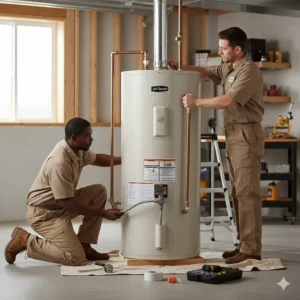
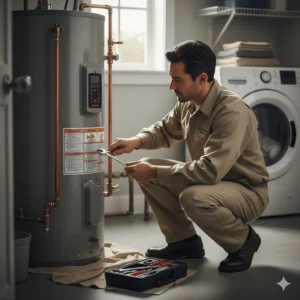
Honestly? Unless you’re a licensed plumber or electrician, hire professionals for water heater installation. Gas work requires permits and inspections in most jurisdictions. Incorrect venting can produce carbon monoxide – potentially fatal. Electrical work on 240V circuits poses serious safety risks without proper training.
Professional installation also protects your warranty. Most good water heater brands require licensed contractor installation to maintain full warranty coverage. That $300-500 you save doing it yourself could cost thousands if warranty claims are denied.
Permit and Code Compliance
Building codes vary by location but typically require permits for water heater replacement. Inspectors verify proper venting, combustion air supply, temperature/pressure relief valve installation, and seismic strapping in earthquake-prone regions. Operating without permits can complicate home sales and insurance claims.
Bradford White states for professional installation only to ensure safety and quality, and products should only be purchased through and installed by qualified plumbing and heating professionals. This contractor-only model ensures compliance but limits consumer options.
Timing Your Replacement
Don’t wait for complete failure before replacing your water heater. Average lifespans run 8-12 years for tanks, 15-20 years for tankless, and 10-15 years for heat pumps. Once your unit reaches 75% of expected lifespan, start shopping and budgeting for replacement.
Emergency replacements cost 20-40% more due to rushed scheduling and limited model selection. Planning ahead lets you research thoroughly, compare prices, take advantage of seasonal sales, and qualify for utility rebates requiring advance applications.
Smart Technology and Connectivity Features
WiFi-Enabled Water Heaters
Smart home integration separates premium good water heater brands from budget options. WiFi connectivity with companion apps enables remote monitoring and control of water heaters. Adjust temperature, monitor energy usage, and receive maintenance alerts from anywhere.
Rheem’s EcoNet app and A.O. Smith’s connected models provide real-time energy tracking that reveals usage patterns and optimization opportunities. Vacation mode automatically lowers temperature when you’re away, saving energy without manual adjustments.
Diagnostic and Predictive Maintenance
Advanced water heaters monitor performance metrics and alert you to potential problems before failure occurs. Unusual cycling patterns, pressure anomalies, or efficiency degradation trigger notifications letting you schedule preventive maintenance rather than emergency repairs.
This predictive capability particularly shines with heat pump models. Refrigerant levels, compressor performance, and defrost cycles all affect efficiency. Early detection of issues saves money and extends equipment life.
Environmental Impact and Sustainability
Carbon Footprint Reduction
Heat pump water heaters are two to three times more energy-efficient than conventional electric water heaters, dramatically reducing carbon emissions. For homes powered by renewable electricity, heat pumps essentially eliminate water heating emissions entirely.
Even traditional technologies vary significantly in environmental impact. Ultra-low NOx burners in gas heaters produce lower levels of nitrogen oxide and nitrogen dioxide than traditional gas units, reducing air pollution and greenhouse gas emissions.
Water Conservation
Tankless water heaters eliminate the 30-80 gallons of hot water wasted when draining tanks for maintenance or replacement. They also reduce wait times for hot water, minimizing water run down the drain while waiting for temperature to rise.
Recirculation systems available on premium tankless models learn hot water usage patterns and schedule recirculation accordingly, providing hot water faster when needed while conserving water and energy during low-use periods.
Financial Incentives and Tax Credits
Federal Tax Credits
Current tax incentives ending in 2025 could reduce payback time to a few years for high-efficiency models. Heat pump water heaters qualify for tax credits up to $2,000 under the Inflation Reduction Act. Energy Star certified gas models may qualify for smaller credits.
When filing taxes, include the manufacturer code for proper credit claiming. A.O. Smith uses code A5X5 according to their website. Check specific model qualifications before purchase to avoid disappointment.
Utility Rebates
Many utilities offer substantial rebates for efficient water heaters. Programs vary by region but often provide $300-1,500 for heat pump models, $100-300 for high-efficiency gas units, and $50-150 for tankless installations. Combined with federal tax credits, incentives can cover 30-50% of equipment costs.
Application requirements vary. Some programs require pre-approval before purchase, others accept post-installation claims. Research available incentives early in your shopping process to maximize savings.
Frequently Asked Questions
❓ How long does a good water heater brand typically last?
❓ What size water heater brand do I need for my household?
❓ Are tankless water heaters from good brands worth the extra cost?
❓ Can I install a water heater from a good brand myself?
❓ What's the difference between UEF and Energy Factor ratings?
Conclusion: Choosing Your Perfect Water Heater Match
After analyzing seven top-performing options, here’s the bottom line: there’s no single “best” good water heater brand for everyone. Your ideal choice depends on budget, household size, energy costs, and long-term goals.
For maximum efficiency and lowest operating costs, heat pump models from Rheem or A.O. Smith lead the pack despite higher initial investment. Budget-conscious homeowners find excellent value in traditional gas tanks from A.O. Smith or Bradford White. Space-constrained homes benefit from tankless technology by Rinnai or EcoSmart.
Don’t just chase the cheapest upfront price. Calculate total cost of ownership including installation, operation, maintenance, and expected lifespan. Factor in available rebates and tax credits. Consider professional recommendations from licensed contractors who install and service these brands daily.
Most importantly, size your water heater correctly for your actual usage. An oversized unit wastes energy heating unused capacity, while undersized models leave you suffering cold showers during peak demand. When in doubt, consult professionals who can assess your specific situation and recommend optimal solutions.
The investment in a good water heater brand pays dividends for years through reliable hot water, lower energy bills, and peace of mind knowing you won’t face emergency replacements at the worst possible times. Choose wisely now, and you’ll thank yourself for the next decade.
🎯 Ready to Upgrade Your Home Comfort?
⚡ Don’t settle for lukewarm performance from an aging water heater. Click any product name above to check current prices and availability on Amazon. Many models qualify for substantial rebates and tax credits, making premium efficiency surprisingly affordable. Your future self (and your energy bill) will thank you! 🏆
Recommended for You
- Condensing Water Heater: 7 Top Picks That Save 40% Energy
- Direct Vent Water Heater: 7 Best Models for 2025
- Propane Tankless Water Heater: 7 Game-Changing Picks 2025
Disclaimer: This article contains affiliate links. If you purchase products through these links, we may earn a small commission at no additional cost to you.
✨ Found this helpful? Share it with your friends! 💬🤗
