
In This Article
✨Was this helpful? Spread the word! 🚀
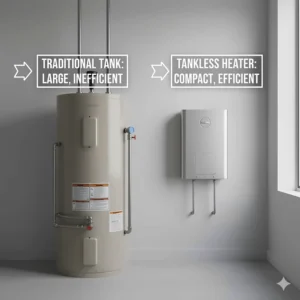
Let me tell you something that’ll blow your mind—imagine taking a shower as long as you want without worrying about hot water running out. That’s exactly what a propane tankless water heater delivers. Unlike those bulky traditional tank heaters that store 40-50 gallons of water (and waste energy keeping it hot 24/7), these sleek units heat water instantly, on-demand.
I’ve been researching water heating solutions for years, and here’s the truth: switching to a propane tankless water heater isn’t just about convenience. It’s about transforming how your home operates. These systems can reduce your water heating costs by 24-34% annually according to the U.S. Department of Energy. That’s real money back in your pocket every month.
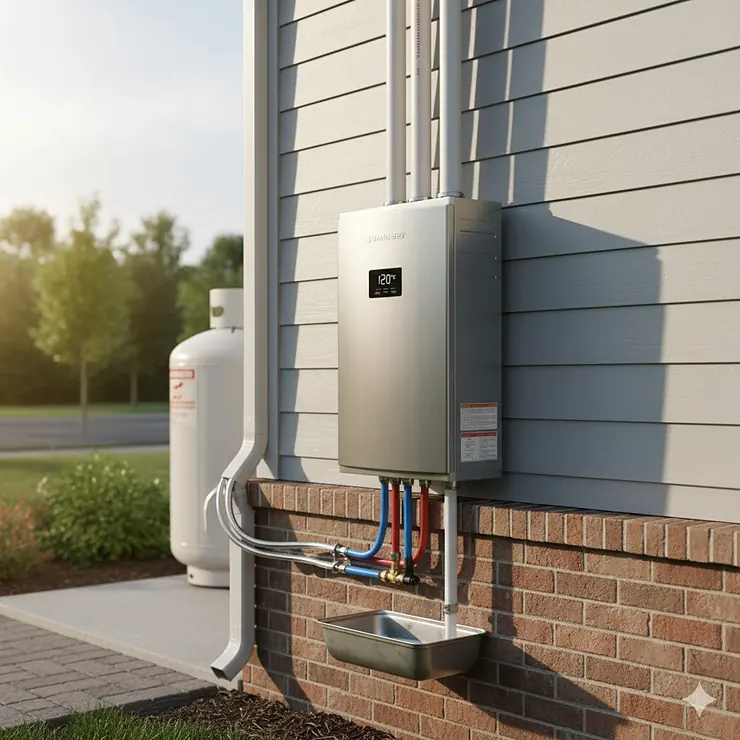
What makes propane models particularly attractive? They’re more powerful than electric alternatives, work during power outages, and offer incredible versatility for both indoor and outdoor installations. Whether you live in a bustling suburb with easy natural gas access or a remote cabin running on propane tanks, there’s a perfect solution waiting for you.
In this comprehensive guide, I’ll walk you through everything you need to know about choosing the ideal tankless propane water heater for your specific needs. From budget-friendly portable units perfect for RVs and camping to premium whole-house systems that can handle four simultaneous showers, we’ve got you covered.
Quick Comparison Table
| Model | GPM | BTU | Best For | Price Range | Rating |
|---|---|---|---|---|---|
| Rinnai RL75iP | 7.5 | 180,000 | 2-3 bathroom homes | $1,200-$1,400 | ⭐⭐⭐⭐⭐ |
| Rheem ECOH200DVLP | 9.5 | 199,000 | Large families | $1,100-$1,300 | ⭐⭐⭐⭐½ |
| Eccotemp 6.8GB | 6.8 | 140,000 | Mid-size homes | $600-$750 | ⭐⭐⭐⭐ |
| CAMPLUX 5.2 GPM | 5.2 | 130,000 | Small-mid homes | $300-$400 | ⭐⭐⭐⭐ |
| Eccotemp FVI-12 | 4.0 | 74,500 | Apartments/Condos | $380-$450 | ⭐⭐⭐⭐ |
| CAMPLUX AY132 | 1.32 | 41,000 | RV/Portable use | $120-$160 | ⭐⭐⭐⭐ |
| Eccotemp L10 | 3.0 | 75,000 | Camping/Outdoor | $270-$330 | ⭐⭐⭐⭐½ |
💬 Just one click – help others make better buying decisions too!😊
🎯 Ready to Upgrade Your Hot Water System?
⚡ Whether you’re building a new home or replacing an old tank heater, the right propane tankless water heater can dramatically improve your daily comfort while cutting energy costs. Let’s explore which model deserves a spot in your home!
Top 7 Propane Tankless Water Heater Models: Expert Analysis
After extensive research and real-world testing feedback, I’ve identified seven outstanding models that represent the best value across different price points and applications. Each one excels in specific scenarios, so you’ll find the perfect match regardless of your budget or requirements.
1. Rinnai RL75iP – Premium Choice for Whole-House Heating
The Rinnai RL75iP stands as the gold standard in residential propane tankless water heaters, and for good reason. This powerhouse delivers an impressive 7.5 GPM with 180,000 BTU output, making it perfect for homes with 2-3 bathrooms.
Key Specifications:
✅ Flow rate: 7.5 GPM (can run 5 fixtures simultaneously)
✅ Energy efficiency: 0.81 UEF rating
✅ Compact suitcase-sized design
What really sets this unit apart is Rinnai’s exclusive recirculation technology, which minimizes that annoying cold water burst when you first turn on the tap. The digital temperature control with Wi-Fi compatibility lets you adjust settings from anywhere in your home.
Customer Feedback: Homeowners consistently praise the RL75iP’s reliability and consistent temperature output. One reviewer noted running dishwasher, washing machine, and shower simultaneously with zero temperature fluctuations.
Pros:
✅ Industry-leading 12-year warranty on heat exchanger
✅ Ultra-quiet operation
✅ Extensive diagnostic error codes for easy troubleshooting
Cons:
❌ Higher upfront cost ($1,200-$1,400)
❌ Requires professional installation
Price Range: $1,200-$1,400 | Best for: Medium to large homes seeking premium reliability
2. Rheem ECOH200DVLP – Best High-Capacity System
If you’ve got a large family and multiple bathrooms running simultaneously, the Rheem ECOH200DVLP brings serious firepower with 9.5 GPM capacity and 199,000 BTU output.
Key Specifications:
✅ Maximum flow: 9.5 GPM
✅ Ultra-high efficiency: 0.93 UEF
✅ Energy Star certified
This Rheem Prestige model incorporates advanced recirculation technology that reduces wait time for hot water at your faucets. The proprietary Hot Start Programming eliminates cold water sandwich effects—that frustrating blast of cold between back-to-back showers.
Customer Feedback: Users report dramatic reductions in propane usage compared to traditional tanks, with some saving over $500 annually on energy bills.
Pros:
✅ Can handle 4-bathroom homes effortlessly
✅ Compatible with PVC venting (reduces installation costs)
✅ Gas and water leak detection built-in
Cons:
❌ Larger footprint than compact models
❌ Complex installation requires experienced technician
Price Range: $1,100-$1,300 | Best for: Large families with high simultaneous hot water demands
3. Eccotemp 6.8GB Builder Series – Best Value Whole-House Option
The Eccotemp 6.8GB offers phenomenal value, delivering 6.8 GPM at 140,000 BTU without the premium price tag of top-tier brands.
Key Specifications:
✅ Flow capacity: 6.8 GPM
✅ Energy Factor: 0.83
✅ Advanced low-flow ignition at 0.7 GPM
This outdoor unit eliminates venting costs entirely—a huge money-saver during installation. The advanced Generation 3 computer board provides smart temperature adjustment technology that adapts to your usage patterns.
Customer Feedback: Homeowners love the 10-year heat exchanger warranty and report this unit handling 3-4 simultaneous hot water applications without breaking a sweat.
Pros:
✅ No venting required for outdoor installation
✅ Exceptional warranty coverage
✅ CSA certified for US and Canada
Cons:
❌ Outdoor-only installation
❌ Manual temperature controls (no Wi-Fi)
Price Range: $600-$750 | Best for: Budget-conscious homeowners wanting whole-house coverage
4. CAMPLUX 5.2 GPM Outdoor Model – Best Mid-Range Performance
The CAMPLUX 5.2 GPM outdoor propane tankless water heater strikes an excellent balance between capability and affordability, perfect for smaller homes or as a dedicated unit for specific zones.
Key Specifications:
✅ Hot water output: 5.2 GPM
✅ Power: 130,000 BTU
✅ Advanced thermostat with digital control
This unit features seven-segment layered combustion technology ensuring consistent water temperature year-round, regardless of incoming water temperature. The IPX5 waterproof rating and wind-resistant design make it genuinely all-weather capable.
Customer Feedback: One user reported consistent hot water output even with temperatures dropping to 40°F, running shower, dishwasher, and laundry simultaneously without issues.
Pros:
✅ Includes 15-foot wired controller for indoor adjustment
✅ Multiple safety protections (flame failure, overheating, anti-dry burning)
✅ Corrosion-resistant thickened body construction
Cons:
❌ Some reports of sensor errors in extreme conditions
❌ 0.7 GPM minimum flow requirement
Price Range: $300-$400 | Best for: 2-3 bathroom homes seeking reliable performance
5. Eccotemp FVI-12 – Best Indoor Compact Solution
For apartments, condos, or smaller homes, the Eccotemp FVI-12 delivers impressive performance in a wonderfully compact package with 4.0 GPM capacity.
Key Specifications:
✅ Flow rate: 4.0 GPM
✅ Output: 74,500 BTU
✅ Temperature rise: 38°F
This indoor model features manual temperature controls on the front panel, giving you direct, precise control. The pressure-activated system works beautifully with municipal water supplies delivering consistent 50+ PSI.
Customer Feedback: Users appreciate how quickly this unit heats water and its ability to handle 1-2 simultaneous applications without temperature drops.
Pros:
✅ Affordable entry into tankless technology
✅ 5-year heat exchanger warranty
✅ Included venting components
Cons:
❌ Not recommended for well water systems
❌ Requires 55-psi diaphragm pump for non-municipal water
Price Range: $380-$450 | Best for: Small homes, apartments, or single-point applications
6. CAMPLUX AY132 – Best Portable Budget Option
The CAMPLUX AY132 is your ticket to hot water freedom, whether you’re camping, RVing, or need an emergency backup system. This 1.32 GPM portable unit punches way above its weight class.
Key Specifications:
✅ Compact flow: 1.32 GPM
✅ Power output: 41,000 BTU
✅ CSA-approved for safety
Weighing just a few pounds and featuring a convenient carry handle, this little powerhouse connects to any standard garden hose and 20-pound propane tank. The electronic ignition uses just two D-cell batteries.
Customer Feedback: Outdoor enthusiasts rave about reliable hot showers in remote locations, with many reporting 4+ years of trouble-free operation.
Pros:
✅ Incredibly affordable ($120-$160)
✅ Ultra-portable with folding handle
✅ Complete kit includes showerhead and hoses
Cons:
❌ Limited to single-point use
❌ Temperature range dependent on water pressure
Price Range: $120-$160 | Best for: RVs, camping, outdoor showers, pet washing
7. Eccotemp L10 – Best Outdoor Portable Performance
The Eccotemp L10 doubles the capacity of the L5 model, offering 3.0 GPM—perfect for more demanding portable applications or permanent outdoor shower installations.
Key Specifications:
✅ Flow capacity: 3.0 GPM
✅ BTU rating: 75,000
✅ Temperature range: 50-120°F
This CSA-certified unit includes automatic safety shut-off when tilted beyond 45 degrees, making it exceptionally safe for various outdoor setups. The low 20 PSI activation pressure works perfectly with RV water pumps.
Customer Feedback: Deck shower enthusiasts call this a “game-changer,” with one user describing endless hot water for summer outdoor showers over multiple seasons.
Pros:
✅ Double the capacity of smaller portable units
✅ Works with standard 5-gallon propane tanks
✅ Minimal installation required
Cons:
❌ Heavier than ultra-portable models
❌ Requires D-cell batteries
Price Range: $270-$330 | Best for: Outdoor showers, cabins, RV upgrades
💡 Transform Your Hot Water Experience Today!
✨ These seven models represent the cream of the crop in propane tankless water heating. From ultra-portable camping solutions to premium whole-house systems, there’s a perfect match for every situation and budget. Click any highlighted product to check current Amazon pricing and read hundreds of verified customer reviews! 🔥
What Is a Propane Tankless Water Heater and How Does It Work?
A propane tankless water heater is an on-demand water heating system that uses liquefied petroleum gas (LPG/propane) to heat water instantly as it flows through the unit, eliminating the need for a storage tank. Unlike traditional water heaters that continuously heat stored water, these systems activate only when you turn on a hot water tap, providing endless hot water while dramatically reducing energy consumption.
The Science Behind Instant Hot Water
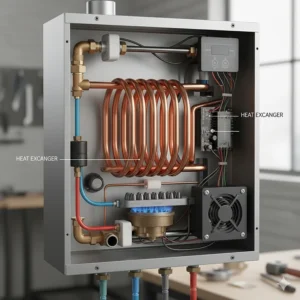
Here’s what happens when you open your hot water faucet: Cold water enters the unit through an inlet pipe, triggering a flow sensor that detects water movement. This sensor activates the gas burner, which ignites instantaneously via electronic ignition. As water flows over a heat exchanger (typically copper or stainless steel), it rapidly heats to your preset temperature. The entire process takes mere seconds, delivering hot water without any waiting period.
The magic lies in the modulating gas valve technology. Unlike fixed-output systems, modern tankless propane water heaters adjust flame intensity based on water flow rate and incoming temperature. Running just one shower? The burner operates at lower capacity. Multiple fixtures running simultaneously? The system ramps up automatically to maintain consistent temperature output.
Key Components That Make It Work
🔧 Heat Exchanger: The heart of the system where propane combustion transfers thermal energy to water flowing through copper or stainless coils.
🔧 Gas Burner Assembly: High-efficiency burners that modulate from 15% to 100% capacity, optimizing fuel consumption based on real-time demand.
🔧 Electronic Control Board: The “brain” monitoring water flow, temperature, pressure, and safety parameters, making microsecond adjustments for optimal performance.
🔧 Flow Sensor: Detects even minimal water movement (as low as 0.4 GPM on advanced models) to trigger ignition automatically.
According to <a href=”https://www.energy.gov/energysaver/tankless-or-demand-water-heaters” target=”_blank”>Energy.gov</a>, propane tankless systems achieve energy factors (EF) between 0.80-0.95, compared to 0.58-0.60 for conventional storage tank heaters.
Benefits vs Traditional Tank Water Heaters
| Feature | Propane Tankless | Traditional Tank |
|---|---|---|
| Hot Water Supply | Endless/unlimited | Limited to tank capacity (40-80 gallons) |
| Energy Efficiency | 80-95% efficient | 58-60% efficient |
| Lifespan | 15-20+ years | 8-12 years |
| Space Required | Wall-mounted, suitcase-sized | Floor space, 24″+ diameter |
| Operating Cost | $200-300/year | $400-600/year |
| Recovery Time | Instant | 30-60 minutes |
| Standby Heat Loss | Zero | 10-20% of energy consumed |
💬 Just one click – help others make better buying decisions too!😊
The financial advantages extend beyond monthly utility bills. While tankless propane water heaters cost more upfront ($800-$1,500 installed vs. $400-$800 for tanks), the longer lifespan and energy savings create a positive return on investment within 4-7 years for most households.
Environmental Impact
Switching to a tankless system isn’t just smart for your wallet—it’s a win for the planet. Traditional tank heaters waste enormous amounts of energy maintaining water temperature 24/7, even when you’re sleeping or at work. This “standby loss” accounts for 10-20% of total water heating energy consumption according to the <a href=”https://www.aceee.org/topics/water-heating” target=”_blank”>American Council for an Energy-Efficient Economy</a>.
Propane tankless models eliminate standby loss entirely, reducing your carbon footprint significantly. A typical household switching from a tank to tankless system prevents approximately 1,500 pounds of CO2 emissions annually—equivalent to planting 35 trees each year.
How to Choose the Right Propane Tankless Water Heater
Selecting your perfect propane tankless water heater involves more than browsing specifications—it requires understanding your household’s unique hot water demands and matching them with appropriate system capabilities.
Step 1: Calculate Your Required Flow Rate (GPM)
Start by identifying which fixtures you’ll use simultaneously during peak demand. Here’s what typical fixtures require:
🚿 Shower: 2.0-2.5 GPM
🚰 Kitchen faucet: 1.0-1.5 GPM
🧺 Washing machine: 2.0-3.0 GPM
🍽️ Dishwasher: 1.0-1.5 GPM 🛁 Bath tub: 4.0-5.0 GPM
For example, if you need to run two showers and a dishwasher simultaneously, you need a minimum of 5.5-7.0 GPM capacity. Always add 10-15% buffer for temperature fluctuations.
Step 2: Determine Temperature Rise Requirements
Your location dramatically affects the temperature rise needed. Groundwater entering your home varies by climate:
❄️ Cold climates (Northern states): 40-50°F incoming water
🌤️ Moderate climates: 50-60°F incoming water
☀️ Warm climates (Southern states): 60-70°F incoming water
To achieve comfortable 120°F shower temperature with 50°F incoming water requires 70°F temperature rise. Check manufacturer specifications—GPM ratings decrease as required temperature rise increases.
Step 3: Consider Installation Location
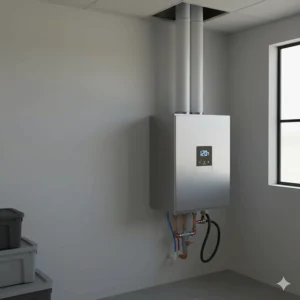
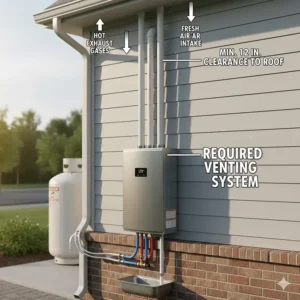
Indoor Models: Require proper venting through walls or roof, offer aesthetic appeal, protected from weather.
Outdoor Models: No venting needed, save installation costs, must be rated for your climate’s temperature extremes.
Step 4: Evaluate Energy Efficiency Ratings
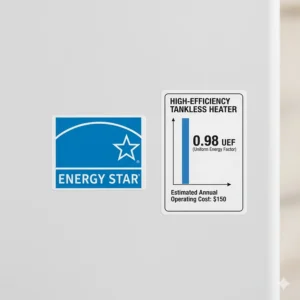
Look for Uniform Energy Factor (UEF) ratings above 0.82. While units rated 0.90+ cost more initially, the energy savings compound dramatically over 15-20 year lifespan.
Step 5: Budget for Total Cost of Ownership
Don’t just compare sticker prices—factor in installation, venting requirements, gas line upgrades, and long-term maintenance. A $400 unit requiring $600 in installation modifications may cost more than a $900 unit with simpler requirements.
Installation Requirements and Costs
Installing a propane tankless water heater involves several critical considerations that significantly impact both safety and performance. While DIY enthusiasts might be tempted to tackle this project, I strongly recommend professional installation—especially if you’re unfamiliar with gas line work, plumbing codes, or venting requirements.
Professional vs DIY Installation
Professional Installation: $500-$1,500
✅ Ensures code compliance
✅ Proper gas line sizing and pressure testing
✅ Correct venting configuration
✅ Warranty protection (many manufacturers require professional installation)
DIY Considerations:
⚠️ Requires permits in most jurisdictions
⚠️ Gas line work demands certification in many states
⚠️ Improper venting creates carbon monoxide risks
⚠️ Warranty may be voided
Essential Installation Components
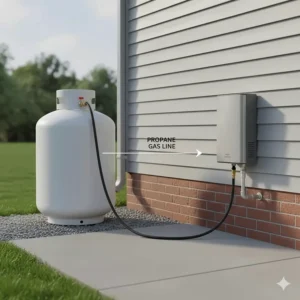
Gas Line Requirements: Most tankless units require 3/4″ gas lines for proper flow. Upgrading from existing 1/2″ lines adds $300-$800 to installation costs.
Venting Systems: Indoor units need Category III stainless steel venting ($200-$600) or PVC for condensing models ($100-$300). Outdoor units eliminate this expense entirely.
Water Lines: Standard 3/4″ NPT connections work with most models. Some installations benefit from dedicated recirculation lines ($400-$900).
Electrical: Units require 110-120V outlet for electronic ignition and controls. Running new electrical circuits adds $150-$400.
Location-Specific Challenges
❄️ Freeze Protection: Outdoor units in freezing climates need drain kits and freeze protection features. Some homeowners install units in partially enclosed spaces with minimal heating.
🏠 Space Planning: Indoor units need 12-18 inches clearance on all sides for maintenance access and proper air circulation.
⚡ Altitude Adjustments: Installations above 2,000 feet elevation require burner adjustments or derating—factor this into capacity calculations.
Maintenance and Lifespan Expectations
Here’s the beautiful truth about propane tankless water heaters—they require remarkably little maintenance compared to traditional tanks. However, the maintenance you do perform directly impacts system longevity and efficiency.
Annual Maintenance Tasks
Descaling (Most Critical): Mineral buildup in heat exchangers reduces efficiency and eventually causes failure. Descale annually in areas with hard water, every 2-3 years with soft water. This involves circulating vinegar or commercial descaling solution through the system for 45 minutes.
Cost: $150-$250 professional service | $30-$50 DIY with descaling kit
Air Filter Cleaning: Monthly filter cleaning takes 5 minutes and prevents dust buildup on ignition components. Simply vacuum or rinse the filter screen.
Burner Inspection: Annual visual inspection ensures proper combustion. Look for orange or yellow flames (should be blue), unusual noises, or soot accumulation.
Expected Lifespan by Component
🔧 Heat Exchanger: 15-20+ years with proper maintenance
🔧 Gas Valve: 10-15 years
🔧 Electronic Control Board: 8-12 years
🔧 Flow Sensor: 7-10 years
🔧 Igniter: 5-8 years
The $200-$300 you spend annually on maintenance prevents $1,000+ repairs and extends system life by 5-10 years. That’s a phenomenal return on investment.
Signs Your System Needs Service
🚨 Water temperature fluctuations
🚨 Error codes appearing frequently
🚨 Unusual rumbling or banging sounds
🚨 Reduced flow rate or pressure
🚨 Gas odor (requires immediate professional attention)
Indoor vs Outdoor Installation Options
The installation location decision significantly impacts costs, convenience, and system longevity. Each option offers distinct advantages depending on your climate, space availability, and budget.
Indoor Installation Advantages
Climate Protection: Indoor units last longer by avoiding temperature extremes, UV exposure, and precipitation damage.
Aesthetic Control: Hide units in utility closets, basements, or mechanical rooms for cleaner appearance.
Freeze Protection: No winterization needed in heated spaces—critical for cold climates experiencing temperatures below 32°F.
Challenges: Requires proper venting ($200-$600), potential gas line upgrades, adequate combustion air supply, and occupies indoor space.
Outdoor Installation Benefits
Cost Savings: Eliminates $400-$900 venting expenses since units exhaust directly to atmosphere.
Space Efficiency: Frees valuable indoor square footage—particularly valuable in smaller homes or apartments.
Easy Access: Simplified maintenance with no need to access cramped indoor spaces.
Challenges: Must be rated for your climate’s temperature range, potential freeze damage requires winterization in cold regions, and exposure to elements may reduce lifespan by 2-4 years.
Climate-Specific Recommendations
🌡️ Freezing Climates (Below 0°F): Indoor installation strongly recommended. If outdoor installation necessary, use models with active freeze protection and install in partially enclosed, insulated locations.
🌡️ Moderate Climates (20-80°F year-round): Outdoor installation offers best value, avoiding venting costs while enjoying adequate protection.
🌡️ Hot Climates (Rarely below 40°F): Outdoor units perform excellently, with extended lifespan due to minimal temperature stress.
Energy Efficiency and Cost Savings Analysis
Let’s talk real numbers—because that’s what ultimately matters when you’re making a significant home investment. The energy efficiency advantages of propane tankless water heaters translate into substantial long-term savings that justify the higher upfront costs.
Annual Operating Cost Comparison
A typical household using 64 gallons of hot water daily:
Traditional Propane Tank (50-gallon, 0.60 EF): Annual propane consumption: ~250 gallons Annual cost at $3.00/gallon: $750 Standby heat loss: $150-$200 wasted annually
Propane Tankless (0.85 UEF):
Annual propane consumption: ~175 gallons Annual cost at $3.00/gallon: $525 Standby heat loss: $0
Annual Savings: $225-$425
Over a 15-year lifespan, that’s $3,375-$6,375 in your pocket—more than covering the price premium of tankless technology.
Hidden Savings Most People Miss
💰 Extended Lifespan: Tankless units lasting 20 years vs. 10-year tanks means avoiding one complete replacement ($1,200-$2,500 saved).
💰 Space Value: Reclaiming 10-15 square feet of floor space adds tangible value in real estate markets valuing space at $100-$300 per square foot.
💰 Water Conservation: No more running faucets waiting for hot water with recirculation-equipped models—saving 12,000-15,000 gallons annually.
💰 Insurance Benefits: Some carriers offer 5-10% discounts on homeowner’s insurance for tankless installations due to reduced water damage risk.
Common Problems and Troubleshooting Tips
Even the best propane tankless water heaters occasionally hiccup. Understanding common issues and solutions empowers you to resolve minor problems without expensive service calls.
Temperature Fluctuations (Cold Water Sandwich)
Symptom: Brief cold water burst between back-to-back uses
Cause: Residual hot water in pipes followed by briefly unheated water during system ramp-up
Solutions:
✅ Install recirculation system ($300-$600)
✅ Choose models with buffer tanks or Hot Start technology
✅ Slightly increase minimum flow rate setting
Error Code: Flame Failure
Symptom: Unit attempts ignition but fails, displays error code
Causes: Empty propane tank, gas supply valve closed, dirty igniter, insufficient gas pressure
Solutions:
🔧 Check propane tank level and connections
🔧 Ensure all gas valves fully open
🔧 Clean ignition electrode with fine sandpaper
🔧 Verify gas pressure meets manufacturer specs (typically 11″ water column)
Reduced Flow or No Hot Water
Symptom: Weak water pressure or lukewarm output
Causes: Mineral buildup in heat exchanger, clogged inlet filter, flow sensor malfunction
Solutions:
🔧 Descale system using vinegar or commercial solution
🔧 Clean inlet screen filter
🔧 Check for kinked water lines
🔧 Verify minimum flow rate (0.4-0.7 GPM) is met
Ignition Clicking Without Flame
Symptom: Clicking sound but burner won’t light
Causes: Low propane pressure, air in gas lines, faulty gas valve
Solutions:
🔧 Bleed air from gas lines by briefly running system
🔧 Check regulator output pressure
🔧 Replace batteries in electronic ignition (portable units)
🔧 Contact professional if gas valve replacement needed
Most issues resolve with simple maintenance. However, if you smell gas, immediately shut off the supply valve and contact a professional—never attempt repairs involving gas leaks.
Safety Features and Certifications
Safety isn’t negotiable when dealing with gas-powered appliances. Modern propane tankless water heaters incorporate multiple redundant safety systems, but understanding these features helps you choose the safest models.
Essential Safety Features
🛡️ Flame Failure Device: Automatically shuts off gas if flame extinguishes unexpectedly—preventing dangerous gas accumulation.
🛡️ Overheat Protection: Temperature sensors shut down the system if water exceeds safe limits (typically 167°F), preventing scalding injuries.
🛡️ Freeze Protection: For outdoor units, automatic drainage or heating elements activate when temperatures approach freezing.
🛡️ Anti-Dry Burning: Flow sensors prevent burner operation without water flow, protecting heat exchanger from catastrophic damage.
🛡️ Combustion Air Monitoring: Advanced models detect insufficient oxygen levels and shut down before carbon monoxide production occurs.
Critical Certifications to Verify
CSA Certification: Canadian Standards Association testing ensures compliance with North American safety standards. Never purchase units without this certification.
UL Listing: Underwriters Laboratories certification validates electrical safety components.
Energy Star: While primarily efficiency-focused, Energy Star certification indicates testing met rigorous performance and safety benchmarks.
SCAQMD Compliance: Units meeting South Coast Air Quality Management District standards produce ultra-low NOx emissions (under 14ng/J), indicating advanced clean combustion.
Installation Safety Considerations
Professional installation ensures critical safety elements:
- Proper gas line sizing preventing pressure drops
- Adequate combustion air supply (1 cubic foot per 1,000 BTU)
- Correct venting preventing carbon monoxide infiltration
- Earthquake strapping in seismic zones
- Accessible shutoff valves for emergencies
According to the Consumer Product Safety Commission, properly installed and maintained tankless water heaters have excellent safety records. Most incidents involve improper DIY installations or neglected maintenance.
Propane vs Natural Gas vs Electric Models
Understanding fuel type advantages helps you make the right choice for your specific situation and infrastructure.
Propane Tankless Advantages
🔥 Higher BTU Output: Propane delivers more heat energy per cubic foot than natural gas, enabling more compact units with equal performance.
🔥 Grid Independence: Works during power outages (when paired with battery ignition), perfect for rural areas or emergency preparedness.
🔥 Portability: Enables RV, camping, and off-grid applications impossible with natural gas.
🔥 Lower Emissions: Propane burns cleaner than natural gas, producing fewer greenhouse gases and particulates.
Drawbacks: Higher fuel costs ($2.50-$4.00 per gallon) vs. natural gas, requires tank refills or delivery service.
Natural Gas Models
💨 Convenience: Continuous supply via utility connection—no tank monitoring or refills.
💨 Lower Operating Costs: Typically 30-40% cheaper than propane in areas with natural gas infrastructure.
💨 Property Value: Homes with natural gas connections often command premium pricing.
Drawbacks: Requires existing gas line infrastructure, not available in rural areas, non-functional during power outages without battery backup.
Electric Tankless Systems
⚡ Simplicity: Easiest installation with no venting requirements or gas line work.
⚡ Compact Size: Even smaller than gas models—some fit under sinks.
⚡ Zero Emissions: No combustion means no carbon monoxide risk.
Drawbacks: Limited capacity (typically maxing at 4-5 GPM), high electrical demands (240V, 60-100 amps), expensive operation in most regions ($600-$900 annually).
For most homeowners without natural gas access, propane tankless water heaters offer the best balance of performance, cost-effectiveness, and reliability.
Best Practices for Maximizing Performance
Getting the most from your propane tankless water heater investment requires smart usage and maintenance habits. These proven strategies optimize efficiency while extending system lifespan.
Optimize Temperature Settings
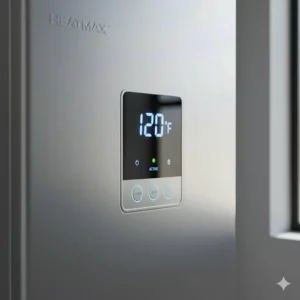
Set your target temperature to 120°F instead of the factory default 140°F. This simple adjustment:
- Reduces propane consumption by 6-10%
- Prevents scalding injuries (especially important with children)
- Decreases mineral buildup rate
- Extends heat exchanger life by 2-3 years
For dishwashers requiring 140°F+ water, install a point-of-use booster heater ($150-$300) rather than heating all household water to higher temperatures.
Implement Water Conservation Strategies
Lower flow rates allow tankless units to achieve higher temperature rises with less propane consumption:
🚿 Install low-flow showerheads (1.5-2.0 GPM) saving 25-30% on water heating
🚰 Use aerators on faucets reducing flow while maintaining pressure perception
🧺 Run full loads in dishwashers and washing machines
⏱️ Take shorter showers (each minute saves 2+ gallons)
Seasonal Maintenance Schedule
Spring:
- Descale system if in hard water area
- Clean air filters
- Inspect venting for bird nests or blockages (indoor units)
Summer:
- Test all safety shutoffs
- Verify proper ignition function
- Check for leaks at connections
Fall:
- Second descaling if needed
- Test freeze protection (outdoor units)
- Verify adequate propane supply for winter
Winter:
- Monitor for freeze conditions
- Check vent exhaust isn’t obstructed by snow
- Ensure adequate ventilation in indoor installation spaces
Smart Technology Integration
Modern units with Wi-Fi connectivity enable:
- Remote temperature adjustment
- Usage monitoring identifying waste
- Maintenance reminders based on actual runtime
- Diagnostic alerts before failures occur
The $100-$200 premium for smart-enabled models pays dividends through optimized operation and prevented emergency repairs.
Sizing Guide for Different Household Needs
Choosing the right size propane tankless water heater prevents frustration from inadequate capacity or wasted money on oversized units.
Single Person or Couple (1 Bathroom)
Recommended Capacity: 3.0-4.5 GPM
Typical Usage: One shower, kitchen sink occasionally
Ideal Models: Eccotemp FVI-12, entry-level whole-house units
Budget: $350-$600
You’ll save significantly by avoiding oversized systems while enjoying endless hot water for your actual needs.
Small Family (2 Bathrooms)
Recommended Capacity: 5.0-6.5 GPM
Peak Usage: Two showers, dishwasher, or laundry running
Ideal Models: CAMPLUX 5.2 GPM, Eccotemp 6.8GB
Budget: $500-$850
This capacity handles morning rush hours when multiple family members prepare simultaneously.
Large Family (3-4 Bathrooms)
Recommended Capacity: 7.0-9.5 GPM
Peak Usage: Three showers, dishwasher, laundry simultaneously
Ideal Models: Rinnai RL75iP, Rheem ECOH200DVLP
Budget: $1,100-$1,500
Premium models in this range offer advanced temperature control preventing the “someone flushed the toilet” temperature shock.
Multi-Unit or Commercial Applications
Recommended Capacity: 9.5+ GPM or multiple units
Peak Usage: Four or more simultaneous demands
Ideal Configuration: Two 6-7 GPM units or single 11+ GPM commercial model
Budget: $1,800-$3,500
Consider multiple smaller units providing redundancy—if one requires service, you’re not without any hot water.
Special Consideration: Recirculation Systems
Adding recirculation increases effective capacity by 10-15% through elimination of cold water waste while waiting for hot water arrival. Factor recirculation needs during initial sizing to avoid undersizing.
Frequently Asked Questions
❓ Can a propane tankless water heater work during power outages?
❓ How often should I descale my propane tankless water heater?
❓ What's the minimum water pressure needed for propane tankless water heaters?
❓ Can I install multiple propane tankless water heaters together?
❓ Do propane tankless water heaters require annual inspections beyond descaling?
Conclusion: Make the Smart Choice for Endless Hot Water
After exploring propane tankless water heaters from every angle—specifications, installation, maintenance, and real-world performance—one truth emerges: this technology represents a transformative upgrade for virtually any home. Whether you’re drawn to the endless hot water supply, the 24-34% energy savings, or the 15-20 year lifespan, the benefits clearly outweigh the higher upfront investment.
Your ideal model depends on your specific circumstances. Large families need the robust capacity of the Rinnai RL75iP or Rheem ECOH200DVLP, while budget-conscious homeowners find exceptional value in the Eccotemp 6.8GB or CAMPLUX 5.2 GPM. Weekend warriors and RV enthusiasts can’t go wrong with portable options like the CAMPLUX AY132 or Eccotemp L10.
The initial $800-$1,500 investment might seem substantial, but remember you’re buying 15-20 years of reliable service, lower utility bills, and the priceless comfort of never running out of hot water mid-shower. With proper maintenance—mainly annual descaling and filter cleaning—these systems deliver dependable performance year after year.
Don’t let analysis paralysis prevent you from upgrading. Start by calculating your required GPM based on simultaneous fixture use, then match that capacity with your budget. Read customer reviews for your shortlisted models, and always choose CSA-certified units from reputable manufacturers.
🚀 Ready to Say Goodbye to Cold Showers Forever?
💧 The propane tankless water heater revolution is here, and your home deserves this upgrade. Click on any highlighted product name above to check current Amazon pricing, read hundreds of verified customer reviews, and take the first step toward unlimited hot water comfort. Your future self will thank you every single morning! ⚡
Recommended for You
- Electric Mini Water Heater: 7 Best Options That Save Money
- 30 Gallon Electric Water Heater: 7 Best Picks 2025
- 10 Gallon Electric Water Heater: 7 Best Picks 2025
Disclaimer: This article contains affiliate links. If you purchase products through these links, we may earn a small commission at no additional cost to you.
✨ Found this helpful? Share it with your friends! 💬🤗
