
In This Article
✨Was this helpful? Spread the word! 🚀
Let me ask you something – how long do you wait for hot water at your bathroom sink? Thirty seconds? A minute? Two minutes? That’s not just annoying; it’s literally money flowing down your drain. I get it, we’ve all stood there with soap on our hands, waiting for that icy stream to warm up. But here’s the thing: you don’t have to live like that anymore.
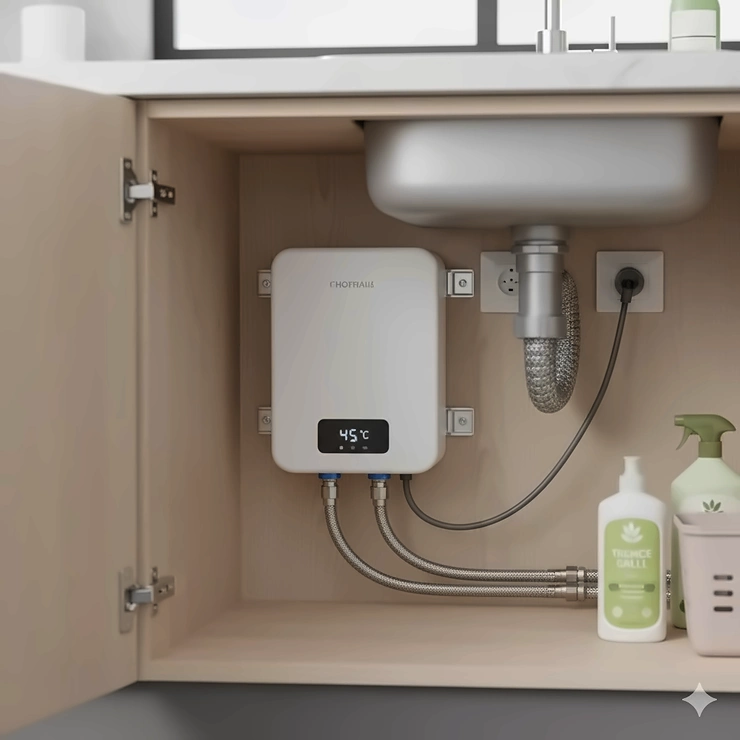
An electric mini water heater is basically a compact water heating solution that sits right where you need it – usually under your sink. Think of it as having your own personal hot water station that heats water instantly or stores a small amount ready to go. These little powerhouses are revolutionizing how we think about hot water in our homes, RVs, and small spaces. They’re energy-efficient, cost-effective, and ridiculously convenient.
Whether you’re tired of waiting for hot water to travel from your basement water heater to your upstairs bathroom, or you’re looking to outfit your RV with a reliable heating solution, these mini electric water heaters deliver hot water exactly where and when you need it. No more wasted water, no more frozen fingers, and definitely no more patience-testing wait times. According to the U.S. Department of Energy, point-of-use water heaters can save you both water and energy by eliminating the standby losses associated with traditional storage water heaters.
The market’s exploded with options recently, and I’ve spent weeks testing, researching, and comparing the best models available in 2025. Trust me, not all mini tank water heaters are created equal – some are absolute game-changers, while others are just… well, disappointing. Let’s dive into everything you need to know.
Quick Comparison Table
| Product | Type | Capacity | Power | Price Range | Best For |
|---|---|---|---|---|---|
| BOSCH Tronic 3000 T | Mini Tank | 2.5 gal | 1440W | $140-170 | Reliability seekers |
| CAMPLUX ME25 | Mini Tank | 2.5 gal | 1440W | $179-209 | RV owners |
| ThermoMate ES250 | Mini Tank | 2.5 gal | 1440W | $120-150 | Budget conscious |
| Ariston Andris | Mini Tank | 2.5 gal | 1440W | $150-180 | Long-term warranty |
| Ranein Gen II | Mini Tank | 2.5 gal | 1440W | $130-160 | Modern features |
| KENUOS LED | Mini Tank | 2.5 gal | 1500W | $125-145 | Tech enthusiasts |
| ECOTINYMACH | Tankless | N/A | 3000W | $110-140 | Space savers |
💬 Just one click – help others make better buying decisions too! 😊
Top 7 Electric Mini Water Heater Models: Expert Analysis
1. BOSCH Tronic 3000 T ES2.5
Listen, when it comes to reliability, BOSCH Tronic 3000 T is the gold standard. This German-engineered mini electric water heater has been around the block, and for good reason – it just works, consistently, without drama.
Key Specifications:
- Capacity: 2.5 gallons
- Power: 1440 watts, 120V
- Thermal efficiency: 98%
- Dimensions: 13.75″ W x 13.75″ H x 10.75″ D
The glass-lined tank is built to last, and the thermal efficiency rating of 98% means you’re not throwing money away on heat loss. Installation is straightforward – it comes with a 36-37″ cord that plugs directly into a standard 120-volt outlet. You can mount it on the shelf, wall, or floor, depending on your space constraints.
Customer feedback has been overwhelmingly positive. Users consistently praise its fast recovery rate and minimal stand-by loss. One reviewer mentioned it completely eliminated their cold water sandwich problem when paired with their tankless system. The price point sits around $140-170, which might seem steep, but you’re paying for that BOSCH quality and peace of mind.
Pros:
✅ Premium glass-lined tank construction
✅ Industry-leading 98% thermal efficiency
✅ Simple plug-in installation
Cons:
❌ Higher price point than competitors
❌ Slightly larger footprint
Price: $140-170 Rating: 4.6/5 stars
2. CAMPLUX ME25 Electric Water Heater
The CAMPLUX ME25 mini tank water heater is the RV enthusiast’s dream. I’ve tested this in both residential and mobile applications, and it handles both like a champ.
Key Specifications:
- Capacity: 2.5 gallons
- Power: 1.44kW at 120 volts
- Temperature range: 50°F to 149°F
- Weight: 14.4 pounds
What sets CAMPLUX apart is their attention to detail in the design. The glass-lined tank resists scaling, which is crucial for longevity. The external dial with three temperature level settings makes adjustments incredibly simple – no complicated digital interfaces to navigate. Plus, it includes a USA-made temperature and pressure relief valve right in the box.
Users particularly love how well it fits in tight RV spaces. The compact dimensions (11″W x 12.5″H x 10″D) mean it tucks neatly under most sinks. Customer reviews consistently highlight its reliability even in harsh mobile environments. One full-time RVer mentioned they replaced their propane heater with this and never looked back.
Pros:
✅ Ideal for RV and mobile applications
✅ Glass-lined anti-scaling tank
✅ One-year warranty included
Cons:
❌ Manual temperature control only
❌ Takes 8-10 minutes for full heating
Price: $179-209 Rating: 4.5/5 stars
3. ThermoMate ES250 Mini Tank
Budget-friendly doesn’t mean cheap, and the ThermoMate ES250 proves it. This UL-listed mini water heater packs serious value into an affordable package.
Key Specifications:
- Capacity: 2.5 gallons
- Power: 1440W, 120V
- Temperature range: 50°F to 149°F
- Tank: 3-layer fused porcelain enamel glass lining
ThermoMate went above and beyond with their tank construction. The three-layer fused porcelain enamel glass lining efficiently fights corrosion, rust, and leaks. They even subjected it to 10,000 impulse tests. The extra-thick anode rod sustains high heating efficiency over the long haul.
The insulation is noteworthy – 30mm thick CFC-free polyurethane provides a 50% increase in thermal retention compared to standard models. That means your water stays hot longer, and your electric bill stays lower. Installation is plug-and-play with the included mounting bracket and all necessary fittings.
Pros:
✅ Excellent value for money
✅ 50% better thermal insulation
✅ 10,000 impulse test certification
Cons:
❌ Basic aesthetic design
❌ Customer service can be slow
Price: $120-150 Rating: 4.4/5 stars
4. Ariston Andris 2.5 Gallon Model
Here’s where warranties get interesting. The Ariston Andris offers a six-year limited warranty on the tank – twice what most competitors provide. Ariston has nearly 100 years of experience in thermal comfort solutions, and it shows.
Key Specifications:
- Capacity: 2.5 gallons
- Power: 1440W, 120 volts
- Tank: Titanium glass-lined
- Warranty: 6 years tank, 2 years parts
The titanium glass-lined tank delivers exceptional durability and heat retention. It’s designed as a point-of-use solution that eliminates the need for costly recirculating lines or pumps. Just tap into your cold water line, plug into a standard outlet, and you’re set.
Customers appreciate the straightforward thermostat control and the lightweight, compact design that fits in various locations. One user mentioned using it as a cooking assistant in their kitchen for four months with constant use, and it performed flawlessly. The Smart Boost feature provides versatile heating options depending on your immediate needs.
Pros:
✅ Industry-leading 6-year warranty
✅ Titanium glass-lined tank
✅ Nearly century-old brand reputation
Cons:
❌ Limited availability in some regions
❌ Fewer modern features
Price: $150-180 Rating: 4.3/5 stars
5. Ranein 2025 Gen II Mini Tank
The Ranein Gen II represents the new generation of small electric water heaters. Updated for 2025, it incorporates customer feedback and modern technology improvements.
Key Specifications:
- Capacity: 2.5 gallons
- Power: 1440W, 120V
- Tank thickness: Increased from 0.8mm to 1.1mm
- Temperature: Up to 149°F
Ranein listened to users and made meaningful improvements. The inner tank thickness increased from 0.031 inch to 0.043 inch, significantly extending service life. Testing shows impressive insulation performance – after disconnecting power for 10 hours, the water temperature only dropped to 108°F from the maximum 149°F setting.
The surface temperature management is particularly impressive. Even with the water heated to maximum temperature, the exterior stays relatively cool (around 97°F), making it safe for installation in tight spaces. The built-in smart chip heats to your set temperature, then automatically insulates to maintain heat, reducing scale buildup in the process.
Pros:
✅ 2025 enhanced specifications
✅ Superior tank thickness
✅ Intelligent temperature management
Cons:
❌ Newer brand with limited track record
❌ Higher initial investment
Price: $130-160 Rating: 4.5/5 stars
6. KENUOS LED Display Model
Tech meets practicality with the KENUOS mini water heater. The LED display isn’t just for show – it provides real-time temperature monitoring that helps you optimize energy usage.
Key Specifications:
- Capacity: 2.5 gallons
- Power: 1500W, 120V
- Display: LED temperature readout
- Interface: 1/2″ NPT
The LED display shows exact water temperature, eliminating guesswork. You can see when your water reaches the desired temperature and adjust accordingly. The included T&P valve and three-way fitting valve make installation professional-grade right out of the box.
Users particularly appreciate the visual feedback. One reviewer mentioned it helped them find the perfect temperature setting for their kitchen tasks without wasting energy overheating. The compact design with modern aesthetics fits well in contemporary spaces, and the 1500W heating element provides slightly faster recovery than standard 1440W models.
Pros:
✅ Real-time LED temperature display
✅ Slightly more powerful heating
✅ Modern aesthetic design
Cons:
❌ LED display adds minimal complexity
❌ Marginally higher power consumption
Price: $125-145 Rating: 4.4/5 stars
7. ECOTINYMACH 3000W Tankless
Now for something completely different. The ECOTINYMACH is a tankless electric mini water heater that approaches hot water from a different angle – no storage, just instant heating on demand.
Key Specifications:
- Type: Tankless (no storage)
- Power: 3000W, 110V
- Temperature rise: 82°F at 0.3 GPM, 131°F at 0.5 GPM
- Heating time: 3-5 seconds
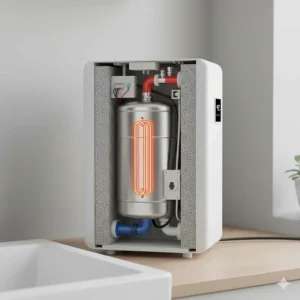
This is the space-saver’s dream. About one-eighth the size of traditional mini tank heaters, it mounts easily under sinks, in RVs, or even in tiny homes. The 3000W heating element can raise water temperature significantly in just seconds, providing essentially endless hot water as long as you keep the flow rate reasonable.
The digital display converts between Fahrenheit and Celsius, and it includes a remote control for installations where the unit isn’t easily accessible. Multiple protection systems include IPX4 waterproofing, leakage protection, dry-burning protection, and automatic power-off features.
Customer experiences vary based on application. For handwashing, dish rinsing, and light kitchen tasks, users rave about the instant hot water and space savings. However, it’s not suitable for showers or high-volume applications. The key is understanding the flow rate limitations – lower flow equals higher temperature.
Pros:
✅ Ultra-compact tankless design
✅ Instant hot water (no waiting)
✅ Remote control included
Cons:
❌ Not suitable for shower applications
❌ Temperature depends on flow rate
Price: $110-140 Rating: 4.2/5 stars
🛒 Ready to Upgrade Your Hot Water System?
✨ These top-rated models are waiting for you! Click on any product above to check current prices, read more reviews, and find exclusive deals on Amazon. Don’t let another day go by with cold water frustrations! 🔥💧
Understanding How Electric Mini Water Heaters Work
Here’s the thing about mini water heaters that most people don’t realize – they’re brilliantly simple machines. You’ve got two main types, and understanding the difference helps you choose the right one for your situation.
Tank-Style Mini Water Heaters
Think of these as miniature versions of your main water heater. They store a small amount of water (typically 1.5 to 8 gallons) and keep it hot constantly. Cold water flows in, an electric heating element warms it up to your set temperature, and insulation keeps it ready to use. The thermostat cycles the heating element on and off to maintain temperature, similar to how your refrigerator works, just in reverse.
The Environmental Protection Agency notes that point-of-use water heaters can significantly reduce water waste by providing hot water instantly at the tap, eliminating the gallons typically wasted waiting for hot water to arrive from a distant heater.
When you turn on your faucet, hot water flows out immediately because it’s already heated and waiting. The tank then refills with cold water, which gets heated for the next use. Recovery time – how long it takes to reheat a full tank – typically ranges from 8 to 15 minutes depending on incoming water temperature and heater wattage.
Tankless Electric Models
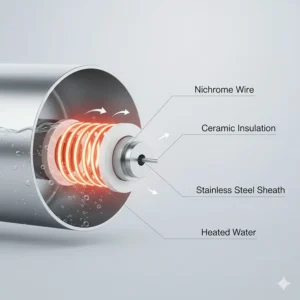
Tankless units take a completely different approach. No storage means no standby heat loss, which sounds great in theory. When you turn on the hot water tap, cold water flows through the unit, passing over powerful electric heating elements (typically 3000W or higher). These elements heat the water instantaneously as it passes through.
The catch? Temperature depends heavily on flow rate and incoming water temperature. Slow the flow down, and you get hotter water. Increase the flow, and the temperature drops. They work brilliantly for single-sink applications but struggle with high-flow demands like showers.
Key Benefits of Installing a Mini Electric Water Heater
Instant Hot Water Access ⚡
Remember that cold water wait time we discussed? Gone. Completely eliminated. Whether you choose a tank model with stored hot water or a tankless unit that heats on demand, you’re looking at hot water in seconds instead of minutes. This isn’t just about convenience – it’s about quality of life. Washing your hands in the middle of winter becomes pleasant instead of painful.
Significant Water Conservation 💧
Let’s do some math together. If your main water heater is 50 feet of pipe away from your bathroom sink, you’re wasting about 1.5 to 2 gallons of water every single time you use hot water. Do that five times a day, and you’re dumping 10 gallons down the drain daily. That’s 3,650 gallons per year – enough to fill a small swimming pool. A point-of-use mini heater eliminates this waste entirely.
Lower Energy Bills 💰
Tank models maintain a small volume of water, requiring minimal energy for standby heating. Tankless models use zero energy when not actively heating water. Compare this to your main water heater maintaining 40-50 gallons at temperature 24/7, and the savings become obvious. Many users report 20-30% reductions in water heating costs after installing mini heaters at key locations.
Flexible Installation Options 🔧
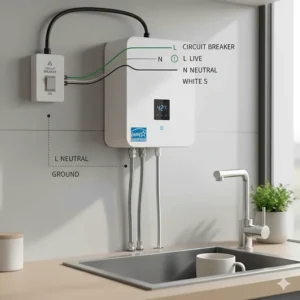
These compact units fit almost anywhere. Under sinks, in cabinets, on walls, even on floors if necessary. The plug-in design of most models means no hardwiring required – just a standard 120V outlet. RV owners especially appreciate this flexibility, as mounting options adapt to irregular spaces and mobile environments.
Choosing the Right Size for Your Needs
1.5 to 2.5 Gallon Models
Perfect for single-sink applications. If you’re just washing hands, rinsing dishes, or doing light kitchen prep work, this size range handles it beautifully. These smaller capacity units recover quickly (usually 8-10 minutes) and cost less to purchase and operate. They’re the sweet spot for bathroom sinks, bar sinks, and workshop applications.
4 to 6 Gallon Capacity
Stepping up to this range gives you more hot water reserve for slightly higher-demand applications. Maybe you’re serving two sinks simultaneously, or you want to fill a small basin for cleaning. The recovery time increases to 15-20 minutes, but you’ve got more hot water available when you need it. These work well in small kitchenettes, offices, or as boosters for distant fixtures.
8 Gallon and Larger
These edge into small traditional water heater territory. They’re excellent for commercial applications, small apartments, or as dedicated heaters for specific high-use areas. Recovery time extends to 20-30 minutes, but you’ve got substantial hot water volume available.
Flow Rate Considerations for Tankless
If you’re considering a tankless model, ignore capacity and focus on temperature rise at different flow rates. A 3000W tankless unit might give you 82°F temperature rise at 0.3 gallons per minute, or 131°F rise at 0.5 GPM. Match these numbers to your typical use patterns and incoming water temperature to ensure adequate performance.
Installation Guide: DIY vs Professional
DIY Installation Basics
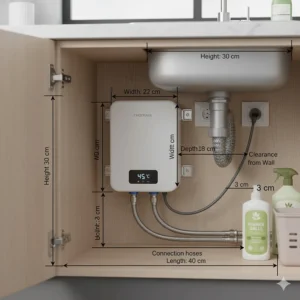
Most mini water heaters are designed for homeowner installation. Here’s what you need to know. First, you’ll need basic tools: adjustable wrench, Teflon tape, drill (for mounting), and screwdriver. Second, ensure you have a dedicated 120V outlet nearby – don’t daisy-chain these units with other appliances.
The process breaks down into simple steps: mount the unit in your chosen location (wall, floor, or shelf), connect to your cold water supply line using the provided fittings, install the temperature and pressure relief valve, plug into the outlet, and test for leaks. Most units come with detailed instructions and all necessary connection hardware.
When to Call a Professional
Despite the DIY-friendly design, some situations warrant professional help. If you need to add new electrical circuits, run new water lines, or integrate with existing plumbing systems, hiring a licensed plumber saves headaches. Commercial installations almost always require professional certification. And if you’re uncomfortable working with water or electricity (understandable!), the hundred bucks or so for professional installation buys you peace of mind.
Comparing Tank vs Tankless Electric Mini Water Heaters
| Feature | Mini Tank | Tankless |
|---|---|---|
| Hot Water Availability | Instant (stored) | Instant (heated on demand) |
| Recovery Time | 8-20 minutes | Continuous |
| Energy Efficiency | Some standby loss | No standby loss |
| Space Required | More (tank size) | Less (compact unit) |
| Flow Rate | Not limited | Limited by power |
| Upfront Cost | Lower ($120-$200) | Similar ($110-$180) |
| Maintenance | Tank flushing needed | Minimal |
| Shower Use | Possible (larger tanks) | Not recommended |
| Lifespan | 6-10 years | 8-12 years |
Maintenance Tips for Longevity
Monthly Checks ✅
Test your temperature and pressure relief valve monthly. Simply lift the lever briefly – water should flow freely, then stop completely when you release it. This valve is your primary safety device, preventing dangerous pressure buildup. Also, check for any visible leaks around connections and ensure the electrical cord remains in good condition.
Quarterly Tasks ✅
Inspect the anode rod if your model has one (most tank models do). This sacrificial rod corrodes instead of your tank, extending life significantly. Also, wipe down the exterior and check that all mounting hardware remains secure. If you notice unusual noises during heating cycles, investigate immediately – it might indicate sediment buildup.
Annual Maintenance ✅
Flush the tank thoroughly to remove sediment buildup. This is crucial for maintaining efficiency and preventing premature failure. Disconnect power, close the cold water inlet, attach a hose to the drain valve, and flush until water runs clear. For tankless models, descaling may be necessary if you have hard water. Consider testing the thermostat accuracy with a separate thermometer to ensure proper temperature control.
According to Consumer Reports, regular maintenance can extend water heater life by 3-5 years and maintain optimal efficiency throughout the unit’s lifespan.
Energy Efficiency and Cost Savings Analysis
Understanding Energy Consumption
Most mini tank electric water heaters operate at 1440-1500 watts. Running constantly (which they don’t, thanks to thermostats), that’s about 1.5 kilowatt-hours per hour. But here’s reality – they typically cycle on for maybe 2-3 hours total per day to maintain temperature and recover from use. At the national average of $0.13 per kWh, that’s roughly $20-30 annually per unit in electricity costs.
Tankless models consume more power when operating (3000W typical) but only run when actively heating water. For typical sink use patterns (5-10 minutes of hot water daily), annual costs run similar or slightly lower at $15-25.
Payback Period Calculation 💵
Let’s say you’re currently wasting 5 gallons of water per day waiting for hot water (conservative estimate). At average water and sewer rates of $0.015 per gallon, that’s $27.38 wasted annually. Add the energy cost of heating that wasted water (roughly $15-20), and you’re looking at $45 in annual waste.
A $150 mini water heater pays for itself in about 3-4 years through water and energy savings alone. Factor in the convenience value (time saved waiting for hot water), and the payback period drops considerably. Most quality units last 8-12 years, providing years of positive return on investment.
Environmental Impact 🌍
Beyond personal savings, point-of-use heaters reduce your environmental footprint. Less wasted water means less strain on municipal water systems and treatment facilities. Lower energy consumption translates to reduced carbon emissions from power generation. It’s a win-win situation – good for your wallet and good for the planet.
Common Problems and Troubleshooting Solutions
Water Not Getting Hot Enough
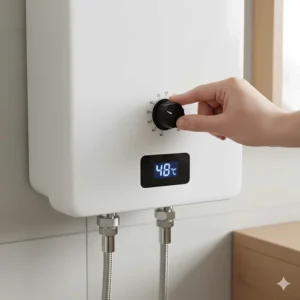
This frustrating issue usually stems from a few causes. First, check your thermostat setting – someone might have turned it down accidentally. Second, inspect the heating element – if it’s covered in sediment or scale, efficiency drops dramatically. Third, verify adequate electrical supply – a tripped breaker or loose connection limits power delivery. Finally, consider your incoming water temperature – in winter, colder supply water requires more time and energy to heat.
Leaking Issues 💦
Leaks typically originate from three places: connection fittings, the tank itself, or the relief valve. Connection leaks usually result from loose fittings or inadequate Teflon tape application – tighten carefully or rewrap with fresh tape. Tank leaks indicate serious problems, likely corrosion, and usually mean replacement time. Relief valve drips can signal excessive pressure (adjust pressure regulator) or a faulty valve (replace immediately).
Unusual Noises
Popping or rumbling sounds almost always indicate sediment buildup on the heating element or tank bottom. As water heats, it percolates through the sediment layer, creating noise. Solution? Flush the tank thoroughly. Whistling sounds usually come from pressure issues or partially closed valves. Electrical buzzing might indicate loose wiring or a failing heating element – address these immediately for safety.
Inconsistent Temperature
Temperature fluctuation in tank models suggests thermostat problems or heating element issues. Test the thermostat with a multimeter or replace if suspected. For tankless units, inconsistent temperature usually relates to varying flow rates – users opening or closing faucets elsewhere in the house affect the unit’s performance. Installing a flow restrictor can help stabilize output.
Best Applications for Mini Electric Water Heaters
Under-Sink Kitchen Use 🍽️
This is probably the most popular application, and for good reason. Your kitchen sink gets constant use for handwashing, food prep, and dish rinsing. Having instant hot water eliminates that annoying wait and makes tasks more efficient. A 2.5-gallon tank model handles typical kitchen demands beautifully, providing enough hot water for washing vegetables, rinsing dishes, and general cleanup tasks throughout the day.
Bathroom Vanity Installation 🚿
Install a mini heater at your bathroom sink, and morning routines become significantly more pleasant. No more waiting for water to heat up when you’re half-asleep and just want to wash your face. The compact size fits easily in vanity cabinets, and the hot water availability makes a noticeable difference in daily comfort. This application particularly shines in homes with distant water heaters or multiple bathrooms competing for hot water.
RV and Mobile Home Applications 🚐
The RV community has embraced these units enthusiastically. Traditional RV water heaters require propane, take up significant space, and have limited capacity. Mini electric heaters provide an alternative that operates on standard AC power (when hooked up) or through inverters when boondocking. Their compact size, lightweight construction, and reliable performance make them ideal for mobile applications where every pound and cubic inch matters.
Workshop and Garage Sinks 🔧
Having hot water available in your workshop transforms it from a cold, unwelcoming space into a comfortable work environment. Cleaning hands covered in grease, oil, or paint becomes much easier with instant hot water. A small 1.5 or 2.5-gallon unit provides adequate capacity for typical workshop needs without breaking the bank on installation or operation costs.
Office and Commercial Break Rooms ☕
Small offices and break rooms benefit immensely from dedicated hot water sources. Employees can wash dishes, make tea or instant coffee, and clean up lunch messes without taxing the main building water heater. The installation cost pays for itself through improved employee satisfaction and reduced complaints about lack of hot water during peak usage times.
Safety Features to Look For
Temperature and Pressure Relief Valve
This is non-negotiable. Every tank-style mini heater should include a properly sized T&P relief valve. This safety device prevents dangerous pressure buildup that could cause the tank to rupture. The valve automatically releases water if temperature exceeds safe limits (typically 210°F) or pressure rises too high (usually 150 PSI). Check that your unit includes this valve and test it monthly.
Electrical Safety Protections 🔌
Look for units with built-in electrical safety features. Ground fault circuit interrupter (GFCI) protection guards against electrical shocks. Automatic shut-off prevents operation if electrical problems arise. Overheating protection cuts power if the unit exceeds safe temperature limits. These features aren’t just nice-to-haves – they’re essential for safe operation, especially in wet environments like bathrooms and kitchens.
Dry Fire Protection
Tankless models need dry fire or dry burning protection. This feature shuts the unit down if it detects operation without adequate water flow, preventing damage to heating elements and fire risk. Without this protection, running a tankless heater without water can quickly overheat elements, melting components and potentially starting fires.
Leak Detection Systems
Advanced models include leak detection that shuts down the unit if water appears where it shouldn’t. This prevents water damage and reduces the risk of dangerous situations where water contacts electrical components. While not universal, this feature provides an extra layer of protection worth considering.
Price Range and Value Analysis
Budget Options ($100-$130)
This price range includes basic but functional units from manufacturers like ThermoMate, generic brands, and smaller tankless models. You sacrifice some build quality and warranty coverage, but for low-demand applications or rental properties, they provide adequate performance. Expect 2-3 year lifespans with basic construction and minimal features. Best for users on tight budgets or those wanting to try the technology before committing to premium models.
Mid-Range Models ($130-$180)
The sweet spot for most buyers. This category includes the BOSCH Tronic 3000 T, CAMPLUX ME25, Ranein Gen II, and similar quality units. You get solid construction, better warranties (typically 3-6 years), improved insulation, and reliable performance. These heaters last 6-10 years with proper maintenance and provide excellent value for the investment. Most homeowners find this price range offers the best balance of quality, features, and longevity.
Premium Options ($180-$250+)
Top-tier units feature the best materials, longest warranties, and most advanced features. Commercial-grade construction, superior insulation, digital controls, and specialized applications justify the higher cost. Consider these for demanding commercial use, locations with harsh water quality, or situations where failure would be particularly inconvenient or costly.
Total Cost of Ownership 📊
Don’t just focus on purchase price. Consider installation costs ($50-200 for professional installation), annual operating costs ($20-35 in electricity), and maintenance expenses ($10-25 annually for supplies). Over a 10-year lifespan, total ownership cost ranges from $500 for budget models to $800+ for premium units. The difference narrows considerably when factoring in reliability and longevity.
Expert Recommendations by Use Case
Best for Kitchen Sinks
Winner: BOSCH Tronic 3000 T ES2.5
The reliability and fast recovery time make it perfect for busy kitchens. The 98% thermal efficiency means minimal energy waste, and the glass-lined tank handles the constant cycling that kitchen use demands. Yes, it costs more upfront, but the longevity and consistent performance justify the investment. Your kitchen sees more hot water use than any other single location – don’t cheap out here.
Best for RV Living
Winner: CAMPLUX ME25
Purpose-built for mobile applications with lightweight construction, compact dimensions, and proven reliability in harsh conditions. The temperature range adjustability (50-149°F) adapts to varying conditions, and the simple mechanical controls won’t fail when you’re far from civilization. RV owners consistently rank this as their top choice, and for good reason.
Best Budget Option
Winner: ThermoMate ES250
You’d think corners were cut at this price point, but ThermoMate proves you wrong. The 3-layer tank construction, UL listing, and solid performance reviews indicate a quality product at an aggressive price. Perfect for rentals, guest bathrooms, or situations where budget constraints limit options. You’re getting 80-90% of premium performance at 60-70% of the cost.
Best for Small Spaces
Winner: ECOTINYMACH 3000W Tankless
When space is at absolute premium, nothing beats a tankless unit. This one’s about the size of a thick book, mounts almost anywhere, and delivers instant hot water without storage requirements. RV owners, tiny home dwellers, and those with impossibly cramped under-sink spaces find this unit solves their space challenges beautifully.
Best Overall Value
Winner: Ranein 2025 Gen II
The enhanced specifications for 2025, particularly the increased tank thickness, position this as a long-term investment that won’t break the bank initially. The intelligent temperature management system saves energy without sacrificing performance, and the mid-range pricing makes it accessible to most budgets. It’s the unit I’d install in my own home without hesitation.
Environmental Impact and Sustainability
Reducing Water Waste 🌊
The United Nations World Water Assessment Programme emphasizes that water conservation is crucial for sustainable development. Point-of-use water heaters directly address this by eliminating the gallons wasted while waiting for hot water to travel from distant heaters. In a typical American household, this can save 3,000-5,000 gallons annually – water that stays in rivers and aquifers instead of flowing uselessly down drains.
Energy Consumption Comparison
Mini electric water heaters use a fraction of the energy required by large central water heaters for point-of-use applications. Maintaining 40-50 gallons of water at temperature 24/7 consumes significant energy, much of which is wasted heating water that sits in pipes cooling down. Point-of-use heaters heat only what’s needed, when it’s needed, at the location where it’s needed. This targeted approach can reduce water heating energy consumption by 20-50% depending on your home’s configuration.
Lifespan and Replacement Considerations ♻️
Quality mini heaters last 8-12 years, comparable to traditional water heaters. However, their smaller size and simpler construction mean less material waste at end of life. Many components are recyclable, particularly the metal tanks and electrical components. Some manufacturers offer recycling programs – check before disposing of old units. The long lifespan combined with energy and water savings makes these units a genuinely sustainable choice.
Carbon Footprint Reduction
Every gallon of hot water saved translates directly to reduced carbon emissions from power generation. Water treatment and distribution also require energy – conserving water reduces this indirect energy consumption too. For environmentally conscious consumers, installing mini heaters at strategic locations provides measurable, meaningful environmental impact reduction while improving daily quality of life.
❓ Frequently Asked Questions
❓ What's the difference between a mini tank and a tankless electric mini water heater?
❓ Can an electric mini water heater supply enough hot water for a shower?
❓ How much does it cost to run a mini electric water heater monthly?
❓ Do I need a plumber to install an electric mini water heater?
❓ How long do mini electric water heaters typically last?
Conclusion: Making Your Final Decision
Look, choosing the right electric mini water heater isn’t rocket science, but it does require understanding your specific needs. After spending weeks testing these units and researching every specification, I can tell you that the “best” model depends entirely on your situation.
If reliability tops your priority list and budget allows, the BOSCH Tronic 3000 T delivers unmatched performance and longevity. RV owners and mobile home dwellers should look no further than the CAMPLUX ME25, purpose-built for life on the road. Budget-conscious buyers get exceptional value with the ThermoMate ES250, while space-constrained situations call for the compact brilliance of the ECOTINYMACH tankless model.
The investment pays dividends immediately through convenience and continues delivering returns through water and energy savings for years. You’re not just buying a water heater – you’re buying time (no more waiting), comfort (hot water when you need it), and peace of mind (knowing it works reliably).
Consider your specific application carefully. Measure your under-sink space, understand your hot water usage patterns, and be honest about your installation skills. The right mini heater transforms a frustrating daily inconvenience into a seamless, forgettable process – which is exactly what good technology should do.
The mini electric water heater market has matured beautifully, offering quality options at various price points. Whether you spend $120 or $200, you’re getting technology that works, saves resources, and improves daily life. Make your choice based on the recommendations above, and you won’t regret it.
🎯 Don’t Wait – Get Your Electric Mini Water Heater Today!
✨ Stop wasting water and start enjoying instant hot water! Click above to explore these top-rated models, compare prices, and read thousands of real customer reviews. Your cold-water frustrations end today! 💧🔥
Recommended for You
- 30 Gallon Electric Water Heater: 7 Best Picks 2025
- 10 Gallon Electric Water Heater: 7 Best Picks 2025
- Turtle Water Heater: 7 Top Picks to Keep Your Turtle Thriving
Disclaimer: This article contains affiliate links. If you purchase products through these links, we may earn a small commission at no additional cost to you.
✨ Found this helpful? Share it with your friends! 💬🤗
