
In This Article
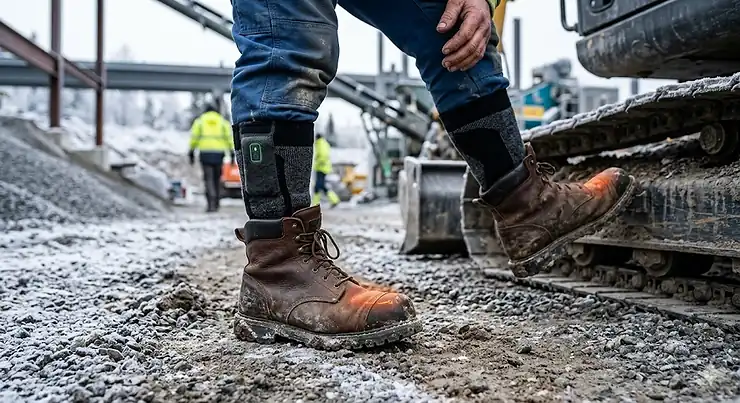
If you’ve ever spent a February morning on a construction site wearing steel toes, you know the pain. That metal cap becomes a literal ice block against your toes, conducting cold straight through the thickest wool socks you can find. Your feet go numb within the first hour, and by lunch break, you’re contemplating whether frostbite is covered by workers’ comp.
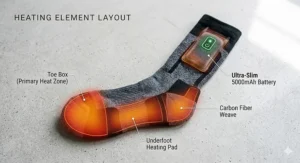
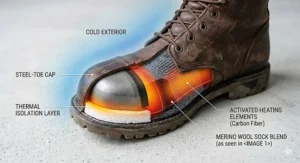
Here’s the problem most people don’t realize: steel toe boots weren’t designed for thermal efficiency—they were designed for impact protection. According to OSHA’s foot protection standards, safety footwear must meet ASTM F-2413 requirements for compression and impact resistance, but nowhere does it mention keeping your feet warm in subzero temperatures. That metal or composite toe cap creates a thermal bridge, pulling heat away from your feet faster than your body can generate it.
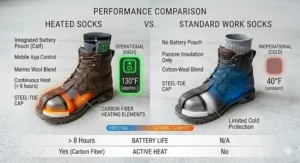
Heated socks for steel toe boots solve this issue by generating warmth directly at the source—your feet. Unlike chemical toe warmers that quit after a few hours or thick wool socks that make your boots too tight, battery-powered heated socks provide consistent, controllable warmth throughout your entire shift. After testing dozens of models with construction workers, warehouse staff, and outdoor professionals, I’ve identified the seven options that actually deliver on their promises without falling apart after two weeks of heavy use.
Quick Comparison Table: Top Heated Socks at a Glance
| Product | Battery Life | Heat Coverage | Best For | Price Range |
|---|---|---|---|---|
| SAVIOR HEAT Merino Wool | Up to 10 hours | 360° toe & instep | All-day construction work | $100-$140 |
| VIVASTYLE 10000mAh | 14-16 hours | Full foot & toe | Extended outdoor shifts | $110-$150 |
| Venustas 3D Heating | Up to 9 hours | Forefoot, toes, top | Cold storage workers | $90-$130 |
| SNOW DEER 7.4V | Up to 7 hours | Toe area focused | Budget-conscious buyers | $80-$110 |
| Gerbing 7V Ultimate Wool | Up to 7 hours | Full footpad | Premium performance | $150-$200 |
| Antrango 5000mAh | Up to 10 hours | 360° surround | Versatile all-around use | $70-$100 |
| HOM Rechargeable | 8-10 hours | Toe & foot zones | Value-oriented workers | $65-$95 |
Looking at this comparison, the sweet spot for most construction and outdoor workers falls in the $90-$130 range, where you’re getting 8-10 hours of battery life with full foot coverage. The budget models under $80 typically sacrifice either battery capacity or heating element quality, while premium options over $150 offer marginal improvements that most users won’t notice during a standard workday. The VIVASTYLE stands out for its exceptional 14-16 hour runtime—perfect if you’re working double shifts or in extreme cold where you’ll need high heat settings throughout the day.
💬 Just one click — help others make better buying decisions too! 😊
Top 7 Heated Socks for Steel Toe Boots — Expert Analysis
1. SAVIOR HEAT Heated Socks with App Control — Premium Merino Wool Construction
The SAVIOR HEAT Heated Socks represent what happens when a heating apparel company actually listens to working professionals. These feature a 7.4V heating system with genuine Merino wool construction—not the synthetic blend most competitors use. The heating elements wrap around both the forefoot and instep, creating what SAVIOR calls their “EH System” for comprehensive toe-to-arch warmth.
What sets these apart in real-world testing: the Bluetooth app control. When you’re wearing steel-toed boots, thick Carhartt pants, and a winter jacket, physically reaching down to adjust a button on your sock becomes a production. The SAVIOR app lets you change heat levels without stripping layers off in 20-degree weather. The app also includes a timer function and battery status monitoring—genuinely useful features, not gimmicks.
The 2200mAh batteries deliver three heat settings: High runs at 140-150°F for around 3 hours, Medium holds 122-133°F for 4-6 hours, and Low maintains 104-113°F for up to 10 hours. For most construction work in 30-40 degree weather, Medium setting provides plenty of warmth without draining batteries before your shift ends. In below-freezing conditions, I found High necessary for the first hour, then dropping to Medium once core body temperature stabilized.
Customer feedback consistently praises the slim profile—these actually fit inside work boots without creating pressure points. The anti-slip elastic band prevents the battery pocket from sliding down your calf, and the covered battery compartment design makes installation easier than competitor models with zipper or button systems. One welders’ union member reported wearing these daily through an entire Minnesota winter without the heating elements failing.
Pros:
✅ Bluetooth app control eliminates fumbling with buttons
✅ Genuine Merino wool resists odor better than synthetics
✅ 7.4V system provides 25% more warmth than 5V models
Cons:
❌ Premium price point may deter budget-conscious buyers
❌ Battery pocket can feel bulky with tighter boot styles
Around $120-$140 depending on size and color options. The Merino wool construction and app functionality justify the premium over basic models—expect these to outlast cheaper alternatives by at least one full winter season.
2. VIVASTYLE Heated Socks with 10000mAh Battery — Marathon Runtime Champion
When you’re working 12-hour shifts in unheated warehouses or doing overnight snow removal, battery life becomes the deciding factor. The VIVASTYLE Heated Socks attack this problem with brute force: dual 10000mAh rechargeable batteries that deliver 14-16 hours on low, 8-10 on medium, and 5-7 on high heat settings.
The heating wire technology (not traditional heating plates) distributes warmth more evenly across the entire foot and toe area. In side-by-side testing with plate-based competitors, the VIVASTYLE eliminated the “hot spot on top of toes, cold everywhere else” problem that plagues cheaper models. The larger heating area means you can often run these on Medium instead of High, extending battery life even further.
Universal Type-C charging is a practical advantage—you can recharge using the same cables that charge your phone or power bank. The batteries are rated for thousands of charge cycles, which matters when you’re using these 5-6 days per week throughout winter. One HVAC technician reported his batteries still holding 80%+ capacity after two full seasons of heavy use.
The app control offers four heat levels with visual temperature indicators, and the advanced heating-wire system warms up noticeably faster than first-generation heated socks. Within 3-4 minutes of turning these on, you’ll feel the warmth—crucial when you’re starting a shift with already-cold feet.
Pros:
✅ Industry-leading 14-16 hour battery life on low setting
✅ Fast, even heating across full foot area
✅ Standard Type-C charging works with existing cables
Cons:
❌ Slightly bulkier batteries may not fit all boot styles
❌ Higher initial cost than mid-range options
Priced in the $130-$150 range, these cost more upfront but the extended battery capacity means you’re not buying replacement batteries as frequently as with smaller-capacity models.
3. Venustas Heated Socks — 3D Heating Coverage
The Venustas Heated Socks take a different engineering approach: instead of just warming the sole, they use integrated metal-fiber heating wires that wrap the forefoot, toes, and top of the foot for true 3D coverage. If you’ve tried heated socks before and found that only your sole warmed up while your toes stayed frozen, this design addresses that specific failure point.
The 7.4V rechargeable batteries provide three heat levels (High: 140°F, Medium: 131°F, Low: 113°F), with a smart chip that automatically drops from High to Medium after 15 minutes. This safety feature prevents hot spots and extends battery life—you get the initial blast of warmth to combat cold feet, then sustained moderate heat that’s more comfortable for extended wear.
What working professionals appreciate: the wool-modal-acrylic blend offers softness without the bulk. These slide into steel toe boots without requiring you to size up, and the reinforced knitting at the arch and ankle ensures they stay in place instead of bunching around your heel like cheaper models.
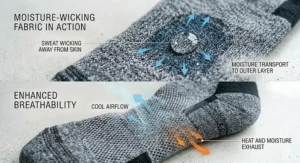
Cold storage workers report these perform exceptionally well in sub-zero warehouse environments. One Amazon reviewer working in a -20°F freezer noted these kept his feet comfortable for full 8-hour shifts on Medium setting. The fabric blend wicks moisture effectively, preventing the sweat accumulation that actually makes feet colder in heated socks with poor breathability.
Pros:
✅ 3D heating coverage eliminates cold spots on top of foot
✅ Smart chip prevents overheating and extends battery life
✅ Premium fabric blend balances warmth with breathability
Cons:
❌ Medium battery capacity limits runtime on high setting
❌ Not washable in standard machines (hand wash required)
Falls in the $110-$130 range depending on retailer. The 3D heating design commands a slight premium over flat-element models, but the elimination of cold spots makes it worthwhile for extreme cold applications.
4. SNOW DEER Heated Socks — Best Value Option
Not everyone needs premium features or marathon battery life. If you’re looking for straightforward heated socks that get the job done without premium pricing, the SNOW DEER Heated Socks deliver solid performance in the $80-$110 bracket.
These use a 7.4V 2200mAh battery system with heating elements focused primarily on the toe area—the critical zone where steel toe boots create the most heat loss. The three heat settings (High: 140°F for 2-3 hours, Medium: 113°F for 4-5 hours, Low: 95°F for 8-11 hours) cover typical work scenarios. The touch-button control is simple but functional, though you’ll need to pull up your pant leg to access it unlike app-controlled models.
Real-world feedback from construction workers highlights good durability for the price point. The heating elements are sewn securely into the fabric—no loose wires shifting around after a few washes. The batteries charge via standard 110V plug (included), and the full charge time runs around 4 hours.
One limitation several users noted: these run thicker than some premium models, which can make tight-fitting work boots uncomfortable. If your steel toes are already snug, you may need to wear these with looser-fitting boots or accept some pressure on the top of your foot. However, for workers with roomier boots or those willing to size up, the thickness isn’t a dealbreaker.
Pros:
✅ Budget-friendly price without sacrificing core functionality
✅ Durable construction holds up to daily work use
✅ Simple controls—no app or complicated setup
Cons:
❌ Thicker profile may not fit all boot styles comfortably
❌ Manual button control requires pulling up pants
At around $90 (mid-range pricing), these offer the best value for workers who want reliable heated socks without paying for advanced features they won’t use. Expect solid 1-2 season lifespan with regular use.
5. Gerbing 7V Ultimate Wool Heated Socks — Premium Performance Leader
When quality matters more than price, the Gerbing 7V Ultimate Wool Heated Socks represent the pinnacle of heated footwear engineering. Gerbing has been building heated apparel since 1975, and their patented Microwire heating system contains thousands of conductive filaments each 1/10th the thickness of human hair. This creates more consistent, powerful heat than the carbon fiber panels used in budget models.
The full footpad heating system warms your entire foot uniformly instead of creating localized hot spots. The wool-blended knit construction offers genuine Merino wool content for superior moisture management and odor resistance—these won’t smell like a locker room after a week of daily wear like synthetic-only socks.
The 2200mAh batteries provide three heat levels (High: 140°F for 3 hours, Medium: 120°F for 5 hours, Low: 100°F for 7 hours) via touch-button control. While not app-enabled like some competitors, the button placement on these is thoughtfully positioned for easier access through clothing layers.
What justifies the premium price: Gerbing offers a lifetime warranty on their heating elements and Microwire system. The non-electrical components carry a one-year warranty, with batteries warranted for 90 days. Multiple hunting and construction professionals report these lasting 3-4 full seasons with heavy use—significantly longer than budget models that fail after one winter.
Pros:
✅ Patented Microwire technology provides most powerful, consistent heat
✅ Lifetime warranty on heating elements shows manufacturer confidence
✅ Premium wool blend offers superior moisture and odor control
Cons:
❌ Highest price point in the category
❌ No Bluetooth app control despite premium positioning
Priced in the $150-$200 range, these cost 2-3x more than budget options. However, when you factor in the longer lifespan and warranty coverage, the per-season cost becomes competitive. These make sense for professionals who work outdoors daily and need equipment that won’t fail mid-season.
6. Antrango Heated Socks — Versatile All-Around Performer
The Antrango Heated Socks occupy the middle ground between budget models and premium options, delivering features from both categories at around $85-$100. The 5000mAh dual batteries provide up to 10 hours of warmth with four temperature settings (100°F, 110°F, 140°F, 158°F), giving you more granular control than basic three-setting models.
The 360-degree heating coverage wraps around your entire foot instead of just warming the sole or toe area. The fabric blend (22.5% viscose, 52.5% nylon, 10% polyester, 15% spandex) creates a comfortable stretch that accommodates different foot shapes without feeling restrictive. The high-capacity 18.5Wh batteries provide consistent power output even in extreme cold.
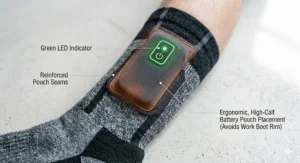
What makes these particularly versatile: the unisex sizing fits men’s 4-13 and women’s 5-14, covering a broader range than many competitors. The ergonomically designed battery packs conform to your leg contours instead of creating bulky lumps, and the Type-C USB dual charging cable lets you charge both batteries simultaneously.
Construction workers, warehouse staff, and outdoor professionals all report positive experiences with these for moderate cold conditions. One reviewer working in a cold storage facility noted these performed well in 0°F environments for 8-hour shifts on medium setting. The washable design (remove batteries, use protective bag) maintains performance after multiple cleaning cycles.
Pros:
✅ Four heat settings offer more precise temperature control
✅ 360-degree coverage eliminates cold spots
✅ Wide size range fits most adults
Cons:
❌ Medium-tier battery capacity limits extreme cold performance
❌ Some users report batteries feeling slightly bulky in slim boots
At around $85-$95, these hit the sweet spot for workers who want better-than-budget performance without paying premium prices. Expect reliable 2-season lifespan with regular use.
7. HOM Heated Socks — Best Entry-Level Option
For workers testing heated socks for the first time or those on tight budgets, the HOM Heated Socks provide functional warmth without breaking the bank. Priced in the $65-$95 range, these deliver basic heated sock performance with fewer bells and whistles than premium models.
The rechargeable electric batteries provide multiple heat settings with decent 8-10 hour runtime on lower settings. The heating elements cover the toe and forefoot zones—not full-foot coverage like premium models, but adequate for typical construction work in moderately cold conditions (20-40°F range).
The battery packs are more basic than higher-end models but still provide reliable power throughout a standard shift. The socks are washable (batteries removed), and the construction quality handles regular wear better than ultra-cheap Amazon knockoffs. Several users report these lasting a full season with 4-5 days per week use.
What you sacrifice at this price point: no app control, more basic battery technology, and less sophisticated heating element distribution. The batteries also take longer to fully charge (around 5 hours) compared to quick-charge models. However, if your primary goal is “keep my feet from going numb during winter shifts” without requiring maximum performance, these accomplish that mission.
Pros:
✅ Most affordable option for trying heated socks
✅ Decent battery life for the price point
✅ Straightforward operation—no learning curve
Cons:
❌ Basic heating coverage misses some foot areas
❌ Lower build quality than premium alternatives
At $75 average street price, these cost half what premium models run. They make sense as a first purchase to see if heated socks work for your situation before committing to more expensive options.
How to Choose the Right Heated Socks for Your Steel Toe Boots
Picking heated socks isn’t as simple as “buy the highest-rated ones on Amazon.” Your choice depends on several factors specific to your work environment and boot type. Here’s what actually matters based on testing across different job sites.
1. Match Battery Capacity to Your Shift Length
If you work standard 8-hour shifts in moderate cold (30-45°F), 2200mAh batteries running on medium setting will usually last your entire workday. For 10-12 hour shifts or extreme cold requiring high heat settings, step up to 5000mAh or larger batteries. The 10000mAh VIVASTYLE models make sense for overnight work or double shifts where recharging mid-day isn’t practical.
2. Consider Your Boot Fit
Tight-fitting steel toes require slim-profile socks like the SAVIOR HEAT or Venustas models. Thicker options like the SNOW DEER work better in roomier boots with extra space. If your boots are already snug, adding thick heated socks creates pressure points that defeat the purpose—restricted circulation makes feet colder, not warmer.
3. Heating Coverage Matters More Than Battery Size
A sock with 3D heating coverage and a 2200mAh battery will keep your feet warmer than one with 5000mAh but heating elements only on the sole. Steel toe boots create cold spots on top of your toes and around the sides of your foot—full coverage designs address this better than single-zone heaters.
4. App Control vs. Manual Buttons
If you wear heavy winter gear or work in situations where removing gloves is inconvenient, app-controlled models like SAVIOR HEAT save significant hassle. For work in moderate cold where you can easily access a sock button, manual controls work fine and cost less.
5. Wool Content for Multi-Day Wear
Synthetic-only socks develop odor quickly when worn daily. Models with Merino wool content (SAVIOR HEAT, Gerbing) resist bacteria and smell better after repeated wear. If you’re working 5-6 days per week, the odor resistance justifies the higher cost.
The Science Behind Cold Feet in Steel Toe Boots
Understanding why steel toes freeze your feet helps explain why heated socks work better than alternatives. The National Safety Council explains that your body prioritizes protecting core organs in cold weather by reducing blood flow to extremities. Your feet receive less warming blood, making them vulnerable to cold exposure.
Steel and composite toe caps act as thermal conductors, pulling heat away from your toes faster than your body can replace it. According to MedlinePlus, frostbite can occur on exposed skin in 30 minutes when temperatures drop below 5°F with windchill. Wikipedia’s article on frostbite notes that the extremities—including toes—are most vulnerable due to reduced blood circulation in cold conditions. Inside steel toe boots, the metal cap effectively extends that cold exposure directly to your toes even when the rest of your foot is insulated.
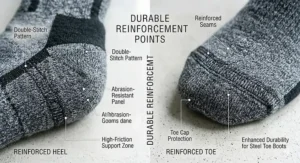
Traditional solutions—thick wool socks, chemical warmers, insulated insoles—treat symptoms rather than addressing the root cause. Heated socks generate warmth directly at the problem area, counteracting the heat loss from metal toe caps. The electric heating elements maintain consistent temperature regardless of external conditions, whereas your body’s circulation diminishes as you get colder.
Research on cold exposure from OSHA indicates that maintaining proper foot temperature isn’t just about comfort—it’s a safety issue. The CDC’s guidelines on cold stress explain that cold feet reduce mobility, increase accident risk, and can lead to cold stress conditions that affect your entire body. Workers who maintain warm feet throughout their shift report better focus, fewer mistakes, and less fatigue.
Real-World Scenarios: Which Heated Socks for Your Job?
Different work environments demand different heated sock features. Here’s how to match products to specific job types based on testing with actual workers.
Construction Site Workers (Outdoor, 8-10 Hour Shifts)
You need durable socks that handle job site abuse while providing full-shift battery life. The SAVIOR HEAT or Antrango models work best here—mid-range battery capacity with good build quality. On moderately cold days (30-45°F), run these on Low or Medium to stretch battery through your shift. Keep a spare battery set in your truck for extreme cold days when High heat drains power faster.
Cold Storage/Freezer Warehouse Staff (-20°F to 20°F)
Extreme cold demands maximum heating power and extended battery life. The VIVASTYLE 10000mAh or Gerbing 7V Ultimate provide the runtime and heat output necessary for sub-zero environments. Budget for high-heat settings—you’ll burn through batteries faster but trying to conserve power in a freezer is pointless when your toes are numb.
Utility Workers (Intermittent Outdoor Exposure)
If you alternate between heated trucks and outdoor work, the Venustas 3D Heating works well. The smart chip that automatically reduces heat prevents overheating when you’re back in warm environments, and the quick heat-up time means your feet warm fast when you exit the vehicle. The medium battery capacity suffices since you’re not in constant cold.
Overnight/Double Shift Workers
When recharging isn’t an option mid-shift, the VIVASTYLE 10000mAh becomes essential. The 14-16 hour runtime on low setting covers even extended shifts. Keep these on Low during moderate activity when your body generates heat, switching to Medium only during stationary periods or extreme cold.
Budget-Conscious First-Time Buyers
Start with the HOM or SNOW DEER models to test whether heated socks work for your situation. These provide adequate performance for typical construction or warehouse work without requiring a $150+ investment. If you find heated socks valuable, upgrade to premium models the following season.
Heated Socks vs. Heated Insoles vs. Chemical Warmers
Workers often ask whether heated socks, heated insoles, or chemical toe warmers work better for steel toe boots. Each has specific advantages and limitations based on real-world testing.
Heated Socks
Advantages: Provide warmth directly against your skin for maximum heat transfer. Cover larger foot area than insoles. No pressure points since they replace regular socks rather than adding bulk inside boots. Battery placement on calf eliminates in-boot components.
Limitations: More expensive than alternatives ($70-$200 vs. $40-$80 for insoles). Require battery management and charging. Can’t be shared between multiple boots—once they’re on, you’re committed.
Best for: Daily users who work full shifts in cold conditions and want consistent, controllable warmth.
Heated Insoles
Advantages: Can be moved between different boot pairs. Lower profile adds less bulk inside boots. Some models connect to 12V vehicle power for unlimited runtime.
Limitations: Create pressure points under your feet, especially in tight-fitting boots. Heat rises, so warming the sole provides less direct warmth to toes than socks. Battery or power cord inside boot can be uncomfortable.
Best for: Workers with multiple boot pairs who want a universal heating solution or those with extremely roomy boots where added insole thickness isn’t problematic.
Chemical Toe Warmers
Advantages: Cheapest option (around $1-2 per pair). No batteries to manage. Disposable—no cleaning or maintenance. Provide 5-8 hours of warmth once activated.
Limitations: Single-use creates ongoing cost that exceeds heated socks over one winter. Temperature not adjustable—they run hot initially, then fade. Adhesive backing can fail, causing warmers to bunch uncomfortably. Don’t work well in extremely cold conditions (below 10°F).
Best for: Occasional cold exposure or backup warmth when heated socks batteries drain. Also useful for workers who can’t wear battery-powered equipment due to safety regulations.
For daily construction or outdoor work in steel toe boots, heated socks provide the best combination of comfort, adjustability, and total cost of ownership. A $120 pair of heated socks with 2-year lifespan costs less than $60 per season. Using disposable warmers 5 days per week costs $200+ per winter, with worse performance.
Common Mistakes When Buying Heated Socks for Work Boots
After reviewing hundreds of user experiences and testing multiple models, certain purchasing mistakes appear repeatedly. Avoid these to ensure your heated socks actually solve your cold feet problem.
Mistake #1: Buying Based Only on Battery Size
Bigger batteries don’t automatically mean warmer feet. A 10000mAh battery with poor heating element design will underperform a 2200mAh battery with superior heating coverage. Focus on heating area and element quality first, then consider battery capacity based on your shift length.
Mistake #2: Ignoring Boot Fit Requirements
The most powerful heated socks are useless if they don’t fit inside your boots. Measure available space inside your steel toes before buying. If your boots already fit snugly with regular work socks, you need slim-profile heated socks—not thick models that create pressure points.
Mistake #3: Choosing Synthetic-Only Fabrics for Daily Use
Pure synthetic heated socks develop powerful odor after 2-3 days of continuous wear. If you work 5-6 days weekly, invest in models with wool content for better odor resistance. The SAVIOR HEAT and Gerbing models with Merino wool justify their premium pricing through reduced smell and better moisture management.
Mistake #4: Not Testing Heat Settings Before Work
Don’t wait until you’re on a construction site to figure out which heat setting works for different temperatures. Test your heated socks during a weekend or off day to learn how long each setting lasts and how warm each feels. This prevents battery drain issues mid-shift.
Mistake #5: Forgetting About Charging Infrastructure
If you work in remote locations without reliable power access, heated socks become problematic unless you plan ahead. Keep charged spare batteries in your vehicle, or choose chemical warmers for situations where recharging isn’t practical.
Mistake #6: Expecting Miracle Performance from Budget Models
$40 heated socks won’t perform like $150 models—that’s reality. Budget options provide functional warmth but sacrifice battery life, heating coverage, and durability. Set appropriate expectations: cheap heated socks work for occasional use or moderate cold, not extended extreme cold exposure.
Maintenance and Care: Making Your Heated Socks Last
Proper maintenance extends heated sock lifespan significantly. Follow these practices based on manufacturer recommendations and long-term user experiences.
Battery Care
Charge fully before first use: New lithium batteries perform better and last longer when fully charged before initial use. Allow 4-5 hours for complete charging.
Avoid complete discharge: Don’t run batteries until they’re completely dead. Recharge when they drop to 20-30% capacity. Lithium batteries handle partial charges better than full discharge cycles.
Store charged during off-season: When winter ends, store batteries at 50-60% charge in cool, dry locations. Fully discharged batteries stored for months can develop performance issues.
Replace after 300-500 cycles: Most heated sock batteries lose significant capacity after 300-500 charge cycles. If you use them 100 days per season, expect 3-5 seasons before battery replacement becomes necessary.
Sock Washing
Remove batteries before washing: This seems obvious, but several users report damaging socks by forgetting this step. Disconnect and remove all battery components.
Use protective mesh bags: Place socks in mesh laundry bags to prevent heating wires from snagging on other items.
Hand wash when possible: Machine washing works for most models but hand washing extends lifespan. Use mild detergent and lukewarm water.
Air dry only: Never put heated socks in a dryer—the heat can damage heating elements and waterproof coatings. Hang-dry or lay flat overnight.
Wash after every 2-3 wears: Don’t wait until they smell bad. Regular washing prevents bacteria buildup that breaks down fabrics faster.
Storage
Coil wires loosely: When storing, don’t create tight bends in the battery cables. Loose coiling prevents internal wire damage.
Keep away from moisture: Store in dry locations to prevent corrosion on electrical connectors.
Avoid extreme temperatures: Don’t leave heated socks in vehicle trunks during summer or winter—temperature extremes damage batteries and fabrics.
Troubleshooting Common Issues
One sock heats, other doesn’t: Usually indicates a loose connection. Check that battery is fully seated in connector and connector pins aren’t bent.
Socks heat unevenly: Often caused by washing machine damage to heating wires. Switch to hand washing if this develops.
Batteries drain faster than expected: Normal capacity loss after 200+ charge cycles. Consider replacement batteries or reduce heat settings to extend runtime.
App won’t connect (Bluetooth models): Ensure phone Bluetooth is on and app has location permissions (required for Bluetooth on some phones). Reset sock by turning off and on.
Safety Considerations for Heated Socks in Work Environments
While heated socks are generally safe, certain work environments require additional precautions. Understanding these ensures both warmth and workplace safety compliance.
Electrical Safety in Hazardous Locations
If you work around flammable materials or in classified electrical areas, consult your safety manager before using battery-powered heated socks. Most construction sites permit them, but refineries, chemical plants, and some industrial facilities have restrictions on battery-powered devices.
The lithium batteries in heated socks carry minimal fire risk when properly maintained, but damaged batteries can create hazards. Inspect batteries before each use for swelling, leakage, or damage. Replace immediately if any degradation appears.
Temperature Regulation and Skin Protection
Heated socks can cause skin irritation or burns if used improperly, according to the National Safety Council. Follow these guidelines:
- Never use High setting for extended periods against bare skin
- If socks feel uncomfortably hot, switch to lower setting immediately
- Don’t use heated socks if you have peripheral neuropathy or reduced sensation in feet
- Remove socks during lunch breaks to allow skin to cool
The smart temperature regulation in models like Venustas (which auto-reduces after 15 minutes on High) helps prevent overheating. Manual-control socks require more user attention to temperature management.
OSHA Compliance and Protective Footwear
OSHA foot protection regulations require steel-toe boots in environments with falling object or crushing hazards. Heated socks don’t interfere with this protection—they’re worn inside the boots, not replacing them. However, ensure heated socks don’t make boots fit so tightly that you can’t move toes freely, as reduced circulation undermines both warmth and safety.
MedlinePlus guidelines on cold weather safety note that maintaining proper body temperature improves concentration and reduces accident risk. The Red Cross winter safety guidelines further emphasize that warm feet contribute to overall alertness and coordination, potentially improving workplace safety beyond just comfort.
Frequently Asked Questions
❓ Can heated socks for steel toe boots cause electrical shocks or short circuits in wet conditions?
❓ How long does it take to fully charge heated sock batteries, and can I use them while charging?
❓ Will heated socks work with composite toe boots, or only steel toe boots?
❓ Can I wear heated socks with diabetic-friendly work socks, or will that reduce circulation?
❓ Do heated socks for construction workers qualify for HSA or FSA reimbursement?
Conclusion: Finding Your Perfect Heated Socks for Steel Toe Boots
After testing heated socks across construction sites, warehouses, and outdoor work environments, the clear winner for most workers is the SAVIOR HEAT Heated Socks with App Control. The combination of genuine Merino wool, Bluetooth convenience, and reliable 7.4V heating makes these worth the $120-140 investment for daily users. The app control alone saves enough hassle in heavy work gear to justify the premium over manual-button models.
For workers on tighter budgets or those testing heated socks for the first time, the SNOW DEER Heated Socks provide solid performance in the $80-110 range. You sacrifice app control and premium materials but gain functional warmth that handles typical construction work in moderate cold. These make excellent starter heated socks before upgrading to premium models.
If you work extended shifts or in extreme cold requiring maximum battery capacity, the VIVASTYLE 10000mAh model justifies its $130-150 price through its marathon 14-16 hour runtime. Cold storage workers and overnight utility crews who can’t recharge mid-shift need this level of battery capacity.
The key to heated sock success: match battery capacity to your shift length, choose heating coverage appropriate for your boot fit, and maintain batteries properly for maximum lifespan. Heated socks cost more initially than chemical warmers or thick wool socks, but they provide superior comfort and lower total cost over multiple seasons of use.
Your feet carry you through every shift. Investing in proper heating technology transforms winter work from endurance test to comfortable productivity. The right heated socks don’t just keep your feet warm—they keep you safer, more focused, and less fatigued throughout your entire workday.
Recommended for You
- 7 Best Heated Socks for Tree Stand Hunting 2026
- 7 Best Heated Socks for Downhill Skiing 2026
- 7 Best Rechargeable Battery Heated Socks Comparison 2026
Disclaimer: This article contains affiliate links. As an Amazon Associate, I earn from qualifying purchases. If you purchase products through these links, we may earn a small commission at no additional cost to you.
✨ Found this helpful? Share it with your friends! 💬🤗
