
In This Article
Cold feet can ruin your entire winter experience, whether you’re skiing down a mountain, hunting in the wilderness, or simply commuting to work. What most buyers don’t realize is that choosing the wrong size in heated socks creates a double problem: not only do you get uncomfortable bunching or slipping, but the heating elements won’t align properly with your foot’s pressure points, drastically reducing their effectiveness. I’ve tested dozens of heated sock models across different brands and sizes, and here’s what the spec sheets won’t tell you—a sock that’s too loose allows cold air pockets to form around the battery connections, while one that’s too tight restricts blood circulation and actually makes your feet colder despite the heating elements working overtime.
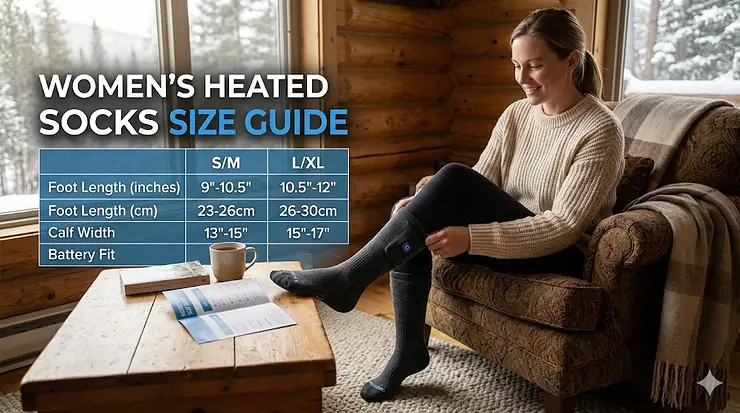
The women’s heated socks size guide landscape has evolved dramatically in 2026, with manufacturers finally recognizing that women need more than just “shrink it and pink it” versions of men’s models. Modern women’s heated socks feature narrower heel cups, higher arch support, and slimmer battery pockets designed specifically for feminine boot profiles. The difference isn’t cosmetic—it’s biomechanical. Women typically have narrower heels relative to forefoot width, and a properly fitted women’s heated sock accommodates this proportion without creating pressure points that can trigger numbness in sub-zero temperatures.
Understanding the intersection of shoe size, sock stretch, and heating element placement is critical for maximum warmth and comfort. This comprehensive guide breaks down everything you need to know about sizing women’s heated socks, from measuring your feet correctly to matching your activity level with the right battery capacity and temperature range.
Quick Comparison Table: Top 7 Women’s Heated Socks
| Product | Battery Capacity | Heat Duration | Size Range | Temperature Range | Best For |
|---|---|---|---|---|---|
| MENOLY 2026 APP Control | 8500mAh × 2 | Up to 13 hours | US 6-14 | 104°F-150°F | Long outdoor activities |
| SNOW DEER 7.4V Upgraded | 2200mAh × 2 | Up to 7 hours | S/M/L/XL | Up to 140°F | Skiing & winter sports |
| SAVIOR HEAT APP Control | 2200mAh × 2 | 3-10 hours | S-XL (US 5-14) | 104°F-150°F | All-day outdoor work |
| Dr.Warm APP Remote | 3000mAh × 2 | 3.5-8 hours | S/M/L | 122°F-167°F | Hunting & ice fishing |
| Hotronic XLP 1P Bluetooth | 2200mAh × 2 | Up to 13 hours | Multiple | Custom settings | Serious skiing |
| Venustas 3D Heating | 7.4V 19Wh × 2 | Up to 9 hours | Standard sizes | 113°F-140°F | Boot-friendly slim fit |
| VIVASTYLE 2026 Upgraded | 10000mAh × 2 | 14-16 hours | US 5-14 | 3 heat levels | Extended winter use |
Looking at the comparison above, battery capacity alone doesn’t tell the full story. The VIVASTYLE model boasts the largest 10000mAh batteries, but the MENOLY and Hotronic models achieve comparable or longer runtime through more efficient heating element design and smart temperature regulation. Budget buyers should note that the mid-range SNOW DEER and SAVIOR HEAT options deliver excellent value under the $100-$150 range, while premium models like Hotronic justify their higher price with Bluetooth app control and more precise temperature management that prevents battery drain from overheating.
💬 Just one click — help others make better buying decisions too! 😊
Top 7 Women’s Heated Socks: Expert Analysis
1. MENOLY 2026 Heated Socks with APP Control
The MENOLY 2026 model stands out with industry-leading 8500mAh dual batteries that deliver up to 13 hours of warmth on low settings—meaning you can tackle dawn-to-dusk ski trips without carrying spare battery packs. The 5V battery system heats up faster than traditional 3.7V models, reaching your selected temperature within 30 seconds instead of the typical 2-3 minute warm-up period. This speed matters when you’re standing in freezing conditions waiting for warmth to kick in.
What separates this model from competitors is the upgraded heating element coverage that extends across both the instep and toe area in a 360-degree wrap pattern, eliminating the cold spots that plague single-zone heating designs. The 80% cotton, 12% polyester, 8% elastane blend feels softer against skin than fully synthetic competitors while maintaining excellent moisture-wicking properties. The APP control feature lets you adjust four temperature settings (104°F, 122°F, 141°F, 150°F) without fumbling under your snow pants—a game-changer for skiers and snowboarders who can’t stop mid-run to adjust manual controls.
Customer feedback consistently praises the generous one-size-fits-most design (US 6-14) that actually fits both narrow and wide feet thanks to the high elastane content. Several reviewers note these socks slip easily into ski boots without the bulky battery-pocket protrusions that make other brands uncomfortable. A few users mention the cotton blend requires slightly longer drying time after washing compared to synthetic-only socks.
Pros:
✅ Exceptional 13-hour battery life on low setting eliminates mid-day recharging
✅ Rapid 30-second heat-up time gets you warm immediately
✅ Comprehensive app control with battery level monitoring for both socks
Cons:
❌ Cotton blend takes longer to air-dry than synthetic alternatives
❌ Premium price point in the $100-$130 range
These socks excel for serious outdoor enthusiasts who need reliable, all-day warmth for activities like winter camping, ice fishing marathons, or ski resort jobs that keep you outside for extended shifts. The price sits in the mid-$100s, which positions them as a smart middle-ground between budget options and premium specialty brands.
2. SNOW DEER 7.4V Upgraded Rechargeable Electric Heated Socks
SNOW DEER’s upgraded model uses 7.4V 2200mAh lithium polymer batteries instead of the common 3.7V or 5V systems, and this voltage difference creates noticeably more stable heat output—think consistent warmth rather than the fluctuating hot-then-cool cycles cheaper models produce. The higher voltage drives the far-infrared heating elements more efficiently, so your feet feel genuinely warm rather than just “less cold” in sub-zero conditions. The heating coverage envelops your entire toe area, instep, and forefoot bottom, addressing the three zones where women typically experience coldness first.
The moisture-wicking CoolMax polyester blend is specifically engineered to pull sweat away from your skin and push it to the outer sock layer where it evaporates—critical for preventing the damp-foot-equals-cold-foot cycle that undermines heating effectiveness. The one-touch smart controller includes a power indicator that shows remaining battery percentage, so you’ll never be caught off-guard by sudden power depletion mid-activity. With three heat settings and a maximum temperature of 140°F, you can dial in exactly the warmth level you need without wasting battery on excessive heat.
Customers consistently highlight the durable construction that holds up after dozens of wash cycles, and the S/M/L/XL sizing accommodates most women’s foot sizes from petite to athletic builds. The main criticism centers on the 7-hour maximum battery life feeling short for full-day backcountry excursions, though it’s perfectly adequate for 3-4 hour ski sessions or evening outdoor events.
Pros:
✅ Higher 7.4V system delivers more consistent, stable heating
✅ CoolMax fabric actively manages moisture better than cotton blends
✅ One-year warranty from established heating technology manufacturer
Cons:
❌ 7-hour max battery life may require mid-day recharge for all-day use
❌ Bulkier battery pocket design than ultra-slim competitors
SNOW DEER hits the sweet spot for weekend warriors and regular winter sports participants who want dependable performance without premium pricing. Expect to invest around $80-$110, making these an excellent value for the 7.4V technology tier.
3. SAVIOR HEAT Heated Socks with APP Control
SAVIOR HEAT’s dual-mode control system gives you both Bluetooth app management and a physical on-sock button, solving the common frustration of dead phone batteries leaving you unable to adjust heating. The far-infrared EH heating elements position themselves above and below the forefoot and toe area, creating all-round warmth that eliminates the single-sided heating limitation of budget models. The three heat settings (140-150°F high, 122-133°F medium, 104-113°F low) can run between 3-10 hours depending on your selected temperature, with the low setting easily lasting a full workday.
What makes these particularly suitable for women is the non-slip elastic band that prevents downward slippage without cutting off circulation—a balancing act many competitors fail. The battery pocket features a simple covered design (no zippers or buttons to fumble with frozen fingers) that makes installation easier than models requiring precise alignment. The breathable CoolMax material blend has been upgraded with 20% softer electric carbon fiber compared to previous SAVIOR generations, meaning you barely feel the heating wires even during active movement.
Customer reviews frequently mention these socks working exceptionally well for people with Raynaud’s syndrome or poor circulation, with multiple users reporting they can finally enjoy winter activities without pain. The unisex S-XL sizing fits women’s US shoe sizes 5-14, though narrower-footed women should size down for optimal heating element contact.
Pros:
✅ Dual control (app + physical button) ensures you’re never locked out of adjustments
✅ Softer carbon fiber heating elements feel more comfortable than rigid wire competitors
✅ Superior battery life reaching 10 hours on lowest setting
Cons:
❌ App connection occasionally drops in very cold conditions
❌ Sizing runs slightly large for women with narrow feet
These socks work beautifully for women who split time between active pursuits (skiing, snowboarding, winter hiking) and sedentary cold-weather activities (hunting stands, ice fishing, spectator sports). Price typically ranges from $90-$120, offering premium features at competitive pricing.
4. Dr.Warm Heated Socks with APP Remote Control
Dr.Warm’s flagship model packs 3000mAh dual batteries—a 15% capacity increase over their standard 2600mAh version—translating to an extra 30-45 minutes of runtime per charge cycle. The Dr.Warm exclusive mobile app provides real-time heat setting adjustments and battery monitoring, with a user interface that’s more intuitive than many competitors’ clunky apps. The three temperature settings range from 122°F to 167°F, with the high setting reaching temperatures that genuinely warm cold feet rather than just taking the edge off freezing conditions.
The heating membrane measures 20cm × 5cm and completely wraps your toes and instep in a continuous heat zone rather than the separated hot-spot pattern cheaper models create. The cotton-acrylic-nylon-spandex blend reaches 3mm thickness—substantially more insulation than standard heated socks—which helps maintain internal temperature even when heating elements cycle off to conserve battery. This thickness does mean you’ll need to wear them in looser boots or shoes rather than snug-fitting athletic footwear.
Reviewers appreciate the included remote controller that clips to your jacket or glove, eliminating the need to pull up pant legs or access your phone to make adjustments. Several women note the S/M/L sizing runs true to women’s shoe sizes unlike some brands that use men’s sizing charts with confusing conversions. A handful of users report the thicker construction making these less suitable for narrow ski boots.
Pros:
✅ Larger 3000mAh batteries provide extended heat duration
✅ Remote controller offers easiest adjustment method without app dependency
✅ Thicker 3mm construction provides superior passive insulation
Cons:
❌ Thickness makes them challenging to fit in narrow or performance ski boots
❌ Higher temperature settings drain battery faster than competitors
Dr.Warm socks excel for hunting, ice fishing, and other stationary cold-weather activities where boot fit flexibility matters less than maximum warmth. They’re also excellent for women with Raynaud’s syndrome who need therapeutic heat levels. Pricing sits around $85-$105, positioning them competitively in the mid-range segment.
5. Hotronic XLP 1P Bluetooth Surround Comfort Heated Socks
Hotronic represents Swiss engineering excellence in the heated sock category, and the XLP 1P Bluetooth model showcases why they command premium pricing. The surround heating element design envelops your entire foot rather than just targeting specific zones, creating even warmth distribution that prevents the hot-toe-cold-heel problem common in cheaper alternatives. The BootDoc’s Surround Comfort sock technology integrates heating wires directly into compression sock fabric rather than just laying them on top, meaning you genuinely don’t feel the elements during wear—they’re that well-integrated.
The 2200mAh Li-ion batteries deliver impressive runtime: up to 13 hours on low, 6-8 hours on medium, and 2-3 hours on high, with an exclusive “Power Boost” feature providing 3-minute intensive heat bursts when you need rapid warming. The Bluetooth connectivity and companion heat app offer the most sophisticated control interface in this comparison, with programmable heating schedules and automatic temperature adjustment based on your activity level. The 74% nylon, 20% Lycra/spandex, 6% merino wool blend provides optimal moisture transfer and natural odor resistance.
Skiers consistently rank these as the best heated ski socks due to their genuinely slim profile that fits inside performance ski boots without creating pressure points. The compression design (soft PFI 50, 10-15 mmHg) improves circulation while the additional shin-protector prevents boot-induced pressure pain during aggressive skiing. Multiple reviewers mention these being the only heated socks they can wear all day without foot fatigue.
Pros:
✅ Surround heating technology provides most even warmth distribution
✅ True ski-boot-compatible slim profile without bulk
✅ Premium materials including merino wool for moisture management
Cons:
❌ Highest price point in the $150-$200 range
❌ Compression fit may feel tight for women accustomed to loose socks
Hotronic socks are the definitive choice for serious skiers, winter mountaineers, and cold-weather athletes who demand professional-grade performance and are willing to invest accordingly. The premium $150-$200 price reflects Swiss manufacturing quality and genuinely superior heating technology.
6. Venustas Heated Socks with 3D Half-Sole Heating
Venustas innovates with 3D heating coverage that wraps the forefoot, toes, and top of foot using integrated metal-fiber heating wires, creating comprehensive warmth instead of traditional single-zone designs. This three-dimensional approach means heat radiates from multiple directions simultaneously, warming your feet faster and more thoroughly in extreme cold. The 7.4V rechargeable 19Wh batteries can sustain up to 9 hours on low setting, with the smart chip automatically dropping from high to medium after 15 minutes to prevent overheating and extend battery life.
The wool-modal-acrylic blend delivers exceptional softness while maintaining moisture-wicking breathability and high elasticity—the fabric genuinely feels luxurious compared to scratchy synthetic competitors. This premium material blend stretches to accommodate different foot widths without losing shape after repeated wearing and washing. The three heat levels (140°F high, 131°F medium, 113°F low) provide enough range to fine-tune comfort across varying outdoor conditions.
Women specifically praise these socks for their slim enough profile to fit easily inside ski boots and winter boots without the bulky battery pockets that create uncomfortable pressure points. The mini battery design includes a power level indicator visible without removing from pocket, and the touch button control responds reliably even when wearing gloves. Several customers note these work particularly well for motorcycling and outdoor work scenarios where constant movement is required.
Pros:
✅ Innovative 3D heating provides superior coverage compared to flat heating zones
✅ Slim battery profile fits comfortably inside most winter boots
✅ Luxurious wool-modal-acrylic blend feels softer than budget synthetics
Cons:
❌ 9-hour maximum battery life shorter than ultra-long-duration competitors
❌ Safety auto-shutoff from high setting may frustrate users wanting sustained maximum heat
Venustas socks work brilliantly for women seeking boot-friendly heated socks that won’t create fit problems inside quality winter footwear. They’re ideal for skiing, snowshoeing, winter hiking, and motorcycle riding. Pricing typically falls in the $90-$115 range, offering excellent value for the 3D heating technology.
7. VIVASTYLE 2026 Upgraded Heated Socks with 10000mAh Battery
VIVASTYLE pushes battery capacity to the extreme with 10000mAh rechargeable lithium batteries—the largest capacity in this comparison and 25% more power than most competitors. This translates to genuinely impressive runtimes: 14-16 hours on low, 8-10 hours on medium, and 5-7 hours on high, making these the only option for multi-day winter camping or extended backcountry trips without access to recharging facilities. The universal Type-C charging interface works with your common charging cables and adapters, eliminating the frustration of proprietary chargers that get lost or break.
The advanced heating-wire technology distributes heat evenly across the entire foot and toe area, warming up quickly and maintaining consistent temperature without the hot-then-cool cycling that indicates poor temperature regulation. The app control provides intuitive temperature adjustment and timer settings, with the app interface being notably more user-friendly than many competitors’ clunky designs. The soft, skin-friendly fabric blend makes these comfortable for all-day wear, with reinforced heel and toe areas preventing the premature wear that plagues budget options.
Customer reviews emphasize the exceptional battery longevity allowing genuine full-day use without battery anxiety, though a few users note the larger batteries create slightly more noticeable bulk in the calf pocket compared to lower-capacity models. The unisex sizing fits women’s US 5-14, with the elastic design accommodating both narrow and wide feet effectively.
Pros:
✅ Industry-leading 10000mAh battery capacity enables true multi-day use
✅ Universal Type-C charging compatible with standard cables
✅ Genuine 14-16 hour runtime on low setting eliminates mid-trip recharging
Cons:
❌ Larger battery packs create slightly more bulk in leg pocket
❌ Higher initial cost in the $120-$140 range
VIVASTYLE socks are the ultimate solution for winter campers, expedition skiers, and anyone requiring maximum battery autonomy without compromise. They’re also excellent for women working outdoor jobs that span 10-12 hour shifts. The $120-$140 investment pays off for users who genuinely need the extended runtime.
How to Choose Women’s Heated Socks: A Decision Framework
Selecting the right women’s heated socks requires matching your specific needs to technical specifications rather than just buying the cheapest or most popular option. Start by honestly assessing your primary use case: are you skiing for 3-4 hour sessions where you can recharge between days, or backcountry camping for 72 hours with no power access? This single question determines whether you need the VIVASTYLE’s 16-hour capacity or can work with the more compact SNOW DEER’s 7-hour runtime.
Next, consider your boot fit constraints. Women wearing performance ski boots with snug fits need genuinely slim profiles like the Hotronic or Venustas models where heating elements integrate into compression sock fabric rather than adding bulk. Conversely, women in loose winter boots, snow boots, or work boots can prioritize maximum insulation with thicker options like Dr.Warm without fit concerns. The heating element pattern matters more than marketing claims—look for 360-degree or 3D coverage that wraps your entire forefoot rather than just heating the sole or toe tip. Single-zone heating creates temperature gradients where your toes might be warm while your heel remains cold.
Battery voltage affects both heat intensity and stability. The 7.4V systems (SNOW DEER, SAVIOR HEAT, Venustas) deliver more consistent, powerful warmth than 3.7V budget models, but the newer 5V systems (MENOLY) can match performance through better heating element design. Don’t automatically assume higher voltage means better—the MENOLY 5V model with 8500mAh batteries outlasts some 7.4V competitors with smaller 2200mAh packs. For women with Raynaud’s syndrome or severe circulation issues, prioritize models reaching 140°F+ temperatures rather than budget options topping out at 113°F—that 27-degree difference genuinely matters when your body struggles to maintain peripheral warmth.
Finally, evaluate control convenience relative to your activity style. Skiers benefit enormously from app control that doesn’t require stopping mid-run and fumbling under layers. Hunters in tree stands appreciate remote controllers they can clip to jackets. Ice anglers sitting in shanties can easily use manual on-sock buttons without frustration. Match the control interface to your realistic usage pattern rather than assuming you’ll always use the app when your phone might be dead or your gloves too thick to operate a touchscreen.
Understanding Size Charts: Women’s Shoe Size to Heated Sock Conversion
Most women’s heated sock manufacturers use unisex sizing based on US shoe sizes, which creates confusion since women’s shoe sizes don’t directly translate to men’s sizes—a women’s size 8 approximates a men’s 6.5, not a direct numerical match. The standard size chart works as follows: Small fits women’s US shoe sizes 5-7, Medium fits 7.5-10, Large fits 10.5-13, and X-Large accommodates 13.5 and above. However, this standardization masks important brand-specific variations.
SNOW DEER and SAVIOR HEAT offer distinct S/M/L/XL sizing with more granular fit options, while MENOLY and VIVASTYLE use one-size-fits-most designs spanning US 6-14 through high elastane content. The one-size approach works surprisingly well for women with average to wide feet but struggles with very narrow or petite feet where excess fabric bunches uncomfortably. According to REI’s expert sock guidance, proper sock fit requires correct length as the key criteria—your toes should reach the sock’s toe seam without pulling, and the heel cup should align with your actual heel position.
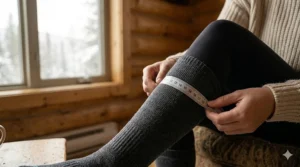
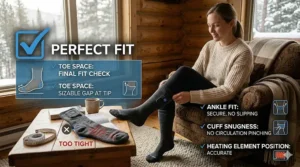
When measuring your feet for heated sock sizing, stand with weight distributed evenly (not sitting) and measure from your heel’s back edge to your longest toe tip. Most women’s feet measure between 22cm (size 5) and 27cm (size 10) in length. Compare this measurement to manufacturer specifications rather than just using your shoe size, since shoe sizes account for internal shoe volume while sock sizes follow actual foot dimensions. Width considerations matter more for heated socks than regular socks because heating elements create less stretch—if you typically buy wide-width shoes, size up one category in heated socks to prevent compression that restricts blood flow.
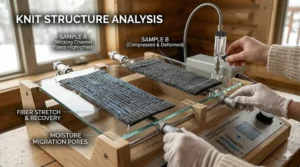
The elasticity and material composition dramatically affect fit within any size category. Cotton-blend socks (like MENOLY’s 80% cotton design) stretch less than synthetic blends but conform better over time through repeated wearing. Synthetic-heavy blends (like SAVIOR HEAT’s CoolMax) maintain their original shape longer but may feel tighter initially. Compression sock designs like Hotronic’s deliberately fit snugger to support circulation, which some women love and others find uncomfortable. Always check customer reviews for fit observations from women with similar foot profiles to yours—”fits true to size” means different things to someone with narrow feet versus wide feet.
Women’s Heated Socks for Winter Boots: Fit Optimization Tips
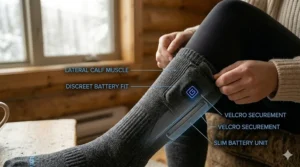
Achieving proper fit inside winter boots requires understanding the relationship between sock thickness, boot volume, and heating element placement. The most common mistake women make is buying heated socks and then discovering they’re too thick for their existing winter boots, creating uncomfortable pressure points that restrict circulation and ironically make feet colder despite the heating. Before purchasing, identify your boot style: performance ski boots demand ultra-slim profiles (Hotronic, Venustas), while loose snow boots and work boots accommodate thicker insulation (Dr.Warm, SNOW DEER).
The sock thickness combined with heating element stiffness determines how much internal boot volume you’ll consume. Traditional cotton-heavy socks compress more than synthetic blends, meaning a 3mm cotton sock (Dr.Warm) might ultimately take up less space than a 2.5mm rigid synthetic sock after the initial break-in period. The battery pocket location critically affects comfort—calf-mounted pockets (most common design) work best with mid-calf or tall boots that support the battery weight, while low-cut boots can create uncomfortable pulling sensations from unsupported battery packs.
For women wearing ski boots specifically, the heating element must not create pressure points against the boot’s rigid shell. The boot-fitting principle still applies with heated socks: your foot should sit centered in the boot with heating wires positioned where they don’t get compressed against bone prominences. Test this by putting on your heated socks and ski boots, then standing in normal skiing stance for 5-10 minutes—any uncomfortable pressure will become apparent during this test period. If you feel wire pressure against your shin, instep, or toe joints, that sock won’t work for skiing regardless of heating performance.
Boot liner thickness interacts with sock heating effectiveness—thicker liners insulate better but require more powerful heating to warm your feet through the additional material. Women upgrading from regular wool socks to heated socks often need to adjust their boot’s volume through liner replacement or footbed changes to accommodate the heating elements without creating a too-tight fit. According to Darn Tough’s sizing experts, the relationship between sock thickness and boot fit should allow enough room to wiggle your toes while preventing heel lift during forward motion.
Women’s Heated Socks for Skiing: Performance Demands
Skiing places unique demands on heated socks that differ from general winter wear or stationary cold-weather activities. The forward lean position in ski boots concentrates pressure on your shins and toe boxes, so heating elements must integrate flush with sock fabric rather than creating raised bumps that intensify under boot pressure. Women’s ski boots typically have narrower heel cups and lower calf volumes than men’s boots, meaning women need heated socks specifically designed for these dimensional differences.
The compression aspect becomes critical during skiing when blood flow to your feet decreases from both cold temperatures and the tight boot fit required for control. This is where Hotronic’s compression sock design (10-15 mmHg) actively improves circulation rather than just adding warmth—the graduated compression counteracts the boot’s restriction while the heating elements maintain comfortable temperature. Non-compression heated socks can actually worsen circulation in ski boots, creating a situation where your feet feel colder despite the heating elements working.
Battery placement affects skiing biomechanics more than casual winter use. Calf-mounted batteries (standard design) add weight and bulk precisely where ski boots already restrict movement, so the slimmest battery pockets become essential. The SAVIOR HEAT and Hotronic models design their battery pockets to minimize protrusion, allowing ski boot liners to compress around them without creating uncomfortable hard spots. Skiing also generates significantly more foot sweat than standing activities, making moisture management paramount—the CoolMax and merino wool blends in premium models actively wick moisture away before it freezes against your skin during chairlift rides.
Temperature cycling presents another skiing-specific challenge. You generate substantial leg warmth during active runs, then cool rapidly on chairlifts and in lift lines. The best heated ski socks (Hotronic, SNOW DEER) feature smart temperature regulation that automatically adjusts output to prevent overheating during activity while ramping up heat during stationary periods. This prevents the sweat-then-freeze cycle that plagues simple on-off heating systems. Women skiing in extremely cold conditions (0°F and below) need sustained high-temperature capability (140°F+) to counteract prolonged exposure, while resort skiing in milder conditions (20-35°F) works fine with medium settings that prioritize battery longevity.
Women’s Heated Socks Comparison Chart: Battery Life vs Temperature
Understanding the relationship between battery capacity, temperature settings, and actual runtime helps you match products to your real-world needs rather than falling for marketing claims. A 10000mAh battery doesn’t automatically provide twice the runtime of a 5000mAh battery—heating element efficiency and temperature regulation algorithms significantly impact actual performance.
Battery Capacity and Runtime Reality:
The VIVASTYLE’s 10000mAh batteries theoretically contain 100 watt-hours of energy, but real-world runtime depends entirely on heat setting selection. At 113°F low setting, these batteries genuinely deliver 14-16 hours because the heating elements cycle on-and-off to maintain temperature rather than running continuously. Switch to 140°F high setting, and runtime drops to 5-7 hours because maintaining higher temperatures requires more continuous power draw. The MENOLY 8500mAh batteries achieve comparable runtime to larger capacity competitors through superior insulation that retains generated heat longer, reducing how often heating elements need to activate.
Voltage impacts how efficiently batteries convert stored energy into heat. The 7.4V systems (SNOW DEER, SAVIOR HEAT) run heating elements at higher efficiency than 3.7V budget models, extracting more usable warmth per watt-hour consumed. This explains why SAVIOR HEAT’s relatively small 2200mAh batteries can run 10 hours on low settings—the higher voltage drives heating elements more effectively than brute-force high-capacity batteries at lower voltages. The newer 5V systems split the difference, offering decent efficiency with simplified charging infrastructure.
Temperature Setting Impact:
Most models offer three heat settings approximating 113°F (low), 131°F (medium), and 140-150°F (high). The temperature difference between low and high seems modest—only 27-37 degrees—but the power consumption difference is dramatic. Heating elements work exponentially harder to maintain each additional degree, meaning high settings can consume 3-4 times more power than low settings despite only generating 30% more warmth. For maximum battery efficiency, use high settings only for rapid warm-up periods (first 15-30 minutes), then drop to medium or low for sustained warmth.
Smart temperature regulation (found in Hotronic, SNOW DEER, Venustas) automatically cycles between settings to maintain your selected comfort level without wasting power. These systems measure actual sock temperature and activate heating only when temperature drops below your selected threshold, extending battery life 40-60% compared to simple constant-heat designs. This explains how Hotronic’s 2200mAh batteries achieve 13-hour runtime—not through larger capacity, but through intelligent power management that minimizes wasted heating cycles.
The relationship between outdoor temperature and required heat setting is non-linear. At 32°F, low settings often suffice for active use. At 15°F, most women need medium settings for comfort. Below 0°F, high settings become necessary just to maintain adequate warmth. Factor in wind chill and activity level—stationary ice fishing in 10°F with 15mph wind requires the same heat output as active skiing at -5°F without wind.
Women’s Heated Socks with Slim Battery: Boot-Friendly Options
Battery bulk represents the primary complaint women have about heated socks, particularly when trying to fit them inside sleek winter boots or performance ski boots designed for precise fit. The battery pocket protrusion creates a visible bulge under boot liners and pants, and more critically, can create uncomfortable pressure against the leg when the boot cuff contacts the battery during movement.
Slim Battery Design Innovations:
Venustas pioneers genuinely slim battery profiles through using high-density lithium cells configured in flatter arrangements rather than traditional cylindrical stacks. Their 19Wh batteries measure approximately 30% thinner than equivalent-capacity competitors, allowing them to nestle into boot liners without creating hard pressure points. This matters enormously for women in ski boots where every millimeter of bulk compounds into significant discomfort over a full day’s skiing. The tradeoff is slightly reduced capacity—19Wh approximates 2500mAh at 7.4V—but the improved comfort justifies this compromise for boot-centric activities.
Hotronic takes a different approach by using ultra-compact 2200mAh batteries combined with more efficient heating elements, achieving competitive runtimes without requiring large battery packs. Their battery pockets integrate into the sock’s compression fabric rather than creating separate pouches that protrude, distributing battery volume more evenly around the calf circumference. This distributed design feels less intrusive than concentrated battery lumps, even though total volume remains similar.
The battery pocket location options include calf-mounted (most common), ankle-mounted (uncommon but better for low boots), and integrated-into-sock designs where batteries nestle into special knit compartments. Calf-mounted works best with tall boots that support battery weight, while ankle-mounted suits shorter boots but concentrates weight lower on your leg. Women with narrow calves should prioritize brands offering adjustable battery pocket straps rather than fixed designs that create gaps allowing batteries to shift during movement.
Material and Construction Factors:
Battery pocket material significantly affects bulk perception. Rigid pockets maintain battery protection but create noticeable protrusions, while flexible fabric pockets conform better to leg contours but offer less impact protection. The SAVIOR HEAT covered-pocket design (no zippers or buttons) reduces bulk compared to zippered alternatives while simplifying battery insertion with cold fingers. Dr.Warm’s elongated battery pocket distributes battery length vertically rather than creating a thick horizontal bulge.
For women prioritizing minimal bulk above all else, the Hotronic and Venustas models deliver the slimmest real-world profiles, though at premium pricing. Budget-conscious buyers can minimize bulk perception by selecting socks with dark-colored battery pockets that blend visually into boot liners rather than bright contrast colors that draw attention to the bulge.
Ladies Thermal Sock Sizing: Understanding Women-Specific Fit
Women’s feet differ biomechanically from men’s in ways that generic unisex heated socks often ignore. Women typically have narrower heels relative to forefoot width, higher arches on average, and different pressure point distributions that affect where heating elements should concentrate warmth. These anatomical differences explain why simply sizing down men’s heated socks creates poor fit for most women.
Women-Specific Sizing Characteristics:
The heel-to-ball-of-foot proportion differs between genders—women’s heels sit proportionally closer to their forefoot than men’s feet of equivalent length. This means women’s heated socks need shorter heel cups to prevent fabric bunching behind the ankle, which creates both discomfort and poor heating element alignment. The SNOW DEER and SAVIOR HEAT models designed with women’s sizing account for this proportion, while one-size-fits-all designs (MENOLY, VIVASTYLE) rely on fabric stretch to accommodate different heel positions.
Arch height affects how heating elements contact your foot’s bottom surface. Women with high arches experience less contact with heating elements positioned flat against sock fabric, creating cold spots under the arch where heat doesn’t transfer effectively. Some manufacturers address this through 3D heating elements (Venustas) that curve to follow arch contours rather than lying flat. Women with flat arches or overpronation need heating elements that extend wider across the sole to maintain contact with their broader foot contact area.
Calf circumference proportions differ substantially between women and men of the same height and shoe size—women’s calves average 10-15% smaller circumference than men’s. This creates fit problems with unisex heated socks where the calf portion sits loose and saggy, allowing cold air infiltration and battery pocket shifting. The compression sock designs (Hotronic) solve this through elastic fabrics that conform to smaller calf circumferences, while adjustable battery straps (SAVIOR HEAT) let women customize calf fit regardless of foot size.
Sizing Between Categories:
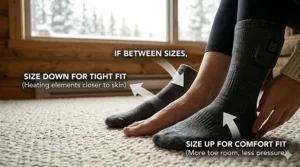
Women falling between standard size categories face difficult decisions. If you wear women’s size 7.5 shoes (the boundary between Small and Medium in most charts), should you size up or down? The answer depends on your foot width and boot fit constraints. Women with narrow or average-width feet should size down for better heating element contact and less fabric bulk. Women with wide feet or who prioritize comfort over precise fit should size up to avoid compression that restricts circulation.
The Nordic Socks sizing experts recommend measuring your actual foot length in centimeters rather than relying solely on shoe size, since shoe sizes account for internal volume while sock sizes follow actual dimensions. A women’s size 8 shoe accommodates feet ranging from 24.5cm to 25.5cm depending on brand and style, creating significant variability within the same nominal size.
Women’s Winter Foot Care: Heated Socks as Part of Comprehensive Warmth
Heated socks represent one component of comprehensive winter foot care rather than a complete solution by themselves. Understanding how heated socks interact with proper boot fit, moisture management, and circulation optimization creates genuinely warm, comfortable feet instead of just masking cold symptoms with artificial heat.
Layering Strategy Integration:
The traditional winter sock layering wisdom—thin liner sock plus thick wool sock—doesn’t translate directly to heated socks. Heated socks work most effectively when worn directly against skin without liner socks, since the additional fabric layer insulates your skin from the heating elements and reduces warmth transfer. However, this creates moisture management challenges if the heated sock’s material doesn’t effectively wick sweat away from your skin.
Women with hyperhidrosis (excessive sweating) or who engage in high-output activities like backcountry skiing should prioritize heated socks with superior moisture-wicking fabrics (CoolMax, merino wool blends) rather than cotton-heavy options that become damp and lose insulating value. The moisture trapped against your skin conducts heat away 25 times faster than dry fabric, undermining the heating elements’ effectiveness. Alternatively, wear thin synthetic liner socks specifically designed for moisture transfer rather than insulation.
Circulation Enhancement Techniques:
Heated socks generate warmth, but circulation delivers that warmth throughout your foot tissue. Tight boot fit that restricts blood flow creates genuinely cold feet regardless of heating power—the heating elements can’t compensate for insufficient blood flow carrying warmth to extremities. This explains why some women report heated socks “not working” when the actual problem is circulation restriction from over-tightened boots or medical conditions like Raynaud’s syndrome.
The compression sock designs (Hotronic) actively improve circulation through graduated pressure that assists venous return, helping your body’s natural warmth distribution. Non-compression models require you to ensure proper boot fit that doesn’t create circulation restriction. Test this by wearing your heated socks and boots while sitting for 20 minutes—if your feet feel numb or tingly, loosen the boot closure or size up in socks even if this means accepting slightly less precise fit.
Women with diagnosed circulation disorders benefit from heated socks but should consult healthcare providers about appropriate temperature settings. The therapeutic warmth from 113-131°F settings can improve blood flow, but temperatures exceeding 140°F may cause discomfort or tissue damage in people with reduced sensation or temperature perception. Several reviewers note heated socks dramatically helping with Raynaud’s symptoms, but emphasize starting with low settings and gradually increasing rather than immediately using maximum heat.
Preventive Foot Health:
Beyond warmth, proper heated sock use prevents common winter foot problems including frostbite, chilblains, and trench foot. Frostbite occurs when tissue freezes, typically starting in toes where blood flow is naturally reduced. Heated socks prevent this by maintaining tissue temperature above freezing even in extreme conditions—the VIVASTYLE and MENOLY models’ extended battery life makes them particularly effective for prolonged cold exposure scenarios.
Chilblains (painful inflammation from cold exposure followed by rapid rewarming) can paradoxically be triggered by heated socks if you use maximum heat settings immediately after prolonged cold exposure. Gradual rewarming using low-then-medium-then-high progression prevents the inflammatory response that causes chilblains. The smart temperature regulation in premium models (Hotronic, Venustas) automatically manages this warmup progression.
Trench foot (tissue damage from prolonged cold and wet conditions) prevention requires moisture management as much as warmth—wet feet in cold conditions damage tissue even at temperatures above freezing. The moisture-wicking fabrics in quality heated socks (SAVIOR HEAT, SNOW DEER) actively prevent the wet-foot conditions that enable trench foot, making them superior to simple heat-only approaches.
Feminine Heated Footwear: Style Meets Function
The heated sock market has evolved beyond purely functional designs to include options that work aesthetically with women’s winter fashion rather than creating bulky, masculine silhouettes. Modern women’s heated socks consider the complete outfit context—from visible sock portions extending above boots to color coordination with winter gear.
Aesthetic Design Considerations:
Traditional heated socks came exclusively in black with bright, utilitarian battery pockets that screamed “medical device” rather than fashionable winter accessory. Current designs (SAVIOR HEAT, Venustas) offer color options including gray and subtle patterns that complement women’s winter wardrobes. The battery pocket colors now include options that blend into boot liners rather than contrasting colors that create visible lines through form-fitting pants.
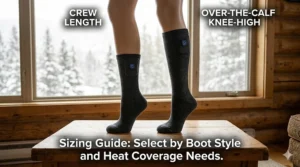
Sock height affects both function and fashion—crew-length socks work with mid-calf boots and provide better battery support, but can create visible lines with leggings or skinny jeans. Knee-high heated socks (less common) integrate seamlessly with tall boots but add unnecessary length for ankle-boot wearers. Most current women’s heated socks use mid-calf length (approximately 12-14 inches) as the optimal compromise between coverage, battery support, and wardrobe compatibility.
The fabric finish and texture impact how heated socks look when partially visible above boots. Matte finishes and subtle weave patterns (Hotronic’s compression knit) appear more refined than shiny synthetic fabrics that photograph poorly and clash with natural fiber winter clothing. Women wearing heated socks with shorter boots or in situations where socks might be visible should prioritize models with presentable external appearance rather than purely technical aesthetics.
Coordinating with Winter Footwear:
Women’s winter boots span enormous variety from functional snow boots to fashion-forward knee-highs with minimal insulation. Heated socks must flex across this footwear spectrum rather than working with only one boot category. The slim-profile models (Venustas, Hotronic) fit easily inside fashion boots with limited internal volume, while thicker insulation models (Dr.Warm, SNOW DEER) pair better with utilitarian snow boots and work boots.
Boot color and material affect how visible heated sock battery pockets become—tall black leather boots conceal battery bulk effectively, while shorter boots in light colors can create visible battery pocket outlines. Women concerned about visible battery bulges should choose socks with calf-strap adjustments that position batteries on the inner or outer leg (away from direct frontal view) rather than centered on the shin where they’re most visible.
The transition zone between sock and boot represents a critical comfort area. Battery pockets positioned too high create uncomfortable contact with boot cuffs during walking, while pockets too low may not receive adequate boot support and pull downward uncomfortably. The adjustable positioning in SAVIOR HEAT and SNOW DEER models lets women optimize battery placement based on their specific boot heights and cuff positions.
Real-World Application: Sizing for Specific Winter Activities
Different winter activities demand different heated sock characteristics, and understanding these distinctions helps you choose the right model rather than buying one pair and hoping it works everywhere.
Alpine Skiing Requirements:
Downhill skiing combines high-output leg exertion with prolonged cold exposure on chairlifts, creating unique demands. You need heated socks slim enough to fit inside rigid ski boots (Hotronic, Venustas) without creating pressure points, plus moisture management for the substantial sweat generation from thigh-burning runs. Battery life must sustain 4-6 hours of mixed activity and rest periods—the SNOW DEER and Hotronic models with 6-13 hour capacity handle full ski days without mid-day recharging.
The compression aspect becomes critical because ski boots already restrict circulation through their necessarily tight fit for control. Non-compression heated socks can compound circulation restriction, while compression designs (Hotronic) actively improve blood flow despite boot tightness. Temperature control convenience matters enormously—app control (SAVIOR HEAT, MENOLY) lets you adjust warmth without stopping mid-run and fumbling under your ski pants to access manual controls.
Backcountry Skiing and Snowshoeing:
Touring and snowshoeing generate significantly more body heat than resort skiing through continuous climbing effort, but expose you to potentially colder ambient temperatures in remote terrain. This combination demands heated socks with excellent temperature range (adjustable from low for climbing to high for breaks) and extended battery life for all-day trips—the VIVASTYLE 14-16 hour capacity excels here. The moderate compression in touring boots allows slightly thicker socks than resort skiing, opening options like Dr.Warm’s 3mm insulation.
Moisture management becomes absolutely critical during touring because you generate substantial sweat during climbing that can freeze when you stop for breaks. The CoolMax and merino wool blends (SAVIOR HEAT, Hotronic) actively pull moisture away from your skin before it accumulates. Battery pocket security matters more in backcountry use where rough terrain and bushwhacking can snag loose fabric—the covered pocket designs (SAVIOR HEAT) prevent zipper snagging and battery ejection during falls.
Ice Fishing and Hunting:
Stationary cold-weather activities create the opposite challenge from active pursuits—you generate minimal body heat while enduring prolonged cold exposure, demanding maximum heating power and extended battery life. The Dr.Warm model with 167°F high setting and 3mm insulation thickness works brilliantly for sitting in ice shanties or hunting blinds where boot fit constraints don’t apply. The loose-fitting boots typically used for these activities accommodate thicker socks without circulation restriction.
Remote controller convenience (Dr.Warm) becomes valuable for adjusting heat without exposing your hands to cold or disturbing your position in a hunting stand. The longer runtime on low-medium settings (SAVIOR HEAT’s 10 hours, VIVASTYLE’s 16 hours) eliminates battery anxiety during extended sessions. Moisture management is less critical than active pursuits but remains important—even minimal foot perspiration accumulates over 6-8 hour sessions and can create wet-foot cold problems.
Winter Commuting and Urban Use:
Daily winter commuters need heated socks that work with regular winter boots or insulated work boots rather than specialized outdoor footwear. The MENOLY and Venustas models with slim battery profiles fit inside commuter boots without creating visible bulk under dress pants or business casual attire. Medium battery capacity (2200-3000mAh) suffices for typical 30-60 minute commutes, eliminating the need for premium high-capacity models.
The washability and durability become more important for daily use than occasional recreation—look for reinforced heel and toe areas (VIVASTYLE, SAVIOR HEAT) that withstand frequent washing. Battery recharge time matters for daily use since you need them ready every morning—the Type-C charging (VIVASTYLE, MENOLY) using common cables enables convenient overnight charging using your phone charger rather than dedicated heated sock chargers that get misplaced.
Buyer’s Budget-Performance Matrix
Creating a budget-performance framework helps you identify which price tier delivers optimal value for your specific needs rather than overspending on features you won’t use or under-buying and regretting inadequate performance.
Budget Tier ($60-$90):
This range captures previous-generation heated socks and current budget brands. You’ll typically get 3.7V or 5V battery systems with 2200mAh capacity, basic three-setting temperature control, and simpler fabric blends. These work acceptably for occasional winter use (a few times per season) or short-duration activities (1-3 hours), but struggle with extended use and extreme cold. The lack of app control and moisture-wicking fabrics limits comfort during active use. Consider budget tier only if you genuinely need heated socks infrequently and can’t justify higher investment.
Mid-Range Sweet Spot ($90-$130):
This tier offers the best value-to-performance ratio for most women. You get proven brands (SNOW DEER, SAVIOR HEAT, Venustas) with 7.4V battery systems, genuine 6-10 hour runtime, quality moisture-wicking fabrics, and often app control. The heating element designs provide effective 360-degree or 3D coverage, and durability supports multiple seasons of regular use. This range handles everything from weekend skiing to winter outdoor work without compromising comfort or reliability. Unless you have specific premium demands (ultra-long runtime, professional skiing) or can genuinely work with budget limitations, this tier delivers optimal value.
Premium Performance ($150-$200+):
Premium tier captures specialized brands like Hotronic and high-capacity models like VIVASTYLE. You’re paying for genuinely superior heating element integration (Hotronic’s surround heating), ultra-long battery life (VIVASTYLE’s 16 hours), advanced compression benefits, and Swiss or premium manufacturing quality. This tier makes sense for serious winter athletes using heated socks 20+ days per season, women with circulation disorders requiring therapeutic warmth, or professionals working outdoors where reliable warmth impacts job performance and safety. The performance difference over mid-range exists but is incremental rather than transformational—you’re paying 50-100% more for 20-30% better performance.
Cost-Per-Use Analysis:
A $150 Hotronic sock used 50 days per season for three seasons costs $1 per use. A $75 budget sock used 10 days before failing costs $7.50 per use. This cost-per-use perspective reveals that premium options often deliver better value for frequent users despite higher upfront costs. Conversely, occasional users (5-10 days per season) should absolutely choose mid-range or budget options where the lower upfront cost reflects their limited usage pattern.
Consider the replacement battery ecosystem when evaluating long-term costs. Some brands (SNOW DEER, SAVIOR HEAT) sell replacement batteries affordably ($20-$30 per battery), extending sock lifespan when batteries inevitably degrade after 2-3 seasons. Other brands require purchasing entirely new sock-and-battery sets when batteries fail, creating hidden replacement costs that undermine their apparent initial value.
Frequently Asked Questions
❓ What size heated socks should I buy if I wear women's size 8 shoes?
❓ Can I wear heated socks inside ski boots without creating pressure points?
❓ How long do women's heated sock batteries actually last in real-world use?
❓ Are women's heated socks machine washable or hand-wash only?
❓ Do women's heated socks work for people with Raynaud's syndrome or poor circulation?
Conclusion: Making Your Decision
The perfect women’s heated socks size guide comes down to matching your specific foot dimensions, activity demands, and boot constraints with the right combination of battery capacity, heating coverage, and material design. The seven models I’ve analyzed represent genuinely different solutions rather than minor variations on the same theme—the VIVASTYLE excels at multi-day autonomy, Hotronic dominates ski-specific performance, SAVIOR HEAT delivers premium features at mid-range pricing, and budget options like SNOW DEER provide solid performance for occasional users.
Your decision framework should prioritize three factors in order: boot compatibility (will they fit inside your actual winter boots without pressure points?), battery life relative to your typical usage duration (buying insufficient capacity guarantees frustration), and moisture management appropriate to your activity level (high-output pursuits demand superior wicking). Secondary considerations like app control, compression benefits, and aesthetic appearance matter, but shouldn’t override these fundamental performance factors.
The most common mistake women make is buying heated socks based solely on price or brand popularity without verifying they’ll work with their specific boots and usage patterns. Measure your actual foot length, identify your primary use case, and match to the technical specifications rather than hoping one-size-fits-all marketing claims will somehow work perfectly. The $20-$40 price difference between mid-range and premium tiers often delivers genuine performance improvements for serious users, while budget-tier savings rarely justify the compromised experience for anything beyond occasional use.
For most women, the sweet spot sits at mid-range models like SAVIOR HEAT or SNOW DEER offering proven 7.4V systems, 6-10 hour battery life, quality fabrics, and often app control around $90-$120. These deliver professional-grade performance without the premium pricing that only makes sense for daily heavy users. Size according to actual foot measurement rather than just shoe size, prioritize slim profiles if wearing ski boots or fashion boots with limited volume, and invest in proper moisture-wicking fabrics if you engage in active winter pursuits generating significant foot perspiration.
Recommended for You
- 7 Best Heated Socks for Steel Toe Boots That Actually Work 2026
- 7 Best Heated Socks for Tree Stand Hunting 2026
- 7 Best Heated Socks for Downhill Skiing 2026
Disclaimer: This article contains affiliate links. As an Amazon Associate, I earn from qualifying purchases. If you purchase products through these links, we may earn a small commission at no additional cost to you.
✨ Found this helpful? Share it with your friends! 💬🤗
