
In This Article
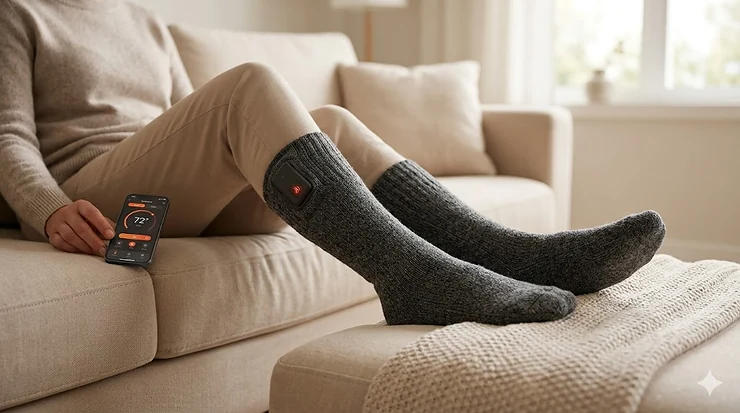
If you’ve ever experienced that pins-and-needles sensation in your toes or noticed your feet turning an alarming shade of purple after sitting too long, you’re not alone. Poor circulation affects millions of Americans, and for many, chronically cold feet become more than just an inconvenience—they’re a daily struggle that impacts quality of life. The good news? Heated socks for circulation problems have evolved far beyond the bulky, uncomfortable options of the past.

Modern heated socks work in two primary ways: battery-powered electric heating elements that deliver controlled warmth directly to your feet, and advanced thermal fabrics that trap and amplify your body’s natural heat. What most people don’t realize is that maintaining consistent foot temperature isn’t just about comfort—it’s about encouraging better blood flow. According to research published by the National Institutes of Health, peripheral circulation issues affect over 200 million people worldwide, with conditions like peripheral artery disease (PAD) becoming increasingly common as we age.
Here’s what you need to know before investing in heated socks: electric models with rechargeable batteries offer on-demand heat control but require charging and maintenance, while high-quality thermal socks provide passive warmth without batteries but won’t deliver the same intense heat. For people dealing with diabetes, peripheral artery disease, Raynaud’s syndrome, or simply stubborn cold feet from poor circulation, choosing the right type makes all the difference between merely tolerating winter and actually enjoying it.
Quick Comparison: Top Heated Socks at a Glance
| Product | Type | Heat Duration | Temperature Range | Best For | Price Range |
|---|---|---|---|---|---|
| SAVIOR HEAT APP Control | Electric/Battery | Up to 10 hours | 104-150°F | Tech lovers who want remote control | $80-$120 |
| Global Vasion Electric | Electric/Battery | 3-6.5 hours | 3 heat levels | Budget-conscious buyers needing reliable heat | $40-$65 |
| Snow Deer Rechargeable | Electric/Battery | 2-8 hours | High/Med/Low | Outdoor enthusiasts and hunters | $70-$95 |
| Heat Holders Original | Thermal (non-electric) | All day | Passive (2.34 TOG) | Diabetics needing soft, non-binding comfort | $12-$18 |
| 8500mAh APP Control | Electric/Battery | Up to 13 hours | 104-150°F (4 levels) | Extended outdoor activities | $90-$130 |
| SAVIOR HEAT Merino Wool | Electric/Battery | Up to 12 hours | 104-149°F (smart safety) | Premium comfort with natural fiber | $100-$140 |
| Thermrup Heated Insoles | Electric Insoles | 4-8 hours | 4 adjustable levels | Those preferring their own socks | $45-$70 |
Looking at this comparison, three patterns emerge immediately. First, battery-powered models in the $80-$130 range deliver the most versatile heat control—you’re paying for longer run times and smart features like app connectivity. Second, if you have diabetes or sensitive skin, the non-electric Heat Holders at around $15 provide impressive warmth without any risk of overheating or pressure points. Third, buyers on a tight budget should note that the Global Vasion offers solid performance around $50, though you’ll sacrifice some battery longevity compared to premium options. The real question isn’t which sock is objectively “best,” but which trade-offs align with your specific circulation needs and daily routine.
💬 Just one click — help others make better buying decisions too! 😊
Top 7 Heated Socks for Circulation Problems: Expert Analysis
1. SAVIOR HEAT Heated Socks with APP Control
The SAVIOR HEAT APP Control model stands out as the most technologically advanced option for anyone who values convenience alongside therapeutic warmth. What immediately caught my attention wasn’t just the Bluetooth app control—though being able to adjust heat settings from your phone without hiking up pant legs in freezing weather is legitimately game-changing—but rather the 360-degree heating coverage that wraps both the top and bottom of your forefoot.
Here’s what that means in practice: most cheaper heated socks only heat the toe box or just the top of your foot, leaving cold spots that defeat the purpose for circulation issues. SAVIOR HEAT’s far infrared carbon fiber elements cover the instep and entire toe area, which means more consistent warmth reaching the blood vessels you’re trying to help. The dual 7.4V 2200mAh rechargeable batteries deliver genuine performance—on low heat (104-113°F), expect a solid 9-10 hours, which is enough for a full day of outdoor work or hunting. Medium heat (122-131°F) gives you 5-6 hours, and high heat (131-149°F) runs about 2-2.5 hours. The spec sheet won’t tell you this, but those 7.4V batteries actually deliver 20% more power than the common 5V alternatives, which translates to faster heating and stronger warmth in genuinely cold conditions.
Customer feedback consistently mentions the Coolmax material’s breathability—sweaty feet are a circulation killer, and moisture-wicking matters more than most people realize. Users dealing with Raynaud’s and early-stage PAD report these actually keep their feet comfortable during winter commutes, something standard wool socks never managed. A few reviewers note the battery pocket design with a cover (rather than zippers) makes getting batteries in and out noticeably easier, especially with arthritis-affected hands.
Pros:
✅ App and manual button control for maximum flexibility
✅ 360° heating zone covers entire forefoot and toe area
✅ Higher 7.4V battery voltage delivers stronger, more reliable heat
Cons:
❌ Premium pricing (around $90-$120 range)
❌ Requires 4-hour initial charge before first use
Value Verdict: For serious circulation issues where consistent, controllable heat is non-negotiable, these justify the investment. The app control alone saves you from constantly bending over to adjust settings—a huge win if you have mobility limitations or simply appreciate not having to interrupt what you’re doing every hour.

2. Global Vasion Electric Heated Socks
If your budget caps out around $50-$60 and you need something reliable that actually works, Global Vasion Electric Heated Socks deliver surprising performance at nearly half the price of premium brands. These were specifically marketed for “chronically cold feet” from poor circulation, and real-world users with conditions like neuropathy and diabetes have backed up those claims in hundreds of reviews.
The 3.7V rechargeable lithium-ion batteries offer three distinct heat settings—high (red), medium (orange), and low (green)—with color-coded indicators that make it foolproof to know which mode you’re in. On high, you’ll get about 3-3.5 hours of heat; low settings stretch to 6-6.5 hours. That’s significantly shorter than SAVIOR HEAT’s runtime, but here’s the context that matters: if you’re using these for a 4-hour hunting session or a day at an outdoor sporting event, they’ll cover you completely. The heating element focuses primarily on the front instep and toe area, which is exactly where most circulation-related coldness concentrates.
The material blend uses carbon fiber heating technology with soft, stretchy knitted fabric. Multiple users mention these feel “thick and cushiony” compared to regular socks, with padded reinforcement at the heel and toe. One detail I appreciate: the recessed heating element design means the wires aren’t poking into your foot—a common complaint with cheaper heated socks that just lay wires flat against skin. For people with peripheral neuropathy who have reduced sensation, this matters tremendously; you don’t want exposed wires you can’t feel potentially causing hot spots.
Customer experiences split into two camps: outdoor workers and hunters love these for their no-frills effectiveness and reasonable price, while a minority complain about battery longevity declining after heavy use over multiple winters. The reality is you’re getting what you pay for—these aren’t built to last a decade, but for 2-3 seasons of regular use, they’re a solid value proposition.
Pros:
✅ Best value for money under $65
✅ Straightforward 3-level heat control with clear visual indicators
✅ Soft, stretchy material comfortable for extended wear
Cons:
❌ Shorter battery life compared to 7.4V models
❌ Some users report battery performance degrading after 1-2 years
Value Verdict: These are your “smart starter option” if you’re new to heated socks or unsure whether you’ll use them enough to justify spending $100+. They work, they’re affordable, and they’ll help you figure out whether battery-heated socks solve your circulation problems before committing to a premium investment.
3. Snow Deer Rechargeable Electric Heated Socks
Snow Deer Heated Socks occupy the interesting middle ground between budget and premium—around the $70-$95 range depending on sales—and they’ve built a loyal following among serious hunters and winter outdoorsmen who need consistent performance in brutal conditions. What separates these from cheaper alternatives isn’t just battery capacity (they use 7.4V 2200mAh batteries similar to SAVIOR HEAT), but the attention to material quality and heating element placement.
The Coolmax fabric construction deserves specific mention here. Coolmax isn’t just marketing jargon; it’s a polyester-based fiber engineered to wick moisture away from skin about 5 times faster than cotton. Why does this matter for circulation? Because damp feet constrict blood vessels and drastically reduce your body’s natural warming capacity. By keeping feet dry, these socks help your circulatory system do its job more effectively rather than fighting against trapped moisture. The heating elements cover the entire toe box comprehensively—not just a strip across the top—which users with poor circulation consistently highlight as the key feature that actually keeps their feet warm versus just “less cold.”
Battery performance sits in the 2-8 hour range depending on heat settings: low heat can stretch close to a full day, high heat burns through in a couple hours. Several hunters report using these successfully on all-day sits in sub-freezing temperatures, starting on low to conserve battery and bumping to medium or high as needed. One clever user tip from reviews: if you alternate between two pairs (keeping one set charging), you essentially get unlimited heated coverage for multi-day camping or hunting trips.
The material thickness makes these slightly less suitable for tight-fitting boots, though they work fine in ski boots and insulated winter work boots with room to spare. Some users note the cotton-based versions Snow Deer offers are comfortable but less effective than the Coolmax models for genuine cold-weather performance.
Pros:
✅ Excellent heat distribution across entire toe box
✅ Coolmax moisture-wicking keeps feet dry for better circulation
✅ Proven reliability in extreme cold among outdoor enthusiasts
Cons:
❌ Slightly bulkier than thinner electric sock options
❌ Cotton versions less effective than Coolmax models
Value Verdict: If you spend extended time outdoors in genuinely cold conditions—not just walking to your car but actually working or recreating in winter—Snow Deer hits the sweet spot of performance and durability without reaching premium pricing. Hunters particularly appreciate these because they hold up to repeated rough use.
4. Heat Holders Original Thermal Socks
Let’s talk about the elephant in the room: Heat Holders aren’t battery-powered heated socks at all, and that’s precisely what makes them essential in this lineup. For people dealing with diabetes, sensitive skin conditions, or anyone whose circulation issues come with complications that make controlled electric heat risky, these deliver remarkable warmth through pure thermal engineering rather than technology.
The 2.34 TOG rating—Thermal Overall Grade, a scientific measurement of insulation—makes these legitimately 7 times warmer than standard cotton socks. Here’s how they actually work: the specially developed heavy bulk yarn creates an extremely thick, cushioned pile with long loops that trap air close to your skin. That trapped air acts as insulation, while the intensively brushed inner lining feels incredibly soft and continues accumulating warmth throughout the day. No batteries, no charging, no risk of overheating—just passive thermal retention that works with your body’s natural heat production.
What customers with circulation problems specifically praise is the non-binding top. Traditional sock elastic creates pressure rings around your calves that can restrict blood flow—exactly what you’re trying to avoid if you have peripheral artery disease or diabetic neuropathy. Heat Holders solve this with a gentle, loose-fitting cuff that stays up without constriction. The 91% acrylic, 5% nylon, 3% polyester, 1% elastane fiber composition also provides superior moisture-wicking compared to cotton, keeping feet dry without the “clammy warmth” some thermal socks produce.
Multiple diabetic users report these helped them achieve a full night’s sleep for the first time in years—chronic cold feet at night is a legitimate quality-of-life issue that often goes unaddressed. At around $12-$18 per pair, these offer extraordinary value, though you’ll want to size correctly; they run thick, so if you’re between sizes or have narrow feet, consider sizing down.
Pros:
✅ No batteries or charging required—pure passive warmth
✅ Non-binding design safe for diabetics and circulation issues
✅ Exceptional softness reduces skin irritation and pressure points
Cons:
❌ Cannot provide active heating on demand
❌ Thickness may not fit in tight dress shoes or slim-fit boots
Value Verdict: Every person with circulation problems should own at least one pair of these as their “safe option” for situations where battery-heated socks aren’t practical or advisable. They’re also perfect for indoor use, sleeping, or anytime you need warmth without the bulk of battery packs.
5. 8500mAh APP Control Heated Socks with 360° Heat
The 8500mAh APP Control heated socks represent the current peak of battery capacity in this product category, and that translates directly into something people with circulation issues desperately need: confidence that warmth won’t suddenly abandon you mid-activity. With dual 8500mAh batteries—significantly larger than the standard 2200mAh most competitors offer—you’re looking at up to 13 hours on the lowest setting, 7-8 hours on medium, and 5 hours even on maximum heat.
Why does this matter beyond just “more hours”? For anyone managing PAD, Raynaud’s, or diabetic neuropathy, the psychological benefit of knowing your socks won’t die halfway through the day cannot be overstated. You stop constantly checking battery levels and can actually focus on your activity, whether that’s a work shift, a day on the slopes, or simply running errands without anxiety about your feet getting dangerously cold.
The four-temperature control system offers more granular adjustment than the typical three-level options: 104°F, 122°F, 141°F, and 150°F. That top setting at 150°F is notably hotter than most competitors, which some users appreciate for severely compromised circulation, though others find it unnecessary and prefer staying in the 122-141°F range for comfort. The app control via smartphone works smoothly according to reviews, though the manual button backup remains available if your phone dies or you simply prefer tactile controls.
These use an 80% cotton, 12% polyester, 8% elastane material blend—more cotton than the synthetic Coolmax options—which feels more “sock-like” and less technical, though it doesn’t wick moisture quite as aggressively. The 360-degree heating coverage extends across the instep and toes, ensuring no cold spots develop. Multiple reviews from users with “bad circulation and arthritis” specifically mention the relief these provide, noting the warmth helps reduce joint stiffness and soreness in feet and ankles.
Pros:
✅ Industry-leading 8500mAh battery capacity for marathon runtime
✅ Four temperature levels provide precise heat adjustment
✅ Cotton-rich blend feels more natural than fully synthetic options
Cons:
❌ Higher price point (around $90-$130 range)
❌ Cotton blend less moisture-wicking than Coolmax alternatives
Value Verdict: If battery anxiety has kept you from trusting heated socks, or if your daily routine genuinely requires all-day heating, the extra capacity here delivers peace of mind worth paying for. These are also smart for caregivers buying for elderly relatives with circulation issues—fewer charges mean less hassle and more consistent use.
6. SAVIOR HEAT Merino Wool Heated Socks with Smart Safety
The SAVIOR HEAT Merino Wool model addresses a question most heated sock buyers don’t think to ask until they’ve already purchased: what happens if I forget I have these on high heat? The Smart Safety feature automatically steps down to medium heat level every 30 minutes when on high, preventing potential hot spots while maintaining therapeutic warmth. You can manually bump it back to high if needed, but this automatic safeguard makes these the top choice for anyone with reduced sensation from neuropathy or anyone whose cognitive function might make them forget about temperature settings.
Beyond the safety innovation, what justifies the premium pricing (around $100-$140) is the merino wool construction. Unlike synthetic fabrics, merino naturally regulates temperature, resists odors, and provides exceptional softness. For people whose feet are sensitive from diabetic neuropathy or who simply can’t tolerate the sometimes “plasticky” feel of technical synthetics, merino delivers a wearing experience that doesn’t constantly remind you these are “medical devices”—they feel like quality socks that happen to be heated. The trade-off is these are slightly thinner than other SAVIOR HEAT models, making them perfect for ski boots, work boots, and hiking footwear where every millimeter of space matters.
The 7.4V 2200mAh batteries (two included) provide the standard impressive runtime: up to 12 hours on low, 5-6 hours on medium, 2-3 hours on high. The Bluetooth app control includes a timer function (0-180 minutes) that reviewers appreciate for naps or timed warming sessions. Battery status monitoring through the app prevents the common frustration of having socks die unexpectedly. One overlooked detail: the brown merino color choice helps hide inevitable dirt and wear better than black synthetics, a practical consideration if you’re wearing these daily.
Pros:
✅ Smart Safety auto-temperature regulation prevents overheating
✅ Premium merino wool provides natural comfort and odor resistance
✅ Slimmer profile fits better in tight boots and shoes
Cons:
❌ Highest price point in this comparison
❌ Merino durability slightly lower than synthetic options with heavy outdoor use
Value Verdict: For people with neuropathy who need maximum safety features, or anyone who prioritizes natural fiber comfort over synthetic performance, these represent the pinnacle of heated sock engineering. The Smart Safety feature alone makes these worth considering for gift-giving to elderly relatives with circulation issues.
7. Thermrup Heated Insoles
The Thermrup Heated Insoles take a completely different approach: instead of replacing your socks, they heat from below through battery-powered insoles that fit inside any footwear. This solution appeals to three specific groups: people who already have compression socks or diabetic socks they need to wear, those who want to heat their work boots or everyday shoes without changing what they’re wearing, and anyone who finds battery pockets on socks uncomfortable or inconvenient.
With four adjustable heat levels, these warm the entire bottom of your foot—sole, heel, and forefoot—which affects circulation differently than top-heating socks. Some users with PAD report this bottom-up warming feels more natural and effective for their specific condition. The insoles are one-size-fits-all but come clearly marked by shoe size, making them easy to trim down for a perfect fit. Battery packs slip into included gaiters that wrap around your calves (or can attach to boot laces), keeping them secured but accessible.
The heating technology takes a few minutes to reach full temperature—noticeably slower than socks that heat instantly—but once warmed, they maintain consistent heat well. Battery life runs 4-8 hours depending on setting, which is solid though not exceptional. Several reviewers mention these work brilliantly for jobs requiring steel-toe boots where thick heated socks simply won’t fit, or for dress shoes where battery packs on socks would be visible. The material is durable enough for daily use, though trimming them properly the first time is crucial; cut too much and they won’t heat evenly.
One significant consideration: because these are insoles rather than fabric against your skin, you MUST wear regular socks over them. Going barefoot risks overheating or discomfort. They also add about 3-4mm of height, which can affect boot fit if you’re already maxed out on space.
Pros:
✅ Works with any socks you already own and need to wear
✅ Heats from below for different circulation approach
✅ Perfect for work boots and footwear where heated socks don’t fit
Cons:
❌ Slower to heat up compared to direct-contact heated socks
❌ Requires wearing included gaiters to secure battery packs
Value Verdict: At around $45-$70, these offer a practical alternative if heated socks don’t work for your specific footwear needs or if you’re committed to existing compression socks for medical reasons. They’re also great for testing whether foot warming actually helps your circulation before investing in a full heated sock system.
How to Choose the Right Heated Socks for Your Circulation Needs
Selecting heated socks isn’t as simple as picking the highest temperature or longest battery life—your specific circulation condition, daily activities, and even your footwear determine which type will actually help versus just burning through your budget. Start by honestly assessing your symptom severity. If you’re dealing with mild cold feet that mostly bother you during outdoor activities, passive thermal socks like Heat Holders might solve your problem for under $20 without any electronic complexity. But if you have diagnosed peripheral artery disease, diabetic neuropathy, or Raynaud’s syndrome where your feet stay cold regardless of external temperature, you need active heating that electric battery-powered socks provide.
Battery Capacity and Runtime Reality
The spec sheets list maximum hours, but real-world usage differs significantly based on ambient temperature and your activity level. An 8500mAh battery claiming “13 hours on low” might deliver closer to 9-10 hours if you’re actually out in 20°F weather versus sitting indoors at 65°F. Calculate backward from your actual needs: if you work an 8-hour shift plus commute, you need at least 10 hours of claimed battery life to avoid running out. Similarly, if you plan multi-day hunting or camping trips, consider buying a second battery pair or choosing models with easily swappable batteries rather than integrated ones.
Material Matters for Medical Conditions
Diabetics and anyone with reduced foot sensation should prioritize non-binding tops and soft inner linings—tight elastic and rough seams create pressure points that can go unnoticed and cause problems. The merino wool and Coolmax options offer the best combination of softness and moisture-wicking; cotton feels traditional but traps sweat, which is counterproductive for circulation. If you have latex allergies or sensitive skin, verify material compositions before purchasing, especially with cheaper models that may use adhesives or coatings you’ll react to.
Heating Zone Coverage
Pay attention to WHERE heat is delivered, not just how hot it gets. Most circulation problems affect toes first, so you need heating elements that actually reach the toe box, not just the top of your foot. The 360-degree coverage models (SAVIOR HEAT, high-capacity 8500mAh options) cost more but eliminate cold spots that let circulation problems persist even while “heated.” If you specifically struggle with heel coldness (less common but it happens), consider heated insoles that heat from below rather than socks that typically focus forefoot.
Footwear Compatibility and Thickness
Be realistic about what you’ll wear these in. Thick battery-powered socks with bulky battery pockets won’t fit in slim-profile dress shoes, period. If you need heated socks for work boots, measure the available space; most quality heated socks add 3-5mm thickness compared to regular socks. For ski boots or ice skates where space is at absolute premium, look specifically at “slim fit” models or the merino wool versions that trade some insulation for reduced bulk. Heated insoles solve this by not changing sock thickness at all, though they add height instead.
Safety Features for Vulnerable Users
If you’re buying for someone with neuropathy who has reduced sensation, Smart Safety features that auto-regulate temperature aren’t optional—they’re essential. Manual temperature controls require awareness and fine motor skills; cognitively impaired or elderly users might not manage buttons reliably. Similarly, app-controlled models offer convenience for caregivers who can remotely check and adjust settings without disturbing the wearer. Passive thermal socks eliminate these concerns entirely but provide no active heating.
Total Cost of Ownership
Don’t just compare sticker prices; factor in battery replacement, charging cables, and expected lifespan. A $50 model that lasts one season before batteries degrade costs more annually than a $120 model that lasts four seasons. Premium brands (SAVIOR HEAT, Snow Deer) typically include better warranties and responsive customer service—read reviews specifically mentioning manufacturer support when things go wrong. Cheaper options work fine if you view them as disposable, but expect to replace them more frequently.
Real-World Application: Matching Socks to Your Circulation Situation
Understanding which heated socks work for theoretical “circulation problems” is one thing; knowing which ones actually solve YOUR specific daily challenges is what matters. Let me walk through three common scenarios with recommendations based on what actually works in practice, not just on paper.
The Daily Commuter with Early-Stage PAD
You work an office job, drive or take public transit, and your feet stay uncomfortably cold despite normal indoor temperatures. Your doctor confirmed peripheral artery disease but it’s mild—no pain while walking, just persistent coldness and occasional numbness. For this scenario, Heat Holders thermal socks during work hours paired with SAVIOR HEAT APP Control socks for your commute home offers the ideal combination. The Heat Holders keep you warm at your desk without any battery management or charging, while the electric socks in your bag handle the cold commute and evening walks. This prevents battery anxiety during your workday and gives you active heating exactly when needed.
Why this works: most people in this situation overcompensate by running heated socks all day, which wastes battery life and creates dependency. By splitting your warming strategy, you preserve battery capacity for genuine cold exposure while using passive thermal socks when your body can maintain adequate warmth with just insulation assistance.
The Outdoor Worker in Cold Climate
You spend 8-10 hours outside daily in winter—construction, utility work, landscape maintenance, or similar—and your PAD or Raynaud’s makes cold feet not just uncomfortable but potentially dangerous for circulation. You need maximum runtime without midday charging. For this scenario, the 8500mAh APP Control heated socks with their 13-hour low-heat capacity become non-negotiable, and I’d strongly recommend buying two pairs so you can rotate. Start your day on low heat, bump to medium during extreme cold periods, and keep the second pair charging at home so you never face a dead-battery situation.
Why this works: the extended battery capacity handles full work shifts, and the four-temperature system lets you balance warmth against battery consumption as weather fluctuates. The app control means you can adjust without removing gloves or bending over repeatedly—a practical detail that matters tremendously when you’re on a jobsite. The cotton-rich material is also more durable against the constant friction of work boots compared to thinner synthetic options.
The Diabetic Senior with Neuropathy
Your parent or elderly relative has diabetes-related neuropathy with poor circulation and reduced foot sensation. Safety is paramount—they might not feel if socks get too hot. They also have mobility limitations making charging and battery management difficult. For this scenario, Heat Holders thermal socks should be the everyday solution with SAVIOR HEAT Merino Wool Smart Safety socks reserved for genuinely cold outdoor activities. The Smart Safety auto-regulation prevents overheating even if they forget what temperature setting they’re on, and the merino’s softness reduces pressure points their reduced sensation won’t alert them to.
Why this works: defaulting to non-electric thermal socks eliminates burn risk and charging burden for daily use. When electric heat is truly needed (doctor appointments on cold days, holiday gatherings with outdoor walking), the Smart Safety feature provides active warming with automatic protection. The merino wool’s natural antimicrobial properties also help since reduced circulation often means reduced healing if skin problems develop.
Understanding How Heated Socks Support Blood Flow
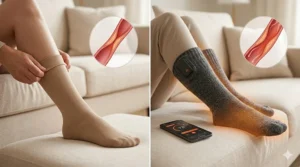
The connection between heated socks and circulation improvement isn’t as straightforward as “warmth equals better blood flow,” though that’s how most marketing presents it. The actual mechanisms at work deserve explanation because understanding them helps you use heated socks more effectively. When external heat is applied to your feet, your body responds by dilating peripheral blood vessels—a process called vasodilation—which increases blood flow to the area. This response is most beneficial for people with conditions like Raynaud’s syndrome where blood vessels constrict excessively, or early-stage peripheral artery disease where circulation is restricted but not completely blocked.
However, here’s the critical nuance that product descriptions never mention: heated socks maintain temperature rather than stimulating circulation in a way that persists after you remove them. According to research in vascular medicine, consistent gentle warming can help prevent the cold-induced vasoconstriction that makes circulation problems worse, essentially keeping your existing circulation working at its baseline capacity rather than dropping below it. For people with diabetes who have both neuropathy and circulatory issues, this temperature maintenance becomes particularly important since they can’t feel when their feet get cold and reach problematic states.
The Mayo Clinic explains that peripheral artery disease management focuses on exercise, medication, and lifestyle changes—heated socks aren’t medical treatment and won’t reverse arterial narrowing. What they CAN do is make it comfortable enough to stay active, which IS one of the best treatments for improving circulation long-term. If your cold feet prevent you from taking your daily walk, heated socks remove that barrier and let you engage in the actual therapeutic activity.
Think of heated socks as a tool that creates conditions favorable for your existing circulation to work optimally, not as a cure or therapy device. For severe circulatory issues like critical limb ischemia, you need medical intervention—heated socks won’t substitute for that and using them while ignoring serious symptoms could be dangerous. But for manageable circulation problems where staying warm, active, and comfortable supports your overall treatment plan, quality heated socks genuinely help.
Battery Safety and Maintenance for Long-Term Performance
Electric heated socks are only as good as their battery care, yet this is where most users unintentionally shorten their product lifespan by months or even years. Lithium polymer and lithium-ion batteries—the types used in all quality heated socks—have specific charging behaviors that either preserve or destroy their capacity over time. Understanding these basics will save you significant money and frustration.
First Charge Protocol Matters: When you receive new heated socks, that initial full charge (usually 4 hours) isn’t arbitrary—it calibrates the battery’s power management circuitry. Skipping this or doing a quick partial charge instead sets up problems down the line. Similarly, don’t use your socks until this initial charge completes; yes, they’ll turn on at 60% charge, but you’re training the battery to accept less capacity than it’s designed for.
Avoid Complete Discharge Cycles: Contrary to old advice about battery “memory,” modern lithium batteries hate being fully drained. If you run your heated socks until they completely die, you’re gradually reducing maximum capacity. Instead, recharge when they hit about 20-30% remaining power. If you feel batteries getting noticeably warm during use (beyond the normal slight warmth), stop using them immediately and let them cool before charging—overheating damages cells permanently.
Storage Strategy for Off-Season: Planning to pack away your heated socks for spring and summer? Don’t store them fully charged OR fully empty. Charge them to about 40-50%, disconnect the batteries from the socks, and store them in a cool, dry place. Every 3-4 months, check and top them back to 40-50% if they’ve self-discharged. Batteries stored fully charged at high temperatures degrade fastest; batteries stored fully dead sometimes refuse to charge again at all.
Charging Habits That Extend Life: Use the manufacturer’s charger, not random USB cables that might deliver incorrect voltage. Charge at room temperature, never in extreme cold or heat. Avoid charging overnight “just in case”—once the indicator shows full, unplug them. Constant trickle charging after full capacity slowly degrades battery chemistry. If you have two pairs of heated socks, rotate their usage rather than always using one pair while the other sits; batteries actually benefit from regular charge-discharge cycles within reasonable ranges.
Washing Without Destroying Electronics: This seems obvious but bears repeating: ALWAYS remove batteries before washing heated socks. Hand washing in lukewarm water with mild detergent is safest; if you must machine wash, use a mesh laundry bag on gentle cycle and air dry only. The heating elements themselves are waterproof, but the connection ports where batteries attach are not—ensure these are completely dry before reconnecting batteries or you’ll short something out. Never wring or twist heated socks aggressively; the internal wiring can disconnect even though you can’t see it from outside.
Common Mistakes When Using Heated Socks for Circulation Issues
Even quality heated socks fail to help if used incorrectly, yet these mistakes appear repeatedly in user reviews from people frustrated with “defective” products that were actually fine. Learning what NOT to do matters as much as choosing the right product.
Mistake #1: Assuming Hotter Is Better. People with severe circulation problems often blast their socks on maximum heat constantly, thinking more warmth equals more circulation benefit. This backfires in multiple ways: excessive heat makes feet sweat, which causes vasoconstriction when that sweat evaporates and cools—the opposite of what you want. It also drains batteries in 2-3 hours, leaving you with cold feet for the rest of your day. And for people with neuropathy, sustained high heat they can’t fully feel increases burn risk. The sweet spot for circulation support sits at medium heat (around 120-130°F), warm enough to dilate blood vessels without causing sweating or discomfort.
Mistake #2: Wearing Heated Socks Over Regular Socks. Layering heated socks over traditional socks blocks heat transfer and traps moisture between layers—exactly what worsens circulation. The heating elements need direct contact with your skin through a single thin sock layer for effective warming. If you need compression socks for medical reasons, wear those UNDER heated socks if possible, or choose heated insoles instead that work with your required compression hosiery.
Mistake #3: Ignoring Footwear Selection. Cramming heated socks into boots that are already snug constricts blood flow and negates the warming benefit. Your boots or shoes need enough room to accommodate the extra thickness of heated socks plus the battery packs without pressure. If your toes feel cramped or squeezed, you’re restricting circulation—size up your footwear or choose slimmer heated sock models. Similarly, wearing them in non-breathable rubber boots traps moisture and heat, creating a swampy environment that’s counterproductive.
Mistake #4: Static Usage Without Movement. Heated socks support circulation, they don’t replace it. Sitting completely motionless for hours with heated socks on is less effective than combining gentle warmth with periodic movement. If your job or situation involves prolonged sitting, set reminders to flex your feet, rotate ankles, and stand briefly every 45-60 minutes. The combination of external warming and muscle movement pumps blood through your lower extremities far more effectively than passive heating alone.
Mistake #5: Neglecting to Match Heat to Activity Level. Starting your day on high heat when you’re about to walk from your car to an office building wastes battery and overheats your feet before you even need warming. Learn to anticipate your day: start on low for active periods when your body is generating heat, bump to medium when stationary, and save high heat for emergency cold exposure. This tactical approach triples your effective battery life and maintains steady comfort rather than cycling between too-hot and too-cold.
Long-Term Cost and Value Analysis
Looking at heated socks as a one-time purchase misses the bigger financial picture. The true cost includes replacement batteries, potential accessory purchases, charging electricity, and product lifespan. Let’s break down what you’re actually spending over a typical 3-year period.
Budget Option Scenario (Global Vasion at ~$55): Initial purchase is affordable, but 3.7V batteries typically last 200-300 charge cycles before capacity drops noticeably. If you use these daily during 5-month winters, that’s about 150 charges per year, meaning replacement around year two. Global Vasion’s proprietary batteries aren’t widely available separately, so you’re likely buying a whole new set of socks—$55 more. Three-year total: approximately $110, or $36.67 annually.
Mid-Range Option Scenario (Snow Deer at ~$85): Better battery chemistry and build quality extend lifespan to around 400-500 cycles. With daily winter use, you’ll get through 2-3 seasons before needing new batteries. Snow Deer sells replacement battery packs for about $30-35, which is more economical than replacing entire socks. Three-year total: approximately $120 ($85 + $35 batteries), or $40 annually.
Premium Option Scenario (SAVIOR HEAT at ~$110): Higher-quality 7.4V batteries last 500+ cycles, and SAVIOR HEAT’s warranty and customer service mean defective units get replaced rather than abandoned. Replacement batteries cost around $40 but you’ll likely only need them once in three years. Three-year total: approximately $150, or $50 annually. Factor in the app features, better heat distribution, and longer daily runtime, and the per-hour cost of warming actually drops below cheaper options.
Thermal Non-Electric Option (Heat Holders at ~$15): No batteries, no charging, but they wear out faster with daily use—expect to replace annually with heavy use. Three-year total: $45, or $15 annually. This seems cheapest, but remember you’re only getting passive warming, not active temperature control.
The Hybrid Approach (What Smart Buyers Actually Do): Savvy users invest in one premium electric pair ($110) for outdoor activities and commutes, plus 2-3 pairs of Heat Holders ($45 total) for indoor and low-activity use. Three-year total: approximately $195, or $65 annually—but this covers all warming scenarios without over-relying on battery-powered options or underserving your needs. The versatility and appropriate-tool-for-situation approach provides better circulation support than any single option alone.
Hidden Costs to Factor In: Quality charging cables last; cheap ones fray and need replacement ($10-15 each). If you need larger boots to accommodate heated socks, that’s an additional footwear investment ($60-200 depending on type). Conversely, heated socks might let you avoid buying expensive insulated boots at all, potentially saving $100-150. The electricity to charge batteries is negligible—roughly $0.03-0.05 per charge cycle, or under $5 annually.

Frequently Asked Questions
❓ Can heated socks really improve circulation or just keep feet warm?
❓ Are battery-powered heated socks safe for diabetics with neuropathy?
❓ How long do heated sock batteries actually last before needing replacement?
❓ Can I wear compression socks underneath heated socks for circulation?
❓ What's the real difference between 7.4V and 3.7V heated sock batteries?
Conclusion: Finding Your Perfect Circulation Support Solution
After analyzing seven distinct heated sock options—from cutting-edge battery-powered smart socks to elegantly simple thermal engineering—the pattern becomes clear: there’s no single “best” option that works for everyone with circulation problems. Your ideal solution depends entirely on where you fall along three critical axes: severity of your circulation condition, daily activity patterns, and budget constraints.
For people with diagnosed peripheral artery disease or Raynaud’s syndrome who spend significant time outdoors, premium battery-powered options like the SAVIOR HEAT APP Control or 8500mAh extended-capacity socks aren’t luxuries—they’re legitimate therapeutic tools that enable you to remain active and comfortable. The $100-130 investment pays for itself within a season if it means you can maintain the daily walking your doctor recommended or continue working outside rather than calling in sick from cold-related discomfort.
Conversely, if you’re dealing with mild circulation issues primarily noticeable in indoor environments or during brief cold exposure, the Heat Holders thermal socks at $15 deliver extraordinary value without battery complexity or safety concerns. Don’t let anyone convince you that non-electric options are somehow “inadequate”—for many situations, they’re exactly adequate and appropriately matched to the problem.
The smartest approach most people eventually discover combines both worlds: passive thermal socks for everyday wear and indoor use, paired with one quality battery-powered pair for outdoor activities, commutes, and situations demanding active temperature control. This prevents battery dependency while ensuring you have serious heating capacity when genuinely needed.
Whatever you choose, remember that heated socks support your circulation—they don’t replace medical treatment, exercise, or addressing underlying causes. If your feet are chronically cold despite heated socks, or if you’re experiencing pain, numbness, or color changes that concern you, consult your doctor. Peripheral artery disease progresses, and early intervention makes a tremendous difference in outcomes. Heated socks keep you comfortable while you’re managing the real problem, not instead of managing it.
Recommended for You
- 7 Best Diabetic Safe Heated Socks for Cold Feet (2026 Guide)
- 7 Best Men’s Heated Socks for Work Boots 2026 Guide
- Women’s Heated Socks Size Guide: 7 Top Picks for Perfect Fit 2026
Disclaimer: This article contains affiliate links. As an Amazon Associate, I earn from qualifying purchases. If you purchase products through these links, we may earn a small commission at no additional cost to you.
✨ Found this helpful? Share it with your friends! 💬🤗
