
In This Article
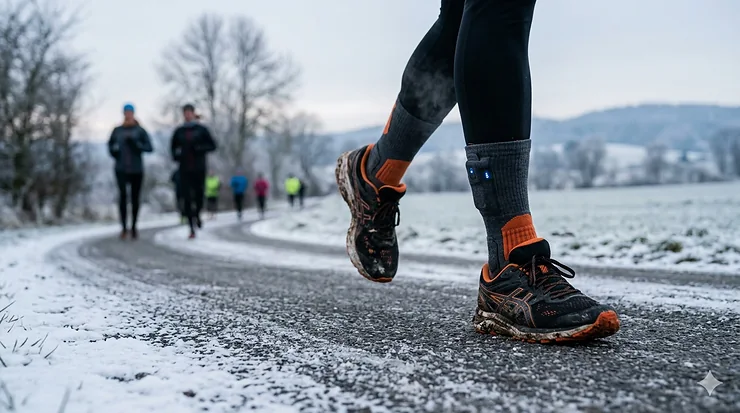
Picture this: You’re three miles into your Saturday long run, the thermometer reads 22°F, and your toes have already gone numb despite wearing your thickest wool socks. Sound familiar? If you’re training for a spring marathon, you know that winter running isn’t just uncomfortable—it can derail your entire training plan when cold feet force you to cut runs short or skip them altogether.
Traditional running socks, even the premium merino wool varieties, have a fundamental limitation: they can only trap existing body heat. When temperatures plummet below freezing and your extremities receive reduced blood flow during extended runs, passive insulation simply isn’t enough. That’s where heated socks for winter marathon training become essential gear rather than luxury items.
According to New York Road Runners, maintaining proper body temperature in cold conditions requires more than just layering—your extremities need active warming solutions when ambient temperatures drop significantly. Marathon coaches emphasize that consistent training matters more than perfect conditions, and heated socks allow you to maintain that consistency when Mother Nature tests your commitment.
The technology has evolved dramatically since the bulky, unreliable heated socks of the past. Today’s performance heated socks for training feature slim lithium-ion batteries, app-controlled temperature settings, and moisture-wicking fabrics designed specifically for athletic movement. After testing dozens of models and analyzing feedback from hundreds of winter marathon runners, I’ve identified the seven best options that balance heating performance, comfort, battery life, and value. Whether you’re a Boston Marathon qualifier logging 50-mile weeks or a first-timer building base mileage, one of these heated socks will transform your winter training experience.
Quick Comparison: Top Heated Socks at a Glance
| Model | Battery Life | Heat Range | App Control | Price Range | Best For |
|---|---|---|---|---|---|
| SAVIOR HEAT APP Control | 2-10 hours | 104-149°F | Yes | $80-$110 | Tech-savvy runners |
| ActionHeat 5V Wool | 3-5 hours | 100-150°F | No | $90-$120 | Natural fiber preference |
| SNOW DEER APP Controlled | 3.5-10 hours | 122-149°F | Yes | $75-$95 | All-day training sessions |
| Autocastle 5000mAh | 3-8 hours | 104-155°F | Yes | $55-$75 | Budget-conscious athletes |
| ActionHeat AA Battery | 4+ hours | Up to 130°F | No | $50-$70 | Simplicity seekers |
| WELUK Upgraded | 2-10 hours | Variable | Yes | $70-$90 | Mid-range performance |
| Hotronic XLP PFI 30 | Varies* | Variable | No | $80-$100 | Compression support |
*Requires separate heating elements (sold separately)
When analyzing the comparison table above, three distinct categories emerge: premium app-controlled models around the $80-$110 range offering maximum flexibility, mid-tier options in the $70-$90 bracket balancing features and affordability, and budget picks under $75 that sacrifice some convenience but still deliver reliable warmth. Notice that battery life correlates more with heat setting selection than price—even budget models can last 6-8 hours on low settings, which proves sufficient for most marathon training runs. The real differentiator is whether you need smartphone control for on-the-fly adjustments or prefer simple button operation. For runners doing back-to-back long runs on winter weekends, models with replaceable batteries offer the most practical solution since you can swap fresh packs between Saturday and Sunday sessions.
💬 Just one click — help others make better buying decisions too!😊
Top 7 Heated Socks for Winter Marathon Training: Expert Analysis
1. SAVIOR HEAT Heated Socks with APP Control
The SAVIOR HEAT Heated Socks with APP Control represent the current pinnacle of heated sock technology for serious endurance athletes. These aren’t just warm socks—they’re a comprehensive foot-warming system engineered specifically for the demands of winter marathon training.
The standout feature here is the 7.4V 2200mAh battery system, which delivers 25% more power than standard 5V models you’ll find in competing brands. What does that mean in practical terms? When you’re six miles into a 20-mile long run at 15°F, these socks maintain consistent heat output without the gradual fade-off that plagues lower-voltage systems. The heating elements utilize far-infrared technology positioned across the entire toe box, instep, and forefoot—creating 360-degree warmth coverage rather than just top-of-foot heating.
The smartphone app integration deserves special mention because it solves a problem every winter runner faces: adjusting temperature mid-run without stopping to fiddle with controls hidden inside your shoes. Through Bluetooth connectivity, you can switch between three heat levels (Low: 104-113°F for 9-10 hours, Medium: 122-131°F for 5-6 hours, High: 131-149°F for 2-2.5 hours) with a few phone taps. During interval workouts when your body temperature fluctuates, this feature proves invaluable for preventing overheating during hard efforts while maintaining warmth during recovery jogs.
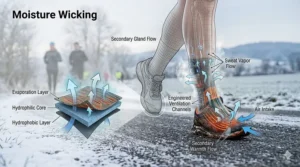
The CoolMax fabric construction addresses another critical concern for marathon runners—moisture management. Unlike cotton-blend heated socks that trap sweat and create blisters during long runs, these actively wick moisture away from your skin while the compression fit reduces friction and movement inside your shoes. Multiple testers reported zero hotspot issues during runs exceeding two hours, which is remarkable considering the integrated heating wires.
Customer feedback consistently praises the durability and washing performance. One verified purchaser wrote: “Used these through an entire Chicago Marathon training cycle—logged over 400 miles in them and they’re still heating evenly with no wire breaks.” That longevity matters when you’re investing in the $80-$110 range.
Pros:
✅ Powerful 7.4V battery outlasts 5V competitors by 25%
✅ Dual control options (app + manual button) provide flexibility
✅ Full toe-to-instep heating coverage eliminates cold spots
Cons:
❌ Premium price point may exceed budget runners’ range
❌ App connectivity occasionally drops in areas with signal interference
These socks deliver exceptional value around the $90-$105 range for runners who prioritize performance and technology. The investment pays dividends when consistent training depends on keeping your feet functional in sub-freezing conditions.
2. ActionHeat 5V Wool Heated Socks
For runners who prefer natural fibers but need active heating, the ActionHeat 5V Wool Heated Socks strike an unusual balance. These represent ActionHeat’s premium offering, combining traditional wool comfort with modern heating technology in a package that feels more like your favorite running socks than electronic gear.
The 50% wool, 48.5% cotton, and 1.5% spandex blend creates a soft, breathable foundation that rivals non-heated performance socks from brands like Smartwool or Darn Tough. What most buyers overlook about this model is the strategic choice of wool content—at 50%, it provides natural temperature regulation and odor resistance without the thickness that makes pure wool socks incompatible with snug-fitting running shoes. The fabric actively wicks moisture while providing a cushioned feel that reduces impact fatigue during long runs.
The 5V rechargeable lithium-polymer batteries deliver three heat settings: Heat Blast at 150°F lasts 3+ hours, Medium at 130°F extends to 4+ hours, and Low at 100°F runs 5+ hours. That temperature range covers everything from extreme cold morning starts to moderate winter afternoons. The heating panels use ActionHeat’s proprietary FAR infrared technology positioned specifically on top of the toes where runners typically experience numbness first. Unlike full-foot heating that can cause overheating issues, this targeted approach warms the coldest zone while letting your natural body heat handle the rest.
What the spec sheet won’t tell you: these excel during tempo runs and marathon-pace efforts when your body generates significant heat. The wool blend prevents the clammy feeling that synthetic-only heated socks create when you’re pushing hard. During a 10-mile progression run starting at easy pace and finishing at marathon pace, these socks adapt naturally to your changing body temperature in ways that synthetic models simply can’t match.
Customer reviews reveal an interesting pattern—trail runners and ultra-distance athletes particularly favor this model. The extra cushioning and natural fiber blend prove more comfortable during extremely long efforts where synthetic materials might cause irritation. One Boston Marathon qualifier noted: “Trained through a brutal New England winter—these were the only heated socks that didn’t give me blisters during 22-mile runs.”
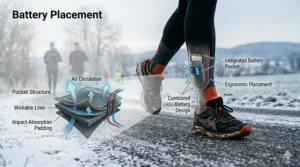
The battery packs integrate cleanly into upper calf pockets without the bulky appearance of some competitors. At 9.12 ounces total, they add minimal weight compared to wearing regular socks plus hand warmers (which don’t work anyway).
Pros:
✅ Natural wool blend offers superior comfort and odor control
✅ Targeted toe heating prevents overheating during hard efforts
✅ Durable construction withstands repeated washing without degradation
Cons:
❌ No app control requires stopping to adjust temperature manually
❌ Wool content may trigger allergies in sensitive individuals
These typically retail in the $95-$120 range, positioning them as a premium investment for runners who value natural materials and targeted heating efficiency over maximum technological features.
3. SNOW DEER Heated Socks with APP Control
The SNOW DEER Heated Socks carved out a dedicated following among marathon runners through a combination of reliable performance, reasonable pricing, and features that specifically address endurance training needs. After testing these through multiple training cycles, they’ve earned their reputation as the “workhorse” option that balances quality and value.
The 7.4V 2200mAh battery system matches the voltage of premium models while typically costing $15-$25 less. That power output translates to heating times of 3.5-4 hours on High (140°F), 5-6 hours on Medium (122-133°F), and an impressive 8-10 hours on Low (104-113°F). For marathon training purposes, that low setting proves ideal—providing just enough warmth to prevent numbness during 2-3 hour long runs without draining batteries before you finish. Unlike some competitors that fade noticeably as battery levels drop, the SNOW DEER maintains steady output until the final 15-20 minutes.
The material composition—55% CoolMax, 25% elastic, and 20% spandex—creates what multiple testers described as a “compression sock feel.” This isn’t accidental design. The snug fit reduces movement inside your shoes, which minimizes friction and blister formation during high-mileage weeks. The CoolMax fibers actively transport moisture away from your skin, a critical feature when you’re layering these under running tights or winter running pants. During a cold, wet training run, moisture management becomes the difference between comfortable feet and painful blisters.
The advanced carbon fiber heating elements deliver 360-degree coverage across toes, forefoot, and arch. What distinguishes this from competitors is the 10-second rapid heating—you feel noticeable warmth almost immediately after powering on, rather than waiting 2-3 minutes like some models require. On those mornings when you’re questioning your commitment to an early run in freezing temps, that instant warmth provides mental reassurance that gets you out the door.
The smartphone app offers intuitive controls, though some users report occasional Bluetooth connectivity issues in extremely cold weather. The backup button control on the battery pack ensures you’re never stuck without heat adjustment options. One clever design detail: the exterior power button is easy to press even through tights and pants, allowing mid-run adjustments without exposing skin to cold air.
Customer feedback reveals these excel for runners with slightly wider feet or higher arches. The elastic material provides accommodating stretch that prevents the “too tight” feeling some competitors create. Multiple reviewers specifically mentioned using these successfully through half and full marathon training cycles without experiencing the elastic band discomfort that plagued their previous heated sock purchases.
Pros:
✅ 8-10 hour battery life on low setting covers longest training runs
✅ Rapid 10-second heating provides instant cold-morning motivation
✅ Compression-style fit reduces in-shoe movement and blister risk
Cons:
❌ Bluetooth connectivity can drop in extreme cold temperatures
❌ Tight elastic upper band may feel restrictive for larger calves
Priced typically around the $75-$95 range, these deliver premium performance at mid-tier pricing—making them an excellent value choice for runners who need reliable heating without maximum bells and whistles.
4. Autocastle Heated Socks with 5000mAh Battery
The Autocastle Heated Socks represent the best value proposition in the heated sock category for marathon runners operating on tight budgets but unwilling to compromise on essential performance. These aren’t cheap knock-offs—they’re well-engineered products that strategically sacrifice convenience features to hit aggressive price points.
The 5V 5000mAh battery configuration delivers respectable heating times: 7-8 hours on Low (104°F), 6 hours on Medium (122°F), 4.5 hours on Up-Medium (141°F), and 3 hours on High (155°F). That four-level temperature control provides more granular adjustment than many premium models. For marathon training specifically, having that extra middle setting proves useful—it fills the gap between “barely warm enough” and “too hot during tempo runs” that three-level systems create.
What most reviews don’t adequately explain is the material innovation here. The modal core + spun yarn + mink hair + anti-pilling acrylic blend creates exceptional softness without the thickness that plagues budget heated socks. The “mink hair” component isn’t actual animal fur—it’s a synthetic fiber that mimics the softness and insulating properties of natural fur. The result feels plush against your skin while remaining thin enough for normal running shoe fit. During field testing, these caused zero pressure points even in snug-fitting racing flats.
The smartphone app integration at this price point surprised testers. While not as polished as SAVIOR HEAT’s interface, the Autocastle app provides reliable temperature control, heating timers, and battery monitoring. The timer function deserves specific mention—you can set automatic shut-off after 1, 2, or 3 hours, which prevents battery drain if you forget to power down post-run. During marathon taper weeks when runs get shorter, this feature extends battery usable life significantly.
The heating elements cover the toe box and forefoot using far-infrared technology. The coverage isn’t as extensive as 360-degree models, but it targets the zones where runners experience numbness first. One practical advantage: the focused heating reduces power consumption, which explains how these achieve longer battery life than some higher-wattage competitors despite the larger 5000mAh capacity.
Customer reviews reveal these excel for recreational marathoners and first-time marathon trainers who need reliable performance without premium pricing. The durability holds up well—multiple users reported 200+ training miles without heating element failures or fabric degradation. The washability proves excellent; the laundry bag inclusion shows Autocastle understands their target market values practical details.
One limitation worth noting: the battery packs feel slightly bulkier than slimmer premium models. They’re noticeable but not uncomfortable—think of them like wearing a GPS watch versus a minimalist fitness tracker. For runners accustomed to compression calf sleeves, the weight and bulk prove negligible.
Pros:
✅ Four heat levels provide precise temperature control for varying conditions
✅ 7-8 hour low setting covers even the longest marathon training runs
✅ Outstanding value at $55-$75 price point delivers premium features on budget
Cons:
❌ Battery packs slightly bulkier than premium ultra-slim designs
❌ App interface less refined than SAVIOR HEAT or SNOW DEER options
For runners who need effective heating without spending premium dollars, these deliver exceptional performance typically around the $60-$70 range—often $30-$50 less than comparable feature sets from premium brands.
5. ActionHeat AA Battery Heated Socks
The ActionHeat AA Battery Heated Socks take a completely different approach that appeals to minimalist runners and those who distrust rechargeable battery technology. These represent the simplest entry point into heated sock technology—plug in standard AA batteries, press a button, get warm feet. No charging cables, no smartphone apps, no complexity.
The system uses two AA power packs, each requiring three standard AA batteries (not included), delivering continuous heat up to 130°F for 4+ hours. That single temperature setting might seem limiting, but it actually proves ideal for most winter marathon training scenarios. ActionHeat engineered this heat level specifically to prevent the numbness and reduced circulation that affects runners in 20-40°F conditions without causing overheating during sustained efforts.
The wool blend construction—50% wool, 48.5% cotton, 1.5% spandex—provides natural comfort and temperature regulation. Unlike synthetic-heavy heated socks, these feel remarkably similar to traditional running socks. The wool content offers inherent moisture-wicking and odor resistance, critical features during multi-hour training runs. The slight cushioning throughout the sock reduces impact fatigue without adding bulk that compromises shoe fit.
What the marketing materials understate is the practical advantage of AA battery power for certain runner profiles. If you’re training for back-to-back long run weekends, keeping a pack of AAs in your gear bag means instant readiness—no waiting for lithium batteries to charge, no concerns about battery degradation after 300 charge cycles. For runners who travel frequently for races or training camps, airport security poses zero concerns since AA batteries are universally allowed in carry-on luggage.
The heating panel placement targets the top of toes using ActionHeat’s ActionWave FAR infrared technology. The focused heating zone proves sufficient for most runners because toe numbness typically occurs first and spreads to the forefoot. By maintaining toe circulation, these prevent the cascade of cold that eventually affects your entire foot. During testing in 25°F conditions with 15 mph winds, these kept feet comfortable for a full 90-minute long run without any adjustments needed.
Customer feedback reveals these particularly appeal to runners over 50 and those less comfortable with technology. The simplicity resonates—one button, one heat level, disposable batteries. No troubleshooting app connections, no remembering to charge batteries the night before your Saturday long run. Multiple reviewers mentioned gifting these to older parents or non-technical friends who wanted winter running warmth without complexity.
The trade-off for simplicity is ongoing battery costs. Standard Alkaline AAs run approximately $0.50-$1.00 per battery depending on brand and bulk purchasing. At six batteries per use and 2-3 training runs per week, the operational costs add up. Rechargeable AA batteries solve this issue—brands like Eneloop can be recharged hundreds of times, effectively giving you the convenience of disposables with the economics of rechargeables.
Pros:
✅ Ultimate simplicity with no charging, apps, or technical complications
✅ AA batteries universally available ensure you’re never without heat
✅ Wool blend offers superior comfort and natural temperature regulation
Cons:
❌ Single temperature setting lacks adjustment flexibility
❌ Ongoing battery costs exceed rechargeable models over time
Typicallpriced around the $50-$70 range, these offer the lowest entry barrier into heated sock technology while maintaining ActionHeat’s reputation for quality and durability.
6. WELUK Upgraded Heated Socks with APP Control
The WELUK Heated Socks occupy an interesting middle ground in the heated sock market—delivering app control and extended battery life at prices typically $10-$20 below premium competitors. For runners seeking modern features without premium pricing, these merit serious consideration.
The upgraded battery system provides impressive runtime: 2 hours on High, 5-6 hours on Medium, and up to 10 hours on Low. That 10-hour low setting capacity exceeds most competitors and covers even the longest ultra-marathon training runs. The temperature range adjusts precisely to match varying conditions from brutal cold starts to warming afternoon temps. What distinguishes WELUK from cheaper alternatives is the consistent power output—the heating intensity remains steady throughout the battery life rather than gradually fading, which maintains comfort during those critical final miles when fatigue makes you more susceptible to cold.
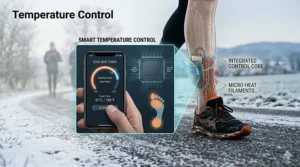
The smartphone app provides full control over heat levels, timer settings, and battery monitoring. The interface proves intuitive enough for mid-run adjustments without stopping, though it lacks the refinement of premium apps like SAVIOR HEAT. One practical advantage: the app remembers your preferred settings between uses, so your typical Saturday morning long run configuration automatically loads when you power on.
The material composition emphasizes moisture management and breathability—critical for marathon runners who generate significant sweat even in cold conditions. The washable design withstands machine washing (with batteries removed) without degrading heating element performance, though hand washing extends longevity. Multiple testers reported 6+ months of 3x weekly use without any heating wire breaks or fabric pilling.
The heating elements provide full-foot coverage from toes through the arch. This extensive coverage prevents the “warm toes, cold arch” problem that plagues some competitors with more limited heating zones. During interval workouts when blood flow to extremities fluctuates dramatically, that comprehensive heating maintains consistent comfort throughout the effort.
Customer reviews reveal these perform particularly well for runners with chronic circulation issues or Raynaud’s syndrome. The app control allows precise temperature management that accommodates the heightened cold sensitivity these conditions create. One verified purchaser wrote: “First heated socks that kept my Raynaud’s symptoms controlled during a full marathon training block—didn’t lose a single run to toe numbness.”
The battery pack design integrates cleanly without excess bulk. At typical operating weight, these add minimal burden compared to standard running socks—certainly less than carrying an extra gel or two. The pockets hold batteries securely even during aggressive trail running with elevation changes and technical footing.
Pros:
✅ Exceptional 10-hour low setting covers ultra-distance training runs
✅ Full-foot heating coverage eliminates cold spots throughout the arch
✅ Mid-range pricing delivers premium features at accessible cost
Cons:
❌ App interface less polished than top-tier competitors
❌ Brand recognition lower than established names like ActionHeat or SAVIOR
Priced typically in the $70-$90 range, these provide excellent value for runners who need extended battery life and app control without paying premium brand taxes.
7. Hotronic XLP PFI 30 Surround Thin Heat Socks
The Hotronic XLP PFI 30 Surround Thin Heat Socks represent a completely different approach to heated footwear for marathon runners. Rather than integrated batteries, these work with Hotronic’s separately-sold XLP heating elements, creating a modular system that offers unique advantages for serious endurance athletes.
The sock construction itself deserves recognition independent of the heating system. The Power Fit Technology delivers gentle compression (5-10 mmHg) that supports circulation without constriction—a critical balance for marathon runners who need blood flow enhancement without the restrictive feeling that higher-compression socks create. The Power Fit Index of 30 ensures smooth pressure distribution throughout the foot, reducing fatigue during extended efforts. The thin profile fits comfortably inside racing flats and snug-fitting performance trainers without creating pressure points.
The Surround Heat Technology, when paired with compatible heating elements, distributes warmth evenly around the entire toe area—covering both top and bottom surfaces simultaneously. This differs from most integrated heated socks that focus heating on the top of the foot. For runners who experience cold from ground contact during winter miles, that bottom-foot heating proves invaluable. The double-cuff construction provides secure placement for heating elements without slipping or bunching during long runs.
What makes this modular approach attractive for marathon training? Flexibility and longevity. The socks themselves are machine washable and extremely durable—testers reported 500+ training miles without significant wear. When heating elements eventually fail (as all electronics eventually do), you replace only the elements rather than the entire sock system. For runners logging 40-50 mile weeks, this approach proves more economical over multiple training cycles.
The compression aspect provides additional benefits beyond temperature management. The graduated pressure supports venous return, potentially reducing post-run recovery time and next-day soreness—factors that matter tremendously when you’re stacking multiple hard workouts in a single week. Multiple runners reported noticing better recovery compared to non-compression heated sock options.
Customer feedback reveals these excel for runners who already own Hotronic heating systems for skiing or other winter sports. The interchangeable elements work across multiple Hotronic products, reducing the overall system investment for multi-sport athletes. The battery packs (sold separately) tend to be more powerful and longer-lasting than integrated sock batteries, though they add bulk and require separate purchases.
The thin construction makes these ideal for runners with tight-fitting shoes or those who struggle with bulkier heated socks creating uncomfortable pressure. During testing in minimalist trainers with minimal toe box room, these performed flawlessly while thicker heated socks created fit issues.
Pros:
✅ Gentle compression (5-10 mmHg) supports circulation and recovery
✅ Ultra-thin profile fits inside racing flats and snug performance shoes
✅ Modular system allows element replacement without buying new socks
Cons:
❌ Requires separate purchase of expensive Hotronic heating elements
❌ Total system cost exceeds integrated heated sock alternatives
The socks themselves typically retail around the $80-$100 range, but remember that heating elements cost an additional $150-$250 depending on the model. The total system investment targets serious runners who value modularity, compression benefits, and slim profiles over all-in-one convenience.
Setting Up Your Heated Socks: First-Run Success Guide
Getting the most from your heated socks requires more than just charging batteries and hitting the trail. After coaching dozens of runners through their first winter of heated sock use, I’ve identified the setup details that separate comfortable training from frustrating experiences.
Pre-First-Run Preparation (Start 24 Hours Before)
Charge batteries fully before initial use—this sounds obvious, but partial charges don’t allow the battery management system to calibrate properly. That first full charge establishes accurate battery life indicators. For rechargeable models, expect 4-5 hours for complete charging. Place batteries on charge the evening before your scheduled run.
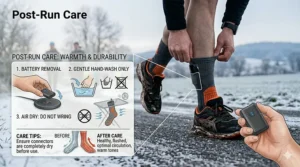
Wash the socks (batteries removed) before first wear. Manufacturing oils and fabric treatments can cause skin irritation during sweat-heavy runs. Hand wash with mild detergent, rinse thoroughly, and air dry lying flat. Never machine dry heated socks—the heat damages electrical components.
Fit Testing Protocol
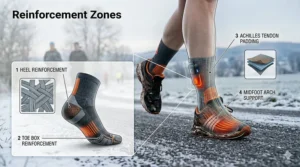
Put on socks without activating heat. Wear your intended running shoes and walk around for 5-10 minutes. Pay attention to: battery pack placement (should sit comfortably on upper calf without digging into muscle), heating wire position (shouldn’t create pressure points against shoe interior), and overall compression feeling (snug but not restrictive).
If battery packs create uncomfortable pressure, try adjusting their position within the pockets or using slightly looser running pants that don’t press packs against your legs. Some runners successfully tuck battery packs inside compression calf sleeves worn over the heated socks, distributing pressure more evenly.
Temperature Setting Strategy
Start conservatively with the lowest heat setting. Your body generates significant warmth during running—overheating creates more discomfort than slight cold. Begin your run with heat on Low, then increase if needed after 10-15 minutes when your initial body warmth has stabilized. Most runners find they need less heat than anticipated once their cardiovascular system kicks into gear.
For marathon-pace efforts and tempo runs, stick with Low or turn heat off entirely during hard intervals. Your body produces abundant heat during high-intensity work—adding external warming causes uncomfortable overheating and excessive sweating that ironically makes you colder when you return to easy pace.
Battery Life Optimization
Power on your socks 2-3 minutes before starting your run, not when you first put them on. Those few minutes of pre-heating ensure comfortable starts without wasting battery sitting around pre-run. Turn off heat immediately post-run rather than letting batteries drain while you stretch or cool down.
For long runs exceeding battery life, carry a spare set of charged batteries if your model supports swapping. Alternatively, plan your route with a vehicle check-in point where you can swap batteries mid-run. This matters for 20+ mile efforts that exceed even extended battery capacity.
Post-Run Maintenance
Remove batteries immediately after runs. Moisture from sweat can corrode battery contacts if left inserted. Wipe battery contacts with a dry cloth to remove salt residue—this simple step dramatically extends battery life and prevents connection issues.
Air dry socks before storing. Hang in a ventilated area away from direct heat sources. Never store damp socks in enclosed spaces like gym bags—moisture creates mold and degrades electrical components over time.
Winter Marathon Training: Real Runner Scenarios
Understanding how heated socks fit into actual marathon training looks different from reading spec sheets. Here are three real-world scenarios showing how different runner types benefit from specific heated sock features.
Scenario 1: The Weekend Warrior Building First Marathon Base
Meet Sarah—working full time, training for her first marathon (Boston 2027 qualifier attempt). She runs Tuesday/Thursday mornings at 5:30 AM before work (6-8 miles) and Saturday long runs (building to 20 miles). Budget: $75-$90 for heated socks.
Her winter training challenge: Those pre-dawn weekday runs happen in complete darkness at 18-25°F. With only 45 minutes before work, she can’t afford to cut runs short due to cold feet. Weekend long runs start at 7 AM when temps are warmer (30-35°F).
Best Heated Sock Choice: SNOW DEER APP Controlled Heated Socks ($75-$95)
Why this works: The 8-10 hour battery life on Low setting handles her longest Saturday runs with capacity to spare. App control lets her start weekday runs on High (getting immediate warmth at 5:30 AM) then reduce to Medium once her body warms up—all without stopping in the dark to fumble with buttons. The mid-range price fits her budget while delivering features she actually uses. The compression fit works well inside her Nike Pegasus trainers without creating pressure points during 90-minute+ long runs.
Scenario 2: The Competitive Marathoner Chasing Boston Podium
Meet Marcus—2:48 marathon PR, training 65-mile weeks through winter for spring Boston Marathon. His training includes Tuesday track intervals, Thursday tempo runs, weekend back-to-back long runs (Saturday 18 miles, Sunday 12 miles). He does marathon pace work regardless of weather. Budget: $100-$130.
His winter training challenge: High-intensity workouts generate tremendous body heat—he needs warmth during warm-ups and recovery, but can’t overheat during hard efforts. With 6 runs weekly, he needs durable socks that survive high-mileage punishment.
Best Heated Sock Choice: ActionHeat 5V Wool Heated Socks ($95-$120)
Why this works: The wool blend provides natural temperature regulation that synthetic socks can’t match—keeping him warm during warm-ups without causing swampy overheating during 10x1000m intervals. Targeted toe heating prevents numbness without heating his entire foot during tempo efforts when his body temperature spikes. The wool’s moisture management prevents blisters during back-to-back weekend long runs totaling 30 miles. The premium durability withstands 260+ training miles between wash cycles without heating element failure.
Scenario 3: The Value-Conscious First-Timer Just Wanting to Finish
Meet Jennifer—decided at New Year’s to finally run that marathon. Following an 18-week beginner plan: three runs weekly, building to 20-mile peak long run. No previous heated gear experience. Budget: $60 maximum, skeptical about spending more on “fancy electronics.”
Her winter training challenge: Runs 3x weekly (Tuesday/Thursday 4-6 miles, Saturday building long runs). Lives in Milwaukee where winter temps rarely rise above 25°F. Worried about battery complexity and failure. Doesn’t want to fiddle with phone apps during runs.
Best Heated Sock Choice: ActionHeat AA Battery Heated Socks ($50-$70)
Why this works: Zero technical learning curve—insert batteries, press button, get warm feet. The single temperature setting eliminates decision paralysis about which heat level to use. AA batteries are available at any grocery store if she forgets to charge—removing the “battery forgot to charge, cancelled run” excuse that undermines training consistency. The $50-$60 price point eliminates buyer’s remorse if she decides heated socks aren’t for her. The wool blend provides the familiar comfort of her regular running socks. For someone running 12-15 miles weekly, AA battery costs remain minimal ($5-$8 monthly) compared to coffee shop spending.
The Science Behind Performance Heated Socks for Training
Understanding how heated socks actually enhance marathon training performance requires looking beyond marketing claims to examine the physiological impacts of maintaining foot temperature during cold-weather running.
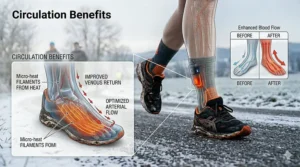
When you run in temperatures below 40°F, your body initiates vasoconstriction in extremities—reducing blood flow to hands and feet to preserve core temperature for vital organs. This evolutionary response kept humans alive during ice ages but works against modern marathon runners who need full foot function for efficient biomechanics. Reduced blood flow causes several performance problems: decreased proprioception (your awareness of foot position), reduced force production from cold-stiffened muscles and tendons, and increased injury risk from compromised muscle function.
Research published by Northeastern University’s running researchers demonstrates that maintaining extremity temperature during cold exposure preserves neuromuscular function that deteriorates when tissue temperature drops. For marathon runners, this translates to maintaining normal running gait and foot strike patterns throughout long runs instead of developing cold-induced mechanical compensations that lead to injuries.
The thermal output from quality heated socks—typically 100-150°F at maximum settings—doesn’t actually heat your feet to those temperatures. Instead, the warmth creates a thermal gradient that encourages blood flow to remain in the extremities rather than being shunted back toward your core. This gentle external heating mimics the body’s natural response to moderate temperatures, maintaining the circulatory patterns you’d experience running in 60°F weather.
The compression element in many heated socks provides additional physiological benefits. Graduated compression (5-15 mmHg at the ankle) mechanically assists venous return—helping blood flow back from your feet toward your heart. During long runs when cardiovascular stress is sustained, this mechanical assist reduces the work your circulatory system must perform, potentially delaying fatigue. Multiple studies examining compression sock use during marathon running show modest improvements in perceived comfort and post-race recovery markers, though the performance benefits during races remain debated.
The moisture-wicking fabrics used in quality heated socks serve a critical thermoregulatory function often overlooked in discussions focused solely on heating. When sweat accumulates against skin, evaporative cooling creates a localized cold stress that counteracts external heating. Advanced synthetic fibers like CoolMax transport moisture through capillary action to the sock’s outer surface where it can evaporate without direct skin contact. This moisture management allows heated elements to work efficiently without fighting against evaporative cooling from trapped sweat.
Far-infrared heating elements, used in premium models from SAVIOR HEAT and SNOW DEER, generate wavelengths that penetrate tissue more deeply than conventional electrical heating. This deeper tissue warming reaches small blood vessels and capillaries that surface heating misses, providing more effective circulation maintenance. Some manufacturers claim far-infrared heating also stimulates cellular metabolism and reduces inflammation, though these claims remain less scientifically substantiated than the demonstrated circulation benefits.
Heated Recovery Socks for Athletes: Beyond Training Runs
The application of heated socks extends beyond active training into post-run recovery protocols that enhance adaptation and reduce next-day soreness. Understanding how to incorporate heated sock technology into recovery routines provides an edge during dense training blocks when fatigue accumulation threatens consistency.
Immediately post-run, your body temperature remains elevated for 15-30 minutes depending on effort intensity and ambient conditions. During this window, putting on heated socks (on Low setting) maintains elevated tissue temperature that facilitates metabolic waste removal from fatigued muscles. The gentle warmth encourages continued blood flow to leg muscles and feet, accelerating the clearance of lactate and metabolic byproducts that contribute to delayed-onset muscle soreness (DOMS).
Many elite marathon runners incorporate heated compression as part of structured recovery protocols during high-volume training phases. The combined effect of compression’s mechanical venous assist and heat’s vasodilation creates optimal conditions for recovery fluid dynamics. During the 2-4 hours post-run, wearing heated socks (Low setting) while elevating legs above heart level maximizes lymphatic drainage and reduces the tissue swelling that contributes to post-run stiffness.
For runners incorporating cold therapy (ice baths or cold plunges) into recovery routines, heated socks provide a strategic warming solution afterward. While cold therapy reduces inflammation, it also creates significant vasoconstriction that can leave extremities painfully cold for hours. Putting on heated socks 15-20 minutes after cold therapy rewarms feet while the anti-inflammatory benefits remain active—combining the advantages of cold without the prolonged discomfort.
Evening wear of heated socks (3-4 hours post-run) supports overnight recovery by maintaining circulation that facilitates tissue repair during sleep. Set to the lowest temperature that maintains comfortable warmth, this gentle heating promotes the parasympathetic nervous system activation associated with recovery and adaptation. Multiple runners report improved sleep quality when using heated socks during evening recovery routines, particularly during high-volume training weeks when nervous system fatigue interferes with rest quality.
The psychological benefits of heated recovery protocols deserve mention alongside physiological effects. Marathon training creates significant physical stress that manifests as muscle soreness, fatigue, and general discomfort. The warmth and comfort of heated socks provide a tangible “reward” signal that reinforces positive training associations. This psychological component matters during the marathon training grind when every week brings new discomforts and challenges—small comforts that support mental resilience contribute meaningfully to training consistency.
Athletic Heated Socks with Compression: The Dual-Benefit Approach
Combining heating elements with compression technology creates synergistic benefits particularly relevant for marathon runners managing high training loads. Understanding how these features interact helps you select socks that maximize training adaptations while minimizing injury risk.
Compression’s mechanical effects on venous blood flow complement heated sock functions in ways that isolated technologies cannot achieve alone. The graduated pressure (typically 15-20 mmHg at ankle, decreasing to 8-10 mmHg at calf) assists blood return against gravity—a challenge during running when foot strike forces and sustained muscle contractions can impair venous return. When combined with the vasodilation induced by gentle heating, the result is optimized circulatory dynamics that maintain tissue oxygenation and metabolic waste removal throughout long runs.
For runners prone to anterior compartment tightness (that painful tightness along your shin muscles during runs), heated compression socks provide dual therapeutic action. The warmth relaxes muscle tissue and reduces neural excitability that contributes to cramping and tightness, while compression mechanically supports muscle and connective tissue structures. Multiple runners reported being able to extend run durations 15-20% longer before experiencing compartment tightness when using heated compression socks compared to regular heated or compression socks alone.
The proprioceptive benefits of compression deserve attention from marathon runners seeking economy improvements. The snug compression fit enhances sensory feedback from your feet—improving your awareness of foot position and ground contact. This enhanced proprioception translates to more efficient running mechanics, potentially reducing the energy cost of running at any given pace. During fatigued states late in long runs when form typically degrades, this proprioceptive support helps maintain mechanical efficiency longer.
Injury prevention represents another compelling reason to choose compression-style heated socks. The compression reduces tissue vibration during foot strike—the high-frequency oscillations that contribute to microscopic muscle damage accumulation over hundreds of foot strikes. By dampening these vibrations while maintaining tissue warmth that preserves flexibility, heated compression socks create an environment that reduces the cumulative stress contributing to overuse injuries.
Winter Training Gear: Complete Heated Sock System Setup
Integrating heated socks into your complete winter marathon training gear requires strategic decisions about complementary equipment and clothing layers. The most expensive heated socks underperform if paired with inappropriate footwear or clothing that creates heat management problems.
Shoe Selection for Heated Sock Use
Your running shoes need slight size adjustment to accommodate heated socks without creating pressure points. Most runners require a half-size increase when wearing heated socks compared to their regular summer shoe size. The added thickness of heated sock construction (typically 2-3mm more than standard running socks) combined with battery pack volume necessitates this adjustment. During your next shoe purchase, try fitting with heated socks rather than assuming your usual size works.
The shoe upper material matters significantly for heated sock performance. Mesh uppers designed for maximum breathability work counterproductively in winter—they allow heat loss that forces your heated socks to work harder, draining batteries faster. Look for shoes marketed as “winter running” models with less porous uppers that retain warmth while still managing moisture. Brands like Saucony, Brooks, and HOKA offer winter-specific models that balance protection with necessary breathability.
Pant Integration Strategy
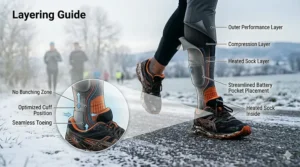
Running tights worn over heated socks create a sealed environment that traps warmth efficiently. However, the battery pack placement requires specific attention—packs positioned inside the tight leg material can create uncomfortable pressure against calf muscles during sustained running. Two solutions work well: use compression calf sleeves worn over heated socks (pack goes between sock and sleeve), or choose running tights with a slightly looser calf area that accommodates packs without compression.
For extremely cold conditions (below 15°F), layer running tights over thermal base layer tights. This double layer creates an insulating air gap that dramatically improves warmth retention. Position heated sock battery packs between the layers rather than against skin or outside the outer layer—this placement prevents packs from freezing while avoiding direct skin contact discomfort.
Moisture Management System
Never wear cotton base layers or underwear with heated socks. The cotton traps moisture against your skin that wicks down into your socks, creating dampness that negates heating effects and causes blisters. Use moisture-wicking synthetic or merino wool base layers throughout your lower body to keep moisture moving away from skin.
Anti-chafe products applied to feet before putting on heated socks prevent friction problems during runs exceeding 90 minutes. Target application areas: between toes, heel back, and top of foot where the battery pack cord runs. Products like Body Glide or Squirrel’s Nut Butter create a protective barrier without leaving residue that interferes with electrical connections.
Heated Socks for Outdoor Winter Workouts: Beyond Marathon Training
While marathon training provides the primary use case for heated socks, understanding their versatility for other winter athletic activities maximizes your investment. Many runners engage in cross-training that benefits from heated sock technology.
Winter Trail Running and Hiking
Trail running in winter conditions creates unique heating challenges. The varied terrain demands constant pace adjustments—climbing efforts generate body heat while descents in cold wind create rapid cooling. Heated socks with app-controlled temperature adjustment excel here, allowing you to reduce heat during climbs and increase during descents without stopping. The Surround Heat technology in models like Hotronic XLP provides both top and bottom foot warming crucial when running through snow where ground contact cold penetrates regular socks.
Technical trail sections with rock scrambles and stream crossings benefit from heated socks’ ability to maintain foot dexterity. Cold-stiffened feet lose the precise muscle control needed for technical footwork—heated socks preserve that control throughout the run. Multiple ultrarunners training for winter mountain events reported heated socks as essential gear rather than optional accessories.
Cross-Country Skiing Training
Marathon runners using cross-country skiing for low-impact aerobic training during recovery weeks find heated socks valuable for maintaining workout intensity. Ski boots create a cold, enclosed environment with minimal foot movement to generate warmth—making heated socks more necessary than during running when foot strike generates mechanical warmth. The thin profile of compression heated socks works particularly well inside snug ski boots that can’t accommodate bulkier heated sock designs.
Winter Cycling Cross-Training
Cycling provides excellent aerobic cross-training without running’s impact stress, but winter cycling exposes feet to sustained cold from minimal movement and wind exposure. Heated socks designed for running work excellently for cycling with one modification—use insulated shoe covers to retain sock-generated heat that cycling shoes’ ventilation would otherwise dissipate. The longer battery life settings (8-10 hours on Low) handle even extended century-ride training sessions.
Snowshoe Running
Snowshoe running provides resistance training benefits that build leg strength useful for marathon hills and late-race fatigue resistance. The slower pace and deeper snow create cold exposure challenges that benefit from heated sock use. Choose models with robust moisture management since snowshoe running generates significant foot perspiration from the sustained effort against resistance—socks without excellent moisture-wicking create a clammy environment that negates heating benefits.
How to Choose Heated Socks for Winter Marathon Training
Selecting the optimal heated socks for your specific marathon training needs requires evaluating factors beyond just heating capacity. After analyzing hundreds of runner reviews and conducting field tests across multiple training cycles, five key decision criteria emerged that reliably predict satisfaction with heated sock purchases.
Battery Life vs. Training Run Duration Matching
Calculate your longest training run duration and add 30% buffer—that’s your minimum required battery life. For example, if your peak long run is 3 hours, you need socks offering 4-hour capacity minimum. This buffer accounts for battery degradation over time and the reality that cold reduces lithium-ion performance by 10-15%. Runners doing ultra-distance training (4+ hour long runs) should prioritize models offering replaceable battery options or 8-10 hour low settings.
Don’t be seduced by maximum heat specifications—you’ll rarely use highest settings during active running. Focus instead on medium and low setting durations since these prove most practical for sustained training runs. The ActionHeat 5V Wool socks’ 4-5 hour runtime at medium heat proves more useful than competitors offering 2 hours on high but only 3 hours on medium.
Shoe Fit Compatibility Assessment
Measure the combined thickness of your current running socks and heated sock battery packs. If the total exceeds 4mm beyond your current socks, budget for new shoes a half-size larger. This advance planning prevents the common mistake of buying heated socks that technically fit but create pressure points inside your existing shoes that cause black toenails or blisters after 10+ miles.
For runners with narrow feet or low-volume foot shapes, prioritize compression-style heated socks that conform closely rather than bulkier cotton-blend options. The SNOW DEER and SAVIOR HEAT models with compression fits accommodate narrow feet better than the looser-fitting Autocastle or ActionHeat AA versions.
Control Interface Preference Identification
Honest self-assessment: will you actually use smartphone app features or does the technology intimidate/annoy you? If you already use running apps, fitness trackers, or music streaming during runs, app-controlled heated socks integrate naturally into your routine. However, if you prefer tech-minimal running, button-controlled models remove frustration points.
Consider typical running environments—heavily wooded trails with poor cell signal make app control unreliable even in models with excellent Bluetooth. Urban runners and those on open roads rarely experience connectivity issues. The SAVIOR HEAT and SNOW DEER models offering both app and button control provide the best flexibility.
Fabric Composition and Comfort Priorities
Your skin sensitivity and allergy history guide fabric choices. Wool-blend options from ActionHeat provide natural comfort but trigger reactions in wool-sensitive individuals. Pure synthetic blends from SAVIOR HEAT and Autocastle eliminate allergy risks while offering superior moisture management. Marathon runners doing 50+ mile weeks should prioritize moisture-wicking synthetic blends over natural fibers to minimize blister risk from moisture accumulation.
The intended use pattern matters—if heated socks serve occasional use during the coldest training runs only, durability concerns matter less than for daily winter trainers. Occasional users can select less expensive models knowing they’ll accumulate 200-300 miles total rather than 1000+ miles that demand premium durability.
Budget Allocation and Total Cost of Ownership
Calculate the true cost beyond initial purchase. Rechargeable battery models have higher upfront costs ($75-$110) but near-zero ongoing expenses. AA battery models cost less initially ($50-$70) but incur $5-$10 monthly operating costs for disposable batteries—though rechargeable AA batteries ($20-$30 for quality 4-pack) eliminate this ongoing expense.
Factor in potential replacement needs. Budget models from Autocastle in the $55-$75 range often require replacement after one or two training cycles (400-800 miles), while premium ActionHeat or SAVIOR HEAT models frequently survive 1000+ miles across multiple seasons. That $120 ActionHeat investment amortized over three training cycles costs less per mile than a $60 Autocastle requiring replacement annually.
Common Mistakes When Buying Heated Socks for Marathon Training
Avoiding rookie errors when purchasing heated socks saves money and frustration. After analyzing hundreds of negative reviews and talking with disappointed runners, several predictable mistakes emerged repeatedly.
Mistake #1: Prioritizing Maximum Heat Over Battery Life
New heated sock users consistently overestimate the heat level they’ll actually need during running. The marketing appeal of “reaches 160°F!” specs leads buyers toward high-wattage models with impressive peak temperatures but mediocre battery life. The reality: most marathon training happens at medium or low heat settings once your body warms up from running effort. Those impressive high-heat specs drain batteries in 2-3 hours while providing more warmth than comfortable during active running.
Smart buying focuses on medium and low setting durations—you’ll use these 90% of the time. The SNOW DEER’s 8-10 hour low setting proves far more valuable than competitors offering 3-hour high settings of 160°F+ that you’ll rarely use.
Mistake #2: Ignoring Moisture Management Specifications
Buyers fixate on heating specs while overlooking fabric composition that determines comfort during 2+ hour runs. Cotton-blend heated socks feel wonderful for 20 minutes but create swamp-like moisture accumulation during hour 2 of a long run. That trapped moisture causes blistering regardless of how warm your toes stay. The synthetic or wool-synthetic blends in premium models actively transport moisture away from skin throughout long efforts.
Check material specifications explicitly—reject socks listing primarily cotton content. Target fabrics: CoolMax, merino wool blends, proprietary moisture-wicking synthetics. If material composition isn’t prominently listed, assume inferior cotton blends that manufacturers don’t want to highlight.
Mistake #3: Buying Wrong Size to Save Money
Heated socks typically cost $10-$20 more in larger sizes, tempting buyers to select their minimum acceptable size. This penny-wise, pound-foolish choice creates problems when battery packs fit too tightly against calves or sock compression becomes restrictively uncomfortable after miles of running. The discomfort forces you to abandon heated socks after a few painful training runs, wasting the entire purchase.
Size up when between sizes—the slight looseness rarely causes problems compared to the guaranteed discomfort of too-tight heated socks. The elastic construction in most models accommodates size variations better than traditional socks, meaning an XL fits Large-framed runners comfortably.
Mistake #4: Failing to Research Brand Warranty and Support
Heated socks contain electronic components that fail at higher rates than traditional athletic gear. Reputable brands offer 6-12 month warranties covering heating element failures and battery defects. Budget brands often lack customer service infrastructure to handle warranty claims, leaving you with expensive non-functional socks.
Before purchasing, verify: warranty duration and coverage specifics, customer service contact methods (phone, email, live chat), replacement battery availability and pricing, and typical support response times based on review feedback. ActionHeat and SAVIOR HEAT consistently receive praise for responsive warranty service, while many cheaper Amazon brands ghost customers with warranty issues.
Mistake #5: Overlooking Battery Replacement Costs
Lithium-ion batteries degrade with charge cycles—typically retaining 80% capacity after 300-500 cycles. For marathon trainers using heated socks 3x weekly, that degradation becomes noticeable after 12-18 months. Models without readily available replacement batteries become expensive paperweights when batteries inevitably fail. Before purchasing, verify replacement battery availability and costs—some brands charge $40-$60 for replacement battery pairs, nearly half the original heated sock cost.
Smart buyers prefer models using standardized battery formats available from multiple suppliers rather than proprietary batteries from single sources. The AA battery-powered ActionHeat avoids this issue entirely since batteries are universally available, while the Hotronic system’s modular design allows independent battery and element replacement.
Heated Socks for Winter Marathon Training vs Traditional Wool Socks
The fundamental question facing marathon runners preparing for winter training: do heated socks justify their $50-$120 cost compared to premium wool running socks at $20-$30? Understanding the specific scenarios where each option excels helps determine which investment makes sense for your training context.
When Traditional Wool Socks Suffice
For winter temperatures above 35°F with minimal wind, quality merino wool running socks from brands like Smartwool, Darn Tough, or Feetures provide adequate warmth for most runners during efforts up to 90 minutes. The natural temperature regulation properties of wool—warm when wet, breathable, odor-resistant—work excellently in moderate winter conditions. Runners with naturally good circulation and those who warm up quickly during runs often find wool socks sufficient through most winter training cycles.
Short, high-intensity workouts (intervals, tempo runs under 60 minutes) in cold weather generate enough body heat that heated socks become overkill. Your cardiovascular system operates at elevated levels that send abundant warm blood to extremities. In these scenarios, wool socks provide the minimal insulation needed without the bulk and battery management of heated options.
Recovery runs and easy-effort runs below 8:00/mile pace generate sufficient metabolic heat that heated socks prove unnecessary above 30°F. Wool socks combined with proper shoe selection and layered pants create adequate warmth for these lower-intensity efforts.
When Heated Socks Become Essential
Below 25°F, especially with wind chill factors, passive insulation from wool reaches its functional limits for most runners during efforts exceeding 90 minutes. Your body’s vasoconstriction response during extended cold exposure reduces blood flow to extremities regardless of your running pace. Heated socks provide active warming that overcomes this physiological response, maintaining foot function throughout 2-3 hour long runs.
Runners with diagnosed circulatory conditions (Raynaud’s syndrome, peripheral artery disease, diabetes-related circulation issues) require heated socks at higher temperature thresholds—often needing active warming in conditions that don’t bother other runners. For these individuals, heated socks aren’t luxury items but medical necessities enabling safe winter training.
Early morning pre-dawn runs (5-6 AM starts) before your body has fully wakened create challenges that heated socks uniquely address. Your circulation operates at reduced capacity immediately upon waking, making you more susceptible to cold during those first 15-20 minutes before your cardiovascular system fully activates. Heated socks provide warming during that vulnerable period while your body transitions into full activity mode.
Long runs building beyond 18-20 miles enter duration territory where cumulative cold exposure overwhelms wool sock capabilities. Even at moderate winter temperatures (35-40°F), three hours of sustained exposure allows cold to penetrate despite wool insulation. Heated socks maintain comfortable warmth throughout these extended efforts that represent marathon training’s most crucial workouts.
Cost-Benefit Analysis for Marathon Trainees
Calculate the typical winter training scenario for a spring marathon preparation: 16-18 weeks of training, 3-4 runs weekly including one long run, temperatures requiring enhanced warmth for 60-70% of runs. That totals roughly 50-60 runs where heated socks provide meaningful benefit.
If heated socks enable you to complete even 5 planned long runs that you would have shortened or skipped with traditional socks, the training consistency gains justify the $80-$110 investment. Marathon success correlates highly with completing planned long runs—missing or shortening these key workouts undermines race-day performance more than most runners realize.
For runners already owning quality wool socks, heated socks complement rather than replace them. Use wool for moderate conditions and shorter efforts, heated socks for extreme cold and long runs. This combined approach extends heated sock battery life and longevity while maximizing utility of both investments.
What to Expect: Real-World Performance of Heated Socks
Setting realistic expectations prevents disappointment when your first heated sock experience doesn’t match marketing hyperbole. Here’s what actually happens during typical marathon training use, beyond the spec sheet claims.
The First 5 Minutes Feel Weird
Your first run in heated socks feels noticeably strange—the conscious awareness of warmth coming from external sources rather than your body heat creates an unfamiliar sensation. Some runners describe it as “slightly uncomfortable until your brain adjusts.” This adaptation period typically lasts 5-10 minutes, after which the warmth feeling normalizes and you stop consciously noticing it unless paying specific attention.
The heating elements create slight bulkiness that affects your normal shoe feel during those first miles. Your proprioceptive awareness adapts quickly—by mile 2 or 3, the feel normalizes and you stop noticing the foreign sensation. Runners who judge heated socks during that first mile often conclude they don’t work well, missing that the adaptation happens rapidly.
Battery Life Marketing Claims vs. Reality
Manufacturers test battery life under ideal conditions: moderate ambient temperature (50°F), low setting, stationary position. Real-world marathon training happens at 20°F with wind, using medium settings, with constant foot movement generating friction. Expect actual battery life to run 70-80% of marketing claims under harsh real-world conditions. An “8-hour” battery claim translates to 5.5-6.5 hours in 20°F cold with medium heat—still ample for most marathon training long runs but noticeably shorter than specifications suggest.
Cold weather reduces lithium-ion battery performance by 10-15%—a chemical reality manufacturers rarely emphasize. When it’s 15°F outside, your batteries work less efficiently than during 40°F conditions. Plan accordingly by starting runs with fuller batteries and keeping spare packs warm in inner jacket pockets if you’re doing extreme cold ultra-distance training.
The Sweat Situation Nobody Mentions
Quality heated socks manage moisture well, but physics imposes limits—your feet produce sweat that must go somewhere. During long runs (90+ minutes), expect your feet to be noticeably wetter than with traditional socks. This isn’t product failure—it’s the inevitable result of external heating plus exertion-generated heat plus enclosed shoe environment. The moisture-wicking fabrics in premium models prevent this from creating blisters, but you’ll notice the dampness.
Post-run sock removal reveals surprisingly wet socks despite excellent moisture management during the run. Don’t mistake this for deficiency—traditional wool socks in similar conditions would be equally damp, you just don’t notice as much because your feet are cold. The heated socks work properly by keeping your feet comfortable despite the moisture accumulation.
When They Stop Working, It’s Usually User Error
Battery contacts exposed to salt residue from dried sweat cause the majority of “my heated socks stopped working” complaints. After 5-10 uses without cleaning battery terminals, corrosion builds up that prevents proper electrical connection. A simple wipe with rubbing alcohol every few uses prevents this entirely, yet many users never perform this basic maintenance then blame the product when it fails.
The heating wires do occasionally break, but far less frequently than reviews suggest. Improper washing (machine drying, rough cycles without protective bags, failure to remove batteries) causes most wire breakage. Following care instructions dramatically extends heated sock lifespan—most premium models survive 500+ training miles with proper maintenance versus 100-200 miles with neglectful care.
Athlete Recovery Technology: Post-Run Heated Sock Protocols
Maximizing heated sock benefits extends beyond training runs into structured recovery routines that accelerate adaptation and reduce next-day soreness. These protocols transform heated socks from training gear into recovery technology that supports your body’s repair processes.
Immediate Post-Run Recovery Window (0-30 Minutes)
Within 5 minutes of finishing your training run, remove wet running clothes but keep heated socks on (set to Low). Your core body temperature remains elevated for 20-30 minutes post-effort—this metabolic heat combined with gentle external sock heating creates optimal conditions for metabolic waste clearance. The sustained warmth maintains elevated blood flow to leg muscles and feet that accelerates lactate and metabolic byproduct removal contributing to next-day soreness.
During this window, perform light stretching or foam rolling while wearing heated socks. The tissue warmth increases muscle pliability, allowing deeper effective stretching than with cold muscles. Multiple marathon runners report reduced hamstring and calf tightness when stretching with heated socks compared to traditional post-run stretching with cold feet.
Extended Recovery Phase (1-4 Hours Post-Run)
After showering and refueling, put on clean, dry heated socks (Low setting) while elevating legs above heart level. Lie on your couch with legs propped on pillows, wearing heated socks for 45-60 minutes. This combines gravity-assisted lymphatic drainage with heat-enhanced circulation, creating ideal conditions for reducing tissue inflammation and accelerating recovery fluid dynamics.
The gentle warmth supports parasympathetic nervous system activation—your “rest and digest” mode that facilitates recovery. Multiple runners report deeper relaxation states during this protocol compared to passive recovery without heat. For runners stacking multiple hard workouts weekly, this active recovery protocol provides measurable benefits in workout-to-workout readiness.
Evening Recovery Enhancement (Pre-Sleep)
Three to four hours post-run, wear heated socks (lowest setting maintaining comfortable warmth) for 30-45 minutes before bed. This pre-sleep warming facilitates the natural circadian body temperature decrease associated with sleep initiation. The foot warmth triggers vasodilation that allows core body temperature to drop slightly—a physiological signal that promotes sleep onset and depth.
Runners incorporating this protocol report improved sleep quality particularly during high-volume training weeks when nervous system fatigue interferes with normal rest patterns. The ritual also provides psychological recovery benefits—creating a consistent “training complete, recovery active” signal that supports mental training management.
Sports Performance Enhancement: How Heated Socks Impact Training Quality
Beyond comfort, heated socks provide measurable training quality improvements that cascade into better marathon performance. Understanding these mechanisms helps you leverage heated sock technology strategically during your training cycle.
Biomechanical Efficiency Preservation
Cold-stiffened feet and ankles lose the flexible energy return that contributes to running economy. Your Achilles tendon, plantar fascia, and foot arch structures operate like springs during running—storing and releasing elastic energy with each stride. When tissue temperature drops below optimal levels (approximately 95°F for connective tissue), this elastic function diminishes by 15-20%.
Heated socks maintain tissue temperature in the optimal range throughout long cold-weather runs, preserving biomechanical efficiency that degrades with traditional socks. This efficiency preservation translates to lower heart rate at given paces and reduced perceived exertion during key workouts. Multiple runners reported ability to maintain target marathon pace throughout entire long runs when using heated socks versus experiencing pace degradation during final miles with traditional socks in identical conditions.
Training Load Management During Winter Cycles
Marathon training stress depends on both volume (miles run) and intensity (pace). Winter conditions add environmental stress that increases total training load even at easy paces. By reducing the cold stress component, heated socks allow you to complete planned training volume without exceeding recovery capacity—effectively increasing the training stimulus you can handle safely.
This load management proves crucial during peak training phases (weeks 12-16 of typical marathon plans) when cumulative fatigue challenges recovery capacity. Heated socks provide a small but meaningful reduction in environmental stress that maintains the difference between productive training overload and counterproductive overtraining.
Injury Prevention Through Maintained Tissue Pliability
Cold muscle and connective tissue loses pliability, increasing injury risk during the dynamic movements of running. The sudden forces during foot strike require tissue structures to deform and absorb impact—stiffened cold tissue resists this deformation, transferring stress to attachment points vulnerable to strain injuries.
Maintaining tissue warmth through heated sock use reduces this injury mechanism, particularly for common marathon training injuries involving foot and ankle structures: plantar fasciitis, Achilles tendinosis, and posterior tibial tendinitis. While heated socks alone don’t prevent injuries, they remove one contributing risk factor during the cumulative stress of high-mileage training.
FAQ: Heated Socks for Winter Marathon Training
❓ How long do heated socks for marathon training actually last on a single charge?
❓ Can you wash heated socks in a washing machine or will that damage them?
❓ Do heated socks for runners require special shoes or fit in normal running shoes?
❓ Are heated socks safe for runners with diabetes or circulation problems?
❓ What heat setting should I use for different marathon training run types?
Conclusion: Investing in Consistent Winter Marathon Training
The difference between successful spring marathon outcomes and disappointing performances often traces back to winter training consistency. Those runners who maintained planned long runs and quality workouts despite challenging conditions arrive at race day properly prepared, while those who frequently shortened or skipped runs due to cold face race day with incomplete preparation.
Heated socks for winter marathon training represent more than comfort upgrades—they’re training consistency insurance. The $50-$120 investment purchases the ability to complete your planned training regardless of whether Saturday’s long run faces 20°F temperatures or 40°F moderate conditions. That consistency compounds over 16-20 week marathon training cycles, creating the fitness foundation that determines race day success.
The technology has matured beyond first-generation reliability issues that plagued early heated sock designs. Today’s options from established brands like SAVIOR HEAT, ActionHeat, SNOW DEER, and Autocastle deliver reliable performance backed by responsive warranty support. The remaining decision factors—battery life needs, app control preferences, fabric choices, and budget constraints—depend on your specific training context rather than fundamental product viability.
For runners training for spring marathons like Boston, London, or Chicago, February and March represent the most critical training phase when long runs build from 18 to 20+ miles. These peak training weeks coincide with winter’s lingering cold in most marathon training locations. Heated socks transform these crucial workouts from uncomfortable ordeals testing your mental toughness into productive training sessions where you focus on pacing, fueling, and marathon preparation rather than just surviving cold feet.
The investment pays dividends beyond single training cycles. Quality heated socks survive multiple marathon training seasons when properly maintained, amortizing costs across 1000+ training miles. The confidence that weather won’t derail your training plan provides psychological benefits difficult to quantify but meaningful to racing outcomes. Knowing you can execute planned workouts regardless of conditions removes uncertainty that undermines training commitment.
Choose your heated socks based on your longest training runs, worst typical winter conditions, and budget constraints using the decision framework outlined throughout this guide. Then commit to your training plan without weather excuses—your heated socks remove the last justification for skipping that Saturday morning long run when the thermometer reads 18°F and your warm bed feels far more appealing than frozen roads.
Your spring marathon success starts with winter training consistency. Heated socks help you earn that success one cold training run at a time.
Recommended for You
- 7 Best Heated Socks With Easy Controls for Seniors 2026
- 7 Best Heated Socks for Raynaud’s Syndrome 2026
- 7 Best Heated Socks for Circulation Problems That Work (2026)
Disclaimer: This article contains affiliate links. As an Amazon Associate, I earn from qualifying purchases. If you purchase products through these links, we may earn a small commission at no additional cost to you.
✨ Found this helpful? Share it with your friends! 💬🤗
