
In This Article
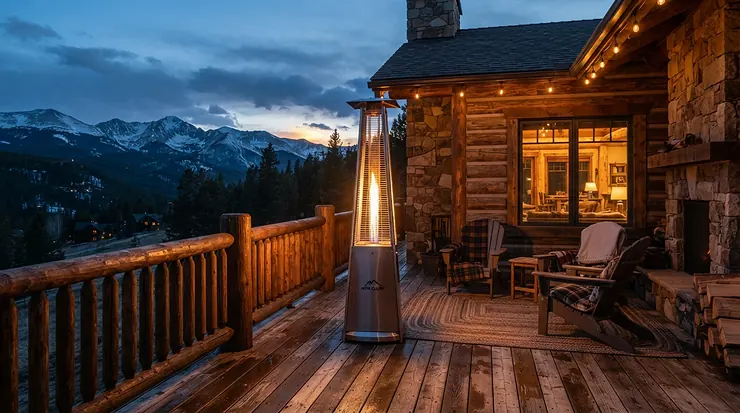
There’s a particular kind of stubbornness that kicks in around October, when the temperature drops but nobody wants to go inside yet. That’s the itch a portable pellet patio heater scratches. Instead of hauling around a hissing propane tank or running an extension cord across wet concrete, you fill a hopper with wood pellets, strike a match, and get a flame that looks like it belongs in a ski lodge rather than a backyard.
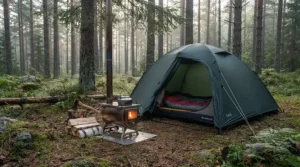
A portable pellet patio heater burns compressed hardwood pellets instead of propane or natural gas, which means no tank swaps, no gas lines, and — depending on the model — a genuinely mesmerizing visual flame you can watch through a glass tube while you talk, grill, or just sit there decompressing. Some models lean hard into ambiance (think glass fire tubes), others are built to actually throw heat across a patio, and a few are light enough to toss in the truck bed for a camping trip.
I spent time digging through real product listings, manufacturer specs, and aggregated customer feedback to put together this guide. Nothing here is invented — where reviews exist, I’ve flagged them as aggregated sentiment, and where I couldn’t verify something (like an exact BTU claim on a listing), I’ve said so rather than guessing. Below, you’ll find seven real, currently available portable pellet patio heater models spanning cheap grab-and-go units, mid-range patio centerpieces, and heavy-duty American-made stoves. There’s also a full breakdown of how to choose one, common mistakes buyers make, and a safety section worth reading before you strike that first match.
Quick Comparison Table
| Product | Best For | Price Range |
|---|---|---|
| Timber Stoves Lil’ Timber | Budget-friendly real heat output | $800–$900 range |
| Timber Stoves Big Timber | Large groups, maximum BTU | Around $1,100–$1,300 |
| Rayzi 67 Inch Spiral Flame Heater | Best-looking flame show | $150–$250 range |
| GARDENFLARE Fire Tube | Small patios, date-night ambiance | Around $250–$300 |
| Flame Genie Wood Pellet Fire Pit | Lightest grab-and-go option | Under $150 |
| Flame Genie Inferno with Tote | Camping and tailgating | $180–$220 range |
| Enyopro 2-Piece Patio Heater | Best value for two heating zones | $180–$330 range |
Looking at the spread above, the two Timber Stoves units are the only ones built for genuine, room-heater-style warmth rather than ambiance, and it shows in both their weight and their price. The Flame Genie models and the GARDENFLARE Fire Tube trade heat output for portability and visual flair, which is exactly what campers and small-balcony owners actually want. If your priority is warming a crowd rather than watching a pretty flame, skip straight to the Timber Stoves section below.
Found a favorite already? Tap through to check today’s price before it changes.
Top 7 Portable Pellet Patio Heaters: Expert Analysis
1. Timber Stoves Lil’ Timber — most heat per dollar in a portable frame
The Lil’ Timber is the budget entry point into Timber Stoves’ American-made lineup, and it doesn’t feel like a stripped-down version of anything. Rated at 72,000 BTU with a 12.5-lb stainless hopper, it’s built around a gravity-fed system that needs no electricity — the flame draws air purely from the stove pipe’s draft. Based on the spec comparison with propane units in this price bracket, that BTU figure is genuinely high; most propane patio heaters topping out around 40,000 BTU cost more to run for less warmth.
What most buyers overlook about this model is that “portable” here means wheeled and liftable by two people, not backpack-light — at roughly 70 lbs assembled, it’s a patio fixture you occasionally relocate, not a camping stove. It’s a strong fit for anyone who wants real warmth on a deck without committing to the premium-tier Big Timber.
Reviewers consistently note the burn quality is clean with minimal smoke, and the three-year parts-and-labor warranty on non-consumables gives some peace of mind that budget units in this category usually skip.
Pros:
- ✅ 72,000 BTU output rivals heaters twice the price
- ✅ Non-electric gravity-fed design works during power outages
- ✅ Three-year manufacturer warranty on key parts
Cons:
- ❌ Around 70 lbs — not a truck-bed camping heater
- ❌ Match-light ignition only, no auto-start
Priced in the $800–$900 range, the Lil’ Timber is the value pick if you want honest patio heat rather than mood lighting.
2. Timber Stoves Big Timber — most powerful for large backyard gatherings
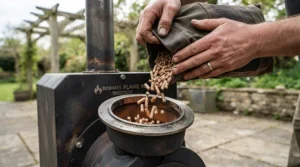
Step up to the Big Timber and you’re looking at a 90,000 BTU freestanding heater with a 20-lb hopper and a claimed 12-foot heating radius. Here’s what to weigh: this is genuinely a “warm a crowd” heater, not a personal-space unit, and the stainless steel construction is rated for both residential and commercial use. Based on the spec sheet, doubling the hopper capacity over the Lil’ Timber roughly doubles the runtime per fill too, so you’re not constantly refeeding it during a party. The trade-off is size and weight — at around 72 lbs and 84 inches tall, moving it solo across a yard is a two-person job, and it needs a genuinely stable, level surface. Reviewers on retail sites consistently praise the radiant, all-around heat pattern, though several aggregated comments mention that shipping damage on the tall glass panels is a recurring headache worth inspecting for on arrival.
Pros:
- ✅ 90,000 BTU handles large patios and events
- ✅ 20-lb hopper means fewer mid-party refills
- ✅ Stainless build rated for commercial-grade use
Cons:
- ❌ Heaviest unit in this list at roughly 72 lbs
- ❌ Tall glass panels are a common shipping-damage complaint
At around $1,100–$1,300 (often discounted from a higher list price), the Big Timber is the splurge for anyone hosting regularly rather than heating a two-person balcony.
3. Rayzi 67 Inch Spiral Flame Pellet Heater — best flame show for the price
The Rayzi heater leans fully into spectacle: an extended glass piping column that creates a spiraling, tornado-like flame pattern, paired with what the manufacturer calls “triple-burn technology” for cleaner combustion. The spec sheet lists an 8.4-lb hopper with roughly 3-plus hours of runtime, which is a solid middle ground — enough for a full evening without needing a giant fuel reserve. What most buyers overlook here is that this isn’t marketed as a primary heat source; it’s a visual centerpiece that happens to throw off warmth, similar in spirit to the GARDENFLARE below but with more usable heat output thanks to the wider burn chamber. The thickened base adds stability that lighter fire-tube designs sometimes lack, which matters if you’ve got pets or kids circling the patio. For the price, it’s hard to beat as a conversation piece that also takes the edge off a chilly evening.
Pros:
- ✅ Distinctive spiral flame effect stands out visually
- ✅ 3+ hour runtime per hopper fill
- ✅ Thickened base adds real tip-resistance
Cons:
- ❌ Ambiance-first design, not a primary heat source
- ❌ Glass column requires careful cleaning to stay clear
Sitting in the $150–$250 range depending on retailer, the Rayzi heater is the pick for people who want their patio to look as good as it feels.
4. GARDENFLARE Wood Pellet Fire Tube — best for small patios and intimate evenings
The German-engineered GARDENFLARE Fire Tube is upfront about what it is: a stainless steel and borosilicate glass column designed for two to three people, not a stand-in for a full patio heater. It burns roughly 2.2 lbs of pellets for up to 75 minutes, producing a flame column up to two feet tall.
Based on the spec comparison, this is the smallest fuel capacity in the group, which means more frequent reloading if you’re settling in for a long night — but that’s the honest trade for its compact, apartment-balcony-friendly footprint. Reviewers consistently frame it as an ambiance product first, warmth second, and the manufacturer’s own marketing agrees, explicitly stating it’s “not designed to replace a full patio heater for warming large outdoor spaces.”
Setup is genuinely fast, at roughly 5–10 minutes with no tools, which matters if you’re the type who decides to have people over an hour before they arrive.
Pros:
- ✅ Elegant, minimalist German design fits small spaces
- ✅ Tool-free setup in under 10 minutes
- ✅ Controlled airflow keeps the flame notably smoke-light
Cons:
- ❌ Only 75-minute burn time per load
- ❌ Manufacturer explicitly markets it as ambiance, not real heat
Priced around $250–$300, the GARDENFLARE is best suited to a condo balcony or a small patio table rather than a backyard that needs actual warming.
5. Flame Genie Wood Pellet Fire Pit — lightest true grab-and-go option
If the keyword you searched was closer to “pellet heater for camping” than “backyard centerpiece,” this is your model. The Flame Genie is a compact steel fire pit weighing only a handful of pounds, purpose-built to be tossed in a truck bed for RVing, tailgating, or backyard parties without ceremony.
It burns roughly 8 lbs of pellets per hour through a gravitational afterburner system that the manufacturer says produces virtually no smoke or sparks — a legitimately useful claim for anyone tailgating next to someone else’s car. Based on the spec sheet, its black powder-coat finish is rated to handle repeated high-heat cycles, and its ash pan design means the fire simply goes out cleanly rather than smoldering unpredictably.
Aggregated customer ratings sit in the moderate range (around 3.5 out of 5 on some retail listings), with complaints centered on maintaining a consistent flame requiring a bit of a learning curve — several reviewers note it takes practice to keep pellets feeding evenly.
Pros:
- ✅ Genuinely lightweight and easy to carry
- ✅ Smoke-free and spark-free combustion design
- ✅ Safe to cook over, per manufacturer specs
Cons:
- ❌ Requires practice to maintain a steady flame
- ❌ Ash pan needs frequent attention during long burns
Priced under $150, the Flame Genie fire pit is the cheapest true “lightweight pellet stove” entry here, and the best fit for anyone who camps more often than they host.
6. Flame Genie Inferno with Tote — best packable upgrade for campers
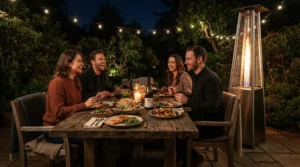
The Flame Genie Inferno is the larger sibling in the lineup, aimed squarely at bigger patios and group camping trips, and it ships with a canvas tote that turns it into an actual grab-and-go unit rather than something you strap down loose in a trunk. Its gravitational afterburner system is the same core tech as the standard Flame Genie, engineered for longer burn times with minimal smoke and ash. What most buyers overlook about this model is that the bottom nests inside the top for storage, shrinking its footprint considerably when it’s not lit — a detail that matters more than it sounds like it should when you’re packing a car for a weekend trip. Reviewers rate it slightly higher on average than the base Flame Genie, and the larger burn chamber means it’s a better match for four to six people around it rather than two.
Pros:
- ✅ Includes a carry tote built for transport
- ✅ Larger flame better suited to groups
- ✅ Nesting design shrinks storage footprint
Cons:
- ❌ Pricier than the standard Flame Genie
- ❌ Still an ambiance-leaning unit, not a space heater
At $180–$220, the Flame Genie Inferno earns its place as the transformation pick for anyone who wants one fire pit that works equally well at the campsite and on the patio.
7. Enyopro 2-Piece Smokeless Pellet Patio Heater — best value for covering two zones at once
The Enyopro heater stands out for one simple reason: it’s sold as a two-pack, which solves a real problem — one fire feature rarely covers both ends of a long patio or two separate seating areas. Each unit is built from 430 stainless steel with a clear glass viewing tube, weighs under 13 lbs, and assembles on a tripod stand in about 15 minutes.
Based on the spec sheet, each compartment burns for roughly 7–8 minutes before needing more pellets, adding up to 1.5–2 hours of total burn time per load — shorter reload cycles than some competitors, but the tripod design makes topping it off simple without waiting for the flame to die down completely.
Aggregated retailer ratings sit around 4.1 out of 5 based on dozens of reviews, which is solid for a budget-tier two-pack. The removable ash box is a small but genuinely useful touch for anyone tired of scraping soot out of a fixed base.
Pros:
- ✅ Two heaters for the price of roughly one premium unit
- ✅ Under 13 lbs each — easy to reposition solo
- ✅ 15-minute tripod assembly, no tools required
Cons:
- ❌ Shorter 7–8 minute burn per pellet compartment
- ❌ Tripod stand feels less sturdy than solid-base competitors
Bundled pricing typically lands in the $180–$330 range for the pair, making the Enyopro the practical pick for symmetrical patios or dual seating zones.
What Is a Portable Pellet Patio Heater?
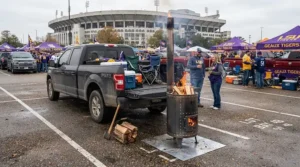
A portable pellet patio heater is an outdoor heating device that burns compressed wood pellets — rather than propane, natural gas, or electricity — inside a vented chamber to produce radiant heat and a visible flame, typically viewed through a glass tube or window. Wood pellets themselves are made from compressed sawdust and industrial wood waste, a category of solid fuel made from compressed organic material, drawn from categories of biomass including industrial waste, food waste, agricultural residues, energy crops, and untreated lumber. Because pellets burn more completely than raw firewood, most portable models produce noticeably less smoke than a traditional fire pit — a genuine practical advantage if you have close neighbors.
How to Choose a Portable Pellet Patio Heater
- Decide if you need heat or ambiance. Fire-tube style units like the GARDENFLARE prioritize visuals over warmth; freestanding stoves like the Timber Stoves models prioritize BTU output.
- Check the hopper capacity against your typical evening length. A 2-lb hopper burning 75 minutes means multiple reloads for a three-hour party; a 20-lb hopper doesn’t.
- Weigh actual portability against your use case. “Portable” ranges from a 13-lb tripod unit you carry solo to a 72-lb stove you wheel occasionally — match that to whether you’re camping or just rearranging a deck.
- Look at the ignition method. Match-light units need more hands-on attention than anything with an auto-start feature.
- Factor in wind exposure. Taller, narrower units are more prone to tipping on exposed decks; wider-based models handle gusty evenings better.
- Confirm the material is rated for your climate. Stainless steel resists rust far better than painted steel if you live somewhere humid or coastal.
- Compare true price-per-hour of heat, not just sticker price. A cheaper unit that needs constant refueling can cost more in pellets over a season than a pricier one with a bigger hopper.
Portable Pellet Heater vs Propane Patio Heater
| Factor | Pellet Heater | Propane Heater |
|---|---|---|
| Fuel cost per hour | Generally lower | Generally higher |
| Setup | No gas lines or tanks | Requires tank swaps |
| Visual appeal | Visible flame, often glass-enclosed | Usually a hidden burner |
| Weather dependency | Pellets must stay dry | Tanks unaffected by moisture |
| Best For | Ambiance + moderate heat | Consistent high heat output |
The core trade-off here is convenience versus consistency. Pellet units like the Timber Stoves models genuinely undercut propane on running cost while adding a flame you actually want to look at, but they demand dry storage and more hands-on tending than a propane heater’s turn-a-dial simplicity. If you’re chasing raw, weatherproof heat output with zero babysitting, propane still wins; if ambiance and lower fuel cost matter more, pellets pull ahead — a distinction reflected in how pellet stoves burn pellets efficiently enough that many pellet appliances were historically exempt from federal emissions rules that apply to standard wood stoves.
Practical Usage Guide: Setup, Maintenance & First 30 Days
Getting a new portable pellet patio heater right in the first month prevents most of the headaches owners report later. Start by placing it on a completely level, non-combustible surface — concrete or pavers, never a wood deck directly, and never on grass where embers could smolder unnoticed. During first use, load pellets only to the manufacturer’s fill line; overfilling is the single most common cause of uneven, smoky burns reported across aggregated reviews. Let the unit run through two or three full burn cycles before judging its performance, since many models need a short “break-in” period as internal surfaces season.
For ongoing maintenance, empty the ash tray after every session rather than letting ash compact, which restricts airflow and causes the exact sooty, inconsistent flame that frustrates new owners. Wipe glass tubes with a damp cloth while cool, never while hot, to avoid thermal cracking. Store your pellets somewhere bone-dry — damp pellets swell, jam feed systems, and burn poorly, which is the most common complaint behind “why won’t my heater stay lit” questions. Finally, cover the unit itself between uses if it will sit outside; even stainless steel benefits from reduced UV and moisture exposure over a full season.
Real-World Scenarios: Which Heater Fits Your Situation
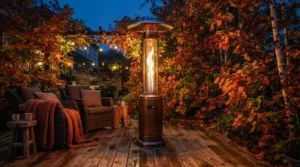
The apartment balcony owner: Limited space, HOA rules against open propane tanks, wants ambiance for two. The GARDENFLARE Fire Tube or a single Flame Genie fits both the footprint and the “not a full heater” honesty of what these units actually deliver.
The weekend camper who tailgates too: Needs something light enough to not think twice about packing, smoke-conscious enough not to annoy the next campsite over, and durable enough for repeated loading in and out of a truck bed. The Flame Genie Inferno with Tote was essentially built for this exact profile.
The family that hosts every Friday: Multiple seating areas, kids and pets around, cold-climate evenings that need actual warmth rather than mood lighting. The Timber Stoves Big Timber or a pair of Enyopro units covering separate zones both solve for real heat over a real crowd.
Common Mistakes When Buying a Pellet Patio Heater
Buyers frequently assume “portable” means camping-light across every model in this category, then are surprised when a 70-lb stove arrives. Read weight specs before assuming portability. Another frequent mistake is buying based on BTU rating alone without checking hopper size — a high-BTU unit with a tiny hopper still needs constant refueling. Shoppers also commonly skip checking whether a unit is ambiance-focused (like fire tubes) versus heat-focused (like freestanding stoves), then feel let down when a glass fire column doesn’t warm a 15-foot patio. Finally, many people underestimate pellet storage needs, buying a heater without planning for a dry, accessible place to keep a season’s worth of fuel.
Safety, Regulations & Compliance Guide
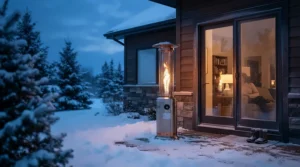
Outdoor combustion appliances carry real risks if used carelessly, and the guidance here applies whether you’re running a pellet heater on a patio or a camping stove at a campsite. A new generation of portable heaters with oxygen depletion sensor technology can automatically shut down before producing serious levels of carbon monoxide, though older units without this feature are intended strictly for outdoor use, and even ODS-equipped heaters still require adequate ventilation when used in enclosed spaces like tents or campers. Never operate any pellet or gas patio heater inside a tent, garage, or other enclosed structure. Keep units at least several feet from anything flammable — umbrellas, cushions, dry vegetation — and always place them on stable, level, non-combustible ground. If your area is under a burn ban or fire watch, check local rules before lighting anything, since pellet appliances are still combustion devices even though they burn cleaner than open wood fires.
On the manufacturing side, most modern pellet stoves are efficient enough that wood stoves certified under the 2015 New Source Performance Standards are independently tested to meet a particulate emissions limit of no more than 4.5 grams per hour, with newer units required to meet an even lower 2.0 to 2.5 gram-per-hour limit as of 2020. That’s a meaningful data point if air quality near your home is a consideration — pellet units generally clear this bar more easily than open wood-burning fire pits.
Long-Term Cost & Maintenance
Wood pellets are widely available and generally cost less per hour of heat than propane, largely because roughly 85% of raw materials for biomass wood pellets come from wood waste streams like logging residues, sawmill residues, and manufacturing residue rather than a fuel requiring extensive drilling and refining infrastructure. Over a full outdoor season, expect to budget for pellet bags (typically sold in bulk by weight), occasional glass or gasket replacement parts on fire-tube units, and periodic ash-removal accessories.
| Cost Factor | Budget Pellet Heater | Premium Pellet Heater |
|---|---|---|
| Upfront price | Under $200 | $1,000+ |
| Annual pellet cost (moderate use) | Lower (smaller hopper, less BTU) | Higher (larger hopper, more BTU) |
| Expected lifespan | 2–4 seasons with care | 5+ seasons, stainless build |
| Replacement parts | Minimal, often disposable-tier | Glass panels, gaskets available |
The math generally favors buying once at the premium tier if you’ll use a heater weekly for years — the Timber Stoves units’ stainless construction and multi-year warranties amortize well over a long ownership period. If you only fire something up a handful of nights per season, a budget unit like the Flame Genie or Enyopro pays for itself faster and won’t sit unused as dead weight in the garage.
Frequently Asked Questions
❓ How much does a portable pellet patio heater cost?
❓ Are pellet patio heaters cheaper to run than propane heaters?
❓ Can you use a pellet patio heater in the rain?
❓ Do pellet patio heaters produce smoke?
❓ What size pellet heater do I need for a small patio?
Conclusion
Choosing between these seven models really comes down to one honest question: are you buying warmth, or are you buying a flame you’ll enjoy watching? The Timber Stoves Lil’ Timber and Big Timber deliver genuine BTU output for people who host regularly and want a patio that actually feels warm on a cold night. The Rayzi heater and GARDENFLARE Fire Tube trade heat for spectacle, and they’re honest about it, which matters when you’re deciding what to spend your money on. The Flame Genie and its Inferno sibling are built for people whose outdoor life doesn’t stop at the property line — camping trips, tailgates, spontaneous backyard fires. And the Enyopro two-pack solves a problem most single-unit heaters can’t: covering more than one seating area without buying two separate premium stoves.
Whichever you land on, the fundamentals matter more than the marketing — check the hopper size against how long you actually spend outside, store your pellets dry, and keep the unit on stable, non-combustible ground every single time. Do that, and any of these seven will earn its keep through a full cold season.
🔍 Take your outdoor evenings to the next level with a heater that matches how you actually use your patio. Click on any highlighted model above to check current pricing and availability, and get ready to make this the season you don’t go inside early.
Recommended for You
- 7 Best Ventless Propane Heaters For Safe Indoor Heat In 2026
- Best Portable Propane Heater 2026: 7 Ultimate Picks
- Best Outdoor Propane Heater 2026: 7 Genuinely Great Picks
Disclaimer: This article contains affiliate links. As an Amazon Associate, I earn from qualifying purchases. If you purchase products through these links, we may earn a small commission at no additional cost to you.
✨ Found this helpful? Share it with your friends! 💬🤗
