
In This Article
Picture this: it’s a frosty winter morning, and you’re heading out to your garage to work on that project you’ve been putting off for weeks. As you open the door, a blast of frigid air hits your face, and suddenly, your motivation evaporates faster than your visible breath. Sound familiar? 🥶
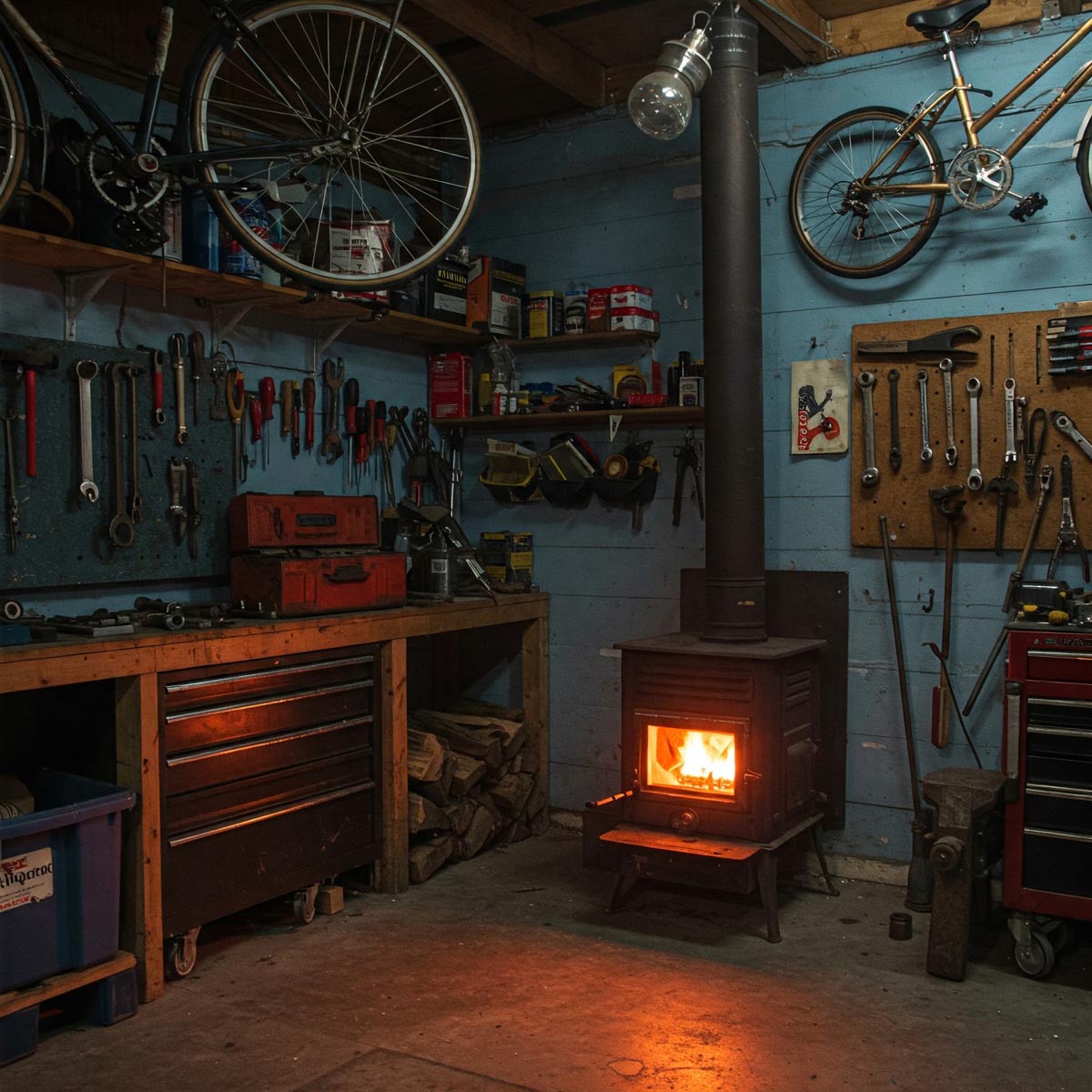
If you’re like many homeowners across the USA who use their garage as a workshop, hobby space, or occasional hangout area, you understand the challenge of keeping this space comfortable during colder months. This is precisely where a wood heater for garage installation can transform your experience.
Wood heaters offer a unique combination of powerful heating capability, cost-effectiveness, and that unmistakable ambiance that only comes from a real wood fire. Unlike electric or gas options, a quality wood heater for garage use provides reliable heat even during power outages and can significantly reduce your heating bills if you have access to affordable wood.
In this comprehensive guide, we’ll explore everything you need to know about selecting, installing, and safely operating a wood heater for garage spaces. From understanding different types and sizing requirements to maintenance tips and top product recommendations, consider this your ultimate resource for turning your chilly garage into a comfortable, productive environment year-round.
Understanding Wood Heaters: Types and Considerations
Before diving into specific product recommendations, it’s important to understand the different types of wood heaters available and what makes them suitable for garage environments.
Types of Wood Heaters for Garage Use ✅
1. Wood Stoves
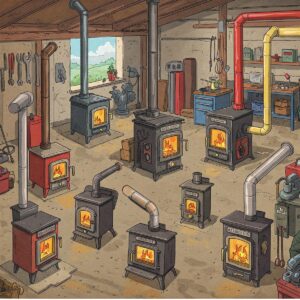
Traditional wood stoves are freestanding units that burn wood directly in a firebox. They’re known for their excellent heat output and classic appeal. Wood stoves typically feature a door with glass that allows you to view the flames while keeping the fire contained.
2. Wood-Burning Furnaces
These are more powerful heating solutions designed to distribute heat through ductwork. While less common for standard residential garages, they’re worth considering for larger detached workshops or commercial garage spaces.
3. Pellet Stoves
Technically a subcategory of wood heaters, pellet stoves burn compressed wood pellets instead of logs. They offer more precise temperature control and often feature automatic feeding systems, making them more convenient but typically requiring electricity to operate.
4. Rocket Mass Heaters
These efficient, DIY-friendly heating systems use a unique combustion design that produces more heat with less wood. They’re gaining popularity among self-sufficient homeowners but require more installation know-how.
Key Considerations When Choosing a Wood Heater for Garage Use ❌
When selecting the right wood heater for garage heating, several factors should influence your decision:
Garage Size and Heating Requirements
The square footage of your garage is perhaps the most critical factor in determining what size heater you’ll need. As a general rule:
- Small garages (up to 500 sq ft): 20,000-40,000 BTU heater
- Medium garages (500-800 sq ft): 40,000-60,000 BTU heater
- Large garages (800+ sq ft): 60,000+ BTU heater
Remember that garages with poor insulation or in extremely cold climates will need heaters on the higher end of these ranges.
Safety Features
Safety should be your top priority when installing any heating appliance in a garage, where flammable materials are often present. Look for:
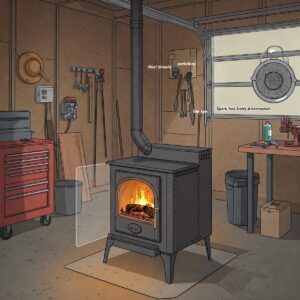
- Heat shields and proper clearance requirements
- Automatic shutoff features
- Quality construction with proper certifications (EPA, UL, etc.)
- Adequate venting capabilities
Installation Requirements
Consider what’s involved in setting up your wood heater:
- Does your garage have an existing chimney or will you need to install one?
- Are local building codes and permits required for installation?
- Will you need professional installation, or can you handle it yourself?
- Do you have adequate space for proper clearances around the unit?
Fuel Efficiency and Emissions
Modern wood heaters are significantly more efficient and cleaner-burning than older models. The EPA has established emissions standards that all new wood heaters must meet. Look for units that:
- Meet or exceed EPA certification requirements
- Have high efficiency ratings (70%+ is excellent)
- Include secondary burn features for cleaner combustion
Top 7 Wood Heaters for Garage Spaces in 2025
After extensive research and comparison, I’ve identified the top wood heaters that offer excellent performance for garage applications. Each of these options brings unique advantages depending on your specific needs.
1. US Stove Company 2000 Wood Stove
The US Stove Company 2000 consistently ranks as one of the best wood heater for garage installations due to its balance of affordable pricing and reliable performance. This EPA-certified wood stove delivers up to 89,000 BTUs of heat output, making it suitable for garages up to 2,000 square feet.
Key Features:
- Heats up to 2,000 square feet
- EPA certified with low 2.0 g/hr emission rate
- Large firebox accommodates logs up to 21″ long
- Cast iron feed door with large ceramic glass window
- Blower included for better heat distribution
The firebrick-lined interior helps maintain optimal burning temperatures while extending the life of the stove. Its classic design also adds a rustic charm to any workspace while providing serious heating power.
2. Drolet Escape 1800 Wood Stove
The Drolet Escape 1800 represents an excellent mid-range option when searching for a wood heater for garage spaces. This Canadian-manufactured stove delivers impressive performance with its 75,000 BTU output and modern efficiency features.
Key Features:
- Heats spaces up to 1,800 square feet
- EPA 2020 certified with only 1.26 g/hr emissions
- Large firebox with extended burn time (up to 8 hours)
- Secondary air system for cleaner combustion
- Optional blower for enhanced heat distribution
What makes this stove particularly suitable for garage use is its relatively compact footprint combined with impressive heating capacity. The built-in ash drawer also simplifies maintenance—an important consideration for a workspace.
3. Vogelzang Defender Wood Stove
For those seeking a budget-friendly wood heater for garage use without sacrificing quality, the Vogelzang Defender provides exceptional value. This sturdy, plate steel stove delivers up to 68,000 BTUs, suitable for heating garages up to 1,200 square feet.
Key Features:
- Heats up to 1,200 square feet
- EPA certified with 3.89 g/hr emissions
- Cast iron feed door with heat-resistant glass window
- Firebrick-lined for durability and heat retention
- Adjustable legs for uneven surfaces
The Defender’s simple, robust design makes it particularly appealing for workshop environments. While it lacks some refinements of more expensive models, it delivers reliable heat at a price point that’s hard to beat.
4. England’s Stove Works Summers Heat 50-SNC13
The England’s Stove Works 50-SNC13 offers an excellent combination of heating power and user-friendly features. With its 80,000 BTU output, this sturdy unit can effectively heat garages up to 1,800 square feet while maintaining high efficiency.
Key Features:
- Heats up to 1,800 square feet
- EPA certified with 1.3 g/hr emissions
- Large viewing window for fire visibility
- Digital control board for temperature management
- Automatic blower for improved heat circulation
This stove’s standout feature is its blend of traditional wood heating with modern control features, making it easier to maintain consistent temperatures in your garage workspace.
5. Pleasant Hearth Wood Stove
The Pleasant Hearth medium wood stove offers an excellent balance of size, performance, and aesthetics. With 65,000 BTUs of heating power, it’s well-suited for medium-sized garages up to 1,200 square feet.
Key Features:
- Heats spaces up to 1,200 square feet
- EPA certified with 2.18 g/hr emissions
- Brick-lined firebox for improved heat retention
- Chrome door handle and pedestal base
- Variable speed blower included
What makes this wood heater for garage use particularly appealing is its attention to design details while maintaining solid performance specifications. The arched door with large viewing glass adds visual appeal even when the stove isn’t in use.
6. Drolet Blackcomb II Wood Stove
The Drolet Blackcomb II represents one of the more compact options on our list while still delivering impressive performance. With a 65,000 BTU output, it’s ideal for smaller garages up to 1,000 square feet where space might be at a premium.
Key Features:
- Heats up to 1,000 square feet
- EPA 2020 certified with 1.14 g/hr emissions
- Space-saving design with reduced clearance requirements
- Top and rear venting options for flexible installation
- Removable ash lip for easier cleaning
This stove’s versatile installation options make it particularly suited for garage environments where positioning flexibility might be necessary due to space constraints or existing structures.
7. Ashley Hearth AW1120E-P Wood Stove
The Ashley Hearth AW1120E-P pedestal wood stove rounds out our top picks with its combination of affordable pricing and solid performance. Offering 68,000 BTUs of heat output, it can effectively warm garages up to 1,200 square feet.
Key Features:
- Heats up to 1,200 square feet
- EPA certified with 3.5 g/hr emissions
- Pedestal base with integrated ash drawer
- Large viewing window with air wash system
- Accepts logs up to 18″ in length
This stove’s pedestal design gives it a smaller footprint than some leg models, which can be advantageous in garage settings where floor space is valuable. The integrated ash pan simplifies regular maintenance, an important consideration for workshop environments.
Comparison Table: Top Wood Heaters for Garage Use
| Model | Heating Area | BTU Output | Emissions (g/hr) | Log Length | Price Range |
|---|---|---|---|---|---|
| US Stove Company 2000 | 2,000 sq ft | 89,000 | 2.0 | Up to 21″ | $$$$ |
| Drolet Escape 1800 | 1,800 sq ft | 75,000 | 1.26 | Up to 20″ | $$$$ |
| Vogelzang Defender | 1,200 sq ft | 68,000 | 3.89 | Up to 18″ | $$ |
| England’s Stove Works 50-SNC13 | 1,800 sq ft | 80,000 | 1.3 | Up to 18″ | $$$$ |
| Pleasant Hearth | 1,200 sq ft | 65,000 | 2.18 | Up to 18″ | $$$ |
| Drolet Blackcomb II | 1,000 sq ft | 65,000 | 1.14 | Up to 17″ | $$$ |
| Ashley Hearth AW1120E-P | 1,200 sq ft | 68,000 | 3.5 | Up to 18″ | $$ |
Transform Your Workspace Today! 🔥
Ready to say goodbye to freezing fingers and uncomfortable working conditions? These top-rated wood heaters for garage use can revolutionize your workspace experience. Click on any of the links above to check current pricing and availability. With winter approaching fast, now’s the perfect time to invest in a heating solution that will serve you for years to come!
Installation Considerations for a Wood Heater in Your Garage
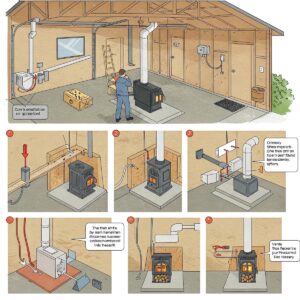
Installing a wood heater for garage use isn’t as simple as setting it up and lighting a fire. Proper installation is crucial for both safety and efficiency. Here’s what you need to know before proceeding:
Permits and Regulations ✅
Before purchasing a wood heater for garage installation, check with your local building department about:
- Required permits for wood stove installation
- Local fire codes and regulations
- Insurance requirements (many insurers have specific requirements for wood heating appliances)
- HOA restrictions (if applicable)
Most jurisdictions follow the National Fire Protection Association (NFPA) 211 standard, which provides guidelines for chimneys, fireplaces, vents, and solid fuel-burning appliances.
Proper Placement and Clearances ❌
Wood stoves generate significant heat, requiring minimum clearances from combustible materials:
- Typically 36 inches from combustible walls (can be reduced with proper heat shields)
- 18 inches from non-combustible materials
- Floor protection extending at least 18 inches in front and 8 inches on sides and rear
- At least 15 feet from flammable materials like gas cans, paint, or solvents (common in garages)
According to research by the U.S. Fire Administration, improper clearances from combustible materials are a leading cause of home heating fires. This risk can be higher in garage environments, where space constraints and the presence of flammable materials create additional hazards.
Venting and Chimney Requirements ✅
Proper venting is absolutely essential for any wood heater for garage installation:
- Most installations require a UL-listed Class A chimney specifically designed for wood stoves
- The chimney must extend at least 3 feet above the roof and 2 feet higher than anything within 10 feet
- Horizontal runs should be minimized and include a rise of at least 1/4 inch per foot
- Proper support brackets and roof flashing are necessary for safe installation
A study published in the Journal of Fire Sciences found that improper venting is responsible for approximately 36% of all wood-heating related fires. Investing in professional installation can significantly reduce these risks.
Professional vs. DIY Installation ❌
While many homeowners are tempted to install wood heaters themselves to save money, this isn’t always the wisest choice:
Professional Installation Benefits:
- Ensures compliance with building codes and manufacturer specifications
- Reduces risk of fire hazards from improper installation
- May be required for warranty validation and insurance coverage
- Includes proper testing and verification of safe operation
DIY Installation Considerations:
- Only recommended for those with significant experience
- Requires thorough understanding of building codes and manufacturer requirements
- Must include proper testing and verification before regular use
- Should still be inspected by a professional before first use
According to the Chimney Safety Institute of America, professional installation is strongly recommended for all solid-fuel heating appliances to ensure safety and proper function.
Operating Your Garage Wood Heater Safely and Efficiently
Once your wood heater for garage use is properly installed, operating it safely and efficiently becomes your next priority. Here’s how to get the most from your investment while maintaining safety:
Fuel Selection and Preparation ✅
The type and quality of wood you burn significantly impacts your heater’s performance:
Best Woods for Burning:
- Hardwoods like oak, maple, and hickory provide more heat per volume
- Seasoned wood (dried for at least 6-12 months) burns cleaner and hotter
- Avoid soft woods like pine except for starting fires (they create more creosote)
- Never burn treated lumber, painted wood, or construction scraps in your garage wood heater
According to the Environmental Protection Agency, burning properly seasoned hardwood can increase heating efficiency by up to 25% while reducing smoke and creosote buildup compared to unseasoned wood.
Proper Fire Starting and Maintenance ❌
Learning to build and maintain an efficient fire takes some practice:
- Start with small, dry kindling arranged to allow maximum airflow
- Add progressively larger pieces as the fire establishes
- Maintain proper air control settings for the most efficient burn
- Avoid overfilling the firebox, which can lead to overheating
- Keep the fire door closed during operation except when adding wood
Research from the Alliance for Green Heat indicates that proper fire management techniques can improve wood stove efficiency by 15-30%, significantly reducing fuel consumption while improving heat output.
Regular Maintenance Requirements ✅
A well-maintained wood heater for garage use will provide better performance and greater safety:
Daily/Weekly Tasks:
- Remove excess ash when it reaches 1-2 inches deep
- Check the door gasket for tight seal
- Inspect the glass and clean as needed (using wood stove glass cleaner)
Monthly Tasks:
- Inspect the chimney connector for any damage or corrosion
- Check heat shields and clearances to ensure they remain adequate
- Test smoke and carbon monoxide detectors
Annual Tasks:
- Have the chimney professionally inspected and cleaned
- Check all mechanical components for proper function
- Inspect firebrick and internal components for damage
Studies by the Consumer Product Safety Commission found that lack of regular maintenance contributes to approximately 28% of all residential heating fires, emphasizing the importance of these routine checks.
Carbon Monoxide Safety ❌
Carbon monoxide (CO) is a particularly important consideration when using a wood heater for garage heating:
- Always install carbon monoxide detectors in your garage and any adjacent living spaces
- Ensure proper ventilation in the garage (garages tend to be well-sealed for energy efficiency)
- Never leave a smoldering fire unattended
- Be aware of symptoms of CO poisoning: headache, dizziness, confusion, nausea
According to the Centers for Disease Control and Prevention, carbon monoxide poisoning causes more than 400 deaths annually in the United States, with heating equipment being a leading source.
Upgrading Your Garage’s Heating Efficiency
While a quality wood heater for garage use provides excellent heat, maximizing its efficiency requires considering your garage as a complete system:
Garage Insulation Improvements ✅
Even the best wood heater for garage spaces will struggle in a poorly insulated environment:
- Insulate garage walls to at least R-13 (more in colder climates)
- Add ceiling insulation to at least R-30
- Install weatherstripping around garage doors and windows
- Consider insulated garage doors for significant heat retention improvements
Research by the Department of Energy indicates that proper insulation can reduce heating needs by 30-50%, potentially allowing you to purchase a smaller wood heater while achieving the same comfort level.
Supplemental Heating Options ❌
For optimal garage comfort, consider pairing your wood heater with complementary solutions:
Radiant Floor Heating:
- Works excellently with wood heat by distributing warmth evenly
- Provides comfortable workspace temperatures even when the air is cooler
- Can be operated as a primary or backup heating system
Infrared Heaters:
- Provide targeted heating for specific work areas
- Can supplement wood heat during extremely cold conditions
- Typically electric-powered for instant heat when needed
Heat Recovery Ventilation:
- Improves air quality while preserving heat
- Particularly important in well-sealed garage workshops
- Helps manage humidity levels, which can be affected by wood heating
Heat Distribution Enhancements ✅
Improving heat circulation throughout your garage maximizes the effectiveness of your wood heater:
- Ceiling fans (run in reverse during winter) help push warm air down from the ceiling
- Strategic placement of portable fans can direct heat to colder areas
- Consider a heat-powered stove fan that sits on top of your wood heater
- Thermal mass (like concrete or stone) near the stove can store and radiate heat
A study in the Energy and Buildings Journal found that improved heat distribution can increase perceived comfort by 15-20% even without increasing the actual heating output.
Don’t Settle for a Cold Workshop Another Day! 🔥
Transform your garage experience with one of these top-rated wood heaters! These carefully selected models offer the perfect balance of heating power, efficiency, and safety features. Click any link above to check current pricing and take the first step toward a comfortable year-round workspace!
Environmental Considerations for Wood Heating
While wood is a renewable resource, using a wood heater for garage heating does have environmental implications worth considering:
Emissions and Air Quality ✅
Modern EPA-certified wood heaters produce significantly fewer emissions than older models:
- New wood heaters (2020 EPA standards) emit 60-80% less particulate matter than older stoves
- Proper operation significantly reduces smoke and pollutants
- Secondary burn technology in modern stoves captures and burns gases that would otherwise become pollution
According to the EPA’s Burn Wise Program, replacing an old wood stove with a new EPA-certified model can reduce emissions by up to 70% while using 1/3 less wood for the same heat output.
Sustainable Wood Sourcing ❌
The environmental impact of your wood heater for garage use depends largely on your fuel sourcing practices:
- Use locally sourced wood to minimize transportation emissions
- Consider wood from sustainable forestry operations
- Utilize waste wood from tree services, land clearing, or forest management projects
- Never harvest wood from protected areas or without proper permission
Research from the Forest Stewardship Council indicates that sustainable wood harvesting can actually improve forest health while providing renewable heating resources.
Carbon Neutrality Considerations ✅
Wood heating is often considered carbon-neutral, but the reality is more nuanced:
- Trees absorb carbon during growth and release it when burned or decomposing
- Sustainable harvesting creates a balanced carbon cycle
- Modern efficient wood heaters maximize energy extraction while minimizing carbon release
- When replacing fossil fuel heating, wood can represent a net reduction in carbon emissions
A study in the Journal of Forestry found that wood heating from sustainably managed forests can reduce net carbon emissions by 30-50% compared to heating with fossil fuels, even accounting for harvesting and transportation impacts.
Troubleshooting Common Wood Heater Issues
Even the best wood heater for garage use can experience occasional problems. Knowing how to address these issues can save you time, money, and frustration:
Poor Heat Output ✅
If your wood heater isn’t producing adequate heat, consider these common causes:
- Insufficient draft due to chimney problems
- Wet or unseasoned wood (should have less than 20% moisture content)
- Improper air control settings
- Inadequate insulation in the garage space
- Undersized heater for the space
Excessive Smoke or Backdrafting ❌
Smoke entering your garage instead of going up the chimney indicates serious problems:
- Blocked chimney (creosote buildup or obstructions)
- Competing air currents from exhaust fans or HVAC systems
- Negative pressure in the garage
- Improper chimney height or location
- Cold chimney needing pre-warming
According to the National Fireplace Institute, most backdrafting issues can be resolved by ensuring the chimney establishes a proper draft before fully loading the stove with wood.
Creosote Buildup ✅
Creosote is a flammable byproduct of wood burning that can cause chimney fires:
- Burn only properly seasoned hardwoods
- Maintain adequate firebox temperatures (slow, smoldering fires produce more creosote)
- Have chimneys cleaned professionally at least annually
- Use creosote reducing products as recommended by manufacturers
- Consider a chimney temperature monitor to ensure proper operating temperatures
The Chimney Safety Institute of America reports that chimney fires damage more than 25,000 homes annually in the United States, with most being preventable through proper maintenance and operation.
DIY Wood Heater Solutions for Garage Spaces
For the mechanically inclined homeowner, there are several DIY wood heater for garage options that offer significant cost savings while providing effective heating:
Converted Drum Stoves ✅
One of the most popular DIY options is converting a 55-gallon steel drum into a wood stove:
- Kits are available that include door assemblies, legs, and flue collars
- Proper installation of firebrick is crucial for safety and longevity
- Secondary air inlets can improve efficiency and reduce emissions
- Total cost typically ranges from $150-300 plus chimney components
While these can be effective, it’s important to note that most DIY stoves won’t meet EPA emissions requirements and may not be legal in all jurisdictions.
Rocket Mass Heaters ❌
These innovative heating systems use a unique combustion design for extremely efficient burning:
- Can achieve 80-90% efficiency (compared to 70-75% for the best commercial stoves)
- Typically incorporate thermal mass to store and radiate heat
- Use significantly less wood than conventional stoves
- Require careful design and construction for safe operation
According to permaculture expert Paul Wheaton, properly designed rocket mass heaters can reduce wood consumption by up to 80% compared to conventional wood stoves while producing minimal emissions.
Safety Considerations for DIY Solutions ✅
If pursuing a DIY wood heater for garage heating, keep these safety factors in mind:
- Consult local building codes and obtain necessary permits
- Follow NFPA 211 guidelines for clearances and installation
- Install proper chimney systems designed for wood heating
- Include carbon monoxide and smoke detectors
- Have your installation inspected by a professional before use

Future of Wood Heating Technology
The wood heating industry continues to evolve with new technologies improving efficiency, convenience, and environmental performance:
Hybrid Wood-Electric Systems ✅
These innovative systems combine wood heating with electric backup:
- Automatic switching between wood and electric heating
- Programmable thermostats for consistent temperatures
- Remote monitoring and control via smartphone apps
- Reduced need for constant attention to the fire
Automated Wood Heating ❌
Technology is making wood heating more convenient:
- Automated pellet feed systems that can run for days without attention
- Oxygen sensors for optimized combustion
- Catalytic converters for cleaner burning
- Self-cleaning systems reducing maintenance requirements
Integration with Smart Home Technology ✅
Modern wood heaters are increasingly compatible with home automation:
- Temperature monitoring and alerts
- Automatic damper controls
- Integration with other heating and cooling systems
- Usage tracking and efficiency reporting
A report by Smart Energy International predicts that by 2026, over 30% of new wood heating appliances will include smart technology components, making them more appealing for modern homeowners.
Make Winter Workspace Comfort a Reality! 🔥🛠️
Why continue to struggle with cold fingers and limited garage time during winter? A quality wood heater transforms your garage into a year-round usable space. Browse our top recommendations above and click through to find the perfect solution for your specific needs. With proper installation, these heaters provide years of reliable, cost-effective heating!
Conclusion: Is a Wood Heater Right for Your Garage?
Throughout this guide, we’ve explored the many facets of choosing, installing, and using a wood heater for garage heating. But the most important question remains: is this the right solution for your specific situation?
Advantages of Wood Heating for Garages ✅
- Cost-Effective Operation: Particularly if you have access to affordable or free wood, the operating costs can be significantly lower than electric, propane, or natural gas heating.
- Independence from Utilities: Wood heaters continue functioning during power outages, ensuring your garage remains usable regardless of grid conditions.
- Sustainable Heating Option: When using properly sourced wood, you’re utilizing a renewable resource with potential carbon benefits.
- Ambiance and Experience: There’s an undeniable appeal to the warmth and atmosphere created by a wood fire that other heating methods simply can’t match.
- Dual-Purpose Functionality: Many wood heaters can serve as cooking surfaces in emergency situations.
Potential Drawbacks to Consider ❌
- Installation Complexity: Proper installation requires significant planning and often professional assistance.
- Space Requirements: Wood heaters need adequate clearances and floor protection, potentially using valuable garage space.
- Maintenance Demands: Regular cleaning, ash removal, and annual chimney maintenance require more attention than other heating options.
- Fuel Storage Needs: You’ll need dry, accessible storage space for a sufficient wood supply.
- Variable Heat Output: Unlike thermostat-controlled systems, wood heat requires manual adjustment and attention.
Final Recommendations
A wood heater for garage heating makes the most sense for:
- Those with access to affordable wood supplies
- Homeowners who use their garage frequently as a workshop or living space
- People in rural areas or regions prone to power outages
- Those willing to invest time in proper maintenance and operation
- Individuals who appreciate the unique qualities of wood heat
Before making your final decision, I recommend:
- Consulting with local heating professionals about your specific garage and needs
- Checking your local building codes and HOA restrictions
- Considering your long-term plans for the space
- Evaluating all heating options (electric, gas, wood) for your specific situation
With proper selection, installation, and operation, a quality wood heater can transform your garage from a cold, uncomfortable space into a welcoming workshop or hobby area you’ll enjoy year-round.
Transform Your Garage Experience Today! 🔥🔧
Ready to say goodbye to cold, uncomfortable workshop sessions? These top-rated wood heaters for garage spaces deliver exceptional performance and value. Click on any of our recommended products above to check current pricing and take the first step toward year-round comfort in your workspace!
More FAQs:
❓ What size wood heater is best for a two-car garage?
❓ Can I install a wood heater in my garage safely?
❓ Which is better for garage use: catalytic or non-catalytic wood heater?
❓ How often should I clean my garage wood heater?
❓ Is heating a garage with a wood stove cost-effective?
Recommended for You:
- Wood Stove with Heat Shield: 7 Best Options for Safe & Efficient Heating in 2025
- 10 Best Window Mounted Heat Pump Options For Year-Round Comfort in 2025
- Water Heater Water Valve: Complete Guide for Homeowners in 2025
Disclaimer: This article contains affiliate links. If you purchase products through these links, we may earn a small commission at no additional cost to you.
