
In This Article
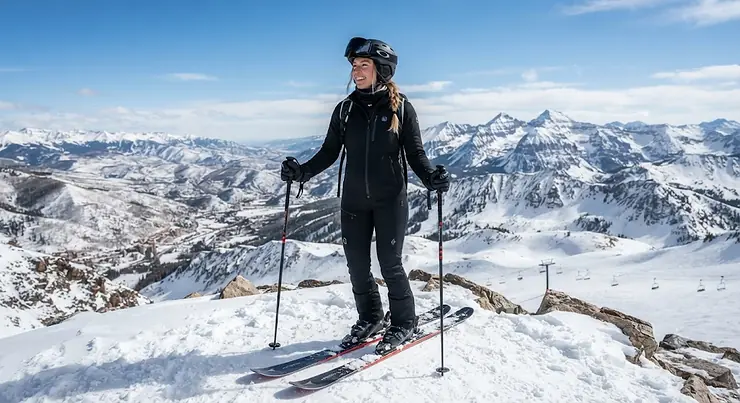
A battery heated body suit for skiing is any wearable heating system — jacket, vest, or layered suit — that uses a rechargeable battery and carbon-fiber or wire heating elements sewn into the fabric to actively warm your core, back, and pockets while you ride, rather than just trapping the heat your body already makes. That distinction matters more than it sounds like it should. Regular ski layers are passive: they slow down heat loss. A heated suit is active: it’s putting energy back into the system, which is why people who run cold, deal with circulation issues, or just hate that bone-deep chill on a windy chairlift keep switching over.
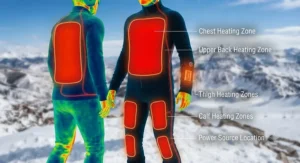
I’ve spent the last few weeks digging through spec sheets, teardown reviews, and the general technology behind heated garments, which mostly rely on 12, 7.4, and 5-volt powerbanks depending on the brand and use case. Some of what’s out there is genuinely excellent engineering. Some of it is a thin heating pad stapled to a jacket and marked up 40%. This guide sorts the seven worth your money from the rest, with honest analysis of who each one actually fits — beginner, powder hound, or budget-conscious weekend warrior — plus deep dives into how these suits perform for snowboarding, snowmobiling, ice fishing, winter camping, and even motorcycling, since the same core technology crosses over into all of them.
One quick note before we dive in: prices on heated apparel move constantly with seasonal sales, so every figure below is a range based on research at the time of writing, not a locked-in number — always check the current price before buying.
Quick Comparison Table
| Product | Best For | Battery Runtime | Heat Zones | Price Range |
|---|---|---|---|---|
| Gobi Heat Shift | Ski-specific warmth | Up to 9 hrs | 5 zones | $150–$200 range |
| Milwaukee M12 ToughShell | Durability & tool-battery owners | Up to 6 hrs | 2 independent zones | $200–$260 range |
| ORORO Soft Shell Heated Jacket | Best all-around value | Up to 10 hrs | 3 zones | $100–$140 range |
| VentureHeat 7.4V Snowmobile Jacket | Snowmobiling | 5–8 hrs (setting-dependent) | 3 zones | $130–$180 range |
| DEWALT DCHV095BD1 Vest | Motorcycling & layering systems | 6–8 hrs | 3 settings | $180–$230 range |
| ActionHeat 5V Soft Shell | Ice fishing & hunting on a budget | 4–8+ hrs | 3 settings | $80–$120 range |
| DEWBU 12V Heated Jacket | Lightest wallet-friendly pick | 4–6 hrs | 5 zones | $70–$100 range |
Looking at this lineup, the split is really about where the heat needs to go and how long you need it to last. The Gobi Heat Shift and Milwaukee M12 ToughShell sit at the top for ski-specific and abuse-resistant use respectively, while the ORORO Soft Shell Heated Jacket is the one most people should actually start with — it hits a sweet spot of runtime, price, and heat-zone coverage that the cheaper options can’t match. If you’re outfitting a whole crew for a snowmobile trip or a week of ice fishing, the runtime column is the one to obsess over, since a suit that dies at hour four on a full-day outing is a suit you’ll resent by lunch.
💬 Found a favorite already? One click on any product above helps you compare current pricing before you commit.
Top 7 Battery Heated Body Suits for Skiing: Expert Analysis
1. Gobi Heat Shift — 5-zone heat built for ski days
The standout here is coverage: five heating zones (four in front, one large zone across the back) mean the Gobi Heat Shift warms more real estate than most competitors in this price band. It runs up to nine hours on battery power, and the heat settings cycle through off, low, medium, and high with a simple one-touch controller you can operate with gloves on, which sounds like a small thing until you’re trying to adjust a dial with frozen fingers at a chairlift.
On paper, that five-zone layout means the difference between “my core is warm but my lower back is a block of ice” and actual full-torso comfort on long lift rides. The shell itself uses a wind and water resistant polyester with a nylon lining, adjustable Velcro cuffs, and a helmet-capable hood, so it’s built with skiing specifically in mind rather than being a generic winter jacket with heating elements bolted on.
This is the pick for skiers who run cold on the lift but still want a jacket, not a bulky parka — think intermediate to advanced riders doing full days on the mountain. Reviewers consistently report that the heat-up time is genuinely fast, often under 30 seconds to noticeable warmth, and that the machine-washable design (remove the battery first) is a real convenience over hand-wash-only competitors.
Pros:
- ✅ Five heating zones cover chest and full back
- ✅ Helmet-capable hood built for skiing specifically
- ✅ Machine washable once the battery is removed
Cons:
- ❌ Runtime drops noticeably on the highest heat setting
- ❌ Premium price compared to general-purpose heated jackets
At around $150–$200, the Gobi Heat Shift isn’t the cheapest option here, but for someone who skis 15+ days a season, the ski-specific cut and five-zone coverage justify the premium over a generic heated jacket.
2. Milwaukee M12 ToughShell Jacket — toughest battery ecosystem on snow
What most buyers overlook about the Milwaukee M12 ToughShell Jacket is that it isn’t really a ski jacket wearing a battery — it’s a battery ecosystem wearing a jacket. It uses the same M12 REDLITHIUM battery technology that powers over 60 different Milwaukee tools, so if you or a family member already owns a drill or impact driver from that lineup, you’ve effectively got a spare battery sitting in the garage already.
The jacket runs five carbon fiber heating elements across two independently adjustable zones — back and chest, plus the lower pockets — with a one-touch LED controller offering three heat settings per zone, and Milwaukee claims roughly six hours of continuous heat per charge. A newer Quick-Heat function is also built in, letting you feel warmth roughly three times faster than earlier-generation Milwaukee heated jackets. Based on the spec comparison against the softer, fashion-first heated jackets on this list, the ToughShell’s rugged wind- and water-resistant shell and washer/dryer-safe construction point squarely at buyers who want gear-grade durability, not just warmth — tradespeople, backcountry tourers, and anyone who’s hard on their outerwear.
Aggregated reviewer sentiment consistently praises the fuel gauge feature, which shows remaining battery life at a glance, and the fact that the jacket survives repeated machine washing without the heating elements degrading — a common complaint with cheaper competitors.
Pros:
- ✅ Cross-compatible with the massive M12/M18 tool battery lineup
- ✅ Independently adjustable chest and back heat zones
- ✅ Washer and dryer safe without damaging heating elements
Cons:
- ❌ Bulkier fit than ski-specific shells like the Gobi Heat Shift
- ❌ Six-hour runtime is shorter than some rivals on this list
Priced around $200–$260, the Milwaukee M12 ToughShell Jacket is the pick for buyers who value a battery system they’ll actually reuse across other gear, not just a one-season ski jacket.
3. ORORO Soft Shell Heated Jacket with Detachable Hood — best value all-rounder heat
The standout feature is runtime-per-dollar: three carbon fiber heating elements target the left chest, right chest, and mid-back, running on a 7.4V UL/CE-certified battery rated for up to ten working hours, which beats several pricier competitors on this list outright.
In practice, that ten-hour ceiling means you can realistically wear the ORORO Soft Shell Heated Jacket on low or medium heat for an entire ski day without babysitting the battery gauge — something the six-hour Milwaukee can’t quite match. The shell itself is water- and wind-resistant softshell fabric with a detachable hood, and the whole thing is machine washable, engineered to survive over 50 wash cycles without degrading the heating elements. Here’s what to weigh: this isn’t a ski-specific cut with a helmet-compatible hood like the Gobi Heat Shift, so if you wear a full-face helmet, you’ll want to check hood clearance first.
Reviewers consistently note the jacket’s versatility outside of skiing — plenty of buyers use it for commuting, dog walking, and general winter errands, which suggests the fit and warmth hold up well beyond a single use case.
Pros:
- ✅ Up to 10 hours of runtime beats most rivals here
- ✅ Machine washable for 50+ cycles without element wear
- ✅ Versatile enough for skiing, commuting, and everyday cold
Cons:
- ❌ Detachable hood isn’t built for full-face ski helmets
- ❌ Only three heat zones versus five on premium options
At roughly $100–$140, the ORORO Soft Shell Heated Jacket delivers the best runtime-to-price ratio on this list, making it the default recommendation for most skiers shopping on a mid-range budget.
4. VentureHeat 7.4V Snowmobile Jacket — purpose-built snowmobile heat zones
The VentureHeat 7.4V Snowmobile Jacket stands out because it was engineered around snowmobiling first, skiing second — and that heritage shows in how the shell handles sustained high-wind exposure at speed, which is a very different stress test than standing in a lift line.
The 7.4V battery platform is a middle-ground voltage: enough output to feel genuine warmth within the first minute, without the bulk of higher-voltage 12V systems built for motorcycle or power-tool crossover use. On paper this means a lighter overall package that still holds up to sustained cold exposure, which is exactly what backcountry and resort skiers dealing with exposed ridgelines need. What most buyers overlook is that the snowmobile-oriented cut tends to run slightly roomier through the shoulders to accommodate a helmet and goggles simultaneously — worth knowing if you prefer a trim ski-jacket silhouette.
A common theme in aggregated review sentiment for 7.4V heated snowmobile jackets in general is that the battery pocket placement matters more than people expect; buyers consistently report preferring designs where the battery sits in an interior chest pocket rather than a bulky external pouch, since it keeps the pack both warmer and better protected from impact.
Pros:
- ✅ Built specifically for high-wind, high-speed cold exposure
- ✅ Roomier cut accommodates helmet and goggles layering
- ✅ Mid-voltage 7.4V platform balances warmth and weight
Cons:
- ❌ Looser fit than trim ski-specific jackets
- ❌ Fewer color/style options than mainstream ski brands
In the $130–$180 range, the VentureHeat 7.4V Snowmobile Jacket is the strongest choice for skiers who split time between resort laps and snowmobile-accessed backcountry terrain.
5. DEWALT DCHV095BD1 Heated Puffer Vest — layers into a full heated system
The standout feature is the layering system: this quilted, wind-resistant vest can zip directly into the DEWALT DRW21-3 Class 3 rain jacket, creating a combined heated and high-visibility outer system — a genuinely clever bit of modular design most heated-apparel brands don’t offer.
Powered by a DEWALT 20V MAX battery, the vest offers three adjustable heat settings, and because it’s a vest rather than a full jacket, it’s meant to be worn as a heated base layer under your existing ski shell rather than replacing it outright. Based on the spec comparison, that’s actually a smart approach for skiers who already own a great outer shell and just need core warmth added underneath, rather than buying an entirely new heated jacket. What the spec sheet won’t tell you, but the layering-system design implies, is that this is really aimed at people who already live in the DEWALT tool-battery ecosystem — tradespeople, weekend DIYers, motorcyclists — who want one battery platform doing double duty.
Pros:
- ✅ Zips into a full heated, high-visibility layering system
- ✅ Runs on the widely-owned DEWALT 20V MAX battery platform
- ✅ Vest design layers cleanly under an existing ski shell
Cons:
- ❌ No sleeves means arms stay unheated
- ❌ Least ski-specific fit of any product on this list
Typically listed in the $180–$230 range (though deal pricing brings it lower at times), the DEWALT DCHV095BD1 Heated Puffer Vest makes the most sense for skiers who ride motorcycles or already own DEWALT tools and want one battery ecosystem across everything.
6. ActionHeat 5V Soft Shell Jacket — budget-friendly warmth for hunters and anglers
ActionHeat’s 5V heated jackets use rechargeable power banks and strategically placed heating panels delivering up to 150°F of warmth at the touch of a button, with most 5V batteries running four to eight-plus hours per charge depending on the heat setting.
That 150°F ceiling is genuinely aggressive for a budget product — most entry-level heated jackets top out noticeably cooler. Reviewers consistently describe the ActionHeat line as the gateway product for people trying heated apparel for the first time, largely because the 5V power-bank format is compatible with common portable chargers, meaning you’re not locked into a proprietary battery you’ll lose or forget to bring on a trip. Here’s what to weigh: because it’s 5V rather than the 7.4V or 12V systems used by pricier competitors, output per zone runs a bit lower, so it warms up fast but won’t out-muscle the Milwaukee or Gobi Heat on the coldest days.
The brand is sold in more than 5,000 retail stores nationwide, which is a reasonable proxy for real-world durability testing at scale — a product line that flimsy typically doesn’t survive that kind of retail footprint.
Pros:
- ✅ Aggressive 150°F max heat output for a budget product
- ✅ Universal 5V battery works with common power banks
- ✅ Widely stocked, suggesting solid real-world durability
Cons:
- ❌ Lower per-zone output than 7.4V or 12V competitors
- ❌ Shell construction is less refined than premium ski jackets
At roughly $80–$120, the ActionHeat 5V Soft Shell Jacket is the smart entry point for skiers, ice anglers, and hunters who want to try heated apparel before committing to a pricier system.
7. DEWBU 12V Heated Jacket — lightest wallet-friendly heated option
The DEWBU carries five heating zones and three heating modes on a 12V battery pack, which on paper is a genuinely strong spec sheet for the price point — most sub-$100 heated jackets top out at three zones, not five.
The 12V platform means faster heat-up and slightly higher peak output than the 5V ActionHeat, while staying lighter than the bulkier work-grade Milwaukee and DEWALT options. What most buyers overlook is that a water-resistant soft shell with multiple pockets at this price is unusual — cheaper competitors often skip pocket organization entirely to hit a lower price point. Based on the spec comparison, the DEWBU 12V Heated Jacket essentially undercuts the ORORO on price while nearly matching its zone count, though it can’t touch ORORO’s ten-hour runtime ceiling.
Aggregated review sentiment for budget 12V heated jackets in this category tends to flag battery life as the tradeoff for the lower price — expect four to six hours rather than the eight-to-ten-hour range of pricier systems, so plan a mid-day top-up charge if you’re doing a full resort day.
Pros:
- ✅ Five heat zones is unusual at this price point
- ✅ 12V platform heats up faster than 5V budget rivals
- ✅ Multiple pockets included despite the low price
Cons:
- ❌ Shorter 4–6 hour runtime than pricier competitors
- ❌ Smaller, less established brand than ORORO or ActionHeat
At around $70–$100, the DEWBU 12V Heated Jacket is the pick for skiers on a tight budget who still want real zone coverage rather than a single heated panel.
Practical Usage Guide: Setup, First Use & Maintenance
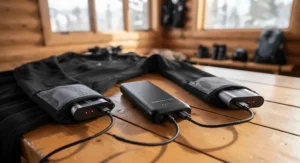
Getting the most out of any battery heated body suit for skiing starts before you ever hit the lift line. First, fully charge the battery the night before — most lithium packs used in the Gobi Heat Shift, ORORO Soft Shell Heated Jacket, and similar products take two to four hours for a full charge, and cold batteries deliver noticeably less runtime, so don’t leave the pack in a freezing car overnight expecting full performance the next morning.
On first use, start on the medium setting rather than high. Jumping straight to max heat both drains the battery faster and can trigger the auto-shutoff safety feature some jackets use to prevent overheating the fabric. A common mistake in the first 30 days is running the suit on high the entire day, then being disappointed when runtime falls short of the advertised number — real-world runtime is almost always shorter than the lab-tested maximum, since ambient temperature, wind, and how often you cycle the heat setting all eat into battery life.
For maintenance, always remove the battery pack before washing, even on machine-washable models like the ORORO Soft Shell Heated Jacket, which is rated for 50+ wash cycles specifically because the battery and heating element are designed as separable components. Store the battery at roughly 40–50% charge during the off-season rather than fully charged or fully drained — this is standard lithium-ion battery care and meaningfully extends the pack’s usable lifespan across multiple winters.
Real-World Scenarios: Matching the Right Heated Suit to Your Winter Activity
Battery Heated Body Suit for Snowboarding
Snowboarders spend more time seated on lifts and sitting in the snow strapping in than skiers do, which means more direct cold exposure to the lower back and thighs. A jacket with strong back-zone heating, like the Gobi Heat Shift‘s large rear panel or the Milwaukee M12 ToughShell‘s independently adjustable back zone, tends to outperform chest-only designs for this reason. If you’re a college-age rider hitting the terrain park most weekends on a tight budget, the DEWBU 12V Heated Jacket covers five zones for a fraction of the cost of premium options.
Battery Heated Body Suit for Snowmobiling
Snowmobiling exposes riders to sustained wind chill at speed, which is a fundamentally different heat-loss scenario than standing at a resort. Snowmobile suits are traditionally designed as one-piece or hybrid garments specifically to protect against wind while riding, drawing design inspiration from both ski suits and motorcycle gear, which is exactly why a purpose-built option like the VentureHeat 7.4V Snowmobile Jacket tends to outperform a general ski jacket with heating elements added as an afterthought.
Battery Heated Body Suit for Ice Fishing
Ice fishing is the opposite problem: hours of near-total stillness in extreme cold, with almost no body heat generated to supplement the suit. Here, runtime matters more than peak output, which is why the ten-hour ORORO Soft Shell Heated Jacket or the budget-friendly, widely-stocked ActionHeat 5V Soft Shell Jacket make more sense than a high-output but short-runtime option — you need steady low-to-medium heat for an entire stationary day, not a quick burst of max warmth.
Battery Heated Body Suit for Winter Camping
Winter campers need a suit that survives repeated packing, temperature swings between camp activity and sitting still, and ideally a battery that can be topped off from a portable power bank. The 5V ActionHeat system’s compatibility with common power banks is a real advantage here, since backcountry campers often already carry one for phones and headlamps.
Battery Heated Body Suit for Motorcycling
Motorcyclists dealing with wind chill at highway speeds need durable, high-output heat, which points toward the 12V-class options built on established tool-battery ecosystems — the DEWALT DCHV095BD1 Heated Puffer Vest and Milwaukee M12 ToughShell Jacket both fit this profile, since their battery platforms are already proven in demanding outdoor and jobsite conditions.
Buyer’s Decision Framework
If you ski fewer than ten days a season and want to try heated apparel without a big investment, choose the DEWBU 12V Heated Jacket or ActionHeat 5V Soft Shell Jacket, because the low price point makes the experiment low-risk while still delivering real zone coverage.
If you ski 15+ days a season and want dedicated ski-specific engineering, choose the Gobi Heat Shift, because its helmet-compatible hood and five-zone layout are built around resort skiing specifically rather than adapted from a general winter jacket.
If you already own tools from a major cordless platform, choose the Milwaukee M12 ToughShell Jacket or DEWALT DCHV095BD1 Heated Puffer Vest, because sharing a battery ecosystem across ski gear and tools means fewer chargers, fewer proprietary packs, and better long-term value.
If your winters split between skiing and snowmobiling or motorcycling, choose the VentureHeat 7.4V Snowmobile Jacket, because its wind-focused design at speed outperforms resort-oriented jackets in sustained high-wind conditions.
How to Choose a Battery Heated Body Suit for Skiing
- Match voltage to your climate. A 5V system like the ActionHeat is fine for mild resort days, but consistently sub-20°F conditions call for a 7.4V or 12V platform for real output.
- Prioritize runtime over peak heat. A jacket that hits 150°F for two hours does less for a full ski day than one holding a steady medium heat for eight to ten hours.
- Check zone placement, not just zone count. Five zones poorly placed can perform worse than three zones covering chest and back well.
- Confirm helmet and goggle compatibility if the hood matters to you. A heated body suit lightweight enough for layering under a shell doesn’t always need its own hood at all.
- Look for machine-washable construction. Ski gear gets genuinely dirty; a suit you can’t wash easily becomes a suit you stop wearing.
- Weigh battery ecosystem lock-in. If you already own tool batteries from Milwaukee or DEWALT, that compatibility has real long-term value.
- Read aggregated review themes, not star ratings alone. A 4.3-star average tells you less than knowing whether battery pocket placement or seam durability keeps coming up as a complaint.
A ski heated full suit setup — meaning a jacket plus bibs or pants both wired for heat — is worth considering if you run cold everywhere, not just your core; most riders, though, find a single well-placed heated jacket plus normal insulated pants covers 90% of the discomfort.
Battery Heated Body Suits vs Traditional Ski Layering
Traditional ski layering — base layer, mid-layer fleece, insulated shell — works by trapping the heat your body already produces. It’s reliable, doesn’t need charging, and never runs out of battery mid-run. But it has a hard ceiling: if you’re not generating much body heat, extra passive layers just insulate the cold you already have.
A battery heated body suit adds active warmth on top of that system, which is why the ORORO Soft Shell Heated Jacket and similar products are typically worn as a mid-layer or outer shell rather than a full replacement for your existing kit. The tradeoff is battery management — you now have one more thing to charge and monitor. For skiers with circulation issues, Raynaud’s-type cold sensitivity, or anyone who’s simply always cold no matter how many fleece layers they stack, the active heat wins decisively. For casual skiers doing three or four runs before heading inside, traditional layering alone is often perfectly sufficient and considerably cheaper.
Common Mistakes When Buying a Battery Heated Body Suit for Skiing
The most common mistake is buying based on peak temperature claims alone. A jacket advertising 150°F sounds impressive, but if that number only holds for 90 minutes before the battery drops to a low trickle, it’s not actually more useful than a steadier 130°F system running six hours longer.
The second mistake is ignoring battery voltage compatibility with cold-weather performance — lithium batteries lose capacity in extreme cold regardless of brand, so a suit rated for eight hours at room temperature might deliver closer to five or six on an actual sub-zero mountain day. Third, buyers frequently skip checking whether the battery pocket sits somewhere accessible enough to swap mid-day; some designs bury the pack under multiple layers, making a battery swap on the lift a genuine hassle. Finally, don’t assume “machine washable” means “wash with the battery in” — that’s a fast way to destroy an expensive component.
What to Expect: Real-World Performance and Winter Sport Full Body Heat
Spec sheets describe heat output in a lab, not on a windy chairlift at 15°F with a 25 mph gust. In practice, winter sport full body heat performance depends heavily on wind exposure, how much skin the shell actually covers, and how often you’re moving versus sitting still. A jacket with a strong medium setting will generally feel warmer in real skiing conditions than one with an aggressive but short-lived high setting, simply because you’ll actually use the medium setting all day rather than burning through the battery in two hours.
Expect noticeably faster heat-up on colder days — the temperature differential between your skin and a 15°F environment makes the initial warmth land more, well, noticeably. Expect runtime to drop by roughly 20–30% compared to advertised numbers once wind chill and cold-battery capacity loss are factored in. And expect the biggest practical difference to come from zone placement rather than raw wattage — a well-placed three-zone jacket like the ORORO frequently outperforms a poorly-placed five-zone competitor in actual comfort.
Long-Term Cost & Maintenance
| Consideration | Budget Tier (DEWBU, ActionHeat) | Mid Tier (ORORO, VentureHeat) | Premium Tier (Gobi Heat, Milwaukee, DEWALT) |
|---|---|---|---|
| Upfront Cost | $70–$120 range | $100–$180 range | $150–$260 range |
| Expected Battery Lifespan | 200–300 charge cycles | 300–400 charge cycles | 400+ charge cycles, tool-ecosystem batteries often longer |
| Replacement Battery Cost | Lower, but less standardized | Moderate | Moderate, but batteries reusable across other tools/gear |
| Best For | Occasional skiers, testing the category | Most regular skiers | Frequent riders, tool-ecosystem owners, backcountry use |
Looking at total cost of ownership rather than just sticker price changes the math considerably. The Milwaukee M12 ToughShell Jacket‘s upfront cost is the highest here, but if that M12 battery also powers a drill you already own, the effective per-jacket cost drops since you’re not buying a battery you’ll never use elsewhere. Budget-tier options like the ActionHeat 5V Soft Shell Jacket make sense as a low-commitment entry point, but expect to replace the battery pack sooner, and factor that into a multi-season cost comparison rather than judging on day-one price alone.
✨ Ready to stop shivering on the lift? Compare current prices on today’s top pick before the next storm rolls in.
Safety, Regulations & Compliance for Heated Apparel
Battery heated apparel runs on lithium-ion cells, and lithium-ion battery safety has become a genuine regulatory focus in recent years. The U.S. Consumer Product Safety Commission has specifically flagged thermal runaway in lithium-ion batteries as a hazard that can lead to fires, explosions, gas releases, burns, overheating, and smoke inhalation, and while that rulemaking has centered on e-mobility devices rather than wearables, the underlying battery chemistry risks apply broadly to any lithium-powered product, heated jackets included.
For heated ski apparel specifically, look for UL or CE certification on the battery pack — several products on this list, including the ORORO Soft Shell Heated Jacket, explicitly market UL/CE-certified batteries, which is a meaningful signal of third-party safety testing rather than just a marketing claim. This consumer safety guide on lithium-ion batteries lays out practical precautions worth following regardless of which suit you buy: avoid charging unattended overnight, don’t charge a battery that’s visibly swollen or damaged, and stop using any pack that feels unusually hot during charging.
There’s no ski-resort-specific regulation banning heated apparel, but airlines do restrict how many spare lithium batteries you can carry in checked versus carry-on luggage if you’re flying to your ski destination, so check your airline’s battery watt-hour limits before a trip.
Features That Actually Matter (And Those That Don’t)
What actually matters: zone placement over zone count, realistic runtime at actual winter temperatures (not lab conditions), UL/CE battery certification, and machine-washability without removing the heating elements’ effectiveness over time. A heated body suit lightweight enough to layer comfortably under your existing ski shell will get worn far more often than a bulky standalone heated parka that feels like overkill on a 25°F bluebird day.
What matters less than the marketing suggests: the exact peak temperature number. A 150°F max sounds dramatic, but nobody skis on max heat all day — it drains the battery too fast and, frankly, gets uncomfortably hot against skin within minutes. App-connected controls and smartphone integration are a nice-to-have, not a deciding factor; a physical one-touch button that works reliably with gloves on, like the setups used by the Gobi Heat Shift and Milwaukee M12 ToughShell Jacket, beats a fussy app any day you actually need warmth fast on a cold lift.

FAQ
❓ How long does a battery heated body suit for skiing last on one charge?
❓ Can I wash a heated ski jacket in the washing machine?
❓ Is a battery heated body suit safe to wear while skiing?
❓ Do heated ski suits work with a full-face helmet?
❓ Is a heated vest or a heated jacket better for skiing?
Conclusion
A battery heated body suit for skiing isn’t a gimmick if you actually run cold on the mountain — it’s a legitimate upgrade over passive layering, and the technology has matured enough that runtime, safety certification, and zone placement now separate the genuinely good options from the gimmicky ones. For most skiers, the ORORO Soft Shell Heated Jacket hits the best balance of runtime, price, and real-world warmth. Frequent riders and tool-ecosystem owners should look hard at the Milwaukee M12 ToughShell Jacket, while anyone chasing dedicated ski engineering will get the most out of the Gobi Heat Shift‘s five-zone, helmet-compatible design.
Whichever one you pick, the fundamentals matter more than flashy marketing numbers: check for real battery certification, prioritize sustained runtime over peak heat claims, and match the suit to how you actually use it — resort laps, backcountry snowmobile access, or stationary hours on the ice. Do that, and the next storm day becomes a lot more comfortable.
✨ Don’t Miss These Exclusive Deals!
🔍 Take your winter warmth to the next level with these carefully researched picks. Click on any highlighted product to check current pricing and availability before your next trip to the mountain!
Recommended for You
- Battery Heated Body Suit: 7 Top Picks for Winter 2026
- Heated Neck Wrap vs Heating Pad Neck: 7 Best Picks for 2026
- Heated neck wrap for skiing: 7 Best Picks That Actually Work in 2026
Disclaimer: This article contains affiliate links. As an Amazon Associate, I earn from qualifying purchases. If you purchase products through these links, we may earn a small commission at no additional cost to you.
✨ Found this helpful? Share it with your friends! 💬🤗
