
In This Article
Your neck has no idea it’s 2026. It still reacts to a 20-degree wind the same way it did in 1926 — by tensing up, sending a chill straight down your spine, and ruining what was otherwise a perfectly good walk to the car. That’s the whole reason the battery heated scarf vs USB heated scarf debate exists in the first place: two different ways of solving the exact same shiver.

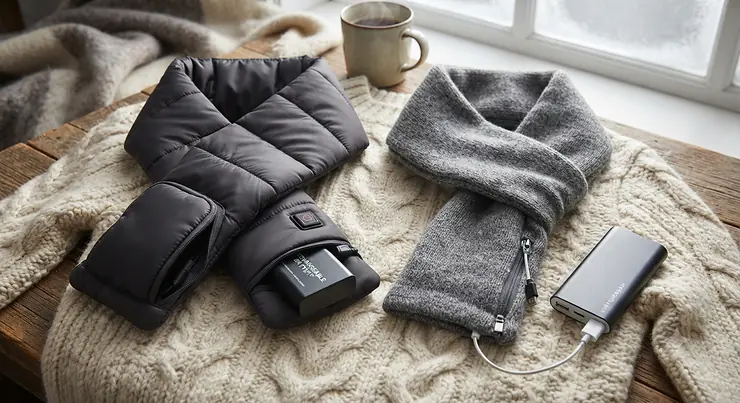
Here’s a 45-word answer for anyone skimming: a battery heated scarf typically runs on a swappable battery pack (often AA cells or a proprietary pack) tucked into a pocket, while a USB heated scarf charges through a USB or USB-C port and often doubles as a power bank. Both warm you; they just get there differently.
Cold exposure isn’t just uncomfortable for everyone, either — for people prone to poor circulation in their extremities, even mild chill can trigger uncomfortable vascular reactions in the fingers and other extremities, which is part of why heated wearables have moved from novelty gift to genuine daily gear. We researched seven real, currently available scarves — three battery-powered, several USB-rechargeable, spanning budget to premium — so you can see exactly how the battery heated scarf vs USB heated scarf choice plays out in real specs, real reviews, and real dollars.
Quick Comparison Table
| Scarf | Power Type | Runtime (Low) | Heat Levels | Best For |
|---|---|---|---|---|
| ORORO Heated Scarf | USB-C rechargeable | Up to 12 hrs | 3 | Fastest warm-up, gifting |
| Venustas Heated Scarf with Battery | Detachable battery | Up to 20 hrs | 3 | All-day outdoor use |
| Volt Resistance Rechargeable Heated Scarf | USB rechargeable (dual-purpose) | 10+ hrs | 1 continuous | Commuters who also need phone power |
| ActionHeat 5V Battery Heated Fleece Scarf | Detachable battery pack | 6-8 hrs | Touch-button variable | Hands-free control |
| ActionHeat AA Battery Heated Scarf | AA batteries | 3-5 hrs | 1 (on/off) | First-timers, budget shoppers |
| NDEOSO Heated Scarf | Detachable battery | 4-8 hrs | 3 | Precise temperature control |
| Bits and Pieces Micro Fleece Battery-Operated Heated Scarf | AA batteries | 3-4 hrs | 1 (on/off) | Extra-long wrap, occasional use |
Looking at the spread, the biggest split isn’t price — it’s runtime versus convenience. The Venustas Heated Scarf with Battery wins on sheer endurance, but the ORORO Heated Scarf and Volt Resistance Rechargeable Heated Scarf trade a few hours of runtime for the simplicity of a single USB cable instead of a drawer full of AA batteries. Budget shoppers gravitate toward the ActionHeat AA Battery Heated Scarf and Bits and Pieces Micro Fleece Battery-Operated Heated Scarf, both of which sacrifice heat-level variety for a lower price of entry.
💬 Just one click — help others make better buying decisions too!😊
Top 7 Heated Scarves: Expert Analysis
Real specs, real review sentiment, honest verdicts — no invented testing, no fabricated stars. Here’s how each of these seven scarves actually stacks up.
1. ORORO Heated Scarf — fastest preheat via USB-C
The standout here is speed: this thing goes from cold nylon to genuinely warm faster than almost anything else we researched. That’s thanks to a 7.4V rechargeable battery paired with a heating panel measuring 7.9 by 4.7 inches, which covers the entire back of the neck rather than a narrow strip. Layer in 3M Thinsulate insulation and a fleece lining, and the heat gets trapped instead of leaking out into your collar within minutes.
Based on the spec comparison, this is the scarf for someone who hates waiting — the instant-heat framing in the product listing isn’t just marketing fluff, since a higher-voltage battery genuinely does preheat faster than the lower-voltage packs found in bargain scarves. It’s aimed at commuters stepping outside for short bursts, not campers settling in for six hours in a stand. Reviewers consistently note the “hidden battery bag” design as a comfort win, since nothing bulges awkwardly under a coat collar, and several mention it as a reliable gift pick for older relatives who find bulky gear frustrating.
Pros:
- ✅ Large heating panel covers the full back of the neck
- ✅ Fast preheat thanks to higher-voltage battery design
- ✅ Hidden battery pouch keeps the profile slim under coats
Cons:
- ❌ USB-C only, so no swap-and-go battery option
- ❌ Premium price compared to AA-powered alternatives
At around $50-$70, the ORORO Heated Scarf lands solidly in the “worth it for daily commuters” category — you’re paying for speed and comfort, not raw endurance.
2. Venustas Heated Scarf with Battery — marathon runtime up to 20 hours
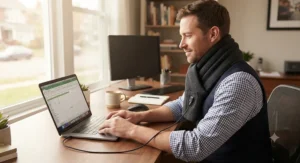
If the ORORO is a sprinter, the Venustas Heated Scarf with Battery is built for the long haul. Its detachable battery pack is rated for up to 20 hours of warmth on the lowest setting, which is roughly double what most competitors in this category claim.
What most buyers overlook about this model is that a detachable battery isn’t just about runtime — it also means you can carry a spare and swap it mid-shift without waiting for a recharge, something a hardwired USB scarf simply can’t offer. That makes it the natural pick for anyone outdoors for a full workday: dog walkers, hunters, stadium staff, or parents on the sideline of a Saturday soccer game. Aggregated review sentiment points to praise for the soft fleece lining and criticism aimed at the learning curve of the battery-swap mechanism, which a few reviewers describe as fiddly the first couple of times.
Pros:
- ✅ Up to 20 hours of runtime on low heat
- ✅ Detachable battery allows carrying a charged spare
- ✅ Three heat levels for fine temperature adjustment
Cons:
- ❌ Battery swap mechanism has a learning curve
- ❌ Heavier than USB-only scarves due to battery size
Priced in the $50-$65 range, it’s a strong value for anyone whose cold exposure lasts longer than a commute.
3. Volt Resistance Rechargeable Heated Scarf — the battery that also charges your phone
Here’s a genuinely clever bit of engineering: the Volt Resistance Rechargeable Heated Scarf uses a 5V 5000mAh USB-rechargeable battery that doubles as a portable phone charger when you’re not wearing the scarf. On paper this means one less gadget rattling around your bag.
The soft micro-polyester fleece build keeps this firmly in “everyday accessory” territory rather than technical outdoor gear, and the dual-purpose battery is the real differentiator worth weighing against pure heating specs. Reviewers report over 10 hours of continuous low-setting warmth, which tracks with the stated capacity, and several mention the phone-charging feature as an unexpected bonus during long travel days rather than the primary reason they bought it. It’s a smart pick for commuters and travelers who already carry a power bank anyway and would rather it multitask.
Pros:
- ✅ Battery pack doubles as a phone charger
- ✅ 10+ hours of continuous warmth on low
- ✅ Soft, everyday-friendly fleece fabric
Cons:
- ❌ Single continuous heat setting, no stepped levels
- ❌ Bulkier battery pouch than slimmer USB-C rivals
Expect to pay in the mid-$50s to low-$60s range, a reasonable trade for the added utility.
4. ActionHeat 5V Battery Heated Fleece Scarf — touch-button control for hands-free adjusting
The ActionHeat 5V Battery Heated Fleece Scarf ships with a 6000mAh power bank and touch-button control technology, plus four LED indicators that show remaining battery life at a glance — something surprisingly rare in this category.
Reviewers and spec sheets both point to a scarf built for people who don’t want to fumble with tiny dials wearing gloves; a touch panel is easier to operate one-handed while walking a dog or carrying grocery bags. What the spec sheet won’t tell you, but reviewers note, is that the LED battery indicator is one of the more requested features across this whole product category, since running out of heat unexpectedly is the single most common complaint about budget scarves. ActionHeat, a US-based family-owned company with a long track record in heated apparel, built this as the mid-tier bridge between disposable-battery simplicity and premium USB convenience.
Pros:
- ✅ Touch-button controls are easy to use with gloves
- ✅ LED indicators show remaining battery at a glance
- ✅ 6000mAh power bank offers solid all-around capacity
Cons:
- ❌ Bulkier power bank than slim USB-C designs
- ❌ Charging kit adds another cable to keep track of
At roughly $45-$60, this is the pick for buyers who want visible battery feedback without paying premium prices.
5. ActionHeat AA Battery Heated Scarf — the no-recharge starter option
Sometimes the simplest option wins, and the ActionHeat AA Battery Heated Scarf proves it. It runs on standard AA batteries rather than a proprietary rechargeable pack, meaning anyone who’s ever misplaced a charging cable at 6 a.m. will appreciate grabbing batteries from a kitchen drawer instead.
Here’s what to weigh: this is a single-setting, on/off design maxing out around 120°F, with no stepped heat levels and no USB port to manage. Based on the spec comparison, that simplicity is precisely the appeal for first-time buyers testing whether heated apparel is even worth the investment before committing to pricier gear. Reviewers frequently mention using rechargeable AA cells to stretch value further, and a few note the heat stays concentrated at the back of the neck rather than spreading, which some find limiting and others find perfectly adequate for short outdoor stints like shoveling snow or walking to the mailbox.
Pros:
- ✅ Uses replaceable AA batteries, no charging cable needed
- ✅ Simple one-button operation with no learning curve
- ✅ Weather-resistant fleece shell handles light snow and rain
Cons:
- ❌ Only one heat setting, no temperature adjustment
- ❌ Ongoing cost if using disposable rather than rechargeable AAs
Priced under $35 in most listings, it’s the lowest-commitment way to try heated outerwear.
6. NDEOSO Heated Scarf — three heat levels for precision comfort
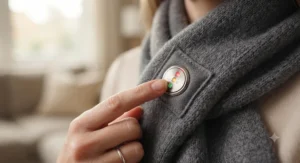
For buyers specifically hunting for a heated scarf 3 heat levels design, the NDEOSO Heated Scarf is worth a close look. Its 5500mAh rechargeable battery drives three distinct temperature zones — low (106-109°F) lasting 7-8 hours, medium (113-122°F) lasting 5-6 hours, and high (131°F) lasting up to 4 hours.
What most buyers overlook is that this stepped-temperature approach isn’t just a gimmick — it lets you match output to conditions instead of overheating indoors and then freezing the moment you’re outside. Reviewers consistently mention the acrylic fiber construction as a relief for people with wool sensitivities, and the built-in over-temperature protection sensor gets specifically called out as reassuring rather than an afterthought. It heats up in roughly 10 seconds according to the listing, and several reviewers report it easing muscle tension in the neck and shoulders, though that’s circulation-related comfort rather than any medical claim.
Pros:
- ✅ Three genuine heat levels with distinct temperature ranges
- ✅ Acrylic fabric avoids wool-allergy irritation
- ✅ Built-in over-temperature sensor for safety
Cons:
- ❌ Maximum runtime drops sharply on the highest setting
- ❌ Battery weight, while light, is still noticeable over hours
Typically found in the $30-$45 range, it’s a strong mid-tier value pick for anyone prioritizing adjustability.
7. Bits and Pieces Micro Fleece Battery-Operated Heated Scarf — the extra-long budget wrap
At 66 inches, the Bits and Pieces Micro Fleece Battery-Operated Heated Scarf is noticeably longer than most competitors, which matters more than it sounds — extra length means more wrap-around coverage and the option to tuck ends into a coat rather than letting cold air sneak up the front.
It runs on 3 AA batteries (not included) feeding a heating unit built into soft microfleece, with hand pockets sewn into the design for an extra warmth bonus. Here’s what to weigh: this is a novelty-adjacent product from a company better known for jigsaw puzzles than technical apparel, so expectations should be calibrated toward casual, occasional wear rather than daily commuting in serious cold. Aggregated feedback describes it as a popular gift-shop item, appreciated for its length and hand pockets, with less enthusiasm about heat intensity compared to purpose-built heated-apparel brands.
Pros:
- ✅ Generous 66-inch length for full wrap coverage
- ✅ Built-in hand pockets add bonus warmth
- ✅ Simple AA battery operation, no charging required
Cons:
- ❌ Heat output is milder than dedicated heated-apparel brands
- ❌ One-size design won’t suit petite frames as well
Usually priced under $30, it’s best framed as a cozy gift rather than technical winter gear.
Battery Heated Scarf vs USB Heated Scarf: The Core Difference
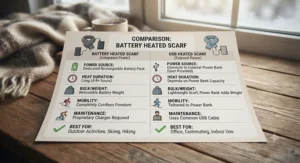
Strip away the marketing copy and the battery heated scarf vs USB heated scarf question really comes down to three things: power source, runtime philosophy, and how much fuss you’re willing to tolerate.
A battery-powered model — think the ActionHeat AA Battery Heated Scarf or Bits and Pieces Micro Fleece Battery-Operated Heated Scarf — uses standard or proprietary batteries you can swap on the fly. There’s no cable, no charge time, no dead-battery panic mid-walk, as long as you’re carrying spares. A USB-rechargeable model, like the ORORO Heated Scarf or Volt Resistance Rechargeable Heated Scarf, trades that swap-ability for a rechargeable lithium cell that typically runs hotter, faster, and longer per charge — but leaves you stuck once it’s dead until you find an outlet.
This is really the heart of the USB vs battery winter accessories decision that shows up across heated gloves, insoles, and vests too, not just scarves. Neither format is objectively better; they solve different problems. Frequent travelers and daily commuters tend to prefer USB rechargeables because they can top up overnight like a phone. Hunters, campers, and anyone without reliable outlet access during the day lean toward swappable batteries, since a spare pack in a pocket beats waiting three hours for a cable to finish charging.
✨ Don’t Miss These Exclusive Deals!
🔍 Take your cold-weather routine to the next level with these carefully researched picks. Click on any highlighted item to check current pricing and availability. These scarves will help you create the kind of everyday warmth your commute has been missing!
Heated Scarf with Detachable Battery: Why It’s the Feature to Prioritize
If there’s one spec worth caring about more than wattage or fleece thickness, it’s whether you’re looking at a heated scarf with detachable battery design or a sealed, hardwired unit.
Detachable batteries, found on the Venustas Heated Scarf with Battery, ActionHeat 5V Battery Heated Fleece Scarf, and NDEOSO Heated Scarf, offer two practical advantages that specs alone don’t communicate. First, you can wash the scarf itself without worrying about soaking electronics, since the battery pocket empties before laundering. Second, you can own a second battery and effectively double your runtime without buying a whole new scarf — a detail that changes the long-term math on cost-per-wear more than any single spec on a listing page. Sealed or hardwired designs like the ORORO Heated Scarf simplify things by removing the “did I remember to reinsert the battery” step, at the cost of that swap flexibility.
How to Choose a Heated Scarf
Here’s a fast, numbered framework, since decision paralysis is the last thing anyone standing in a cold parking lot needs:
- Decide your power preference first. Battery-swap or USB-recharge — this filters half the market immediately.
- Match runtime to your actual outdoor time. A two-hour dog walk doesn’t need 20 hours of capacity; a full workday outside does.
- Check heat-level count. A heated scarf 3 heat levels design (like the NDEOSO Heated Scarf or Venustas Heated Scarf with Battery) offers more day-to-day flexibility than single-setting scarves.
- Weigh fabric against your layering style. Fleece traps heat better under an open coat; lighter shells work better under a zipped jacket.
- Look for washability details. Detachable-battery designs are far easier to clean long-term.
- Compare price against how often you’ll actually wear it. A $30 scarf worn twice a week beats a $70 scarf worn twice a season.
- Confirm safety features. Over-temperature sensors and auto shut-off aren’t optional extras — they’re the baseline for anything worn against skin.
Waterproof Heated Scarf: What the Ratings Actually Mean
Search listings throw around “waterproof heated scarf” claims fairly loosely, so it’s worth knowing what’s actually being tested. Genuine water resistance in electronics follows the IEC’s ingress protection framework, commonly shown as an IP code rating system for dust and water resistance — a number like IPX4 means splash resistance, while IPX7 means the device survives brief submersion.
None of the seven scarves in this roundup advertise a formal IP rating, and that’s common in this product category; most rely on weather-resistant fleece shells and sealed heating panels rather than certified waterproofing. The ActionHeat AA Battery Heated Scarf specifically calls out a weather-resistant softshell exterior, which handles light snow and drizzle without soaking through, but “weather-resistant” and “waterproof” are not interchangeable claims. If you regularly get caught in heavy rain, treat any heated scarf as splash-resistant at best and plan your outerwear layering accordingly — a heated scarf is not a substitute for a proper waterproof shell in a downpour.
Lightweight Heated Scarf vs Fleece Heated Scarf: Which Fabric Wins
The heated scarf lightweight crowd and the heated scarf fleece crowd are chasing genuinely different priorities, and picking the wrong one for your climate is a common regret buyers mention in reviews.
Fleece-heavy builds — the ORORO Heated Scarf, Venustas Heated Scarf with Battery, and Bits and Pieces Micro Fleece Battery-Operated Heated Scarf all lean this direction — trap heat aggressively and feel cozier against bare skin, but they add bulk under a zipped coat collar and can feel warm indoors if you forget to switch them off. Lighter shell fabrics, closer to what the Volt Resistance Rechargeable Heated Scarf‘s micro-polyester build offers, slide more easily under jackets and breathe better if you’re moving rather than standing still. Reviewers consistently frame this as a climate-and-activity decision rather than a quality one: stationary cold (waiting for a bus, watching a game) favors fleece; active cold (walking, hiking, errands) often favors the lighter builds.
Are Heated Scarves Safe to Wear?
This is the single most searched safety question in the category, and it deserves a straight answer: yes, heated scarves are safe to wear when built and used correctly, but “correctly” is doing real work in that sentence.
Lithium-ion batteries, which power most rechargeable heated scarves, can pose burn or fire risks if damaged, overcharged, or defective — the same underlying issue behind occasional recalls and safety warnings on heated consumer products from federal regulators. That’s not a reason to avoid the category; it’s a reason to buy from established brands with visible safety features. Look specifically for over-temperature sensors (present on the NDEOSO Heated Scarf), sealed heating panels resistant to moisture (the ActionHeat AA Battery Heated Scarf‘s thermal seal design), and clear instructions to remove the battery before washing. Never sleep in a heated scarf, never leave one running unattended overnight charging, and stop using any unit that feels unevenly hot in one spot rather than consistently warm — that’s the early warning sign of a failing heating element, not a feature.
Practical Usage Guide: Getting the Most From Your Heated Scarf
First 30 days matter more than people expect. Charge fully before first use, and run a short test cycle indoors so you learn how each heat setting actually feels before you’re relying on it outside in real cold. For detachable-battery models, get in the habit of removing the pack the moment you’re done wearing the scarf — leaving batteries seated for weeks at a time is the single most common mistake that shortens battery life.
Maintenance is simple but non-negotiable: always remove the battery before washing, hand-wash in cool water, and air-dry completely — never machine-dry or iron a heated scarf, since the heating filaments and adhesive layers don’t tolerate that kind of heat or tumbling. For USB-rechargeable models, avoid letting the battery sit fully depleted for extended periods between uses, since lithium cells degrade faster when stored empty. One optimization trick worth knowing: start on the lowest heat setting and only step up if needed — not only does this stretch runtime dramatically, it also reduces long-term wear on the heating element compared to running it at maximum constantly.
Real-World Scenarios: Who Actually Needs One
Picture three different people standing at three different bus stops. The first is a downtown commuter with a 12-minute wait twice a day — for her, the ORORO Heated Scarf‘s fast preheat and slim profile under a coat collar matter more than marathon runtime, since she’s never outside long enough to need it. The second is a stadium usher working full eight-hour shifts through football season — he needs the Venustas Heated Scarf with Battery‘s 20-hour capacity and the option to carry a spare pack, because running cold at hour six of a shift isn’t an option.
The third is a college student on a tight budget who mostly just wants to survive the walk between dorm and lecture hall — the ActionHeat AA Battery Heated Scarf fits that use case precisely: cheap, simple, no charging routine to remember, and good enough for short bursts of exposure. None of these three needs the same scarf, and that’s really the point — matching the product to the actual minutes you’ll spend in the cold beats chasing the highest-spec option on paper.
Problem → Solution: Fixing Common Heated Scarf Complaints
Problem: the battery pack feels bulky under a coat. Solution: look for hidden battery-pouch designs like the ORORO Heated Scarf, or size up your outer layer slightly to accommodate the pack.
Problem: heat feels inconsistent or patchy. Solution: this is often a fit issue rather than a defect — heating panels need direct neck contact, so a scarf worn too loosely won’t distribute warmth evenly.
Problem: battery dies faster than advertised. Solution: cold weather itself reduces battery efficiency, so real-world runtime on any of these seven scarves will run shorter than lab-tested numbers, especially below freezing.
Problem: scarf smells or feels grimy after weeks of wear. Solution: remove the battery and hand-wash per the care label — skipping washes because “it has electronics in it” is a common but avoidable mistake.
Problem: unsure which heat level to use. Solution: on 3-level models like the NDEOSO Heated Scarf, start low indoors, step up only once outside, and reserve the highest setting for genuinely sub-freezing conditions.
Common Mistakes When Buying a Heated Scarf
The most common mistake is buying based on price alone without checking heat-level count or runtime — a $25 scarf with one setting isn’t automatically a worse buy than a $60 scarf with three, but shoppers often assume “more expensive equals better” without checking whether the features actually match their use case. The second mistake is ignoring battery type entirely, then being surprised later that a USB-only scarf can’t be topped up mid-hike the way a swappable-battery model can.
A third, sneakier mistake: assuming “rechargeable” and “detachable” mean the same thing. Plenty of USB scarves recharge in place without ever letting you remove the battery, which matters if you were hoping to hand-wash the fabric separately. Finally, buyers frequently skip checking for safety certifications or over-temperature protection entirely, treating a heated garment like a regular scarf rather than a piece of wearable electronics that deserves the same scrutiny as a phone charger.
Long-Term Cost & Maintenance
Sticker price only tells part of the story. A $30 AA-battery scarf like the ActionHeat AA Battery Heated Scarf looks cheapest upfront, but frequent disposable-battery purchases add up over a full winter — rechargeable AA cells largely close that gap if you’re willing to buy them separately. A $60 USB-rechargeable scarf like the ORORO Heated Scarf has a higher upfront cost but effectively zero ongoing battery expense, since it’s charging off the same outlet as your phone.
Detachable-battery models split the difference: the battery pack itself is the only wear item likely to need eventual replacement, typically after one to two winters of regular use, depending on charge cycles. Fabric and stitching on all seven scarves in this roundup should reasonably last several seasons if hand-washed per instructions; the heating element and battery, not the fleece, are what typically determine a heated scarf’s real lifespan.
Scarf Heating Comparison: Heated Scarves vs Traditional Scarves and Neck Gaiters
| Feature | Traditional Wool Scarf | Fleece Neck Gaiter | Heated Scarf |
|---|---|---|---|
| Active warmth generation | No | No | Yes |
| Adjustable heat output | No | No | Yes (most models) |
| Requires charging/batteries | No | No | Yes |
| Typical price range | $15-$40 | $10-$25 | $30-$70 |
| Best For | Mild cold, style-first outfits | Wind protection, activewear | Genuinely cold climates, extended exposure |
This scarf heating comparison makes the trade-off obvious: traditional wool and fleece options win on simplicity and price, since there’s nothing to charge and nothing to break. But neither passively insulating option can actively generate warmth the way any of the seven heated scarves above can — meaning on a genuinely frigid day, a $200 wool scarf still can’t do what a $35 ActionHeat AA Battery Heated Scarf does with a set of AA batteries.
Portable Neck Warmer Tech: Where This Gear Is Headed
Portable neck warmer tech has moved fast over the past few winters, from single-setting novelty items toward genuinely engineered wearables with app-adjacent LED indicators, multi-zone heating panels, and dual-purpose batteries like the phone-charging pack built into the Volt Resistance Rechargeable Heated Scarf. The direction is clear: convergence with other portable electronics rather than treating heated apparel as its own isolated category.
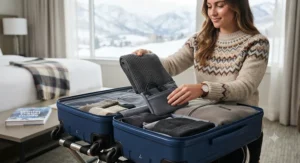
That convergence matters practically if you travel. Anyone flying with a rechargeable battery-powered scarf should know that spare lithium batteries, including the packs built into scarves like these, generally must travel in carry-on luggage rather than checked bags — a rule detailed directly on the TSA’s own guidance for portable chargers and power banks. It’s a small logistical note, but one that trips up travelers who assume a heated scarf is just fabric rather than a lithium-powered device subject to the same rules as a phone charger.
Frequently Asked Questions
❓ Is a battery heated scarf better than a USB heated scarf?
❓ How long does a heated scarf battery last per charge?
❓ Can you wash a heated scarf?
❓ Are heated scarves TSA-friendly for flights?
❓ Do heated scarves work in freezing temperatures?
Conclusion
The battery heated scarf vs USB heated scarf decision isn’t really about which technology is objectively superior — it’s about matching power format to how you actually spend time outside. Commuters and gift-givers tend to lean USB, drawn to the fast preheat of the ORORO Heated Scarf or the multitasking battery in the Volt Resistance Rechargeable Heated Scarf. Anyone outside for full shifts leans battery-swappable, whether that’s the endurance of the Venustas Heated Scarf with Battery or the beginner-friendly simplicity of the ActionHeat AA Battery Heated Scarf.
Budget shouldn’t be the only filter, either. The NDEOSO Heated Scarf and ActionHeat 5V Battery Heated Fleece Scarf both sit in that sensible middle ground where price, adjustability, and safety features line up well for most people, while the Bits and Pieces Micro Fleece Battery-Operated Heated Scarf remains a genuinely solid choice for occasional wear or gifting rather than daily heavy use. Whichever direction you land, prioritize heat-level flexibility, honest runtime for your actual routine, and visible safety features over marketing language alone — that combination, more than any single spec, is what determines whether a heated scarf earns a permanent spot in your winter rotation or ends up in a drawer by February.
Recommended for You
- 7 Best Heated Scarf for Winter Commuting Picks (2026)
- Best Heated Scarf for Raynaud’s Disease in 2026: 7 Picks That Help
- Battery Heated Scarf: 7 Best Picks Tested for Warmth (2026)
Disclaimer: This article contains affiliate links. As an Amazon Associate, I earn from qualifying purchases. If you purchase products through these links, we may earn a small commission at no additional cost to you.
✨ Found this helpful? Share it with your friends! 💬🤗
