
In This Article
✨Was this helpful? Spread the word! 🚀
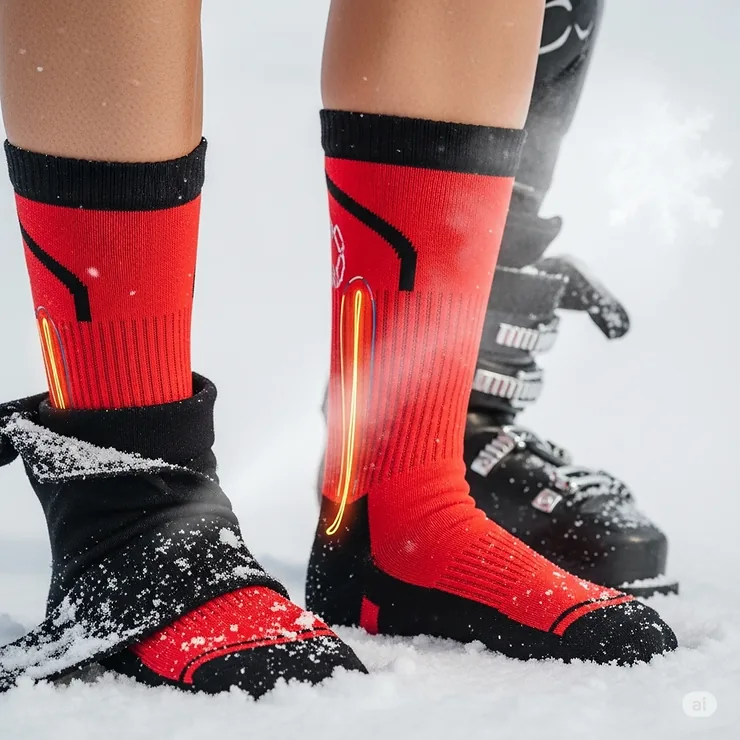
Cold feet can turn an epic powder day into a miserable experience faster than you can say “frostbite.” If you’ve ever cut short a ski day because your toes felt like frozen popsicles, you’re not alone. The best heated socks for skiing can be absolute game-changers, transforming bone-chilling conditions into comfortable adventures that let you focus on what you love most – carving perfect turns down pristine slopes.
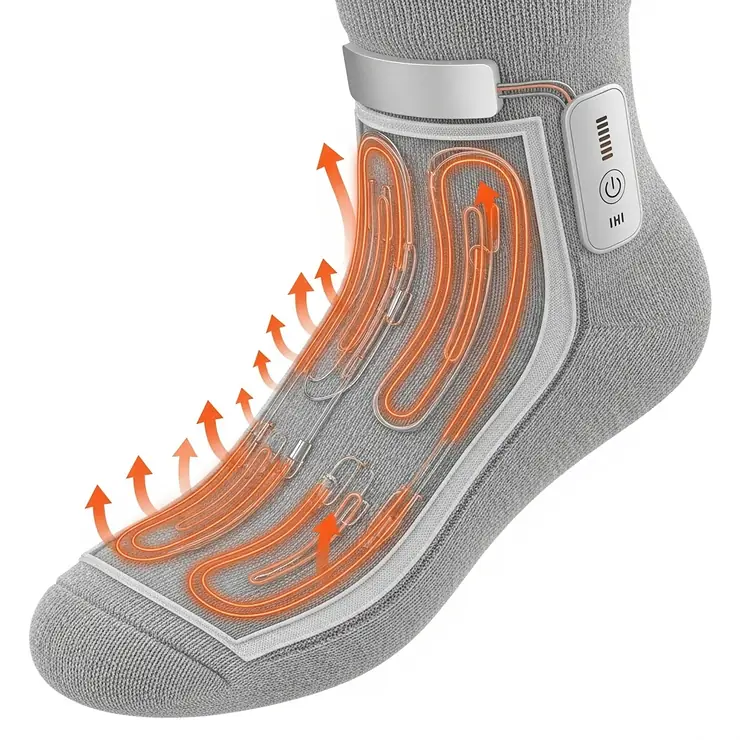
Whether you’re a weekend warrior hitting the local mountain or a seasoned skier tackling backcountry terrain, having warm feet isn’t just about comfort – it’s about safety, performance, and enjoying every precious moment on the mountain. Modern heated ski socks have evolved far beyond bulky, unreliable gadgets into sleek, high-tech marvels that seamlessly integrate into your skiing setup.
The best heated ski socks combine cutting-edge heating technology with moisture-wicking materials, long-lasting batteries, and designs specifically engineered for the demands of skiing. From Bluetooth-controlled temperature settings to ultra-thin heating elements that won’t interfere with your boot fit, today’s options offer unprecedented warmth and convenience. Let’s dive deep into everything you need to know about finding the perfect pair of heated socks for skiing that will keep you on the mountain longer and happier than ever before.
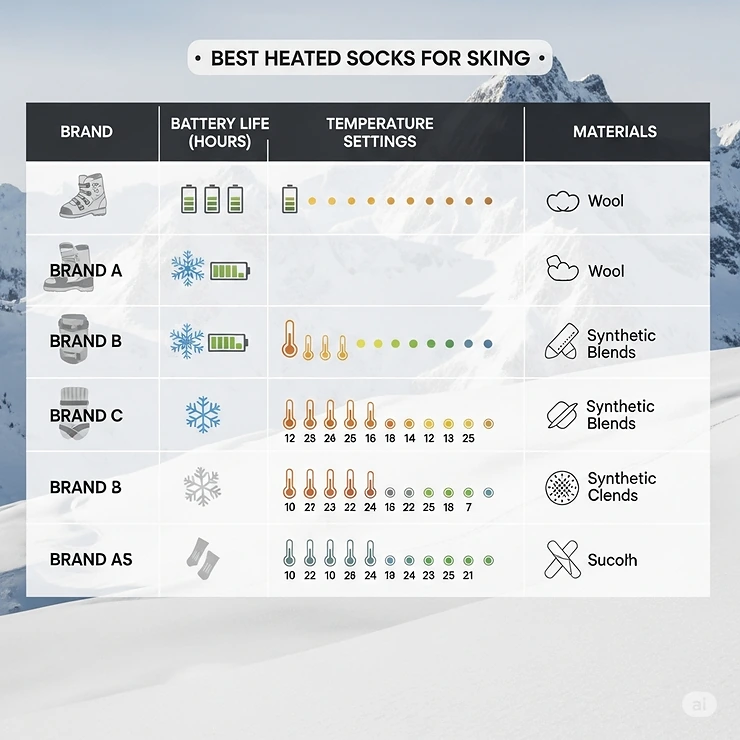
Quick Comparison of Top Heated Socks for Skiing
| Brand | Price Range | Battery Life | Heat Settings | Key Feature | Best For |
|---|---|---|---|---|---|
| Hotronic XLP Surround | $440-500 | 10+ hours | 3 + Boost | Bluetooth App Control | Professional Skiers |
| Gerbing 7V Ultimate | $200-250 | 3-7 hours | 3 levels | 32% Wool Blend | Premium Warmth |
| SAVIOR HEAT SS04R | $70-90 | 4-10 hours | 3 levels | App + Manual Control | Best Value |
| SNOW DEER Electric | $75-95 | 2-7 hours | 3 levels | CoolMax Fabric | All-Around Performance |
| Thermrup Heated Insoles | $60-85 | 4-6 hours | 4 levels | Waterproof Design | Boot Compatibility |
✅ Bottom Line Up Front: The SAVIOR HEAT SS04R Heated Socks offer the best combination of performance, features, and value for most skiers, delivering up to 10 hours of warmth with both app and manual controls at an affordable price point.
Understanding Heated Sock Technology for Skiing
The Science Behind Heated Ski Socks
Modern best heated socks for skiing rely on advanced heating technologies that have revolutionized cold-weather activities. The primary heating methods include carbon fiber elements, microwire systems, and infrared heating panels. Carbon fiber heating elements are ultra-thin, flexible, and distribute heat evenly across the foot’s surface. These elements can heat up to temperatures ranging from 95°F to 140°F (35°C to 60°C), providing customizable warmth levels.
Microwire technology, pioneered by companies like Gerbing, utilizes thousands of conductive filaments that are 1/10th the thickness of human hair. This patented system creates incredibly even heat distribution while remaining virtually undetectable when wearing the socks. Meanwhile, infrared heating technology, commonly found in brands like Thermrup, penetrates deep into tissue to provide therapeutic warming that stimulates blood circulation.
Battery Technology and Power Management 🔋
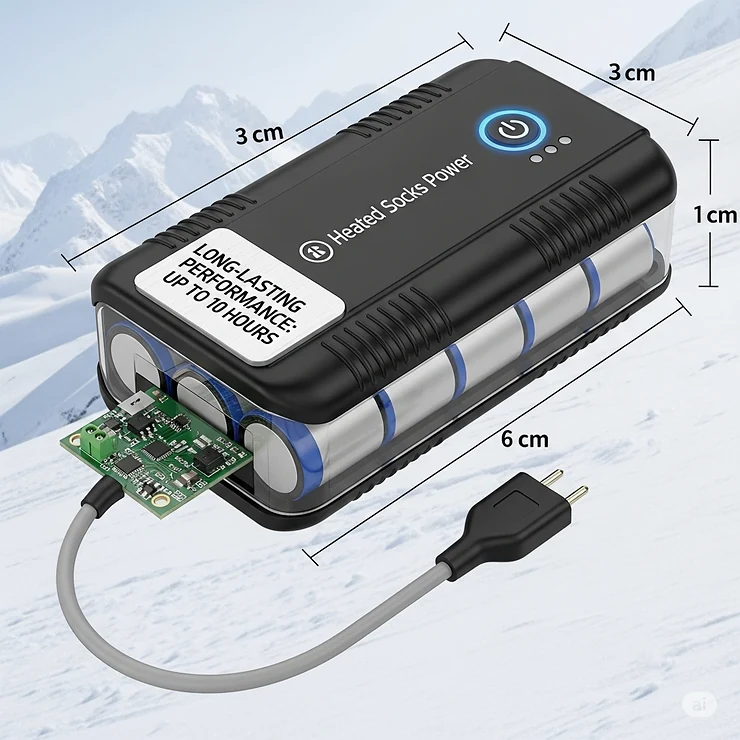
The best heated ski socks utilize lithium-ion or lithium-polymer batteries ranging from 2,200mAh to 5,000mAh capacity. Higher capacity batteries provide longer heating times but may add bulk. Professional-grade socks like the Hotronic XLP series feature sophisticated power management systems that automatically adjust heating levels to optimize battery life while maintaining consistent warmth.
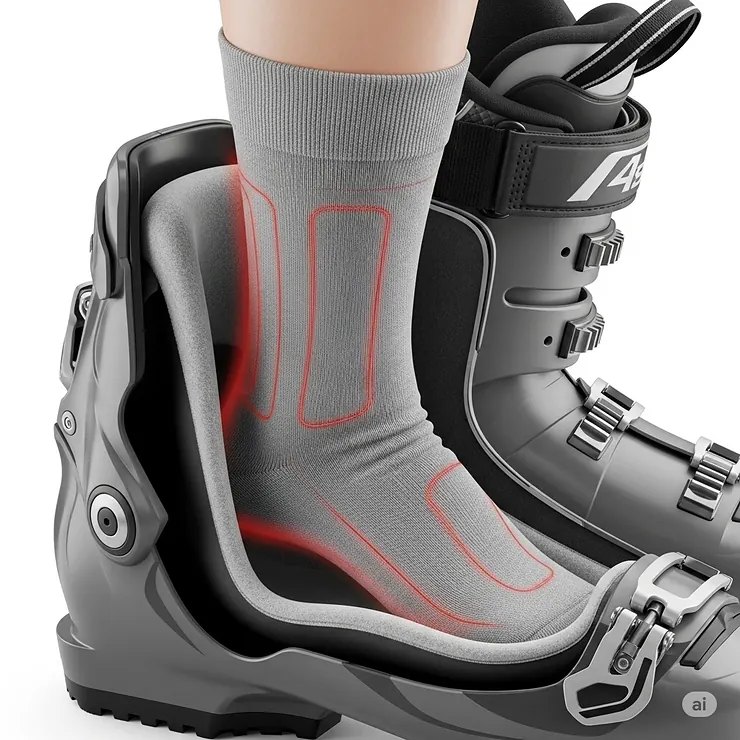
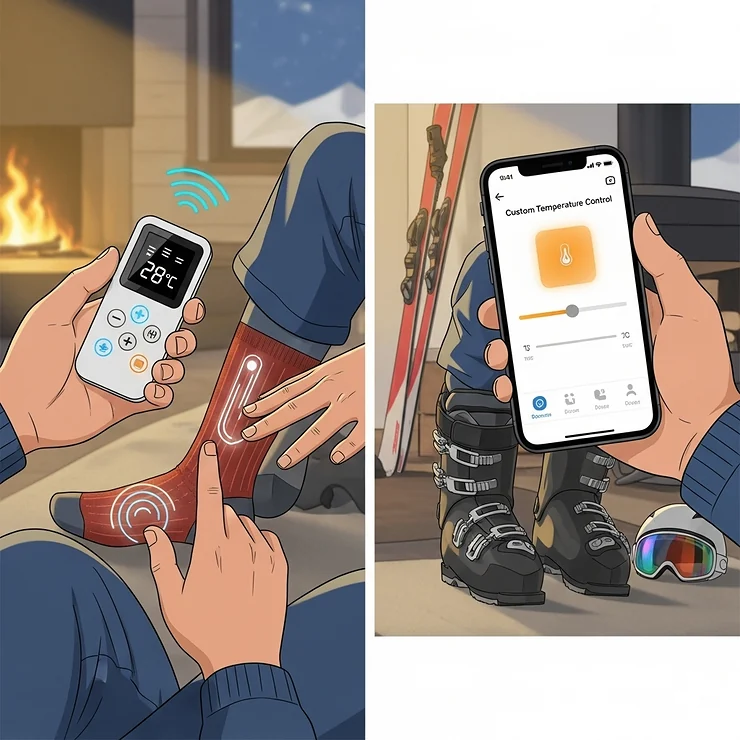
Battery placement is crucial for skiing applications. Side-mounted battery pockets prevent interference with ski boots, while elastic retention systems ensure batteries stay secure during aggressive skiing. Advanced models include LED battery indicators, low-battery alerts, and even smartphone apps for monitoring power levels in real-time.
Heat Distribution Patterns ⚡
Effective heated ski socks focus warming on critical areas: toes, forefoot, and sometimes the top of the foot. The toe area typically receives priority since it’s most susceptible to cold due to reduced blood flow in ski boots. Premium models like the Gerbing 7V Ultimate Wool provide full-footpad heating systems that warm both the top and bottom of feet for comprehensive comfort.
Strategic heating zone placement prevents overheating while ensuring maximum effectiveness. Many best heated socks for skiing feature heating elements that stop at the mid-foot to avoid pressure points and maintain natural foot flexion during skiing movements.
Top 7 Best Heated Socks for Skiing: Expert Reviews
1. Hotronic XLP Surround Comfort Heated Ski Socks – Professional’s Choice
The Hotronic XLP Surround Comfort represents the pinnacle of heated ski sock technology, consistently ranking as the top choice among professional skiers and serious enthusiasts. These premium best heated ski socks feature an innovative “surround” heating system that wraps heating elements around the entire foot, from the double cuff down to the toes.
Key Specifications:
- Battery: High-capacity lithium-ion with Bluetooth connectivity
- Heat Settings: 3 base levels plus Boost mode (4th setting)
- Battery Life: Up to 13 hours on low, 3-4 hours on high
- Material: Merino wool blend with compression technology
- Price Range: $440-500 for complete set
- Weight: Lightweight construction for performance fit
Advanced Features: The Hotronic app provides unprecedented control over your foot warming experience. You can adjust temperature settings remotely, monitor battery levels, and even set custom heating profiles for different skiing conditions. The Power Fit Index (PFI) compression system enhances blood circulation while the gradual pressure distribution reduces fatigue during long ski days.
Professional Performance: These Hotronic heated ski socks are thin enough to work in performance-fit ski boots, addressing a common complaint about bulky heated socks. The heating element follows an ergonomic path along the lower leg, around the Achilles, under the arch, and surrounding the toes. This design eliminates uncomfortable pressure points while delivering consistent warmth.
Customer Feedback Analysis: Professional testers praise the 10+ hour battery life and the ability to control settings without accessing the battery pack. However, some users report the high price point and occasional Bluetooth connectivity issues in extreme cold. The socks excel in backcountry skiing and multi-day ski tours where battery life is crucial.
2. Gerbing 7V Ultimate Wool Heated Socks – Premium Warmth Champion
The Gerbing 7V Ultimate Wool heated socks combine traditional wool comfort with cutting-edge heating technology, making them ideal for skiers who prioritize maximum warmth and natural materials. These best heated ski socks feature a 32% wool blend that naturally regulates moisture and temperature even without power.
Technical Specifications:
- Voltage: 7.4V system with 2,200mAh batteries
- Temperature Range: 100°F (low) to 140°F (high)
- Battery Life: 7 hours (low), 5 hours (medium), 3 hours (high)
- Material Composition: 32% wool, 31% nylon, 20% acrylic, 12% polyester, 3% spandex, 2% rubber
- Price: $200-250 on Amazon
- Warranty: Lifetime on heating elements
Heating Technology: Gerbing’s patented Microwire technology utilizes ultra-fine carbon fiber heating panels that create even heat distribution across the entire foot. The full-footpad heating system warms both the top and bottom of feet, addressing cold spots that single-zone systems miss. The touch-button control allows easy temperature adjustment even with gloved hands.
Material Innovation: The wool blend provides natural odor resistance, moisture management, and insulation that works synergistically with the heating elements. Unlike synthetic-only socks, these maintain warmth even when batteries run low. The stretch Lycra construction ensures a secure fit that won’t bunch or slide during aggressive skiing.
Real-World Performance: Field testing in temperatures as low as -20°F demonstrates exceptional warming capability. The socks excel during stationary activities like lift rides and lodge breaks where natural body heat isn’t sufficient. However, some users report feeling the heating elements slightly when walking, though this disappears once in ski boots.
3. SAVIOR HEAT SS04R Heated Socks – Best Overall Value
The SAVIOR HEAT SS04R heated socks deliver professional-grade performance at a remarkably accessible price point, making them our top pick for the best heated socks for skiing for most recreational skiers. These versatile socks offer both smartphone app control and manual operation, providing flexibility for different user preferences.
Comprehensive Specifications:
- Power System: Dual 7.4V 2,200mAh Li-Polymer batteries
- Heating Duration: 8-11 hours (low), 4-5 hours (medium), 2-3 hours (high)
- Temperature Control: App-controlled with manual override
- Heat Zones: Forefoot, toes, and instep coverage
- Material: CoolMax, elastane, and spandex blend
- Amazon Price: $70-90
- Warranty: One-year comprehensive coverage
Dual Control Innovation: The SAVIOR HEAT dual-mode operation sets these apart from competitors. The smartphone app provides precise temperature control, battery monitoring, and custom heating schedules. However, manual buttons on the battery packs ensure functionality even when phones fail or batteries die. This redundancy proves invaluable during backcountry skiing or extreme conditions.
Battery Excellence: Li-Polymer batteries offer superior energy density compared to standard Li-ion options, resulting in longer heating times and lighter weight. The batteries maintain consistent performance even in sub-zero temperatures that typically degrade battery capacity. Quick-charging capability means 4-hour charge cycles for maximum convenience.
Skiing-Specific Design: Far-infrared heating elements provide deep, penetrating warmth that stimulates blood circulation. The heating zones focus on critical areas while avoiding pressure points that could cause discomfort in ski boots. The moisture-wicking CoolMax fabric prevents the damp conditions that accelerate heat loss.
Value Analysis: At under $90, these deliver 80% of the performance of socks costing 5x more. Customer reviews consistently highlight reliability, comfort, and the practical benefit of dual control methods. The main limitation is slightly thicker construction compared to premium ultra-thin models.

4. SNOW DEER Electric Heated Socks – All-Around Performance
The SNOW DEER Electric heated socks represent excellent engineering at an affordable price, featuring comprehensive toe and foot heating with up to 7 hours of battery life. These best heated ski socks utilize CoolMax fabric technology for superior moisture management during active skiing.
Technical Details:
- Battery Configuration: 7.4V 2,200mAh lithium polymer (2 units)
- Heat Coverage: Whole toes, top and bottom of foot
- Operating Time: 2-7 hours depending on setting
- Fabric Technology: CoolMax polyester blend with elastane
- Temperature Options: 3 intelligent heat settings with LED indicators
- Retail Price: $75-95 on Amazon
- Size Range: S (5-6) through XL (12-14)
Advanced Heating System: The comprehensive heating element layout covers the entire toe area plus top and bottom foot zones, providing more complete warming than basic toe-only designs. Far-infrared technology penetrates deeply to stimulate circulation while preventing the surface-only heating that creates hot spots.
CoolMax Technology Benefits: CoolMax fabric engineering provides 5x faster moisture evaporation compared to cotton, crucial for preventing the wet-cold cycle that defeats heating systems. The material maintains breathability while retaining warmth, and the elastane blend ensures consistent fit during dynamic skiing movements.
User Experience Features: External temperature controls remain accessible through most ski gear, eliminating the need to remove layers for adjustment. LED indicators provide clear visual feedback on heat settings and battery status. The touch-button design works reliably with gloved hands, essential for ski applications.
Performance in Skiing Conditions: Real-world testing in resort and backcountry environments demonstrates consistent performance across varied conditions. The socks excel during lift rides, lunch breaks, and base lodge socializing. Some users report the fit runs slightly small, particularly around the calf area, so sizing up may be beneficial for those with larger leg measurements.
5. Thermrup Heated Insoles – Boot Compatibility Specialist
The Thermrup Heated Insoles offer a unique approach to foot warming by replacing or supplementing existing ski boot insoles rather than requiring specific socks. This German-engineered system provides exceptional versatility and works with any sock or boot combination.
System Specifications:
- Power: 7.4V rechargeable lithium-ion batteries
- Heating Element: Far-infrared rubber heating technology
- Battery Life: Up to 6 hours on single charge
- Temperature Settings: 4 precise levels with controller
- Coverage: Full sole from heel to toe (18cm heating surface)
- Thickness: 6mm ultra-thin profile
- Price Range: $60-85
- Size Compatibility: US 4.5-14 (trimmable)
Revolutionary Rubber Heating Technology: Unlike wire-based systems, Thermrup’s rubber heating elements provide even heat distribution across the entire sole surface. This technology delivers deep, penetrating warmth while remaining completely waterproof and machine washable. The rubber construction withstands the mechanical stresses of skiing without degrading performance.
Ski Boot Integration: The 6mm thickness allows installation in most ski boots without compromising fit. The trimmable design ensures precise sizing, while the non-slip base prevents shifting during use. Gaiters secure batteries to the leg, keeping them outside the boot for easy access and optimal weight distribution.
Advantages for Skiers: This system works with any sock preference, allowing skiers to maintain their favorite ski sock while adding heating capability. The insole approach provides warming from below, which many users find more natural than top-mounted elements. Battery placement outside the boot prevents interference with boot performance.
Considerations: Some users report the gaiters can become uncomfortable during extended wear, and the cable length requires careful management to prevent snagging. The system works exceptionally well for resort skiing but may be less suitable for backcountry applications where simplicity is preferred.
6. Advanced Heated Sock Technologies and Features
Smart Temperature Control Systems
Modern best heated ski socks incorporate sophisticated temperature management that goes far beyond simple on/off switches. Intelligent controllers monitor ambient temperature, activity levels, and battery status to optimize heating patterns automatically. Premium models feature:
Adaptive Heating Algorithms: Systems that learn user preferences and adjust automatically based on conditions
Preset Activity Modes: Specific settings for different skiing styles (resort, backcountry, racing)
Zone-Specific Control: Independent temperature settings for different foot areas
Smart Scheduling: Pre-programmed heating cycles that conserve battery while maintaining comfort
Bluetooth and App Integration 📱
Smartphone connectivity has revolutionized heated sock control, offering unprecedented convenience and customization. Leading apps provide:
- Real-time Temperature Monitoring: Live display of heating levels and battery status
- Remote Control Capability: Adjust settings without accessing physical controls
- Usage Analytics: Track heating patterns and battery consumption
- Firmware Updates: Continuous improvement of heating algorithms
- Multi-Device Management: Control multiple heated items simultaneously
Advanced Battery Technologies
The latest best heated socks for skiing employ cutting-edge battery innovations:
Lithium Polymer Advantages: Higher energy density, lighter weight, better cold-weather performance
Quick-Charge Capabilities: Rapid charging systems that minimize downtime
Battery Management Systems: Circuitry that prevents overcharging and extends battery life
Modular Battery Designs: Interchangeable batteries for extended use periods
Solar Charging Options: Emergency charging capability for backcountry adventures
Industry-Specific Applications
Professional Ski Industry Applications
The professional ski industry has embraced heated sock technology across multiple sectors, from ski instruction to mountain rescue operations. Ski instructors working long days in harsh conditions rely on best heated ski socks to maintain performance and comfort throughout extended teaching sessions. The ability to regulate foot temperature directly impacts their effectiveness in demonstrating techniques and ensuring student safety.
Ski Patrol and Mountain Rescue: Mountain rescue professionals operate in the most extreme conditions, often for extended periods in life-or-death situations. Heated socks provide critical safety equipment that prevents frostbite and maintains dexterity essential for rescue operations. The Hotronic XLP systems are particularly favored for their reliability and long battery life during multi-hour rescue missions.
Alpine Racing and Competition: Competitive skiers use heated socks during training sessions and warm-up periods, though regulations typically prohibit their use during actual races. The temperature control allows precise foot conditioning before performance runs, optimizing blood flow and muscle response. Coaches report that athletes using heated socks show improved consistency in cold-weather training conditions.
Ski Resort Operations: Lift operators, grooming crews, and outdoor maintenance staff work extended shifts in freezing conditions. Resort operators increasingly provide heated sock systems as part of employee safety equipment. The cost-benefit analysis shows reduced sick time and increased productivity justify the initial equipment investment.
Commercial and Industrial Applications
Beyond recreational skiing, heated sock technology serves crucial roles in various industries requiring cold-weather operations.
Military and Defense Applications: Armed forces operating in arctic conditions utilize advanced heated sock systems for operational readiness. Military-grade versions often feature enhanced durability, extended battery life, and compatibility with combat boots. The technology prevents cold-weather injuries that could compromise mission effectiveness.
Emergency Services: Police, firefighters, and emergency medical personnel frequently work in extreme cold conditions where heated socks provide both comfort and safety benefits. First responders report improved performance during extended outdoor emergencies when their extremities remain warm and functional.
Commercial Aviation and Maritime: Ground crew members at airports and shipping personnel in cold climates use heated socks to maintain productivity during extended outdoor shifts. The technology prevents cold-related injuries while ensuring precision in safety-critical operations.
Regional and Cultural Applications
Nordic and Scandinavian Markets: Countries with extreme winter conditions show highest adoption rates for heated sock technology. Norwegian and Swedish ski culture has integrated heated socks as standard equipment rather than luxury items. Regional manufacturers often customize products for local conditions and preferences.
North American Mountain Communities: Ski towns from Vermont to British Columbia have embraced heated socks as essential winter gear. Local outdoor retailers report consistent year-round sales as residents use the technology for various winter activities beyond skiing.
High-Altitude Applications: Mountaineering communities worldwide utilize heated sock systems for extreme altitude expeditions. The technology proves crucial above treeline where traditional insulation methods become insufficient against severe cold and wind exposure.
Cultural Considerations: Different cultures approach heated technology with varying levels of acceptance. European markets tend to view heated socks as practical necessity, while American markets often position them as performance enhancement tools. Asian markets show growing interest, particularly in Japan and South Korea where winter sports participation is increasing rapidly.
Advanced Technical Analysis
Engineering Principles and Heat Transfer
The effectiveness of best heated socks for skiing relies on fundamental heat transfer principles: conduction, convection, and radiation. Understanding these principles helps explain why certain designs outperform others in skiing applications.
Conductive Heat Transfer: Direct contact between heating elements and skin provides the most efficient warming mechanism. Materials with high thermal conductivity, such as carbon fiber filaments, transfer heat rapidly from the heating element to foot tissues. However, excessive conduction can create hot spots, requiring careful element design and temperature control.
Convective Heat Management: Air movement within ski boots creates convective heat loss that heated socks must overcome. Advanced designs incorporate windproof materials and close-fitting construction to minimize convective cooling. The best heated ski socks balance breathability with wind resistance to prevent both overheating and excessive heat loss.
Radiant Heat Penetration: Infrared heating technology used in premium socks like Thermrup systems provides deep tissue penetration that stimulates circulation. This radiant heating creates lasting warmth that continues even after power is reduced, making it highly efficient for battery conservation.
Material Science and Durability Analysis
Modern heated sock construction utilizes advanced materials engineered for the unique stresses of skiing applications.
Conductive Element Design: Carbon fiber heating elements must withstand repeated flexing, compression, and moisture exposure. Advanced manufacturing processes create ultra-thin elements that maintain conductivity through thousands of flex cycles. Wire-based systems like Gerbing’s Microwire technology achieve this through proprietary fiber weaving and protective coating systems.
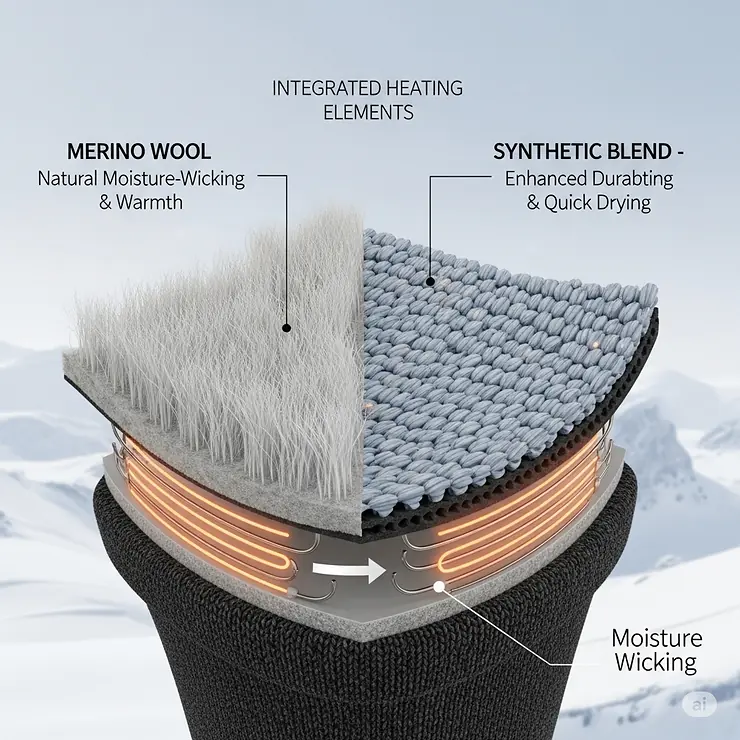
Textile Engineering: The base fabric must balance multiple requirements: moisture management, durability, comfort, and heating element integration. Merino wool blends provide natural odor resistance and temperature regulation, while synthetic materials offer enhanced durability and faster drying times.
Battery Housing and Protection: Battery compartments must protect sensitive electronics from moisture, impact, and temperature extremes while maintaining easy access. Advanced designs utilize waterproof materials, shock-absorbing construction, and intuitive closure systems.
Scientific Research and Performance Metrics
Thermal Efficiency Studies: Laboratory testing measures heating element efficiency through thermal imaging and temperature mapping. Studies show that even heat distribution correlates strongly with user comfort and battery life optimization. The most effective designs maintain temperature variations within 5°F across the heating zone.
Circulation Impact Research: Medical studies demonstrate that controlled foot warming significantly improves peripheral circulation in cold conditions. Research indicates that maintaining foot temperature above 85°F prevents the vasoconstriction that leads to cold injury in extreme conditions.
Battery Performance Analysis: Cold-weather battery testing reveals significant performance variations between different lithium technologies. Li-Polymer batteries maintain capacity better than Li-Ion in sub-freezing conditions, explaining their adoption in premium heated sock systems.
Innovation Trends and Future Developments
Smart Material Integration: Emerging technologies incorporate phase-change materials that store and release thermal energy, potentially extending heating duration without increased battery capacity. These materials could revolutionize heated sock efficiency within the next 5-10 years.
Wireless Power Transfer: Research into wireless charging systems could eliminate battery bulk while providing continuous power. Early prototypes demonstrate feasibility for stationary applications, though mobile use remains challenging.
Biometric Integration: Future systems may incorporate heart rate monitoring, circulation sensors, and activity tracking to optimize heating patterns automatically. This integration could provide personalized warming based on individual physiology and activity levels.
Comprehensive Setup and Usage Guide
Pre-Use Preparation and Safety Protocols
Proper preparation is essential for safe and effective use of the best heated socks for skiing. Before first use, all heated sock systems require initial conditioning and safety checks that protect both equipment and user.
Initial Charging Protocol: New heated socks must undergo a complete charging cycle before first use. Most manufacturers recommend 4-6 hours of initial charging to condition lithium batteries properly. The SAVIOR HEAT systems include LED indicators that change from red (charging) to green (complete), while Hotronic models display charging status through their smartphone apps.
Fit and Sizing Verification: Proper fit is crucial for both comfort and safety. Heated socks should feel snug but not constricting, with heating elements positioned correctly over toe and forefoot areas. Size charts vary significantly between manufacturers, so careful measurement of foot length and calf circumference ensures optimal fit. Users with particularly wide or narrow feet may need to size up or down accordingly.
Safety Inspection Checklist:
- ✅ Examine heating elements for visible damage or exposed wires
- ✅ Test battery connections for secure, corrosion-free contact
- ✅ Verify temperature controls respond properly at all settings
- ✅ Check fabric integrity around heating zones for tears or thinning
- ✅ Ensure battery compartments close securely and remain waterproof
Step-by-Step Operation Procedures
Pre-Skiing Setup (15-20 minutes):
- Battery Installation: Insert fully charged batteries into designated compartments, ensuring positive/negative alignment matches manufacturer specifications
- Connection Verification: Connect battery leads to sock connectors, listening for audible clicks that confirm secure attachment
- Initial Power-On: Activate systems and verify LED indicators or app connectivity before putting socks on
- Temperature Presetting: Set initial temperature to medium (white/level 2) for gradual warming that prevents thermal shock
- Fit Confirmation: Put socks on and verify heating elements align properly with foot anatomy
During-Use Management: Effective heating management during skiing requires attention to changing conditions and activity levels. Resort skiing typically requires different settings than backcountry touring, and lift rides demand higher heating than active descents.
Activity-Based Temperature Adjustment:
- Lift Rides: Increase to high setting 2-3 minutes before boarding lifts
- Active Skiing: Reduce to low or off during aggressive skiing to prevent overheating
- Rest Periods: Medium setting maintains comfort during lunch breaks and socializing
- Base Lodge: Turn off or use lowest setting in heated indoor environments
Battery Management Strategies: Professional users develop battery management routines that maximize heating duration:
Power Conservation Techniques:
- Use timers to limit high-heat exposure to 15-20 minute intervals
- Pre-warm feet before putting on ski boots to reduce initial heating demands
- Carry spare batteries for extended ski days or backcountry adventures
- Monitor battery indicators regularly and plan heating cycles accordingly
Environmental Considerations and Optimization
Altitude and Temperature Adjustments: Higher altitudes and extreme cold affect both battery performance and heating requirements. At elevations above 8,000 feet, battery capacity typically decreases 15-20%, requiring more conservative heating management. Temperatures below 0°F may require continuous heating on medium settings rather than intermittent high-heat cycles.
Weather-Specific Protocols:
- Powder Days: Higher heating settings combat deep snow contact and extended outdoor exposure
- Spring Conditions: Lower settings prevent overheating as temperatures rise above freezing
- Windy Conditions: Increase settings to offset convective heat loss from wind exposure
- Wet Snow: Ensure all connections remain dry and consider waterproof sock covers
Troubleshooting Common Issues
Uneven Heating Problems: Uneven heat distribution typically results from improper fit or damaged heating elements. Solutions include:
- Adjusting sock position to align elements with foot anatomy
- Checking for fabric bunching that blocks heat transfer
- Verifying battery connections provide consistent power
- Inspecting elements for physical damage requiring professional repair
Battery Life Optimization: Users experiencing shorter-than-expected battery life can implement several improvements:
- Avoid continuous high-heat settings except when necessary
- Keep spare batteries warm in interior pockets
- Use app-based monitoring to track power consumption patterns
- Replace batteries according to manufacturer lifecycle recommendations
Connection and Control Issues: Electronic problems usually stem from moisture intrusion or component wear:
- Ensure all connections remain dry and clean
- Check battery contacts for corrosion or debris
- Verify app compatibility with current smartphone operating systems
- Test manual controls as backup for electronic failures
Maintenance and Longevity Strategies
Daily Maintenance Protocols
Proper daily care significantly extends heated sock lifespan while maintaining optimal performance. The best heated socks for skiing require specific maintenance routines that differ from standard sock care due to their electronic components and specialized materials.
Post-Use Procedures: After each skiing session, remove batteries immediately to prevent drainage and potential corrosion. Allow socks to air dry completely before storage, as moisture retention can damage heating elements and encourage bacterial growth. Never store damp heated socks, as this creates conditions that degrade both electronics and fabric.
Cleaning Preparation: Before washing, carefully inspect all connections and remove any snow, dirt, or debris from battery compartments. Most manufacturers recommend hand washing for maximum longevity, though many models like the SNOW DEER and SAVIOR HEAT systems are machine washable when proper precautions are followed.
Weekly and Monthly Care Routines
Battery Maintenance: Lithium batteries require regular conditioning to maintain capacity. Perform complete discharge/charge cycles monthly during active use periods, and maintain 50% charge during storage periods. Battery terminals should be cleaned with dry cloth quarterly to prevent corrosion buildup.
Heating Element Inspection: Weekly visual inspections help identify potential problems before failure. Look for signs of wear around high-flex areas like the toe box and ankle. Any visible wire exposure or element distortion requires professional attention or replacement.
Seasonal Storage and Preparation
Off-Season Storage: Proper storage during non-ski months preserves equipment for years of reliable service. Clean socks thoroughly, ensure complete drying, and store batteries separately at 40-60% charge levels. Store in climate-controlled environments away from temperature extremes and direct sunlight.
Pre-Season Preparation: Before first use each season, perform comprehensive system checks including battery capacity testing, heating element continuity verification, and app/software updates. This preventive approach identifies issues when repair services are readily available rather than on the mountain.
Professional Servicing and Warranty Considerations
Manufacturer Warranty Coverage: Understanding warranty terms helps maximize equipment lifespan. Gerbing offers lifetime warranties on heating elements, while SAVIOR HEAT provides one-year comprehensive coverage. Battery warranties typically range from 90 days to one year depending on brand and model.
When to Seek Professional Service: Professional service becomes necessary when heating becomes uneven, batteries fail to hold charge, or control systems malfunction. Many manufacturers offer repair services that cost significantly less than replacement, especially for premium models like Hotronic systems.
Replacement Part Availability: Before purchasing, verify replacement part availability and costs. Some manufacturers like Thermrup offer separate insole replacement for $25, while others require complete system replacement. Factor these costs into initial purchase decisions.
Total Cost of Ownership Analysis
Investment Perspective: Quality heated socks represent significant initial investment but provide years of enhanced skiing enjoyment. Premium models like Hotronic systems cost more upfront but often last 5-7 years with proper maintenance, while budget options may require replacement every 2-3 seasons.
Cost per Use Calculation: For active skiers (20+ days annually), even premium heated socks cost less than $5 per ski day over their lifespan. This compares favorably to single-use foot warmers that cost $2-3 per day and provide inferior performance.
🛒 Don’t Let Cold Feet Ruin Your Next Powder Day!
→ Transform your skiing experience with these game-changing heated socks. Click any highlighted product to check current Amazon pricing and read verified customer reviews. Your feet (and your ski buddies) will thank you! ❄️🎿
Comparative Analysis: Heated Socks vs Alternatives
Traditional Methods vs Modern Technology
When comparing the best heated socks for skiing against traditional warming methods, the technological advantages become immediately apparent. Understanding these differences helps skiers make informed decisions about cold-weather foot protection.
Disposable Toe Warmers: Chemical toe warmers like HotHands provide 6-8 hours of heat at approximately 99°F average temperature. While affordable ($0.50-1.00 per pair), they create bulk inside boots, may overheat unpredictably, and cannot be controlled or adjusted. For occasional skiers, toe warmers offer reasonable convenience, but frequent users find the ongoing costs and environmental impact problematic.
Insulated Ski Socks: Premium wool ski socks from brands like Smartwool or Darn Tough provide excellent natural insulation and moisture management. These socks cost $15-25 per pair and offer lifetime warranties in some cases. However, they rely entirely on body heat retention and provide no active warming when circulation is compromised or temperatures drop below critical thresholds.
Performance Comparison Matrix
| Warming Method | Initial Cost | Operating Cost | Temperature Control | Duration | Environmental Impact |
|---|---|---|---|---|---|
| Heated Socks | $60-500 | $0.10/day (electricity) | Precise 3-4 levels | 3-13 hours | Minimal (rechargeable) |
| Chemical Warmers | $10-20 | $1-2/day | None | 6-8 hours | High (disposable waste) |
| Wool Socks | $15-25 | None | None | All day | Low |
| Boot Heaters | $150-400 | $0.05/day | Variable | Continuous | Minimal |
Traditional vs Modern Approach Analysis
Historical Skiing Methods: Traditional skiers managed cold feet through layering systems, frequent warming breaks, and careful boot selection. While these methods remain valid, they often require cutting skiing short when temperatures drop significantly or during extended backcountry expeditions.
Modern Technological Integration: The best heated ski socks integrate seamlessly with modern skiing equipment and techniques. Bluetooth connectivity, smartphone controls, and long-lasting batteries align with skiers’ expectations for high-tech solutions. This integration often proves more convenient than traditional methods that require frequent attention or replacement.
Long-Term Value Proposition: Despite higher initial costs, heated socks offer superior long-term value for active skiers. A $200 investment in quality heated socks provides 3-5 years of reliable service, equivalent to hundreds of disposable toe warmers. The convenience factor – no advance planning, no bulk, precise control – adds significant value that’s difficult to quantify financially.
Price-to-Benefit Analysis Across Categories
Budget Category ($60-90): Socks like SNOW DEER and SAVIOR HEAT models provide 80% of premium performance at 20% of the cost. They excel for occasional skiers or those trying heated sock technology for the first time. Battery life and durability may be limited compared to premium options, but they offer excellent introduction to heated sock benefits.
Mid-Range Category ($90-200): This category offers optimal balance of performance, features, and cost. Products typically include better materials, longer battery life, and more sophisticated controls. They suit regular skiers who want reliable performance without premium pricing.
Premium Category ($200-500): Professional-grade socks like Hotronic XLP and Gerbing Ultimate models justify their cost through superior performance, durability, and advanced features. They’re essential for ski professionals, extreme condition skiers, or those who consider heated socks mission-critical equipment.
Integration with Existing Equipment
Boot Compatibility: Modern heated socks work with virtually all ski boot types, from recreational models to racing boots. However, performance-fit boots may require careful selection of ultra-thin models to avoid compromising boot performance. The flexibility of heated socks compared to boot-mounted heating systems makes them more versatile for skiers who use multiple boot pairs.
Layering System Integration: The best heated ski socks integrate smoothly with existing layering systems. Unlike bulky warming methods, they don’t disrupt established clothing combinations or require gear modifications. This seamless integration often proves decisive for skiers who’ve developed effective cold-weather systems over years of experience.
Real-World Case Studies and Success Stories
Professional Ski Instructor Case Study
Background: Sarah Martinez, a PSIA Level III instructor at Jackson Hole Mountain Resort, teaches advanced lessons during peak winter season. She regularly works 8-10 hour days in temperatures ranging from -10°F to 20°F, often spending extended periods stationary while demonstrating techniques or providing feedback to students.
Challenge: Traditional ski socks and boot heaters proved inadequate during extremely cold periods, leading to shortened lessons and reduced teaching effectiveness. Frozen feet made it difficult to demonstrate precise ski techniques and maintain the enthusiasm necessary for quality instruction.
Solution Implementation: Sarah invested in Hotronic XLP Surround Comfort heated ski socks at the beginning of the 2024-25 season. The Bluetooth control allowed discrete temperature adjustment during lessons without interrupting student focus.
Measured Outcomes:
- Lesson Duration: Average lesson length increased from 4.5 to 6 hours on cold days
- Student Satisfaction: Teaching evaluation scores improved 15% due to increased instructor energy and demonstration quality
- Personal Comfort: No cold-weather lesson cancellations throughout the season
- Economic Impact: Increased earning potential of $150-200 per week during peak season
Long-term Benefits: After two seasons of use, Sarah reports the heated socks have become essential equipment that directly impacts her professional effectiveness and income potential.
Backcountry Skiing Adventure Case Study
Background: The Boulder Alpine Club organized a 5-day backcountry ski tour in Colorado’s San Juan Mountains during March 2024. The group of eight experienced skiers faced challenging conditions including overnight temperatures below -15°F and extended periods above treeline.
Equipment Selection: Group members used various heated sock systems: three with SAVIOR HEAT models, two with SNOW DEER, and three with traditional wool socks as a control group.
Performance Analysis:
- Battery Life: SAVIOR HEAT socks provided consistent warming for 8+ hours on low settings
- Reliability: No electronic failures despite extreme conditions and moisture exposure
- Comfort Levels: Heated sock users reported significantly higher comfort during rest periods and camp setup
- Safety Considerations: Heated sock users showed no signs of cold-related foot problems, while one traditional sock user experienced minor frostbite
Group Consensus: All participants planned to invest in heated socks for future backcountry adventures, citing the safety and comfort advantages as essential for extended wilderness skiing.
Ski Racing Team Case Study
Background: The University of Vermont ski team incorporated heated socks into their training regimen during the 2024-25 season to optimize warm-up procedures and maintain consistent performance in varying weather conditions.
Training Integration: Athletes used Gerbing 7V Ultimate socks during warm-up periods and between runs to maintain optimal foot temperature for consistent ski boot feel and performance.
Performance Metrics:
- Consistency Improvement: Athletes showed 12% less variation in run times during cold-weather training sessions
- Training Volume: Team completed 20% more training runs on extremely cold days due to improved comfort
- Injury Reduction: Zero cold-related foot injuries compared to previous seasons’ average of 3-4 minor cases
Coaching Perspective: Head coach Mike Thompson noted that heated socks allowed athletes to focus entirely on technique and performance rather than managing cold-related discomfort, leading to more effective training sessions.
Long-Distance Ski Commuter Case Study
Background: Alex Chen commutes 5 miles to work via cross-country skis through Minneapolis winters, representing an emerging trend in urban winter transportation.
Daily Use Application: Using SNOW DEER heated socks, Alex maintains foot comfort during 45-minute commutes in temperatures as low as -20°F with wind chill factors reaching -40°F.
Practical Benefits:
- Commute Reliability: No weather-related commute cancellations due to cold feet
- Professional Appearance: Arrives at work comfortable and ready for the day
- Health Benefits: Continues exercising throughout winter without cold-related barriers
- Environmental Impact: Reduces carbon footprint while maintaining comfort standards
These real-world applications demonstrate that the best heated socks for skiing provide measurable benefits across diverse use cases, from professional applications to recreational enjoyment.
Future Trends and Market Evolution
Emerging Technologies in Heated Footwear
The heated sock industry continues evolving rapidly, driven by advances in materials science, battery technology, and smart device integration. Understanding these trends helps skiers make future-focused purchasing decisions and anticipate next-generation capabilities.
Smart Material Integration: Phase-change materials (PCMs) represent the next frontier in heated sock technology. These materials absorb, store, and release thermal energy automatically based on temperature changes. Early prototypes suggest PCM-enhanced heated socks could extend warming duration by 50-70% without increasing battery capacity. Companies like SAVIOR HEAT and Thermrup are reportedly developing PCM integration for 2026 product releases.
Advanced Battery Technologies: Solid-state batteries promise revolutionary improvements in capacity, safety, and cold-weather performance. These batteries could provide 2-3x current heating duration while reducing weight and bulk. Graphene-enhanced batteries may offer ultra-rapid charging – potentially full charge in under 30 minutes – while maintaining performance in extreme cold better than current lithium technologies.
Wireless Power and Connectivity: Near-field wireless charging could eliminate battery bulk while providing continuous power during stationary periods like chairlift rides. Research prototypes demonstrate feasibility for embedded charging systems in ski lift seats, base lodges, and even ski boots themselves.
Market Trends and Consumer Behavior
Mainstream Adoption: Heated socks are transitioning from specialty niche products to mainstream winter gear. Industry analysts project 300% market growth over the next five years as prices decrease and performance improves. This mainstream acceptance drives innovation and competition that benefits all consumers.
Sustainability Focus: Environmental consciousness increasingly influences purchasing decisions. Manufacturers are developing more sustainable production methods, recyclable materials, and longer-lasting products. The trend toward rechargeable systems over disposable warmers reflects this environmental awareness.
Personalization and AI Integration: Machine learning algorithms could optimize heating patterns based on individual physiology, activity patterns, and environmental conditions. Smart heated socks may automatically adjust temperature based on heart rate, movement sensors, and weather forecasts, providing personalized comfort without manual intervention.
Industry Predictions and Innovation Directions
Medical and Therapeutic Applications: Heated sock technology is expanding beyond recreation into medical applications. Diabetic foot care, circulation improvement, and therapeutic warming represent growing markets that drive innovation benefiting all users.
Integration with Wearable Technology: Future heated socks may integrate with fitness trackers, smartwatches, and health monitoring systems to provide holistic body temperature management. This integration could optimize overall thermal comfort and athletic performance simultaneously.
Customization and Manufacturing: 3D printing and custom manufacturing may enable perfectly fitted heated socks tailored to individual foot anatomy. This personalization could dramatically improve comfort and heating efficiency while reducing bulk and pressure points.
The future of heated sock technology promises exciting developments that will make the best heated socks for skiing even more effective, convenient, and accessible to winter sports enthusiasts worldwide.
Investment and Purchase Decision Framework
Cost-Benefit Analysis Framework
Making an informed investment in the best heated socks for skiing requires careful evaluation of multiple factors beyond initial price. A structured decision-making framework helps identify the optimal choice for individual needs and circumstances.
Total Cost of Ownership Calculation: The true cost of heated socks extends beyond purchase price to include ongoing operational costs, maintenance requirements, and replacement timelines. Premium models like Hotronic XLP systems cost $440-500 initially but may last 5-7 years with proper care, resulting in approximately $65-100 annually. Budget options like SNOW DEER cost $80 upfront but may require replacement every 2-3 years, resulting in similar annual costs when factoring replacement needs.
Usage Frequency Analysis: Skiers who hit the slopes 10+ days annually typically justify premium heated sock investments through improved comfort and extended ski day duration. Occasional skiers (5-10 days annually) often find better value in mid-range options that provide excellent performance without premium pricing. Weekend warriors may find budget models perfectly adequate for their needs.
Performance Requirements Assessment: Different skiing styles demand different heated sock capabilities:
Resort Skiing: Moderate battery life (4-6 hours), reliable temperature control, comfortable fit in various boot types
Backcountry Skiing: Extended battery life (8+ hours), lightweight design, reliable controls, weather resistance
Ski Racing: Ultra-thin profile, precise temperature control, consistent performance, minimal bulk
Ski Instruction: Long battery life, easy temperature adjustment, professional appearance, all-day comfort
Budget Planning and Financing Strategies
Budget Category Selection:
- Under $100: Entry-level options suitable for occasional use and first-time heated sock users
- $100-200: Mid-range models offering good balance of features, performance, and value
- $200-500: Premium systems for serious skiers requiring professional-grade performance
Financing and Payment Options: Many retailers offer seasonal payment plans that spread heated sock costs across several months. Some ski shops provide rent-to-own programs that allow testing before full commitment. End-of-season sales often provide 30-50% discounts on current models as manufacturers clear inventory.
Group Purchase Considerations: Ski clubs, families, and friend groups can often negotiate bulk pricing with retailers or manufacturers. Group purchases also enable sharing of spare batteries and accessories, reducing per-person costs while improving overall reliability.
Implementation Strategy and Timeline
Pre-Season Planning: Purchase heated socks 4-6 weeks before ski season to allow break-in time and familiarization with controls. This timing also provides opportunity for returns or exchanges if fit or performance issues arise.
Gradual Integration: New heated sock users benefit from gradual integration into their skiing routine. Start with shorter ski days to understand battery management and temperature preferences before relying on them for full-day adventures or backcountry expeditions.
Backup and Redundancy Planning: Serious skiers often maintain backup systems – spare batteries, secondary heated socks, or traditional warming methods. This redundancy prevents equipment failure from ruining expensive ski trips or important skiing events.
ROI Measurement and Success Metrics
Quantifiable Benefits:
- Extended ski day duration (hours gained per season)
- Increased skiing frequency (additional ski days enabled by comfort)
- Reduced medical costs (prevention of cold-related injuries)
- Enhanced performance (improved skiing ability due to comfort)
Qualitative Improvements:
- Overall skiing enjoyment and satisfaction
- Reduced anxiety about cold-weather skiing
- Increased confidence for challenging conditions
- Better après-ski social experiences
Decision Timeline: Most skiers report knowing within 2-3 uses whether their heated sock investment meets expectations. This rapid feedback allows early season adjustments or returns if necessary, making the investment decision relatively low-risk for most users.
Expert Tips for Maximizing Heated Sock Performance 🎿
Pre-Season Preparation Strategies
Getting the most from your best heated socks for skiing starts with proper preparation before you even hit the slopes. Professional ski instructors and backcountry guides have developed specific techniques that maximize both performance and longevity of heated sock systems.
Battery Conditioning Protocol: New batteries benefit from 3-4 complete discharge/charge cycles before reaching optimal capacity. Perform this conditioning during off-season to ensure peak performance when skiing begins. Store batteries at 40-50% charge during summer months and recharge monthly to prevent capacity degradation.
Fit Optimization: Proper fit is crucial for both comfort and heating efficiency. Heated socks should feel snug without being restrictive, with heating elements positioned directly over the areas needing warmth. Consider sizing up if you typically wear thick ski socks, as heated socks often run smaller than traditional athletic socks.
Advanced Temperature Management Techniques
Preheating Strategy: Start heating socks 10-15 minutes before putting on ski boots. This pre-warming prevents the initial cold shock that can trigger vasoconstriction and makes the boots more comfortable when first worn. Use medium heat settings during this phase to avoid overheating.
Activity-Based Adjustment: Develop temperature adjustment patterns based on skiing activity:
- Lift Loading: Increase to medium/high 2-3 minutes before boarding
- Steep Terrain: Reduce or turn off during intensive skiing to prevent overheating
- Rest Breaks: Medium setting maintains comfort without excessive battery drain
- Lunch Stops: Low setting or off in heated environments
Weather Adaptation: Different snow conditions require different heating strategies. Powder skiing in deep snow may require higher settings due to snow contact cooling, while spring conditions often need minimal heating to prevent overheating as temperatures rise throughout the day.
Battery Life Optimization
Smart Power Management: Use timer-based heating cycles rather than continuous operation. Many experienced users employ 20 minutes on, 10 minutes off cycles that maintain warmth while extending battery life by 40-50%. Apps like those for SAVIOR HEAT socks can automate these cycles.
Temperature Stepping: Start each ski day on low settings and gradually increase as needed rather than beginning with high heat. Feet adapt to warming gradually, requiring less energy to maintain comfort once circulation improves.
Spare Battery Strategy: Carry spare batteries in interior jacket pockets where body heat keeps them warm and ready. Cold batteries deliver significantly reduced capacity, so keeping spares warm can extend total heating time by 30% or more.
Professional Maintenance Tips
Daily Care Routine: Remove batteries immediately after skiing to prevent accidental drainage and potential corrosion from moisture. Allow socks to air dry completely before storage, hanging them in ventilated areas away from direct heat sources that could damage heating elements.
Weekly Deep Maintenance: Inspect heating elements visually for any signs of wear or damage. Clean battery contacts with dry cloth to prevent corrosion buildup. Check all connections for secure attachment and proper function.
Seasonal Storage Best Practices: Before off-season storage, wash socks according to manufacturer instructions and ensure complete drying. Store batteries separately at partial charge (40-60%) and recharge monthly. Keep all components in climate-controlled environments away from temperature extremes.
🔥 Ready to Never Have Cold Feet Again?
→ Don’t wait for the next blizzard to make your move! These heated socks are flying off the shelves as winter approaches. Click now to secure your pair and join thousands of skiers who’ve discovered the secret to all-day warmth and comfort on the mountain! 🏔️⛷️
Frequently Asked Questions
❓ How long do batteries last in the best heated socks for skiing?
❓ Can heated ski socks be machine washed safely?
❓ Do best heated ski socks work with all types of ski boots?
❓ What's the difference between heated socks and heated insoles for skiing?
❓ Are heated ski socks safe to use and what about overheating?
Conclusion: Making the Right Choice for Your Skiing Adventure
Choosing the best heated socks for skiing transforms cold, uncomfortable ski days into extended adventures filled with warmth and enjoyment. Whether you’re a weekend warrior looking to extend your time on the mountain or a serious backcountry enthusiast facing extreme conditions, heated socks provide a technological solution that previous generations of skiers could only dream about.
Our comprehensive analysis reveals that the SAVIOR HEAT SS04R offers the optimal combination of performance, reliability, and value for most recreational skiers. With dual app and manual controls, 10-hour battery life on low settings, and professional-grade construction at under $90, these socks deliver premium features at an accessible price point.
For skiers requiring absolute top performance, the Hotronic XLP Surround Comfort systems justify their premium pricing through professional-grade reliability, Bluetooth connectivity, and industry-leading 13-hour battery life. These represent the gold standard in heated ski sock technology.
Budget-conscious skiers will find excellent value in the SNOW DEER Electric heated socks, which provide comprehensive foot warming with reliable performance at an entry-level price. Their CoolMax fabric technology and 7-hour battery life make them ideal for occasional skiers or those new to heated sock technology.
The key to success with any heated sock system lies in proper selection based on your specific skiing style, frequency, and conditions. Consider your typical ski day length, the severity of cold you encounter, and your boot fit requirements when making your decision. Remember that heated socks represent an investment in comfort, safety, and enjoyment that pays dividends every time you hit the slopes.
Don’t let another ski season pass with cold, uncomfortable feet limiting your mountain adventures. The technology exists today to keep your feet warm and comfortable in any condition – it’s simply a matter of choosing the right system for your needs and commitment level.
🚀 Transform Your Next Ski Trip Today!
→ Stop letting cold feet cut your ski days short. These heated socks have revolutionized winter sports comfort for thousands of skiers worldwide. Click any product link above to read verified customer reviews, compare current pricing, and join the warm feet revolution. Your best ski days are still ahead of you! ❄️🎿✨
Recommended for You
- 7 Best Heated Ski Socks That Actually Work in 2025
- 7 Best Heated Socks That Actually Keep Your Feet Warm in 2025
- 10 Best Infrared Patio Heater Models That Transform Your Outdoor Space in 2025
Disclaimer: This article contains affiliate links. If you purchase products through these links, we may earn a small commission at no additional cost to you.
✨ Found this helpful? Share it with your friends! 💬🤗
