
In This Article
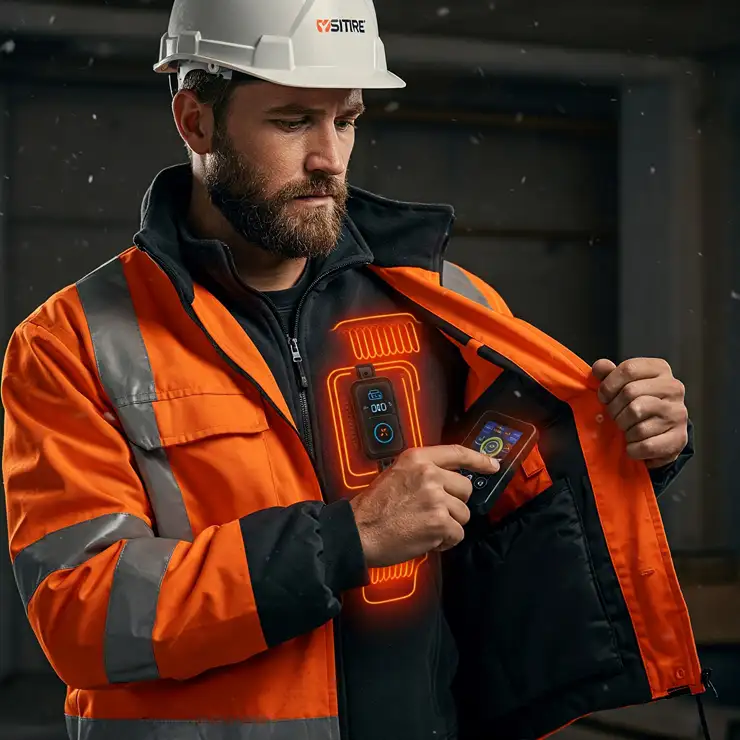
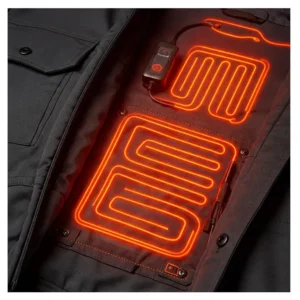
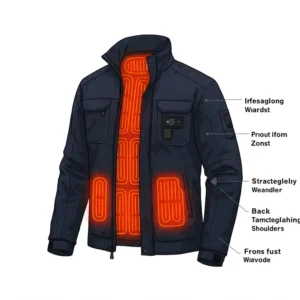
A heated work jacket is a tough outer layer with thin carbon-fiber or graphene heating elements stitched into the lining, powered by a rechargeable battery that sits in a pocket. Press a button and the chest and back warm up within seconds. You get adjustable heat on demand instead of the passive warmth of ordinary insulation.
The idea isn’t new. Heated clothing has long been popular with motorcyclists, skiers, and outdoor workers like carpenters and construction crews. What’s new is how good the gear has become. Packs are smaller and shells are tougher. The big tool brands now sell jackets that share batteries with the drill already riding in your truck.
If you’ve ever stood on a roof deck at 6 a.m. with numb fingers and a thermos gone lukewarm, you already get the pitch. Layers help, but layers also bulk you up, and bulk is the enemy of anyone who bends, lifts, climbs, or swings a hammer all day. A well-chosen heated work jacket adds warmth without adding another sweater’s worth of stiffness.
Here’s the catch: the market is crowded, and the spec sheets all sound alike. “Five heat zones.” “Up to 10 hours.” “Water-resistant.” What do those phrases mean when you’re hauling lumber in sleet? That’s what this guide untangles. We compared seven real heated work jackets from tool brands and independent makers. We read what professional reviewers and everyday buyers keep saying, then translated the specs into plain English.
Think of it as a map, not a sales pitch. By the end, you’ll know which heated work jacket fits your trade, your battery habits, and your budget. You’ll also know which popular features are mostly marketing glitter.
Quick Comparison: Heated Work Jackets at a Glance
Short on time? This table lines up all seven jackets so you can shortlist before the deep dive. Power system and heat zones shape daily use more than anything else, so they come first.
| Product | Power System | Heat Zones | Best For |
|---|---|---|---|
| Milwaukee M12 Heated TOUGHSHELL Jacket | M12 12V tool battery | Chest, back, hand pockets | Milwaukee M12 battery owners |
| DEWALT DCHJ076 Heated Heavy Duty Work Coat | 20V MAX tool battery | 5 (chest, arms, mid-back) | Rugged jobsite use with arm heat |
| Makita DCJ205 18V LXT Heated Jacket | 18V LXT tool battery | 5 (pockets, upper back, neck) | Makita crews who want long runtime |
| ORORO Men’s Classic Heated Jacket | Included 7.4V pack | 4 | Everyday value and commuting |
| Venustas Men’s Waterproof Heated Jacket | Included rechargeable pack | 5 | Wet, windy days on a budget |
| ActionHeat 5V Battery Heated Work Jacket | 5V power bank | 3 | Canvas-jacket fans, mild-to-cold days |
| DEWBU 12V Heated Work Coat | Included 12V pack | 5 (including arms) | Extreme cold and static work |
Looking at the comparison above, the Makita DCJ205 and Milwaukee M12 Heated TOUGHSHELL Jacket make the most sense if you already own those tool batteries. The battery is the priciest part of any heated work jacket, and you’d be reusing it. The DEWALT DCHJ076 is the only pick here that pairs true arm heating with a duck-fabric shell. Budget buyers should note that the ORORO Men’s Classic and Venustas Men’s Waterproof include their own packs, which keeps the total cost predictable. The ActionHeat 5V Battery Heated Work Jacket trades some runtime for a classic canvas look.
💬 Just one click — help others make better buying decisions too!😊
Top 7 Heated Work Jackets: Expert Analysis
1. Milwaukee M12 Heated TOUGHSHELL Jacket — best for hot-swapping tool batteries
The big draw is the power source. It runs on the same M12 packs that drive Milwaukee’s compact tools, so a dead battery becomes a ten-second swap instead of a dead afternoon.
Carbon-fiber elements warm the chest, back, and front hand pockets across three heat settings. A quick-heat mode that reviewers at ProToolReviews describe as roughly three times faster gets you to temperature quickly. In practice, you can zip up in a cold truck cab and feel warmth before the cab heater catches up. The stretchy polyester shell and brushed lining stay flexible for overhead work, though this is a weather-resistant softshell rather than a canvas armor suit.
Based on the spec comparison, this is the jacket for crews already invested in M12. A spare pack doubles as a spare for your tools. It’s less compelling if you own no Milwaukee gear, because the battery and charger kit adds to the bill.
Reviewers consistently rate its heat coverage near the top of their group, while battery efficiency scores lower than coverage. A recurring user complaint concerns the battery cord. One reviewer also found the pack more comfortable once moved to a front pocket for driving.
Pros:
- ✅ Hot-swappable M12 batteries keep heat going all day
- ✅ Quick-heat mode warms you up fast
- ✅ Machine washable once the battery is removed
Cons:
- ❌ Battery cord complaints appear in user reviews
- ❌ Softshell is less rugged than duck or canvas
Expect roughly the $150-$250 range, depending on bare jacket versus kit (check current price). It’s a strong value if M12 is already your platform.
2. DEWALT DCHJ076 Heated Heavy Duty Work Coat — best for tough duck fabric with arm heat
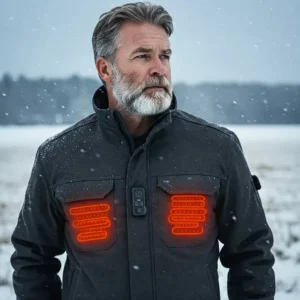
Most heated work jackets warm your torso and stop there. This one also heats both arms, which matters more than it sounds when you’re gripping cold tools.
The shell is water- and wind-resistant duck fabric over a fleece lining. Five zones cover the left and right chest, both arms, and mid-back, with an LED controller offering three settings plus a preheat function. Gusseted underarms add reach room, and ribbed storm cuffs seal out drafts. On paper, that combination means fewer cold spots and a coat that survives abrasion that would shred a softshell.
The battery is a 20V MAX pack, sold separately in the jacket-only version. DEWALT lists up to 5.5 hours on low with a compact 1.5Ah battery. Bigger packs stretch that, so existing DEWALT owners get the best economics.
Reviewers of an earlier-generation hooded DEWALT model praised its jobsite toughness. They also noted that the battery pocket felt awkward when seated and was hard to close while wearing the jacket. Field & Stream named the current coat its best pick for work.
Pros:
- ✅ Heats chest, back, and both arms
- ✅ Heavy-duty duck shell with fleece lining
- ✅ Works with DEWALT 20V MAX packs you may own
Cons:
- ❌ Compact-battery runtime is modest
- ❌ Battery pocket comfort is a recurring review theme
Pricing varies widely by size, color, and kit, so check current price. Its value depends on whether you already own the batteries.
3. Makita DCJ205 18V LXT Heated Jacket — best for marathon runtime
Makita’s headline claim is runtime. With a 6.0Ah 18V LXT battery, the company cites up to 35 hours on low.
That number assumes the low setting and a big pack, so treat it as a ceiling. Even so, a large battery in a belt-clip power source can plausibly carry you through several shifts between charges. Five zones cover the front hand pockets, upper back, and neck. The neck zone is a clever touch, since cold air sneaking down your collar ruins more mornings than a chilly chest does.
ProToolReviews highlights quicker heating than older Makita models and trim, athletic styling. The trade-off is a bulkier 18V power source. Makita doesn’t sell a battery kit for it in the U.S., so the value hinges on owning LXT batteries.
The shell is water-repellent polyester rather than waterproof, which suits light drizzle but not sustained rain. Tool reviewers describe it as comfortable even without heat. No arm heating is the main spec-sheet gap compared with the DEWALT DCHJ076.
Pros:
- ✅ Very long runtime with large LXT batteries
- ✅ Heated neck zone blocks collar drafts
- ✅ Slim cut leaves room to move
Cons:
- ❌ Power source is bulkier than small-battery rivals
- ❌ Water-repellent, not fully waterproof
Jacket-only listings land roughly in the $160-$240 range (check current price). It’s excellent value for Makita loyalists and a hard sell for everyone else.
4. ORORO Men’s Classic Heated Jacket — best all-round value softshell
ORORO is the brand most roundups reach for first. It nails the unglamorous basics: a self-contained pack, sensible zones, and a softshell that handles wind and light wet weather.
Four carbon-fiber zones, including the collar, run off a UL-certified battery pack of about 4,800mAh. That’s rated for roughly 10 hours on low. Ten hours on low is a full workday of gentle warmth. Expect far less on high, as with every jacket in this category.
Forbes Vetted picked an ORORO jacket as its best heated jacket overall for long-lasting battery and weather-resistant fabric. The tradeoff is toughness. A softshell won’t shrug off welding spatter or barbed wire the way duck does, so it’s better for light-duty trades, delivery work, and commuting than demolition.
User feedback is mostly positive, with one recurring honest caveat. A reviewer at Reviewed.com didn’t notice a big gap between the ORORO and a good down jacket once outdoors. Another buyer warned that a dead battery leaves you relying on insulation alone.
Pros:
- ✅ Pack included, so there’s no tool-battery lock-in
- ✅ Heated collar adds neck warmth
- ✅ About 10 hours on low
Cons:
- ❌ Softshell is less abrasion-resistant than duck
- ❌ Insulation alone is modest if the battery dies
Prices vary by model and season, roughly the $80-$200 range, so check current price. It’s the safest value pick for non-tool-brand buyers.
5. Venustas Men’s Waterproof Heated Jacket — best for wet weather on a budget
When rain and wind are the real enemies, waterproofing matters more than raw heat. Venustas leans into that.
Roundups describe five generous heating zones, FELLEX insulation, a reflective Mylar lining, and a detachable hood, all on a waterproof shell. The Mylar layer bounces your own body heat back toward you. That helps stretch the battery, because the jacket wastes less warmth. Reviewers often name it a best-value pick, with coverage (not raw output) as the reason.
The battery runs about 36Wh, and one roundup reports roughly 10 hours on low but only about 3 on high. That’s honest performance for this category, and a reminder to live on low and medium. Quality control gets mixed notes. A buyer of Venustas’s women’s 3-in-1 jacket reported a power button failing within hours. That’s one report rather than a pattern, but check the return window.
Pair it with a thin base layer and it suits dog-walking, yard work, and wet-weather trades. It’s less suited to abrasive jobs than the DEWALT DCHJ076, so match it to your work.
Pros:
- ✅ Waterproof shell with detachable hood
- ✅ Five zones with a heat-reflecting lining
- ✅ Pack included at a friendly price
Cons:
- ❌ High setting drains the battery in about three hours
- ❌ Occasional button-durability complaints
Roughly the $100-$200 range (check current price). It’s a smart pick if soggy weather is your main problem.
6. ActionHeat 5V Battery Heated Work Jacket — best for the classic canvas look
Some people just want a work jacket that looks like a work jacket. ActionHeat builds exactly that, with a cotton canvas shell, rib-knit cuffs and waist, and a hood-ready cut.
Three carbon-fiber panels warm the chest and upper back. A 5V, 6,000mAh power bank drives them across three settings: roughly 110°F on low, 130°F on medium, and 150°F on high. ActionHeat lists about 4.5 hours or more on low, 3 on medium, and 2 on high. That’s lighter-duty heat than a 12V system, but it’s gentle, steady, and enough for moderate cold.
Fashion and gear roundups often name it the best heated work jacket for canvas lovers. Buyers describe it as heavy, warm, and durable. One reviewer said it feels lighter than a Carhartt, and they wished for heat in the sleeves and pockets. Another cut open the interior pocket stitching to move the battery inside, away from the cold, and reported a manufacturing defect on their unit.
Because it uses a standard 5V USB-style power bank, you can charge your phone from the same battery. That’s handy on long outdoor days.
Pros:
- ✅ Heavy cotton canvas looks and feels like a real work coat
- ✅ Simple 5V power bank charges easily
- ✅ Three clear heat settings
Cons:
- ❌ Only three zones, with no arm or pocket heat
- ❌ Shorter runtime than larger-battery jackets
Retail pricing sits in the low-to-mid $200s at the time of research, so check current price. It’s fair value for the canvas styling, but not the most heat per dollar.
7. DEWBU 12V Heated Work Coat — best for extreme cold and static work
Voltage is the quiet hero here. Several roundups credit the 12V system with heating hotter and faster than the common 7.4V packs.
Five carbon-fiber zones cover the torso and both arms, powered by a 54Wh pack. Reported runtimes are roughly 3.5 to 4 hours on high and 9 to 10 hours on low. USB-C output lets you charge other devices, and a vehicle hookup option can provide ongoing power on equipment-based jobs. One roundup notes the 12V pack takes about five to six hours to charge from empty, so a spare battery is smart.
Max surface heat is around 140°F, which is plenty. Warmer isn’t better if you sweat, because sweat is what actually gets you cold later.
Roundups call DEWBU the most-reviewed jacket in their lineups. Heavy review volume is useful because patterns become visible, though we couldn’t verify individual review details, so check recent buyer feedback before ordering. It’s a strong match for flaggers, crane operators, and anyone standing still at 15 degrees.
Pros:
- ✅ 12V system heats hotter than typical 7.4V jackets
- ✅ Arm zones plus torso coverage
- ✅ Vehicle hookup option for long static shifts
Cons:
- ❌ Pack is slow to recharge
- ❌ Softshell is less rugged than duck canvas
Typically about the $100-$200 range (check current price). It’s the best heat-per-dollar choice for brutal cold.
Top 7 Heated Work Jackets Compared Side by Side
| Product | Reported Runtime (Low) | Shell | Price Range | Best For |
|---|---|---|---|---|
| Milwaukee M12 Heated TOUGHSHELL Jacket | Varies by M12 pack (up to roughly 12 hrs cited) | Stretch polyester softshell | $150-$250 | Milwaukee M12 Heated TOUGHSHELL Jacket: tool-battery crews |
| DEWALT DCHJ076 | Up to 5.5 hrs on compact 1.5Ah | Duck fabric | Varies by kit | DEWALT DCHJ076: rugged jobsites |
| Makita DCJ205 | Up to 35 hrs with 6.0Ah | Water-repellent polyester | $160-$240 | Makita DCJ205: long shifts |
| ORORO Men’s Classic | About 10 hrs | Softshell | $80-$200 | ORORO Men’s Classic: everyday value |
| Venustas Men’s Waterproof | About 10 hrs | Waterproof shell | $100-$200 | Venustas Men’s Waterproof: wet weather |
| ActionHeat 5V Work Jacket | 4.5+ hrs | Cotton canvas | Low-to-mid $200s | ActionHeat 5V Work Jacket: canvas fans |
| DEWBU 12V Work Coat | 9-10 hrs | Softshell | $100-$200 | DEWBU 12V Work Coat: extreme cold |
In the table above, the runtime numbers are manufacturer or reviewer claims, and they depend heavily on battery size and heat setting. The Makita DCJ205 posts the longest figure only because of its large 18V pack. The ActionHeat 5V Work Jacket has the shortest, since 5V power banks are small. For buyers without tool batteries, the ORORO Men’s Classic and DEWBU 12V Work Coat offer the best runtime-per-dollar. Pick the DEWALT DCHJ076 if shell toughness outranks everything else.
Practical Usage Guide: Getting More Heat From Your Heated Work Jacket
A heated work jacket rewards good habits. Here’s how to squeeze out more warmth and longer battery life.
Charge fully before first use. Most packs reach their rated capacity only after a complete first charge, so don’t test-drive a half-full battery and blame the jacket.
Wear a thin, moisture-wicking base layer. Skip cotton. OSHA-linked guidance notes that cotton loses insulation when wet, and the heating elements work best when they sit close to your body.
Preheat, then drop down. Run the high or quick-heat setting for a few minutes in the truck, then switch to low or medium once you’re working. Your body generates heat when moving, so low is often enough for active tasks.
Keep the battery warm. Cold drains lithium packs faster. If your jacket has an interior pocket for it, use it. One ActionHeat reviewer moved the pack inside the jacket for exactly this reason.
Carry a spare pack. For a tool-battery jacket, that’s just another battery. For others, a charged spare ends the “dead at 2 p.m.” problem.
Wash correctly. Remove the battery, use cold water and a gentle cycle, and follow the maker’s instructions. Heated-gear makers generally recommend low temperatures or hand washing.
Avoid first-30-day mistakes. Don’t crank high all day, don’t leave packs fully drained for weeks, and don’t wear it too loose.
✨ Ready to Upgrade Your Cold-Weather Gear?
🔍 Take your workday warmth to the next level with these carefully selected jackets. Click any highlighted product name to check current pricing and availability. A good heated work jacket will help you stay focused, comfortable, and productive all winter long!
Real-World Scenarios: Which Heated Work Jacket Fits Your Job?
Specs only matter when matched to a real day. Here are four profiles.
The framing carpenter with a Milwaukee or Makita kit. You’re outdoors from 6 a.m. to 4 p.m., moving constantly, and you already own a handful of tool batteries. The Milwaukee M12 Heated TOUGHSHELL Jacket or Makita DCJ205 makes sense because the batteries are already in your truck. The jacket-only price keeps the budget manageable.
The road-crew flagger. You stand still for hours in wind, so heat output and arm warmth matter more than flexibility. The DEWBU 12V Work Coat or DEWALT DCHJ076 gives the strongest, most complete coverage. If you work near traffic, check whether your employer requires an ANSI-rated high-visibility layer. Several brands sell heated hi-vis jackets, and a heated jacket underneath a vest is another route.
The delivery driver who is in and out of the truck. You need quick warm-ups and easy charging. The ORORO Men’s Classic with a USB-C charging option and quick start suits short stops. Its collar heat helps when you’re hopping out in the wind.
The farm and ranch hand. Chores happen in wet snow and wind. The Venustas Men’s Waterproof handles moisture, while the ActionHeat 5V Work Jacket gives canvas durability for fence-line work. Expect to bump heat on medium in the coldest hours.
Most budgets land between $100 and $250 for the jacket. Add another $50-$150 if you need to buy tool batteries and a charger.
How to Choose a Heated Work Jacket: 6 Steps That Actually Matter
Picking well takes six decisions.
- Choose your power platform first. If you own Milwaukee, DEWALT, or Makita batteries, a matching bare jacket usually offers the best total value. If not, a self-contained pack avoids buying a charger system you don’t need.
- Check where the heat goes. Chest and back warm your core, which helps the rest of your body feel warmer. Arm and pocket zones are a bonus.
- Match voltage to climate. Lower-voltage 5V packs suit mild-to-cold days. 7.4V suits most winters, and 12V or tool-battery systems suit brutal cold.
- Read runtime on low. High-setting runtime is often just two to four hours, so judge the jacket by what you’ll realistically use.
- Match the shell to the job. Duck or canvas resists abrasion, softshell flexes better, and waterproof shells beat rain and snow.
- Size for contact. Heating elements work best close to your body. A jacket that’s too baggy wastes heat, so leave room only for a thin base layer.
Features That Actually Matter (And Those That Don’t)
What matters: Zone placement, quick warm-up, battery pocket comfort, machine-washability, certified battery packs, and a pass-through USB port you’ll use daily. Weather resistance matters too. Wet conditions strip warmth faster than almost anything.
What doesn’t (as much as marketing implies):
- Zone count. Eight zones sound impressive, but total heat is limited by the battery. Three well-placed zones beat eight scattered ones.
- Maximum temperature. Anything above about 140-150°F is more than most people tolerate against the body for long.
- Giant runtime numbers. “Up to 35 hours” is a best-case, low-setting, big-battery number.
- App control. Carhartt’s smart X-1 heated vest earned praise for automation, but Outdoor Life’s reviewer found its small battery was the weak link. Fancy software can’t fix a tiny pack.
Spend on build quality, battery ecosystem, and fit instead.
What to Expect: Real-World Performance
A heated work jacket is not a portable fireplace. It delivers gentle, steady warmth to your core, typically in the 110-150°F range at the element, and the rest of you still depends on gloves, boots, and a hat.
Warm-up usually takes seconds to a couple of minutes on high. Standing still in the wind, you’ll feel the difference immediately. Moving briskly, you may need very little heat at all. That’s why many people run low or medium most of the day.
Expect runtime to drop in freezing temperatures because cold weakens lithium batteries. Expect high-setting runtime of two to four hours on most packs. Expect your hands and feet to stay cold unless you add heated gloves or socks.
Think of it as a thermostat for your torso. Used wisely, it makes a medium-weight shell perform like a heavy parka. Used lazily, it’s a button you’ll hit once and forget.
Common Mistakes When Buying a Heated Work Jacket
Buying by zone count. More zones don’t guarantee more warmth. Placement and battery size matter more.
Ignoring battery ecosystem. Buying a tool-brand jacket without the batteries can cost more than buying a self-contained model.
Choosing the wrong size. Too loose wastes heat. Too tight blocks circulation and restricts movement.
Skipping the base layer. Heating elements work best against a thin wicking layer, not bare skin and not a bulky sweater.
Assuming it replaces required safety gear. A heated work jacket adds comfort. It doesn’t replace hi-vis, flame-resistant, or other PPE your job requires.
Forgetting the spare battery. Even a 10-hour pack dies eventually, usually when you need it most.
Washing carelessly. Forgetting to remove the battery or using hot water can damage elements and connectors.
Heated Work Jacket vs Traditional Work Jacket
Is a heated work jacket worth it compared with a conventional insulated one? Heat output is the obvious difference, but weight, bulk, and ongoing cost matter too. Field & Stream’s testing highlights how modern heated options stay wind- and water-resistant while adding on-demand warmth.
| Option | Warmth Control | Bulk | Ongoing Cost | Best For |
|---|---|---|---|---|
| Heated work jacket | Adjustable, battery-powered | Moderate | Battery replacement over time | Cold, still, or variable days |
| Insulated canvas jacket | Fixed | Heavy | None | Active work in steady cold |
| Layering system | Adjustable by layer | Bulky | Low | Highly variable conditions |
A traditional jacket never runs out of power, which is its biggest advantage. A heated work jacket can match or beat it in warmth at lower weight, because the battery supplies heat the fabric would otherwise need bulk to trap. The trade-off is dependence on a charged battery. If your work involves extended standing, rapid temperature swings, or tight spaces where bulk gets in the way, the heated option usually wins. If you’re always moving and the cold is mild, a good insulated jacket may be enough.
Long-Term Cost & Maintenance
The sticker price is only part of the story. For a tool-brand heated work jacket, the real cost is the jacket plus a battery and charger if you don’t own them. For a self-contained jacket, it’s the jacket alone, with a replacement pack down the road.
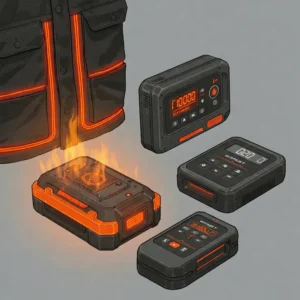
Lithium batteries wear out. Plan on a few winters of daily use before a pack loses noticeable capacity. Treat the battery like a power tool pack: store it partly charged in a cool, dry place during summer, and avoid leaving it fully drained.
Maintenance is simple. Remove the battery, wash cold on a gentle cycle, and air dry. Check the cord and connectors periodically for fraying. Most heated gear carries a short warranty, often around a year, so keep your receipt.
Cost per use tells the real story. A jacket in the $150-$250 range worn 80 cold days a season for three seasons costs well under a dollar a day. Against the cost of productivity lost to shivering, that’s a bargain.
Heated Work Jacket Safety and Cold-Stress Guide
A heated work jacket is comfort gear. It isn’t a medical device or a substitute for safe work practices. OSHA’s Cold Stress Guide explains that although the agency has no specific standard for cold environments, employers must protect workers from recognized hazards, including cold stress. Risk factors include wetness, improper dressing, and exhaustion.
Practical takeaways:
- Stay dry. Wet clothing accelerates heat loss, so waterproof or water-resistant shells matter.
- Layer sensibly. Adjustable layers beat one thick layer.
- Don’t rely on the battery alone. A dead battery shouldn’t leave you in danger. Carry a spare, and dress so you remain safe without it.
- Take warm breaks. Short breaks in warm, dry areas remain one of the best cold-stress controls.
- Know the warning signs. Uncontrolled shivering, slurred speech, and confusion mean it’s time to get help.
Choose certified batteries when possible, avoid damaged cords, and never sleep or leave a charging pack unattended. If your job requires specific PPE such as high-visibility apparel, confirm that any heated layer meets your employer’s requirements.
Frequently Asked Questions About the Heated Work Jacket
❓ Are heated work jackets worth the money?
❓ How long does a heated work jacket battery last?
❓ Can I use my Milwaukee, DEWALT, or Makita battery with any heated work jacket?
❓ Can you wash a heated work jacket?
❓ Is a heated work jacket good in rain or snow?
Conclusion: Which Heated Work Jacket Should You Buy?
The best heated work jacket is the one that fits your battery habits, your shell needs, and your weather. If you already own the batteries, the Milwaukee M12 Heated TOUGHSHELL Jacket, DEWALT DCHJ076, and Makita DCJ205 offer excellent system value. The DEWALT DCHJ076 stands out for arm heat and a rugged duck shell, while the Makita DCJ205 wins on runtime.
If you’d rather skip the ecosystem, the ORORO Men’s Classic is the safest all-round value, and the Venustas Men’s Waterproof is the pick for wet weather. The ActionHeat 5V Work Jacket appeals to canvas lovers. The DEWBU 12V Work Coat is the heat-per-dollar champion for extreme cold.
Whatever you choose, remember the basics. Layer smartly, keep a spare battery, and treat the jacket as a comfort tool rather than a replacement for safe cold-weather practices. A good heated work jacket won’t make winter disappear, but it can make a freezing shift feel manageable.
✨ Ready to Beat the Cold This Winter?
🔍 Compare these top picks, click any highlighted product name to check current pricing and availability, and find the heated work jacket that keeps you warm, safe, and productive on the job!
Recommended for You
- 10 Best Women’s Heated Jackets For Ultimate Winter Comfort in 2025
- Top 5 DeWalt Women’s Heated Jackets Compared to Leading Brands in 2025
- Best Women’s Heated Fleece Jackets: Ultimate Comfort Guide for Outdoor Adventures [2025 Reviews]
Disclaimer: This article contains affiliate links. As an Amazon Associate, I earn from qualifying purchases. If you purchase products through these links, we may earn a small commission at no additional cost to you.
✨ Found this helpful? Share it with your friends! 💬🤗
