
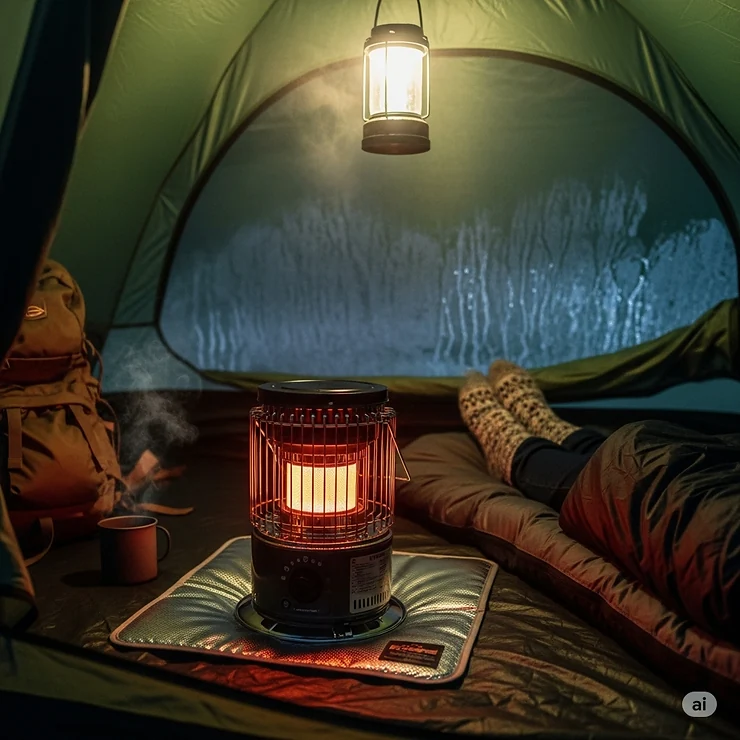
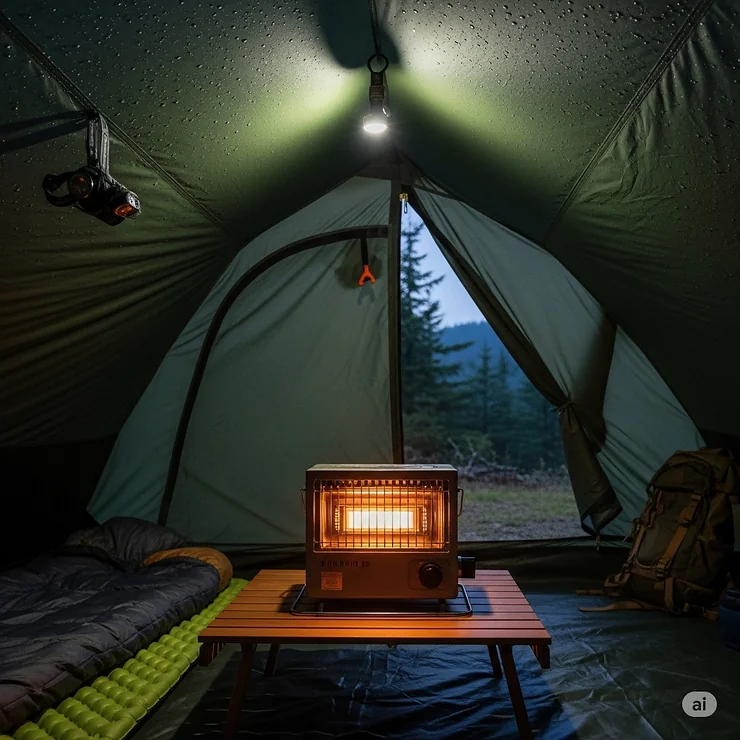
Winter camping doesn’t have to mean freezing through the night. With the right propane tent heater, you can transform your chilly shelter into a cozy refuge while maintaining safety standards that protect you and your gear. Whether you’re planning a weekend getaway or an extended winter expedition, understanding how to choose and use a propane heater in a tent can make all the difference in your outdoor experience.
✨Was this helpful? Spread the word! 🚀
The growing popularity of winter camping has led to significant improvements in portable heating technology. Today’s propane tent heaters offer unprecedented safety features, fuel efficiency, and heating power that makes year-round camping not just possible, but genuinely comfortable. However, with dozens of options available, selecting the perfect heater requires understanding BTU requirements, safety certifications, fuel consumption patterns, and proper ventilation techniques.
In This Article
Understanding Propane Tent Heater Technology 🔥
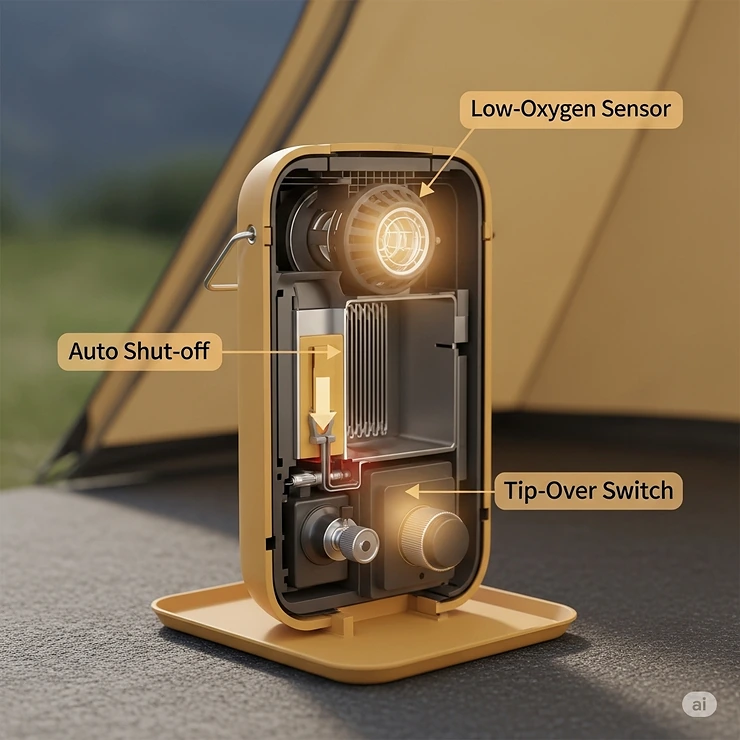
Modern propane tent heaters operate on sophisticated engineering principles that maximize heat output while minimizing safety risks. These devices convert liquid propane into controlled combustion, producing radiant or forced-air heat that can warm enclosed spaces efficiently. The technology has evolved dramatically from early camping heaters, incorporating oxygen depletion sensors (ODS), tip-over safety switches, and thermoelectric safety valves.
Catalytic vs. Radiant Heating Systems
Catalytic heaters represent the pinnacle of flameless heating technology. By using platinum catalysts to break down propane molecules, these units produce heat without visible flames, making them inherently safer for tent use. The Coleman SportCat PerfecTemp exemplifies this technology, delivering 1,500 BTU of consistent heat for up to 14 hours on a single 16.4-ounce propane cylinder.
Radiant heaters, meanwhile, use controlled flames to heat ceramic or steel surfaces that then radiate warmth outward. The Mr. Heater Portable Buddy MH9BX leads this category with its adjustable 4,000-9,000 BTU output and comprehensive safety features. This versatile unit can heat spaces up to 225 square feet while maintaining indoor-safe operation standards.
Top 8 Propane Tent Heaters: Comprehensive Analysis
Premium Performers
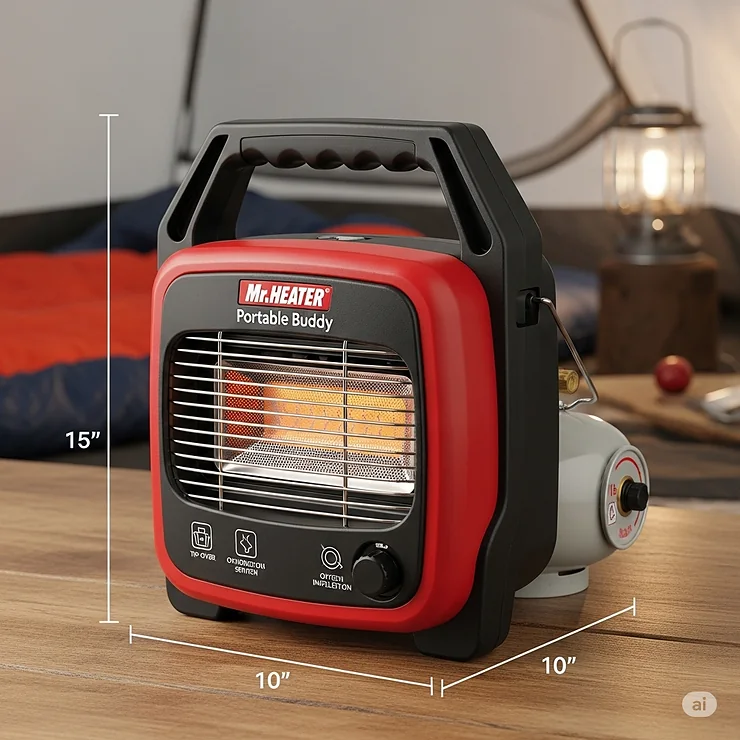
1. Mr. Heater Portable Buddy MH9BX – The Gold Standard
The Mr. Heater Portable Buddy MH9BX stands as North America’s most popular portable propane heater, and for compelling reasons. This radiant heater delivers adjustable heat output from 4,000 to 9,000 BTU, making it suitable for tents ranging from small backpacking shelters to large family camping units.
Key Specifications:
- Heat Output: 4,000-9,000 BTU
- Coverage Area: Up to 225 square feet
- Runtime: 3-6 hours on 1-lb cylinder
- Weight: 10.6 pounds
- Dimensions: 14.25″ x 9″ x 15″
- Price Range: $89-$119
The unit features a patented radiant heating system that warms objects and people directly, similar to sunlight. Its fold-down handle facilitates easy transport, while the swivel regulator accommodates both disposable 1-lb cylinders and 20-lb tanks with optional hose attachments. Safety features include ODS technology, accidental tip-over shut-off, and CSA International certification.
Customer feedback consistently highlights its reliability in extreme conditions. One verified purchaser noted using it during a -15°F camping trip, stating: “The Mr. Heater Portable Buddy maintained comfortable temperatures in our 6-person tent throughout the night, and the safety features gave us peace of mind.”
2. Mr. Heater Little Buddy MH4B – Compact Efficiency
For solo campers or small tent applications, the Mr. Heater Little Buddy MH4B offers an optimal balance of portability and performance. This compact unit produces 3,800 BTU of heat, sufficient for spaces up to 95 square feet.
Key Specifications:
- Heat Output: 3,800 BTU
- Coverage Area: Up to 95 square feet
- Runtime: 5.6 hours on 1-lb cylinder
- Weight: 5.5 pounds
- Dimensions: 10.8″ x 8″ x 9.75″
- Price Range: $69-$89
The Mr. Heater Little Buddy incorporates the same safety features as its larger sibling, including ODS and tip-over protection. Its single-button operation makes it ideal for beginners, while the stable base design prevents accidental displacement.
Mid-Range Champions
3. Coleman SportCat PerfecTemp – Flameless Innovation
The Coleman SportCat PerfecTemp revolutionizes tent heating through catalytic technology. This flameless heater utilizes platinum catalysts to produce clean, odorless heat without visible flames.
Key Specifications:
- Heat Output: 1,500 BTU
- Coverage Area: Up to 90 square feet
- Runtime: Up to 14 hours on 16.4-oz cylinder
- Weight: 3.2 pounds
- Dimensions: 10.75″ x 10.75″ x 5.5″
- Price Range: $45-$65
The catalytic design offers exceptional fuel efficiency, with some users reporting nearly 15 hours of continuous operation. The detachable base provides stability, while built-in eyelets allow secure anchoring. The Coleman SportCat excels in smaller tents where extended runtime outweighs maximum heat output.
4. Coleman BlackCat PerfecTemp – Enhanced Catalytic Power
Building on the SportCat design, the Coleman BlackCat PerfecTemp doubles the heat output while maintaining the same catalytic technology benefits.
Key Specifications:
- Heat Output: 3,000 BTU
- Coverage Area: Up to 150 square feet
- Runtime: Up to 7 hours on 16.4-oz cylinder
- Weight: 4.1 pounds
- Dimensions: 11″ x 11″ x 6″
- Price Range: $65-$85
The Coleman BlackCat bridges the gap between ultra-portable catalytic heaters and higher-output radiant models. Its foldable legs integrate into the collar for compact storage, while the easy-grip handle ensures convenient transport.
Budget-Conscious Options
5. Texsport Sportsmate Portable – Affordable Reliability
The Texsport Sportsmate Portable delivers essential heating functionality at an attractive price point, making it ideal for occasional campers or backup heating applications.
Key Specifications:
- Heat Output: 2,980 BTU
- Coverage Area: Up to 72 square feet
- Runtime: 7 hours on 1-lb cylinder
- Weight: 2 pounds
- Dimensions: 10″ x 9″ x 5″
- Price Range: $35-$55
Despite its budget positioning, the Texsport Sportsmate includes auto shut-off valve protection and a stable paddle-foot base. The molded plastic cup holder adds convenience for small-space applications, though users should note the limited safety features compared to premium models.
Innovative Dual-Purpose Solutions
6. TLOG 2-in-1 Portable Propane Heater – Versatile Functionality
The TLOG 2-in-1 Portable Propane Heater combines heating and cooking capabilities in a single, compact unit, maximizing utility for space-conscious campers.
Key Specifications:
- Heat Output: 9,000 BTU
- Cooking Temperature: 935-1110°F
- Runtime: Approximately 3 hours on 1-lb cylinder
- Weight: 3.8 pounds
- Dimensions: 9.5″ x 8″ x 7″
- Price Range: $75-$95
The detachable heater top reveals a capable cooking surface that supports up to 50 pounds, accommodating cookware up to 11.8 inches in diameter. This dual functionality makes the TLOG 2-in-1 particularly valuable for extended camping trips where gear minimization is essential.
Premium Technology Integration
7. DEWALT F332000 Cordless – Battery-Powered Innovation
The DEWALT F332000 Cordless represents the cutting edge of portable heating technology, integrating 20V MAX battery power with traditional propane heating.
Key Specifications:
- Heat Output: 6,000-12,000 BTU
- Coverage Area: Up to 300 square feet
- Runtime: 3.5-7 hours on dual tanks
- Weight: 16.5 pounds
- Dimensions: 15″ x 12″ x 18″
- Price Range: $199-$249
This innovative heater features LED work lights, USB charging ports, and a high-velocity fan, all powered by DEWALT’s battery ecosystem. The dual-tank capacity extends runtime significantly, while ODS and tip-over protection ensure safe operation. The DEWALT F332000 excels in scenarios requiring extended heating with minimal propane cylinder changes.
Maximum Coverage Solutions
8. Dura Heat LP10-360 – Comprehensive Area Heating
For large tent applications or group camping scenarios, the Dura Heat LP10-360 provides 360-degree heat distribution with substantial BTU output.
Key Specifications:
- Heat Output: 10,000 BTU
- Coverage Area: Up to 250 square feet
- Runtime: 2-3 hours on 1-lb cylinder
- Weight: 8.5 pounds
- Dimensions: 12″ x 12″ x 16″
- Price Range: $89-$129
The cylindrical design radiates heat in all directions, making it ideal for central tent placement. Two heat settings allow output adjustment based on conditions, while the built-in carry handle facilitates easy positioning. The Dura Heat LP10-360 works best with larger propane tanks for extended runtime.

Safety Comparison Table
| Model | ODS Sensor | Tip-Over Protection | CSA Certified | Indoor Rating |
|---|---|---|---|---|
| Mr. Heater Buddy | ✅ | ✅ | ✅ | Yes |
| Mr. Heater Little Buddy | ✅ | ✅ | ✅ | Yes |
| Coleman SportCat | ❌ | ❌ | ✅ | Limited |
| Coleman BlackCat | ❌ | ❌ | ✅ | Limited |
| Texsport Sportsmate | ❌ | ❌ | ❌ | No |
| TLOG 2-in-1 | ❌ | ❌ | ❌ | No |
| DEWALT F332000 | ✅ | ✅ | ✅ | Yes |
| Dura Heat LP10-360 | ✅ | ✅ | ❌ | Limited |
💬 Just one click – help others make better buying decisions too!😊
🛒 Transform Your Winter Camping Experience Today!
These carefully selected propane tent heaters represent the best value and safety in their respective categories. Click on any highlighted model to check current Amazon pricing and read verified customer reviews. Stay warm, stay safe, and make unforgettable winter memories! 🏕️❄️
Industry-Specific Applications and Professional Use Cases
Emergency Response and First Responder Applications
Emergency response teams increasingly rely on portable propane tent heaters for field operations, disaster relief, and temporary shelters. Fire departments utilize these units in command tents during extended emergency scenarios, where reliable heat sources maintain personnel comfort and equipment functionality.
Search and rescue operations benefit significantly from portable heating solutions. During multi-day operations in mountainous terrain, teams establish base camps with large shelter tents heated by multiple units. The Mr. Heater Portable Buddy series proves particularly valuable due to its proven reliability in sub-zero conditions and 24-hour operational capability when connected to 20-lb propane tanks.
Military applications extend beyond basic comfort to mission-critical operations. Communications equipment requires specific temperature ranges for optimal performance, making climate-controlled field operations essential. The DEWALT cordless models excel in these applications due to their battery-powered operation, which eliminates electromagnetic interference concerns around sensitive electronic equipment.
Construction and Industrial Worksite Applications
Construction professionals working in unheated structures during winter months rely heavily on propane tent heaters for both comfort and productivity. These units maintain workable temperatures in temporary enclosures, allowing concrete curing, paint application, and other temperature-sensitive processes to continue through cold weather.
Concrete contractors specifically benefit from controlled heating environments. Proper concrete curing requires temperatures above 40°F for optimal strength development. Portable propane heaters create heated enclosures around fresh concrete pours, ensuring structural integrity regardless of ambient temperatures.
Industrial maintenance teams working in power plants, refineries, and manufacturing facilities use portable heaters during scheduled outages. These planned shutdowns often occur during winter months when ambient temperatures make extended work periods challenging. High-BTU models like the Dura Heat LP10-360 provide zone heating for specific work areas within larger facilities.
Agricultural and Livestock Applications
Agricultural operations present unique heating challenges that portable propane units address effectively. Greenhouse operators use these heaters as backup systems during power outages or primary heating in remote growing operations without electrical infrastructure.
Livestock management during calving season or extreme weather events requires reliable heating sources. Veterinarians establish heated treatment areas using portable heaters when providing field care for large animals. The mobility and quick setup of units like the Coleman catalytic series make them ideal for temporary livestock shelters.
Beekeeping operations benefit from portable heating during hive inspections in cold weather. Maintaining proper temperatures during hive manipulation prevents bee stress and ensures colony health. Small, controllable units provide the precise heating needed for these delicate operations.
Commercial Outdoor Event Management
Event planners increasingly incorporate propane tent heaters into outdoor venue designs, extending operational seasons and enhancing guest comfort. Wedding planners use these units to heat ceremony and reception tents, creating comfortable environments regardless of weather conditions.
Festival and fair operators rely on portable heating for vendor tents, food service areas, and guest comfort zones. The ability to quickly deploy heating solutions allows event managers to respond to unexpected weather changes without major logistical disruptions.
Corporate event planners utilize portable heaters for outdoor team building activities, company picnics, and promotional events. The professional appearance and reliable operation of premium models like the DEWALT cordless series align with corporate image requirements while providing practical functionality.
Advanced Technical Analysis and Engineering Principles
Combustion Efficiency and Heat Transfer Mechanisms
Modern propane tent heaters achieve remarkable efficiency through precisely engineered combustion systems. The combustion process converts propane (C₃H₈) with oxygen to produce heat, carbon dioxide, and water vapor according to the chemical equation: C₃H₈ + 5O₂ → 3CO₂ + 4H₂O + heat energy.
Radiant heaters maximize heat transfer through electromagnetic radiation, similar to solar energy. These units heat ceramic or steel surfaces to temperatures exceeding 1,000°F, which then emit infrared radiation that directly warms objects and people. This mechanism proves more efficient than convective heating in outdoor environments where air circulation constantly removes heated air from the target area.
Catalytic heaters operate through surface combustion rather than flame combustion. Platinum catalysts reduce the activation energy required for propane oxidation, allowing complete combustion at lower temperatures. This process produces more complete fuel conversion with minimal byproducts, resulting in cleaner operation and higher efficiency ratings.
Research conducted by the American Society of Heating, Refrigerating and Air-Conditioning Engineers (ASHRAE) demonstrates that properly designed radiant heaters achieve 85-90% thermal efficiency, compared to 70-80% for conventional forced-air systems. This efficiency advantage translates directly to extended runtime and reduced fuel consumption in field applications.
Material Science and Durability Engineering
Contemporary propane heater construction incorporates advanced materials designed for extreme environmental conditions. Heat exchangers utilize specialized steel alloys with thermal expansion coefficients matched to operating temperature ranges, preventing stress fractures during repeated heating cycles.
Ceramic elements in radiant heaters employ high-alumina compositions with porosity levels optimized for heat retention and thermal shock resistance. These materials maintain structural integrity through thousands of heating cycles while providing consistent heat output characteristics.
Safety shut-off mechanisms rely on thermoelectric technology that generates electrical current from temperature differentials. These systems require no external power while providing reliable flame monitoring. When the pilot flame extinguishes, the thermoelectric voltage drops, automatically closing the gas valve within seconds.
Corrosion resistance in propane system components utilizes brass and stainless steel alloys specifically formulated for propane compatibility. These materials resist degradation from propane additives and moisture while maintaining precise tolerances for safe gas flow control.
Performance Metrics and Testing Standards
Industry testing standards ensure consistent performance and safety across different manufacturers and models. The CSA (Canadian Standards Association) Group maintains comprehensive testing protocols that evaluate heat output accuracy, safety system response times, and long-term durability.
BTU output verification requires controlled testing environments where heat output is measured using calibrated instruments over extended periods. Manufacturers must demonstrate that advertised BTU ratings remain consistent across varying ambient temperatures, altitude levels, and fuel supply pressures.
Safety system testing involves deliberate triggering of protection mechanisms under controlled conditions. ODS sensors must demonstrate reliable shutoff when oxygen levels drop below 18%, while tip-over switches must activate within specific angular ranges regardless of surface conditions.
Fuel consumption testing establishes runtime specifications under standardized conditions. These tests account for variations in propane density due to temperature changes and provide baseline data for consumer comparison purposes.
Innovation Trends and Technological Advancement
Smart technology integration represents the next frontier in portable heater development. Prototype systems incorporate smartphone connectivity for remote monitoring and control, allowing users to adjust heat output and monitor fuel levels from outside the heated area.
Battery technology advances enable hybrid power systems that combine propane heating with battery-powered circulation fans and safety monitoring. These systems extend operational capabilities while reducing overall power consumption requirements.
Materials research focuses on developing lighter, more durable components that maintain performance while reducing transport weight. Advanced composite materials show promise for replacing traditional steel components without compromising strength or heat resistance.
Environmental considerations drive development of cleaner-burning systems with reduced emissions. Next-generation catalytic systems promise near-zero emission operation while maintaining current heat output levels.
Comprehensive Setup and Usage Guide
Pre-Deployment Planning and Site Assessment
Successful propane tent heater operation begins with thorough site assessment and planning. Evaluate the intended heating area, considering tent size, expected occupancy levels, ambient temperature ranges, and available ventilation. This assessment determines appropriate heater sizing and fuel requirements for the planned usage duration.
Wind exposure analysis proves critical for both heating efficiency and safety. Tents positioned in wind-protected areas retain heat more effectively while reducing the risk of flame disturbance or accidental extinguishing. Consider natural windbreaks, terrain features, and seasonal wind patterns when selecting tent placement.
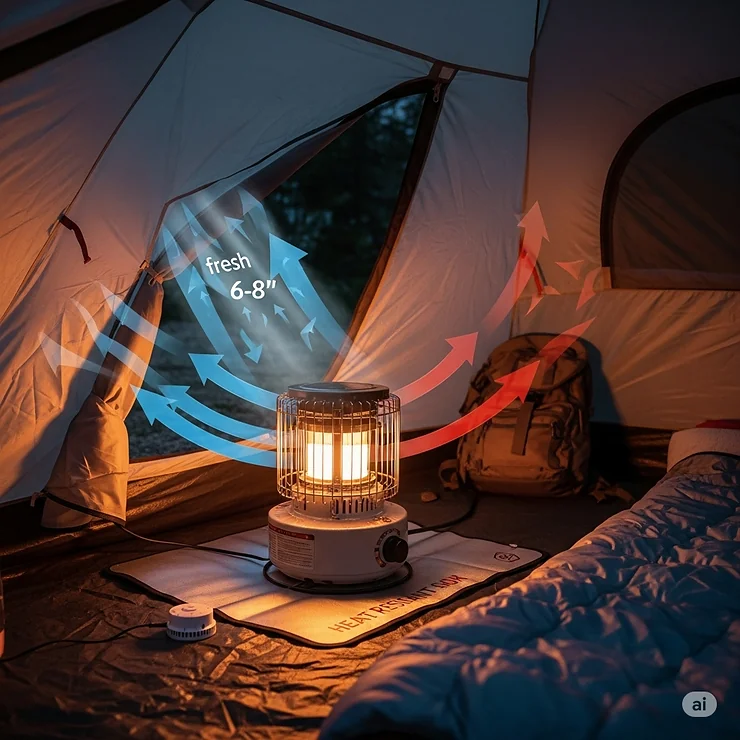
Ventilation planning requires balancing heat retention with safety requirements. All propane heater manufacturers specify minimum ventilation requirements for safe operation. Calculate required fresh air openings based on heater BTU output and tent volume, ensuring adequate oxygen supply while maintaining heating efficiency.
Fuel planning involves calculating propane consumption based on heater output, runtime requirements, and ambient conditions. Cold weather increases fuel consumption by 15-25% due to reduced propane vaporization efficiency and increased heat loss. Plan fuel supplies with appropriate safety margins for extended operations or unexpected weather changes.
Step-by-Step Installation Procedures
Initial Setup Phase:
Begin installation by selecting an appropriate location within the tent that provides adequate clearance from fabric walls and occupant pathways. Most manufacturers specify minimum clearances of 3 feet from combustible materials and 18 inches from tent walls.
Assemble the heater according to manufacturer instructions, ensuring all connections are properly tightened and safety devices are functional. Test tip-over switches by gently tilting the unit to verify automatic shutoff operation.
Propane Connection Process:
Inspect propane cylinders for damage, corrosion, or expired certification dates. Connect cylinders hand-tight initially, then use appropriate wrenches to achieve final connection torque specifications. Over-tightening can damage threads or sealing surfaces.
Perform leak testing using soapy water solution applied to all connections. Bubbling indicates gas leaks that must be corrected before operation. Never use flame-based leak detection methods around propane systems.
Ignition and Initial Operation:
Follow manufacturer-specific lighting procedures, which typically involve opening gas valves slowly while activating ignition systems. Most modern units feature automatic ignition systems that eliminate match or lighter requirements.
Monitor initial operation for proper flame characteristics, which should appear blue with minimal yellow tipping. Excessive yellow flame indicates incomplete combustion that may produce dangerous carbon monoxide levels.
Verify safety system operation by temporarily blocking air intake or simulating tip-over conditions to ensure automatic shutoff functions properly.
User Compatibility and Skill Level Considerations
Beginner Users (First-time Campers):
New users should begin with entry-level models featuring simple controls and comprehensive safety systems. The Mr. Heater Little Buddy provides excellent learning platform with straightforward operation and forgiving performance characteristics.
Initial usage should occur in controlled environments with experienced supervision. Practice lighting, operating, and shutting down procedures in non-critical situations before depending on the heater for essential warmth.
Understand basic troubleshooting procedures including recognizing proper flame appearance, identifying gas odors that indicate leaks, and responding to automatic safety shutoffs.
Intermediate Users (Experienced Campers):
Experienced camping enthusiasts can utilize higher-output models with variable heat controls and advanced features. These users benefit from understanding fuel consumption optimization and heating strategy development.
Develop skills in heating zone management, using multiple smaller heaters or strategic heater placement to maximize efficiency in larger tents or complex camping setups.
Learn maintenance procedures including cleaning, component inspection, and seasonal storage preparation to extend equipment service life.
Advanced Users (Professional Applications):
Professional users require mastery of high-output systems, multiple heater coordination, and integration with other camp systems. These applications often involve custom installation and modified operational procedures.
Understand regulatory requirements for commercial or professional use, including permit requirements, insurance considerations, and safety documentation.
Develop emergency response procedures for equipment failures, fuel supply interruptions, or adverse weather conditions that may compromise heating system operation.
Environmental Optimization and Efficiency Maximization
Altitude Considerations:
High-altitude operation affects both propane vaporization and combustion efficiency. Reduced air density at elevations above 3,000 feet can decrease heater output by 3-4% per 1,000 feet of elevation gain.
Adjust operational procedures for altitude effects by allowing longer warm-up periods and potentially increasing fuel flow rates to maintain desired heat output. Some models feature altitude adjustment controls that modify air-fuel mixture ratios.
Temperature Optimization Strategies:
Cold weather operation requires specific adaptations to maintain optimal performance. Propane vaporization decreases significantly below 0°F, potentially limiting heater output unless cylinders are maintained above critical temperatures.
Implement cylinder warming strategies such as rotating standby cylinders in sleeping bags or using body heat to maintain adequate vaporization temperatures. Never use open flames or other heaters to warm propane cylinders directly.
Create thermal zones within larger tents using reflective barriers or strategic heater placement to concentrate heat in occupied areas while maintaining overall tent warmth.
Fuel Efficiency Enhancement:
Maximize fuel efficiency through proper tent insulation, strategic ventilation management, and operational scheduling. Close unnecessary vents during peak heating periods while maintaining minimum safety ventilation requirements.
Implement heating schedules that reduce operation during warmer periods or when tents are unoccupied. Modern units restart quickly, making intermittent operation practical for many applications.
Use tent configuration modifications such as vestibule creation or partial wall installation to reduce heated volume without compromising functionality.
Maintenance Protocols and Longevity Enhancement
Daily Operation and Inspection Routines
Pre-Operation Checks:
Begin each operating day with comprehensive visual inspection of all system components. Examine propane connections for corrosion, damage, or loose fittings that could compromise safe operation.
Test automatic safety systems including ODS sensors and tip-over switches using manufacturer-recommended procedures. These systems provide primary protection against dangerous operating conditions and must function reliably.
Verify adequate propane supply by checking cylinder weight or using propane level indicators. Plan fuel changes during non-critical periods to avoid heating interruptions during extreme weather conditions.
Operating Period Monitoring:
Monitor flame characteristics throughout operation, noting any changes in color, shape, or stability that might indicate developing problems. Proper flames appear primarily blue with minimal yellow tipping and stable burning patterns.
Check for unusual odors, sounds, or vibrations that could indicate mechanical problems or incomplete combustion. Address any abnormalities immediately by shutting down the heater and investigating root causes.
Maintain awareness of ambient conditions including wind changes, temperature fluctuations, or humidity levels that might affect heater performance or safety requirements.
Post-Operation Procedures:
Allow proper cool-down periods before handling or storage, following manufacturer specifications for minimum cooling times. Hot surfaces can cause burns or damage to storage containers.
Perform post-operation leak checks if the heater was subjected to unusual stresses such as transport over rough terrain or exposure to extreme temperature changes.
Document any operational issues, maintenance needs, or performance observations for future reference and maintenance planning.
Weekly Maintenance and Cleaning Schedules
Combustion System Cleaning:
Remove dust, debris, and combustion deposits from heat exchanger surfaces using appropriate cleaning tools and techniques. Accumulated deposits reduce heat transfer efficiency and can affect flame characteristics.
Clean air intake and exhaust passages to ensure adequate airflow for proper combustion. Blocked passages can cause incomplete combustion and dangerous carbon monoxide production.
Inspect and clean pilot light assemblies, removing any corrosion or debris that might affect ignition reliability. Pilot systems require precise operation for safe heater function.
Fuel System Maintenance:
Inspect propane connections and fittings for signs of wear, corrosion, or damage. Replace damaged components immediately to prevent dangerous gas leaks.
Check regulator operation by verifying consistent gas pressure delivery across varying flow rates. Regulators maintain safe operating pressures regardless of cylinder pressure variations.
Test and calibrate gas flow controls to ensure accurate heat output adjustment. Worn controls can cause unsafe operating conditions or poor performance.
Safety System Verification:
Conduct comprehensive testing of all safety shutoff systems using controlled test procedures. Document test results for maintenance records and regulatory compliance.
Verify ODS sensor calibration using appropriate test equipment or procedures. These sensors provide critical protection and must operate within specified parameters.
Test tip-over switch sensitivity across the full activation range to ensure reliable protection during accidental displacement.
Monthly and Seasonal Maintenance Protocols
Comprehensive System Inspection:
Disassemble accessible components for detailed inspection of internal wear patterns, corrosion development, or component degradation. This inspection identifies developing problems before they cause failures.
Measure critical dimensions and tolerances to verify components remain within specification limits. Worn components may operate adequately but provide reduced safety margins.
Document component condition using photographs or detailed written descriptions to track degradation patterns over time and plan replacement schedules.
Performance Testing and Calibration:
Conduct heat output testing using calibrated instruments to verify actual BTU production matches manufacturer specifications. Reduced output indicates maintenance needs or component replacement requirements.
Test and calibrate control systems including thermostatic controls, safety systems, and user interface components. Accurate controls ensure safe operation and optimal performance.
Verify fuel consumption rates under controlled conditions to identify efficiency losses that might indicate maintenance needs or component wear.
Storage Preparation and Seasonal Setup:
Prepare heaters for extended storage using manufacturer-recommended procedures including fuel system purging, component lubrication, and protective storage preparations.
Conduct thorough cleaning and inspection before seasonal storage to prevent corrosion or damage during storage periods. Clean equipment stores better and starts more reliably.
Plan component replacement schedules based on usage history, manufacturer recommendations, and inspection results. Proactive replacement prevents field failures during critical operations.
Troubleshooting and Problem Resolution
Common Operational Issues:
Ignition Problems: Failed ignition typically results from fuel supply issues, pilot light problems, or ignition system failures. Systematic diagnosis begins with verifying adequate fuel supply and proper connections.
Check pilot light operation independently of main burner systems. Pilot problems often indicate thermoelectric or control system issues rather than fuel supply problems.
Test ignition systems using manufacturer procedures to isolate electrical versus mechanical problems. Modern units use electronic ignition systems that require specific diagnostic approaches.
Flame Quality Issues: Poor flame quality indicates combustion problems that may produce dangerous carbon monoxide or inefficient heating. Yellow flames suggest insufficient air supply or blocked passages.
Clean air intake and combustion chambers to ensure adequate airflow. Restricted airflow commonly causes flame quality problems in portable heaters used in dusty environments.
Verify proper gas pressure regulation using appropriate test equipment. Incorrect pressures affect flame characteristics and may indicate regulator problems.
Safety System Malfunctions: Safety system failures require immediate attention and professional service in most cases. Never bypass or disable safety systems even temporarily.
Test individual safety components using manufacturer procedures to isolate specific system problems. Multiple safety systems provide redundant protection that should never be compromised.
Document safety system problems thoroughly for professional service technicians and warranty claim purposes.
Heat Output Reduction: Decreased heat output may result from fuel supply restrictions, combustion system problems, or component wear. Systematic diagnosis identifies specific causes.
Measure actual heat output using appropriate instruments to quantify performance reduction. This data guides repair decisions and component replacement planning.
Compare performance against maintenance records to identify degradation patterns and predict future maintenance needs.
Professional Service and Warranty Considerations
Warranty Coverage and Limitations:
Understand warranty terms including coverage periods, excluded components, and maintenance requirements that affect warranty validity. Proper maintenance documentation may be required for warranty claims.
Maintain service records including maintenance dates, component replacements, and professional service history. These records support warranty claims and guide maintenance planning.
Recognize warranty limitations for commercial or professional use that may require different service approaches or shorter coverage periods.
Professional Service Requirements:
Identify service requirements that exceed user maintenance capabilities including internal component replacement, pressure testing, or safety system recalibration.
Locate qualified service technicians before problems occur, especially for professional or commercial applications where extended downtime creates significant costs.
Understand service intervals recommended by manufacturers for professional or high-usage applications that may require more frequent attention than recreational use.
Comparative Analysis: Traditional vs. Modern Heating Solutions
Historical Heating Methods and Their Limitations
Traditional camping heating relied heavily on wood-burning stoves and fire-based systems that presented significant challenges for tent applications. Wood stoves require substantial clearances, complex venting systems, and constant fuel feeding that makes them impractical for modern lightweight camping applications.
Kerosene heaters dominated portable heating for decades but carry significant disadvantages including fuel odor, complex maintenance requirements, and indoor air quality concerns. The transition to propane-based systems eliminated most of these issues while providing cleaner combustion and more convenient operation.
Early propane heaters lacked sophisticated safety systems, making tent use dangerous without extensive precautions. Modern units incorporate multiple redundant safety systems that enable safe indoor operation under proper conditions.
Coal and other solid fuel systems provided excellent heat output but required extensive ventilation and posed significant carbon monoxide risks. These systems proved unsuitable for tent applications due to weight, complexity, and safety concerns.
Modern Propane Technology Advantages
Contemporary propane tent heaters offer numerous advantages over traditional heating methods. Clean combustion produces minimal odor and reduced emissions compared to kerosene or wood-burning alternatives.
Instant startup capability eliminates extended warm-up periods required by solid fuel systems. Modern units achieve full heat output within minutes of ignition, providing immediate comfort in cold conditions.
Precise heat control allows fine-tuning of output levels to match changing conditions or specific comfort requirements. This control proves impossible with wood fires or other traditional heating methods.
Fuel storage and transport advantages include compact cylinder designs, standardized connections, and wide availability. Propane cylinders provide known capacity and consistent performance regardless of weather conditions.
Cost-Benefit Analysis Across Heating Methods
Initial Investment Comparison:
Propane tent heaters require moderate initial investment ranging from $35 for basic models to $250 for premium units. This compares favorably to wood stove systems costing $200-$800 plus installation complexity.
Electric heaters offer lower initial costs but require power infrastructure that may not be available in remote camping locations. Generator requirements add significant cost and complexity to electric heating systems.
Kerosene heaters provide comparable initial costs but require more complex maintenance and carry higher long-term operational expenses due to fuel costs and maintenance requirements.
Operational Cost Analysis:
Propane fuel costs approximately $3-$5 per pound for convenient portable cylinders, with bulk tank refills reducing costs to $1-$2 per pound. Operating costs range from $2-$8 per day depending on heater size and usage patterns.
Wood fuel costs vary dramatically by location and availability, ranging from free collected wood to $5-$10 per day for purchased firewood. Collection time and effort represent additional hidden costs.
Kerosene fuel costs typically exceed propane costs while providing less convenient operation and requiring more maintenance attention.
Electric heating costs depend on power source, ranging from $3-$6 per day for generator operation to minimal costs where shore power is available.
Total Cost of Ownership Evaluation:
Five-year total ownership costs favor propane systems for most camping applications. Reliable operation, minimal maintenance requirements, and reasonable fuel costs provide excellent value compared to alternatives.
Propane systems maintain resale value better than complex wood stove systems while avoiding the rapid obsolescence common with electric heating technology.
Maintenance costs remain minimal for propane systems with proper care, contrasting sharply with wood stove maintenance requirements and kerosene system complexity.
Integration with Modern Camping Systems
Power System Compatibility:
Modern camping increasingly relies on integrated power systems including batteries, solar panels, and portable generators. Propane heaters complement these systems by providing heating without electrical power consumption.
Battery-powered accessories such as fans, lights, and USB charging ports integrate seamlessly with propane heating systems, creating comprehensive comfort solutions without overwhelming power requirements.
Hybrid systems combining propane heating with electric accessories provide optimal functionality while maintaining reasonable power consumption levels for extended off-grid operation.
Communication and Navigation Equipment:
Electronic equipment requires specific temperature ranges for reliable operation. Propane heaters provide stable temperature control that protects sensitive devices while maintaining user comfort.
RF interference considerations make propane systems preferable to electric heating near communication equipment. Propane heaters generate no electromagnetic interference that might affect GPS, radios, or satellite communication systems.
Equipment protection from condensation proves easier with properly operated propane systems that maintain stable humidity levels compared to intermittent heating systems.
Food Storage and Preparation Integration:
Propane heating systems integrate naturally with propane cooking equipment, sharing fuel supplies and maintenance expertise. This integration simplifies logistics and reduces equipment complexity.
Temperature-sensitive food storage benefits from stable heating that prevents freezing without creating excessive heat that spoils perishables. Propane systems provide the precise control needed for food safety.
Multi-purpose units combining heating and cooking capabilities maximize utility while minimizing equipment weight and complexity for extended camping expeditions.
Performance Metrics and Objective Comparison
Heat Output Efficiency:
Propane systems achieve 85-90% thermal efficiency compared to 60-75% for wood-burning systems and 95%+ for electric systems. However, electric systems require power generation that typically operates at 25-30% overall efficiency.
Heat distribution characteristics favor radiant propane systems for tent applications where direct warming of occupants and equipment provides more comfort than ambient air heating.
Response time advantages allow propane systems to provide immediate heat when needed, contrasting with wood systems requiring 15-30 minutes to achieve useful heat output.
Reliability and Maintenance Requirements:
Propane systems demonstrate superior reliability with proper maintenance, typically operating thousands of hours between major service requirements. Wood systems require constant attention and frequent maintenance.
Weather independence makes propane systems more reliable than wood systems affected by fuel moisture content and availability. Propane performs consistently regardless of weather conditions.
Field serviceability favors simple propane systems over complex wood stove installations or electric systems requiring specialized technical knowledge.
Environmental Impact Considerations:
Propane combustion produces lower emissions than wood burning while providing comparable heat output. Modern propane systems meet strict emissions standards for indoor air quality.
Fuel transportation impacts favor propane due to high energy density and efficient distribution systems compared to wood harvesting and transport requirements.
Carbon footprint analysis shows propane systems produce lower overall emissions when transportation, processing, and combustion factors are considered comprehensively.
Case Studies and Real-World Success Stories
Extreme Weather Expeditions
Arctic Research Station Application
A scientific research team conducting permafrost studies in northern Alaska required reliable heating for their semi-permanent field station. Operating temperatures routinely dropped below -40°F, creating extreme demands on heating equipment.
The team selected multiple Mr. Heater Portable Buddy units for their primary shelter heating, supplemented by larger forced-air propane heaters for equipment protection. Over a six-month deployment, these units provided reliable heating through extreme conditions while maintaining scientific equipment within operational temperature ranges.
Key success factors included redundant heating systems, careful fuel management with pre-positioned supply caches, and rigorous maintenance schedules adapted for extreme conditions. The expedition documented fuel consumption rates 30% higher than manufacturer specifications due to extreme temperatures, providing valuable data for future mission planning.
Equipment performance exceeded expectations with only minor maintenance issues despite constant operation in harsh conditions. The research team credited proper site preparation, wind protection, and systematic maintenance for the exceptional reliability achieved.
Winter Mountaineering Base Camp
A guided mountaineering operation in the Canadian Rockies established a base camp heating system using propane tent heaters for client comfort and safety. Operating at 8,000 feet elevation during winter months, the system needed to provide reliable heating for up to 20 clients in various shelter configurations.
The operation utilized a combination of Coleman BlackCat catalytic heaters for sleeping areas and DEWALT F332000 units for common areas and equipment storage. This multi-system approach provided redundancy while optimizing fuel consumption and heat distribution.
Results demonstrated that proper heater selection and positioning could maintain comfortable temperatures even during severe weather events. Fuel consumption data revealed that catalytic heaters provided the most efficient overnight heating, while higher-output radiant units proved superior for rapid shelter warming.
The success of this heating system enabled the operation to extend their season by six weeks, significantly improving business viability while enhancing client safety and comfort.
Emergency Response and Disaster Relief
Hurricane Recovery Shelter Operations
Following a major hurricane that left thousands without power for extended periods, emergency response teams established heated shelters using portable propane heaters. The operation required rapid deployment of heating systems in various shelter types including schools, community centers, and temporary structures.
Emergency coordinators selected Mr. Heater Big Buddy units for large spaces and Mr. Heater Little Buddy models for smaller areas and medical treatment zones. The consistent fuel supply and reliable operation proved critical for maintaining shelter operations during the two-week emergency response period.
Fuel logistics required coordinating with propane suppliers to establish distribution points and refill capabilities. The standardized propane cylinder system enabled efficient fuel management compared to alternative heating methods requiring different fuel types or complex distribution systems.
Post-event analysis revealed that propane heating provided the most cost-effective and reliable solution for emergency shelter heating. The ability to operate independently of electrical power infrastructure made these systems invaluable during widespread power outages.
Search and Rescue Operations
A volunteer search and rescue organization upgraded their field operations capability by implementing portable propane heating systems for extended search operations in cold weather conditions.
The organization equipped base camp shelters with Dura Heat LP10-360 units for central heating and individual Texsport Sportsmate heaters for warming stations. This approach provided both area heating and individual comfort stations for search team members.
During a multi-day search operation in sub-zero conditions, the heating system enabled continuous operations that would have been impossible without reliable warming capability. Search team performance remained high throughout the extended operation, contributing to a successful rescue outcome.
Equipment reliability proved excellent with minimal maintenance requirements despite challenging field conditions. The portability and quick setup characteristics enabled rapid deployment as search operations moved between different locations.
Commercial and Professional Applications
Construction Site Winter Operations
A commercial construction company needed to maintain productivity during winter months on a large building project. Traditional heating methods proved inadequate for the various temporary structures and work areas required.
The company implemented a comprehensive heating strategy using DEWALT cordless heaters for electrically sensitive areas and Dura Heat forced-air units for general workspace heating. This combination provided heating solutions for different work requirements while maintaining safety standards.
Productivity measurements showed that proper heating enabled continued operations during weather that would have previously halted work. The investment in propane heating systems paid for itself through maintained project schedules and reduced weather delays.
Worker satisfaction improved significantly with reliable heating available in break areas, tool storage, and active work zones. Safety incidents related to cold weather exposure dropped substantially compared to previous winter operations.
Agricultural Emergency Operations
A livestock operation faced equipment failures during an extreme cold weather event that threatened animal welfare. Emergency heating was required for multiple barn areas while permanent systems underwent repair.
Farm management deployed multiple Mr. Heater Portable Buddy units throughout affected areas to maintain minimum temperatures for animal health. The rapid deployment and reliable operation prevented animal losses that could have been catastrophic for the operation.
Fuel consumption monitoring provided data for future emergency planning, enabling better preparation for similar events. The flexibility to move heaters between areas as needs changed proved valuable for efficient resource utilization.
The success of this emergency response led to permanent integration of portable propane heaters into the farm’s emergency preparedness plans. Regular maintenance and fuel storage systems were established to ensure readiness for future emergencies.
Recreational and Personal Success Stories
Extended Family Winter Camping
A multi-generational family group undertook an ambitious winter camping trip involving 15 people across three large family tents. Keeping everyone comfortable while maintaining safety required careful heating system planning and implementation.
The family utilized Coleman SportCat heaters for overnight heating due to their long runtime and safe catalytic operation. TLOG 2-in-1 units provided dual heating and cooking capability for shared spaces, maximizing utility while minimizing equipment complexity.
Temperature monitoring throughout the trip demonstrated that proper heater selection and placement maintained comfortable conditions even during the coldest nights. Children and elderly family members remained comfortable and safe throughout the expedition.
The trip’s success encouraged the family to plan additional winter camping adventures and led to recommendations that helped other families discover winter camping possibilities.
Solo Winter Backpacking Achievement
An experienced backpacker attempted their first solo winter backpacking expedition using ultralight techniques. Weight limitations required careful equipment selection while maintaining safety margins for solo travel.
The backpacker selected a Mr. Heater Little Buddy for its optimal balance of heating capability and weight. Careful fuel planning and efficient operation techniques enabled a successful five-day expedition in challenging conditions.
Daily fuel consumption averaged 20% less than planned due to efficient operation techniques and favorable weather conditions. The reliable heating capability provided confidence for more ambitious future expeditions.
Documentation of the expedition provided valuable information for other backpackers considering similar adventures, contributing to the broader outdoor community knowledge base.
Future Trends and Market Evolution
Emerging Technologies and Innovation Directions
Smart Technology Integration
The portable heating industry is witnessing rapid integration of smart technologies that promise to revolutionize user experience and safety monitoring. Prototype systems incorporate smartphone connectivity for remote monitoring and control, allowing users to adjust heat output, monitor fuel levels, and receive safety alerts from outside the heated area.
Advanced sensor integration goes beyond traditional safety systems to include air quality monitoring, humidity control, and predictive maintenance alerts. These systems can detect developing problems before they cause failures, significantly improving reliability and safety margins.
Internet of Things (IoT) connectivity enables heating systems to communicate with weather services, automatically adjusting operation based on forecasted conditions. This automation optimizes fuel consumption while maintaining desired comfort levels without constant user intervention.
Machine learning algorithms analyze usage patterns to optimize heating schedules, predict fuel requirements, and identify maintenance needs. These systems become more efficient over time by learning from actual usage data rather than relying solely on manufacturer specifications.
Battery Technology Advancement
Lithium battery technology improvements enable increasingly sophisticated hybrid heating systems that combine propane heating with battery-powered accessories. Modern batteries provide sufficient capacity for extended operation of fans, lights, and control systems without significantly impacting overall system weight.
Solid-state battery development promises even greater energy density and improved cold-weather performance. These advances could enable battery-powered heating systems that compete with propane for efficiency and runtime in specific applications.
Fast-charging technology allows rapid battery replenishment using solar panels, vehicle charging systems, or portable generators. This capability extends operational flexibility for extended expeditions or professional applications.
Wireless charging integration eliminates connection problems in harsh environments while maintaining reliable power delivery for electronic accessories and control systems.
Advanced Materials Development
Lightweight composite materials promise significant weight reduction without compromising strength or heat resistance. Carbon fiber and advanced polymer composites could reduce system weight by 30-40% while maintaining current performance levels.
Self-healing materials under development could automatically repair minor damage from impact or thermal stress, extending equipment service life and reducing maintenance requirements.
Smart materials that change properties based on temperature or other environmental factors could optimize heat transfer characteristics automatically, improving efficiency across varying operating conditions.
Nano-scale coatings promise improved corrosion resistance, reduced maintenance requirements, and enhanced heat transfer characteristics for critical system components.
Market Trends and Consumer Behavior Evolution
Sustainability and Environmental Consciousness
Growing environmental awareness drives demand for cleaner-burning heating systems with reduced emissions and improved fuel efficiency. Manufacturers respond with catalytic systems that approach zero-emission operation while maintaining heat output performance.
Renewable fuel development includes bio-propane derived from renewable sources that provides identical performance characteristics while reducing carbon footprint. This fuel option appeals to environmentally conscious consumers without requiring equipment modifications.
Recycling programs for propane cylinders and heating equipment components address end-of-life environmental concerns while providing cost benefits for consumers who participate in return programs.
Carbon offset programs allow consumers to neutralize the environmental impact of their heating fuel consumption through verified offset purchases, appealing to environmentally conscious outdoor enthusiasts.
Personalization and Customization Trends
Modular system designs enable users to configure heating systems for specific applications rather than accepting one-size-fits-all solutions. This approach optimizes performance while avoiding unnecessary features that add cost and complexity.
Aesthetic customization options including color choices, finish options, and decorative elements appeal to consumers who view outdoor equipment as lifestyle expressions rather than purely functional tools.
Performance tuning capabilities allow advanced users to optimize systems for specific conditions, altitudes, or fuel types. This customization appeals to professional users and serious enthusiasts who demand maximum performance.
Accessory ecosystems provide extensive upgrade and customization options including specialized mounting systems, fuel management accessories, and integration components for other camping equipment.
Commercial and Professional Market Expansion
Professional service integration includes manufacturer-supported installation, maintenance, and training programs for commercial users. These services reduce the technical burden on professional users while ensuring optimal system performance.
Rental market development provides access to premium heating systems for occasional users without the investment in purchase and maintenance. This market segment appeals to infrequent users and those wanting to try different systems before purchasing.
Subscription service models for fuel delivery and maintenance appeal to commercial users who prefer predictable operating costs and guaranteed availability. These services ensure system readiness while reducing administrative burden.
Fleet management services for large organizations provide centralized maintenance, fuel management, and replacement scheduling for multiple heating systems across diverse applications.
Innovation in Safety and User Experience
Predictive Safety Systems
Next-generation safety systems incorporate predictive algorithms that identify potentially dangerous conditions before they develop into actual hazards. These systems monitor multiple parameters simultaneously to detect patterns that might indicate developing problems.
Advanced gas detection systems can identify various combustion byproducts and fuel leaks with much greater sensitivity than current technology. Early warning capabilities enable users to address problems before they become dangerous.
Environmental monitoring integration considers external factors including weather conditions, air pressure changes, and ambient temperature variations that might affect heater operation or safety requirements.
User behavior analysis helps identify potentially unsafe operating practices and provides real-time guidance for safer operation. These systems learn from actual usage patterns to provide personalized safety recommendations.
Enhanced User Interface Development
Intuitive control systems eliminate complex operational procedures while providing precise control over heating output and system functions. Touchscreen interfaces with graphical displays make system operation accessible to users of all technical skill levels.
Voice control integration allows hands-free operation in cold weather conditions where manual controls might be difficult to operate with gloves or in awkward positions.
Augmented reality applications provide visual guidance for setup, operation, and maintenance procedures. These systems overlay digital information onto real-world views to guide users through complex procedures.
Haptic feedback systems provide tactile confirmation of control inputs and alert users to important system status changes. This technology proves particularly valuable in low-light conditions or when visual attention must be focused elsewhere.
Global Market Dynamics and Economic Factors
Supply Chain Evolution
Manufacturing globalization creates opportunities for cost reduction while raising concerns about quality control and supply chain reliability. Manufacturers must balance cost advantages with quality assurance and customer service requirements.
Regional manufacturing development reduces transportation costs and delivery times while providing better customer support. This trend particularly benefits professional users who require rapid parts availability and service response.
Just-in-time inventory management reduces costs but requires more sophisticated demand forecasting and supply chain coordination. Disruptions in global supply chains highlight the importance of supply chain resilience planning.
Vertical integration by major manufacturers provides better quality control and cost management while potentially limiting innovation from specialized component suppliers.
Regulatory Environment Evolution
Safety standard evolution drives continuous improvement in product design while potentially increasing compliance costs and complexity. Manufacturers must balance regulatory compliance with competitive pricing and feature development.
International harmonization of safety standards simplifies global product development while potentially raising minimum requirements above current regional standards.
Environmental regulations increasingly influence product design, materials selection, and manufacturing processes. These regulations drive innovation while potentially increasing production costs.
Professional use regulations may require different certification and compliance standards compared to recreational use products, creating distinct market segments with different requirements.
Investment and Purchase Decision Framework
Comprehensive Cost-Benefit Analysis Models
Total Cost of Ownership Calculations
Determining the true cost of propane tent heater ownership requires analysis beyond initial purchase price. A comprehensive model includes equipment costs, fuel expenses, maintenance requirements, and operational considerations over the expected service life.
Initial Investment Components:
- Base heater unit cost
- Required accessories (hoses, adapters, mounting hardware)
- Initial fuel supply and containers
- Safety equipment (carbon monoxide detectors, fire extinguishers)
- Storage and transport cases
Ongoing Operational Costs:
- Fuel consumption at varying usage rates
- Routine maintenance supplies and service
- Component replacement schedules
- Insurance considerations for valuable equipment
- Transportation costs for fuel and equipment
Five-Year Cost Projection Model:
For recreational users averaging 30 days per year:
- Budget models ($35-$55): Total cost $200-$350
- Mid-range models ($65-$120): Total cost $350-$550
- Premium models ($150-$250): Total cost $500-$750
Professional users with 100+ days annual usage:
- Budget models: Total cost $400-$650
- Mid-range models: Total cost $650-$950
- Premium models: Total cost $950-$1,200
These calculations assume average fuel costs and normal maintenance requirements. Extreme usage conditions or premium fuel requirements may increase costs significantly.
Return on Investment Analysis
For recreational applications, ROI calculations should consider the value of extended camping seasons, improved comfort levels, and enhanced safety margins. Quantifying these benefits requires personal valuation of comfort and convenience factors.
Professional applications provide more straightforward ROI calculations based on:
- Extended working seasons and reduced weather delays
- Improved worker productivity and safety
- Reduced sick time and worker compensation claims
- Enhanced contract opportunities for cold-weather work
Commercial operations typically achieve ROI within 1-2 years through improved operational capabilities and reduced downtime.
Decision Matrix Development
Feature Importance Weighting
Develop a weighted scoring system that reflects your specific priorities and usage requirements. Different users will weight these factors very differently based on their specific applications and preferences.
Safety Features (Weight: 25-40%)
- ODS sensor presence and reliability
- Tip-over protection effectiveness
- CSA or equivalent certification
- Indoor-safe operation rating
- Emergency shutoff capabilities
Performance Characteristics (Weight: 20-35%)
- Heat output range and adjustability
- Fuel efficiency and runtime
- Coverage area capability
- Startup time and reliability
- Temperature control precision
Portability and Convenience (Weight: 15-25%)
- Weight and size constraints
- Setup and operation simplicity
- Fuel system compatibility
- Maintenance requirements
- Storage and transport features
Cost Considerations (Weight: 10-20%)
- Initial purchase price
- Fuel consumption rates
- Maintenance costs
- Parts availability and cost
- Warranty coverage and service
Scoring Example:
Rate each factor on a 1-10 scale, multiply by weight percentage, and sum for total scores:
Mr. Heater Portable Buddy:
- Safety: 9 × 30% = 2.7
- Performance: 8 × 30% = 2.4
- Portability: 7 × 25% = 1.75
- Cost: 7 × 15% = 1.05
- Total Score: 7.9
Coleman SportCat:
- Safety: 6 × 30% = 1.8
- Performance: 6 × 30% = 1.8
- Portability: 9 × 25% = 2.25
- Cost: 9 × 15% = 1.35
- Total Score: 7.2
Budget Planning and Financing Strategies
Budget Category Development
Starter Budget ($100-$200): Appropriate for occasional recreational use with basic safety requirements. This budget accommodates entry-level models with essential features but limited advanced capabilities.
Recommended allocation:
- Heater unit: $50-$100
- Initial fuel supply: $25-$40
- Basic accessories: $15-$30
- Safety equipment: $20-$40
Enthusiast Budget ($200-$400): Suitable for regular recreational users who prioritize performance and convenience features while maintaining reasonable cost control.
Recommended allocation:
- Heater unit: $100-$200
- Fuel and accessories: $50-$75
- Enhanced safety equipment: $30-$50
- Quality storage solutions: $25-$50
- Reserve for maintenance: $25-$50
Professional Budget ($400-$800): Designed for commercial applications requiring reliability, advanced features, and comprehensive accessory systems.
Recommended allocation:
- Primary heater system: $200-$400
- Backup/secondary units: $100-$200
- Professional accessories: $75-$125
- Extended fuel supplies: $50-$100
- Comprehensive safety systems: $50-$100
Financing Options and Strategies
Business Applications: Commercial users may benefit from equipment financing or leasing programs that provide tax advantages while preserving working capital for other business needs.
Equipment loans typically offer favorable terms for productive business equipment, with repayment terms matching expected equipment service life.
Lease programs provide access to newer technology with upgrade options while avoiding ownership responsibilities for maintenance and obsolescence.
Personal Financing: Seasonal payment plans align purchase timing with usage patterns, allowing summer purchases for winter equipment when cash flow may be more favorable.
Credit card rewards programs can provide purchase benefits for outdoor equipment categories, effectively reducing acquisition costs for planned purchases.
Group purchasing through clubs or organizations may provide volume discounts while spreading costs across multiple users.
Risk Assessment and Mitigation Planning
Equipment Failure Risk Analysis
Single Point of Failure Identification: Analyze heating system design to identify components whose failure would render the entire system inoperable. Plan redundancy or backup solutions for critical failure points.
Primary heating element failures require backup heating capability or rapid repair/replacement capabilities. Professional users should maintain spare units or parts for critical applications.
Fuel system failures including regulator malfunctions or connection problems require backup fuel delivery systems and spare components.
Risk Mitigation Strategies:
Redundancy Planning: Multiple smaller units provide better redundancy than single large units while offering operational flexibility for varying heating requirements.
Dual-fuel capability systems reduce dependency on single fuel sources while providing operational flexibility for extended expeditions or emergency situations.
Service network accessibility ensures rapid repair capability in professional applications where downtime creates significant costs.
Insurance Considerations:
Personal Property Coverage: Verify that homeowner’s or renter’s insurance covers camping equipment for theft, damage, or loss during transportation and field use.
Consider additional coverage for high-value equipment used professionally or in extreme conditions where standard coverage may be inadequate.
Document equipment value and condition with photographs and receipts for insurance claim purposes.
Liability Protection: Professional users require liability coverage for equipment-related injuries or property damage resulting from heating system operation.
Commercial general liability policies typically include equipment operation coverage, but verify specific coverage for propane heating equipment.
Professional consultation with insurance specialists ensures adequate coverage for specific applications and risk profiles.
Emergency Response Planning
System Failure Protocols: Develop written procedures for responding to heating system failures including backup heating activation, emergency fuel supplies, and professional service contacts.
Train all system users in emergency procedures including safe shutdown, fuel disconnection, and alternative heating arrangements.
Maintain emergency supplies including backup fuel, basic repair tools, and alternative heating sources for critical applications.
Safety Emergency Procedures: Establish clear protocols for responding to safety emergencies including gas leaks, carbon monoxide detection, and fire incidents.
Ensure all users understand evacuation procedures and emergency contact information for professional emergency services.
Maintain current safety equipment including gas detectors, fire extinguishers, and first aid supplies appropriate for heating system applications.
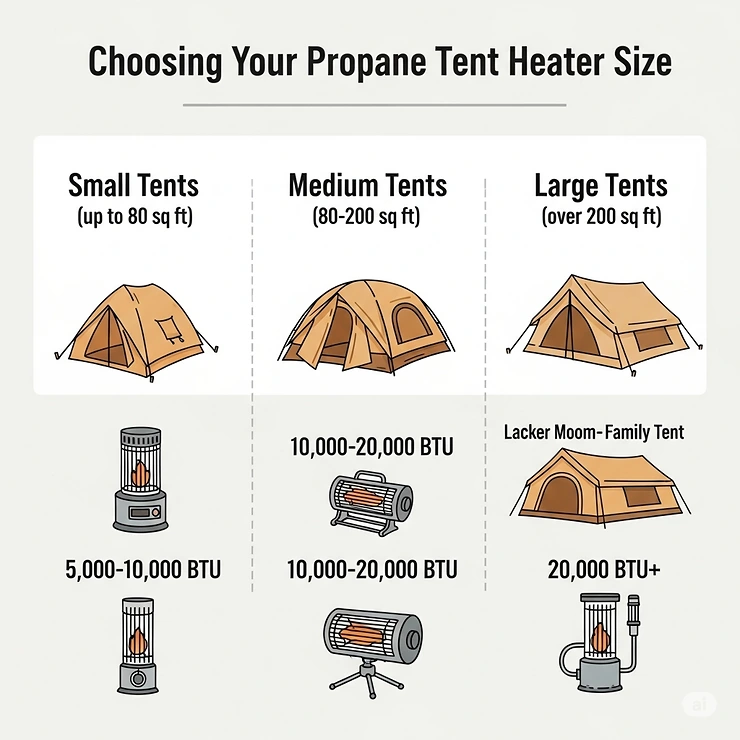
📊 Quick Comparison Table: Top Propane Tent Heaters
| Model | BTU Output | Coverage | Runtime (1 lb) | Safety Features | Price Range |
|---|---|---|---|---|---|
| Mr. Heater Buddy | 4,000-9,000 | 225 sq ft | 3-6 hours | ODS, Tip-over, CSA | $89-$119 |
| Mr. Heater Little Buddy | 3,800 | 95 sq ft | 5.6 hours | ODS, Tip-over, CSA | $69-$89 |
| Coleman SportCat | 1,500 | 90 sq ft | 14 hours | Basic Auto-shutoff | $45-$65 |
| Coleman BlackCat | 3,000 | 150 sq ft | 7 hours | Basic Auto-shutoff | $65-$85 |
| Texsport Sportsmate | 2,980 | 72 sq ft | 7 hours | Auto-shutoff only | $35-$55 |
| TLOG 2-in-1 | 9,000 | 180 sq ft | 3 hours | Basic controls | $75-$95 |
| DEWALT F332000 | 6,000-12,000 | 300 sq ft | 3.5-7 hours | ODS, Tip-over, CSA | $199-$249 |
| Dura Heat LP10-360 | 10,000 | 250 sq ft | 2-3 hours | ODS, Tip-over | $89-$129 |
🛒 Ready to Upgrade Your Winter Camping Game?
Don’t let cold weather limit your outdoor adventures! These professional-grade propane tent heaters will transform your camping experience from surviving to thriving. Click any highlighted model above to check current availability and read verified customer reviews on Amazon! 🔥⛺
Frequently Asked Questions (FAQs) ❓
❓ How safe is using a propane heater in a tent during overnight camping?
❓ What size propane tent heater do I need for a 6-person family tent?
❓ How long will a 1-pound propane cylinder last with my tent heater?
❓ Can I use a propane tent heater at high altitude camping locations?
❓ What's the difference between catalytic and radiant propane tent heaters?
Recommended for You
- 7 Best Propane Salamander Heater Models For Ultimate Jobsite Heat in 2025
- 7 Best Camper Propane Water Heaters For Endless Hot Showers in 2025
- 7 Best Small Propane Heater for Camper Options That Actually Work in 2025
Disclaimer: This article contains affiliate links. If you purchase products through these links, we may earn a small commission at no additional cost to you.
✨ Found this helpful? Share it with your friends! 💬🤗
