
In This Article
You’ve driven three hours. You’ve paid for lift tickets. You’ve schlepped boots, poles, a helmet, and a bag that weighs more than a golden retriever. And then — around 10:30 a.m., somewhere on your third run — your toes go completely numb.
Not cold. Numb. The kind of numb where you’re not entirely sure you still have feet.
Sound familiar? Cold feet on the slopes aren’t just uncomfortable. According to the CDC’s frostbite prevention guidance, exposure to freezing temperatures causes the body to slow blood circulation to the extremities — meaning your toes are literally the last in line when your body is deciding who gets warmth. Ski boots don’t help. Their rigid shells and tight fit compress blood vessels even further.
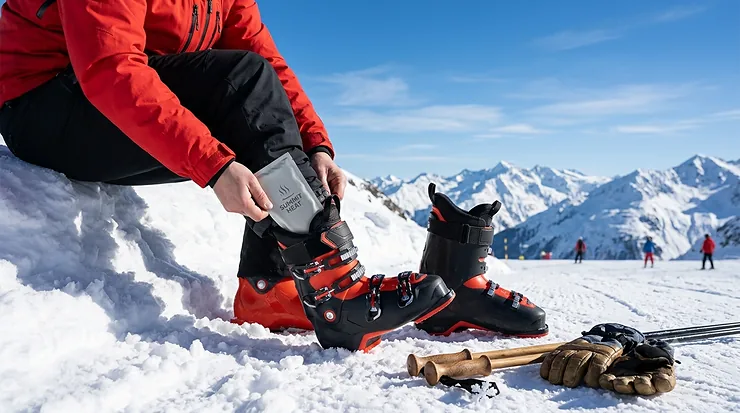
That’s exactly where disposable heated insoles for skiing come in. These single-use, air-activated thermal pads slip under your sock (or your boot liner), activate automatically when exposed to oxygen, and deliver hours of consistent, chemical-free heat. No charging cables. No battery packs strapped to your shin. No worrying about whether you remembered to charge them the night before. You tear open the pouch, shake for a few seconds, and warm feet show up to the party.
In this guide, I’ve researched and compared 7 real products currently available on Amazon — from the iconic household name to the European ski-team-approved option you’ve probably never heard of. Whether you need budget-friendly bulk packs for a family ski week or a premium ultra-thin insole that disappears inside a snug boot, there’s something here for every skier.
Let’s warm things up.
Quick Comparison: 7 Best Disposable Heated Insoles for Skiing
| Product | Heat Duration | Pack Options | Adhesive? | Best For |
|---|---|---|---|---|
| HotHands Insole Foot Warmers | Up to 9 hrs | 10–16 pair | No / Yes (with adhesive version) | Reliable everyday budget pick |
| THE HEAT COMPANY Insole Warmers | Up to 9 hrs | 6–32 pair | No | Serious skiers, pro-level quality |
| Grabber Insole Foot Warmers | Up to 5 hrs | 30 pair | No | Half-day skiers, value in bulk |
| WORLD-BIO Disposable Insole Warmers | Up to 8+ hrs | 10–40 pair | No | Full-day skiers, big value packs |
| Bramble Insole Foot Warmers | Up to 10 hrs | 5–30 pair | No | Longest heat, eco-conscious buyers |
| Sport Temp Insole Foot Warmers | Up to 10 hrs | 20 pair | Yes | Skiers who hate shifting insoles |
| MEDLOT Insole Foot Warmers | Up to 9 hrs | 20 pair | Yes | Women’s sizing, casual skiers |
Reading this table: Heat duration is the biggest dividing line here. If you’re an all-day grinder — first chair to last run — you need at least 8–10 hours of coverage. The Grabber’s 5-hour rating is fine for a quick morning session but will leave afternoon skiers cold (literally). The adhesive option from Sport Temp and MEDLOT matters more than most buyers realize: in a ski boot, a non-adhesive insole can bunch forward under your toes by mid-morning, killing both comfort and heat distribution.
💬 Just one click — help others make better buying decisions too! 😊
Top 7 Disposable Heated Insoles for Skiing: Expert Analysis
1. HotHands Insole Foot Warmers — The Crowd Favorite That Earns Its Reputation
If you’ve ever stuffed a hand warmer into a glove at a football game, you already know HotHands. Their insole version brings that same reliable chemistry to your ski boots — and it’s been a best-seller on Amazon for years for a reason.
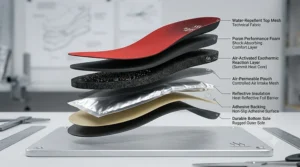
How it actually works: Each warmer uses iron powder oxidation (iron, water, salt, activated charcoal, and vermiculite) to generate heat up to around 100°F over 9 hours. The chemistry is dead-simple — open the pack, expose to air, and oxidation starts. This is the same basic reaction that causes iron to rust; HotHands just made it faster and warmer. Because it’s air-activated, not electrically activated, there’s zero risk of a battery dying mid-mountain.
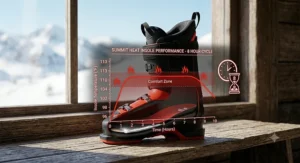
The spec sheet says “up to 9 hours,” and in real-world skiing conditions — where your feet are compressed in a boot limiting airflow — you’ll realistically see 7 to 8 hours of meaningful warmth. That covers a full ski day for most people. Made in the USA, TSA-approved, and available in 16-pair bulk packs, this is the product you buy a 3-pack of and never think about again.
What most buyers overlook is the size: HotHands insoles run a universal size that works for men’s roughly 7–13. If you’re on the smaller end, there’s slight overhang — not a dealbreaker, but worth knowing before you’re stuffing them into a women’s size 7 boot.
✅ 9-hour heat duration — enough for a full ski day
✅ Made in USA, TSA-approved for travel
✅ Widely available, great bulk value
❌ Universal sizing — not ideal for smaller feet
❌ No adhesive on standard version (can shift in boot)
Price range: around $10–$20 for 16 pairs | Value verdict: Best overall bang for buck in the category.
2. THE HEAT COMPANY Insole Foot Warmers — The One the Pros Actually Use
Here’s a name most American skiers haven’t heard of — and that’s exactly why I’m putting it second on this list. THE HEAT COMPANY is an Austrian brand, and their foot warmers have been trusted by the Austrian Ski Team, the Swiss Ski team, and the German snowboard national team. That’s not marketing copy. That’s ski pros who literally cannot afford cold feet trusting this product over everything else available.
Available in four sizes (S, M, L, XL) with up to 9 hours of warmth, these are 100% natural and purely air-activated using iron-powder oxidation — no fillers, no synthetic additions. The sizing matters enormously here. While most American brands default to a universal-fit, THE HEAT COMPANY’s size-specific pads actually fill the insole cavity of your boot properly. That means heat reaches the toe box and the heel with even distribution instead of pooling under the ball of your foot.
In practice, the difference between a properly-sized insole warmer and a too-big one is significant. A warmer that bunches at the front of the boot restricts circulation in the toes — the exact area you’re trying to keep warm. Get the right size, and these perform noticeably better than the one-size alternatives.
Available in 6, 12, and 32-pair packs, making them practical for a week-long ski trip without over-buying.
✅ Multiple sizes (S/M/L/XL) for proper fit
✅ Trusted by professional ski teams across Europe
✅ 100% natural ingredients, purely air-activated
❌ Slightly higher price per pair than generic alternatives
❌ Less widely known = fewer reviews for quick reassurance
Price range: around $15–$35 depending on pack size | Value verdict: Best performance pick for serious skiers who want precision fit.
3. Grabber Insole Foot Warmers — Best for Half-Day Skiers and Value Bulk Buyers
Grabber is another legacy American brand in the hand and foot warmer space, and their insole warmers offer a straightforward proposition: 5 hours of heat, available in bulk 30-pair packs, at a very friendly price point. Let’s be clear-eyed about what 5 hours means on the mountain: you get a solid morning session. First chair at 8 a.m.? You’re warm through lunch. Post-lunch afternoon session? Not so much.
But that’s not a flaw for every skier — it’s a feature for the right one. If you’re doing half-day morning sessions, skiing with young kids who tap out by noon, or heading up for a quick two- or three-hour blast, Grabber’s 5-hour warmers are genuinely excellent. You’re not paying for heat hours you’re not using.
The natural ingredient blend (iron, activated charcoal, salt, and vermiculite) generates odorless, clean heat with no chemical smell — a legitimate concern in the enclosed microclimate of a ski boot. They activate within minutes of opening and hit consistent warmth quickly. Available in S/M sizes, which is a plus for shorter feet.
At around $15–$20 for 30 pairs, the per-pair cost is among the lowest in the category, making Grabber the obvious choice for families, group ski trips, or anyone who wants a big supply without a big investment.
✅ Excellent bulk value — 30 pairs per pack
✅ Odorless, natural ingredient formula
✅ Available in S/M sizing for smaller feet
❌ Only 5-hour duration — not suited for full ski days
❌ No adhesive — can shift inside boot
Price range: around $15–$20 for 30 pairs | Value verdict: Perfect for short sessions and family ski trips.
4. WORLD-BIO Disposable Insole Foot Warmers — Underrated Workhorse for Full-Day Skiers
WORLD-BIO doesn’t have the brand recognition of HotHands, but this is one of those quietly excellent products that experienced outdoor enthusiasts have been recommending to each other for years. Available in packs ranging from 10 to a whopping 40 pairs, these full-length insole warmers deliver 8+ hours of heat using the same iron-powder oxidation principle — and they do it at a price that makes stocking up for an entire season feel reasonable rather than reckless.
The “extra thin” design is a genuine selling point here, not just marketing language. Ski boots have notoriously tight tolerances, and adding even a few millimeters of bulk can compress your toes, restrict circulation, and — counterintuitively — make your feet colder. WORLD-BIO’s thin profile means they slide into a boot liner without creating pressure points. They cover the full length of the insole, which matters because a half-length warmer only heats the front of your foot. Your heel and arch stay cold.
Crucially, the iron-powder reaction requires airflow to sustain itself — so if your boot is especially tight, periodically wiggling your toes to circulate air inside the boot actually helps maintain heat. This is true of all air-activated warmers, but WORLD-BIO’s packaging explains it clearly, which most competitors skip.
Customer feedback consistently highlights the value: buyers who ski multiple weekends per season love the 40-pair option as a seasonal supply they don’t have to think about.
✅ 8+ hour duration, full-length coverage
✅ Extra-thin profile for tight ski boots
✅ 10–40 pair value packs — great for frequent skiers
❌ No adhesive backing
❌ Universal sizing only — can be large for smaller feet
Price range: around $10–$25 depending on pack size | Value verdict: Best pick for regular skiers wanting bulk supply without compromising on heat duration.
5. Bramble Insole Foot Warmers — Longest Heat Duration in the Category
Ten hours. That’s Bramble’s headline claim, and it’s the longest heat duration of any disposable insole warmer I researched at this price point. For skiers who start early and finish late — or who simply refuse to compromise — this is the metric that earns Bramble a spot on this list.
Available in 5, 15, and 30-pair packs, these air-activated warmers use all-natural, odorless ingredients and deliver consistent heat without spikes or drop-offs. The 10-hour rating is particularly valuable because heat duration in warmers isn’t linear — many “8 hour” warmers produce strong heat for 4–5 hours then taper off significantly. A product rated for 10 hours typically maintains useful warmth through the 8-hour mark, which is exactly what an all-day skier needs.
What Bramble doesn’t have is size variety or an adhesive option — they’re non-adhesive and appear to come in one general size. That makes them less ideal for skiers with very small feet, where the warmer may extend beyond the boot and bunch at the toe box. For average to larger feet in standard ski boots, this isn’t an issue.
The brand itself is newer to the market than HotHands or Grabber, but customer feedback on Amazon has been consistently positive, with reviewers specifically calling out the heat duration as accurate and reliable.
✅ Up to 10 hours — longest duration in this review
✅ All-natural, odorless formula
✅ Multiple pack sizes including a 30-pair bulk option
❌ No adhesive — can shift during aggressive skiing
❌ Single size option may not suit all foot sizes
Price range: around $10–$30 depending on pack size | Value verdict: Best choice for committed all-day skiers who want maximum heat hours per dollar.
6. Sport Temp Insole Foot Warmers — The Adhesive Advantage
Here’s the thing about skiing that distinguishes it from, say, wearing foot warmers at a winter festival: you’re moving aggressively. Edge-to-edge turns, pole plants, moguls, sudden stops. A non-adhesive insole warmer in a ski boot is going to migrate. Every. Single. Run. By mid-morning you’ve got half the warmer bunched under your toes and the other half contributing nothing to your warmth levels.
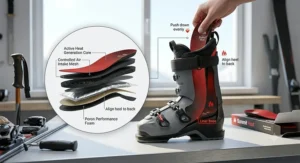
Sport Temp solves this with an adhesive backing. You peel, stick, press, and that warmer stays put for the entire day — regardless of how hard you ski. This is the detail most buyers don’t consider until they’ve lost a warmer to the floor of a gondola.
Sport Temp’s adhesive insoles deliver up to 10 hours of air-activated heat using natural, odorless ingredients. They’re TSA-compliant, USA safety-approved, and come in 20-pair packs. The small business behind this brand clearly thought about the skiing use case specifically — the product description calls out skiing and snowboarding before hiking and camping, which isn’t the usual priority order.
The main caveat: adhesive warmers require a clean, dry boot surface to stick properly. If your boot liner is old, damp, or particularly textured, the adhesive may not hold as well as advertised. Let your boots dry thoroughly between sessions if you’re using these for multiple consecutive ski days.
✅ Adhesive backing keeps insole in place during skiing
✅ Up to 10 hours of heat, TSA-compliant
✅ 20-pair pack covers multiple ski trips
❌ Adhesive performance depends on boot surface condition
❌ Single pack size — no bulk option currently
Price range: around $15–$20 for 20 pairs | Value verdict: Best pick for aggressive skiers who’ve had foot warmers shift on them before.
7. MEDLOT Insole Foot Warmers — Best for Women and Casual Skiers
Most foot warmer brands design to men’s sizing and then wave vaguely toward “universal fit” as their concession to women. MEDLOT actually specifies sizing: Women’s 6.5–9 and Men’s 6–8. That’s a meaningful difference. A warmer sized for an average male foot, crammed into a women’s size 7.5 boot, doesn’t heat evenly and often creates uncomfortable pressure.
MEDLOT’s adhesive-backed warmers deliver up to 9 hours of odorless, air-activated heat using high-quality non-woven breathable fabric — a material choice that allows the right amount of oxygen to reach the iron-powder core while remaining comfortable against the foot. The 20-pair box also includes a 3-year shelf life, which means buying a few boxes before ski season and stashing them without worrying about them going bad before next winter.
The brand also highlights suitability for people with Raynaud’s Syndrome or poor circulation — a detail that actually matters on the slopes, where reduced circulation is a real issue even for otherwise healthy skiers. If your feet run cold even in warm conditions, this added context from the manufacturer is reassuring.
What MEDLOT lacks is size variety beyond their single specified range — and the “cannot be trimmed” note on packaging means you’re stuck with one size working or not, unlike some competitors. But within their stated sizing range, this is an excellent, adhesive-backed option at a fair price.
✅ Specifically sized for women’s and smaller men’s feet
✅ Adhesive backing, 3-year shelf life
✅ Noted suitable for Raynaud’s Syndrome and poor circulation
❌ Cannot be trimmed to fit — sizing is fixed
❌ Single size option limits flexibility
Price range: around $12–$18 for 20 pairs | Value verdict: Best choice for women skiers and those with smaller feet or circulation concerns.
How to Get Maximum Heat from Your Disposable Insoles (And the Mistakes That Waste Them)
Buying the right disposable heated insoles for skiing is step one. Using them correctly is where most people leave performance on the table.
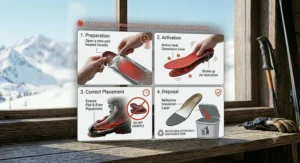
Step 1: Activate before you boot up. Open the pack and expose to air 10–15 minutes before putting your boots on. The iron oxidation reaction needs a head start. Skipping this means your toes will be cold for the first 20–30 minutes of your first run — the most critical period when your feet are coldest.
Step 2: Wear socks between the warmer and your skin. Every manufacturer says this, and every novice ignores it. Direct skin contact with a warmer that’s hitting peak heat (~100–105°F) can cause minor burns over several hours. A mid-weight ski sock creates a barrier and also distributes heat more evenly.
Step 3: Don’t cinch your boots too tight. This is the skiing-specific advice that you won’t find on the packaging. Compression kills heat. Extremely tight boot buckles restrict blood flow to your toes — the exact vessels that need to carry warmth throughout your foot. A secure fit that allows natural toe movement is warmer than a vise-grip fit.
Step 4: Wiggle your toes periodically. Air-activated warmers need oxygen to sustain their reaction. In a sealed ski boot, that oxygen becomes limited. A few toe wiggles every 30 minutes does two things: pumps fresh oxygen into the boot environment and promotes blood circulation. Both extend the effective life of your warmer.
Step 5: Store unused pairs properly. Keep them in their sealed outer packaging in a cool, dry place. Heat and humidity can pre-activate a warmer through the bag, drastically reducing its useful lifespan. A cold garage is fine; a hot car is not.
✨ Don’t Miss These Exclusive Deals!
🔍 Ready to say goodbye to numb toes? Click any highlighted product name above to check current pricing and availability. The right warmer can completely transform your time on the mountain — stay toasty from first chair to last run!
Which Skier Are You? Finding Your Perfect Disposable Insole Match
Not all cold feet are created equal, and not all skiers need the same solution. Here’s how to match your profile to the right product.
The Casual Day-Tripper: You ski once or twice a season, usually a half-day. You want something cheap, reliable, and in stock at any sporting goods store — or delivered by tomorrow. Get: HotHands (16-pair) or Grabber (30-pair). Both are brand names you trust, widely available, and competitively priced. The Grabber’s 5-hour rating covers your session perfectly without overpaying for heat hours you won’t use.
The Dedicated Weekend Skier: You’re on the mountain most weekends from December to March. You need 8+ hours of warmth, don’t want to manage battery charging mid-week, and ski hard enough that a shifting insole is legitimately annoying. Get: WORLD-BIO 40-pair (seasonal supply) or Bramble 30-pair. Stock up once, and the issue disappears for months. Add Sport Temp if shifting warmers have been your nemesis.
The Ski Trip Traveler: You’re packing for a week in Colorado or Vermont and have airline luggage restrictions in mind. Disposables are TSA-approved and featherlight — a massive practical advantage over battery-powered alternatives. Get: THE HEAT COMPANY in a 32-pair pack, or Sport Temp (adhesive = no fumbling in the locker room). Both pack flat and won’t trigger security alerts.
The Skier with Cold-Sensitive Feet: Whether it’s Raynaud’s Syndrome, age-related circulation changes, or just naturally poor extremity warmth, you need the most reliable and longest-lasting heat option available. Get: MEDLOT (if your feet are women’s 6.5–9) or Bramble (for the 10-hour duration). Combined with proper layering advice from UF Health’s cold weather injury prevention guide, you can manage cold feet effectively even in extreme conditions.
The Family Ski Group: You’ve got three kids, a partner, and grandma who all insist on skiing regardless of temperature. You need volume, you need it cheap, and you need it to work for everyone from a size 5 to a size 12. Get: Grabber 30-pair for the shorter sessions and HotHands 16-pair for full-day adults. Mix and match by need.
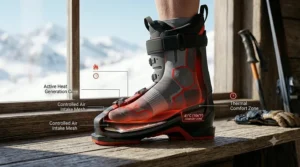
Disposable Heated Insoles vs. Rechargeable: The Real-World Verdict for Skiers
The marketing for rechargeable electric heated insoles makes a compelling case: reusable, adjustable heat settings, app-controlled in some models. Sounds great on paper. In practice, for skiing specifically, the disposable vs. rechargeable debate is more nuanced than most buyers realize.
| Feature | Disposable (Air-Activated) | Rechargeable (Electric) |
|---|---|---|
| Setup time | Seconds — open and go | Requires overnight charge |
| Heat control | Fixed (no settings) | Adjustable (low/medium/high) |
| Duration | 5–10 hours (product dependent) | 3–8 hours (setting dependent) |
| Boot fit impact | Ultra-thin, minimal bulk | Battery pack adds bulk |
| Failure risk | Zero electrical failure | Battery can die, malfunction |
| Cost per use | $0.50–$1.50 per pair | $0 after initial purchase (~$80–$200) |
| Travel convenience | TSA-approved, pack anywhere | Carry-on electronics restrictions |
| Best for | Occasional to regular skiers | Daily skiers, multiple disciplines |
The analysis here is more interesting than the table suggests. Rechargeable insoles look economically superior over time — until you factor in that rechargeable heated insoles often add 5–8mm of bulk to your boot, which can be the difference between a comfortable fit and a circulation-restricting fit. Many serious skiers find their boot fit becomes unacceptable with battery packs inside. Disposable insoles, being ultra-thin, solve this entirely.
Battery failure is also a real concern. If a rechargeable insole dies at 1 p.m. on a full-price ski day, you’re cold for the rest of the afternoon with no backup. A pocket full of spare HotHands costs $2 and weighs nothing. For pure skiing — as opposed to commuting or standing around — disposables remain the pragmatic, low-risk choice for the majority of skiers.
How to Choose Disposable Heated Insoles for Skiing: 7 Expert Criteria
Shopping for disposable heated insoles for skiing looks simple until you’re standing in a ski shop surrounded of identical-looking packaging. Here’s what actually matters:
1. Heat duration relative to your ski day. Match the warmer’s rated duration to your actual on-mountain time, adding 20% buffer. If you ski 7 hours, get a warmer rated for at least 8–9 hours. Heat duration degrades in oxygen-restricted environments like ski boots.
2. Sizing and coverage area. Full-length insoles warm the entire foot; toe warmers (a related but different product) only warm the front third. For skiing, full-length coverage is almost always preferable, as cold can radiate from the heel up.
3. Thickness profile. Even 2mm of extra thickness can affect boot fit. Look for products specifically described as “ultra-thin” or “extra-thin.” When in doubt, brands like THE HEAT COMPANY that explicitly serve the ski market have engineered for ski boot tolerances.
4. Adhesive vs. non-adhesive. For skiing — particularly for aggressive or racing-oriented skiers — adhesive backing prevents migration. For casual skiing in roomy boots, non-adhesive is fine and easier to reposition.
5. Activation chemistry. All reputable products use iron-powder oxidation with activated charcoal, salt, and vermiculite. According to NIH research on frostbite prevention, maintaining foot warmth is medically significant — so you want a product using well-understood, safe chemistry rather than anything synthetic or novel.
6. Pack economics. For occasional skiers, small packs (5–10 pair) are fine. Regular skiers should calculate cost-per-pair across different pack sizes — the jump from a 10-pair to a 40-pair pack often cuts cost per pair by 40–50%.
7. Shelf life. Most quality products offer 2–3 years unopened. Buy seasonal supply at the start of winter, store in cool conditions, and avoid mid-season stockouts when prices surge.
Common Mistakes When Buying Single-Use Foot Warmers
Buying the wrong product — or using the right product wrong — is more common than you’d think. Here’s what trips people up:
Mistake #1: Confusing toe warmers with insole warmers. These are distinct products. Toe warmers are small adhesive pads that go on top of the toe area of your sock, covering roughly the front quarter of your foot. Insole warmers are full-length pads that go under your foot, heating the entire plantar surface. Many buyers accidentally order toe warmers expecting insole coverage. Read the product title carefully.
Mistake #2: Buying by price-per-pack rather than price-per-pair. A 5-pair pack at $8 sounds cheaper than a 16-pair pack at $18 — until you do the math. Always calculate per-pair cost when comparing. The bigger packs almost always win.
Mistake #3: Assuming all air-activated warmers perform identically. The iron-powder chemistry is similar across brands, but execution differs. Warmer thickness, fabric breathability, and ingredient ratios affect both heat level and duration. THE HEAT COMPANY’s involvement with professional ski teams isn’t accidental — elite athletes tested and chose them.
Mistake #4: Ignoring boot fit when choosing thickness. Adding any insole product to a ski boot changes the fit. If your boots are already fitted tightly to your foot — which is correct for performance skiing — even an ultra-thin warmer can create pressure. Demo a pair on an easy ski day before committing to a full season supply.
Mistake #5: Storing extras in the boot bag. Heat and moisture in a boot bag can partially activate warmers through their sealed packaging, reducing their lifespan. Always store unused pairs in a cool, dry location, ideally at home between ski trips.
The Science Behind Air-Activated Heating: Why It Works So Well in Ski Boots
Here’s the elegant part of this technology that most marketing copy glosses over. Iron oxidation — the same process that causes rust — releases heat. The formula in these warmers (iron powder + water + salt + activated charcoal + vermiculite) is a carefully tuned system: the charcoal improves oxygen distribution, the salt acts as a catalyst, and the vermiculite retains heat longer than the reaction alone would sustain.
The result is an exothermic reaction that produces steady, consistent heat rather than a burst-and-fade effect. According to Wikipedia’s overview of iron oxidation chemistry, the oxidation of iron is the transfer of electrons between iron and oxygen — a process that releases energy as heat. The warmers essentially slow-burn this reaction over hours.
What makes this particularly useful for skiing is that the reaction rate adjusts with oxygen availability. Tightly sealed ski boots slightly throttle the reaction, which is actually a self-regulating feature — the warmer doesn’t overheat when oxygen is restricted. This is the key reason these warmers, unlike electric heating elements, carry no burn risk when used as directed (with socks between the warmer and skin).
Long-Term Cost and Value: Are Single-Use Disposable Insoles Worth It?
Let’s run the actual math, because the “disposable vs. rechargeable” cost comparison is often presented misleadingly.
| Scenario | Product | Cost per ski day |
|---|---|---|
| Casual (10 ski days/year) | HotHands 16-pair x 3 packs | ~$1.10–$1.50/day |
| Regular (25 ski days/year) | WORLD-BIO 40-pair | ~$0.50–$0.75/day |
| Frequent (50+ ski days/year) | Budget rechargeable insole ($120) | ~$0/day after investment |
The break-even between disposables and a mid-range rechargeable is roughly 80–100 ski days — about two to three full seasons for a dedicated weekend skier. If you’re below that threshold, disposable insoles are economically competitive, and they offer the operational simplicity that no rechargeable product can match.
What the table doesn’t capture: disposables have zero maintenance cost, zero failure risk, zero charging requirement, and zero boot-fit alteration. Rechargeable insoles require bulkier boots, may need replacement batteries after 2–3 seasons, and carry the very real risk of a dead battery turning an afternoon of skiing into an afternoon of suffering.
For most recreational and intermediate skiers — which is the majority of the American ski market — disposable heated insoles for skiing remain the smarter, simpler, and more reliable choice year after year.
FAQ: Your Top Questions About Disposable Heated Insoles for Skiing
❓ How long do disposable heated insoles for skiing actually last on the slopes?
❓ Can I use air-activated insole warmers directly against my skin inside a ski boot?
❓ Are disposable heated insoles TSA-approved for air travel to ski resorts?
❓ What's the difference between disposable heated insoles vs rechargeable for skiing?
❓ Are disposable heated insoles for hunting the same products as for skiing?
The Bottom Line: Warm Feet Change Everything on the Mountain
Here’s the thing nobody tells you when you’re learning to ski: cold feet don’t just make you uncomfortable. They make you worse at skiing. Numb toes affect balance, reduce your ability to feel the snow through your edges, and — critically — make you want to stop. Cutting your ski day short because you can’t feel your feet isn’t just a comfort problem. It’s a performance and safety issue.
The CDC and sports medicine researchers are clear that maintaining foot warmth in extreme cold is medically meaningful, not just a luxury preference. Consistent cold exposure to extremities can progress from discomfort to frostnip to genuine frostbite — and ski boots, for all their performance engineering, are not insulated enough on their own in temperatures below about 20°F.
Disposable heated insoles for skiing are one of the most cost-effective, foolproof solutions available. No setup. No charging. No technical failure. Just consistent heat, activated by the same reliable chemistry that’s been keeping outdoor workers, hunters, and athletes warm for decades.
My top picks? If you want the most reliable all-rounder, go with HotHands. For professional-grade performance and sizing precision, THE HEAT COMPANY is genuinely exceptional. For the skier who hates shifting insoles, Sport Temp’s adhesive version is quietly brilliant.
Whatever you pick — your toes will thank you around run six.
✨ Don’t Miss These Exclusive Deals!
🔍 Click any product name in this guide to check current pricing and availability on Amazon. Stay warm out there — because the best ski run is always the next one.
Recommended for You
- 7 Best Rechargeable Heated Insoles in 2026
- 7 Best Heated Thermal Underwear Sets of 2026 That Will Crush the Cold
- Best Heated Base Layer Shirt for Skiing in 2026 (Top 7 Picks)
Disclaimer: This article contains affiliate links. As an Amazon Associate, I earn from qualifying purchases. If you purchase products through these links, we may earn a small commission at no additional cost to you.
✨ Found this helpful? Share it with your friends! 💬🤗
