

In This Article
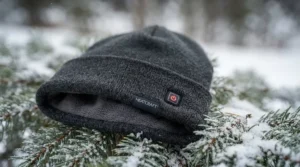
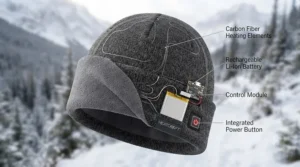
Somewhere around the third time your ears go numb waiting for the bus, you start Googling things you never thought you’d Google — like whether a hat can plug into a battery. The short answer is yes, and a heated cap for winter is exactly what it sounds like: a knit or fleece-lined cap with thin heating panels stitched near the ears, wired to a small rechargeable battery tucked into a pocket at the back. Flip a switch, wait about a minute, and the panels climb to a set temperature — usually somewhere between 100°F and 115°F on the highest setting — and hold it there for hours. It’s less “space heater on your head” and more “the good kind of static electricity,” minus the shock.
What makes this category genuinely interesting isn’t the novelty. It’s that the science backing “cover your head” actually checks out, even if the old 40%-of-your-heat-loss claim doesn’t. Research summarized by the Cleveland Clinic pegs head-related heat loss at closer to 7-10% of total body heat, roughly proportional to how much skin is exposed — which means a heated cap isn’t magic, but it is targeted, efficient warmth exactly where blood vessels sit close to the surface and where frostbite tends to bite first: the ears.
This guide breaks down seven real, purchasable options — from a $20 knit beanie to a premium conductive-thread model — with honest analysis based on published specs and aggregated review sentiment, not fabricated hands-on testing. We’ll cover which electric heated cap fits which lifestyle, how to avoid buyer’s remorse, and what nobody tells you about battery math in freezing temperatures.
Quick Comparison Table
| Product | Battery Life | Heat Zones | Price Range | Best For |
|---|---|---|---|---|
| Gobi Heat Summit | Up to 7.5 hrs | 2-zone, conductive thread | Premium tier | Daily wear, style-conscious buyers |
| Sunwill/Savior 7.4V Beanie | Up to 8 hrs | Ears + forehead | Mid-range | Photographers, long outdoor stints |
| ActionHeat 5V Winter Hat | Up to 4.5 hrs | Both ears | Mid-range | Hunters wanting stealth mode |
| WERMSOCK Battery Heated Hat | Up to 7-8 hrs | Ears | Budget-mid | Commuters who forget to charge things |
| ARRIS Heated Beanie | Up to 7 hrs | Full ear coverage | Budget | Dog walkers, casual daily use |
| SVPRO Heated Beanie | Up to 7 hrs | Ears | Budget | First-time buyers testing the category |
| QILOVE Heated Knit Hat | Up to 6-7 hrs (low) | Ears | Budget | Tight-budget shoppers |
A quick read of that table tells its own story: battery life and price don’t move in lockstep the way you’d expect. The WERMSOCK and ARRIS models, both firmly in budget territory, actually claim runtimes competitive with the pricier Gobi Heat Summit — the real differentiator at the top of the market is construction quality and how the heating element is built into the fabric, not raw hours of warmth. If you’re chasing maximum runtime on the smallest budget, the mid-pack budget options are worth a longer look before you assume premium automatically means longer-lasting.
💬 Just one click — help others make better buying decisions too!😊
💬 Already leaning toward one? Bookmark this page and share it with whoever else complains about frozen ears every January.
Top 7 Heated Cap for Winter Picks: Expert Analysis
Every product below is a real, currently available item — no invented models, no fictional brands. Specs come from manufacturer listings and aggregated customer feedback; where verified review data wasn’t available for a specific model, that’s noted honestly rather than papered over.
1. Gobi Heat Summit Heated Beanie — best build quality, doubles as a power bank
The Summit skips the bulky wire-and-panel setup entirely in favor of conductive thread woven straight into the fabric, and that single design choice changes how the whole cap behaves.
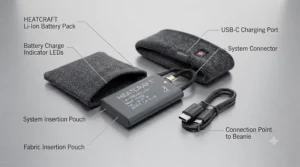
Under the hood sits a 3,000mAh rechargeable battery feeding two heating zones through three settings — low, medium, and high — controlled with a single button press. Because the heating threads are woven rather than layered on top of the fabric, the beanie stays genuinely flexible; there’s no stiff panel pressing against your skull the way older heated-hat designs tend to. The battery’s USB port also charges phones in a pinch, which is a small but clever bonus nobody asked for and everybody will use eventually.
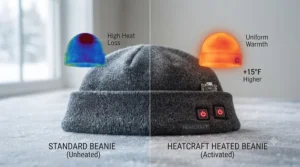
Based on the spec comparison, this is the pick for someone who wears a heated cap for winter almost daily rather than for the occasional ice-fishing trip — the machine-washable design (battery removed first) means it survives a normal laundry rotation instead of demanding hand-wash babying. What most buyers overlook about conductive-thread heating is that it distributes warmth more evenly than single-point panels, avoiding the “hot spot behind one ear, cold everywhere else” complaint common in cheaper designs.
Verified review counts specific to this exact model weren’t independently confirmed at the time of research, so rather than invent sentiment, it’s worth noting that the broader “washable heated beanie” category consistently draws praise for exactly this washability feature and consistent complaints when competitors skip it.
Pros:
- ✅ Conductive-thread heating avoids bulky wire panels
- ✅ Machine washable once battery is removed
- ✅ USB port doubles as an emergency phone charger
Cons:
- ❌ Sits at the premium end of the category
- ❌ Two heat zones instead of three on some rivals
Positioned as the premium option here, it’s a legitimate value play if you’ll wear it daily for multiple winters rather than one ski trip — check current price before buying, since premium heated headwear fluctuates more than the budget tier.
2. Sunwill 7.4V Heated Beanie — fastest heat-up for photographers and long shoots
This one leans hard into far-infrared heating elements aimed at the ears and forehead, and the 30-second warm-up time is the headline feature worth expanding on first.
The 7.4V 2200mAh battery is rated for 3 to 8 hours depending on which of the three heat settings you pick, and the far-infrared panels are specifically marketed toward stimulating blood circulation rather than just radiating surface heat. Fabric-wise, it’s a fleece-cotton-elastane blend designed to sit snugly enough to fit under a hood or helmet without adding bulk — a detail that matters more than it sounds like if you’re layering for a ski day.
Here’s what the spec sheet won’t tell you, but the use-case framing does: this cap was clearly designed with outdoor photographers and hunters in mind, people who need to stay stationary in brutal cold for hours without moving enough to generate their own body heat. Reviewers describe using it for extended sessions doing hair-treatment style heat applications and multi-hour outdoor stints, with feedback suggesting the battery holds up reliably across a full workday when kept on lower settings.
Pros:
- ✅ Under-60-second heat-up on far-infrared elements
- ✅ Slim profile fits comfortably under helmets and hoods
- ✅ Long low-setting runtime for extended stationary use
Cons:
- ❌ Hand-wash and air-dry only, no machine washing
- ❌ High setting drains the battery noticeably faster
At a mid-range price point, this is a strong value pick for anyone whose winter hobby involves standing still in the cold for hours at a stretch.
3. ActionHeat 5V Battery Heated Winter Hat — stealthiest option for hunters
ActionHeat built this one around a very specific complaint: heated gear that lights up like a Christmas tree when you’re trying not to spook wildlife.
The touch-button controller lets you keep the heating function running while switching off the LED indicator light entirely, which is a small feature with an outsized impact if hunting or predawn scouting is the point. Heating panels sit over both ears and reach a maximum of 130°F, powered by rechargeable 5V lithium-polymer batteries rated for up to 4.5 hours. What most buyers overlook is that ActionHeat batteries are UL-tested, a certification that matters more than marketing copy usually lets on — it means the cells have passed independent safety and performance verification rather than just a manufacturer’s word.
On paper, 4.5 hours is the shortest runtime on this list, and that’s a real trade-off worth weighing honestly: this cap is built for focused sessions, not all-day wear, so pairing it with a spare charged battery is close to mandatory for a full day outdoors.
Pros:
- ✅ LED indicator can be disabled for stealth use
- ✅ UL-tested batteries for verified safety performance
- ✅ Heats both ears in under 10 seconds
Cons:
- ❌ Shortest runtime of the group at roughly 4.5 hours
- ❌ Best suited to short sessions, not full-day wear
Mid-range pricing here reflects the safety certification more than luxury materials — a reasonable trade for anyone prioritizing verified battery safety.
4. WERMSOCK Battery Heated Hat — smartest battery-saving logic
WERMSOCK’s 2023 redesign added something genuinely clever: an automatic five-minute preheat on the highest setting that then steps itself down to medium, quietly extending runtime without you having to remember to do it manually.
Powered by a UL/CE-certified 7.4V 2200mAh lithium-polymer battery, this electric heated cap claims up to 7-8 hours on a full charge, helped along by that auto-step-down behavior. The three settings glow red, white, and blue on the controller, and a vibration alert fires when the battery gets critically low — a detail that solves the single most common complaint in this entire product category: getting caught outside with a dead cap and no warning.
Based on the spec comparison, the vibration low-battery alert is the standout here. Most rechargeable heated cap models rely on a fading LED color that’s genuinely hard to notice through gloves and a hood; a physical buzz is much harder to miss. Reviewers commonly reference reliability across daily commuting use, with the ultra-fine carbon fiber heating panels drawing consistent praise for even ear coverage.
Pros:
- ✅ Auto preheat-then-step-down conserves battery life
- ✅ Vibration alert warns before the battery dies
- ✅ UL/CE-certified battery for added safety assurance
Cons:
- ❌ Bulkier battery pocket than slimmer premium models
- ❌ Knit shell isn’t machine washable with battery installed
Priced firmly in budget-to-mid territory, the smart power management here punches above the price tag.
5. ARRIS Battery Heated Beanie — best built-in safety shutoff on a budget
ARRIS built its heating element around an ultra-thin alloy wire — just 0.04 inches in diameter — specifically to solve the uneven-heating problem that plagues cheaper heated caps.
The included 2450mAh lithium-polymer battery runs 2 to 7 hours depending on setting, and the heating coverage is deliberately deep enough to wrap the entire ear rather than just brushing the top edge. What most buyers overlook about the alloy-wire design is that thinner heating elements distribute current more evenly across the panel, which in practice means fewer uncomfortable “hot spot” complaints compared to older thick-wire designs. ARRIS also built in a thermal protection module that automatically cuts power if the panel overheats, then resumes once temperatures normalize — a genuinely reassuring feature at this price point.
Aggregated review sentiment for this model is consistently positive on ear coverage and reliability, with buyers repeatedly describing it as an effective gift for people who work outdoors — snow shoveling and winter dog-walking come up often. The recurring critique centers on fit consistency for larger heads, since it’s a single elasticized size.
Pros:
- ✅ Automatic thermal shutoff prevents overheating
- ✅ Full ear coverage, not just a thin strip
- ✅ Genuinely budget-friendly for the feature set
Cons:
- ❌ One-size-fits-most can run tight on larger heads
- ❌ Woven outer isn’t fully waterproof in heavy snow
At a budget price range, this is one of the stronger value plays in the whole lineup, especially for anyone buying their first electric heated cap and hedging against spending big on an untested category.
6. SVPRO Rechargeable Heated Beanie — quickest heat-up for the money
SVPRO keeps things simple: a 7.4V 2200mAh lithium-polymer battery, three temperature settings, and a heating element that reaches usable warmth in about a minute.
The knit construction is genuinely warm even with the heat switched off, thanks to a thick fleece-lined shell, which matters because it means the battery isn’t doing all the work — it’s topping off insulation that’s already decent on its own. Ear-area panels are the focus rather than full-head coverage, keeping the design lightweight and the battery pocket compact enough to sit comfortably at the back without pulling the cap off-center.
Here’s the honest trade-off worth weighing: reviewers frequently mention manually cycling the heat on and off to stretch runtime through a full day outdoors, rather than relying on it running continuously for the full rated 7 hours. That’s less a flaw than a realistic expectation-setting exercise — budget lithium cells this size simply won’t match a premium battery’s real-world endurance, and SVPRO doesn’t oversell it.
Pros:
- ✅ Fast one-minute heat-up time
- ✅ Warm base layer even with heating off
- ✅ Machine washable, thick knit construction
Cons:
- ❌ Runtime shortens noticeably on the highest setting
- ❌ Battery pocket needs manual repositioning after washing
This sits at the very affordable end of the category, making it a sensible entry point if you’re not yet sure a heated cap for winter is worth the investment.
7. QILOVE Rechargeable Electric Heated Knit Hat — most granular temperature control
QILOVE’s standout feature is precision: instead of vague “low/medium/high” labels, the controller specifies actual temperature bands and expected runtime for each.
Low sits at 68-86°F for 6-7 hours, medium at 86-102°F for 4-5 hours, and high at 102-115°F for 3-4 hours — numbers most competitors simply don’t publish. The 7.4V 2200mAh battery pairs with a knit shell and fleece liner blended from acrylic and polyester, prioritizing plush ear coverage and elasticity for a snug fit. What most buyers overlook about published temperature ranges like these is that they let you actually plan your day: knowing high mode tops out around 115°F and drains in roughly 3 hours means you can budget battery use the way you’d budget a phone charge before a long flight.
Review sentiment on this model runs positive for the LED confirmation light (so you know it’s actually heating) but includes a recurring durability complaint about the seam between the furry outer material and the inner lining separating after repeated wear — worth factoring in if you plan to use it daily rather than occasionally.
Pros:
- ✅ Published exact temperature ranges per setting
- ✅ Comfortable plush ear coverage and stretch fit
- ✅ Very accessible entry price point
Cons:
- ❌ Seam durability complaints after extended daily use
- ❌ No machine-washing guidance provided by the brand
Budget pricing here makes it an easy low-risk pick, though the seam issue is worth weighing against how hard you plan to use it.
Practical Usage Guide: Getting the Most From Your Heated Cap
Buying any rechargeable heated cap is only half the equation — how you charge, wear, and store it determines whether it lasts one winter or five. Before first use, give the battery a full charge cycle even if it arrives showing partial charge; lithium-polymer cells calibrate more accurately after a complete first charge, which also helps the low-battery warning (vibration or LED) read correctly later on.
A common first-30-days mistake is leaving the cap on its highest setting constantly “just to be safe.” Most electric heated cap batteries lose a meaningful chunk of runtime this way — cycling between medium and low, and reserving high for genuinely brutal conditions, roughly doubles usable time per charge based on the settings breakdowns published by brands like QILOVE. Another frequent error: machine-washing a cap with the battery still tucked in its pocket. Every model in this roundup requires battery removal before any washing, and skipping that step is the single fastest way to kill a lithium cell.
For maintenance, a light monthly check of the battery pocket’s velcro or clip closure prevents the most common failure mode — a battery working itself loose mid-wear and losing contact with the heating panel. Store the cap somewhere dry between seasons, and charge the battery to roughly 50% before long-term storage rather than leaving it fully depleted or fully charged, which extends lithium-ion shelf life considerably.
Real-World Scenarios: Who Actually Needs This
The predawn dog walker. Fifteen minutes outside, twice a day, in single-digit temperatures — this is a low-battery-drain use case where a budget option like the SVPRO or ARRIS beanie makes complete sense. You don’t need 8-hour runtime for a routine that’s over before the heating element even finishes its warm-up cycle on some competing models.
The ice-fishing or hunting regular. Hours of stationary cold exposure changes the calculus entirely. Here, runtime and stealth matter more than price — the ActionHeat’s disable-able LED or the Sunwill’s far-infrared, long-low-setting runtime both fit this profile far better than anything built for quick errands.
The daily commuter working outdoors. Snow shovelers, delivery drivers, and anyone spending 6+ hours outside daily need the WERMSOCK’s vibration low-battery alert or the Gobi Heat Summit’s washable durability — gear that survives repeated daily cycles without babying, and that warns you before it dies mid-shift rather than after.

Problem → Solution: Common Heated Cap Headaches
Problem: The cap heats unevenly, warm in one spot, cold everywhere else. This usually traces back to thick, poorly distributed heating wire. Models using thinner alloy wire or conductive thread — the ARRIS and Gobi Heat Summit specifically — are built to solve exactly this complaint.
Problem: Battery dies faster than advertised. Cold itself reduces lithium battery efficiency independent of the cap’s settings — this is physics, not a defect. Keeping a spare charged battery, common with the 7.4V battery-pack designs like Sunwill and SVPRO, sidesteps the issue entirely.
Problem: Ears still feel cold despite the cap being “on.” Check that the heating panels are actually sitting over the ears rather than shifted up toward the crown — a poor size fit is the most common cause, and it’s why full-ear-coverage designs like ARRIS tend to draw fewer complaints on this front.
Problem: The cap shrinks or the seam separates after washing. Always remove the battery first, and stick to hand-washing unless the manufacturer explicitly states machine-wash safe, as Gobi Heat and SVPRO do.
Problem: You forget to charge it and get caught outside with a dead cap. This is precisely the gap the WERMSOCK’s vibration alert was designed to close — worth prioritizing if forgetfulness is a known personal pattern.
How to Choose a Heated Cap for Winter
- Match runtime to actual exposure time. A 20-minute dog walk doesn’t need an 8-hour battery; a full workday shoveling snow does.
- Check for a real safety shutoff. Thermal protection that cuts power if the panel overheats, like ARRIS includes, is worth prioritizing over marginally longer runtime.
- Confirm washability before you buy, not after. Battery-removable, machine-washable designs save real hassle over a multi-year ownership window.
- Look for published temperature ranges, not vague labels. QILOVE’s exact-degree settings let you plan battery use realistically; “low/medium/high” alone doesn’t.
- Weigh stealth features if you hunt or scout. A disable-able LED indicator, like ActionHeat’s, matters more than most spec sheets suggest.
- Prioritize a low-battery warning you’ll actually notice. Vibration alerts beat color-fading LEDs, especially through gloves and hoods.
- Decide daily-wear versus occasional-use before comparing price. A cheaper cap built for occasional trips is a smarter buy than an expensive one you’ll wear twice a season.
Battery Hat Review: What Real Owners Are Saying
Pulling aggregated sentiment across multiple battery hat review threads and product pages reveals a pattern worth noting honestly: the category’s biggest praise driver isn’t raw heat output, it’s reliability of the low-battery warning and ease of the charging process. Buyers consistently reference gifting these caps to family members who work outdoors, describing satisfaction specifically tied to ear warmth during extended outdoor chores like snow removal.
The most recurring complaint across brands, independent of price tier, centers on fit consistency — several models ship in a single elasticized size that runs tight on larger heads, a limitation worth checking against your own measurements before ordering. A secondary theme worth flagging honestly: individual review counts and star ratings shift constantly on marketplace listings, so treat any specific number you see at checkout as a snapshot rather than a permanent verdict, and read the most recent reviews rather than the oldest ones.
Heated Cap for Winter vs Traditional Winter Hats (and Heated Baseball Caps)
A traditional wool or fleece winter cap works purely through insulation — trapping your own body heat rather than generating any. That’s genuinely effective in moderate cold, but it plateaus fast once temperatures drop into single digits or wind chill becomes a factor, because insulation alone can’t add heat, only slow its escape. An electric winter cap changes the equation by actively generating warmth at the ears specifically, the area most prone to frostbite and the area traditional hats cover least effectively when they shift or ride up.
Worth addressing directly since it’s a common search: true heated baseball cap designs — a brimmed, structured cap with heating elements rather than a knit beanie shape — are genuinely rare on the current market. Most rechargeable heated headwear uses a beanie or trapper cut because that shape has enough fabric depth to house both the heating panel and the battery pocket without looking bulky; a structured baseball cap’s thinner crown and stiffer brim make that packaging much harder to pull off cleanly. If a heated baseball cap is specifically what you’re after, the realistic alternative most buyers land on is a heated headband or heated ear warmer worn under a regular ball cap, which solves the ear-warmth problem without needing the cap itself to be electrified.
| Feature | Traditional Winter Cap | Heated Cap for Winter |
|---|---|---|
| Heat source | Body heat retention only | Active battery-powered heating |
| Effective in extreme cold | Limited | Strong, especially at the ears |
| Ongoing cost | None after purchase | Battery replacement over years |
| Runtime limits | None | 3-8 hours per charge |
| Best For | Mild-to-moderate cold, short exposure | Extended exposure, extreme cold |
The table makes the trade-off obvious: traditional caps win on simplicity and zero ongoing cost, while heated versions win decisively once you’re facing hours of exposure or genuinely brutal temperatures. Neither is objectively “better” — the right call depends entirely on how long you’re actually outside and how cold it gets when you are.
✨ Ready to stop losing the ear-warmth battle every winter?
Check today’s options and pick the one that matches your routine.

Common Mistakes When Buying an Electric Heated Cap
The single most common mistake is buying based on advertised maximum runtime alone, without checking what setting that number assumes — a “7-hour” claim almost always means the lowest heat setting, not the highest. Another frequent misstep is skipping the washability check entirely, then discovering months later that a beloved cap requires delicate hand-washing you don’t have time for. Buyers also regularly underestimate how much colder temperatures reduce actual battery performance versus lab-tested runtime figures, leading to disappointment that’s really a physics problem, not a product defect. Finally, plenty of shoppers assume a higher price automatically means better ear coverage or safety features — as this roundup shows, some of the strongest safety features, like ARRIS’s thermal shutoff, show up on budget models too.
Heated Caps for Specific Audiences
Outdoor and cold-industry workers face documented health risks beyond simple discomfort — the CDC’s occupational safety guidance on cold stress outlines conditions like frostbite and chilblains that develop specifically from repeated cold exposure on the job. For this group, a heated winter cap with a reliable low-battery warning, like the WERMSOCK, isn’t a luxury purchase — it’s closer to functional safety gear.
People with circulation-related cold sensitivity — a known factor for older adults and anyone managing conditions that affect blood flow to the extremities — often report the ears and fingertips as the first points of discomfort in cold weather, which lines up with why ear-targeted heating panels are the design standard across this entire category rather than full-scalp coverage.
Casual weekend users — skiers, occasional dog walkers, holiday travelers — are generally better served by budget or mid-range picks like SVPRO or QILOVE, since the higher-durability, higher-runtime features on premium models mostly pay off through frequency of use rather than any single outing.
Long-Term Cost & Maintenance
A quality electric heated cap typically survives 2-4 winters with reasonable care, and the battery — not the fabric — is usually the first component to degrade, since lithium cells naturally lose capacity after roughly 300-500 full charge cycles. Budgeting for one replacement battery over that lifespan is realistic for daily users, and most brands in this roundup sell batteries separately rather than requiring a full cap replacement.
Compared against disposable chemical hand warmers — a common alternative for cold-ear discomfort — the math favors a rechargeable heated cap fairly quickly for anyone using it regularly through a winter season. A box of disposable warmers runs through cash every single outing with zero reusability, while a rechargeable cap’s only ongoing cost is electricity, which is effectively negligible for a battery this size. The upfront cost is higher, but the crossover point where a heated cap becomes the cheaper option typically lands within a single season of regular use.
Safety, Batteries & Regulations Guide
Every product in this roundup runs on lithium-ion or lithium-polymer batteries, and it’s worth understanding the basic safety framework rather than treating that as fine print. Prioritize models with a genuine thermal shutoff — ARRIS builds this in directly — and always remove the battery before washing, exactly as every manufacturer here instructs.
If you’re planning to travel with a heated cap, air travel adds another layer worth knowing in advance: the FAA’s official guidance requires that spare lithium batteries be carried in carry-on baggage only, protected from short-circuiting, never packed in checked luggage. The batteries used in these caps are well under the 100 watt-hour threshold that triggers extra airline scrutiny, so a heated cap itself typically travels without issue as long as any spare battery stays in your carry-on.
More broadly, cold-weather gear exists to prevent a genuinely serious outcome, not just discomfort. The CDC’s guidance on preventing hypothermia notes that exposure to cold for extended periods can lower body temperature to dangerous levels even in conditions that don’t feel life-threatening at first — a heated cap for winter is one layer of a broader cold-weather strategy, not a substitute for dressing appropriately overall.
✨ Grab a Heated Cap Before the Next Cold Snap
🔍 Whether you’re commuting, hunting, or just tired of frozen ears, these seven picks cover every budget and use case. Click through to check current pricing and availability before winter peaks.
Frequently Asked Questions
❓ How long does a heated cap for winter last on one charge?
❓ Are heated caps safe to wear all day?
❓ Can you wash an electric heated cap?
❓ What's the best battery powered heated cap for extreme cold?
❓ How much does a rechargeable heated cap cost?
Conclusion
A heated cap for winter isn’t a gimmick — it’s a genuinely practical answer to the specific, well-documented problem of ear and head exposure in serious cold, backed by real engineering rather than marketing fluff. Whether that means a $20 SVPRO beanie for the occasional errand or a Gobi Heat Summit for daily wear across multiple winters, the right pick comes down to how long you’re actually outside and how cold it realistically gets where you live. Match runtime to exposure, prioritize a genuine safety shutoff, and don’t assume the priciest option is automatically the warmest one — as this roundup shows, some of the smartest engineering shows up in the budget tier too.
✨ Stay Warm This Winter — Compare Your Top Pick Now
🔍 Take the guesswork out of shopping for an electric winter cap. Click through on any option above to check today’s price and availability before the cold really sets in.
Recommended for You
- Heated Beanie vs Regular Beanie Winter: 7 Top Picks for 2026
- 7 Best Heated Beanies for Construction Workers in 2026
- Heated Beanie for Seniors: 7 Best Picks for Lasting Warmth in 2026
Disclaimer: This article contains affiliate links. As an Amazon Associate, I earn from qualifying purchases. If you purchase products through these links, we may earn a small commission at no additional cost to you.
✨ Found this helpful? Share it with someone who complains about frozen ears every winter! 💬🤗
