
In This Article
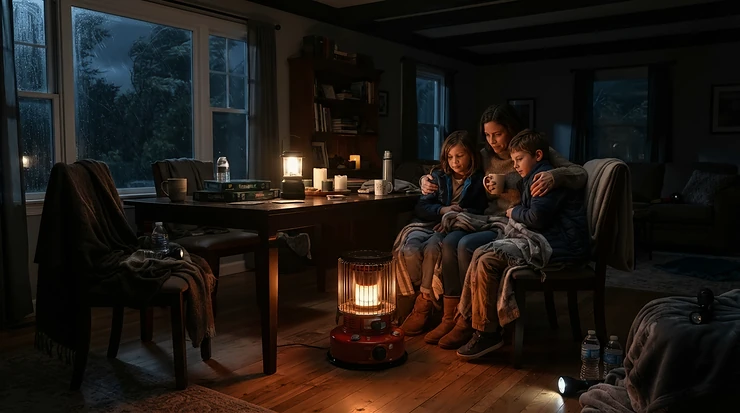
Power outages don’t send a calendar invite. Neither does the first real cold snap of the season, the one that turns your living room into a walk-in fridge overnight. That’s usually the moment people start googling “indoor propane heater” at 11 p.m., half-panicked, half-hopeful that something exists that can throw real heat without a chimney, an electrician, or a second mortgage.

Good news: it does. The bad news is that the category is a minefield of vague marketing. Plenty of propane heaters sold online are outdoor-only units wearing indoor-sounding names, and using the wrong one in a closed room is a genuine, documented safety hazard, not just a compliance footnote.
This guide sorts that out. You’ll get seven real, currently available models spanning budget camping units to premium wall-mounted heaters, an honest breakdown of what “indoor-safe” actually requires, and enough comparative analysis to skip the trial-and-error phase entirely. No invented testimonials, no fabricated star ratings — just spec sheets, aggregated review themes, and straight talk about where each unit earns its keep.
What Is an Indoor Propane Heater? An indoor propane heater is a space heater built to burn liquid propane safely inside enclosed rooms, equipped with an oxygen depletion sensor (ODS) and tip-over shutoff so it self-extinguishes before oxygen or stability drops to a dangerous level. Not every propane heater qualifies — only models specifically certified for the job do.
Quick Comparison Table
| Model | BTU Range | Best For | Price Range |
|---|---|---|---|
| Mr. Heater Little Buddy | 3,800 | Tightest budgets, small rooms | around $60-$80 |
| Mr. Heater Portable Buddy MH9BX | 4,000-9,000 | Everyday indoor supplemental heat | $100-$130 range |
| Mr. Heater Buddy FLEX | 8,000-11,000 | Garages, workshops, larger rooms | $140-$170 range |
| Mr. Heater Big Buddy | 4,000-18,000 | Cabins, large basements, big families | $150-$190 range |
| Camco Olympian Wave 8 | 4,200-8,000 | RVs, off-grid, no-flame silence | $150-$220 range |
| Dyna-Glo IR30PMDG-1 | 6,000-30,000 | Permanent wall heat, whole rooms | $280-$320 range |
| ProCom ML100HBA-B | up to 10,000 | Simple, no-frills backup heat | $150-$200 range |
A quick read of the table tells most of the story: BTU output and price rise together, but “best” depends entirely on your square footage and whether you want something portable or permanently installed. The Mr. Heater Little Buddy wins on pure affordability, while the Dyna-Glo IR30PMDG-1 justifies its higher price with genuinely whole-room heat output. Notice that every model here carries an oxygen depletion sensor — that’s the baseline, not a bonus feature, for anything you’d actually put indoors.
💬 Found a model that fits your space already? Jump to the full breakdown below before you commit — the specs matter more than the price tag.
Top 7 Indoor Propane Heaters: Expert Analysis
1. Mr. Heater Little Buddy — cheapest true indoor-safe option
The Little Buddy is the entry point into indoor-safe propane heating, and it earns that spot by doing one thing well instead of everything adequately. Its 3,800 BTU output sounds modest, but in a 95-square-foot space — a tent, a small shed, a dorm room — that’s genuinely enough to take the edge off freezing temperatures within minutes. It runs on a single 1-pound cylinder, screws directly into the unit with no hose required, and includes the same oxygen depletion sensor and tip-over shutoff found on Mr. Heater’s pricier models, so the safety engineering isn’t watered down to hit the low price.
Based on the spec comparison, this is the right call for anyone heating one small room occasionally rather than a whole cabin daily — trying to stretch it across an open living room will just leave you disappointed. Reviewers consistently report reliable ignition even in cold starts and note that the unit runs for roughly five to six hours on a full cylinder at its rated output, which lines up with expectations for its size class.
Pros:
- ✅ Lowest price point in any certified indoor-safe propane heater
- ✅ No hose or external tank needed — fully self-contained
- ✅ Same ODS and tip-over protection as larger Buddy models
Cons:
- ❌ Heat output too low for anything beyond a small room
- ❌ Runs on pricier small cylinders instead of a bulk 20-lb tank
At around $60-$80 range, the Little Buddy is close to an impulse purchase, and for backup heat in a small space, that’s exactly what it should be.

2. Mr. Heater Portable Buddy MH9BX — best all-around indoor propane heater
The Portable Buddy MH9BX is the model most people picture when they search for an indoor propane heater, and the reputation is earned. Its 4,000-9,000 BTU range covers a genuinely usable 225 square feet, which is enough for a bedroom, a home office, or a mid-size garage bay, and the swivel-out fold handle means it’s actually built to be carried, not just labeled portable.
What most buyers overlook about this model is that its 1-pound cylinder connection also accepts a hose-and-filter adapter for a full 20-pound tank, which turns a camping heater into legitimate multi-hour home backup heat without buying a second unit. On paper this means you get flexibility most single-purpose heaters don’t offer. Aggregated customer feedback across major retailers shows this unit carrying tens of thousands of reviews with a sustained average near 4.7 stars, and the recurring praise centers on how quickly it heats a cold room and how rarely the ODS trips during normal use — a good sign the sensor is well-calibrated rather than hair-trigger.
Pros:
- ✅ Strong heat-to-size ratio for everyday indoor rooms
- ✅ Optional hookup to a 20-lb tank for longer runtime
- ✅ Widely reviewed with a consistently high satisfaction rate
Cons:
- ❌ Not powerful enough for open-concept living spaces
- ❌ 1-lb cylinders get expensive if used as the primary fuel source
In the $100-$130 range, this is the safest default recommendation for someone who just wants one reliable indoor propane heater and doesn’t want to overthink it.
3. Mr. Heater Buddy FLEX MH11BFLEX — most adaptable for garages and workshops
The Buddy FLEX takes the Portable Buddy formula and widens it into a modular system, and that’s really its standout feature — the accessory rail and quick-connect gas ports mean it can power a compatible light, fan, or cook-top attachment off the same fuel line. Its 8,000-11,000 BTU omni-directional burner spreads heat across a 180-degree arc rather than a narrow cone, covering roughly 275 square feet, which noticeably outperforms a single-direction radiant heater of similar output in an open garage bay.
Here’s what to weigh: the accessory ecosystem is genuinely useful if you’re heating a workshop where you also want a task light running, but it’s dead weight if you just want a heater for a bedroom. The Life Safety System bundles an oxygen sensor, thermal shutdown, and a 50-degree tip switch, layering more redundancy than most units in this price bracket bother with. Reviewers frequently mention the clean-burning, low-odor operation as the standout day-to-day feature, alongside reliable performance in genuinely cold garage conditions.
Pros:
- ✅ 180-degree burner heats wider spaces than single-direction models
- ✅ Modular accessory system adds real utility for workshops
- ✅ Triple-layered safety shutdown system
Cons:
- ❌ Premium over the standard Portable Buddy for features you may not use
- ❌ Bulkier footprint than the basic MH9BX
At $140-$170 range, it’s the pick for anyone heating a workspace rather than a living space.
4. Mr. Heater Big Buddy — most heat output in the portable category
The Big Buddy exists for one reason: when 9,000 BTU isn’t enough, and you still don’t want a permanently installed unit. Its adjustable 4,000-18,000 BTU range and dual-tank hookup for two 1-pound cylinders means it can run twice as long between refuels as its smaller siblings, and its rated 450-square-foot coverage genuinely stretches across an open living room or a good-sized cabin interior.
Based on the spec comparison, the built-in fan is what separates this from simple radiant heaters — forced convection circulates warm air instead of just radiating it toward whoever’s sitting closest, which matters a great deal in larger or draftier rooms. What the spec sheet won’t tell you, but reviewers note, is that the fan adds a low hum that’s noticeable in a quiet bedroom but disappears entirely in an active living space or workshop. It also includes a swivel regulator that lets it connect to a full 20-pound tank via hose, extending runtime from hours into a full day on low settings.
Pros:
- ✅ Highest BTU output among portable indoor-safe Mr. Heater models
- ✅ Dual cylinder hookup roughly doubles runtime between refills
- ✅ Fan-assisted heat distribution for larger rooms
Cons:
- ❌ Fan noise is noticeable in quiet sleeping areas
- ❌ Largest and heaviest of the portable Buddy lineup
In the $150-$190 range, the Big Buddy is the clear upgrade path once a room’s square footage outgrows the standard Portable Buddy.
5. Camco Olympian Wave 8 — off-grid heating solution built for RVs
The Olympian Wave 8 takes a completely different approach: catalytic combustion instead of an open flame, which means no visible flame, no flue, and near-silent operation with zero fan noise. That standout feature — flameless catalytic heat — is exactly why it’s become the default off-grid heating solution for RV owners and cabin dwellers who want warmth without running a generator or drawing down a battery bank.
Its 4,200 to 8,000 BTU adjustable output covers up to 290 square feet, and the self-generating piezo starter is rated for roughly 20,000 ignitions, which in practice means years of daily use before it needs attention. It requires a vented area, not a sealed one, so cracking a window slightly is part of correct operation rather than an inconvenience. Reviewers who use it in RVs and trailers consistently describe it as the most efficient heater they’ve owned, converting propane to heat at close to 99.98% efficiency with none of the condensation buildup some vent-free models produce.
Pros:
- ✅ Completely silent — no fan, blower, or visible flame
- ✅ Exceptionally fuel-efficient catalytic combustion
- ✅ Long-rated piezo starter built for years of daily use
Cons:
- ❌ Requires a vented space, unsuitable for fully sealed rooms
- ❌ Higher upfront cost than comparable-output radiant heaters
At $150-$220 range, this is the pick for full-time RVers or off-grid cabin owners rather than occasional backup use.
6. Dyna-Glo IR30PMDG-1 — most heat output for whole-room permanent installs
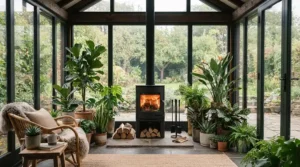
The Dyna-Glo IR30PMDG-1 shifts categories entirely: it’s a permanently wall-mounted, vent-free infrared heater rated up to 30,000 BTU, and that standout figure translates into coverage up to 1,000 square feet — genuinely whole-room or whole-cabin heat rather than a supplemental boost. Infrared heating warms objects and people directly, the same principle as sunlight, rather than just heating air that drafts away the moment a door opens.
Here’s what most buyers overlook about this model: it isn’t a plug-and-play portable unit. It requires connection to a 100-pound tank or larger through a two-stage regulator, and manufacturer instructions call for professional installation — this is infrastructure, not an appliance you unbox and fire up the same afternoon. What most buyers overlook about this model is that its low-medium-high control (6,000/18,000/30,000 BTU) lets it double as an efficient low-output heater on mild days rather than blasting max heat constantly. Its built-in ODS is standard across the entire Dyna-Glo vent-free line, and the battery-assisted igniter means it works during power outages, a genuine advantage for emergency backup heat.
Pros:
- ✅ Highest coverage area of any model on this list
- ✅ Works during power outages — no electricity required to run
- ✅ Adjustable output for both mild and severe cold
Cons:
- ❌ Requires professional installation, not a portable unit
- ❌ Needs a large propane tank, adding setup cost and space
In the $280-$320 range, it’s the strongest long-term value if you’re heating one space daily rather than moving a heater from room to room.
7. ProCom ML100HBA-B — simplest odor-free propane heater for backup use
The ProCom ML100HBA-B strips the category down to essentials: manual control, blue-flame vent-free design, and a rated output up to 10,000 BTU with no fan, no electronics beyond the safety sensor, and nothing to program. That simplicity is the standout feature — when the power’s out and you just need heat, a unit with fewer parts is one with fewer things to go wrong.
Blue-flame combustion burns hotter and more completely than yellow-flame designs, which is a meaningful part of why this qualifies as a genuinely odor-free propane heater during normal operation rather than one that leaves a faint gas smell lingering in the room. Based on the spec comparison, its lower BTU ceiling puts it a notch below the Dyna-Glo for large rooms, but its manual simplicity and lower price make it a sensible pick for a spare room or a basement that only needs occasional heat. Reviewers frequently cite the straightforward setup and dependable pilot ignition as the main reasons they’d buy it again.
Pros:
- ✅ Blue-flame combustion for cleaner, more complete burning
- ✅ Simple manual controls with fewer failure points
- ✅ Reliable pilot ignition reported across reviews
Cons:
- ❌ Lower max BTU output than several other models here
- ❌ No fan assistance, so heat stays more localized
At $150-$200 range, it’s a solid no-frills choice for anyone who wants dependable backup heat without extra features to manage.
What Makes a Propane Heater “Indoor Use Approved”?
Not every heater with “propane” in its name belongs indoors, and this is where most buying mistakes happen. A propane heater indoor use approved designation isn’t marketing language — it’s a specific certification tied to testing standards like ANSI Z21.11.2 for portable units, confirmed by a nationally recognized testing lab such as UL or CSA. Outdoor-rated heaters burn propane the same way, but they’re built without the oxygen depletion sensor that indoor-rated units require by law.
The practical test: check the manual, not the box art. If it doesn’t explicitly say the unit is designed for use in enclosed spaces and rated for indoor operation, treat it as outdoor-only regardless of how the marketing photos look. Every model featured above carries that explicit indoor rating, which is precisely why they made this list instead of the dozens of similarly priced patio heaters that didn’t.
Is an Indoor Propane Heater Safe? Understanding the Real Risks
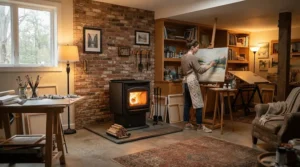
Asking whether an indoor propane heater safe choice even exists is a fair question, and the honest answer is: yes, with real qualifiers. Every certified indoor unit reduces risk substantially compared to an uncertified one, but “reduces” isn’t “eliminates.” All combustion — even efficient, certified combustion — produces some carbon monoxide, and a properly functioning ODS shuts the unit off before oxygen depletion becomes dangerous, not before any CO is produced at all.
That distinction matters because it changes what “safe use” looks like in practice: cracking a window for airflow, never running a unit in a bedroom while sleeping, and always pairing any propane heater with a battery-powered carbon monoxide detector — not as an optional add-on, but as standard equipment. The CDC’s guidance on CO poisoning is unambiguous that even flu-like symptoms during heater use warrant getting to fresh air immediately rather than waiting them out.
Low-Oxygen Shutoff Safety: How ODS Technology Actually Works
Every model on this list relies on the same core mechanism for low-oxygen shutoff safety: a sensor that monitors flame characteristics, which shift measurably as ambient oxygen concentration drops. When oxygen falls below roughly 18%, the sensor cuts fuel flow automatically, well before levels become hazardous to people in the room. This isn’t a smoke-detector-style afterthought bolted onto the unit; it’s an integrated part of the burner assembly, tested as part of certification.
What’s worth understanding is the limitation baked into the design: an ODS protects against low-oxygen conditions specifically, not against every possible CO scenario, and units used in a state ID at high altitude or in unusually tight spaces can trip the sensor more frequently simply because oxygen depletes faster there. That’s a feature working correctly, not a defect — a tripped sensor means the room needs more airflow, not a different heater.
Odor-Free Propane Heaters: What “Clean-Burning” Really Means
The phrase “odor-free propane heater” gets thrown around loosely, so it’s worth being precise. Properly tuned propane combustion is genuinely low-odor during normal operation — what you’re smelling in a poorly maintained unit is usually incomplete combustion or a faint leak at a fitting, not a normal characteristic of propane itself. Blue-flame designs like the ProCom tend to burn more completely than yellow-flame units, which is part of why they’re marketed around clean, low-odor performance.
That said, “odor-free” during steady operation doesn’t apply to startup and shutdown, when a brief propane smell is completely normal as the line purges. If odor persists well after ignition or lingers throughout use, that’s a maintenance flag — check connections, clean the burner, and don’t dismiss it as just how propane smells.
Off-Grid Heating Solutions: When the Grid Goes Down
For anyone living off-grid, in an RV, or simply preparing for the next multi-day outage, propane heaters solve a problem electric space heaters structurally can’t: they work with zero power input. A genuine off-grid heating solution needs three things — no dependency on line power, a fuel source that stores indefinitely without degrading, and a runtime long enough to matter. Propane checks every box; a 20-pound tank stores for years and can run a mid-size unit like the Portable Buddy for well over 100 hours total.
The North Carolina Department of Agriculture’s propane safety guidance reinforces a point worth repeating here: heaters rated for outdoor use generate carbon monoxide faster than indoor-rated units, so an off-grid setup absolutely still requires the correct certification — “no power required” is not the same as “safe anywhere.”
✨ Don’t Miss These Exclusive Deals!
🔍 Take your winter heating setup to the next level with these carefully selected, certified indoor-safe models. Click on any highlighted pick above to check current pricing and availability.
Practical Usage Guide: Setup, Maintenance & Your First 30 Days
Getting a new indoor propane heater running correctly starts before ignition. Place it on a level, hard, nonflammable surface at least three feet from bedding, curtains, or furniture — carpet and rugs are technically usable with some models but hard flooring is always safer. Check the cylinder connection for a tight seal using a soap-water test (bubbles mean a leak) rather than smell alone, since a slow leak isn’t always noticeable by odor.
During the first 30 days, expect the ODS to trip occasionally in a very tight room — that’s the sensor doing its job, not a defect, and the fix is more airflow, not a return. Crack a window an inch whenever the heater runs, and install a plug-in or battery carbon monoxide detector in the same room before first use, not after. Common early mistakes include running the heater on carpet near curtains, skipping the leak check on a new hose connection, and assuming a “no odor” reading means no CO — it doesn’t, since CO itself is odorless. Wipe the burner grille monthly if used regularly, and store cylinders upright in a cool, ventilated space between uses rather than in a closed closet.
Real-World Scenarios: Matching the Right Heater to Your Life
If you’re a college student in a 250-square-foot dorm room worried about a landlord who won’t fix the heat, the Little Buddy or Portable Buddy MH9BX covers the space without needing a hose setup or storage for a large tank — compact enough for a closet between uses. If you’re a full-time RVer parked off-grid through winter, the Camco Olympian Wave 8 solves the noise and battery-drain problem that a fan-forced heater creates, running silently off a single small tank for days.
If you’re renovating a garage workshop and want heat plus a work light on the same fuel line, the Buddy FLEX‘s accessory system earns its premium. And if you’re heating a finished basement or cabin as a daily living space rather than an emergency backup, the Dyna-Glo IR30PMDG-1‘s 1,000-square-foot coverage and power-outage independence make it the only unit here built for that job specifically, despite its higher upfront cost and installation requirement.

Problem → Solution: Fixing Common Indoor Propane Heater Issues
Problem: The ODS keeps shutting the unit off. Solution: increase airflow — crack a window slightly rather than sealing the room tighter, and confirm the room size matches the heater’s rated square footage.
Problem: A faint propane smell lingers during use. Solution: check hose and regulator connections with a soap-water test; persistent odor during steady operation (not just at startup) signals a leak that needs addressing before continued use.
Problem: The heater won’t hold a flame at altitude. Solution: several models, including the Dyna-Glo line, note reduced performance above 4,500 feet — this is a known limitation, not a malfunction, and lower BTU settings often stabilize it.
Problem: Runtime feels shorter than advertised. Solution: BTU ratings assume max output; running on medium or low settings, as tested on models like the Big Buddy, meaningfully extends cylinder life.
Problem: Uncertainty about whether a unit is legal to use. Solution: check state and local codes directly — some jurisdictions restrict unvented heaters regardless of federal certification, so manufacturer approval is necessary but not always sufficient.
How to Choose an Indoor Propane Heater
- Confirm indoor certification first. Skip anything without explicit ANSI-tested, ODS-equipped indoor approval — this eliminates most of the market immediately.
- Match BTU output to square footage. Oversizing wastes fuel; undersizing leaves you cold and tempted to misuse the unit outside its rated space.
- Decide portable versus permanent. A grab-and-go unit like the Portable Buddy suits flexible needs; a wall-mounted unit like the Dyna-Glo suits one fixed space used daily.
- Check fuel logistics. Small 1-lb cylinders are convenient but costlier per BTU than a 20-lb or 100-lb tank setup over time.
- Prioritize safety redundancy. Tip-over shutoff, ODS, and (for permanent units) battery-assisted ignition during outages all matter more than aesthetic features.
- Read aggregated review themes, not star averages alone. A 4.5-star product with recurring ignition complaints tells you more than the number itself.
- Budget for a CO detector alongside the heater. Treat this as part of the purchase, not an optional accessory.
Common Mistakes When Buying a Propane Heater for Indoor Use
The single most common mistake is assuming any propane heater for indoor use claim on a listing title is accurate — third-party marketplace listings sometimes misuse “indoor” loosely, so the manufacturer manual is the only reliable source. A close second: buying based on BTU number alone without checking rated square footage, which varies by insulation and ceiling height far more than shoppers expect.
Other recurring errors include skipping the CO detector purchase entirely, assuming a low-odor unit means zero CO output, and placing a rated indoor heater in a sealed room with no airflow at all — even certified units are designed with some ventilation assumed, not a fully airtight space.
Indoor Propane Heater vs Electric Space Heater
| Factor | Indoor Propane Heater | Electric Space Heater |
|---|---|---|
| Works during power outage | Yes | No |
| Fuel cost per hour | Lower on bulk tanks | Higher on most utility rates |
| Setup complexity | Moderate (cylinder/tank, ventilation) | Minimal (plug in) |
| Best For | Off-grid, outages, large BTU needs | Apartments, no combustion allowed |
The honest analysis here: propane wins decisively on independence and raw heat output per dollar, which is exactly why it dominates off-grid and outage scenarios, but electric heaters remove combustion risk entirely and suit renters whose leases prohibit fuel-burning appliances. Neither is universally “better” — the right choice depends on whether power outages or lease restrictions are your bigger constraint.
Long-Term Cost & Maintenance
A 20-pound propane tank holds roughly 4.7 gallons of propane and typically costs $20-$25 range to refill. Running a 9,000 BTU heater like the Portable Buddy at moderate settings for four hours nightly through a cold month uses well under one full 20-lb tank, putting typical seasonal fuel cost for supplemental use in a modest, predictable range compared to running electric resistance heaters on peak utility rates.
Maintenance costs stay low across this category: an annual burner cleaning, periodic hose inspection, and eventual sensor or igniter replacement after years of heavy use are the extent of it for portable units. Permanently installed models like the Dyna-Glo carry a higher upfront cost but no recurring cylinder-swap logistics, which evens out the total cost of ownership over several winters for anyone heating the same space daily.
FAQ
❓ Can you leave an indoor propane heater on overnight while sleeping?
❓ How much propane does an indoor heater use per hour?
❓ Do indoor propane heaters produce carbon monoxide?
❓ What size indoor propane heater do I need for a 400 square foot room?
❓ Is a ventless propane heater legal to use in my state?
Conclusion
The right indoor propane heater comes down to matching certified safety features to your actual space, not chasing the highest BTU number on the shelf. For most households, the Mr. Heater Portable Buddy MH9BX hits the sweet spot of price, coverage, and flexibility, while off-grid users get real value from the silent, fuel-sipping Camco Olympian Wave 8, and anyone heating a whole room daily should look hard at the Dyna-Glo IR30PMDG-1‘s permanent, power-outage-proof output.
Whichever model fits your situation, the non-negotiables stay the same: confirm explicit indoor certification, pair the heater with a carbon monoxide detector, and treat ventilation as part of normal operation rather than an inconvenience. Get those three things right, and an indoor propane heater becomes exactly what it promises — dependable warmth when the grid or the weather lets you down.
Recommended for You
- High Velocity Heater Guide: 7 Best Picks for 2026 Workshops
- 7 Best Quiet Fan Heaters of 2026: Silent, Cozy Warmth Picks
- Best Forced Air Heater 2026: 7 Top Picks for Garage & Job Site
Disclaimer: This article contains affiliate links. As an Amazon Associate, I earn from qualifying purchases. If you purchase products through these links, we may earn a small commission at no additional cost to you.
✨ Found this helpful? Share it with your friends! 💬🤗
