
In This Article
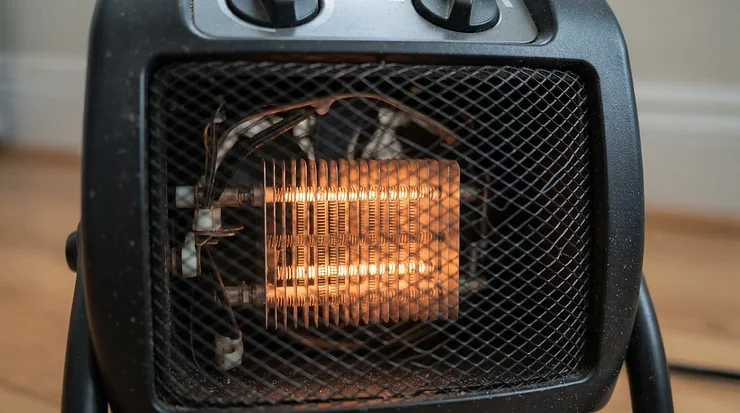
Infrared vs ceramic bathroom heater is a comparison between two ways of warming a small, damp room: infrared units radiate energy that warms you and nearby surfaces directly, while ceramic units heat a PTC ceramic element and circulate warmed air. One delivers radiant warmth in seconds; the other builds room-wide comfort.

Now picture the moment. You step out of a steaming shower into a bathroom that feels like the inside of a walk-in fridge. The towel is cold. The tile is colder. Every fiber of your being wants to get dressed in under four seconds. That is the problem a bathroom heater solves, and your choice between infrared and ceramic decides how it solves it.
Here is the short version. The U.S. Department of Energy explains that small space heaters work through either convection, which circulates warmed air, or radiant heating, which beams warmth at whatever sits in its path. Ceramic fan heaters lean on convection. Infrared panels and heat lamps lean on radiant warmth. Nearly every watt becomes heat in both cases, so the real contest is about delivery: speed, heat distribution, noise, safety hardware, and how long you actually stand in the room.
In this guide, I compare seven real models across both camps, translate the spec sheets into everyday meaning, and flag the safety rules that matter when electricity shares a room with a bathtub. Whether you are weighing a radiant vs convection bathroom heater for a tiny powder room or a full remodel, the sections below narrow the field fast.
Quick Comparison: Infrared vs Ceramic Bathroom Heater at a Glance
| Feature | Infrared (Radiant) | Ceramic (Convection, PTC) |
|---|---|---|
| How it heats | Radiates energy at people and surfaces in its line of sight | Warms a ceramic element, then moves heated air around the room |
| When you feel it | Within seconds, if you stand in its path | After a few minutes, as the air warms |
| Heat distribution | Directional, with cooler “shadow” zones | Room-wide, helped by fans and oscillation |
| Noise | Silent bulbs or panels; some wall units add a small fan | Low fan hum on most models |
| Best For | Short stays and fixed mounting: Heat Storm HS-1500-PHX-WIFI, Broan-NuTone 164 | Pre-heating the whole room: DREO WH517S, Lasko CD08200 |
Looking at the table, the pattern is simple. If your bathroom routine is a quick shower followed by a quick mirror session, radiant warmth wins because it hits your skin immediately. If you like to pre-warm the room before you even step in, the ceramic camp wins because warmed air fills every corner, including the spot behind the door where cold likes to hide. Put another way, the radiant vs convection bathroom heater choice is really about timing. The Heat Storm HS-1500-PHX-WIFI represents the first approach, while the DREO WH517S represents the second.
In any infrared vs ceramic bathroom heater matchup, neither type is “more efficient” in the way marketing copy implies. Electric resistance heaters convert essentially all the power they draw into heat, a point echoed by university extension guidance. The difference is where that heat lands, and whether it lands on you or on the ceiling.
💬 Just one click — help others make better buying decisions too!😊
Top 7 Infrared vs Ceramic Bathroom Heater Picks: Expert Analysis
I could not personally test these heaters, so everything below comes from manufacturer specs, retailer listings, independent test reports, and aggregated owner reviews. Prices appear as ranges only, so check current price before buying.
1. Lasko CD08200 — cheapest ALCI-protected plug-in
The standout feature is the built-in ALCI plug, the hair-dryer-style plug with TEST and RESET buttons that cuts power if it senses leakage current. The Lasko CD08200 wraps that hardware around a no-frills 750W/1500W ceramic heater in the $40-$60 range.
A single button cycles power, heat level, and a one-hour timer. The body stands about 8 inches tall and weighs roughly 3.4 pounds, so it slides beside a vanity without hogging floor space. The timer works like insurance for forgetful mornings, but there is no thermostat, which means it cannot hold a set temperature. T3’s reviewer flagged those same two gaps. Bob Vila’s testers raised a test bathroom about 10°F in under 30 minutes on high, and cautioned that the front grille still gets hot.
Based on the spec comparison, this suits renters and guest baths under roughly 50 square feet, where you run it for 15 minutes and switch it off. Larger rooms will outrun it. If you want the safety logic behind ALCI plugs, Consumer Reports’ guidance on bathroom space heaters advises choosing a model with built-in shock protection if you must use one at all.
Aggregated review sentiment is positive: a major retailer listing shows about 4.4 out of 5 across roughly 300 ratings, and owners commonly mention the compact size and quick warm-up in small bathrooms. Some say they have bought more than one.
Pros:
- ✅ ALCI plug with test and reset buttons
- ✅ Compact and light enough for any corner
- ✅ Two heat levels plus one-hour timer
Cons:
- ❌ No thermostat to hold a temperature
- ❌ Front grille still gets hot
At around $40-$60, the Lasko CD08200 is the lowest-risk way to try a bathroom heater, and the value verdict is strong as long as your bathroom is small.
2. DREO Solaris Slim H3 (ALCI) — oscillation spreads warmth wider
Oscillation is the headline, backed by a PTC ceramic element. This slim tower sweeps a 70° arc, which improves heat distribution compared with a fixed-direction blower, and it carries an ALCI plug for bathroom use.
The spec sheet lists five modes (H1, H2, H3, ECO, and fan-only) spanning roughly 700-1500W, a 41-95°F digital thermostat, a 1-12 hour timer, a remote, and about 37.5 dB of noise. It measures about 5.9 by 5.9 by 15.75 inches and weighs under 5 pounds. Tip-over and overheat protection come standard. On paper, that thermostat is the feature the cheaper plug-ins lack: it cycles power down once the room reaches your target, so you are not paying to overshoot.
Bob Vila’s reviewer used the heater almost daily for nearly two months without trouble, and mentioned switching it off during baths because the room got toasty. That is a useful clue: the unit has more capacity than a typical bathroom needs. The listed coverage is around 200 square feet, so it can double as a dressing-room or bedroom heater.
Reviewers generally praise the quiet operation and fast warm-up. The most common learning-curve note is the touch controls, which take a few tries.
Pros:
- ✅ Thermostat and timer prevent overshooting
- ✅ 70° oscillation improves heat distribution
- ✅ Quiet fan with ALCI safety plug
Cons:
- ❌ Touch controls take brief practice
- ❌ Floor-standing, so it needs a dry spot
Expect roughly $75-$95. For anyone who wants a smarter, quieter ceramic heater without drilling into a wall, the DREO Solaris Slim H3 (ALCI) is the practical mid-range pick.
3. DREO WH517S — wall-mounted PTC with splash rating
Getting the heater off the floor is the main advantage, and the PTC ceramic element is the engine. This wall unit pairs it with an IP24 rating for occasional splashes, 1500W of power, and app and Alexa control.
The PTC ceramic element ramps up quickly and tapers its own output as it gets hot, which is why Dreo can pair it with a fan for fast warm-up. Bob Vila’s tester warmed a 65-square-foot bathroom from 58°F to 70°F in about 20 minutes. Tom’s Guide lists it at about 15.7 by 12.2 by 4.7 inches and 6 pounds, and noted it can run up an electric bill if left on. One detail matters for bathrooms: the ALCI plug comes on the “AS” variant, so confirm you are buying that version.
What most buyers overlook is the mounting height. Placing the heater high keeps it away from splashes and small hands, and the outlet can be tilted by hand to aim warmth downward where your wet skin needs it. Bob Vila’s tester also highlighted how much floor space a wall unit frees.
Dreo’s own site shows about 4.8 out of 5 from several hundred reviews, and independent reviewers called it stylish and easy to install.
Pros:
- ✅ IP24 splash rating and wall-mounted safety
- ✅ Smart scheduling and remote control
- ✅ Quick warm-up from PTC ceramic element
Cons:
- ❌ Wall mounting only, so you must drill
- ❌ ALCI plug exists only on the AS version
At roughly $90-$120, the DREO WH517S is the best value if you want a permanent, tidy, smart ceramic solution.
4. Heat Storm HS-1500-PHX-WIFI — wall infrared with Wi-Fi scheduling
Radiant warmth without floor clutter is the pitch. This wall-mounted infrared heater draws 1500W, is rated for up to about 150 square feet, and runs from a remote or a smartphone app.
The infrared design means you feel warmth on your skin quickly, which matters in the first minute out of the shower. The grille stays cool to the touch and overheating protection is built in. Bob Vila’s testers recorded a 5°F rise in about 18 minutes, after which the unit shut itself off. They also flagged a practical snag: the mounting holes sit 13.75 inches apart while studs are typically 16 inches apart, so only one screw hit a stud and they added a drywall anchor.
Here’s what to weigh in the infrared vs ceramic bathroom heater trade-off. Retailer listings describe it as bathroom-friendly because it mounts on the wall, but no ALCI plug is listed, so plug it into a GFCI-protected outlet and mount it out of any splash zone.
On noise, owner sentiment is mixed: one independent lab noted fan sound as a minor complaint, while a retailer review summary highlights how quiet it is and how quickly it warms small rooms such as bathrooms.
Pros:
- ✅ Directional radiant warmth with no floor footprint
- ✅ Wi-Fi app and remote scheduling
- ✅ Cool-touch grille with overheat protection
Cons:
- ❌ Mounting holes miss standard stud spacing
- ❌ No ALCI plug, so GFCI outlet is essential
Priced around $120-$150, the Heat Storm HS-1500-PHX-WIFI earns its place for people who prize instant radiant warmth and app control.
5. De’Longhi TRN0812T — silent oil-filled “radiant” heater with GFI plug
Silence is the draw. This 1200W oil-filled radiator has no fan or motor, a GFI plug, a thermostat, a 24-hour programmable timer, and thermal cut-off protection.
This is a classic radiant vs convection bathroom heater gray area. De’Longhi markets it as a radiant heater, but the U.S. Department of Energy places oil-filled heaters in the convection group because the hot oil warms the surface, which then warms the air. In practice, that means slow, steady, quiet heat that lingers after you switch it off, since the oil holds warmth. Consumer Reports lists the weight at about 17 pounds, and the unit is roughly 18 inches wide with extra-wide feet for stability. Retailers cite coverage of roughly 100-200 square feet, so treat the lower figure as realistic for a bathroom.
Honest analysis: this is not the pick for a cold-start emergency. It shines for people who run a heater on a timer before waking, then enjoy a stable, silent room. The vertical thermal chimneys keep the surface temperature lower, which helps in homes with kids or pets.
Retailer review scores vary, roughly 4.1-4.7 out of 5 depending on the site, with about three-quarters of one retailer’s reviewers recommending it.
Pros:
- ✅ Silent, fanless operation
- ✅ GFI plug and programmable 24-hour timer
- ✅ Holds warmth after cycling off
Cons:
- ❌ Slow warm-up compared with fan or infrared
- ❌ Heavy and bulky for tiny bathrooms
Expect roughly $100-$155. The De’Longhi TRN0812T offers quiet, even comfort for pre-scheduled mornings, though it costs more than a basic ceramic.
6. Broan-NuTone 164 — two-bulb infrared heat lamp plus exhaust fan
The standout is that it is a ceiling-mounted infrared heat lamp for bathroom use that doubles as your exhaust fan. It takes two 250W BR40 infrared bulbs (sold separately) and moves 70 CFM at roughly 3.5-4.0 sones.
The infrared bulbs deliver instant radiant warmth overhead, the way a sunbeam warms your shoulders. Broan’s own literature labels these ceiling heaters as supplemental heat, and listings rate the coverage at about 65 square feet, which is honest about the limits. Two bulbs total about 500W, so running both costs far less than a 1500W plug-in, though warmth is concentrated beneath the fixture.
Reviewers like the quiet fan and the direct heat, and the Amazon-sourced rating sits near 4.3 out of 5 across roughly 700 reviews. Common complaints involve wiring: you need separate switching for each lamp and the fan, one reviewer found heat minimal until swapping a plain bulb for a red heat lamp, and another noted that the instructions lean toward new construction.
Pros:
- ✅ Instant radiant warmth with vent fan included
- ✅ Low wattage means low running cost
- ✅ No floor space, no cords, no tip-over risk
Cons:
- ❌ Wiring and installation can be fiddly
- ❌ Bulbs sold separately and heat stays focused
At roughly $80-$115 plus bulbs, the Broan-NuTone 164 is the best budget entry for a remodel or fan replacement.
7. Panasonic WhisperWarm DC FV-0511VH1 — premium ceiling PTC fan/heater
Power with polish is the headline. This ceiling unit combines a 1600W PTC heater with a quiet ECM-motor exhaust fan selectable at 50, 80, or 110 CFM.
Panasonic describes the PTC element as self-limiting, and the adjustable grille with directional louvers is designed to push warmth from head to toe, which improves heat distribution compared with a plain downward blast. It fits 4-inch or 6-inch ducting, is HVI certified and UL listed, and uses the Flex-Z Fast bracket for installation from below the ceiling. Bob Vila’s team named a Panasonic WhisperWarm DC fan/heater as its ceiling-mounted pick but did not test it hands-on, and flagged that it requires a dedicated circuit, so hire an electrician.
Why it matters: 1600W is enough to make a 100-square-foot primary bath comfortable, and the vent fan is built for steam. Retail review pools are smaller than for plug-ins, with one major listing showing about 4.7 out of 5 from roughly two dozen reviews, so treat sentiment as encouraging but limited.
Pros:
- ✅ Strong 1600W PTC heat with vent fan
- ✅ Adjustable louvers aid heat distribution
- ✅ Three airflow speeds and DC motor
Cons:
- ❌ Needs dedicated circuit and professional install
- ❌ Highest upfront cost on this list
At around $300-$350, the Panasonic WhisperWarm DC FV-0511VH1 is a long-term upgrade for remodels where you want the heater to disappear into the ceiling.
Side-by-Side Comparison of All 7 Heaters
| Product | Type | Power | Mounting | Price Range | Review Signal | Best For |
|---|---|---|---|---|---|---|
| Lasko CD08200 | Ceramic, convection | 750/1500W | Portable | $40-$60 | About 4.4/5, ~300 ratings | Small baths, renters |
| DREO Solaris Slim H3 (ALCI) | PTC ceramic, oscillating | 700-1500W | Portable | $75-$95 | Strong editorial feedback | Thermostat control |
| DREO WH517S | PTC ceramic, fan-forced | 1500W | Wall | $90-$120 | About 4.8/5, 400+ reviews | Tidy smart setups |
| Heat Storm HS-1500-PHX-WIFI | Infrared | 1500W | Wall | $120-$150 | About 4.4/5 (small pool) | Fast radiant warmth |
| De’Longhi TRN0812T | Oil-filled radiator | 1200W | Portable | $100-$155 | 4.1-4.7/5 by retailer | Silent scheduled heat |
| Broan-NuTone 164 | Infrared heat lamp + fan | 2 x 250W bulbs | Ceiling | $80-$115 plus bulbs | About 4.3/5, ~700 reviews | Fan replacement |
| Panasonic WhisperWarm DC FV-0511VH1 | PTC ceramic + fan | 1600W | Ceiling | $300-$350 | About 4.7/5, small pool | Remodel upgrade |
Looking at the comparison above, the Lasko CD08200 and DREO Solaris Slim H3 (ALCI) cover the budget and mid-range ceramic bases, while the Heat Storm HS-1500-PHX-WIFI and Broan-NuTone 164 are your infrared answers. The Panasonic WhisperWarm DC FV-0511VH1 justifies its premium only if you are already opening the ceiling. Treat review signals as snapshots, because rating counts shift constantly.
✨ Don’t Miss These Exclusive Deals!
🔍 Take your bathroom warm-up to the next level with these carefully selected products. Click on any highlighted item to check current pricing and availability. These heaters will help you create a cozy, safer morning routine your whole family will love!
Practical Usage Guide: Setup, Placement and Maintenance
A heater is only as safe and effective as its setup, and this is where most listings go quiet. Whichever side of the infrared vs ceramic bathroom heater debate you land on, use this short routine to get the most from any pick above.
Set it up right:
- Choose a dry perch. Keep portable units well away from the tub, sink, and shower spray, and keep them at least three feet from towels, curtains, and cabinets.
- Skip extension cords. Plug directly into a GFCI outlet, which Consumer Reports notes has been required in bathrooms for decades.
- Test the safety plug. For ALCI models like the Lasko CD08200 and DREO Solaris Slim H3 (ALCI), press TEST, confirm the power drops, then press RESET. Many safety guides suggest checking regularly, such as monthly.
Aim the heat: Point a ceramic unit toward where you stand when drying off. A wall unit such as the DREO WH517S should tilt its airflow downward, while an overhead infrared heat lamp for bathroom use delivers its best radiant warmth directly beneath the fixture, so position your towel hook there.
Maintain it: Unplug and let it cool, then vacuum the intake grille so dust does not bake onto the Lasko CD08200 or the De’Longhi TRN0812T. For the Broan-NuTone 164, an infrared heat lamp for bathroom projects, let bulbs cool before changing them, and vacuum the ceiling grille once or twice a year.
Common first-30-day mistakes: running on high the entire time instead of using a thermostat, ignoring a tripped ALCI plug, and parking a heater on a bath mat or a towel stack.

Real-World Scenarios: Infrared vs Ceramic Bathroom Heater for Your Home
Specs come alive when you attach them to a life. Here are three buyer profiles, framed as reasoning rather than anecdotes.
Scenario 1: the apartment renter. For a radiant vs convection bathroom heater decision, budget settles it. A 40-square-foot bath, a $60 budget, and a 15-minute morning routine. The Lasko CD08200 fits, because the 1500W high setting plus the one-hour timer matches a short burst. If you want a thermostat and quieter airflow, step up to the DREO Solaris Slim H3 (ALCI).
Scenario 2: the family hall bath. Roughly 70 square feet, small kids, and a morning scramble. The priority is safety plus scheduling, so the DREO WH517S mounted high, or the Heat Storm HS-1500-PHX-WIFI on a GFCI outlet, keeps hot surfaces and cords out of reach. Use the app to start warming 15 minutes before the first alarm.
Scenario 3: the remodel. A 100-square-foot primary bath with ceiling access and no existing heat. The Panasonic WhisperWarm DC FV-0511VH1 brings 1600W and a quiet vent fan, while the Broan-NuTone 164 works on a tighter budget if you accept lower output.
What it costs to run: At about 18 cents per kilowatt-hour, which is the national residential average the U.S. Energy Information Administration projects for 2026, a 1500W heater running 20 minutes costs roughly 9 cents. Over a 30-day month, that is about $2.70, though your local rate may differ widely.
Problem → Solution Guide: Infrared vs Ceramic Bathroom Heater Pain Points
Four common complaints show up again and again. Each has a practical fix.
Problem 1: The room warms up but the mirror fogs. Warm, moist air needs somewhere to go. Run the vent fan on the Broan-NuTone 164 or Panasonic WhisperWarm DC FV-0511VH1, or crack the door after showering.
Problem 2: Your feet are still cold. The radiant vs convection bathroom heater split explains this one: Warm air rises, so ceramic heat can leave the floor chilly. Use the oscillation on the DREO Solaris Slim H3 (ALCI) or a wall-mounted unit like the DREO WH517S aimed downward, and add a thick bath mat.
Problem 3: The safety plug or GFCI keeps tripping. Stop using the heater and have it checked. The Consumer Product Safety Commission has advised that a tripped GFCI should not be assumed broken, because it may be reacting to real leakage current.
Problem 4: The breaker pops when you run the heater and hair dryer. A 1500W heater plus a 1800W hair dryer overloads a shared circuit. Run one at a time, or install a dedicated circuit, which is the recommendation for 1600W ceiling heaters like the Panasonic WhisperWarm DC FV-0511VH1.
How to Choose Between Infrared vs Ceramic Bathroom Heater Options
Use these seven steps in order, and the right category usually reveals itself by step four.
- Measure the room. Compare square footage with the manufacturer’s coverage claim, and treat that number as a ceiling, not a promise. The Broan-NuTone 164 is rated for about 65 square feet, the Heat Storm HS-1500-PHX-WIFI about 150.
- Decide how long you stay. In a radiant vs convection bathroom heater decision, this is the tiebreaker. The Department of Energy notes radiant heaters make the most sense when you will be in line of sight for a limited time. Short showers favor infrared; long soaks favor ceramic.
- Check the safety hardware. Look for an ALCI or GFCI plug, tip-over protection, overheat protection, and an IP rating such as the IP24 on the DREO WH517S.
- Pick the mount. Floor, wall, or ceiling changes safety, cord management, and installation difficulty.
- Prioritize controls. A thermostat prevents overshooting, a timer prevents forgetting. The Lasko CD08200 has only the timer.
- Compare noise. Fanless options like the De’Longhi TRN0812T are silent; fan models vary, and the DREO Solaris Slim H3 (ALCI) lists roughly 37.5 dB.
- Estimate running cost. Multiply watts by hours by your rate, then compare against how fast the heater makes you comfortable.
Features That Actually Matter (And Those That Don’t)
Spec sheets love big numbers, but only a handful change your mornings. Here is the filter I would apply.
Worth paying for: shock protection (ALCI or GFI plugs), a thermostat, a timer, and sensible heat distribution. The thermostat on the DREO Solaris Slim H3 (ALCI) and the 24-hour timer on the De’Longhi TRN0812T do more for daily comfort than any gadget.
Nice, not essential: Wi-Fi control. The app on the Heat Storm HS-1500-PHX-WIFI and the DREO WH517S is genuinely handy for pre-warming, but it will not rescue a heater that is too small for your room.
Mostly marketing: vague claims of “energy-saving” technology. Since electric heaters convert nearly all power to heat, a lower electric bill really comes from shorter run times and well-placed radiant warmth, not magic ceramics.
Overlooked: noise and mounting. A fanless unit like the De’Longhi TRN0812T is silent, while a wall unit such as the Heat Storm HS-1500-PHX-WIFI needs studs or anchors, as testers discovered.
Also overlooked: the plug. A short cord tempts you toward an extension cord, which is exactly what you should avoid, so check cord length and outlet position before you buy.
Radiant vs Convection Bathroom Heater: How Heat Distribution Really Differs
Radiant vs convection bathroom heater is less a technology debate than a geometry problem. Radiant warmth travels in straight lines and warms the first solid thing it meets: your shoulders, your towel, the vanity. Convection warms air, and air wanders upward, then across, then down, which is why a ceramic fan heater can take a few minutes to lift the whole room.
Think of radiant warmth as stepping into a patch of sun, and convection as the slow warming of a pool. The sun patch is instant but has edges. The pool is gradual but reaches everywhere.
For bathroom use, that creates real trade-offs in heat distribution. Infrared sources such as the Heat Storm HS-1500-PHX-WIFI leave cooler “shadow” zones behind you, so a wall unit works best aimed at where you dress. Ceramic fan heaters fill the whole space, but the air they warm rises to the ceiling first, so oscillation on the DREO Solaris Slim H3 (ALCI) matters.
There is also a humidity wrinkle. Any time you heat air, its relative humidity drops, so a hot ceramic fan can make the room feel crisp and dry. Radiant sources warm skin directly without needing the air to do the work, so you feel warmer at a lower air temperature, the same trick a sunny winter day plays.
Finally, remember the Cornell University Extension point: per watt, all electric heaters deliver the same amount of heat. The oil-filled De’Longhi TRN0812T simply stores and releases it more slowly.
Infrared Heat Lamp for Bathroom: Where Ceiling Fixtures Fit
An infrared heat lamp for bathroom use is the old-school answer, and it still earns its keep. The concept is simple: an infrared bulb screws into a ceiling housing, and when you flip the switch, radiant warmth lands immediately on whoever is below.
The Broan-NuTone 164 is the practical example. Two 250W BR40 infrared bulbs cover about 65 square feet, the fan vents steam, and Broan’s literature is clear that ceiling heaters supplement, rather than replace, your home’s main heat source. Based on the spec comparison, this infrared option is ideal for powder rooms and compact baths where a plug-in heater would eat counter space.
In a radiant vs convection bathroom heater comparison, a heat lamp also has limits. Bulbs wear out and need replacing. Bulb choice changes glare and perceived output, and one reviewer reported minimal heat until swapping a plain bulb for a second heat lamp. The wiring can also be tricky: independent control of each lamp and the fan generally needs a three-switch setup.
If you want the same overhead radiant warmth as an infrared heat lamp for bathroom ceilings, without bulbs to replace, a panel such as the Heat Storm HS-1500-PHX-WIFI offers a wall-mounted alternative. If you want overhead heat plus air movement, the Panasonic WhisperWarm DC FV-0511VH1 blends a PTC heater with a powerful vent fan.
PTC Ceramic Element: Why It Matters in a Bathroom
A PTC ceramic element is a heating plate whose electrical resistance climbs as it warms. According to Wikipedia’s explanation of self-regulating heaters, that behavior makes the element tend to hold a particular temperature, since it produces strong power when cool and little when hot.
What that means for you: a PTC ceramic element ramps quickly, then eases off by itself, reducing the risk of runaway overheating. Dreo builds the DREO WH517S and the DREO Solaris Slim H3 (ALCI) around PTC ceramic, and Panasonic describes the 1600W heater in the WhisperWarm DC as self-limiting.
Two honest caveats. First, “ceramic” on a box does not always guarantee PTC; some products use ceramic plates or housings around more conventional resistance wire, so look for the words PTC in the specifications. Second, a self-regulating element does not replace shock protection. Water, not temperature, is the main bathroom hazard, which is why the ALCI plug on the DREO Solaris Slim H3 (ALCI) and the GFI plug on the De’Longhi TRN0812T matter as much as the heating tech.
In an infrared vs ceramic bathroom heater showdown, a PTC ceramic element gives you fast warm-up and built-in thermal restraint. Pair it with oscillation, as on the DREO Solaris Slim H3 (ALCI), and you also get better heat distribution. Pair it with a vent fan, as in the Panasonic WhisperWarm DC FV-0511VH1, and you get comfort plus moisture control.
Safety, Codes and Bathroom Zones
Water and electricity are the oldest bad roommates in the house, so this section deserves your attention.
The Consumer Product Safety Commission has long cautioned against using portable electric heaters in bathrooms, noting that a GFCI can cut power within milliseconds if an appliance falls into water. You can read the agency’s CPSC warning about electric heaters in bathrooms for the original reasoning. Consumer Reports, citing CPSC data, reports that portable space heaters were involved in an average of about 1,600 house fires a year from 2019 to 2021.
Here is how to translate that into action:
- Prefer bathroom-designed hardware. ALCI plugs (Lasko CD08200, DREO Solaris Slim H3 (ALCI)) or GFI plugs (De’Longhi TRN0812T) add a layer of protection at the plug.
- Use wall or ceiling mounting when possible. The DREO WH517S, Heat Storm HS-1500-PHX-WIFI, Broan-NuTone 164, and Panasonic WhisperWarm DC FV-0511VH1 keep hot surfaces and cords off the floor.
- Respect clearance. Keep heaters at least three feet from combustibles, and never leave one running unattended.
- Hire a pro for hardwiring. Ceiling heaters and some wall units follow local electrical codes and often require a dedicated circuit.
None of this is meant to scare you, and none of it changes with the infrared vs ceramic bathroom heater choice you make. A certified heater, correct placement, and a working GFCI turn a risky habit into a manageable one.
Long-Term Cost & Maintenance: Infrared vs Ceramic Bathroom Heater Running Costs
At the national residential average of roughly 18 cents per kilowatt-hour projected by the Energy Information Administration for 2026, the hourly cost is simple math. A 1500W heater draws 1.5 kWh per hour, or about 27 cents. The Panasonic WhisperWarm DC FV-0511VH1 at 1600W lands near 29 cents. The De’Longhi TRN0812T at 1200W costs around 22 cents at full power, and the Broan-NuTone 164 with two 250W bulbs runs near 9 cents per hour.
An infrared heat lamp for bathroom use is the cheapest per hour on this list. Cheap per hour does not always mean cheap per comfort in an infrared vs ceramic bathroom heater comparison, so factor in time and coverage. A heat lamp that makes you comfortable in 30 seconds and runs 10 minutes uses far less energy than a ceramic heater warming a room for 25.
| Option | Upfront Cost | Warm-Up Feel | Installation | Best For |
|---|---|---|---|---|
| Plug-in ceramic | Low | Minutes | None | Lasko CD08200, DREO Solaris Slim H3 (ALCI) |
| Wall infrared or PTC unit | Medium | Seconds to minutes | Mount on wall | Heat Storm HS-1500-PHX-WIFI, DREO WH517S |
| Ceiling heat lamp or fan/heater | Low to high | Seconds to minutes | Wiring required | Broan-NuTone 164, Panasonic WhisperWarm DC FV-0511VH1 |
| Central heat only | Already owned | Slow | None | Moderate climates |
The table shows the trade-off clearly: plug-ins win on convenience, wall units on safety and tidiness, and ceiling fixtures on long-term integration. Maintenance is light across the board, mostly dusting grilles, swapping infrared bulbs, and periodically testing ALCI plugs.
Infrared vs Ceramic Bathroom Heater FAQs
❓ Is an infrared vs ceramic bathroom heater better for a small bathroom?
❓ Can a ceramic bathroom heater be used safely near a shower?
❓ Do infrared bathroom heaters dry out the air?
❓ Is an infrared heat lamp for bathroom cheaper to run than a ceramic heater?
❓ How long should I run a heater before showering?
Conclusion: Which Warmth Should You Choose?
The infrared vs ceramic bathroom heater debate does not have one winner, only a winner for your habits, and the radiant vs convection bathroom heater split comes down to how you move through your morning. If you want instant radiant warmth the second the shower stops, infrared in the form of the Heat Storm HS-1500-PHX-WIFI or the Broan-NuTone 164, an infrared heat lamp for bathroom ceilings, puts heat where you stand. If you want the whole room warm before you enter, a ceramic unit with a thermostat, like the DREO Solaris Slim H3 (ALCI) or DREO WH517S, builds comfort corner to corner.
On a tight budget, the Lasko CD08200 is the safest low-cost entry. For silent, scheduled warmth, the De’Longhi TRN0812T fits. For a remodel with ceiling access, the Panasonic WhisperWarm DC FV-0511VH1 is the premium upgrade.
Whichever you choose, put safety first: ALCI or GFCI protection, a dry mounting spot, clearance from fabric, and a timer. A little planning turns a cold, grumpy morning into a smooth one.
Recommended for You
- Bathroom Heater To Reduce Moisture And Mold: 7 Best Picks 2026
- Bathroom Heater For Mobile Home: 7 Best, Safe Picks In 2026
- Bathroom Heater For Seniors With Fast Warm Up: 7 Safe Picks 2026
Disclaimer: This article contains affiliate links. As an Amazon Associate, I earn from qualifying purchases. If you purchase products through these links, we may earn a small commission at no additional cost to you.
✨ Found this helpful? Share it with your friends! 💬🤗
