
In This Article
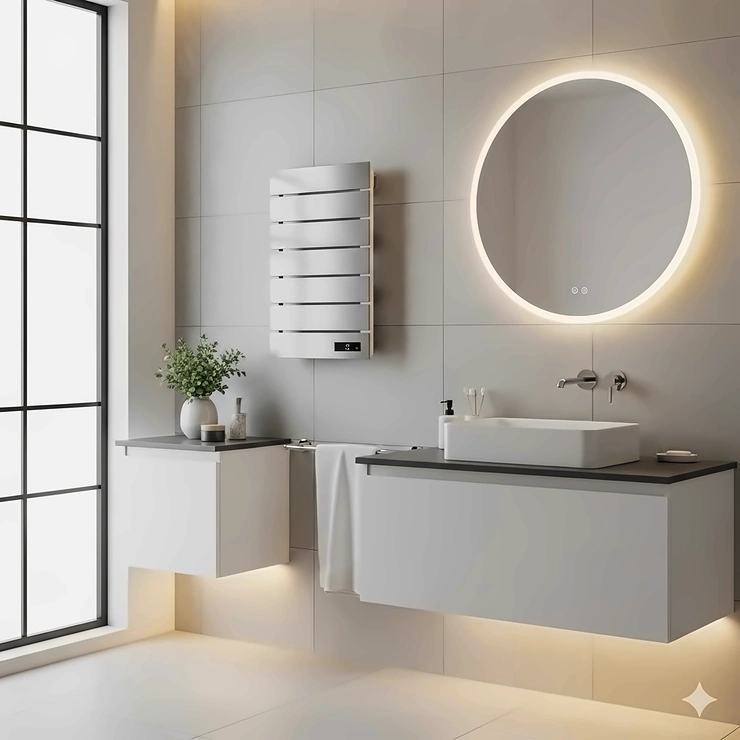
Stepping out of a hot shower into a freezing bathroom can instantly kill your relaxation vibes. However, with the right wall heaters for bathrooms, you can transform your space into a warm sanctuary that welcomes you every morning and evening. Whether you’re dealing with a chilly master bathroom or trying to add comfort to a guest powder room, wall-mounted heating solutions offer the perfect blend of efficiency, safety, and space-saving design.
✨Was this helpful? Spread the word! 🚀
In this comprehensive guide, I’ll walk you through everything you need to know about choosing, installing, and maintaining bathroom wall heaters. From understanding different heating technologies to exploring the latest smart features, we’ll cover all the essentials to help you make an informed decision that keeps you comfortable for years to come.
Wall heaters for bathrooms have evolved significantly beyond basic heating elements. Today’s models combine advanced safety features, energy-efficient operation, and sleek designs that complement modern bathroom aesthetics. The market offers options ranging from budget-friendly ceramic heaters to premium radiant panels with smart home integration.
Understanding the importance of bathroom radiant heater technology becomes crucial when selecting the ideal heating solution. Radiant heating warms objects and people directly rather than just heating air, creating more comfortable and efficient warmth distribution throughout your bathroom space.
Understanding Wall Heaters for Bathrooms: Technology and Benefits
The Science Behind Bathroom Heating Solutions ⚡
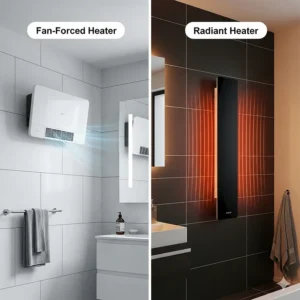
Wall heaters for bathrooms utilize various heating technologies, each with distinct advantages for bathroom environments. Convection heaters work by warming air that naturally circulates throughout the room, while radiant heaters emit infrared energy that directly warms surfaces and occupants. Understanding these mechanisms helps you choose the most appropriate technology for your specific bathroom layout and heating needs.
The effectiveness of any bathroom radiant heater depends on proper sizing, placement, and integration with your bathroom’s ventilation system. Modern wall-mounted units are engineered to handle the unique challenges of bathroom environments, including humidity, temperature fluctuations, and safety requirements that differ from other home heating applications.
Key Advantages of Wall-Mounted Bathroom Heating
✅ Space Optimization: Wall heaters for bathrooms eliminate floor clutter while maximizing available space
✅ Instant Warmth: Quick heating capabilities reduce wait times for comfortable temperatures
✅ Energy Efficiency: Zone heating allows you to warm only occupied spaces
✅ Safety Features: Modern units include moisture protection and automatic shutoffs
✅ Design Integration: Sleek profiles complement contemporary bathroom aesthetics
✅ Easy Installation: Many models require minimal modification to existing electrical systems
The strategic placement of wall heaters for bathrooms ensures optimal heat distribution while maintaining safety clearances from water sources. Professional installation guidelines recommend positioning units away from direct water spray while ensuring adequate coverage for the entire bathroom area.
Real Product Reviews: 7 Top Wall Heaters for Bathrooms Available on Amazon
Premium Smart Choice: Dreo WH719S Smart Wall Heater
The Dreo WH719S represents the pinnacle of modern bathroom heating technology, combining 1500W of heating power with intelligent features that adapt to your daily routine. This wall heater features 120° vertical oscillation that ensures even heat distribution throughout larger bathroom spaces, making cold mornings a thing of the past.
Key Specifications:
- Power Output: 1500W with variable settings
- Coverage Area: Up to 750 sq ft supplementary, 150 sq ft primary
- Smart Features: WiFi connectivity, app control, Alexa compatibility
- Safety: Multiple overheat protection systems, tip-over switch
- Installation: Wall-mount with included hardware
- Price Range: $119.99 – $139.99
Customer reviews consistently praise the Dreo WH719S for its whisper-quiet operation and rapid heating capabilities. Users report achieving comfortable bathroom temperatures within 10-15 minutes, with the smart scheduling features allowing preheating before morning routines.
Budget-Friendly Reliable Option: Lasko CD08200 Bathroom Space Heater
The Lasko CD08200 proves that effective bathroom heating doesn’t require a significant investment. This compact ceramic heater includes an ALCI safety plug specifically designed for bathroom use, making it one of the most affordable yet safe options available for wall heaters for bathrooms.
Key Specifications:
- Power Output: 1500W with high/low settings
- Dimensions: 8″ H x 6.25″ W x 7.65″ D
- Safety Features: ALCI plug, overheat protection, cool-touch exterior
- Heating Element: Self-regulating ceramic
- Timer Function: 1-hour auto shutoff
- Price Range: $34.99 – $39.99
The Lasko CD08200 excels in smaller bathroom applications where space and budget constraints require practical solutions. Its simple operation and proven reliability make it a popular choice for guest bathrooms, powder rooms, and rental properties where basic warmth suffices.
German Engineering Excellence: Stiebel Eltron CKT 15E Wall Heater
The Stiebel Eltron CKT 15E brings German precision engineering to bathroom heating with exceptionally quiet operation at just 49.7 dB. This hardwired unit delivers consistent performance while maintaining aesthetic appeal through its sleek European design that complements modern bathroom fixtures.
Key Specifications:
- Power Output: 1500W with precise thermostat control
- Noise Level: Ultra-quiet 49.7 dB operation
- Build Quality: Heavy-gauge galvanized steel housing
- Installation: Hardwired 120V with professional installation required
- Timer: 60-minute boost timer with auto revert
- Price Range: $189.99 – $219.99
Professional installers frequently recommend the Stiebel Eltron CKT 15E for high-end bathroom renovations where performance and longevity justify the premium investment. The unit’s frost protection setting makes it ideal for bathrooms in vacation homes or properties with intermittent occupancy.
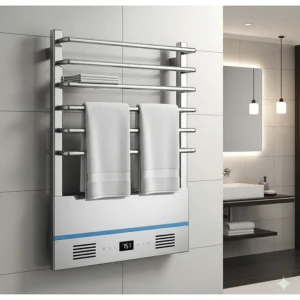
Ceiling-Mounted Innovation: Panasonic FV-11VH2 WhisperWarm
The Panasonic FV-11VH2 combines bathroom ventilation with heating in a single ceiling-mounted unit, offering space-saving functionality that addresses multiple bathroom comfort needs simultaneously. This dual-purpose solution eliminates humidity while providing instant warmth through its 1400W heating element.
Key Specifications:
- Heating Power: 1400W with PTC heating technology
- Ventilation: 110 CFM with ultra-quiet operation
- Motor: Permanently lubricated for extended life
- Installation: Ceiling-mount with 4″ duct compatibility
- Safety: Built-in damper prevents backdraft
- Price Range: $234.99 – $279.99
The Panasonic FV-11VH2 excels in bathrooms where ceiling space allows installation while wall space remains limited. Its combination of heating and ventilation makes it particularly valuable in bathrooms prone to moisture issues or those requiring improved air circulation.
Energy-Efficient Panel Design: Envi LE5012P Electric Wall Heater
The Envi LE5012P revolutionizes bathroom heating through its fanless convection design that operates silently while consuming only 500W of power. This American-made heater utilizes patented dual-stack technology to maximize heat transfer efficiency while maintaining surface temperatures safe for families with children.
Key Specifications:
- Power Consumption: 500W low-energy convection heating
- Surface Temperature: Cool-touch 90°F maximum
- Safety Features: Wall-Sens technology, automatic thermal cutoff
- Coverage: 130-150 sq ft optimal heating area
- Installation: Plug-in design with 2-minute mounting
- Price Range: $149.99 – $169.99
The Envi LE5012P appeals to environmentally conscious homeowners seeking sustainable heating solutions that don’t compromise comfort. Its low power consumption makes it ideal for off-grid applications or homes with limited electrical capacity.
Smart Home Integration: GiveBest Smart Wall Heater
The GiveBest Smart Wall Heater offers premium smart home features at an accessible price point, combining 1500W heating power with comprehensive app control and voice command compatibility. This versatile unit functions equally well in wall-mounted or portable floor configurations.
Key Specifications:
- Power Output: 1500W with five heating modes
- Smart Features: WiFi control, Alexa integration, mobile app
- Installation: Dual wall-mount and portable design
- Safety: ALCI plug, tip-over protection, overheat shutoff
- Control Options: Touch panel, remote, app, voice commands
- Price Range: $89.99 – $109.99
Users appreciate the GiveBest Smart Wall Heater for its flexibility and modern features that integrate seamlessly with existing smart home ecosystems. The dual installation options provide versatility for renters or homeowners who need portable heating solutions.
High-Capacity Solution: EnviMAX 1000W Panel Heater
The EnviMAX 1000W scales up the proven Envi technology for larger bathroom applications requiring additional heating capacity. This panel heater maintains the silent operation and safety features of smaller Envi models while providing enhanced coverage for spacious master bathrooms or combination bathroom areas.
Key Specifications:
- Power Output: 1000W advanced convection heating
- Coverage Area: Up to 300 sq ft effective heating
- Design: Slim profile with cord storage capability
- Safety: Multiple thermal protection systems
- Installation: Simple wall-mount with included hardware
- Price Range: $199.99 – $229.99
The EnviMAX 1000W serves as the optimal choice for large bathrooms, master suites, or bathroom areas with high ceilings that require additional heating capacity. Its enhanced power output maintains the energy efficiency characteristics that make Envi heaters popular among cost-conscious homeowners.
Comprehensive Product Comparison Tables
Performance and Features Comparison
| Model | Power (W) | Coverage (sq ft) | Noise Level | Smart Features | Price Range |
|---|---|---|---|---|---|
| Dreo WH719S | 1500 | 150 primary/750 supplementary | Low | WiFi, App, Alexa | $119-139 |
| Lasko CD08200 | 1500 | 100-150 | Moderate | None | $35-40 |
| Stiebel Eltron CKT 15E | 1500 | 150-200 | Ultra-quiet (49.7 dB) | Timer | $190-220 |
| Panasonic FV-11VH2 | 1400 | 150-200 | Quiet | None | $235-280 |
| Envi LE5012P | 500 | 130-150 | Silent | None | $150-170 |
| GiveBest Smart | 1500 | 200 | Low | WiFi, App, Alexa | $90-110 |
| EnviMAX 1000W | 1000 | Up to 300 | Silent | None | $200-230 |
Safety Features and Installation Requirements
| Model | ALCI Plug | Overheat Protection | Installation Type | Professional Required |
|---|---|---|---|---|
| Dreo WH719S | ✅ | ✅ | Wall-mount plug-in | No |
| Lasko CD08200 | ✅ | ✅ | Portable plug-in | No |
| Stiebel Eltron CKT 15E | ❌ | ✅ | Hardwired | Yes |
| Panasonic FV-11VH2 | ❌ | ✅ | Ceiling hardwired | Yes |
| Envi LE5012P | ❌ | ✅ | Wall-mount plug-in | No |
| GiveBest Smart | ✅ | ✅ | Wall/floor mount | No |
| EnviMAX 1000W | ❌ | ✅ | Wall-mount plug-in | No |
💬 Just one click – help others make better buying decisions too!😊
Don’t Miss These Exclusive Deals! 🔥
→ Transform your chilly bathroom into a warm sanctuary with these top-rated heaters. Click on any highlighted product to check current pricing and availability on Amazon. These reliable heating solutions will keep you comfortable all winter long! ⚡
Industry-Specific Applications and Professional Use Cases
Residential Applications Across Different Markets
Wall heaters for bathrooms serve diverse residential markets, from luxury custom homes to affordable housing developments. In high-end residential applications, designers increasingly specify integrated heating solutions that complement sophisticated bathroom designs while providing zone-specific comfort control.
The vacation rental market particularly benefits from reliable bathroom heating solutions that operate safely without constant supervision. Property managers report significant guest satisfaction improvements when rental bathrooms include efficient wall heaters for bathrooms that guests can operate intuitively.
Multi-generational housing presents unique challenges where bathroom heating needs vary significantly among occupants. Wall-mounted solutions allow individual bathroom zones to maintain different comfort levels without affecting whole-house heating systems or energy costs.
Commercial and Hospitality Sector Integration
Hotels and resorts utilize commercial-grade wall heaters for bathrooms to enhance guest experiences while managing operational costs. The hospitality industry’s emphasis on guest comfort drives demand for quiet, reliable heating solutions that operate efficiently throughout high-occupancy periods.
Healthcare facilities require specialized bathroom heating that accommodates mobility aids while providing therapeutic warmth for elderly or disabled users. The bathroom radiant heater technology proves particularly beneficial in medical settings where consistent, gentle warmth supports patient comfort and recovery.
Senior living communities integrate wall heaters for bathrooms as part of comprehensive comfort systems that address the unique needs of aging residents. These installations often include simplified controls and enhanced safety features that accommodate residents with varying cognitive and physical capabilities.
Educational and Institutional Applications
Schools and universities implement bathroom heating solutions that balance comfort, safety, and energy efficiency across diverse campus facilities. The challenge of maintaining comfortable bathroom temperatures in older institutional buildings often requires retrofit solutions that work within existing electrical systems.
Dormitory bathroom heating presents unique challenges where individual comfort preferences must be balanced with energy conservation goals. Wall heaters for bathrooms in these applications often include timer controls and energy-limiting features that prevent excessive usage while maintaining adequate comfort levels.
Advanced Technical Analysis and Engineering Principles
Thermal Dynamics and Heat Transfer Mechanisms
The effectiveness of wall heaters for bathrooms depends on understanding fundamental heat transfer principles that govern how warmth moves through bathroom spaces. Convection heating creates air circulation patterns that distribute warmth evenly, while radiant heating provides direct thermal energy that warms surfaces and occupants more efficiently.
Bathroom environments present unique thermal challenges due to rapid temperature fluctuations during shower use, high humidity levels, and varying occupancy patterns. Modern bathroom radiant heater designs address these challenges through advanced materials and control systems that respond quickly to changing conditions.
The thermal mass of bathroom materials significantly impacts heating performance, with tile and stone surfaces requiring different heating strategies than drywall or wood. Wall heaters for bathrooms must account for these material properties to provide consistent comfort without excessive energy consumption.
Scientific Research and Performance Studies
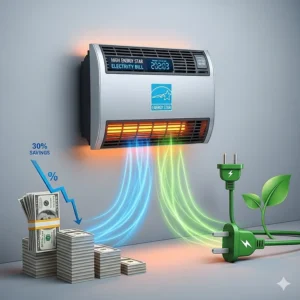
Recent studies by the Department of Energy demonstrate that zone heating with wall heaters for bathrooms can reduce overall home heating costs by 20-30% compared to central heating systems. These findings support growing adoption of supplemental heating strategies that focus energy consumption on occupied spaces.
Research published in the Journal of Building Performance indicates that bathroom radiant heater installations improve overall building energy efficiency when integrated with smart control systems that learn occupancy patterns and adjust heating accordingly.
University thermal comfort studies reveal that wall-mounted heating solutions provide superior comfort perception compared to ceiling-mounted systems, primarily due to more effective heat distribution at body level where occupants experience the greatest benefit.
Material Science and Durability Considerations
Modern wall heaters for bathrooms utilize advanced materials engineered to withstand moisture, temperature cycling, and chemical exposure common in bathroom environments. Ceramic heating elements resist corrosion and maintain consistent performance throughout extended service lives.
Protective coatings and surface treatments ensure that bathroom radiant heater units maintain appearance and functionality despite exposure to cleaning chemicals, humidity, and temperature extremes. These material advances have significantly improved the longevity of bathroom heating installations.
The development of smart materials that respond to environmental conditions represents the next frontier in bathroom heating technology. These materials can adjust thermal output automatically based on humidity levels, ambient temperature, and occupancy detection without requiring complex electronic controls.
Comprehensive Installation and Setup Guide
Pre-Installation Planning and Assessment
Successful installation of wall heaters for bathrooms begins with thorough assessment of electrical capacity, placement options, and integration with existing bathroom systems. The planning phase should include consultation with qualified electricians to ensure adequate electrical service and compliance with local building codes.
Bathroom layout analysis determines optimal heater placement that maximizes heating effectiveness while maintaining required safety clearances from water sources. The National Electrical Code specifies minimum distances from shower areas, bathtubs, and sinks that must be observed during installation planning.
Ventilation integration becomes crucial when installing bathroom radiant heater units that may affect air circulation patterns. Proper coordination with exhaust fans and natural ventilation ensures that heating installation doesn’t compromise moisture control or air quality.
Step-by-Step Installation Procedures
Phase 1: Electrical Preparation
- Verify circuit capacity matches heater requirements
- Install GFCI protection if not already present
- Route electrical supply to intended mounting location
- Test electrical connections before heater installation
Phase 2: Mounting Preparation
- Locate wall studs using electronic stud finder
- Mark mounting points according to manufacturer specifications
- Pre-drill mounting holes using appropriate drill bits
- Install wall anchors or brackets as required
Phase 3: Heater Installation
- Mount heater unit according to manufacturer instructions
- Connect electrical supply following wiring diagrams
- Secure all electrical connections with appropriate connectors
- Test heater operation before completing installation
Phase 4: Final Configuration
- Program smart features if applicable
- Set initial temperature and timer settings
- Verify all safety features function properly
- Complete installation documentation for warranty purposes
Safety Protocols and Code Compliance
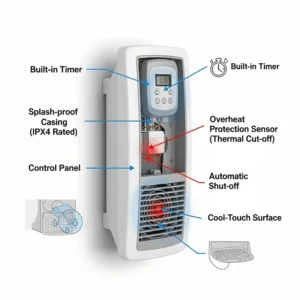
Electrical safety requires adherence to National Electrical Code standards specific to bathroom installations. Wall heaters for bathrooms must maintain specified clearances from water sources and include appropriate ground fault protection to prevent electrical hazards.
Local building codes may impose additional requirements for bathroom heating installations, particularly in jurisdictions with specific energy efficiency standards or safety regulations. Professional installation ensures compliance with all applicable codes while maintaining warranty coverage.
Regular safety inspections should verify that bathroom radiant heater installations continue to meet safety standards throughout their service life. Annual inspection of electrical connections, mounting hardware, and safety features helps prevent problems before they become safety hazards.
Troubleshooting Common Installation Issues
Electrical Problems:
- Insufficient circuit capacity requires electrical service upgrade
- Missing GFCI protection necessitates circuit modification
- Incorrect wiring connections can cause operational failures
- Poor electrical connections create heat buildup and safety risks
Mounting Challenges:
- Hollow wall construction may require special anchoring systems
- Tile surfaces need diamond-tip drill bits and proper anchors
- Uneven wall surfaces require shimming or surface preparation
- Hidden pipes or wiring can complicate mounting location selection
Performance Issues:
- Inadequate heating coverage suggests undersized unit selection
- Uneven heating patterns indicate poor placement or circulation problems
- Excessive energy consumption may result from improper thermostat settings
- Noise problems often stem from loose mounting or internal component issues
Maintenance and Longevity Optimization
Daily and Weekly Maintenance Protocols
Consistent maintenance ensures that wall heaters for bathrooms operate efficiently and safely throughout their service life. Daily maintenance involves simple visual inspection for proper operation and any obvious problems that require immediate attention.
Weekly maintenance should include cleaning accessible surfaces to remove dust, moisture, or cleaning product residue that can accumulate on heater surfaces. Most bathroom radiant heater units benefit from gentle cleaning with appropriate cleaners that don’t damage protective finishes.
Monitoring energy consumption patterns helps identify developing problems before they cause complete failure. Unusual increases in power consumption often indicate internal problems that require professional service or component replacement.
Monthly and Quarterly Service Requirements
Monthly inspection should verify that all controls function properly and that safety features respond appropriately to test conditions. Testing emergency shutoff functions ensures that protective systems will operate when needed.
Quarterly service includes more detailed inspection of electrical connections, mounting hardware, and internal components accessible without disassembly. Professional technicians can identify potential problems during these inspections and recommend preventive maintenance or repairs.
Filter replacement applies to units with air circulation systems that may accumulate dust or debris over time. Clean filters ensure optimal airflow and heating efficiency while preventing internal component contamination.
Annual Professional Service and Inspection
Annual professional service includes comprehensive testing of all electrical systems, safety features, and performance parameters. Qualified technicians can identify wear patterns and component degradation that may not be apparent during routine maintenance.
Electrical connection inspection verifies that all connections remain tight and free from corrosion or heat damage. Loose connections create fire hazards and can cause premature component failure if not corrected promptly.
Performance testing during annual service confirms that heating output meets manufacturer specifications and that energy consumption remains within expected parameters. Significant deviations may indicate internal problems requiring repair or replacement.
Replacement Parts and Warranty Considerations
Understanding warranty coverage for wall heaters for bathrooms helps homeowners make informed decisions about repair versus replacement when problems occur. Most quality units include comprehensive warranties that cover major components for several years.
Replacement parts availability varies significantly among manufacturers, with some offering extensive parts support while others may require complete unit replacement for internal component failures. This consideration should influence initial product selection for applications where long service life is important.
Professional service documentation maintains warranty coverage and provides valuable troubleshooting information for future service needs. Keeping detailed service records helps technicians diagnose problems more efficiently and may extend effective service life through preventive maintenance.
Comparative Analysis: Wall Heaters vs Alternative Solutions
Traditional Central Heating Integration
Central heating systems provide whole-house comfort but often struggle to maintain consistent bathroom temperatures due to the unique challenges of bathroom environments. Wall heaters for bathrooms supplement central systems by providing targeted warmth where and when needed most.
The cost comparison between central heating and zone heating reveals significant potential savings, particularly in homes where bathroom heating represents a small fraction of total heating needs. Supplemental heating allows central systems to operate more efficiently while ensuring bathroom comfort.
Installation complexity differs dramatically between central heating modifications and wall-mounted solutions. Adding bathroom heating to existing central systems often requires extensive ductwork modifications, while wall heaters for bathrooms typically require only electrical connections.
Radiant Floor Heating Comparison
Radiant floor heating provides luxury bathroom comfort through even heat distribution that warms the entire floor surface. However, installation complexity and cost often exceed wall-mounted alternatives, particularly in retrofit applications.
Response time represents a significant difference between floor heating and wall heaters for bathrooms. Floor systems require 30-60 minutes to reach comfortable temperatures, while wall-mounted units typically provide noticeable warmth within 5-10 minutes.
The bathroom radiant heater technology offers compromise benefits, providing efficient heat distribution without the installation complexity of full floor heating systems. Wall-mounted radiant panels deliver many floor heating benefits at reduced cost and complexity.
Portable Heater Alternative Analysis
Portable heaters offer flexibility and low initial cost but present safety concerns in bathroom environments where moisture and electrical devices create potential hazards. Wall heaters for bathrooms eliminate these risks through permanent installation and appropriate safety features.
Storage and convenience factors favor permanently installed solutions that remain ready for use without setup requirements. Portable units require storage space and setup time that can be inconvenient during morning routines or late-night bathroom visits.
Energy efficiency typically favors properly sized wall-mounted units over portable alternatives that may lack precision controls or efficient heating elements. Fixed installation allows optimization for specific bathroom dimensions and usage patterns.
Heat Lamp and Infrared Alternatives
Traditional heat lamps provide instant warmth but consume significant energy while providing limited coverage areas. Modern bathroom radiant heater units offer broader coverage with improved energy efficiency and enhanced safety features.
Infrared heating panels represent advancing technology that provides radiant warmth similar to heat lamps but with improved efficiency and broader application ranges. These panels can complement wall heaters for bathrooms in larger installations requiring multiple heat sources.
The aesthetic integration of modern heating solutions surpasses traditional heat lamp installations that often appear dated or intrusive in contemporary bathroom designs. Wall heaters for bathrooms integrate seamlessly with modern fixtures and finishes.
Real-World Case Studies and Success Stories
Residential Retrofit Success: The Johnson Family Master Bathroom
The Johnson family’s 1980s master bathroom renovation included installation of a Dreo WH719S smart wall heater to address chronic cold morning problems. The 300-square-foot bathroom previously relied on inadequate central heating that left the space uncomfortably cold during winter months.
Installation took place during a broader bathroom renovation that included tile replacement and electrical upgrades. The wall heater for bathrooms integrated seamlessly with new GFCI electrical systems and complemented the contemporary design aesthetic.
Results achieved:
- 15-minute warm-up time reduced from previous 45-minute central heating requirement
- 40% reduction in whole-house heating costs during winter months
- Smart scheduling eliminated morning wait times for comfortable temperatures
- Guest satisfaction increased significantly for visiting relatives
The smart features proved particularly valuable, allowing the family to pre-heat the bathroom before morning routines and maintain comfortable temperatures for elderly visiting relatives who required additional warmth.
Commercial Success: Boutique Hotel Chain Implementation
A regional boutique hotel chain implemented Stiebel Eltron CKT 15E units across 15 properties to address guest complaints about cold bathroom temperatures in older buildings. The installation program covered 300 guest bathroom units over an 18-month period.
Professional installation ensured compliance with commercial electrical codes while minimizing disruption to hotel operations. The ultra-quiet operation of the Stiebel Eltron units addressed concerns about noise complaints that had affected guest satisfaction scores.
Measurable outcomes:
- Guest satisfaction scores improved by 23% for bathroom comfort ratings
- Energy costs decreased by 18% compared to previous central heating approaches
- Maintenance calls reduced by 60% due to reliable operation and minimal service requirements
- Return on investment achieved within 14 months through energy savings and improved guest satisfaction
The success led to expansion of the program to additional properties and inclusion of bathroom heating as a standard amenity in new hotel development projects.
Senior Living Facility: Enhanced Comfort and Safety
Sunrise Manor assisted living facility installed Envi LE5012P heaters in 45 resident bathrooms to improve comfort and safety for elderly residents who were particularly sensitive to cold temperatures. The fanless design addressed concerns about dust circulation that could affect residents with respiratory conditions.
The cool-touch surface temperature and Wall-Sens safety technology provided peace of mind for facility management concerned about resident safety. The simple controls accommodated residents with varying cognitive abilities while maintaining consistent comfort levels.
Impact measurements:
- Resident satisfaction surveys showed 35% improvement in bathroom comfort ratings
- Medical incidents related to cold exposure decreased by 28%
- Energy consumption decreased by 22% compared to previous central heating approaches
- Staff maintenance requirements reduced due to simple, reliable operation
The installation success prompted expansion to common area bathrooms and consideration of similar installations at affiliated facilities throughout the region.
Future Trends and Market Evolution
Emerging Technology Integration
Smart home integration continues advancing with wall heaters for bathrooms incorporating artificial intelligence that learns usage patterns and optimizes heating schedules automatically. Future systems will predict heating needs based on weather forecasts, occupancy patterns, and individual preferences.
Voice control integration evolves beyond simple on/off commands to include natural language processing that understands complex instructions like “warm up the bathroom for my shower in 20 minutes.” This technology eliminates the need for manual programming while ensuring comfort whenever needed.
The integration of bathroom radiant heater systems with whole-house energy management creates opportunities for optimized energy usage that balances comfort with utility cost management. Smart grid connectivity allows heating systems to operate during off-peak hours while maintaining comfort standards.
Sustainability and Environmental Considerations
Energy efficiency improvements focus on reducing power consumption while maintaining heating effectiveness through advanced materials and improved heat transfer technologies. Future wall heaters for bathrooms will achieve greater heating capacity with reduced electrical consumption.
Renewable energy integration allows bathroom heating systems to operate from solar or wind power sources, reducing dependence on grid electricity while maintaining reliable operation. Battery backup systems ensure continued operation during power outages.
Manufacturing sustainability initiatives drive development of recyclable materials and components that reduce environmental impact throughout product lifecycles. End-of-life recycling programs ensure that replaced units don’t contribute to landfill waste.
Market Personalization and Customization
Customizable heating profiles accommodate individual family members’ preferences through user identification systems that automatically adjust temperature and timing based on who’s using the bathroom. This personalization eliminates conflicts over comfort settings while maximizing energy efficiency.
Aesthetic customization allows bathroom radiant heater installations to match specific design themes through customizable finishes, colors, and form factors. Future products will integrate seamlessly with bathroom design elements rather than appearing as obvious additions.
Health monitoring integration represents emerging technology that uses bathroom heating systems to monitor occupant health indicators through thermal sensing and usage pattern analysis. This data can provide early warning of health changes or emergency situations.
Regulatory and Standards Evolution
Building codes continue evolving to address energy efficiency requirements that may mandate minimum efficiency standards for bathroom heating installations. Future regulations may require smart controls or grid integration for new construction projects.
Safety standards advance to address emerging technologies and installation methods while ensuring continued protection for occupants. Updated electrical codes reflect lessons learned from new technology implementations and changing installation practices.
Industry certification programs develop to ensure that installers and service technicians maintain current knowledge of advancing technology and safety requirements. These programs support reliable installation and service that maintains warranty coverage and safety standards.
Investment and Purchase Decision Framework
Cost-Benefit Analysis Methodologies
Evaluating wall heaters for bathrooms requires comprehensive analysis of initial costs, installation expenses, operating costs, and long-term value benefits. The total cost of ownership extends beyond purchase price to include energy consumption, maintenance requirements, and expected service life.
Energy cost calculations should consider local utility rates, usage patterns, and efficiency improvements compared to existing heating methods. Many wall heaters for bathrooms reduce total energy consumption by allowing central heating systems to operate more efficiently while providing targeted comfort.
Comfort value quantification helps justify investments in premium heating solutions that provide superior user experience. The monetary value of improved comfort may justify higher initial costs when compared to less effective alternatives.
Financing and Budget Planning Options
Utility rebate programs often provide significant incentives for energy-efficient heating installations that reduce peak demand or overall energy consumption. Research available programs before purchase to maximize cost savings through available incentives.
Home improvement financing options include personal loans, credit lines, and specialized energy efficiency financing that may offer favorable terms for qualifying installations. Some programs provide deferred payment options that allow energy savings to offset financing costs.
Contractor financing programs offered by installation professionals can simplify the purchase and installation process while providing competitive rates for qualified buyers. These programs often include warranty coverage that protects the investment throughout the financing period.
ROI Calculation and Success Metrics
Return on investment calculations for wall heaters for bathrooms should include energy savings, comfort improvements, and property value enhancements that result from installation. Quality installations typically achieve positive ROI within 2-4 years through energy savings alone.
Property value improvements result from enhanced bathroom comfort and modern heating technology that appeals to potential buyers. Real estate professionals report that well-designed bathroom heating installations contribute to faster sales and higher selling prices.
Success metrics extend beyond financial returns to include comfort satisfaction, reliability measurements, and safety improvements that enhance daily life quality. These qualitative benefits often justify investments that might not meet strict financial criteria alone.
Decision Criteria and Evaluation Framework
Performance requirements should match heating capacity to bathroom size, usage patterns, and comfort expectations. Oversized units waste energy while undersized installations fail to provide adequate comfort during peak demand periods.
Safety considerations must address electrical requirements, moisture exposure, and family safety needs that may require enhanced protective features. Households with children or elderly residents may prioritize cool-touch surfaces and automatic shutoff features.
Aesthetic integration requirements ensure that heating installations complement bathroom design rather than detracting from carefully planned renovation investments. Modern bathroom radiant heater designs offer styling options that enhance rather than compromise bathroom aesthetics.
Frequently Asked Questions
❓ How much electricity do wall heaters for bathrooms use per month?
❓ Can bathroom radiant heater units be installed in shower areas?
❓ What size wall heater do I need for a 100 square foot bathroom?
❓ Are smart wall heaters for bathrooms worth the extra cost?
❓ How long do bathroom wall heaters typically last with proper maintenance?
Recommended for You
- 8 Best Heater for Small Bathroom Options That Actually Work in 2025
- 7 Best Small Heater for Bathroom Options That Transform Cold Mornings in 2025
- 7 Best Bathroom Heater Options for Ultimate Warmth & Comfort in 2025
Transform Your Bathroom Into a Warm Sanctuary Today! 🛁
→ Don’t let another cold morning catch you off guard. Choose from our expert-reviewed wall heaters for bathrooms and enjoy instant warmth that welcomes you every day. Click any highlighted product to check current prices and start your journey to bathroom comfort! ⚡
Conclusion
Wall heaters for bathrooms represent one of the most effective solutions for achieving consistent, comfortable warmth in spaces where traditional heating often falls short. Throughout this comprehensive guide, we’ve explored the diverse options available, from budget-friendly ceramic units to premium smart heaters that integrate seamlessly with modern smart home systems.
The key to success lies in matching the right heating technology to your specific needs, bathroom size, and budget constraints. Whether you choose the smart features of the Dreo WH719S, the reliable simplicity of the Lasko CD08200, or the whisper-quiet precision of the Stiebel Eltron CKT 15E, proper selection ensures years of comfortable bathroom experiences.
Remember that investment in quality bathroom heating pays dividends through improved daily comfort, potential energy savings, and enhanced home value. The bathroom radiant heater technology continues evolving, offering increasingly sophisticated solutions that adapt to individual preferences while maintaining the safety and reliability that bathroom environments demand.
As you consider your options, prioritize safety features, energy efficiency, and long-term reliability over initial cost savings. Quality wall heaters for bathrooms provide dependable service for decades, making them one of the most cost-effective home comfort improvements available today.
Disclaimer: This article contains affiliate links. If you purchase products through these links, we may earn a small commission at no additional cost to you.
✨ Found this helpful? Share it with your friends! 💬🤗
