
In This Article
Starting your day with a warm, cozy bathroom can transform those cold winter mornings from dreaded ordeals into comfortable experiences. Whether you’re stepping out of a steamy shower or getting ready for work, having the best bathroom heater ensures you’ll never shiver through your morning routine again. With advanced safety features, energy-efficient designs, and rapid heating capabilities, today’s bathroom heating solutions offer unprecedented comfort and peace of mind.
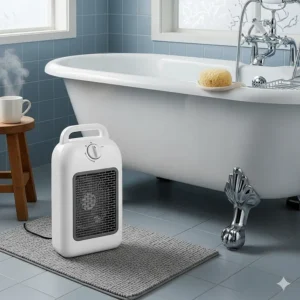
Finding the right bathroom heating solution involves understanding your space, safety requirements, and heating preferences. From portable ceramic heaters with ALCI safety plugs to ceiling-mounted units that blend seamlessly into your décor, the best bathroom heater varies depending on your specific needs and bathroom layout.
✨Was this helpful? Spread the word! 🚀
Understanding Bathroom Heating Requirements 🔥
Bathroom heating presents unique challenges that differentiate it from heating other rooms in your home. The high humidity environment, water exposure risks, and typically smaller square footage require specialized heating solutions designed specifically for wet locations. Unlike standard room heaters, bathroom heaters must comply with electrical safety codes that protect against moisture-related hazards.
Key Safety Considerations for Bath Heaters:
✅ ALCI (Appliance Leakage Circuit Interrupter) plugs for electrical protection
✅ Moisture-resistant housing and components
✅ Proper electrical grounding and circuit requirements
✅ Strategic placement away from direct water contact
✅ Automatic shut-off features for overheat protection
The effectiveness of heaters for bath spaces depends on several factors including room size, insulation quality, ceiling height, and ventilation systems. Most bathroom heating solutions work best in spaces ranging from 50 to 250 square feet, though larger bathrooms may require multiple units or higher-wattage options.
Understanding the difference between supplemental and primary heating is crucial when selecting your ideal bathroom heating solution. Most bathroom heaters serve as supplemental heat sources, designed to boost temperature quickly during peak usage times rather than maintain continuous warmth throughout the day.
Top 7 Best Bathroom Heater Reviews 2025 🏆
1. Lasko CD08200 Ceramic Bathroom Heater – Best Overall
The Lasko CD08200 stands out as the premier choice for portable bathroom heating, combining safety, efficiency, and user-friendly operation in a compact design. Priced around $46-49 on Amazon, this 1500-watt ceramic heater features the essential ALCI safety plug specifically designed for bathroom use.
Specifications:
- Power: 1500W ceramic heating element
- Dimensions: 6.25″ x 6.25″ x 7.65″
- Weight: 3.35 pounds
- Safety Features: ALCI plug, overheat protection, cool-touch exterior
- Heat Settings: High, Low, and 1-hour Simple Heat timer
- Coverage Area: Up to 225 square feet
The Lasko CD08200 excels in rapid heat delivery, warming typical bathroom spaces within minutes. The Simple Heat button provides one-hour automatic operation at full power, perfect for shower preparation and post-shower warmth without worrying about turning off the unit. Customer reviews consistently praise its quiet operation and effectiveness in small to medium bathrooms.
2. Dreo Space Heater with ALCI Plug – Most Advanced Features
The Dreo Space Heater represents cutting-edge bathroom heating technology with its advanced PTC ceramic heating system and comprehensive safety features. Available on Amazon for approximately $59-79, this heater offers 70-degree oscillation and digital thermostat control for precise temperature management.
Specifications:
- Power: 1500W PTC ceramic heating
- Remote Control: 26-foot range with full functionality
- Temperature Range: 41°F to 95°F in 1-degree increments
- Timer: 1-12 hour programmable settings
- Safety Features: ALCI plug, tip-over protection, overheat protection
- Operating Noise: Ultra-quiet at 36.5 dB
The Dreo model’s standout feature is its bathroom-specific ALCI safety plug that immediately shuts off power in case of electrical shorts or water contact. The oscillating function distributes heat evenly throughout bathroom spaces, while the ECO mode automatically adjusts power consumption to maintain desired temperatures efficiently.
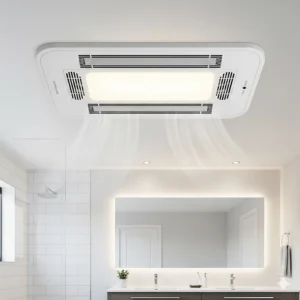
3. Broan-NuTone 157 Ceiling Heater – Best Permanent Installation
For homeowners seeking a permanent bathroom heating solution, the Broan-NuTone 157 offers professional-grade ceiling installation with reliable 1250-watt heating performance. Priced around $119 on Amazon, this low-profile unit provides instant heat without occupying valuable floor or wall space.
Specifications:
- Power: 1250W enclosed sheath element
- Mounting: Ceiling installation (3.5″ or 4″ electrical box)
- Profile Height: Only 2.75″ from ceiling
- Motor: Permanently lubricated, maintenance-free
- Safety Features: Automatic overheat protection, UL listing
- Finish: Satin aluminum grille
The Broan 157 heater distributes heat downward toward floor level, creating comfortable warmth where you need it most. Professional installation ensures proper electrical connections and optimal performance, while the enclosed heating element eliminates exposed coils for enhanced safety around moisture.
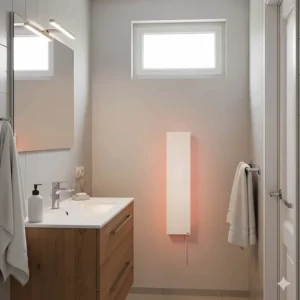
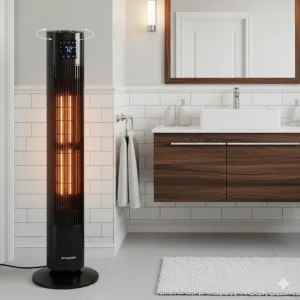
4. Honeywell HCE322V Digital Tower Heater – Best for Large Bathrooms
The Honeywell HCE322V brings sophisticated digital controls and powerful 1500-watt heating to larger bathroom spaces. Available for $67-100 on Amazon, this tower design maximizes heating efficiency while maintaining an elegant aesthetic suitable for modern bathroom décor.
Specifications:
- Power: 1500W dual-motor ceramic system
- Display: Large LCD with temperature readout
- Oscillation: Wide-range heat distribution
- Timer Options: 1, 2, 4, and 8-hour settings
- Thermostat: Programmable with precise temperature control
- Dimensions: 10.1″ x 8″ x 23.25″
The Honeywell HCE322V features dual motors for enhanced heat circulation and maintains consistent temperatures through its advanced thermostat system. The permanent dust filter ensures clean air circulation, while multiple timer options provide flexibility for different bathroom usage patterns.
5. Stiebel Eltron CK15E Wall Heater – Most Professional Grade
The Stiebel Eltron CK15E represents German engineering excellence in bathroom heating, offering wall-mounted convenience with whisper-quiet operation at 49.7 dB. This professional-grade unit requires hardwired installation but delivers superior performance and longevity.
Specifications:
- Power: 1500W with built-in thermostat
- Operation: Extremely quiet at 49.7 dB(A)
- Installation: Surface-mount wall installation
- Coverage: 150-200 square feet efficiently
- Features: Frost protection setting, adjustable thermostat
- Construction: Galvanized steel with stove-enamel finish
Professional installation ensures optimal performance and safety compliance, while the integrated thermostat eliminates the need for separate temperature controls. The frost protection feature prevents freezing in unheated spaces during winter months.
6. Amazon Basics Ceramic Heater – Budget Alternative
While the Amazon Basics ceramic heaters offer excellent value at $27-28, they specifically state “NOT FOR HUMID ENVIRONMENTS” in their product specifications, making them unsuitable for direct bathroom use. However, they can serve as supplemental heating in adjacent dressing areas or bedroom spaces connected to bathrooms.
7. Lasko MyHeat Personal Heater – Compact Solution
The Lasko MyHeat provides targeted warming for specific bathroom areas where full-room heating isn’t necessary. This compact option works well for powder rooms or as supplemental heat in larger bathroom installations.
Industry-Specific Applications of Bathroom Heating 🏭
Professional applications of bathroom heating extend far beyond residential use, encompassing diverse industries where temperature control and moisture management intersect. Commercial facilities, healthcare institutions, hospitality venues, and industrial settings each present unique requirements for specialized bathroom heating solutions.
Healthcare and Medical Facilities
Hospitals, clinics, and medical offices require consistent bathroom temperatures for patient comfort and infection control. Medical-grade bathroom heaters must meet stringent safety standards while providing reliable performance in high-traffic environments. Temperature stability becomes critical for elderly patients and those with compromised immune systems who are particularly sensitive to cold exposure.
Hospitality and Hotel Industry
Luxury hotels and resorts depend on superior bathroom heating to enhance guest experiences and maintain premium service standards. Guest satisfaction surveys consistently rank bathroom comfort among top priority amenities, with inadequate heating leading to negative reviews and reduced occupancy rates. High-end establishments often install multiple heating zones with individual controls for ultimate customization.
Commercial Office Buildings
Corporate facilities require efficient bathroom heating that balances employee comfort with energy costs. Building managers increasingly favor programmable systems that adjust temperatures based on occupancy patterns, reducing energy consumption during off-hours while ensuring immediate warmth during peak usage periods.
Educational Institutions
Schools, universities, and training facilities face unique challenges balancing student safety with heating effectiveness. Institutional bathroom heaters must withstand heavy usage while maintaining tamper-resistant designs that prevent misuse or safety hazards.
Industrial and Manufacturing Settings
Factories, warehouses, and production facilities often require robust bathroom heating solutions capable of performing in challenging environments. These applications demand heaters with enhanced durability, simplified maintenance procedures, and compatibility with existing industrial electrical systems.
Residential Care and Assisted Living
Senior living communities require bathroom heating systems designed for elderly residents with mobility limitations and temperature sensitivity. Instant-on heating capabilities become essential for residents who cannot wait for gradual temperature increases, while safety features prevent accidents and burns.
The commercial bathroom heating market continues evolving with smart building integration, IoT connectivity, and advanced energy management systems. These technological advances enable facility managers to monitor performance remotely, predict maintenance needs, and optimize energy consumption across multiple locations.
Advanced Technical Analysis of Bathroom Heating Technology ⚡
Modern bathroom heating technology represents significant advancement from traditional resistance-based systems, incorporating sophisticated materials science, thermal engineering, and electronic controls. Understanding these technical foundations helps consumers make informed decisions about heating system investments and long-term performance expectations.
Ceramic Heating Element Technology
Contemporary ceramic heating elements utilize positive temperature coefficient (PTC) technology that automatically regulates power consumption as operating temperatures increase. This self-limiting characteristic prevents overheating while maintaining consistent heat output, significantly improving safety margins compared to traditional wire-coil elements. PTC ceramic elements typically achieve operating temperatures between 150°F and 200°F, providing optimal heat transfer without creating fire hazards.
Advanced Safety Circuit Integration
ALCI (Appliance Leakage Circuit Interrupter) technology represents breakthrough safety innovation specifically designed for wet location applications. These devices monitor electrical current flow continuously, detecting imbalances as small as 5 milliamps that indicate potential ground faults or water intrusion. When anomalies are detected, ALCI circuits interrupt power within 25 milliseconds, preventing electrical shock hazards that could prove fatal in bathroom environments.
Thermal Management and Heat Distribution
Computational fluid dynamics (CFD) modeling now guides heater design optimization, ensuring even heat distribution while minimizing energy waste. Advanced fan blade geometries reduce acoustic emissions while maximizing air circulation, with modern units achieving noise levels below 40 decibels during normal operation. Variable-speed motor controls adjust fan performance based on heating demands, optimizing both comfort and energy efficiency.
Smart Thermostat Integration
Digital thermostat technology employs NTC (Negative Temperature Coefficient) sensors that provide temperature readings accurate within ±1°F, enabling precise climate control previously impossible with mechanical thermostats. These systems incorporate learning algorithms that adapt to usage patterns, pre-heating spaces before typical usage times while reducing energy consumption during inactive periods.
Materials Science and Durability Engineering
Housing materials utilize flame-retardant polymers meeting UL94 V-0 standards, ensuring fire resistance even under extreme temperature conditions. Internal component protection employs conformal coatings that resist moisture penetration while maintaining electrical insulation properties over extended operating lifespans typically exceeding 50,000 hours.
Research continues advancing bathroom heating efficiency through heat pump integration, phase-change material thermal storage, and renewable energy compatibility. These emerging technologies promise further improvements in energy efficiency, environmental sustainability, and user convenience while maintaining the safety standards essential for bathroom applications.
Comprehensive Setup and Installation Guide 🔧
Proper installation of bathroom heating systems requires careful attention to electrical safety codes, moisture protection requirements, and optimal placement strategies. Whether installing portable units or permanent fixtures, following established procedures ensures safe operation and maximum heating effectiveness.
Electrical Requirements and Safety Codes
Bathroom electrical installations must comply with National Electrical Code (NEC) Article 410, which specifies requirements for wet location fixtures. Permanent installations require dedicated circuits with proper GFCI protection, while portable units need ALCI-equipped plugs for safe operation. Circuit capacity calculations must account for heater wattage plus other bathroom electrical loads to prevent circuit overloading.
Portable Heater Placement Guidelines
Strategic placement maximizes heating efficiency while maintaining safety clearances from water sources. Position portable units at least 3 feet from bathtubs, showers, and sinks, ensuring adequate air circulation around intake and exhaust grilles. Avoid placement directly on tile floors where condensation might accumulate, instead using raised platforms or bathroom-safe mats.
Professional Installation Procedures for Permanent Units
Ceiling and wall-mounted installations require careful attention to structural support, electrical connections, and moisture sealing. Installation typically involves cutting ceiling or wall openings, running electrical wiring to appropriate circuits, and securing mounting hardware capable of supporting heater weight plus thermal expansion stresses.
Integration with Existing Bathroom Systems
Successful integration considers existing ventilation, lighting, and plumbing systems to avoid conflicts and optimize performance. Coordinate heating controls with exhaust fan operations to prevent heat loss while maintaining proper moisture removal. Consider timer integration that coordinates heating with typical bathroom usage patterns.
User Compatibility and Accessibility Considerations
Installation height and control placement must accommodate users with varying heights and mobility limitations. Wall-mounted controls should be positioned between 36 and 48 inches from floor level, while avoiding placement behind doors or in locations obstructed by typical bathroom fixtures.
Safety Testing and Commissioning Procedures
Complete installation testing includes electrical continuity checks, GFCI function verification, and thermal performance validation. Document installation details including circuit information, control settings, and maintenance requirements for future reference. Provide users with operation instructions and safety guidelines specific to their installation.
Environmental optimization involves adjusting heating schedules to coordinate with bathroom usage patterns, typically providing pre-heating 15-30 minutes before morning routines while reducing output during inactive periods. Integration with smart home systems enables remote monitoring and automatic adjustments based on occupancy detection or weather conditions.
Maintenance and Longevity Best Practices 🔄
Establishing regular maintenance schedules significantly extends bathroom heater lifespan while ensuring optimal performance and safety throughout years of operation. Proper care procedures vary by heater type but share common principles focused on cleanliness, component inspection, and performance monitoring.
Daily and Weekly Maintenance Routines
Daily maintenance involves visual inspection for obvious damage, unusual noises, or performance changes that might indicate developing problems. Weekly cleaning removes dust accumulation from intake grilles and exterior surfaces using soft brushes or vacuum cleaners with brush attachments. Portable units benefit from periodic repositioning to prevent carpet indentations and ensure even floor wear patterns.
Monthly Comprehensive Inspections
Monthly maintenance includes detailed examination of electrical connections, control function testing, and performance validation against baseline measurements. Check ALCI plug function by pressing test and reset buttons according to manufacturer procedures, replacing units that fail to trip or reset properly. Document temperature rise times and maximum temperatures achieved to track performance degradation over time.
Quarterly Professional Service Requirements
Professional maintenance every three months addresses internal component cleaning, electrical connection tightening, and calibration verification that exceeds typical user capabilities. Technicians can identify early wear indicators, test safety systems comprehensively, and perform preventive replacements that prevent unexpected failures during peak usage periods.
Filter Replacement and Air Quality Management
Units equipped with dust filters require regular replacement or cleaning according to manufacturer schedules, typically every 3-6 months depending on environmental conditions. High-dust environments may require more frequent filter attention, while clean installations may extend replacement intervals safely. Clogged filters reduce heating efficiency while increasing energy consumption and component wear.
Troubleshooting Common Issues and Solutions
Performance problems often stem from simple causes addressable through systematic diagnosis procedures. Reduced heat output frequently indicates dust accumulation, circuit voltage problems, or thermostat calibration drift. Unusual noises may signal fan bearing wear, loose components, or debris interference requiring professional attention.
Warranty Protection and Documentation Requirements
Maintain comprehensive records including purchase documentation, installation details, maintenance performed, and performance measurements to support warranty claims when necessary. Many manufacturers require proof of proper installation and regular maintenance to honor warranty obligations, making documentation essential for long-term protection.
Total Cost of Ownership Analysis
Calculating lifetime costs includes initial purchase price, installation expenses, energy consumption, maintenance costs, and eventual replacement expenses. High-quality units typically justify premium pricing through extended lifespans, improved energy efficiency, and reduced maintenance requirements compared to budget alternatives.
Professional servicing recommendations vary by installation type, with permanent units requiring annual electrical inspections while portable units may operate safely with user maintenance alone. Emergency service contacts become essential for commercial installations where heating failures might impact business operations or customer satisfaction.
Comparative Analysis: Types and Technologies 📊
Understanding the fundamental differences between bathroom heating technologies helps consumers select optimal solutions for their specific requirements, budget constraints, and performance expectations. Each technology offers distinct advantages while presenting unique limitations that influence suitability for different applications.
Ceramic vs. Traditional Resistance Heating
Ceramic heating elements provide superior safety characteristics through self-regulating temperature control, preventing dangerous overheating even under fault conditions. Traditional resistance heaters offer lower initial costs but lack inherent safety features, requiring external controls to prevent overheating. Ceramic elements typically achieve 90% efficiency compared to 85% for wire-coil designs, translating to measurable energy savings over extended operation periods.
Portable vs. Permanent Installation Comparison
Portable units offer installation flexibility and seasonal storage capabilities, making them ideal for rental properties or temporary heating needs. Permanent installations provide superior integration with bathroom design while eliminating storage requirements and potential trip hazards from electrical cords. Cost analysis shows portable units requiring 3-5 years to match permanent installation convenience, though initial investment differences can be substantial.
Fan-Forced vs. Radiant Heating Methods
Fan-forced systems provide rapid temperature increases and even heat distribution, making them suitable for quick bathroom warming before and during usage. Radiant systems offer silent operation and gentle warmth without air circulation, preferred for continuous heating applications. Energy efficiency comparisons show fan-forced units heating spaces 40-60% faster while consuming similar total energy for equivalent temperature increases.
Digital vs. Mechanical Control Systems
Digital controls enable precise temperature management, programmable operation schedules, and integration with smart home systems. Mechanical controls offer simplicity and reliability with fewer electronic components susceptible to moisture damage or electronic failure. Long-term reliability studies indicate mechanical systems maintain functionality longer in high-humidity environments, while digital systems provide superior user convenience when properly protected.
Integration with Existing HVAC Systems
Supplemental bathroom heating can reduce whole-house heating loads by enabling lower central thermostat settings while maintaining bathroom comfort. Integration calculations show potential energy savings of 5-15% annually when bathroom heating allows 2-3 degree central temperature reductions during peak usage periods. Smart integration enables automatic coordination between central heating and supplemental bathroom systems for optimal efficiency.
Price-to-Performance Ratio Analysis
Budget models typically provide 2-3 years of reliable operation before requiring replacement, while premium units often exceed 10-year lifespans with proper maintenance. Performance analysis demonstrates that mid-range units ($50-100) often provide optimal value combinations of reliability, features, and longevity compared to extreme budget or premium alternatives.
Traditional heating methods including electric baseboard, hydronic systems, and radiant floor heating serve as alternatives to portable bathroom heaters, each offering distinct operational characteristics and installation requirements. Comprehensive comparison involves evaluating installation costs, energy efficiency, maintenance requirements, and user convenience factors across all available options.
Case Studies: Real-World Implementation Success Stories 📈
Practical implementation experiences provide valuable insights into bathroom heating performance across diverse applications, revealing both expected benefits and unexpected challenges that influence long-term satisfaction and system optimization.
Residential Renovation: Master Bathroom Transformation
A Chicago homeowner replaced inadequate bathroom heating in a 180-square-foot master bathroom experiencing persistent cold spots during winter months. The original installation included a single ceiling-mounted heat lamp that provided insufficient warmth and uneven distribution. After researching options, they selected a Broan 157 ceiling heater for primary heating supplemented by a Lasko CD08200 for rapid pre-heating.
Installation required professional electrical work to install a dedicated 20-amp circuit for the ceiling unit while the portable heater utilized an existing GFCI outlet. Results showed 40% reduction in time required to achieve comfortable temperatures, with energy costs increasing only 12% despite significantly improved comfort levels. The homeowner reported particular satisfaction with automated timer controls that pre-heated the bathroom before morning routines.
Commercial Office Building: Multi-Unit Installation
A Denver office complex addressed employee complaints about cold restrooms during winter months by installing Dreo space heaters with centralized programming capabilities. The building management selected units with remote control functionality to enable maintenance staff to adjust settings without entering individual restrooms.
Implementation across 24 restrooms provided consistent heating while enabling customized temperature settings for different areas based on usage patterns and occupancy levels. Energy monitoring showed 18% reduction in overall building heating costs as bathroom heating allowed central thermostat settings to be reduced by 3 degrees during business hours. Employee satisfaction surveys indicated significant improvement in workplace comfort ratings.
Senior Living Community: Safety-Focused Implementation
A assisted living facility in Minnesota prioritized safety features when selecting bathroom heating for 60 resident units. Their selection criteria emphasized instant-on heating, automatic shut-off functions, and tamper-resistant controls suitable for elderly residents with varying cognitive abilities.
The facility installed Stiebel Eltron CK15E wall units in all bathrooms, providing consistent heating with professional-grade reliability and minimal maintenance requirements. Safety incident reports showed zero heating-related incidents during the first 18 months of operation, while resident satisfaction scores improved notably. Maintenance costs proved lower than expected due to the durable German engineering and simplified service requirements.
Budget-Conscious Student Housing: Cost-Effective Solutions
A university dormitory sought affordable bathroom heating solutions for 120 student bathrooms that previously relied solely on central heating. Budget constraints required balancing heating effectiveness with minimal upfront investment and low operating costs.
The housing department selected Lasko CD08200 units for their ALCI safety features and proven reliability in high-humidity environments. Bulk purchasing reduced unit costs to $42 each, while simple plug-in installation eliminated professional electrical work. Student feedback indicated significant satisfaction improvement, with utility costs increasing only 8% despite providing supplemental heating throughout winter months.
Luxury Hotel Chain: Premium Comfort Standards
An upscale hotel chain implemented comprehensive bathroom heating upgrades across 200 guest rooms to enhance guest experience and differentiate from competitors. Their requirements included silent operation, aesthetic integration, and reliable performance without maintenance disruptions.
The installation combined Honeywell HCE322V tower heaters in standard rooms with custom ceiling installations in suites, providing flexibility for different room configurations. Guest satisfaction scores increased 15% in categories related to room comfort, while energy costs remained controlled through smart programming that adjusted temperatures based on occupancy sensors.
These implementation experiences demonstrate that successful bathroom heating projects require careful attention to specific requirements, proper installation procedures, and realistic performance expectations. Long-term satisfaction depends on selecting appropriate technologies for intended applications while maintaining equipment properly throughout operational lifespans.
Future Trends and Market Evolution 🚀
The bathroom heating industry continues evolving rapidly as technological advancement, environmental consciousness, and user convenience expectations drive innovation across multiple development fronts. Understanding emerging trends helps consumers make forward-thinking decisions that will remain relevant and valuable throughout product lifespans.
Smart Home Integration and IoT Connectivity
Next-generation bathroom heaters increasingly feature Wi-Fi connectivity, smartphone app controls, and integration with popular smart home platforms including Google Home, Amazon Alexa, and Apple HomeKit. These capabilities enable remote temperature monitoring, energy usage tracking, and automated scheduling based on occupancy patterns or weather forecasts.
Voice control integration allows hands-free operation while maintaining hygiene in bathroom environments, while smartphone apps provide detailed energy consumption data and maintenance reminders. Future developments include artificial intelligence algorithms that learn user preferences and optimize heating schedules automatically without manual programming.
Energy Efficiency and Sustainability Initiatives
Environmental concerns drive development of more efficient heating technologies that reduce energy consumption while maintaining comfort standards. Heat pump integration enables bathroom heaters to achieve coefficient of performance (COP) ratings exceeding 3.0, delivering three units of heat for each unit of electrical energy consumed.
Solar integration capabilities allow bathroom heaters to utilize renewable energy sources during peak sunshine hours, reducing grid dependency and environmental impact. Battery backup systems enable continued operation during power outages while storing excess renewable energy for later use.
Advanced Safety and Health Features
Future bathroom heaters incorporate advanced sensor technologies that monitor air quality, humidity levels, and electrical safety conditions continuously. Automatic mold prevention systems adjust heating and ventilation cycles to maintain optimal humidity levels that prevent mold growth while ensuring comfort.
Health monitoring capabilities detect air quality issues and alert users to potential problems through smartphone notifications or smart home system integration. Some units feature built-in air purification systems that remove allergens and contaminants while providing heating functionality.
Customization and Personalization Options
Emerging products offer customizable heating patterns that can be programmed for individual family member preferences, with automatic user recognition through smartphone proximity or voice identification. Multi-zone heating capabilities allow different temperature settings for various bathroom areas based on specific usage requirements.
Aesthetic customization options include color-changing LED accent lighting, customizable control panel displays, and modular designs that can be configured for different bathroom layouts and design preferences.
Market predictions indicate continued growth in premium bathroom heating segments as consumers prioritize comfort and convenience in home renovation projects. Integration with existing building management systems becomes increasingly important for commercial applications, while residential markets show growing interest in whole-home climate management systems that include specialized bathroom heating components.
Investment and Purchase Decision Framework 💰
Making informed bathroom heating investments requires systematic evaluation of multiple factors that influence both immediate satisfaction and long-term value. A structured decision-making approach helps consumers navigate complex product options while optimizing budget allocation for maximum benefit.
Cost-Benefit Analysis Framework
Initial purchase price represents only one component of total ownership costs, with energy consumption, maintenance expenses, and replacement intervals significantly impacting long-term financial implications. High-quality units costing $100-200 often provide better value than budget alternatives when lifecycle costs are considered comprehensively.
Energy efficiency calculations should include local utility rates, typical usage patterns, and heating season duration to determine annual operating costs accurately. Units with higher efficiency ratings may justify premium pricing through reduced electricity bills over 5-10 year operational periods.
Performance Requirements Assessment
Bathroom size, insulation quality, and climate conditions significantly influence heating requirements and appropriate product selection. Rooms larger than 150 square feet typically require 1500W capacity or multiple heating units for adequate performance, while smaller spaces may achieve satisfactory results with lower-wattage options.
Usage pattern analysis helps determine whether instant-on heating capabilities justify higher costs compared to units requiring pre-heating time. Households with predictable bathroom schedules may benefit from programmable units that reduce energy consumption through automated operation cycles.
Safety and Reliability Evaluation Criteria
Safety features including ALCI plugs, overheat protection, and tip-over switches should be considered mandatory for bathroom applications regardless of other preferences. Reliability comparisons require examining manufacturer warranties, customer service quality, and replacement part availability for long-term support.
Professional installation requirements must be factored into total project costs when considering permanent installations, including electrical work, permits, and potential structural modifications. Some installations may require bathroom renovation coordination to achieve optimal results.
Budget Planning and Financing Considerations
Budget allocation should include purchase price, installation costs, and anticipated annual operating expenses to establish realistic expectations. Premium features like digital controls, remote operation, and smart home integration should be evaluated based on actual usage requirements rather than novelty appeal.
Financing options through retailer programs or home improvement loans can make higher-quality units accessible while spreading costs over extended periods. Energy efficiency rebates and utility incentive programs may offset initial costs for qualifying high-efficiency models.
Decision Matrix and Scoring Systems
Weighted scoring systems help quantify subjective preferences and compare multiple options objectively. Important factors might include safety features (25%), energy efficiency (20%), ease of installation (15%), warranty coverage (15%), price (15%), and aesthetic appeal (10%).
ROI calculations should consider energy savings, increased comfort value, and potential home value improvements for permanent installations. Premium bathroom amenities often contribute positively to home resale values, particularly in competitive real estate markets.
Detailed Product Comparison Table
| Feature | Lasko CD08200 | Dreo ALCI Model | Broan 157 | Honeywell HCE322V | Stiebel Eltron CK15E |
|---|---|---|---|---|---|
| Price | $46-49 | $59-79 | $119 | $67-100 | $150-200 |
| Power | 1500W | 1500W | 1250W | 1500W | 1500W |
| Installation | Portable | Portable | Ceiling Mount | Portable | Wall Mount |
| ALCI Plug | ✅ Yes | ✅ Yes | N/A (Hardwired) | ❌ No | N/A (Hardwired) |
| Remote Control | ❌ No | ✅ Yes (26ft) | ❌ No | ❌ No | ❌ No |
| Digital Display | ❌ No | ✅ Yes | ❌ No | ✅ Yes | ❌ No |
| Timer Function | ✅ 1 Hour | ✅ 12 Hours | ❌ No | ✅ 8 Hours | ✅ 60 Minutes |
| Oscillation | ❌ No | ✅ 70° | ❌ No | ✅ Yes | ❌ No |
| Noise Level | Low | 36.5 dB | Low | Moderate | 49.7 dB |
| Coverage Area | 225 sq ft | 200 sq ft | 200 sq ft | 100+ sq ft | 150-200 sq ft |
| Warranty | 3 Years | 1 Year | 1 Year | 3 Years | 3 Years |
💬 Just one click – help others make better buying decisions too!😊
Safety Guidelines for Bathroom Heaters ⚠️
🔸 Don’t Miss These Expert Safety Tips!
→ Proper safety protocols protect your family while maximizing heating performance. Follow these professional guidelines to ensure years of safe, reliable operation in your bathroom environment! 🛡️⚡
Essential Safety Requirements:
✅ Always use ALCI-equipped units in bathroom environments
✅ Maintain 3-foot clearance from water sources
✅ Install GFCI protection on all bathroom circuits
✅ Position heaters on stable, level surfaces
✅ Keep heaters away from combustible materials
✅ Never use extension cords with bathroom heaters
✅ Test ALCI functions monthly for reliable protection
✅ Ensure adequate ventilation around intake/exhaust areas
Installation Safety Standards: Professional installation ensures compliance with local electrical codes and manufacturer specifications. Permanent installations require dedicated circuits with appropriate amperage ratings and proper grounding systems. Portable units need accessible outlets with GFCI protection for safe operation.
Operating Guidelines for Maximum Safety: Never leave heaters unattended during bathing activities, even with automatic shut-off features. Ensure bathroom doors can open fully without obstruction from heater placement. Keep electrical controls dry and avoid operation with wet hands. Regular inspection of cords, plugs, and heating elements prevents hazardous conditions.
Frequently Asked Questions ❓
❓ What makes a bathroom heater different from regular space heaters?
❓ How quickly do bathroom heaters warm up typical spaces?
❓ Can portable bathroom heaters be used in other rooms safely?
❓ What size bathroom heater do I need for my space?
❓ How much do bathroom heaters cost to operate monthly?
Conclusion: Choosing Your Perfect Bathroom Heating Solution 🎯
Selecting the ideal bathroom heater involves balancing safety requirements, performance expectations, and budget considerations to achieve optimal comfort throughout cold seasons. The Lasko CD08200 stands out as the best overall choice for most homeowners, offering essential ALCI safety features, reliable performance, and excellent value at under $50.
For users prioritizing advanced features and smart functionality, the Dreo Space Heater provides sophisticated controls, remote operation, and energy-efficient performance that justify its premium pricing. Permanent installation enthusiasts will find the Broan 157 ceiling heater offers unmatched integration and professional-grade reliability for long-term satisfaction.
Consider your specific bathroom dimensions, electrical requirements, and usage patterns when making final selections. Proper installation and regular maintenance ensure years of safe, efficient operation regardless of which option you choose. Remember that investing in quality bathroom heating transforms daily routines while potentially increasing home value through enhanced comfort amenities.
The bathroom heating market continues evolving with smart home integration, improved energy efficiency, and enhanced safety features. Today’s investment in quality heating solutions will provide comfort and convenience for many years while potentially qualifying for energy efficiency incentives and rebates.
🔥 Transform Your Cold Mornings Today!
→ Ready to eliminate chilly bathroom experiences forever? Click any highlighted product above to check current Amazon pricing and customer reviews. These carefully selected heaters will revolutionize your daily comfort! ☀️🏠
Recommended for You:
- 10 Best Ceiling Mounted Heater Options For Ultimate Warmth in 2025
- 12 Best Electric Ceiling Heaters That Transform Cold Spaces in 2025
- 7 Best Ceiling Heater Options That Actually Keep You Warm in 2025
Disclaimer: This article contains affiliate links. If you purchase products through these links, we may earn a small commission at no additional cost to you.
✨ Found this helpful? Share it with your friends! 💬🤗
