
In This Article
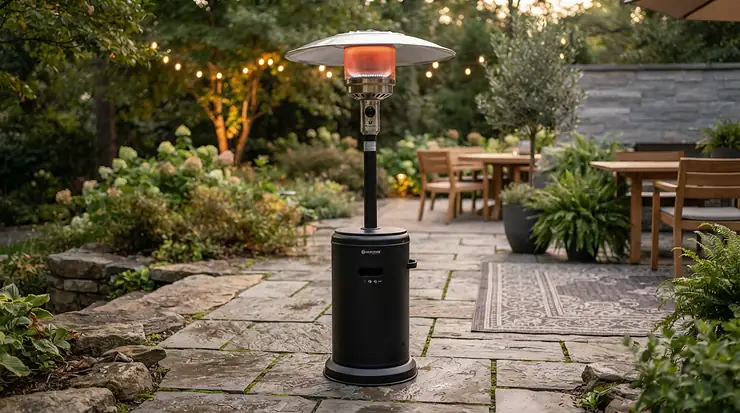
Picture the last mild evening of October. The string lights are on, the drinks are poured, and someone’s teeth have started to chatter. A dyna-glo patio heater exists for exactly this moment: it’s the difference between “let’s go inside” and “one more round out here.”
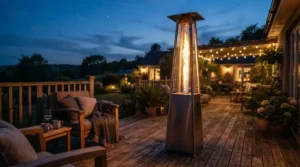
Dyna-Glo is a heating brand under GHP Group, and its standing patio line tops out at 48,000 BTU of radiant output. The finishes are stainless steel, hammered bronze, and a pyramid-flame design with a glass tube. Compared with a generic big-box mushroom heater, the appeal is a familiar shape, a tank tucked out of sight, and wheels for storage.
There are pitfalls too. Model numbers blur together (DGPH101BR, DGPH102SS, DGPH201BR and DGPH202SS all share a body), and the marketing radius numbers are friendlier than real life. A patio heater, sometimes called a mushroom or umbrella heater, is really just a radiant space heater on stilts, so wind, temperature, and placement decide how it feels.
Here’s how this guide works. It covers dyna-glo patio heater reviews, the dyna-glo propane patio heater lineup, the tank-hiding base design, Dyna-Glo heater assembly, and where an affordable propane patio heater brand fits your budget.
One transparency note. I haven’t fired any of these up in a backyard, and I won’t pretend otherwise. Everything here comes from manufacturer specs, owner’s manuals, retailer listings, and aggregated buyer feedback I could verify. Prices are ranges only, so check current price before you buy.
Quick Comparison Table: Seven Heaters at a Glance
| Model | BTU | Ignition | Style | Approx. Price Range | Best For |
|---|---|---|---|---|---|
| Dyna-Glo DGPH102SS | 41,000 | Piezo + pilot | Stainless mushroom | $250–$400 | Everyday decks |
| Dyna-Glo DGPH202SS | 48,000 | Electronic push-button | Stainless mushroom | $300–$450 | Bigger seating areas |
| Dyna-Glo DGPH101BR | 41,000 | Piezo | Hammered bronze mushroom | $250–$400 | Wood decks, warm décor |
| Dyna-Glo DGPH402SS | 42,000 | Electronic | Pyramid flame, 73 in. | $300–$450 | Low pergolas, ambiance |
| Dyna-Glo TT360DG | 30,000–40,000 | Manual tank-top | Portable 360° | Around $100–$150 | Budget, garages, tailgates |
| Fire Sense 60523 | 40,000 | Electronic | Pyramid flame, 88 in. | $250–$450 | Statement piece |
| AZ Patio HLDS01-CGT | 41,000 | Push-button + safety pilot | Bronze mushroom with table | $200–$400 | Entertaining on a budget |
Price tiers here are directional, not quotes, and retailers change them often. Looking at the table, the DGPH102SS is the safe middle, while the DGPH202SS pays extra for reach and a friendlier ignition. If you want the cheapest heat, the TT360DG wins on cost but is a different kind of machine, without the hideaway base or the polish. The AZ Patio HLDS01-CGT is the one to watch if a built-in table matters more than brand name.
💬 Just one click — help others make better buying decisions too!😊
Top 7 Dyna-Glo Patio Heater Picks and Alternatives: Expert Analysis
1. Dyna-Glo DGPH102SS — the balanced everyday workhorse
The DGPH102SS is the model most people picture when they say dyna-glo patio heater, and it earns that spot by refusing to be dramatic.
It’s a 41,000 BTU stainless steel mushroom heater with piezo ignition, a dial for variable heat, and a pilot light. Listings put its heated footprint near 315 square feet, and the maker describes a heat circle of up to 20 feet. In plain English, that covers a four-to-six-person seating cluster, not a whole backyard party. The base hides a 20 lb propane tank, and the manufacturer says a full tank lasts over 10 hours on high, which is a full evening of entertaining.
Based on the spec comparison, this is the sweet spot for a typical deck. It has enough output for chilly-but-not-freezing nights without paying for the extra reach of the 48,000 BTU models. Wind and 40°F air will shrink that circle, though, so treat the numbers as best-case.
On feedback, the Home Depot listing showed a 4.6 out of 5 average across 66 reviews at the time of research. I could verify the score but not read every comment, so take it as a strong signal, not gospel.
Pros:
- ✅ Pilot light plus piezo ignition is simple to operate
- ✅ Hidden 20 lb tank keeps the look clean
- ✅ Wheels make seasonal storage painless
Cons:
- ❌ Modest reach for large or windy patios
- ❌ Hose-and-regulator setup takes patience during assembly
Expect a mid-tier price in roughly the $250–$400 range (check current price), which is solid value for a stainless build.
2. Dyna-Glo DGPH202SS — biggest reach in the mushroom lineup
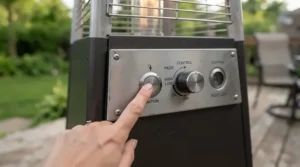
Step up to the DGPH202SS and you get 48,000 BTU, a one-step electronic ignition, and a wide-angle aluminum reflector. It uses the same 32.01 x 32.01 x 87.5-inch frame as its 41,000 BTU sibling.
Here’s a wrinkle the spec sheet won’t highlight. The BTU jump over the DGPH102SS is roughly 17 percent, but the manufacturer claims a 25-foot circle versus 20 feet. On paper, that’s over 50 percent more covered area from about 17 percent more fire. Read the radius as optimistic marketing and the BTU gain as the honest number. You’re buying a warmer, larger comfort zone, not a magic wand.
The weighted base has a sand-fill hole, which matters more than it sounds. A tall heater with a lighter base is a tipping risk on breezy decks, and extra ballast is cheap insurance. The unit also includes an automatic tip-over shutoff.
For feedback, I couldn’t verify a large review sample for this exact SKU. A small Walmart sample for the 48,000 BTU bronze sibling included one buyer who said the igniter never worked and who lit the heater manually. That buyer also said the customer service team offered to replace the head. It’s a tiny sample, but it’s why I’d test the ignition immediately after assembly.
Pros:
- ✅ Strongest heat output in the mushroom family
- ✅ One-push electronic ignition
- ✅ Sand-fillable base adds stability
Cons:
- ❌ Igniter reliability worry from limited feedback
- ❌ Radius claims likely overstate real-world comfort
Budget roughly the $300–$450 range (check current price). It’s worth it if you regularly seat six or more.
3. Dyna-Glo DGPH101BR — warm bronze look for wood decks
The DGPH101BR is basically the DGPH102SS in a hammered bronze finish, at 41,000 BTU with piezo ignition, variable heat, an anti-tilt device, and wheels.
Finish matters more than people admit. Stainless steel looks sleek on composite decking and modern furniture, but on a warm-toned wood deck or brick patio, bronze blends in rather than glaring. A textured hammered finish is also more forgiving of fingerprints and small scuffs than brushed metal. There’s a matching hammered bronze table accessory (15.75 inches square) that fits the DGPH101BR, and a waterproof 600-denier cover is listed for the family as well.
Because this heater shares its internals with the stainless version, you inherit the same strengths and limits. That means the same heat circle, the same run time, and the same need to keep it out of stiff wind. Spend on the cover, not on wishful thinking about all-winter use.
On feedback, I couldn’t verify a reliable, sizable review pool for this specific SKU, so I won’t invent a sentiment summary. If reviews matter to you, check the listing’s current count and read the most recent one-star comments.
Pros:
- ✅ Hammered bronze hides scuffs and blends with wood
- ✅ Matching table and cover options exist
- ✅ Same proven 41,000 BTU platform
Cons:
- ❌ Same modest coverage as the stainless twin
- ❌ Bronze paint can show wear if left uncovered
Plan for around the $250–$400 range (check current price). It’s a style pick, not a performance pick, so choose it only if the finish fits your patio.
4. Dyna-Glo DGPH402SS — shorter pyramid flame for ambiance
The DGPH402SS is the fashionable one. It’s a 42,000 BTU stainless pyramid heater with electronic ignition, a clear glass flame tube, variable heat, and an anti-tilt device. It’s listed at about 26 x 25 x 73 inches, which is notably shorter than the 87.5-inch mushroom models.
That lower height changes real-world use. If you have a pergola, an awning, or a low overhang, a 73-inch heater leaves you more clearance to work with. (Always follow the manual’s clearance rules regardless.) The visible flame also adds atmosphere that a mushroom head can’t match, so it doubles as décor.
The trade-off is how the heat is delivered. Mushroom heaters send radiant heat down from an overhead reflector, while a pyramid tube radiates in every direction. That’s lovely for a cluster of chairs around it, but less efficient if you want heat aimed at a single dining table. Think of it as a campfire that plugs into a propane tank rather than a spotlight.
For feedback, Home Depot hosts a review page for this model, but I couldn’t retrieve the review text or a trustworthy aggregate. Rather than guess, I’ll say check the current star count and skim recent complaints before ordering.
Pros:
- ✅ Lower profile suits low pergolas
- ✅ Visible flame adds ambiance
- ✅ Electronic ignition for easy starts
Cons:
- ❌ Heat is less directional than a mushroom head
- ❌ Glass tube demands more careful handling
Budget roughly the $300–$450 range (check current price). It’s good value if ambiance is half the reason you’re buying.
5. Dyna-Glo TT360DG — cheapest way into big BTUs
The TT360DG isn’t a patio heater in the classic sense, and knowing that will save you frustration. It’s a compact tank-top radiant heater that screws onto a 20 lb propane cylinder and offers 30,000, 35,000, or 40,000 BTU settings. It weighs about 4.4 pounds.
Runtime is decent: about 14.4 hours at 30,000 BTU, 12.4 at 35,000, and 10.8 at 40,000. The maker claims coverage up to 1,000 square feet, but that number comes from a jobsite context, and the manufacturer’s own copy frames it for properly ventilated construction use. On a patio, expect it to warm a compact seating cluster, not a lawn.
The real question is whether you need a hideaway base at all. If you want the lowest cost per BTU, or a heater that can move from a patio to a garage to a tailgate, the TT360DG delivers. The trade-offs are an exposed tank, a top-heavy stack, and no tidy aesthetic.
I couldn’t verify review data specific to this SKU, and reviews for other Dyna-Glo portable units (like the HeatAround line) shouldn’t be substituted here.
Pros:
- ✅ Very low cost for the BTU output
- ✅ Three heat settings and long runtime
- ✅ Tip switch and safety shutoff valve
Cons:
- ❌ Exposed tank looks utilitarian
- ❌ Top-heavy on a full 20 lb cylinder
Expect around $100–$150 (check current price). It’s superb value if function beats form.
6. Fire Sense 60523 — the flame-as-furniture competitor
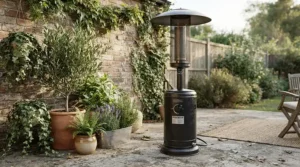
Yes, this is a non-Dyna-Glo pick, and it earns its place because it’s the most common rival shoppers cross-check. The Fire Sense 60523 is a 40,000 BTU stainless pyramid-flame heater with an electronic ignition system, wheels, and a tilt-activated shutoff valve. It runs about 10 hours on a 20 lb tank, per the maker.
It’s tall, roughly 88 inches, and heavy at about 65 pounds assembled, so it’s less nimble than the shorter DGPH402SS. It’s also ETL-certified and one retailer lists a very different BTU figure, which is a reminder that spec sheets aren’t uniform. I’d trust the manufacturer’s 40,000 number.
The visible glass tube is the main appeal. It works as a focal point on its own, even when you’re not cold. If your patio is a place people photograph, the Fire Sense 60523 does more visual work than a plain mushroom head.
Feedback looks decent. A Walmart listing showed 4.4 stars from 131 ratings at the time of research. One reviewer said it out-heated other standing units, and a wedding-gift buyer described assembling it with some excitement.
Pros:
- ✅ Strong visual presence with glass flame tube
- ✅ Stainless burners and grid
- ✅ Tip-over protection built in
Cons:
- ❌ Tall and heavy for a two-wheel tilt
- ❌ Tank isn’t concealed the way Dyna-Glo bases are
Plan on roughly the $250–$450 range (check current price). It’s a fair pick for design-first buyers.
7. AZ Patio HLDS01-CGT — table included for budget entertainers
For the affordable propane patio heater brand question, AZ Patio’s Hiland series is one of the most cited names. The AZ Patio HLDS01-CGT is a 41,000 BTU propane heater in hammered bronze with an access door that hides the tank and a push-button ignition. It has a safety pilot that stops gas if the burner goes out, plus an anti-tilt feature and up to 10 hours of run time on high.
The signature feature is an adjustable table that wraps the pole. It sounds gimmicky until you realize it’s where your drink goes at 9 p.m. when the cold hits and your hands are busy. Dyna-Glo sells stainless and bronze tables as accessories, but here it’s part of the package.
One caution: retail listings for this heater state coverage in wildly inconsistent ways, and some numbers look like typos. Ignore them and compare BTU and manufacturer clearance instead. A 36-inch clearance from combustibles is recommended on a sister model.
I couldn’t verify a sizable review base for this exact SKU, so I won’t fabricate one. Third-party aggregator sites exist, but they’re automated summaries, not primary reviews.
Pros:
- ✅ Included adjustable table
- ✅ Safety pilot plus anti-tilt device
- ✅ Access-door tank concealment
Cons:
- ❌ Inconsistent coverage claims across retailers
- ❌ Less brand support depth than larger names
Look in roughly the $200–$400 range (check current price). It’s strong value if the table is a feature you’ll actually use.
Dyna-Glo Heater Assembly: A Practical Setup Guide
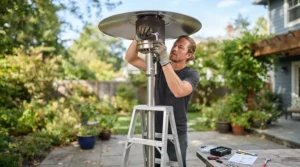
Dyna-Glo heater assembly is where many buyers lose their patience, so it deserves its own plan. Treat it as a small furniture build with a gas connection, which means slow beats fast.
Before you start:
- Inventory the box against the manual. Package contents for the mushroom models typically include a reflector panel, reflector plate, head assembly, cylinder housing, post, support bracket, base, wheel kit, and a hardware pack.
- Work with a second person. The head assembly is awkward when you’re threading it onto a tall post.
- Follow the sequence in your specific owner’s manual. The general flow is base and wheels, post sections, housing, head, and reflector, then the hose and regulator.
Fill the base if your model calls for it. The DGPH202SS listing highlights a sand-fill hole, and stability is worth the extra chore.
Then test for leaks. Use the manual’s leak-check procedure with a soapy solution around the fittings. The manual is also explicit that you should never connect an unregulated propane cylinder and that the tank knob must be closed during connection.
The 30-day mistakes are predictable: over-tightening fittings, skipping the leak check, and parking the heater on a slope. Before the first cold night, take a minute to read the CPSC’s winter heater safety guidance. It stresses stable, level placement and keeping flammables at least three feet away.
For upkeep, the manual suggests automotive wax to keep the finish looking sharp, and a fitted cover keeps rain out of the head. A weekly glance at the hose beats a monthly one.
Real-World Scenarios: Which Model Fits Your Patio?
Specs don’t sit on your deck; you do. Here are three profiles and the models that suit them.
The weekend host (mid-size composite deck, 5–6 guests, about twice a week in cool months). The DGPH202SS is the sensible pick. Its 48,000 BTU output and sand-fillable base handle a bigger cluster of chairs, and electronic ignition helps when guests are waiting.
The couple with a small wood deck (two chairs, 4–5 nights a week from October to March). The DGPH101BR or DGPH102SS fits better. You don’t need 48,000 BTU for two people, and the bronze finish suits warm-toned wood. Buy the cover for this heater since it will see near-daily use.
The renter or tailgater (no permanent setup, occasional use, tight budget). The TT360DG wins because it costs a fraction of the standing models and moves easily. Just plan for the exposed tank, and anchor the stack on flat ground.
If you’re between pergola heights, the DGPH402SS at about 73 inches is the model to measure first. And if the visual is more important than the heat, the Fire Sense 60523 is the flashier alternative.
✨ Ready to Warm Up Your Outdoor Evenings?
🔍 Take your patio to the next level with these carefully selected heaters. Click on any highlighted product name to check current pricing and availability. These picks will help you create cozy evenings your family and friends will love!
Common Problems and Practical Fixes
Even good heaters misbehave. Here are the issues that come up most often, with cautious fixes.
The igniter won’t spark or light. A Walmart reviewer of a 48,000 BTU bronze model reported the igniter never worked and lit it manually. First confirm the tank valve is open and the regulator is seated correctly, then check the ignition power source described in your manual. If it still fails, contact the maker; that same reviewer said the company offered a replacement head.
The pilot keeps going out. On models with a pilot and safety valve, releasing the control too quickly is a common culprit. Hold the control as long as the manual instructs. Persistent failures point to a service issue, so stop and call support rather than tinkering.
The heater doesn’t reach the desired temperature. Owner’s manuals list this as a troubleshooting topic. Check the tank level, confirm the setting is on high, and make sure wind isn’t stripping the heat. A simple windbreak can matter more than extra BTUs.
Uneven glow or popping noises. The manual flags both. Shut the heater off and consult the troubleshooting table, because these are situations where improvisation isn’t wise.
What Is a Dyna-Glo Patio Heater? (And How It Actually Works)
A dyna-glo patio heater is a freestanding outdoor radiant heater from Dyna-Glo, a GHP Group brand, that burns propane from a 20 lb tank to warm a seating area. Most models are tall, mushroom-style units with wheels, a tilt shutoff, and a base that hides the tank.
The physics is the fun part. A patio heater doesn’t heat the air so much as it heats you and everything around you, the way sunlight does. Radiant heat travels in straight lines, which is why a shielded spot beats an open, windy one, and why the heater “feels” warmer when you sit within its cone.
Inside, the parts are simple. A regulator brings tank pressure down to a safe level, a burner ignites through piezo or electronic ignition, and a reflector directs heat downward. A tilt sensor cuts gas if the unit falls over. The DGPH201BR and DGPH202SS manual references the ANSI Z83.26 and CSA 2.37 standard for gas-fired outdoor infrared patio heaters, which is the sort of certification worth confirming on any model you buy.
Think of the heater as a portable, narrow-beam sun. Position it like one.
How to Choose a Dyna-Glo Propane Patio Heater
The dyna-glo propane patio heater you pick should match your space, not your ego. Work through these steps in order.
- Measure your seating zone. A 41,000 BTU unit suits four to six chairs, and a 48,000 BTU unit suits a larger cluster. Bigger isn’t automatically better on a small deck.
- Check overhead clearance. A mushroom heater like the DGPH202SS is about 87.5 inches tall. If your ceiling or pergola is lower, look at the roughly 73-inch DGPH402SS.
- Pick the ignition you’ll tolerate. Piezo plus pilot is simple but a bit hands-on. Electronic push-button is friendlier, though it adds one more component that can fail.
- Decide on tank concealment. A hidden base looks tidy, while a tank-top like the TT360DG wins on cost and portability.
- Confirm outdoor-only use. State regulators note that outdoor-rated heaters can build carbon monoxide faster in tight spaces, so read the North Carolina Department of Agriculture’s propane heater safety guidance before you use any propane unit near an enclosure.
- Budget for extras. A cover, a table, and a spare tank change the real cost.
Dyna-Glo Patio Heater Reviews: What Real Buyers Report
Reliable dyna-glo patio heater reviews take some digging, and it’s worth being straight about what can and can’t be verified.
The strongest number I found is the Home Depot average of 4.6 out of 5 across 66 reviews for the DGPH102SS. Beyond that, the review pool for individual SKUs is thin. A small Walmart sample for the 48,000 BTU bronze model told a mixed story. One buyer said five people could eat dinner spaced six feet apart in 52°F weather, but doubted it would cope at 45°F. The same buyer reported the igniter never worked. Another review used dramatic language about failure after a first use.
The pattern I’d draw, cautiously, is that heat performance is generally accepted as adequate for mild-to-cool conditions, while ignition components are the recurring weak spot. With only a handful of comments, that’s a hint, not a verdict.
Also don’t blend product families. Complaints about pilot lights on Dyna-Glo wall heaters and construction heaters come from different products. And favorable reviews of the portable HeatAround line don’t transfer to standing patio units.

Dyna-Glo Tank Hideaway Heater: Why the Hidden-Tank Base Matters
Let’s clear something up. The Dyna-Glo tank hideaway heater isn’t a separate product line; it’s a design feature. Several standing models tuck a 20 lb propane cylinder inside the base, and shoppers use “tank hideaway” to describe that layout.
The benefits are real. A hidden tank looks cleaner, adds weight low in the frame for stability, and keeps the cylinder upright and out of the way. The DGPH102SS, DGPH202SS, and DGPH101BR all use this idea.
The cautions are equally real. Owner’s manuals warn that certain items stored under a heater can be exposed to radiant heat, so don’t treat the base as a storage cabinet for cushions or chemicals. The tank must be regulated, and the tank knob must be closed during connection. And a full 20 lb cylinder is heavy to swap, so plan how you’ll lift it.
Compare that to the TT360DG, where the tank is the base. It’s cheaper and simpler, but it loses the polish. If your patio is visible from the living room, the hideaway design earns its price.
Affordable Propane Patio Heater Brand: Where Dyna-Glo Fits
What counts as an affordable propane patio heater brand depends on what you value: the lowest sticker price, a longer feature list, or brand support. Dyna-Glo sits in the middle. It isn’t the cheapest name, but its models cover a full ladder from the roughly $100–$150 TT360DG to the premium stainless DGPH202SS.
AZ Patio’s Hiland line pushes cost lower by including an adjustable table and access-door tank storage. Fire Sense leans on design, with the tall glass-tube look of the Fire Sense 60523 and a listing average of 4.4 stars from 131 ratings.
If you value consistent finishes and a wide range of matching accessories, such as covers and tables for the DGPH lineup, Dyna-Glo is easy to live with. If you want the cheapest heat and don’t care how it looks, the tank-top route wins.
Dyna-Glo Propane Patio Heater vs Other Ways to Heat Your Patio
| Option | Strength | Weakness | Best For |
|---|---|---|---|
| DGPH102SS (propane mushroom) | Portable, no wiring | Needs tank swaps | Flexible decks |
| DGPH402SS (pyramid flame) | Ambiance plus heat | Less directional | Low pergolas |
| Electric infrared | No fumes, plug-in | Needs power, less punch | Covered nooks |
| Wood chimenea | Real fire feel | Smoke, cleanup | Casual gatherings |
Propane standing heaters win on portability, since you can roll them wherever the people are. Electric units avoid combustion fumes but depend on outlets and typically trade away raw output. Wood-burning chimeneas, which Wikipedia notes as a home alternative to gas heaters, offer atmosphere but demand cleanup and smoke tolerance. Choose based on where you sit and who complains about smoke.
Long-Term Cost and Maintenance
The sticker price is only the opening bid. Running a heater costs propane, storage, and small upkeep.
| Tier | Example | Approx. Price Range | Run Time (20 lb Tank) | Value Note |
|---|---|---|---|---|
| Budget | TT360DG | $100–$150 | 10.8–14.4 hrs | Best cost per BTU |
| Mid | DGPH102SS | $250–$400 | 10+ hrs on high | Balanced all-rounder |
| Premium | DGPH202SS | $300–$450 | About 10 hrs class | Best reach in lineup |
Here’s an illustration, not a quote. If a tank refill costs $20–$30 in your area and gives about 10 hours on high, that’s roughly $2–$3 per hour of comfort. Dial the heater down, and it stretches further.
The table shows how little separates mid and premium in sticker terms, so the running cost of a bigger burner matters more over years. Add a cover, expect to inspect the hose regularly, and remember the manufacturer’s listing shows a one-year limited warranty on the DGPH102SS, so confirm terms with your seller.
Safety, Regulations, and Compliance Guide
A patio heater is a flame on wheels, so respect it.
Outdoors only. Gas patio heaters shouldn’t be used in enclosed or tented spaces, and a screened porch can trap fumes. The CPSC’s carbon monoxide safety information for portable heaters explains why poorly ventilated areas are dangerous and lists symptoms like headache, dizziness, and confusion.
Level ground. Place the heater on a stable, level surface where it can’t be knocked over. Shim uneven pavers and use the sand-fill option where available.
Clearances. Follow your manual, and keep flammables well away. A sister-brand listing calls for 36 inches from combustibles, and CPSC’s general guidance also says three feet.
Certifications. Look for markings such as ANSI Z83.26 and CSA 2.37 on standing models, or ETL listing like the Fire Sense 60523. Check local rules too, because some venues restrict propane on balconies.

Frequently Asked Questions
❓ How many square feet does a dyna-glo patio heater cover?
❓ How long does a 20 lb tank last in a dyna-glo propane patio heater?
❓ Can I use a Dyna-Glo patio heater on a covered porch?
❓ Is Dyna-Glo heater assembly hard for a beginner?
❓ Do Dyna-Glo patio heaters come with a warranty?
Conclusion
The best dyna-glo patio heater is the one that matches your patio, not the one with the biggest number on the box. For most decks, the DGPH102SS is the calm, sensible choice, and the DGPH202SS earns its premium if you regularly host bigger groups and want push-button ignition. Choose the DGPH101BR when bronze suits your wood deck, and pick the DGPH402SS if your pergola is low and you want a visible flame.
Budget buyers should look at the TT360DG, while design-first shoppers may prefer the Fire Sense 60523. If a built-in table sounds handy, the AZ Patio HLDS01-CGT deserves a look. Whatever you choose, treat assembly seriously, place the heater on level ground in the open air, and check the current price and reviews before you buy.
Recommended for You
- Fire Sense Patio Heater: 7 Best Picks (Ultimate 2026 Guide)
- Infratech Heater Review 2026: 7 Best Models Ranked & Compared
- Bromic Patio Heaters Review 2026: 7 Models, Ranked Honestly
Disclaimer: This article contains affiliate links. As an Amazon Associate, I earn from qualifying purchases. If you purchase products through these links, we may earn a small commission at no additional cost to you.
✨ Found this helpful? Share it with your friends! 💬🤗
