
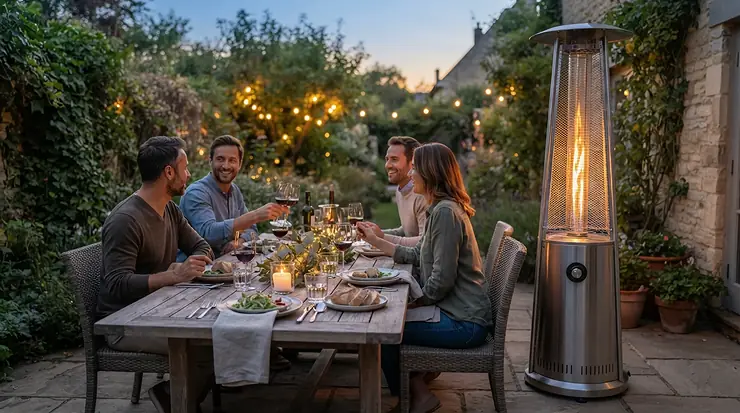
In This Article
What is a fire sense patio heater? It is an outdoor heater from the Fire Sense brand, usually a freestanding propane tower, though tabletop and natural gas models exist. A reflector-topped burner or glass flame tube radiates warmth outward. Most towers put out 40,000-46,000 BTU and run roughly ten hours on a 20 lb tank.
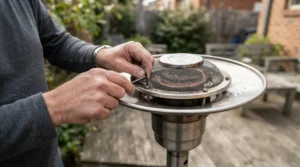
That’s the textbook answer. The practical answer is more interesting. A patio heater is, at heart, a radiant heating appliance. A burner sits atop a pole and pushes flame against a perforated screen, and a reflector bounces escaping heat back toward you. Think of it as a small, portable sun. It won’t warm the air on a windy December night, but it will warm you.
This guide sorts through the Fire Sense lineup so you don’t have to. It draws on real manufacturer specifications, retailer listings, and the aggregated themes in buyer reviews as of September 2026. Nothing here comes from hands-on testing, and no review quotes are invented. Where a claim can’t be verified, I’ll say so.
You’ll get seven models across budget, mid-range, and premium tiers, plus setup and troubleshooting guides. You’ll also find a decoder for Fire Sense heater parts, a running-cost breakdown, and a safety section. Skim the table first if you’re in a hurry. Read the product breakdowns if you’re about to spend real money.
Quick Comparison: Fire Sense Patio Heater Models at a Glance
Here is the whole lineup on one screen. Output figures come from manufacturer and retailer listings, and runtimes assume a full 20 lb tank unless noted.
| Model | Fuel & Output | Ignition | Approx. Runtime | Best For |
|---|---|---|---|---|
| Fire Sense 01775 Commercial Stainless | Propane, 46,000 BTU | Electronic | ~10 hrs | Nightly use, stainless fans |
| Fire Sense Pyramid Flame 60523 | Propane, 40,000 BTU | Electronic | ~10 hrs | Ambience plus all-around warmth |
| Fire Sense Square Flame 62224 | Propane, 46,000 BTU | Check listing | ~10 hrs (verify) | Statement-piece patios |
| Fire Sense Standard Series 61283 | Propane, 44,000 BTU | Piezo | Up to 10 hrs | Hammered-bronze value seekers |
| Fire Sense All Seasons (Aged Chestnut) | Propane, 46,000 BTU | Piezo | ~10 hrs | Everyday patios |
| Fire Sense 10,000 BTU Tabletop 60262 | Propane, 10,000 BTU (1 lb cylinder) | Piezo | Up to ~3 hrs | Balconies, small tables |
| Fire Sense 45,000 BTU Natural Gas 61445 | Natural gas, 45,000 BTU | Electronic | Continuous | Permanent gas-line setups |
Look at the output column first. The gap between 44,000 and 46,000 BTU is about 4%, which is far too small to feel, so ignore it and shop on finish, ignition, and fuel type instead. The real dividing lines are fuel and format: propane towers for flexibility, the Fire Sense 10,000 BTU Tabletop 60262 for tight spaces, and the Fire Sense 45,000 BTU Natural Gas 61445 for people who are tired of hauling tanks.
💬 Just one click — help others make better buying decisions too!😊
Top 7 Fire Sense Patio Heaters: Expert Analysis
Price ranges below are approximate reference points from September 2026 research. Retail prices shift constantly, so check current price before you buy.
1. Fire Sense 46,000 BTU Stainless Steel Commercial Patio Heater (01775) — premium stainless build for entertainers
The Fire Sense 01775 is the stainless flagship of the tower range. That finish matters because bare stainless doesn’t chip the way powder coat can, so it weathers instead of peeling.
The listing shows a 46,000 BTU burner, electronic ignition, wheels, and an access door that hides the 20 lb propane tank inside the pole. It stands roughly 89 inches tall with a 33-inch hood and weighs about 42 lbs. Listings claim heat coverage up to 18 feet in diameter. Treat that as the outer edge of noticeable warmth, not the comfort zone.
This is the model for people with a permanent seating cluster who plan to run it most weekends. One caution: 42 lbs is light for a seven-foot tower. One reviewer bolted theirs to an umbrella base and called the result very stable. Another notes that a US retailer lists a 3-5 minute propane purge on some models before the igniter will catch, so budget patience on the first start.
Buyer sentiment leans positive. Reviewers commonly mention easy assembly, good heat for their space, and helpful phone support. A minority report assembly taking several hours.
Pros:
- ✅ Stainless finish resists weather wear
- ✅ Tank hides behind a tidy access door
- ✅ Electronic ignition simplifies startup
Cons:
- ❌ Assembly can stretch into hours
- ❌ Light base needs anchoring in wind
Expect a price around the $350-$450 range. It is the premium pick, and the value is strong if you’ll use it nightly.

2. Fire Sense Pyramid Flame Patio Heater (60523) — flame centerpiece with all-around warmth
Most patio heaters are utilitarian. The Fire Sense Pyramid Flame 60523 is furniture that happens to burn propane. A one-piece glass tube frames a tall flame, and the same design also ships in a Coronado Brushed Bronze finish as model 62263.
Specs include 40,000 BTU, a stainless burner and heating grid, electronic ignition, and tip-over protection. It is ETL-certified and rolls on attached wheels. A 20 lb tank runs it about ten hours. Because warmth radiates in every direction from the flame column rather than from a hood overhead, it suits a round table where everyone sits at the same distance.
A Walmart listing shows a 4.4-star average across 131 ratings, and reviewers frequently praise the flame and heat. The complaints cluster around assembly. One buyer needed about three hours, another had to force holes to align, and a third found the igniter dead out of the box and had to light it manually. Instructions are a recurring gripe.
Pros:
- ✅ Dramatic visible flame doubles as decor
- ✅ Heat radiates in every direction
- ✅ ETL certification and tilt shutoff
Cons:
- ❌ Assembly and instructions frustrate some buyers
- ❌ Igniter failures reported by a few owners
Plan on the $250-$300 range. That is fair value if ambience counts as a feature for you.
3. Fire Sense Square Flame Patio Heater, Hammered Bronze (62224) — tallest flame, strongest 46,000 BTU punch
If the pyramid is a campfire in a glass case, the Fire Sense Square Flame 62224 is a torch. The manufacturer describes a patented design with a built-in emitter that it says produces more heat than any other flame heater.
Treat that “more than any other” line as marketing. What can be verified is a 46,000 BTU rating, stainless steel burners and grid, a tip-over shutoff, and wheels. It ships in one carton and uses a standard 20 lb tank. The one-carton shipping detail hints at a simpler unboxing than some tower models, though I couldn’t confirm that from assembly reports.
I also couldn’t find a deep pool of independent reviews for this exact model. So this pick rests on specs, not on a crowd’s verdict. The sensible move is to read the current review count on your retailer before ordering. Sitting where flame-heater warmth matters most, an emitter design should send heat outward at torso height instead of dumping it overhead. That is a design inference, not a tested result.
Pros:
- ✅ Full 46,000 BTU flame-style output
- ✅ Stainless burner and heating grid
- ✅ Tip-over shutoff and wheels included
Cons:
- ❌ Limited verifiable review history
- ❌ Bronze powder coat may show wear over time
Budget in the mid-$300s or higher and check current price. It is a design-led splurge, not a value play.
4. Fire Sense Standard Series 44,000 BTU Patio Heater, Hammered Bronze (61283) — classic hammered-bronze mid-range workhorse
The Fire Sense Standard Series 61283 is what most people picture when they hear “patio heater.” Listings show a powder-coated hammered bronze finish, piezo ignition, a stainless steel burner and heating grid, and up to ten hours on a 20 lb tank.
Here’s the spec sheet reality check: 44,000 versus 46,000 BTU is a rounding error at the seat. You are paying for the finish and the ignition style. Piezo ignition is a click-to-spark button, simpler than electronic systems and usually easy to service, but it depends on you holding the control knob long enough for the flame to stabilize.
I couldn’t verify a review pool for this exact model. The closest evidence comes from Best Buy reviews of related 46,000 BTU All Seasons towers. Owners describe easy assembly and simple operation. One notes that in an open patio on a cold day you’ll want to be close, and another recommends filling the base with sand or water. A separate reviewer reported a dent after about seven months in the sun. That points to finish care as the main watch-out.
Pros:
- ✅ Familiar tower design with roomy hood
- ✅ Simple piezo ignition
- ✅ Up to ten hours per 20 lb tank
Cons:
- ❌ Powder coat can dent or fade
- ❌ Heat is strongest close to the pole
Expect roughly the $250-$350 range. It is solid mid-range value for a general-purpose fire sense patio heater.
5. Fire Sense All Seasons 46,000 BTU Patio Heater, Aged Chestnut — best-reviewed all-rounder for everyday patios
The Fire Sense All Seasons Aged Chestnut collects the best review signal I found. A Wayfair listing shows a 4.7-out-of-5 rating. Buyers praise easy assembly, attractive looks, and effective performance.
The specs are straightforward. It has an 18-inch base, a 33-inch reflector, and stands 86 inches tall at about 40 lbs. It uses piezo ignition, a chrome-plated head with a stainless burner and heating grid, and a tilt-valve shutoff. Listings claim an 18-foot heat range and roughly ten hours per tank. A note of caution: one retailer page for this finish lists 48,000 BTU, while most others say 46,000. Confirm the figure at checkout.
The same body comes in many colors, including an Aqua Blue version (61130) that carries ETL approval and suits pool decks. Buyers across Best Buy listings say it works as expected with simple operation. They do warn that you’ll want to sit close.
Pros:
- ✅ Strong buyer satisfaction on major listings
- ✅ Many finishes to match your decor
- ✅ Easy assembly reported by most buyers
Cons:
- ❌ Base benefits from added weight
- ❌ Spec listings vary slightly by retailer
Plan on the $200-$300 range. Value is excellent, and it is my default recommendation for a first-time buyer.

6. Fire Sense 10,000 BTU Tabletop Patio Heater (60262) — pocket-size warmth for tabletops
Not every patio is big enough for a seven-foot tower. The Fire Sense 10,000 BTU Tabletop 60262 stands about 35 inches tall on a 21-inch footprint and runs on a 1 lb disposable propane cylinder that tucks inside the base.
Specs matter here. The heater is CSA-approved and has an oxygen depletion sensor plus a tilt shutoff, which is a meaningful safety layer for a small unit sitting near people at a table. It has adjustable output and piezo ignition, and it runs up to about three hours per cylinder. Listings say it warms roughly 100 square feet and lifts local temperatures 10-25 degrees, which is an optimistic range for windy spots.
Reviewers describe 20-45 minute assemblies, a nicely weighted base, and warmth right around the table. Complaints include confusing instructions, color that varies from photos, and a thin top hat that bends.
Pros:
- ✅ Compact enough for balconies
- ✅ Oxygen depletion sensor plus tilt shutoff
- ✅ Quick assembly in under an hour
Cons:
- ❌ About three hours per small cylinder
- ❌ Thin hat panel bends easily
Expect the lowest price in the lineup, likely in the under-$150 range. It is a cost-effective choice for two or four people at a table.
7. Fire Sense 45,000 BTU Stainless Natural Gas Patio Heater (61445) — no tank refills, just a gas line
The Fire Sense 61445 is the odd one out. It runs on natural gas, not propane, and it’s designed to be permanently mounted on a heavy-duty plate. That makes it the exit ramp for anyone weary of swapping tanks every week.
It offers 45,000 BTU, electronic ignition, tip-over protection, and stainless burners with a double mantle grid. Reviewers who set one up describe the trade-offs in detail. Several had to run gas line or source fittings for a quick-disconnect hose. Some built weighted, wheeled bases from plywood or concrete, and a few tossed the plastic base cover as flimsy.
Reported comfortable heat ranges ran from about 4-8 feet, so expect a smaller warm zone than the 18-foot marketing number. One buyer’s flame head failed to stay lit, and the company sent a replacement within days after proof of purchase, a positive support signal.
Pros:
- ✅ Endless fuel supply from your gas line
- ✅ Lights quickly, reviewers report
- ✅ Responsive support noted by a buyer
Cons:
- ❌ Needs gas line work or fittings
- ❌ Plastic base cover looks cheap
Budget roughly the $300-$400 range plus installation materials. It is the best long-run value only if you have a gas line nearby.
Fire Sense Patio Heater Setup Guide: Your First 30 Days
Listings and reviews suggest that most first-week problems come from rushing assembly. Here’s a routine that avoids them.
Day one: build it right. Assemble on a flat surface and thread every bolt loosely before final tightening. Reviewers who forced misaligned holes were the ones who ran into trouble. Install the igniter battery carefully. One buyer flagged that the positive end faces the spring and the flat negative end faces the igniter button, so double-check yours against the manual.
Connect the fuel safely. Attach the tank with the heater off and away from any flame. Check every connection with soapy water and look for bubbles, a step one Best Buy reviewer highlighted. For the first ignition, give the gas hose time to purge. A US retailer notes some models need 3-5 minutes, and an older reviewer describes holding the control knob about two minutes before pressing the igniter.
Add weight. Sand or water in the base (where the design allows) or an umbrella-base anchor makes a tall tower far steadier. Buyers report both approaches working.
Week-one check. Retighten hardware after the first few uses, because heat cycles can loosen fasteners. Keep the heater well clear of awnings, umbrellas, and railings, following your manual’s clearance distances.
Ongoing. Let it cool completely before covering it. A felt-lined vinyl cover, sold by Fire Sense for its flame heaters, protects the finish between seasons. Store the tank outdoors in a ventilated spot.
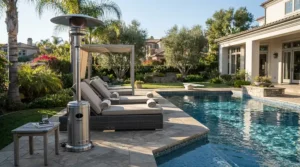
Troubleshooting a Fire Sense Propane Heater: Problems and Fixes
When a fire sense propane heater misbehaves, the cause is usually one of five things. Here they are in order of likelihood.
1. It clicks but won’t light. Confirm the tank valve is open and that air has purged from the line. Try a fresh battery, oriented correctly. If the spark is weak or absent, the piezo igniter and cable are the next suspects.
2. It lights, then goes out when you release the knob. This is the classic thermocouple symptom. Some owners report it after winter storage. Hold the knob for a longer count first. If it persists, replace the thermocouple (with its tilt switch, on some designs). One buyer’s flame head failed this way and was replaced under support.
3. You don’t feel enough warmth while seated. Reviewers say heat is strongest within a few feet of the pole. Move seating closer, or consider a larger reflector accessory, which one buyer added.
4. The tower rocks in wind. Weigh down the base with sand or water, or bolt it to an umbrella base.
5. Finish dents or fades. Store it covered and avoid dragging it across rough surfaces. One reviewer reported a heat-related dent, so don’t push the reflector against walls.
If the smell of gas ever appears, shut off the tank and step away from the unit. Don’t try to diagnose a leak by feel.
Fire Sense Heater Parts: What Fails First and How to Replace It
Fire Sense heater parts are widely sold, which is a real advantage of a mainstream brand. Retail listings show reflectors, glass tubes, thermocouples, burner modules, bases, glass guards, and hardware kits. The brand’s own parts shop lists igniters with cable, thermocouples with tilt switches, and burner modules with regulator valve kits.
The usual suspects, in order:
- Thermocouple: Wear here causes the “won’t stay lit” problem. It is typically a low-cost part, often under $15.
- Piezo igniter and cable: These fix a dead click. Also inexpensive.
- Regulator and hose: These are safety-critical, so replace them at the first sign of cracking or leaks.
- Reflector or hood: Dents or oxidation are cosmetic, but a replacement restores the heat-bounce that makes towers work.
- Glass tube (flame models): Replace on cracks or heavy discoloration.
Buying tips. Match parts to your exact model number, because burner kits are model-specific. Watch for third-party “compatible” listings, which vary in fit. Anything touching the gas path deserves the manufacturer’s part. If you’re not comfortable working on fuel connections, a qualified technician is cheap insurance.
A heater with easy-to-find parts holds its value longer. A $5 thermocouple can rescue a $300 tower, which changes the total cost of ownership math considerably.
How to Choose a Fire Sense Patio Heater
Use these seven steps in order. Each one narrows the field.
- Measure your seating zone. Count how many people sit within about six feet of the heater. That is your practical warm zone, not the 18-foot marketing number.
- Pick your fuel. Propane gives you portability. Natural gas gives you endless fuel. A tabletop unit trades runtime for footprint.
- Choose your form. A hooded tower heats from above, a flame tube heats at torso level, and a tabletop heats a table.
- Compare ignition. Piezo is simple and repairable. Electronic ignition is a touch more convenient at startup.
- Weigh the finish. Stainless resists weather best. Powder coat costs less but can dent or fade.
- Plan for stability. Towers weigh about 40 lbs. Budget for sand, water, or an anchor.
- Check parts and support. Confirm your model’s parts are available before you commit.
If you run a fire sense patio heater in a windy spot, weigh step six most heavily. If it’s mostly for looks, lean toward the flame models.
Fire Sense Patio Heater Reviews: What to Expect in Real-World Performance
Reading fire sense patio heater reviews across retailers, a consistent picture emerges. All summaries here are aggregated themes, not quotes.
What buyers like. Many report simple assembly, a solid build for the price, quick ignition, and attractive finishes. Buyers of flame models often say the visual appeal exceeds expectations.
What buyers criticize. The most common complaints are unclear instructions, occasional missing hardware, igniter problems on a minority of units, and finish wear such as dents.
The heat reality. Here’s the key insight from fire sense patio heater reviews: heat is strongest close to the heater. One Best Buy reviewer sat with their head halfway up the pole and felt little warmth until standing within a couple of feet. Natural gas buyers describe usable heat out to roughly 4-8 feet.
That is normal for radiant gas heaters. The spec sheet’s 18-foot diameter describes reach, not comfort. On a mild fall evening you’ll feel it farther out. On a windy 30-degree night, expect to lean in.
The takeaway: buy for the number of people within six feet, not the square footage of your patio. Two heaters placed at either end of a long table will beat one big tower every time.
Fire Sense Propane Heater Running Costs and Maintenance
A fire sense propane heater is cheap to buy and modestly priced to run. The math is refreshingly simple.
A 20 lb tank holds roughly 4.7 gallons of propane, and propane carries about 91,500 BTU per gallon. That’s about 430,000 BTU per tank. Divide by a 46,000 BTU burn rate and you get roughly nine to ten hours, which matches listing claims.
If a refill or swap costs in the low $20s (a rough, illustrative figure that varies widely by region and retailer), you’re looking at about $2-$2.50 per hour at full output. Turn the dial down and the cost falls with it. A tabletop unit on a 1 lb cylinder runs up to about three hours per cylinder, so its per-hour cost is often higher.
Maintenance costs are small. Thermocouples and igniters are inexpensive parts. A cover protects the finish. The real long-term expense is replacing the tank when it reaches its date stamp, so check the stamp on your cylinder.
For heavy users, a natural gas model like the Fire Sense 45,000 BTU Natural Gas 61445 eliminates refills. The trade-off is upfront installation work and fixed placement.
Given these numbers, cost shouldn’t be the deciding factor between models. Finish, stability, and fuel logistics matter far more.
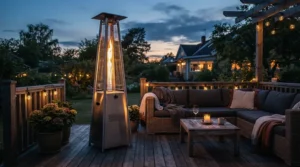
Is Fire Sense a Budget-Friendly Patio Heater Brand?
Short answer: it is one of the more accessible names in the category, and the evidence backs that up. Fire Sense heaters are stocked widely through big retailers including Home Depot, Lowe’s, Walmart, Best Buy, Target, and Wayfair. That distribution keeps prices competitive and makes returns easy.
As a budget-friendly patio heater brand, Fire Sense earns its label through the lower tiers of the range. It delivers respectable BTU output, functional safety features, and lots of finish choices without premium pricing. The compromises show up in details: powder-coat wear, plastic parts on some models, and instructions that frustrate some buyers.
| Model | Approx. Price Range | Value Verdict | Best For |
|---|---|---|---|
| Fire Sense 10,000 BTU Tabletop 60262 | Under $150 | Strong for small spaces | Balconies |
| Fire Sense All Seasons (Aged Chestnut) | $200-$300 | Best overall value | First-time buyers |
| Fire Sense Pyramid Flame 60523 | $250-$300 | Fair for ambience | Decor-driven patios |
| Fire Sense Standard Series 61283 | $250-$350 | Solid mid-range | General use |
| Fire Sense 01775 Commercial Stainless | $350-$450 | Best long-term durability | Heavy nightly use |
Read the table this way: the Fire Sense All Seasons (Aged Chestnut) wins on cost-per-benefit, while the Fire Sense 01775 Commercial Stainless costs more upfront but should hold its looks longer. If you hate maintenance, spend up for stainless. If you’re renting or unsure how much you’ll use it, the budget end is the smart bet.
Freestanding Propane Patio Heater vs. Electric and Natural Gas
A freestanding propane patio heater isn’t the only way to warm a deck. Before you commit, compare the alternatives. Convection quickly carries hot air away outdoors, which is why outdoor heating relies on radiant heat instead of warming the air.
| Type | Fuel & Portability | Strengths | Best For |
|---|---|---|---|
| Fire Sense All Seasons (Aged Chestnut) | Propane, fully portable | Move anywhere, no wiring | Flexible layouts |
| Fire Sense 45,000 BTU Natural Gas 61445 | Natural gas, semi-fixed | Endless fuel | Permanent seating |
| Fire Sense 10,000 BTU Tabletop 60262 | Propane, ultra-portable | Small footprint | Two-person tables |
| Electric infrared (generic) | Plug-in, no fumes | Cleanest option | Covered, ventilated spaces |
Looking at the comparison above, the propane tower wins on freedom. You can wheel it to a different spot each weekend, and it needs no gas line or outlet. Its cost is tank logistics. Natural gas removes those hassles but roots the heater in place. Electric heaters avoid combustion fumes entirely, which is why they suit partially covered areas better, though they typically need a nearby outlet and deliver less punch per unit.
The rule of thumb is simple: choose propane if you value flexibility, natural gas if you value convenience, and electric if ventilation is your limiting factor.
Features That Actually Matter (And Those That Don’t)
Matter:
- Tilt shutoff. Every model here has one, and it’s the feature that matters most if a wind gust or a running kid topples the heater.
- Oxygen depletion sensor. The tabletop model has one, a helpful extra for a unit sitting close to faces.
- Certification. Look for ETL or CSA marks on the listing.
- Tank access. A door or housing that hides and secures the cylinder makes refills easier.
- Base stability. Weight beats every other design detail in wind.
Don’t matter as much:
- BTU differences of a few thousand. Forty-four versus forty-six thousand is invisible in use.
- Stated coverage diameter. Reviewers report a much smaller comfortable zone.
- Marketing superlatives. “Most powerful on the market” appears across many listings and says little.
- Color trends. Pick what you like, but remember darker finishes may show wear differently.
Filtering features this way makes shopping faster. You’ll be comparing safety, stability, and fuel logistics instead of chasing rounding errors.
Safety, Regulations and Placement for Propane Patio Heaters
Outdoor heaters must stay outdoors. That sounds obvious until you consider partially enclosed patios, which is where trouble tends to start. The U.S. Consumer Product Safety Commission documents carbon monoxide deaths from propane heaters used in tents, campers, and other enclosed spaces. Patio heaters are built for open air.
Guidance from the North Carolina Department of Agriculture adds an important point: outdoor-rated heaters build up carbon monoxide faster than indoor-rated ones. It also advises a carbon monoxide detector wherever combustion heaters are used near living spaces.
Practical placement rules:
- Use only in open, well-ventilated areas, never in a garage or enclosed porch.
- Keep the heater clear of awnings, umbrellas, railings, and overhanging branches, following the clearances in your Fire Sense manual.
- Store propane cylinders outdoors, upright, and away from heat sources.
- Never install or remove a tank while the heater is lit or hot.
- If you smell gas, shut off the tank and move away.
Retailer listings also carry California Proposition 65 warnings tied to carbon monoxide, which is standard for combustion appliances. Always read the manual that ships with your specific model, because clearances and procedures vary.

FAQ
❓ Is a fire sense patio heater worth buying in 2026?
❓ Can I use a fire sense propane heater on a covered porch?
❓ Where should I buy Fire Sense heater parts?
❓ What size tank does a freestanding propane patio heater need?
❓ Do Fire Sense heaters come with a propane tank?
Conclusion
The Fire Sense range makes buying easier because the trade-offs are so clear. The Fire Sense All Seasons (Aged Chestnut) is the value-minded default, with the strongest review signal I found. The Fire Sense 01775 Commercial Stainless is the durable premium pick, and the Fire Sense Pyramid Flame 60523 trades a little heat for a lot of ambience. Small spaces belong to the Fire Sense 10,000 BTU Tabletop 60262, and gas-line homes should consider the Fire Sense 45,000 BTU Natural Gas 61445.
Whichever you pick, buy for the six feet around the pole and not the whole patio. Anchor the base, learn where Fire Sense heater parts come from, and keep the unit firmly outdoors. Do that, and a fire sense patio heater can add real weeks to your outdoor season without much fuss.
Recommended for You
- Infratech Heater Review 2026: 7 Best Models Ranked & Compared
- Bromic Patio Heaters Review 2026: 7 Models, Ranked Honestly
- Best Outdoor Pellet Patio Heater: 7 Models Worth Your Patio Space In 2026
Disclaimer: This article contains affiliate links. As an Amazon Associate, I earn from qualifying purchases. If you purchase products through these links, we may earn a small commission at no additional cost to you.
✨ Found this helpful? Share it with your friends! 💬🤗
