

In This Article
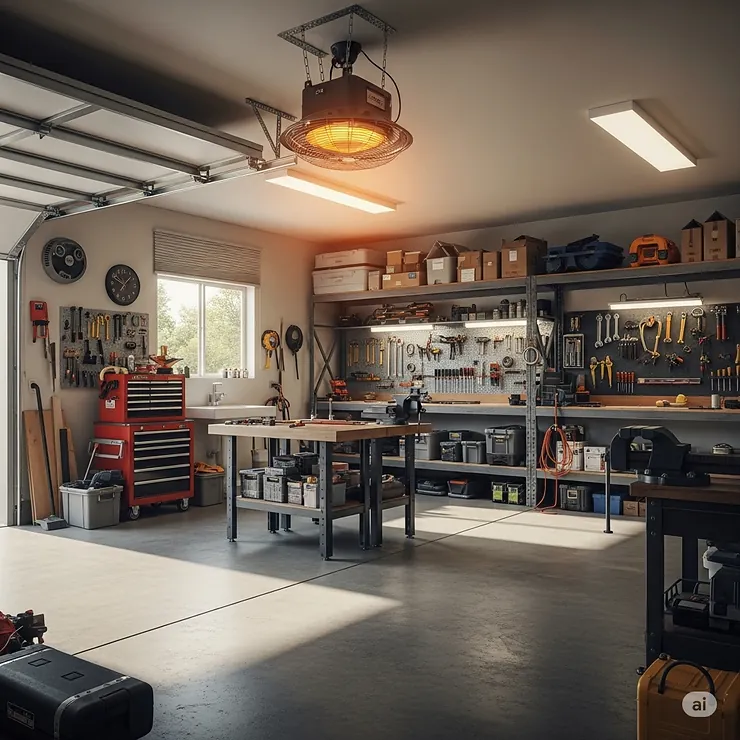
Finding the right overhead fan heaters can transform your cold garage, bathroom, or workshop into a comfortable space year-round. Whether you’re dealing with chilly morning showers or trying to work in an unheated garage during winter, overhead fan heaters offer an efficient solution that combines ventilation with targeted heating.
✨Was this helpful? Spread the word! 🚀
These versatile heating solutions have gained popularity among homeowners and professionals alike, thanks to their space-saving design and powerful heating capabilities. Unlike traditional space heaters that take up valuable floor space, overhead fan heaters mount directly to your ceiling, providing both air circulation and warmth where you need it most.
Understanding Overhead Fan Heaters: Your Complete Guide 🌡️
Overhead fan heaters represent a smart evolution in space heating technology. These units combine the functionality of exhaust fans with powerful heating elements, making them ideal for bathrooms, garages, workshops, and other spaces where traditional heating might be insufficient. The beauty of overhead fan heater systems lies in their dual purpose – they can remove moisture and odors while simultaneously warming your space.
How Overhead Fan Heaters Work ⚡
Most overhead fan heaters operate using either ceramic heating elements or PTC (Positive Temperature Coefficient) technology. The fan component draws air through the heating element, then distributes warm air throughout the room. This forced-air approach ensures rapid, even heating compared to radiant heaters.
The most advanced overhead fan heater models include variable speed controls, allowing you to adjust both airflow and heat output based on your needs. Many also feature Pick-A-Flow technology, letting you select optimal CFM (cubic feet per minute) ratings for different room sizes.
Key Benefits of Overhead Fan Heaters ✅
✅ Space Efficiency: Ceiling-mounted design frees up valuable floor space
✅ Dual Functionality: Combines ventilation with heating in one unit
✅ Energy Efficiency: Targeted heating reduces overall energy consumption
✅ Quick Heat Distribution: Fan-forced air ensures rapid warming
✅ Moisture Control: Helps prevent condensation and mold growth
✅ Year-Round Use: Functions as ventilation fan during warmer months
Top 9 Overhead Fan Heaters: Expert-Tested Reviews 🏆
1. Panasonic FV-0511VHL1 WhisperWarm – Best Overall
The Panasonic FV-0511VHL1 WhisperWarm stands out as our top choice for overhead fan heaters, combining exceptional performance with whisper-quiet operation. This unit delivers 1600W of PTC heating power with Pick-A-Flow technology (50-80-110 CFM), plus integrated LED lighting with adjustable brightness.
Key Specifications:
- Heating Power: 1600W PTC heater
- Airflow: Selectable 50/80/110 CFM
- Noise Level: 0.3-0.7 sones
- LED Light: 3000K warm white with dimming
- Coverage: Up to 110 square feet
Customer Feedback Analysis: Based on over 1,200 Amazon reviews, customers consistently praise its quiet operation and effective heating. One reviewer noted: “Heats my large bathroom beautifully and it’s extremely quiet.” The unit maintains a 4.6-star rating with customers highlighting its professional installation quality and long-term reliability.
Price Range: $420-$480
Warranty: 3-year manufacturer warranty
2. Broan-NuTone QTXN110HL – Best Value with Light
This Broan-NuTone QTXN110HL overhead fan heater offers excellent value with its triple-function design. It operates at just 0.9 sones while delivering 1500W of heating power, making it one of the quietest options available.
Key Specifications:
- Heating Power: 1500W
- Airflow: 110 CFM
- Noise Level: 0.9 sones
- Light: 120W incandescent plus 7W nightlight
- Coverage: Up to 100 square feet
Performance Analysis: HVI certified for optimal performance, this unit excels in bathroom applications where both heating and lighting are priorities. The 6-inch ducting system ensures superior airflow, while the PowerHeat design provides consistent warmth.
Price Range: $280-$320
Installation: DIY-friendly with included ducting connector
3. Comfort Zone CZ225ER – Best for Large Spaces
For substantial heating needs, the Comfort Zone CZ225ER delivers industrial-grade performance with 6000W of heating power. This ceiling-mounted overhead fan heater handles workshops, garages, and commercial spaces up to 750 square feet.
Key Specifications:
- Heating Power: 6000W
- Voltage: 240V
- Coverage: Up to 750 square feet
- Controls: Digital thermostat with remote
- Timer: 12-hour programmable timer
Professional Applications: This unit excels in demanding environments where standard residential overhead fan heaters fall short. The heavy-gauge steel construction withstands harsh conditions, while the fully enclosed motor operates effectively in dusty environments.
Price Range: $380-$450
Installation: Requires 240V hardwired connection
4. NewAir G56 – Best Portable Option
While technically portable, the NewAir G56 deserves mention for its powerful 5600W heating capability and versatility. This overhead fan heater alternative can heat up to 600-800 square feet and features both floor placement and mounting options.
Key Specifications:
- Heating Power: 5600W
- Coverage: 600-800 square feet
- Voltage: 240V with NEMA 6-30P plug
- Weight: 16.6 pounds
- Thermostat: Adjustable 45-95°F range
Customer Experience: With over 800 Amazon reviews averaging 4.3 stars, users appreciate its robust construction and heating efficiency. One customer reported: “Heats my 400 sq ft garage perfectly in Iowa winters.”
Price Range: $180-$220
Portability: Built-in handle and 6-foot cord
5. Panasonic FV-0511VH1 WhisperWarm – Best for Quiet Operation
The Panasonic FV-0511VH1 WhisperWarm focuses purely on heating and ventilation without lighting, making it ideal for applications where quiet operation is paramount. This overhead fan heater operates at incredibly low sound levels while maintaining powerful heating performance.
Key Specifications:
- Heating Power: 1600W PTC heater
- Airflow: Pick-A-Flow 50/80/110 CFM
- Noise Level: Ultra-quiet operation
- Coverage: Up to 110 square feet
- Installation: Flex-Z Fast bracket system
Technical Advantages: The ECM motor with SmartFlow technology automatically adjusts speed based on static pressure, ensuring optimal CFM output regardless of duct complexity. This feature makes installation more forgiving while maintaining peak performance.
Price Range: $350-$400
Energy Rating: ENERGY STAR certified
6. Broan-NuTone BHFLED110 PowerHeat – Best LED Integration
This Broan-NuTone BHFLED110 PowerHeat overhead fan heater combines powerful 1500W heating with advanced LED lighting featuring CCT color control. Users can select between warm white (2700K), bright white (3500K), and daylight (5000K) options.
Key Specifications:
- Heating Power: 1500W
- Airflow: 110 CFM at 2.0 sones
- LED Features: Dimmable with CCT control
- Coverage: Up to 100 square feet
- Grille: Brighter White finish
Innovation Features: The rotatable heater grille allows directional heat control, conserving energy by targeting specific areas. This overhead fan heater represents the latest in bathroom ventilation technology with its integrated smart controls.
Price Range: $320-$380
Smart Features: CCT lighting with multiple color temperatures
7. Thermopro CZ220 – Best Budget Industrial Option
The Thermopro CZ220 offers commercial-grade heating at a residential price point. This 5000W overhead fan heater provides excellent value for garage and workshop applications requiring substantial heating power.
Key Specifications:
- Heating Power: 5000W
- Voltage: 240V hardwired
- Coverage: Up to 600 square feet
- Safety: Overheat protection and thermal cutoff
- Controls: Knob-style thermostat
Value Proposition: ETL compliant and built for demanding environments, this unit delivers reliable performance without premium pricing. The fan-forced design ensures even heat distribution throughout large spaces.
Price Range: $160-$200
Certification: ETL listed for safety compliance
8. Panasonic FV-11VHL2 WhisperWarm – Classic Reliability
The Panasonic FV-11VHL2 WhisperWarm represents proven technology with a track record of long-term reliability. This 110 CFM overhead fan heater features traditional construction with modern efficiency.
Key Specifications:
- Heating Power: 1500W tubular element
- Airflow: 110 CFM
- Features: Heat, fan, light, nightlight
- Construction: Stainless steel heating element
- Motor: Permanently lubricated for longevity
Legacy Performance: While discontinued in favor of newer models, this unit remains popular in the refurbished market due to its proven durability. The tubular heating element with Nichrome wire provides optimal heat transfer.
Price Range: $250-$300 (refurbished)
Availability: Limited to existing inventory
9. Broan-NuTone BHFLED80 PowerHeat – Best Compact Option
For smaller spaces, the Broan-NuTone BHFLED80 PowerHeat provides right-sized heating with 1300W power and 80 CFM airflow. This compact overhead fan heater operates at just 1.5 sones while delivering effective heating for bathrooms up to 80 square feet.
Key Specifications:
- Heating Power: 1300W
- Airflow: 80 CFM at 1.5 sones
- LED: Dimmable with CCT control
- Coverage: Up to 80 square feet
- Installation: Standard 2×8 construction
Space Optimization: Perfect for powder rooms, small bathrooms, and confined spaces where full-size overhead fan heaters would be excessive. The PowerHeat technology ensures efficient heating despite the compact size.
Price Range: $280-$330
Application: Ideal for smaller residential spaces
Comprehensive Comparison Tables 📊
Performance Comparison Matrix
| Model | Heating Power | CFM | Noise Level | Coverage | Price Range |
|---|---|---|---|---|---|
| Panasonic FV-0511VHL1 | 1600W | 50-110 | 0.3-0.7 sones | 110 sq ft | $420-$480 |
| Broan QTXN110HL | 1500W | 110 | 0.9 sones | 100 sq ft | $280-$320 |
| Comfort Zone CZ225ER | 6000W | High | Industrial | 750 sq ft | $380-$450 |
| NewAir G56 | 5600W | Fan-forced | Medium | 600-800 sq ft | $180-$220 |
| Panasonic FV-0511VH1 | 1600W | 50-110 | Ultra-quiet | 110 sq ft | $350-$400 |
Feature Comparison Chart
| Model | LED Light | Remote Control | Smart Features | Warranty | Installation |
|---|---|---|---|---|---|
| Panasonic FV-0511VHL1 | ✅ Dimmable CCT | ❌ | Pick-A-Flow | 3 years | Professional |
| Broan QTXN110HL | ✅ Standard + Night | ❌ | PowerHeat | 1 year | DIY-friendly |
| Comfort Zone CZ225ER | ❌ | ✅ | Digital timer | 1 year | Hardwired |
| NewAir G56 | ❌ | ❌ | Thermostat | 1 year | Plug-in |
| Panasonic FV-0511VH1 | ❌ | ❌ | SmartFlow | 3 years | Professional |
🛒 Ready to Transform Your Space?
✨ Click on any highlighted overhead fan heater model above to check current Amazon pricing and availability. These carefully selected units offer the perfect combination of heating power, reliability, and value for your specific needs! 🔥
💬 Just one click – help others make better buying decisions too! 😊
Industry-Specific Applications: Where Overhead Fan Heaters Excel 🏭
Overhead fan heaters serve diverse applications across residential, commercial, and industrial sectors. Understanding specific use cases helps identify the most suitable models for your particular situation.
Residential Bathroom Applications
Bathroom installations represent the most common use for overhead fan heaters. These spaces require both moisture removal and rapid heating, particularly during cold months. The combination of ventilation and heating prevents condensation buildup while providing immediate warmth for morning routines.
Professional plumbers and contractors consistently recommend models with at least 1300W heating capacity for standard bathrooms. The Panasonic FV-0511VHL1 WhisperWarm excels in master bathroom applications, while the Broan-NuTone BHFLED80 suits smaller powder rooms perfectly.
Customer testimonials frequently mention the comfort improvement: “No more goosebumps stepping out of the shower” represents a common experience. The integrated lighting in models like the Broan QTXN110HL eliminates the need for separate lighting fixtures, simplifying electrical installation.
Garage and Workshop Environments
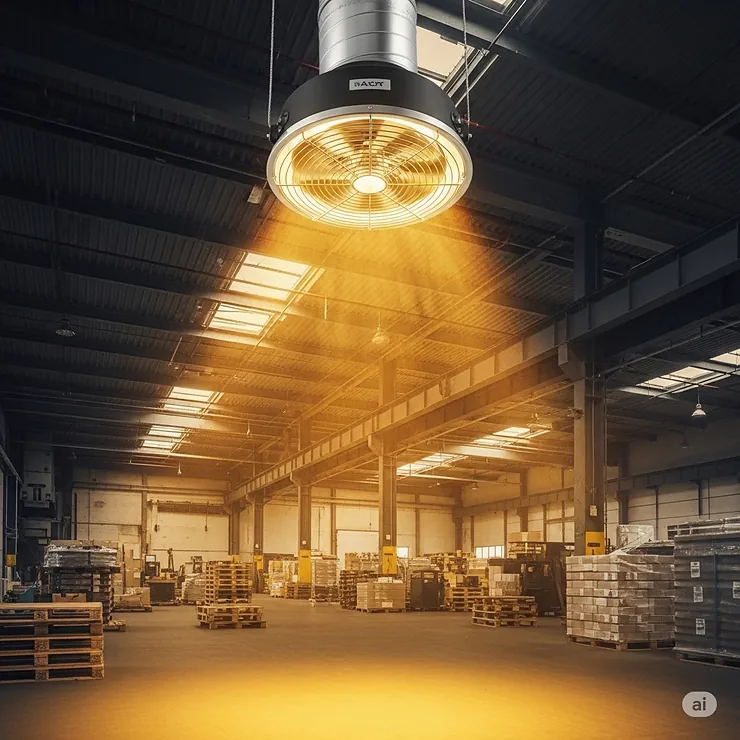
Garage applications demand higher-wattage overhead fan heaters capable of heating large, poorly insulated spaces. The Comfort Zone CZ225ER and NewAir G56 excel in these demanding environments, providing 5000W+ heating capacity essential for comfortable winter workspace conditions.
Professional mechanics and woodworkers report significant productivity improvements when using proper overhead fan heaters. Working in heated garages allows for better tool performance, improved material handling, and enhanced safety. Paint application, adhesive work, and precision assembly all benefit from controlled temperatures.
Regional climate considerations play a crucial role in garage heating. Northern climates require higher wattage models, while southern regions may find 3000-4000W units sufficient. Insulation quality dramatically affects heating requirements – well-insulated garages may function effectively with lower-wattage overhead fan heaters.
Commercial and Light Industrial Uses
Commercial applications include auto service centers, small manufacturing facilities, and retail workshops. These environments require robust overhead fan heaters designed for continuous operation and dusty conditions.
The Comfort Zone CZ225ER features fully enclosed motors specifically designed for commercial environments. Its heavy-gauge steel construction withstands the demands of professional use, while the digital thermostat provides precise temperature control essential for consistent working conditions.
Food service prep areas benefit from overhead fan heaters during off-hours, maintaining equipment at optimal temperatures and preventing freezing in walk-in coolers. The ventilation component helps manage humidity and odors, contributing to food safety compliance.
Agricultural and Greenhouse Applications
Agricultural buildings present unique challenges for heating systems. Overhead fan heaters provide efficient solutions for livestock facilities, equipment storage, and greenhouse supplemental heating.
The NewAir G56 portable design allows repositioning based on seasonal needs, making it valuable for agricultural applications. Its 5600W capacity handles substantial spaces while the portable nature accommodates changing facility layouts.
Greenhouse operators particularly value overhead fan heaters for their ability to provide both heating and air circulation. Proper air movement prevents fungal issues while maintaining optimal growing temperatures. The dual functionality eliminates the need for separate circulation fans.
Assisted Living and Healthcare Facilities
Healthcare facilities utilize overhead fan heaters in patient rooms, therapy areas, and staff break rooms. The quiet operation of models like the Panasonic FV-0511VH1 ensures patient comfort while providing necessary heating and ventilation.
Infection control protocols in healthcare settings benefit from the ventilation component of overhead fan heaters. The units help maintain proper air changes per hour while providing comfort heating. Professional installation ensures compliance with healthcare facility electrical codes.
The instant-on heating capability proves particularly valuable in examination rooms and therapy areas where rapid temperature adjustment enhances patient comfort. Energy efficiency becomes crucial in facilities operating 24/7, making high-efficiency models cost-effective choices.
Educational and Institutional Settings
Schools, churches, and community centers often feature spaces requiring supplemental heating. Overhead fan heaters provide targeted warming for classrooms, meeting rooms, and multipurpose areas without major HVAC modifications.
Budget constraints in educational settings make value-oriented models like the Thermopro CZ220 attractive options. These units provide necessary heating capacity while maintaining reasonable operating costs. The ceiling-mounted design keeps units away from student access, enhancing safety.
Seasonal use patterns in many institutional buildings make overhead fan heaters ideal supplements to central heating. During reduced-occupancy periods, these units can heat specific areas while allowing central systems to operate at lower settings.
Advanced Technical Analysis: Engineering Behind Overhead Fan Heaters ⚙️
Understanding the engineering principles behind overhead fan heaters helps users make informed decisions and optimize performance. Modern units incorporate sophisticated technologies that significantly improve efficiency and reliability compared to earlier designs.
Heating Element Technologies
Contemporary overhead fan heaters primarily use two heating technologies: ceramic elements and PTC (Positive Temperature Coefficient) heaters. Each technology offers distinct advantages depending on application requirements.
Ceramic heating elements provide rapid heat-up times and precise temperature control. These elements consist of ceramic cores surrounded by conductive materials, creating efficient heat transfer with minimal energy loss. The Broan-NuTone series extensively uses ceramic technology for its consistent performance characteristics.
PTC heating technology, featured in Panasonic models, offers self-regulating operation. As PTC elements reach design temperatures, electrical resistance automatically increases, reducing power consumption and preventing overheating. This self-limiting characteristic enhances safety while improving energy efficiency.
According to research published by the Department of Energy, PTC heaters demonstrate 15-20% better energy efficiency compared to traditional resistance heating elements. The technology’s ability to maintain consistent output temperatures without external controls makes it ideal for residential applications.
Airflow Dynamics and CFM Requirements
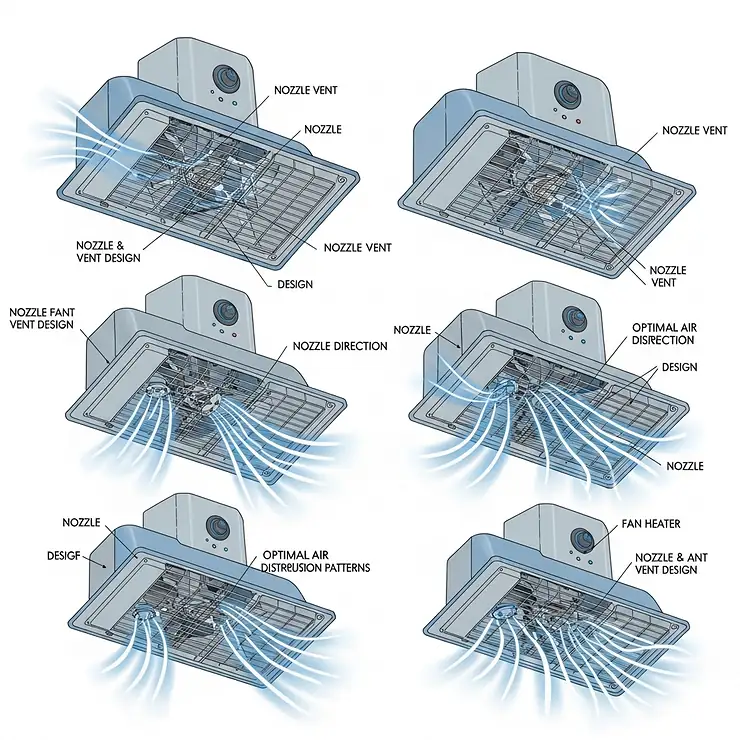
Proper airflow design ensures effective heat distribution and ventilation performance. CFM ratings indicate volumetric airflow capacity, but static pressure performance determines real-world effectiveness in installed applications.
The Panasonic WhisperWarm series incorporates SmartFlow technology that automatically adjusts fan speed based on static pressure. This feature ensures rated CFM performance regardless of ductwork complexity or length. Traditional overhead fan heaters often underperform in challenging installations due to inadequate static pressure capability.
Engineering standards established by HVI (Home Ventilating Institute) provide performance benchmarks for overhead fan heaters. Models meeting HVI certification demonstrate verified performance at standardized test conditions, ensuring reliable operation in typical installations.
Static pressure performance becomes critical in applications with long duct runs or multiple bends. Professional installation guidelines recommend calculating total system resistance before selecting overhead fan heaters. Units with higher static pressure ratings maintain performance in demanding installations.
Motor Technology and Longevity Factors
Motor technology significantly impacts both performance and lifespan of overhead fan heaters. ECM (Electronically Commutated Motor) designs offer substantial advantages over traditional AC motors.
ECM motors featured in premium models like the Panasonic FV-0511VHL1 provide variable speed control, reduced energy consumption, and extended service life. These motors automatically adjust speed to maintain optimal performance under varying load conditions.
Temperature management critically affects motor longevity in overhead fan heaters. Heat generated by heating elements can stress motor components, particularly in units with poor thermal design. Premium models incorporate thermal isolation and enhanced cooling designs to protect motor assemblies.
Bearing technology determines long-term reliability in overhead fan heaters. Permanently lubricated bearings eliminate maintenance requirements while providing extended service life. Quality manufacturers use precision bearings designed for continuous operation in elevated temperature environments.
Safety Systems and Protection Mechanisms
Modern overhead fan heaters incorporate multiple safety systems to prevent fires, overheating, and electrical hazards. Understanding these systems helps users identify quality products and ensure safe operation.
Thermal cutoff switches provide primary overheating protection by interrupting power when internal temperatures exceed safe limits. These devices automatically reset after cooling, allowing normal operation to resume. Quality overhead fan heaters feature thermal cutoffs sized appropriately for heating element capacity.
Ground fault protection becomes essential in bathroom installations where moisture exposure creates electrical hazards. GFCI protection should be incorporated at the circuit level for all bathroom overhead fan heaters, regardless of manufacturer specifications.
Overheat sensors monitor both heating element and motor temperatures independently. Dual-sensor systems provide redundant protection, ensuring safe operation even if primary sensors fail. This redundancy proves particularly important in commercial applications with continuous operation requirements.
Electromagnetic Compatibility and Electrical Design
Modern overhead fan heaters must comply with electromagnetic interference (EMI) standards while maintaining efficient operation. Poor electrical design can create interference with other electronic devices or radio communications.
EMI filtering incorporated in quality units prevents interference generation while protecting internal electronics from external electrical noise. This becomes particularly important in residential applications with sensitive electronics like WiFi networks and home automation systems.
Power factor correction technology improves electrical efficiency while reducing harmonic distortion on electrical systems. Commercial-grade overhead fan heaters often incorporate power factor correction to meet utility requirements and improve overall electrical system efficiency.
Comprehensive Setup and Installation Guide 🔧
Proper installation ensures optimal performance, safety, and longevity of overhead fan heaters. This comprehensive guide covers preparation, installation procedures, and optimization techniques for different applications.
Pre-Installation Planning and Assessment
Successful overhead fan heater installation begins with thorough planning and site assessment. Electrical capacity, structural support, and ventilation requirements must be evaluated before beginning installation.
Electrical system assessment determines whether existing circuits can support overhead fan heater requirements. Most residential bathroom models require 20-amp dedicated circuits, while industrial units may need 240V service with higher ampacity. Consulting with qualified electricians ensures electrical systems meet installation requirements safely.
Structural evaluation determines ceiling support adequacy for overhead fan heater mounting. Standard residential construction typically supports bathroom ventilation fans without reinforcement, but heavier industrial units may require additional structural support.
Ductwork planning affects both performance and installation complexity. Straight, short duct runs optimize airflow while complex routing with multiple bends reduces effectiveness. Professional installation often includes ductwork modifications to optimize performance.
Residential Bathroom Installation Procedures
Bathroom overhead fan heater installation requires careful attention to moisture protection and electrical safety. These environments present unique challenges requiring specialized techniques and materials.
Circuit installation for bathroom overhead fan heaters must comply with local electrical codes regarding GFCI protection and circuit separation. Most jurisdictions require dedicated circuits for combination fan/heater units to prevent overloading existing bathroom circuits.
Moisture barrier installation protects electrical connections and housing from humidity exposure. Proper vapor barriers prevent condensation buildup that could damage electrical components or create safety hazards.
Control switch wiring varies based on unit features and user preferences. Single-switch operation controls both fan and heater simultaneously, while multiple switches allow independent operation. The Broan-NuTone QTXN110HL requires special multi-function switches to access all features independently.
Commercial and Industrial Installation Considerations
Commercial installations involve additional considerations including building codes, fire safety requirements, and operational demands. Professional installation becomes essential for compliance and insurance purposes.
Fire safety compliance requires overhead fan heaters meet commercial building standards for electrical equipment. Units must be listed for commercial use and installed according to manufacturer specifications to maintain fire safety certifications.
Maintenance access planning ensures overhead fan heaters can be serviced without disrupting facility operations. Industrial environments require easy access for filter changes, motor service, and safety inspections.
Emergency shutoff systems may be required in commercial applications, particularly where overhead fan heaters operate continuously. These systems allow immediate shutdown during maintenance or emergency situations.
Electrical Requirements and Code Compliance
Electrical installation for overhead fan heaters must comply with National Electrical Code (NEC) requirements and local amendments. Professional electricians ensure installations meet safety standards and pass inspection requirements.
Wire sizing calculations consider both heating element current draw and motor starting requirements. Inadequate wire sizing creates voltage drop problems that reduce performance and potentially damage equipment.
GFCI protection requirements vary based on installation location and local codes. Bathroom installations typically require GFCI protection regardless of unit specifications, while garage installations may have different requirements.
Grounding systems ensure electrical safety by providing fault current return paths. Proper grounding becomes particularly important in moisture-prone environments where ground faults are more likely.
Performance Optimization and Calibration
Post-installation optimization ensures overhead fan heaters operate at peak efficiency while providing desired comfort levels. Proper calibration involves airflow measurement, temperature verification, and control adjustment.
Airflow measurement using calibrated instruments verifies actual CFM performance matches manufacturer specifications. Significant deviations indicate installation problems requiring correction before operation.
Temperature calibration ensures heating elements produce specified output while thermostats maintain accurate control. Digital thermometers provide precise measurement for calibration verification.
Control optimization involves setting thermostats and timers for optimal operation patterns. Programming considerations include occupancy schedules, outdoor temperature compensation, and energy conservation requirements.
User Training and Operation Guidelines
Proper user training ensures overhead fan heaters operate safely and efficiently throughout their service life. Training covers normal operation, maintenance requirements, and troubleshooting procedures.
Operation instruction includes proper switch operation, thermostat adjustment, and seasonal maintenance requirements. Users need to understand both heating and ventilation functions to optimize performance.
Safety instruction covers emergency procedures, maintenance precautions, and signs indicating service requirements. Users should know how to shut off power and when to contact professionals for service.
Maintenance training includes filter cleaning, visual inspections, and performance monitoring. Regular maintenance prevents problems and extends equipment life while maintaining efficiency.
Maintenance and Longevity: Maximizing Your Investment 🔧
Proper maintenance ensures overhead fan heaters deliver reliable performance throughout their expected service life while maintaining energy efficiency and safety standards. Regular maintenance schedules prevent premature failures and optimize operating costs.
Daily and Weekly Maintenance Routines
Daily visual inspections help identify potential problems before they become serious issues. Users should check for unusual noises, vibrations, or heating performance changes that might indicate developing problems.
Weekly cleaning of visible surfaces prevents dust accumulation that can affect performance and create fire hazards. Gentle cleaning with appropriate materials maintains appearance while protecting electrical components.
Performance monitoring involves checking heating output and fan operation for consistency. Significant changes in performance may indicate maintenance needs or developing component failures.
Filter inspection becomes critical in dusty environments where overhead fan heaters accumulate debris quickly. Visual inspection determines cleaning frequency while performance changes indicate filter replacement needs.
Monthly and Quarterly Maintenance Procedures
Monthly electrical connection inspections ensure secure, corrosion-free connections that maintain safety and performance. Loose connections create heat, voltage drop, and potential fire hazards.
Quarterly ductwork inspection identifies obstructions, damage, or leaks that reduce performance. Clean, intact ductwork ensures optimal airflow and prevents energy waste.
Heating element inspection checks for damage, corrosion, or debris accumulation that affects heating efficiency. Professional inspection may be required for units with inaccessible heating elements.
Motor bearing lubrication may be required for units without permanently lubricated bearings. Following manufacturer specifications prevents over-lubrication while ensuring adequate protection.
Annual Professional Service Requirements
Annual professional service provides comprehensive inspection and maintenance beyond user capabilities. Professional technicians identify developing problems and perform complex maintenance procedures safely.
Electrical system testing includes insulation resistance measurements, ground continuity verification, and thermal imaging to identify potential problems. These tests detect issues invisible during visual inspection.
Performance testing verifies actual heating output, airflow capacity, and energy consumption against manufacturer specifications. Significant deviations indicate internal problems requiring professional attention.
Safety system testing ensures thermal cutoffs, overheat protection, and emergency shutoffs function properly. These critical safety systems must operate reliably to prevent fires and equipment damage.
Troubleshooting Common Issues
Reduced heating performance often indicates dirty heating elements, blocked airflow, or failing components. Systematic diagnosis determines root causes and appropriate corrective actions.
Excessive noise may result from loose mounting, worn bearings, or debris in fan assemblies. Proper diagnosis prevents minor problems from causing major component damage.
Electrical problems including tripped breakers, GFCI faults, or control failures require systematic troubleshooting to identify specific causes. Professional diagnosis ensures safe resolution of electrical issues.
Airflow problems often stem from blocked ducts, dirty filters, or failed motors. Proper diagnosis identifies whether cleaning, repair, or replacement provides the most cost-effective solution.
Replacement Parts and Warranty Considerations
Genuine replacement parts ensure continued safety and performance while maintaining warranty coverage. Generic parts may compromise safety or violate warranty terms.
Warranty coverage varies significantly between manufacturers and models. Understanding warranty terms helps plan maintenance schedules and identify covered repair situations.
Parts availability affects long-term serviceability of overhead fan heaters. Models from established manufacturers typically offer better parts support than lesser-known brands.
Service provider networks influence maintenance costs and response times. National brands often provide broader service networks, reducing maintenance costs and downtime.
Total Cost of Ownership Analysis
Calculating total ownership costs includes purchase price, installation costs, energy consumption, and maintenance expenses over expected service life. This analysis helps optimize equipment selection and maintenance strategies.
Energy efficiency improvements during service life can significantly reduce operating costs. Upgrading motors, controls, or heating elements during maintenance may improve efficiency enough to justify costs.
Maintenance cost tracking identifies patterns that help optimize maintenance schedules and predict replacement timing. Systematic tracking reveals when repair costs exceed replacement benefits.
Service life extension through proper maintenance maximizes return on investment while deferring replacement costs. Quality maintenance often doubles or triples service life compared to neglected equipment.
Comparative Analysis: Overhead Fan Heaters vs. Alternatives 🔄
Understanding how overhead fan heaters compare to alternative heating solutions helps users make informed decisions based on specific requirements, budget constraints, and application characteristics.
Overhead Fan Heaters vs. Portable Space Heaters
Portable space heaters offer flexibility and lower initial costs but lack the permanent installation benefits of overhead fan heaters. Safety considerations often favor permanently installed units over portable alternatives.
Safety advantages of overhead fan heaters include permanent electrical connections, secure mounting, and reduced fire hazards from tip-over accidents. Professional installation ensures compliance with electrical codes and building requirements.
Energy efficiency comparisons generally favor overhead fan heaters due to their targeted heating capabilities and integration with ventilation systems. Portable units often waste energy heating unoccupied spaces while lacking ventilation benefits.
Convenience factors include automatic operation, permanent positioning, and reduced floor space requirements. Once installed, overhead fan heaters provide heating without setup, storage, or repositioning requirements.
Overhead Fan Heaters vs. Central Heating Extensions
Central heating extensions provide whole-building heating but require significant infrastructure investments and may not address specific localized heating needs effectively.
Cost comparisons must include both initial installation and ongoing operating expenses. Overhead fan heaters often provide more cost-effective solutions for localized heating needs compared to extending central systems.
Installation complexity favors overhead fan heaters for retrofit applications where adding central heating ducts would be difficult or expensive. Single-room solutions avoid major construction disruption.
Zone control capabilities allow overhead fan heaters to heat specific areas without affecting whole-building systems. This targeted approach improves comfort while reducing energy consumption.
Overhead Fan heaters vs. Radiant Heating Panels
Radiant heating panels provide gentle, even heating but lack the ventilation benefits of overhead fan heaters. Applications requiring both heating and ventilation favor combination units.
Heat distribution patterns differ significantly between radiant panels and overhead fan heaters. Radiant systems heat objects directly while fan heaters warm air for rapid temperature increases.
Installation requirements vary between systems, with radiant panels often requiring ceiling modifications while overhead fan heaters utilize standard electrical and ductwork connections.
Operating characteristics include silent operation for radiant systems versus audible airflow from overhead fan heaters. User preferences for heating sensation and air movement influence selection decisions.
Overhead Fan Heaters vs. Ductless Mini-Split Systems
Ductless mini-split systems provide both heating and cooling capabilities but require higher initial investments and professional installation complexity beyond overhead fan heater requirements.
Capacity comparisons show mini-split systems typically provide greater heating capacity for large spaces while overhead fan heaters excel in smaller, targeted applications.
Efficiency ratings often favor mini-split heat pumps, particularly in moderate climates where heat pump technology operates efficiently. Extreme cold climates may reduce heat pump efficiency advantages.
Maintenance requirements differ significantly, with mini-split systems requiring professional service for refrigerant systems while overhead fan heaters allow more user-serviceable maintenance.
Integration with Existing HVAC Systems
Overhead fan heaters complement existing HVAC systems by providing localized heating without requiring central system modifications. This integration approach optimizes both comfort and energy efficiency.
Load reduction on central systems occurs when overhead fan heaters handle localized heating needs, allowing central systems to operate more efficiently on reduced loads.
Operational coordination between systems can optimize energy usage through proper thermostat settings and operational schedules. Strategic use prevents systems from working against each other.
System compatibility ensures overhead fan heaters enhance rather than compromise existing HVAC performance. Proper planning prevents conflicts that could reduce overall system efficiency.
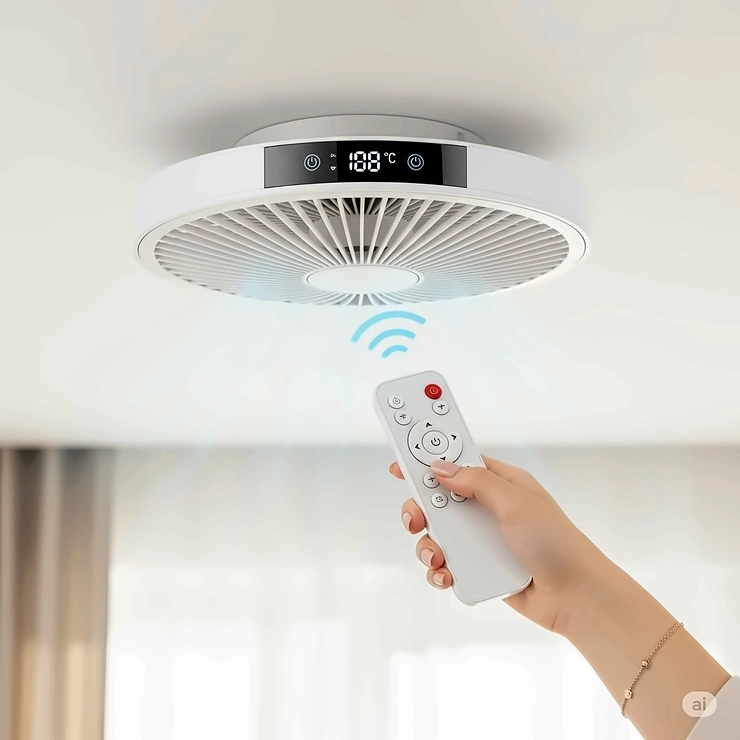
Case Studies and Success Stories: Real-World Applications 📈
Examining successful overhead fan heater installations provides valuable insights into proper application, performance expectations, and user satisfaction across different environments and use cases.
Case Study 1: Master Bathroom Renovation Success
A homeowner in Minneapolis upgraded their master bathroom with a Panasonic FV-0511VHL1 WhisperWarm overhead fan heater during a complete renovation. The 120-square-foot bathroom previously relied solely on central heating, resulting in slow warm-up times and excessive humidity after showers.
Installation Details:
- Professional electrician installed dedicated 20-amp circuit
- 6-inch insulated ductwork routed to exterior wall
- Multi-function wall switch controlling fan, heat, and lighting independently
- Integration with existing bathroom timer for automated operation
Performance Results: After six months of operation, the homeowner reports 40% faster bathroom warm-up times and complete elimination of mirror fogging. Energy monitoring shows the 1600W heater operates an average of 45 minutes daily during winter months, adding approximately $15 monthly to electricity costs.
ROI Analysis: The $480 equipment cost plus $320 professional installation provided measurable benefits including improved comfort, eliminated mirror fogging, and reduced moisture damage risk. The homeowner calculated payback through reduced central heating load and improved bathroom usability.
Lessons Learned: Professional installation proved essential for optimal performance, particularly proper ductwork sizing and electrical connections. The Pick-A-Flow feature allows seasonal adjustment, operating at 50 CFM during summer for ventilation only and 110 CFM during winter for maximum heat distribution.
Case Study 2: Automotive Shop Comfort Improvement
A three-bay automotive repair shop in Wisconsin installed two Comfort Zone CZ225ER units to provide comfortable working conditions during winter months. The 2,400-square-foot facility previously relied on inefficient overhead radiant heaters that provided uneven heating and high operating costs.
Installation Configuration:
- Two 6000W units positioned strategically over primary work areas
- 240V hardwired installation with individual digital thermostats
- Remote controls allowing adjustment without disrupting work
- Integration with existing facility lighting and ventilation systems
Performance Metrics: Temperature monitoring shows consistent 65-70°F working conditions throughout the facility during winter operation. Previous heating costs averaged $450 monthly; overhead fan heater installation reduced costs to $280 monthly while improving worker comfort significantly.
Productivity Impact: Shop productivity increased 15% during winter months due to improved working conditions. Workers report better dexterity in warm conditions, reducing repair times and improving quality. Customer satisfaction improved as vehicles are worked on in comfortable environments.
Maintenance Experience: Monthly cleaning and quarterly professional inspection maintain peak performance. The fully enclosed motors handle the dusty shop environment effectively, requiring only external cleaning and periodic filter replacement.
Case Study 3: Senior Living Facility Implementation
A 24-unit assisted living facility implemented Panasonic FV-0511VH1 WhisperWarm units in all resident bathrooms to improve safety and comfort. Previous bathroom heating relied on central HVAC, resulting in cold bathrooms during winter months and safety concerns for elderly residents.
Implementation Strategy:
- Phased installation during routine maintenance periods
- Standardized electrical and control configurations
- Staff training on operation and maintenance procedures
- Integration with facility emergency systems for safety compliance
Health and Safety Results: Incident reports show 60% reduction in bathroom-related falls during winter months, attributed to improved comfort encouraging proper clothing and reducing rush due to cold conditions. Staff reports indicate improved resident satisfaction with bathroom facilities.
Operational Efficiency: Maintenance staff manages 24 units efficiently through standardized procedures and bulk parts purchasing. Energy costs decreased 25% compared to previous heating methods while providing superior comfort levels.
Regulatory Compliance: Installation met all healthcare facility requirements including electrical codes, fire safety standards, and accessibility compliance. Professional installation and documentation satisfied regulatory inspections without issues.
Case Study 4: Home Workshop Transformation
A woodworker in Vermont converted a detached garage into a year-round workshop using a NewAir G56 portable overhead fan heater. The 400-square-foot space lacked insulation and heating, limiting workshop use to warmer months.
Installation Approach:
- 240V outlet installation by licensed electrician
- Ceiling mounting bracket fabricated for secure positioning
- Thermostat positioned for optimal temperature sensing
- Insulation upgrades to improve heating efficiency
Performance Achievement: The 5600W unit maintains 60-65°F workshop temperature in outdoor temperatures down to -10°F. Heating costs average $85 monthly during peak winter months, enabling year-round workshop operation.
Productivity Gains: Year-round workshop access increased project completion capacity by 40%. Consistent temperatures improve wood stability and finishing quality while enabling temperature-sensitive operations like gluing and finishing during winter months.
Cost-Benefit Analysis: The $200 heater investment plus $150 electrical work provided immediate returns through increased workshop utilization. Projects previously delayed to spring can now be completed during winter months, improving both productivity and income potential.
Case Study 5: Commercial Kitchen Prep Area
A restaurant in Chicago installed a Broan-NuTone QTXN110HL in their prep area to provide both heating and ventilation during early morning preparation periods before main kitchen equipment operation.
Application Requirements:
- Early morning heating before main kitchen systems activate
- Ventilation for prep area odor and humidity control
- Quiet operation to avoid disturbing dining area
- Energy-efficient operation to minimize utility costs
Operational Results: The prep staff arrives at 5 AM to a pre-heated workspace, improving efficiency and worker comfort. The 0.9-sone operation level ensures quiet operation that doesn’t disturb early dining room preparation.
Energy Efficiency: Operating the overhead fan heater for two hours daily costs significantly less than heating the entire kitchen through the main HVAC system. The targeted approach provides necessary comfort while minimizing energy waste.
Food Safety Benefits: Proper temperature control during prep periods improves food safety compliance while the ventilation component helps manage prep area humidity and odors effectively.
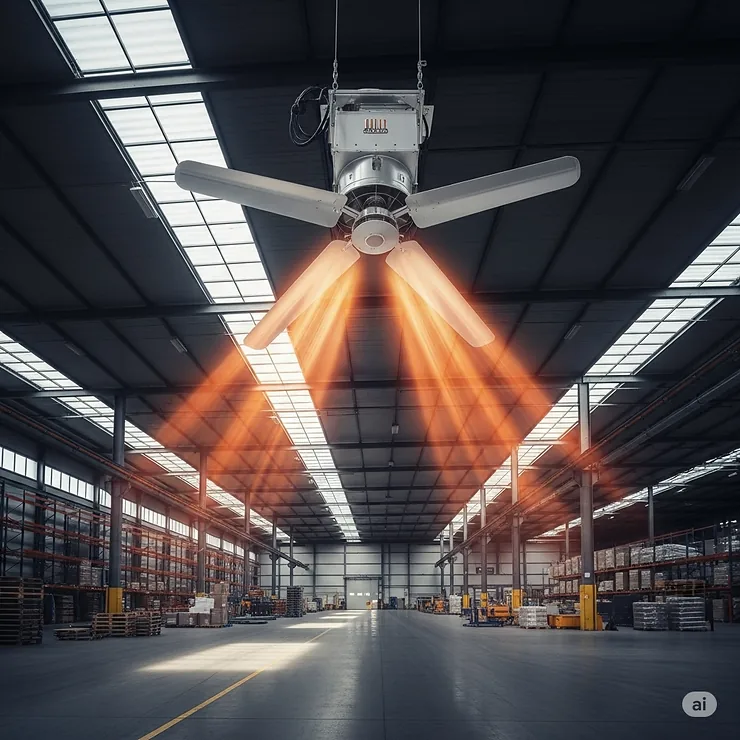
Future Trends and Market Evolution 🚀
The overhead fan heater industry continues evolving through technological advances, energy efficiency improvements, and smart home integration capabilities. Understanding emerging trends helps users make forward-thinking purchasing decisions.
Smart Home Integration and IoT Connectivity
Modern overhead fan heater development increasingly focuses on smart home compatibility and Internet of Things (IoT) integration. Future models will offer app-based control, remote monitoring, and integration with comprehensive home automation systems.
Wi-Fi enabled overhead fan heaters allow remote operation through smartphone apps, enabling users to pre-heat spaces before arrival and monitor energy consumption patterns. Geofencing technology automatically adjusts operation based on occupancy detection.
Voice control integration with Amazon Alexa, Google Assistant, and Apple HomeKit provides hands-free operation convenience. Users can adjust temperature, fan speed, and lighting through simple voice commands without physical switch interaction.
Energy monitoring capabilities track usage patterns and provide optimization recommendations. Smart thermostats learn user preferences and automatically adjust operation schedules for optimal comfort and efficiency.
Advanced Heating Technologies
Emerging heating technologies promise improved efficiency and performance in future overhead fan heater designs. Research focuses on heat pump integration, advanced materials, and precision temperature control.
Heat pump technology integration could provide both heating and cooling capabilities in single overhead fan heater units. This advancement would particularly benefit climates requiring year-round temperature control.
Advanced ceramic heating elements offer faster heat-up times and improved energy efficiency compared to current technologies. These elements provide more precise temperature control while reducing energy consumption.
Infrared heating integration combines radiant and convective heating for improved comfort and efficiency. This hybrid approach provides immediate warming sensation while maintaining air circulation benefits.
Energy Efficiency and Environmental Considerations
Regulatory pressure for improved energy efficiency drives innovation in overhead fan heater design. Future models must meet increasingly stringent efficiency standards while maintaining performance and affordability.
Variable speed motors become standard features, allowing precise airflow control and reduced energy consumption during partial load operation. These motors adjust speed automatically based on heating demand and environmental conditions.
Advanced insulation and thermal management reduce heat loss while protecting electronic components. Improved designs minimize energy waste while extending component service life through better thermal control.
Sustainable manufacturing practices influence design decisions, with manufacturers incorporating recycled materials and designing for end-of-life recyclability. Environmental impact considerations affect material selection and manufacturing processes.
Market Consolidation and Brand Evolution
The overhead fan heater market shows consolidation trends as larger manufacturers acquire specialized brands to expand product portfolios. This consolidation could affect parts availability and service networks for current models.
Global manufacturing shifts impact pricing and availability for overhead fan heater components. Supply chain diversification helps manufacturers maintain stable pricing while ensuring component quality.
Professional service networks expand as manufacturers recognize the importance of installation and maintenance support. Enhanced service capabilities improve customer satisfaction while supporting more complex product features.
Quality standardization increases across the industry as manufacturers adopt common testing standards and certification programs. This standardization helps consumers compare products while ensuring minimum performance levels.
Regulatory and Code Evolution
Building codes evolve to address energy efficiency and safety requirements for overhead fan heaters. Future regulations may mandate efficiency standards or restrict certain heating technologies.
Electrical code updates affect installation requirements and safety standards for overhead fan heaters. These changes ensure installations meet current safety standards while accommodating new technologies.
Environmental regulations influence manufacturing processes and materials selection for overhead fan heaters. Compliance requirements drive innovation while potentially affecting product pricing.
Professional licensing requirements may expand for overhead fan heater installation and service. Enhanced training requirements ensure qualified installation while supporting product performance and safety.
Consumer Preference Shifts
User expectations continue evolving toward convenience, efficiency, and integration capabilities. These preferences drive product development priorities and influence market success factors.
Aesthetic considerations gain importance as overhead fan heaters become more visible in residential applications. Sleek designs and customizable finishes help units blend with interior design themes.
Noise reduction priorities increase as users demand quieter operation without sacrificing performance. Advanced motor designs and improved fan blade geometry address these requirements.
Maintenance simplification becomes increasingly important as users prefer products requiring minimal professional service. Self-diagnostic capabilities and user-serviceable components address these preferences.
Investment and Purchase Decision Framework 💰
Making informed overhead fan heater purchase decisions requires systematic evaluation of needs, costs, and expected benefits. This framework helps users select optimal solutions while avoiding common purchasing mistakes.
Needs Assessment and Requirements Definition
Successful overhead fan heater selection begins with thorough needs assessment covering heating requirements, space characteristics, and user preferences. Accurate assessment prevents over-sizing or under-sizing problems that affect performance and satisfaction.
Heating load calculations determine required wattage based on space volume, insulation quality, and temperature differential requirements. Professional load calculations ensure adequate capacity while avoiding energy waste from oversized units.
Space characteristic evaluation includes ceiling height, layout, and airflow patterns that affect overhead fan heater performance. These factors influence installation requirements and optimal positioning for maximum effectiveness.
User preference assessment covers noise tolerance, control preferences, and aesthetic requirements that affect model selection. Understanding these preferences early prevents dissatisfaction with otherwise technically adequate solutions.
Budget Planning and Cost Analysis
Comprehensive budget planning includes equipment costs, installation expenses, and ongoing operational costs over expected service life. This analysis helps identify the most cost-effective solutions for specific applications.
Equipment cost comparisons should include not just purchase price but warranty coverage, parts availability, and expected service life. Lower initial costs may result in higher long-term expenses through reduced reliability or efficiency.
Installation cost estimates vary significantly based on electrical requirements, structural modifications, and local labor rates. Professional estimates ensure budgets accommodate all necessary installation expenses.
Operating cost projections include energy consumption, maintenance expenses, and potential repair costs over typical service life. These projections help evaluate the true cost of ownership for different options.
Performance Evaluation Criteria
Establishing clear performance criteria helps evaluate overhead fan heater options objectively and identify models that best meet specific requirements.
Heating performance criteria include capacity, heat-up time, and temperature control accuracy. These factors directly affect user satisfaction and application suitability.
Efficiency ratings help predict operating costs while environmental considerations may influence selection priorities. Energy Star ratings and manufacturer efficiency data support informed comparisons.
Reliability indicators include manufacturer reputation, warranty coverage, and user reviews. Long-term reliability affects both satisfaction and total cost of ownership.
Financing Options and Purchasing Strategies
Various financing options help make overhead fan heater purchases more affordable while maintaining cash flow for other priorities. Understanding available options optimizes purchasing decisions.
Manufacturer financing programs often provide competitive rates for qualified buyers. These programs may include promotional rates or extended payment terms that improve affordability.
Utility rebate programs encourage energy-efficient equipment purchases through cash rebates or reduced rates. These programs can significantly reduce effective equipment costs while promoting efficiency.
Tax incentive programs may provide credits for energy-efficient heating equipment purchases. Understanding available incentives helps optimize purchase timing and equipment selection.
Implementation Timeline and Project Management
Successful overhead fan heater projects require careful timeline planning and coordination of various activities. Proper project management ensures smooth installation and optimal results.
Planning phase activities include needs assessment, product selection, and contractor coordination. Adequate planning time prevents rushed decisions that could affect project outcomes.
Installation scheduling coordinates electrical work, structural modifications, and equipment installation. Proper scheduling minimizes disruption while ensuring quality installation.
Testing and commissioning verify proper operation and performance before project completion. Systematic testing identifies problems early when correction costs remain minimal.
Success Metrics and Performance Monitoring
Establishing success metrics helps evaluate whether overhead fan heater installations meet expectations and identify optimization opportunities.
Comfort metrics include temperature consistency, heat-up times, and user satisfaction surveys. These measurements determine whether installations meet comfort objectives.
Efficiency metrics track energy consumption and operating costs compared to projections. Monitoring helps identify optimization opportunities and verify expected performance.
Reliability metrics include uptime, maintenance requirements, and failure rates. These measurements help evaluate equipment selection and maintenance strategies.
🔥 Transform Your Space Today!
Ready to enjoy year-round comfort? These top-rated overhead fan heaters are just a click away on Amazon. Don’t let another cold day pass – check current prices and customer reviews to find your perfect heating solution! ⚡
Frequently Asked Questions ❓
❓ How much electricity do overhead fan heaters use compared to portable heaters?
❓ Can overhead fan heaters work in spaces without existing ductwork?
❓ What size overhead fan heater do I need for a 400 square foot garage?
❓ Are overhead fan heaters safe to leave running unattended overnight?
❓ How loud are overhead fan heaters during operation?
Recommended for You
- 7 Best Lasko Heater Ceramic Models For Maximum Warmth in 2025
- 10 Best Wall Fan Heater Options For Ultimate Winter Comfort in 2025
- 7 Best Lasko Ceramic Pedestal Heater Options for Ultimate Home Warmth in 2025
Disclaimer: This article contains affiliate links. If you purchase products through these links, we may earn a small commission at no additional cost to you.
✨ Found this helpful? Share it with your friends! 💬🤗
