

In This Article
It’s 6 a.m. You peek outside. The thermometer reads 18°F, the wind is cutting sideways, and your motivation is somewhere between “absolutely not” and “I’ll start fresh in April.” Sound familiar?
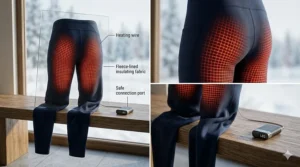
Here’s the thing: cold legs don’t just feel miserable — they actively sabotage your run. Research published in ScienceDirect’s Journal of Building and Environment shows that in cold environments, reduced skin temperature leads to muscle stiffness, decreased joint mobility, and reduced skeletal muscle contractility and coordination. Translation: your legs stop cooperating before your lungs even warm up. You’re not weak. You’re just underdressed.
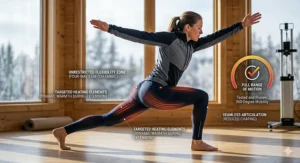
That’s where heated leggings for winter running come in. Not the passive “we added a bit of fleece” kind — but genuinely battery-powered, carbon-fiber-heating, app-controlled thermal tights that deliver consistent warmth from your hips to your calves. A definition for clarity: heated leggings for winter running are performance base-layer bottoms embedded with electric heating elements, powered by a rechargeable battery, designed to maintain optimal leg temperature during cold-weather exercise without sacrificing compression, moisture-wicking, or freedom of movement.
Unlike your grandma’s long johns or a bulky ski base layer, the best models in 2026 are engineered with athletes in mind. They’re slim enough to layer under running pants, smart enough to regulate temperature via Bluetooth, and warm enough to actually change what “too cold to run” means for you.
In this guide, we’ve researched, analyzed, and ranked the 7 best heated leggings for winter running currently available on Amazon — from budget-friendly USB-powered options to premium Merino-wool Bluetooth models. Whether you’re a daily pavement-pounder, a trail runner who won’t let December stop you, or someone whose knees scream at anything below 40°F, there’s a pick here for you.
Ready to reclaim your winter miles? Let’s go.
Quick Comparison Table: Best Heated Leggings for Winter Running at a Glance
| Product | Heating Zones | Power System | Heat Levels | Best For | Price Range |
|---|---|---|---|---|---|
| FERNIDA Women Heated Pants (7.4V) | 8 zones | 7.4V Battery pack | 3 levels | Cold-weather runners | $50–$80 |
| FERNIDA Heated Pants 5V USB + 10000mAh | 8 zones | 5V USB + power bank | 3 levels | Budget performance | $45–$70 |
| Fieldsheer Merino Heated Pant | 3 zones | Powersheer Li-Ion | 4 levels + Bluetooth | Premium trail runners | $130–$180 |
| Baleaf Fleece Lined Leggings (Zip Pockets) | Passive warmth | Fleece thermal | N/A | Moderate cold, daily runners | $35–$55 |
| Baleaf Thermal Hiking Pants (Waterproof) | Passive warmth | Fleece + DWR | N/A | Wet winter conditions | $40–$60 |
| Electric Heating Pants (Carbon Fiber, USB) | 6 zones | USB/power bank | 3 levels | Budget electric warmth | $30–$50 |
| Fieldsheer Primer Pant 7.4V (Bluetooth) | 3 zones | 7.4V system | 4 levels + Bluetooth | Tech-forward runners | $120–$160 |
What this table tells you: If budget is tight, the USB-powered carbon fiber option or FERNIDA 5V delivers genuine electric heat at accessible prices. If you’re serious about performance and hate fiddling with buttons mid-run, the Fieldsheer models’ Bluetooth control is worth every cent of the premium. The two Baleaf picks occupy a different lane entirely — they’re passive-thermal (no batteries, no wires), which makes them lighter, simpler, and perfect for runners who just need reliable insulation in the 25–40°F range rather than active heating.
💬 Just one click — help others make better buying decisions too! 😊
Top 7 Heated Leggings for Winter Running: Expert Analysis
1. FERNIDA Women Heated Pants with Battery Pack (7.4V)
If you’ve ever stood at a trail head in January, hopping from foot to foot waiting for your legs to stop feeling like frozen logs, the FERNIDA 7.4V heated leggings were designed with you in mind. This is FERNIDA’s flagship model — and the voltage jump from 5V to 7.4V matters more than the spec sheet implies.
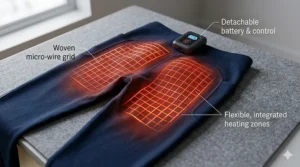
The 7.4V system drives heat through 8 strategically placed carbon fiber heating pads across the abdomen, waist, knees, back of thighs, and back of calves. In practice, that coverage pattern is significant: your knees and thigh muscles are where cold-related stiffness hits hardest during winter running. The double-sided fleece acrylic fabric offers 4-way stretch, so you won’t feel like you’re running in a sleeping bag. The 2025-upgraded elastic waistband keeps things in place through tempo runs and long slow distance alike.
What most buyers overlook about this model is the quality of the included battery — it’s UL/CE-certified, not a random no-name power bank shoved in the box. That certification matters for safety when you’re pushing physical limits outdoors.
Customers frequently note that the heat kicks in fast — within seconds — and that the three temperature levels offer real flexibility as body temperature rises during a run. A few note sizing runs slightly small, so going one size up is often recommended.
✅ 8 heating zones cover the high-value areas for runners
✅ 4-way stretch maintains full range of motion
✅ UL/CE-certified battery included
❌ Sizing runs small — size up
❌ Not ideal for ultra-high-intensity runs where overheating is a concern
Price range: $50–$80. Solid value for serious winter runners who want full-coverage electric warmth.
2. FERNIDA Heated Pants for Women with 10000mAh Battery Pack (5V USB)
Think of this as the FERNIDA 7.4V’s more practical, budget-conscious sibling — and “budget-conscious” shouldn’t be read as “lesser.” The 5V USB system is actually an advantage for certain runners because it means compatibility with virtually any power bank you already own. Forget a specialized battery at home? No problem — the USB port works with your phone charger’s power bank.
This model also features 8 heating zones and the same 3-level temperature control (low, medium, high), but the 5V voltage delivers a gentler, more sustained warmth rather than the aggressive heat of the 7.4V version. For runners who tend to overheat quickly or who run in the 30–45°F range rather than sub-20°F conditions, that’s actually the sweet spot. The included 10,000mAh battery pack charges in approximately 2.2 hours and delivers up to 3 hours on the highest setting — enough for a long Sunday run.
The midweight fleece lining adds passive warmth on top of the active heating, which helps on days when the battery needs a break. Customers highlight the comfort of the waistband and the overall quality of the fabric. One honest caveat from buyers: the heat zones on the calves feel slightly less intense than those on the knees and abdomen.
✅ Works with any 5V USB power bank — universal compatibility
✅ Softer, sustained warmth — ideal for moderate cold
✅ 2.2-hour fast charge on included battery
❌ Heat on calf zones is less intense than higher zones
❌ 3 hours max on high — not enough for ultra events
Price range: $45–$70. The most practical entry point into active heated running leggings.
3. Fieldsheer Merino Women’s Heated Pant with Battery Pack
Here’s where things get genuinely premium. The Fieldsheer Merino Women’s Heated Pant is in a different conversation than most heated leggings on the market — partly because of the Merino wool construction, and partly because of the Bluetooth integration via the MW Connect app.
Let’s start with the fabric. Merino wool is naturally anti-static, more insulating than cotton or most synthetics, and crucially, breathable in ways that polyester blends simply can’t match. For running specifically, that breathability prevents the clammy, overheated feeling that sabotages so many fleece-lined options. The Powersheer Standard rechargeable lithium-ion battery delivers up to 10 hours of heat on low — meaning a full ultra marathon effort or back-to-back cold-weather training days on a single charge.
What separates this from the FERNIDA models isn’t just the Bluetooth — it’s the philosophy. The app lets you monitor battery levels and adjust temperature without breaking stride or pulling at your waistband. That matters on a technical trail when your hands are in gloves and your focus is on footing. The three heating zones (2x inner thigh, 1x upper waist) are positioned for targeted muscle warmth rather than full coverage — which, for high-output runners, is often smarter than blanket heating.
Customers consistently call this the most comfortable heated pant they’ve worn, with particular praise for how naturally it layers under running pants.
✅ Merino wool = natural breathability + moisture management
✅ Up to 10 hours heat — best in class battery life
✅ Bluetooth app control — no fumbling with buttons mid-run
❌ Premium price — significant investment
❌ 3 heating zones only — less coverage than FERNIDA options
Price range: $130–$180. The right pick if you’re running long in serious cold and won’t settle for anything less.
4. Baleaf Women’s Fleece Lined Leggings — Water Resistant with Zip Pockets
No battery required. No charging. No wire tucked into a waistband pocket. Sometimes the simplest solution is the right one — and for runners who train in the 28–42°F range and generate significant body heat once moving, the Baleaf Fleece Lined Leggings with zip pockets are one of the most well-executed passive thermal leggings on Amazon.
The upgraded fleece inner layer traps heat effectively for cold weather under 40°F, which covers the majority of winter running conditions across the continental U.S. The exterior fabric is water-resistant, handling light rain and light snow without soaking through — a genuine advantage over purely thermal options that become dead weight the moment precipitation arrives. The ankle zip is a small detail that runners will quickly come to love: getting these on and off without removing your shoes is a quality-of-life upgrade that pure athletic tights rarely offer.
The reflective elements at the calves, waist, and pocket area are well-placed for pre-dawn or post-sunset running safety. Two regular side pockets plus a zipper pocket accommodate a phone up to 5.5 inches without the fabric bulging or bouncing uncomfortably. The yoga-style waistband with inner drawcord provides a locked-in fit without digging into the hips on longer efforts.
Customers rate these extremely highly for warmth-to-weight ratio and durability through multiple wash cycles.
✅ No battery = no recharging, no added weight
✅ Water-resistant exterior — handles light winter precipitation
✅ Ankle zip for easy on/off without removing shoes
❌ Passive warmth only — not effective below ~20°F
❌ No active heating for cold-sensitive runners or those with circulation issues
Price range: $35–$55. The best value thermal running tight for most winter runners.
5. Baleaf Women’s Fleece Lined Leggings — Waterproof Thermal Hiking Pants
If the previous Baleaf model is your everyday winter running tight, think of this one as its weather-hardened cousin — built for the days when the forecast says 28°F, sleet, and “you’ll regret not layering properly.”
This model steps up to a waterproof outer layer (rather than just water-resistant), making it genuinely useful when running through slushy trails, across wet grass at first light, or in sustained light rain. The fleece inner layer is thicker than the zip-pocket model, trading a small amount of breathability for noticeably better insulation — appropriate for slower-paced cold-weather walking runs or hike-run combinations. Five utility pockets (four side pockets large enough for a phone, plus a rear zipper) make this the best-organized running legging in the Baleaf lineup.
The high-rise waistband provides firm tummy control without the constricting pressure that makes some thermal tights feel punishing after mile five. Gentle compression supports the quads and hamstrings without restricting stride — important for runners who are already fighting muscle stiffness from cold.
What’s worth noting practically: this model works best as a standalone layer in 20–38°F conditions. In truly brutal cold (sub-15°F with wind chill), pair it with a light thermal base layer underneath rather than expecting it to do the job alone.
✅ Full waterproof protection — not just water-resistant
✅ Five pockets — most storage of any legging in this guide
✅ Thicker fleece for deep winter conditions
❌ Slightly less breathable at high running intensities
❌ Better suited for run/hike hybrids than fast-paced tempo work
Price range: $40–$60. Ideal for wet winter conditions and multi-terrain runners.
6. Electric Heating Pants Warming Trousers — Carbon Fiber USB Leggings
This is the wild card of the guide. Ugly name. Surprisingly capable product. The carbon fiber USB heating leggings occupy a genuinely useful niche: maximum heating coverage (6 zones covering the waist, abdomen, knees, and shins) at the most accessible price point in the active-heat category.
The carbon fiber heating elements emit far-infrared rays — the same technology used in professional physical therapy equipment — which penetrates deeper into muscle tissue than surface-level warmth. For runners dealing with chronic knee stiffness, shin issues, or circulation challenges in extreme cold, that’s not just a comfort feature; it’s functional recovery. The three-stage temperature control (red at 55–70°C, blue at 45–60°C, green at 38–45°C) is color-coded for gloved-hand operation — a thoughtful touch for actual outdoor use.
The catch: no battery is included. You power these from any USB power bank, which keeps the price down but means you need to source a 10,000mAh+ power bank separately. When paired with a quality 10Ah bank at full charge, the high-heat mode runs approximately 5–5.5 hours — among the longest runtimes in this guide. The “free bending does not damage the heater” specification is important: inferior carbon fiber elements crack at flex points, which is a common failure mode for cheap heated pants.
Customers note rapid heat-up (within seconds) and appreciate the simplicity of the single-button control.
✅ 6 heating zones including shins — best coverage for the price
✅ Far-infrared carbon fiber — deeper tissue warmth
✅ 5–5.5 hour runtime on high with a good power bank
❌ No battery included — additional purchase required
❌ Heavier construction — less nimble for high-pace running
Price range: $30–$50 (plus power bank). Best budget option for maximum heating zone coverage.
7. Fieldsheer Primer Pant 7.4V with Bluetooth (Men’s/Unisex)
The Fieldsheer Primer Pant is the closest thing to a “smart device” in this entire category. It’s technically listed in menswear, but its slim, compression-fit baselayer design makes it genuinely functional for women runners who prefer a more athletic cut and want the full Bluetooth experience without stepping up to the Merino price point.
The 7.4V system powers three heating elements — one at the lower back and two on the thighs — targeting exactly where leg muscles lose heat fastest during sustained cold-weather running. The flat-lock seams eliminate chafing over distance; the moisture-wicking mesh liner keeps sweat off your skin during high-intensity efforts. Most critically, the Bluetooth MW Connect app integration lets you adjust all four heat settings from your phone without breaking stride — essential when you’re 8 miles into a trail run and conditions change.
The side-stretch panels allow a natural range of motion despite the close fit, and the slim profile layers cleanly under running pants or softshell bottoms. What most buyers overlook: the Primer’s lower back heating element is genuinely rare in this category. Lower back warmth during cold running reduces the reflexive tightening that often leads to hip stiffness and shortened stride — a subtle benefit that becomes obvious around mile 10 on a 28°F morning.
✅ Bluetooth app control — 4 heat settings, battery monitoring
✅ Lower back heating zone — addresses a gap most competitors ignore
✅ Flat-lock seams — anti-chafe for long distances
❌ Men’s sizing — women may prefer sizing down one
❌ Three zones only — less full-coverage than FERNIDA models
Price range: $120–$160. The tech-forward runner’s choice for intelligent heat management.
✨ Don’t Miss These Exclusive Deals!
🔍 Take your winter running to the next level with these carefully selected heated leggings. Click on any highlighted product above to check current pricing and availability — and gear up before the next cold snap hits!
Your Winter Running Persona: Which Heated Legging Actually Fits Your Life?
Choosing between seven products gets easier the moment you stop comparing specs and start comparing lives. Here are three runner profiles worth thinking through honestly.
The Dedicated Daily Runner — You’re out the door five days a week regardless of temperature. You run 45–75 minutes at moderate-to-high intensity, and you’ve already got a power bank from your hiking kit. You want real warmth, you don’t mind charging gear overnight, and your budget is somewhere in the $50–$80 range. The FERNIDA Women Heated Pants 7.4V is built for you. Eight zones, aggressive heat, and a quality battery pack. Full stop.
The Casual Cold-Weather Exerciser — You run three times a week, mostly 30–50 minutes, and you’re more interested in staying comfortable than optimizing performance. You exercise in the 28–42°F range and want something that just works without managing charging schedules. The Baleaf Fleece Lined Water-Resistant Leggings are your answer — no batteries, no fuss, exceptional warmth-to-weight ratio. They’ll outlast three winters of regular use.
The Performance Trail Runner — Long distances. Technical terrain. Conditions that change from 35°F at the trailhead to 18°F at the summit. You need heat management that adapts in real-time, breathable fabric that won’t turn your legs into a sauna on the descent, and a battery that lasts longer than you do. The Fieldsheer Merino Women’s Heated Pant with its 10-hour battery and Bluetooth app is the only serious answer here. Yes, the price is real. So is the performance difference.
How to Use Heated Leggings for Winter Running: A First-Timer’s Guide
Even the best gear can let you down if you don’t use it correctly. After the unboxing, here’s what actually matters.
Step 1 — Charge before you need it. Sounds obvious. It isn’t. Lithium-ion batteries perform best when they’re not starting from dead. Top up the night before, even if the gauge says 40%. Cold temperatures reduce battery efficiency — what reads as 3 hours of runtime at room temperature may deliver 2.2 hours at 15°F.
Step 2 — Layer intelligently. Heated leggings are not an excuse to skip base layers when it’s brutal outside. Wear a thin moisture-wicking layer underneath if temperatures are sub-20°F, and treat the heated legging as your insulating mid-layer. This combination dramatically outperforms heated leggings alone in genuinely extreme cold.
Step 3 — Start on low. Your body will warm up within the first 10–15 minutes of running. If you start on the highest heat setting, you’ll be sweating by mile 2 and tempted to fumble with controls. Start on low or medium, then adjust down as body heat builds. The Bluetooth models handle this seamlessly; manual-button models require a brief pause.
Step 4 — Never wash without removing the battery. Carbon fiber heating elements are generally machine-washable (most recommend a mesh laundry bag), but the power bank and USB plug always need to come out first. Wash on cold, hang dry — tumble drying degrades both the heating elements and the stretch fabric faster than anything else.
Step 5 — Check the pocket seal before heading out. USB ports exposed to moisture are the most common failure point. If your model has a zippered pocket for the power bank, confirm it’s sealed before stepping into rain, sleet, or snow.
5 Mistakes People Make When Buying Heated Leggings for Winter Running
There’s a reason so many heated pants sit in closets after two or three uses. Usually, it’s one of these.
Mistake 1: Buying based on zone count alone. More zones sounds better. But six zones of mediocre carbon fiber heat won’t outperform three zones of premium far-infrared heating placed precisely at the muscles that matter most. Ask where the zones are, not just how many.
Mistake 2: Ignoring voltage. A 5V USB system is convenient. A 7.4V dedicated battery system is warmer. The gap between them is meaningful at temperatures below 20°F. For mild winter running (28–40°F), 5V is sufficient. For genuine sub-freezing performance, budget for 7.4V.
Mistake 3: Sizing down for compression. Heated leggings have internal hardware — heating elements, wiring, power bank pockets. They need to lay flat against the body without stretching over seams. Many people size down for “better compression” and end up with uneven heat distribution because the fabric is pulling the elements out of position.
Mistake 4: Expecting heated leggings to replace proper layering. Active heating raises skin surface temperature. It does not replace wind protection, moisture management, or core warmth. In 10°F winds, you still need an outer layer.
Mistake 5: Skipping the battery quality check. Budget heated pants often ship with no-name power banks that fail within a season. Look for UL or CE certification on included batteries, or use a quality brand power bank you already own.
Heated Leggings vs. Traditional Thermal Running Tights: The Honest Comparison
The passive vs. active warmth debate matters more than most gear sites admit. Here’s the unvarnished comparison.
| Feature | Active Heated Leggings | Traditional Thermal Tights |
|---|---|---|
| Warmth in sub-20°F | ✅ Superior | ⚠️ Requires layering |
| Weight | ⚠️ Heavier (battery) | ✅ Ultralight |
| Setup time | ⚠️ Requires charging | ✅ Pull on and go |
| Breathability | ⚠️ Variable | ✅ Purpose-built for running |
| Therapeutic benefit | ✅ Joint/muscle warmth | ❌ Surface warmth only |
| Cost | ⚠️ $30–$180 | ✅ $20–$80 |
| Best for | Sub-20°F, circulation issues, long runs | 20–42°F, speed work, simplicity |
The honest verdict: traditional thermal tights win on simplicity, breathability, and cost for the majority of winter running conditions (20–42°F). Active heated leggings become the clear winner when temperatures drop below 20°F, when you have circulation issues or joint sensitivity, or when you’re running long enough that maintaining muscle temperature through the latter miles becomes performance-critical. Many serious winter runners own both — thermal tights for ordinary cold, heated leggings for the bad days.
How to Choose Heated Leggings for Winter Running: 6 Criteria That Actually Matter
Buying anything battery-powered for athletic use requires more thought than typical gear purchases. Here’s a prioritized framework.
1. Temperature range you actually run in. Be honest. If your coldest runs are 28°F, a 5V USB system with good fleece lining is perfectly adequate and $60–$80 cheaper than a premium 7.4V setup. Save the high-voltage models for runners who genuinely battle sub-15°F conditions.
2. Run duration. Battery life is non-negotiable for runners going beyond 90 minutes. The Fieldsheer Merino’s 10-hour low-setting battery is the benchmark. Most 5V systems with a 10Ah power bank deliver 4–6 hours on medium — enough for marathon training but not 50-milers.
3. Heating zone placement, not count. Knee and thigh zone coverage is the priority for runners. Abdomen zones are nice. Lower back zones (Fieldsheer Primer specifically) address an often-overlooked stiffness trigger. Shin zones are a bonus.
4. Fabric performance. Electric heat is only half the equation. Moisture-wicking inner fabric stops sweat-induced chill. Water-resistant or waterproof exteriors handle precipitation. Merino wool adds natural breathability for high-output efforts.
5. Battery certifications. UL or CE certification on included power banks is not optional if you’re running hard in remote conditions. An uncertified battery failing mid-run in 10°F weather is more than an inconvenience.
6. Control mechanism. If you run with gloves — and in real winter, you will — test how the temperature controls work with gloved hands before committing. Physical buttons on the waistband are generally more reliable than touch sensors. Bluetooth app control (Fieldsheer models) is the most elegant solution.
What Science Says About Leg Warmth and Winter Running Performance
This isn’t just about comfort. There’s real performance physiology behind keeping your legs warm during cold-weather exercise.
Research from the National Institutes of Health (NIH/NCBI) confirms that cold environments cause peripheral vascular contraction and reduced peripheral blood flow — the body’s attempt to protect core temperature by sacrificing extremity warmth. A separate PubMed study on cold and muscle performance found that reduced muscle temperature directly lowers both metabolic and mechanical power output, explaining why your first cold-weather miles feel so much harder than they should.
A ScienceDirect study on winter running apparel thermal comfort found that thermal insulation in lower-body clothing significantly improved measured comfort and thermoregulation during cold-weather running. Notably, the study found that thermal regulation level improved by 37–40% with appropriate lower-body coverage — a material difference in how your body performs and recovers.
According to REI’s Expert Advice on Cold Weather Running Gear, “without insulated, moisture-wicking apparel, lingering sweat could lead to hypothermia” — and REI’s certified run coaches emphasize that the base layer is the single most critical piece of your cold-weather kit. That framing puts heated leggings in their proper context: not a luxury, but a foundational layer.

FAQ: Heated Leggings for Winter Running
❓ Are heated leggings safe to wear during running?
❓ How long does the battery last in heated leggings for winter running?
❓ Can heated leggings for winter running be worn under other pants?
❓ Do I need to buy a power bank separately for heated leggings?
❓ Are heated compression leggings effective for runners with knee pain in cold weather?
Conclusion: Stop Letting Cold Weather Own Your Winter Training
Here’s the bottom line: the runners who keep logging miles through January, February, and the grim gray stretch of March aren’t necessarily tougher than you are. They’re just better equipped.
Heated leggings for winter running have evolved from gimmicky gadgets into genuinely useful athletic gear — particularly for runners who train below 30°F, deal with circulation issues, or are tired of the first 15 minutes of every cold-weather run feeling like punishment. The right pair doesn’t transform your run; it removes a barrier so your run can be what it should be.
For most winter runners on a reasonable budget, the FERNIDA Women Heated Pants (7.4V) offers the best combination of heating performance, coverage, and value. If you want to keep it simple and battery-free for moderate cold, the Baleaf Water-Resistant Fleece Leggings are the undisputed choice. And if you’re serious about long-distance winter performance with smart technology, the Fieldsheer Merino Heated Pant justifies its premium price tag many times over.
Whatever you choose, remember: every winter mile you run is one more mile ahead of the runners who stayed inside. That gap is worth something.
✨ Don’t Miss These Exclusive Deals!
🔍 Check the latest pricing and availability on all seven picks above — click any highlighted product name to browse on Amazon and find the perfect pair for your next cold-weather run!
Recommended for You
- 7 Best Heated Ski Pants for Women That Actually Work (2026)
- 7 Best Heated Work Pants for Outdoor Construction Workers (2026 Guide)
- 7 Best Kids Heated Socks for Skiing That Keep Tiny Toes Warm (2026)
Disclaimer: This article contains affiliate links. As an Amazon Associate, I earn from qualifying purchases. If you purchase products through these links, we may earn a small commission at no additional cost to you.
✨ Found this helpful? Share it with your friends! 💬🤗
