
In This Article
✨Was this helpful? Spread the word! 🚀
Water Heater Storage Tank Systems
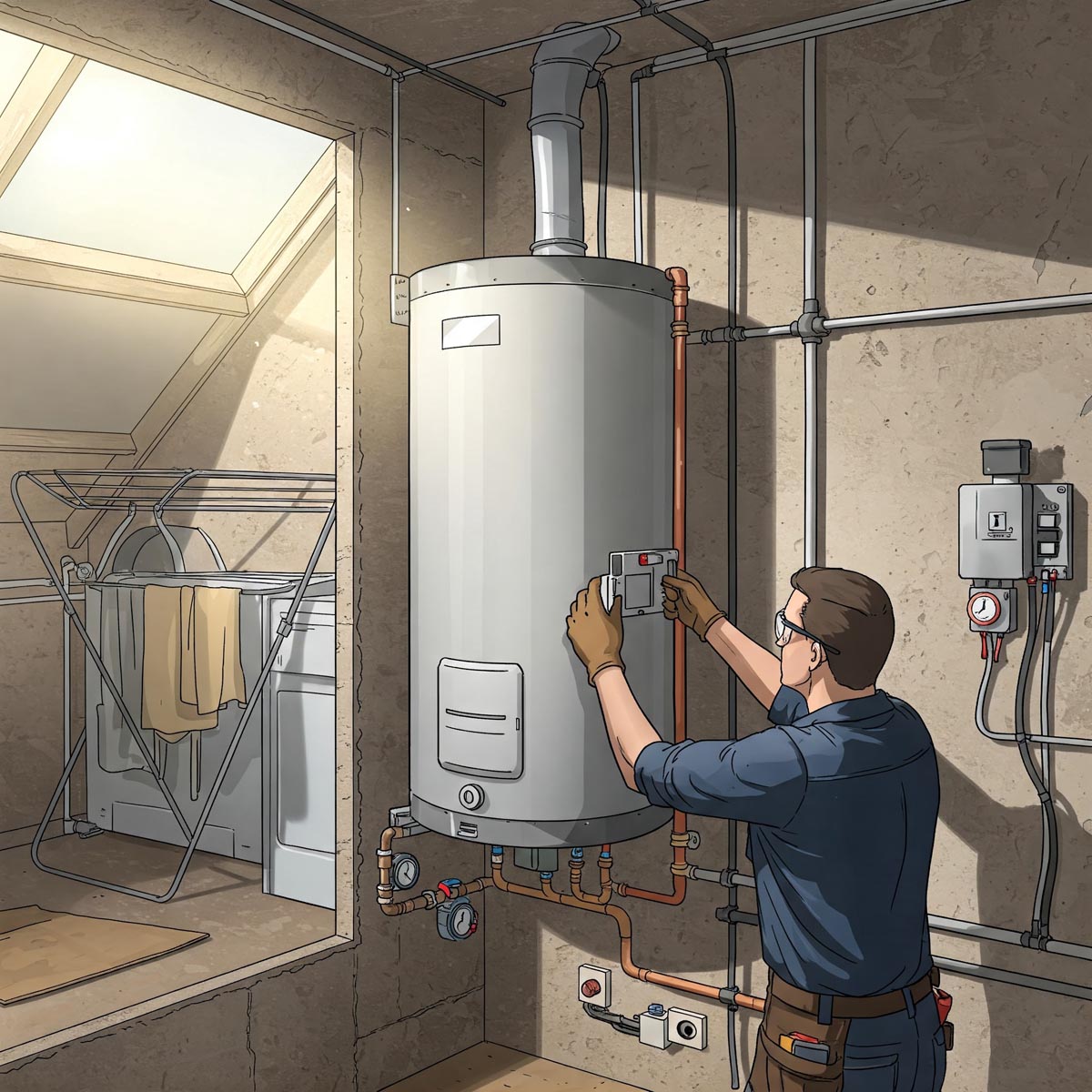
When it comes to ensuring comfort in American homes, few appliances work harder behind the scenes than water heater storage tanks. These unsung heroes deliver hot water for our daily showers, dishwashing, laundry, and countless other household needs. Yet, many homeowners only think about their water heater storage tank when problems arise—usually at the most inconvenient times.
According to the U.S. Department of Energy, water heating accounts for approximately 18% of the average household’s energy consumption, making it the second-largest energy expense after heating and cooling systems. Understanding how water heater storage tanks function, selecting the right one, and maintaining it properly can lead to significant energy savings while ensuring reliable hot water access.
The market for water heater storage tanks has evolved dramatically in recent years, with innovations focused on energy efficiency, smart technology integration, and improved durability. Whether you’re replacing an aging unit, building a new home, or simply wanting to upgrade to a more efficient system, navigating the available options requires careful consideration of various factors including capacity, energy efficiency ratings, recovery rates, and installation requirements.
This comprehensive guide explores everything you need to know about water heater storage tanks, from basic operation principles to advanced selection criteria, maintenance best practices, and top product recommendations. By the end, you’ll have the knowledge to make informed decisions about this essential home appliance that directly impacts your comfort and utility bills.
Understanding Water Heater Storage Tank Basics
What Is a Water Heater Storage Tank?
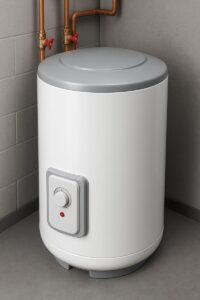
A water heater storage tank is the most common type of water heating system found in American homes. Unlike tankless or on-demand water heaters, storage tank models heat and maintain a reservoir of hot water that’s ready whenever you turn on the tap. These systems consist of an insulated tank, typically holding between 30 to 80 gallons of water, equipped with heating elements or burners that maintain the water at a preset temperature.
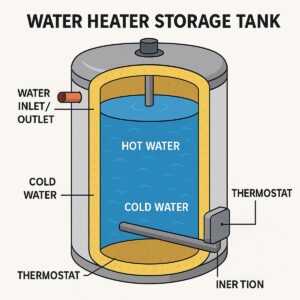
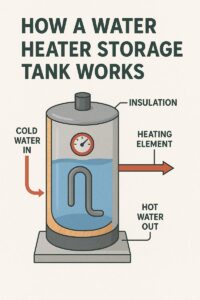
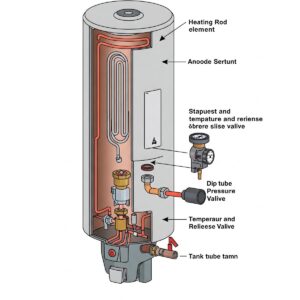
The basic components of a standard water heater storage tank include:
✅ The insulated tank itself, which stores and prevents heat loss from the heated water
✅ Heating mechanism (electric heating elements or gas burners)
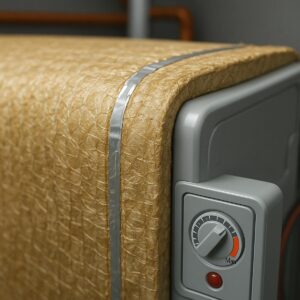
✅ Thermostat to regulate temperature
✅ Pressure relief valve for safety
✅ Dip tube that introduces cold water to the bottom of the tank
✅ Hot water outlet pipe at the top of the tank
✅ Drain valve for maintenance
✅ Anode rod that prevents tank corrosion
According to research published in the Journal of Building Engineering, properly sized and maintained water heater storage tanks can provide hot water for multiple simultaneous uses throughout the home, making them ideal for families with consistent hot water demands.
How Water Heater Storage Tanks Work
Understanding the operation of a water heater storage tank helps explain both its advantages and limitations. Here’s the basic process:
- Cold water enters the tank through the dip tube, which directs it to the bottom of the tank.
- The heating element or burner activates when the water temperature falls below the thermostat setting.
- Hot water, being less dense than cold water, naturally rises to the top of the tank.
- When you open a hot water tap in your home, pressure from the incoming cold water forces hot water out through the outlet pipe at the top of the tank.
- As hot water leaves, new cold water enters, starting the heating cycle again.
This simple yet effective design explains why water heater storage tanks have remained popular despite newer technologies. The American Society of Plumbing Engineers notes that this design provides a reliable buffer of hot water, though it does come with the limitation of potential depletion during heavy usage periods.
Types of Water Heater Storage Tanks
Water heater storage tanks come in several varieties, each with distinct advantages depending on your household needs, energy sources, and budget considerations:
Gas Water Heater Storage Tanks
Gas water heater storage tanks use natural gas or propane burners located beneath the tank to heat water. These models typically heat water faster than electric units and often cost less to operate, especially in areas with lower natural gas prices. According to the Consumer Energy Center, gas water heaters generally have higher recovery rates, meaning they can heat more gallons of water per hour than comparable electric models.
The Rheem Performance Plus 50 Gallon Gas Water Heater offers an excellent balance of efficiency and capacity for medium to large households. With its environmentally friendly low NOx burner and 40,000 BTU input, this model delivers impressive hot water performance while meeting stringent emissions standards.
Electric Water Heater Storage Tanks
Electric models use heating elements submerged in the tank to heat water. While they typically cost less upfront than gas models, operating costs may be higher depending on local electricity rates. Electric water heaters are also generally easier to install, require no venting, and have slightly better energy efficiency ratings when comparing energy input to useful heat output.
For those seeking an efficient electric option, the A.O. Smith Signature Premier 50-Gallon Electric Water Heater combines reliability with smart features. Its dual heating elements provide quick recovery, while the premium grade anode rod offers superior protection against corrosion.
Hybrid/Heat Pump Water Heater Storage Tanks
These innovative units combine a traditional tank with heat pump technology that extracts heat from surrounding air to warm the water. According to the Environmental Protection Agency’s ENERGY STAR program, heat pump water heaters can be 2-3 times more energy-efficient than conventional electric resistance models, though they typically have higher upfront costs.
The Rheem ProTerra 50 Gallon Hybrid Electric Water Heater represents the cutting edge in this category. This ENERGY STAR certified unit can save a typical household approximately $315 annually on energy costs compared to standard electric models.
Solar-Compatible Storage Tanks
These specialized tanks work with solar water heating systems, using energy collected from the sun to heat water. They typically include a backup heating source (electric or gas) for cloudy days or periods of high demand. The Department of Energy reports that solar water heaters can reduce water heating bills by 50-80% annually.
High-Efficiency Condensing Water Heater Storage Tanks
These gas-powered units capture heat from exhaust gases that would otherwise be vented outside, using it to help heat water in the tank. This design significantly improves energy efficiency compared to standard gas models. Studies in Energy and Buildings journal show these units can achieve thermal efficiencies of 94-96%, compared to 70-80% for traditional gas water heaters.
Each type offers distinct advantages depending on your specific needs, home setup, and energy preferences. The next section will help you determine which factors to consider when selecting the right water heater storage tank for your household.
Key Factors to Consider When Choosing a Water Heater Storage Tank
Sizing Your Water Heater Storage Tank Correctly
Selecting the appropriate size for your water heater storage tank is crucial for both comfort and efficiency. A tank that’s too small won’t meet your household’s hot water demands, while an oversized unit wastes energy and money.
The primary factors to consider when sizing include:
✅ Household size (number of occupants)
✅ Peak usage patterns
✅ Simultaneous hot water demands
✅ Available space for installation
According to the Plumbing-Heating-Cooling Contractors Association, a general guideline for sizing is:
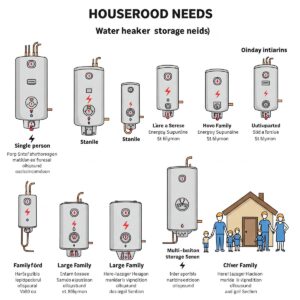
- 1-2 people: 30-40 gallons
- 3-4 people: 40-50 gallons
- 5+ people: 50-80 gallons
However, these guidelines should be adjusted based on your specific usage patterns. For instance, if multiple showers run simultaneously or if you have a high-capacity washing machine or dishwasher, you might need to size up.
The “First Hour Rating” (FHR) is perhaps the most important specification to consider. This rating indicates how many gallons of hot water the unit can deliver in an hour of high usage. To determine your household’s needs, calculate the total hot water requirements during your busiest hour of usage (typically mornings when multiple showers might occur).
Energy Efficiency Considerations
Water heater efficiency directly impacts both environmental footprint and operating costs. Here are key efficiency metrics to evaluate:
Energy Factor (EF) and Uniform Energy Factor (UEF)
The Energy Factor or newer Uniform Energy Factor ratings indicate overall efficiency—higher numbers mean greater efficiency. According to research in Energy Policy journal, upgrading from a water heater with an EF of 0.5 to one with 0.70 can reduce water heating energy consumption by approximately 30%.
Standby Heat Loss
This measures how much heat escapes from the tank when not in use. Look for models with enhanced insulation (at least R-16) and heat traps on inlet and outlet pipes, which can reduce standby losses by up to 60% according to the American Council for an Energy-Efficient Economy.
Recovery Efficiency
This percentage indicates how effectively the heating mechanism transfers energy to the water. Gas units typically have recovery efficiencies around 70-80%, while electric models approach 100% in this specific metric.
The Bradford White 50 Gallon Energy Saver Water Heater excels in efficiency with its enhanced foam insulation and specially designed heat traps. This model significantly reduces standby heat loss, helping homeowners save on energy costs without sacrificing performance.
Fuel Type Availability and Cost Analysis
Your available fuel sources and their relative costs can significantly impact your long-term satisfaction with a water heater storage tank:
Natural Gas
If you have natural gas available, this often provides the lowest operating cost, particularly in colder climates. According to the U.S. Energy Information Administration, natural gas water heaters typically cost 30-40% less to operate than electric models, though this varies by region.
Electricity
Available virtually everywhere, electric water heaters offer installation flexibility and require no venting. They’re ideal for homes without gas service or where venting would be problematic. However, operating costs are typically higher than gas options in most regions.
Propane
Similar in function to natural gas models but requires a propane tank. Operating costs fall between natural gas and electricity in most markets. The American Gas Association notes that propane water heaters can provide faster recovery rates than electric models.
Solar Compatibility
For long-term energy savings, solar-compatible storage tanks can dramatically reduce operating costs, though initial investment is higher. The National Renewable Energy Laboratory estimates that solar water heating systems can reduce water heating bills by 50-80%.
A cost analysis should consider both purchase price and estimated lifetime operating costs based on local utility rates. Many utilities offer rebates for high-efficiency models, which can offset higher initial investment costs.
Recovery Rate and First Hour Rating
The recovery rate measures how many gallons per hour (GPH) a water heater can heat from cold to the set temperature. This becomes particularly important for households with high simultaneous hot water demands.
First Hour Rating (FHR), mentioned earlier, combines tank capacity with recovery rate to indicate real-world performance during periods of high usage. The U.S. Department of Energy recommends selecting a water heater with an FHR that matches or exceeds your household’s peak hour demand.
For large families or homes with luxury bathrooms featuring high-flow fixtures, the A.O. Smith Signature Premier 75 Gallon Gas Water Heater offers an impressive recovery rate and First Hour Rating. Its powerful 76,000 BTU gas burner can quickly reheat water between uses, making it ideal for households with high hot water demands.
Physical Space Requirements and Installation Considerations
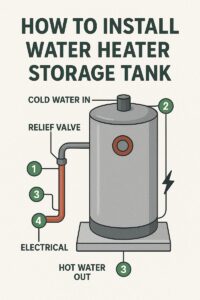
Before selecting a water heater storage tank, carefully evaluate:
✅ Available physical space (height, width, and depth)
✅ Venting requirements (for gas models)
✅ Electrical requirements
✅ Water hardness in your area (may impact maintenance needs)
✅ Local building codes and permit requirements
The National Fire Protection Association’s standards require specific clearances around water heaters for safety, typically a minimum of 12 inches around gas units. Additionally, many localities have adopted stricter energy codes that may require higher efficiency ratings than federal minimums.
Top Water Heater Storage Tank Models of 2025
Best Overall Gas Water Heater Storage Tank
Rheem Performance Platinum 50 Gallon Gas Water Heater
This premium model represents the pinnacle of conventional gas water heater technology. With a 0.72 UEF rating, it exceeds the minimum federal efficiency requirements by a significant margin. The unit features:
- 50-gallon capacity ideal for households of 3-5 people
- Self-diagnostic system that continually monitors performance
- 60,000 BTU burner for rapid recovery
- Eco-friendly low NOx emissions
- 12-year limited warranty
According to verified purchases on Amazon, this model consistently receives praise for its quiet operation and excellent hot water delivery. One reviewer noted: “After upgrading from our 12-year-old unit, we’ve seen approximately $15 monthly savings on our gas bill while never running out of hot water, even with back-to-back showers.”
Best Premium Electric Water Heater Storage Tank
A.O. Smith Signature Premier 50-Gallon Electric Water Heater
This high-end electric model showcases A.O. Smith’s century of water heating expertise:
- Dual 5500-watt stainless steel heating elements
- DynaClean™ diffuser dip tube reduces sediment buildup
- Commercial-grade anode rod extends tank life
- 0.93 UEF for excellent energy efficiency
- 10-year warranty
The Signature Premier series comes equipped with A.O. Smith’s CoreGard™ anode rod technology, which provides up to 33% more protection against corrosion than standard anode rods, potentially extending tank life by years.
Best Budget-Friendly Option
Rheem Performance 40 Gallon Electric Water Heater
For budget-conscious consumers who don’t want to sacrifice quality:
- 40-gallon capacity suitable for 2-4 person households
- 0.92 UEF rating for energy savings
- Overheat protection system
- Easy replacement of existing water heaters
- 6-year limited warranty
This model proves that affordability doesn’t necessarily mean compromising on quality or efficiency. The Performance series delivers reliable hot water with lower upfront costs while still providing energy savings over older models.
Best High-Capacity Option for Large Households
Bradford White 75 Gallon Natural Gas Water Heater
For households with extraordinary hot water demands:
- 75-gallon capacity for large families or luxury homes
- Thermosense™ intelligent gas control
- ICON System™ with advanced temperature control
- Vitraglas® lining for superior tank protection
- Hydrojet® sediment reduction system
Bradford White’s proprietary technologies make this large-capacity model particularly durable and efficient. The Hydrojet® system helps prevent sediment buildup, a common issue that reduces efficiency and shortens the lifespan of water heaters.
Best Energy-Efficient Hybrid Option
Rheem ProTerra 50 Gallon Hybrid Electric Water Heater
This cutting-edge hybrid model represents the future of water heating technology:
- 50-gallon capacity with heat pump technology
- 3.75 UEF rating—up to 400% more efficient than standard electric models
- WiFi connectivity for smartphone monitoring and control
- Multiple operating modes to optimize efficiency
- Energy Star certified with potential utility rebates
According to the EPA’s ENERGY STAR program, this model can save a typical household approximately $3,500 over its lifetime compared to standard electric water heaters. The ProTerra series also qualifies for substantial rebates in many utility districts, sometimes reducing the purchase price by $500 or more.
$
| Model | Type | Capacity | UEF Rating | Recovery Rate | Warranty | Price Range |
|---|---|---|---|---|---|---|
| Rheem Performance Platinum | Gas | 50 Gal | 0.72 | 67 GPH | 12 Years | $$$$ |
| A.O. Smith Signature Premier | Electric | 50 Gal | 0.93 | 25 GPH | 10 Years | $$$ |
| Rheem Performance | Electric | 40 Gal | 0.92 | 21 GPH | 6 Years | $$ |
| Bradford White | Gas | 75 Gal | 0.70 | 90 GPH | 10 Years | |
| Rheem ProTerra | Hybrid | 50 Gal | 3.75 | 37 GPH | 10 Years | $$$$ |
💬 Just one click – help others make better buying decisions too!😊
Top Pick: Ultimate Efficiency and Value
After thorough analysis and comparison, the Rheem ProTerra 50 Gallon Hybrid Electric Water Heater earns our top recommendation for most households looking to maximize efficiency and long-term value. While its initial cost is higher than conventional models, the extraordinary efficiency, smart features, and potential rebates make it the best investment for forward-thinking homeowners.
Installation Considerations for Water Heater Storage Tanks
DIY vs. Professional Installation
While some homeowners with plumbing and electrical experience might consider DIY installation, professional installation is strongly recommended for most water heater storage tank replacements. Here’s why:
✅ Safety concerns with gas, electrical, and plumbing connections
✅ Building code compliance requirements
✅ Proper venting is critical for gas models
✅ Warranty may be voided by improper installation
✅ Permit requirements in most jurisdictions
According to a study in the Journal of Construction Engineering and Management, improper water heater installation is among the top causes of premature system failure and safety incidents. Professional installation typically adds $300-800 to the project cost but provides peace of mind and often extended warranty coverage.
Upgrading Infrastructure During Installation
When replacing an older water heater storage tank, consider these potential infrastructure upgrades:
Expansion Tanks
Many building codes now require thermal expansion tanks, particularly in closed water systems. These small tanks absorb pressure increases as water expands during heating, preventing damage to plumbing fixtures and the water heater itself.
Water Heater Pans and Leak Detection
Installing a drain pan with leak detection can prevent expensive water damage if the tank eventually leaks. Smart water sensors can even send alerts to your phone when moisture is detected.
Updated Venting
Newer high-efficiency gas models often require different venting configurations than older units. Your installer should evaluate whether existing venting meets current code requirements.
Seismic Strapping
In earthquake-prone regions, proper seismic strapping is not just recommended but required by code. These simple metal straps can prevent dangerous tipping during seismic events.
Location Optimization
The placement of your water heater storage tank affects both efficiency and convenience:
✅ Central location minimizes piping runs and wait times for hot water
✅ Adequate clearance around the unit for service access and safety
✅ Protection from freezing in unheated spaces
✅ Consider noise levels for units placed near living spaces
The American Society of Home Inspectors recommends placing water heaters as close as possible to the most frequent point of use while ensuring adequate ventilation and accessibility for maintenance.
Don’t Miss These Exclusive Deals! 🔥
→ Looking to upgrade your home’s hot water system? These carefully selected water heater storage tanks offer the perfect combination of reliability, efficiency, and value. Click on any highlighted product to check current pricing and availability on Amazon—these top-rated models will ensure your household never runs out of hot water again!
Maintenance and Longevity of Water Heater Storage Tanks
Essential Maintenance Tasks
Proper maintenance significantly extends the lifespan of water heater storage tanks while maintaining efficiency and preventing costly failures. Here’s a maintenance schedule based on recommendations from the Plumbing-Heating-Cooling Contractors Association:
Monthly Maintenance
- Visual inspection for leaks around fittings and valves
- Check for unusual noises during operation
- Test pressure relief valve by lifting and releasing the lever
Quarterly Maintenance
- Check temperature setting (120-125°F is typically recommended for safety and efficiency)
- Inspect anode rod if accessible (partial inspection through relief valve opening)
- Clear area around water heater of dust and debris
Annual Maintenance
- Full flush of tank to remove sediment buildup
- Complete anode rod inspection and replacement if needed
- Check all electrical connections (for electric models)
- Inspect gas connections and burner (for gas models)
- Clean air intake screens for proper combustion
Research published in Building and Environment journal indicates that regular maintenance can extend water heater life by 3-5 years and maintain peak efficiency levels throughout the unit’s lifespan.
Signs Your Water Heater Storage Tank Needs Replacement
Even with proper maintenance, water heater storage tanks eventually require replacement. Watch for these warning signs:
✅ Age exceeding expected lifespan (typically 8-12 years)
✅ Rusty water indicating internal tank corrosion
✅ Visible rust on tank exterior, especially around connections
✅ Reduced hot water capacity despite proper settings
✅ Frequent pilot light outages (gas models)
✅ Unusual noises like popping or cracking
✅ Water pooling near the base of the unit
According to the International Association of Certified Home Inspectors, approximately 75% of water heater failures involve slow leaks or sudden tank ruptures that could have been predicted through regular inspection.
Extending Lifespan Through Proper Care
Beyond regular maintenance, these practices can significantly extend your water heater storage tank’s useful life:
Install Water Softeners in Hard Water Areas
Minerals in hard water accelerate sediment buildup and tank deterioration. Water softeners can dramatically reduce these effects, particularly in regions with very hard water. Studies in the Journal of Water Supply Research and Technology show that softened water can extend water heater life by up to 50% in extreme hard water regions.
Use a Timer for Electric Models
Installing a timer that shuts off the water heater during periods of non-use (like while you’re at work) can reduce wear on heating elements while saving energy. Smart timers can learn your household’s usage patterns and optimize heating cycles accordingly.
Insulate Hot Water Pipes
Insulating the first few feet of hot water pipes exiting the tank reduces heat loss and can even allow you to lower the temperature setting slightly, reducing stress on the system.
Regular Anode Rod Replacement
The sacrificial anode rod is designed to corrode instead of your tank. Replacing it every 3-5 years (or more frequently in hard water areas) can dramatically extend tank life. Some premium models like the Bradford White Defender Safety System feature specially designed anode rod systems that provide enhanced protection against tank corrosion.
Energy Efficiency and Cost Savings
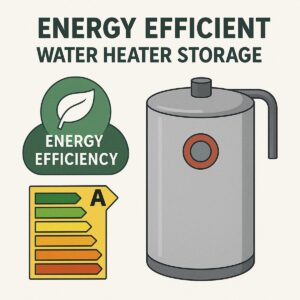
Understanding Efficiency Ratings
Modern water heater storage tanks come with standardized efficiency ratings that help consumers make informed comparisons:
Uniform Energy Factor (UEF)
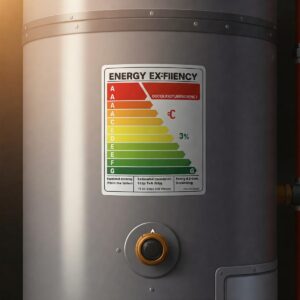
This newer rating replaced the older Energy Factor (EF) system and provides a more consistent measurement of efficiency across different types and sizes of water heaters. Higher UEF numbers indicate greater efficiency:
- Standard gas storage water heaters: 0.55-0.65 UEF
- High-efficiency gas models: 0.67-0.77 UEF
- Standard electric storage water heaters: 0.90-0.95 UEF
- Heat pump/hybrid models: 2.00-4.00 UEF
According to the Department of Energy, each 0.1 increase in UEF typically translates to approximately 3-5% energy savings.
ENERGY STAR Certification
Water heaters earning this certification exceed federal minimum efficiency standards, typically by 8-15%. The EPA’s ENERGY STAR program estimates that if all residential water heaters sold in the U.S. were ENERGY STAR certified, the energy cost savings would amount to more than $13 billion annually.
Calculating Long-Term Operating Costs
While efficient models often carry higher purchase prices, calculating the total cost of ownership provides a more accurate picture:
Annual operating cost = (365 days × daily hot water usage in gallons × temperature rise × fuel cost) ÷ (UEF × fuel energy content)
For most households, the difference between a minimum-efficiency model and a high-efficiency model can amount to $100-300 annually in energy costs. Over a 10-year lifespan, this represents significant savings that often justify higher initial investment.
The Rheem Marathon 50-Gallon Electric Water Heater exemplifies lifetime value with its innovative non-metallic tank that’s virtually immune to corrosion. Though priced higher than conventional electric models, its manufacturers confidently back it with a lifetime warranty on the tank and 6 years on parts, making it an excellent long-term investment.
Rebates and Incentives
Many utility companies and government programs offer substantial rebates for energy-efficient water heater storage tanks:
✅ Federal tax credits for certain high-efficiency models
✅ Local utility rebates (sometimes $200-600 for qualifying models)
✅ State energy office incentives
✅ Occasional manufacturer rebates
The Database of State Incentives for Renewables & Efficiency (DSIRE) maintains a comprehensive, searchable collection of incentives by location. According to their data, combining available rebates can sometimes reduce the effective cost of a high-efficiency water heater by 30-50%.
Smart Technology and Water Heater Storage Tanks
Connected Water Heater Features
The latest generation of water heater storage tanks incorporates smart technology that enhances both convenience and efficiency:
Remote Temperature Control
WiFi-connected models allow temperature adjustments via smartphone apps. This feature is particularly useful for vacation homes or when traveling, allowing you to lower temperatures while away and restore comfort settings before returning.
Usage Monitoring and Reports
Smart water heaters track hot water consumption patterns, providing insights that can help optimize settings and identify potential problems early. According to research in Energy and Buildings journal, households that monitor their hot water usage typically reduce consumption by 15-20% simply through increased awareness.
Leak Detection and Alerts
Advanced models can detect unusual water flow patterns that might indicate leaks or pending failures, sending immediate alerts to prevent water damage and emergency replacements.
Maintenance Reminders
Smart systems track the age of components like anode rods and automatically remind owners when maintenance is due.
The Rheem ProTerra Hybrid Electric Smart Tank Water Heater stands out with its comprehensive EcoNet® Smart Monitoring System. This intuitive platform provides detailed energy usage data, customizable operating modes, and proactive maintenance alerts, all accessible through a user-friendly smartphone app.
Integration with Home Automation Systems
Modern water heater storage tanks increasingly offer compatibility with broader home automation platforms:
✅ Voice assistant compatibility (Amazon Alexa, Google Assistant)
✅ Integration with smart home hubs
✅ Energy management systems that optimize usage based on time-of-use utility rates
✅ Compatibility with solar monitoring systems
According to a recent Parks Associates study, approximately 34% of smart home device owners express interest in connected water heater technology, with energy savings and improved reliability being the primary motivators.
Take Control of Your Hot Water Costs Today! 🚿
→ Ready to transform your home’s hot water experience? The latest water heater storage tank technologies offer unprecedented efficiency and convenience. Click through to explore these innovative products and discover how much you could save on your energy bills!
Environmental Considerations
Carbon Footprint of Different Water Heater Types
The environmental impact of water heater storage tanks varies significantly by fuel type and efficiency:
Natural Gas Models
Traditional gas water heaters produce approximately 4,000-6,000 pounds of CO2 annually for a typical household. High-efficiency condensing models can reduce this by 25-30% according to Carbon Fund research.
Electric Models
While electric water heaters produce no emissions at the point of use, their carbon footprint depends entirely on the electricity generation mix in your region. In areas with clean energy grids, electric models can have a lower carbon footprint than gas. In coal-heavy regions, their lifecycle emissions may actually be higher than direct gas use.
Heat Pump/Hybrid Models
These systems reduce electricity consumption by 60-70% compared to standard electric resistance models, proportionally reducing carbon emissions. The Environmental Protection Agency estimates that widespread adoption of heat pump water heaters could reduce residential water heating carbon emissions by nearly 140 million tons annually.
Recycling and Disposal Considerations
Responsible end-of-life handling for water heater storage tanks involves:
- Metal tank recycling (approximately 75% of tank weight is recyclable steel)
- Proper disposal of insulation materials
- Special handling for electronic components in smart models
- Professional removal of refrigerants from heat pump systems
Many retailers and installation companies offer recycling services for old units. According to the Steel Recycling Institute, recycling a standard water heater tank saves enough energy to power a household for 1-2 weeks.
Sustainable Manufacturing Practices
Leading manufacturers are increasingly implementing sustainable production methods:
✅ Reduced manufacturing waste streams
✅ Energy-efficient production facilities
✅ Recyclable packaging materials
✅ Use of recycled content in components
A.O. Smith, for example, has reduced water consumption in their manufacturing processes by over 35% in recent years while increasing the recycled content in their products.
Troubleshooting Common Water Heater Storage Tank Issues
Insufficient Hot Water
Perhaps the most common complaint, insufficient hot water supply can stem from multiple causes:
Possible Causes and Solutions
- Undersized tank for household needs
- Solution: Upgrade to a larger capacity model or supplement with point-of-use heaters for distant fixtures
- Sediment buildup insulating heating elements
- Solution: Flush tank thoroughly; if problem persists, professional cleaning or replacement may be needed
- Faulty thermostat or heating element
- Solution: Test and replace malfunctioning components
- Crossed hot/cold connections
- Solution: Professional plumbing inspection to identify and correct cross-connections
According to research from the Building Research Establishment, sediment buildup can reduce water heater efficiency by up to 50% while significantly reducing available hot water capacity.
Strange Noises
Popping, rumbling, or banging sounds from a water heater storage tank typically indicate specific issues:
Possible Causes and Solutions
- Sediment buildup causing trapped steam bubbles
- Solution: Regular flushing; severe cases may require professional descaling
- High water pressure causing tank expansion
- Solution: Install pressure-reducing valve if home water pressure exceeds 80 PSI
- Heat trap noise in pipelines
- Solution: Replace noisy heat traps with silent models
The American Water Works Association suggests that sediment-related noises are present in approximately 80% of water heaters over five years old in hard water regions, but regular maintenance can prevent this common issue.
Leaking Tanks
Water pooling around the base of a water heater storage tank requires immediate attention:
Possible Causes and Solutions
- Loose connections
- Solution: Tighten fittings; replace worn washers or gaskets
- Pressure relief valve discharge
- Solution: Check water pressure and temperature settings; replace valve if faulty
- Internal tank corrosion
- Solution: Unfortunately, this typically requires complete tank replacement
- Condensation vs. actual leaking
- Solution: Distinguish between normal condensation (particularly on high-efficiency models) and actual leaks
The Plumbing-Heating-Cooling Contractors Association notes that approximately 75% of catastrophic tank failures are preceded by small leaks, making early detection critical.
Pilot Light Issues (Gas Models)
Pilot light problems are unique to gas water heater storage tanks:
Possible Causes and Solutions
- Dirty pilot assembly
- Solution: Clean thermocouple and pilot orifice
- Faulty thermocouple
- Solution: Replace thermocouple (relatively inexpensive repair)
- Gas supply interruptions
- Solution: Check gas valves and supply
- Draft issues affecting flame
- Solution: Inspect and correct venting problems
According to a study in Home Energy magazine, approximately 40% of service calls for gas water heaters involve pilot light issues, many of which could be prevented through regular maintenance.
Future Trends in Water Heater Storage Tank Technology
Emerging Technologies
The water heater industry continues to evolve with several promising technologies on the horizon:
Heat Pump Advancements
Next-generation heat pump water heaters promise even greater efficiency with:
- CO2 refrigerants with lower global warming potential
- Split system designs that separate the tank from the heat pump component
- Advanced defrost cycles for better cold-climate performance
- Quieter operation through improved compressor design
Research from the National Renewable Energy Laboratory suggests these advancements could push UEF ratings above 5.0 in coming years.
Thermal Battery Integration
Some manufacturers are developing water heater storage tanks that double as thermal batteries for home energy systems:
- Grid-interactive capabilities that heat water during low electricity demand periods
- Integration with home solar systems to store excess daytime production as hot water
- Demand response features that can participate in utility load management programs
Advanced Materials
Innovations in tank materials promise longer lifespans and better performance:
- Composite tanks immune to corrosion
- Phase-change materials in insulation for better heat retention
- Self-healing tank linings that can address minor deterioration
- Anti-scale surfaces that resist mineral buildup
Regulatory Changes on the Horizon
Upcoming regulatory shifts will impact the water heater storage tank market:
✅ Higher minimum UEF requirements taking effect in 2025
✅ Potential phaseout of certain refrigerants in heat pump models
✅ Stricter NOx emission standards for gas models
✅ Expanded ENERGY STAR criteria
According to the Appliance Standards Awareness Project, these changes could eliminate the lowest-performing 30% of current models from the market while driving further innovation.
Special Applications for Water Heater Storage Tanks
Commercial Applications
While this guide focuses primarily on residential units, many principles apply to commercial water heater storage tanks as well. Key differences include:
✅ Higher capacity requirements (often 100+ gallons)
✅ More robust construction for continuous heavy usage
✅ Multiple units often installed in series or parallel configurations
✅ More sophisticated control systems
✅ Higher recovery rate requirements
Commercial entities should consult with specialized engineers to properly size systems based on peak demand patterns specific to their industry (restaurants, hotels, fitness centers, etc.).
Vacation Homes and Seasonal Properties
Water heater storage tanks in seasonal properties face unique challenges:
Considerations for Seasonal Use
- Freeze protection during vacant periods
- Solution: Drain tank completely or maintain minimum heat levels
- Extended periods without use
- Solution: Consider vacation mode settings if available or installation of timer controls
- Rapid scaling in areas with hard water
- Solution: Install water softener or perform more frequent maintenance
- Bacterial growth during dormant periods
- Solution: Flush system thoroughly before use; maintain higher temperature setting initially
The International Association of Certified Home Inspectors recommends complete professional servicing of water heater storage tanks in vacation properties prior to each season of use.
Off-Grid and Remote Installations
For cabins, tiny homes, and other off-grid applications, specialized water heater storage tank considerations include:
✅ Propane models optimized for intermittent use
✅ Solar thermal compatibility
✅ Low-power electric options for generator or limited solar electric systems
✅ Compact designs for space-constrained installations
The Eccotemp L5 Portable Tankless Water Heater offers an excellent solution for off-grid applications with its compact design and propane operation. While not a storage tank model, it provides a reliable alternative when traditional infrastructure isn’t available.
Installation Best Practices
Proper Location and Placement
Correct positioning of your water heater storage tank impacts efficiency, safety, and convenience:
- Central location minimizes piping distance to frequent hot water use points
- Adequate clearances per manufacturer specifications (typically 12-18 inches on all sides)
- Level, stable surface capable of supporting the filled weight (often 400-800 pounds)
- Protection from elements if installed in garage or unheated space
- Accessibility for maintenance and eventual replacement
The Uniform Plumbing Code recommends installing water heaters in areas with floor drains when possible and always with drain pans in finished interior spaces.
Venting Requirements for Gas Models
Proper venting is critical for both efficiency and safety with gas water heater storage tanks:
✅ Direct vent systems that draw combustion air from outside
✅ Power vent models for installations where conventional venting isn’t possible
✅ Proper clearance from combustible materials
✅ Correct slope for horizontal vent runs (¼ inch per foot minimum)
✅ Sealed combustion systems for highest efficiency
A study by the Gas Technology Institute found that approximately 23% of gas water heater installations have some form of venting deficiency that affects performance or safety, highlighting the importance of professional installation.
Upgrade Opportunities During Installation
When replacing a water heater storage tank, consider these valuable upgrades:
Expansion Tanks
These small tanks absorb pressure created as water expands during heating. They’re especially important in closed water systems (those with pressure-reducing valves or backflow preventers). According to the Uniform Plumbing Code, expansion tanks are now required with all new water heater installations in most jurisdictions.
Recirculation Systems
For homes where fixtures are far from the water heater, recirculation systems can provide near-instant hot water while actually reducing overall water usage. Advanced models use motion sensors or programmable timers to operate only when needed, minimizing energy waste.
Water Leak Detection and Automatic Shutoff
Smart water monitors like the Moen Flo Smart Water Monitor can detect leaks and automatically shut off water supply to prevent damage. These systems integrate perfectly with new water heater installations.
Don’t Wait Until Your Old Water Heater Fails! 🔧
→ Proactive replacement of aging water heater storage tanks saves money and prevents the inconvenience of emergency repairs. Browse these top-rated models now to find the perfect replacement that will provide reliable hot water and energy savings for years to come!
Regional Considerations for Water Heater Storage Tanks
Climate Factors
Your geographic location significantly impacts water heater selection and operation:
Cold Climate Considerations
In northern regions with cold incoming water temperatures:
- Higher energy requirements to raise water temperature
- Larger capacity needs to compensate for slower recovery in cold conditions
- Installation location should be heated space when possible
- Enhanced insulation for increased efficiency
- Condensing gas models may require special condensate management in freezing conditions
The Department of Energy estimates that households in northern states typically spend 15-20% more on water heating than identical homes in southern regions due to colder incoming water temperatures.
Hot Climate Considerations
In warmer southern regions:
- Heat pump water heaters perform exceptionally well in warm ambient air
- Solar thermal compatibility becomes more viable
- Slightly smaller capacity may be adequate due to warmer incoming water
- Garages and unheated spaces become viable installation locations
A study in Energy Policy journal found that heat pump water heaters installed in warm southern garages can achieve operating efficiencies up to 25% higher than the same units installed in northern basements.
Water Quality Issues
Regional water characteristics dramatically affect water heater storage tank performance and longevity:
Hard Water Regions
Areas with high mineral content in water supply require:
✅ More frequent maintenance and flushing
✅ Consider built-in scale reduction systems
✅ Higher-quality anode rods
✅ Potential water softener installation
According to the Water Quality Association, approximately 85% of American homes have hard water to some degree, with the highest concentrations in the Southwest and Midwest regions.
Acidic Water Considerations
Regions with naturally acidic water (pH below 7.0):
✅ Glass-lined tanks recommended
✅ More frequent anode rod inspection
✅ Neutralizing filters may be beneficial
✅ Stainless steel tanks as premium option
The Plumbing-Heating-Cooling Contractors Association reports that water heaters in regions with acidic water typically have 30-40% shorter lifespans without appropriate protective measures.
Conclusion: Making Your Water Heater Storage Tank Decision
Selecting the right water heater storage tank represents a significant investment in your home’s comfort, efficiency, and operational costs. By understanding the factors outlined in this comprehensive guide, you’re equipped to make an informed decision that balances initial cost with long-term value.
Remember these key takeaways:
- Proper sizing is crucial—match tank capacity to your household’s actual needs
- Energy efficiency pays dividends throughout the unit’s lifespan
- Fuel type selection should consider both availability and long-term cost projections
- Professional installation ensures safety, efficiency, and warranty protection
- Regular maintenance dramatically extends tank life and maintains performance
- New technologies like hybrid/heat pump models offer compelling advantages despite higher upfront costs
For most American households, the investment in a high-quality water heater storage tank pays dividends through reliable performance, reasonable operating costs, and the simple luxury of consistent hot water for all household needs.
Take Action Now For Reliable Hot Water! 🚿
→ Don’t wait for your current water heater to fail! Explore these top-rated water heater storage tanks today and enjoy peace of mind knowing you’ve selected the perfect system for your home’s needs. Click any highlighted product to check current Amazon pricing and take the first step toward better hot water reliability!
More FAQs:
❓ How long does a water heater storage tank typically last?
❓ What size water heater storage tank do I need for a family of four?
❓ How much can I save by upgrading to a high-efficiency water heater storage tank?
❓ Can I install a water heater storage tank myself to save money?
❓ What's the price difference between gas and electric water heater storage tanks?
Recommended for You:
- Water Heater Water Valve: Complete Guide for Homeowners in 2025
- 10 Best Window Mounted Heat Pump Options For Year-Round Comfort in 2025
- 7 Best Wood Heater for Garage Options to Transform Your Workspace in 2025
Disclaimer: This article contains affiliate links. If you purchase products through these links, we may earn a small commission at no additional cost to you.
