
In This Article
You know the feeling. You’re three runs in, the temperature has dropped ten degrees since 9 a.m., and no matter how many layers you’ve piled on, that bone-deep cold keeps creeping in right through your core. Your fingers work the poles okay. Your legs are fine. But that hollow chill settling into your chest? That’s the one that kills your focus, shortens your day on the mountain, and sends you shuffling to the lodge an hour before you’d planned.
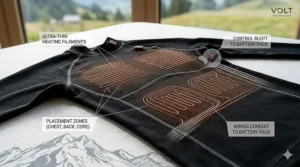
A heated base layer shirt for skiing is the answer most skiers haven’t tried yet — and once you do, you genuinely can’t go back to stuffing yourself into four passive layers like a human burrito. In plain terms, it’s a close-fitting thermal shirt with embedded heating elements — carbon fiber panels, conductive threads, or microwire networks — powered by a rechargeable battery pack that fits in a small interior pocket. Flip it on, choose your heat level, and within about 60 seconds you feel actual warmth spreading across your chest and back. It’s not magic, but it’s close enough.
These shirts have gotten dramatically better over the past few years. We’re talking 6–10-hour battery life, featherweight designs that sit invisibly under a ski jacket, and multiple heat zones that target exactly where you lose warmth first: your core. The Centers for Disease Control and Prevention warns that when your core temperature drops, blood withdraws from your extremities to protect vital organs — meaning if you’re cold in the chest, your hands and feet get colder too. Fixing the core fixes everything.
This guide breaks down the 7 best options available on Amazon right now — covering every budget level, both men’s and women’s cuts, and battery systems ranging from a basic 5V USB setup to pro-grade 7V heated technology — so you can find the one that actually fits your skiing style and budget.
Quick Comparison: Top 7 Heated Base Layer Shirts for Skiing
| Product | Voltage | Heat Zones | Battery Life | Best For | Price Range |
|---|---|---|---|---|---|
| ActionHeat 5V Men’s Heated Thermals | 5V | 3 zones | 4.5 hrs (Low) | Budget-first skiers | $70–$90 |
| ActionHeat 5V Women’s Base Layer Shirt | 5V | 3 zones | 4.5 hrs (Low) | Women wanting lightweight warmth | $70–$90 |
| Gobi Heat Basecamp Men’s Shirt | 5V | 3 zones (+ neck) | 8 hrs (Low) | All-day mountain sessions | $170–$200 |
| Gerbing 7V Men’s Battery Heated Shirt | 7V | 3 zones | 8 hrs | Cold-weather power users | $130–$160 |
| Volt Resistance 7V Four-Panel Base Layer | 7V | 4 panels (back-focused) | 8 hrs (Low) | Back pain sufferers, long-haul skiers | $100–$130 |
| Volt Resistance Tactical 5V USB | 5V USB | 2 panels | 10+ hrs (Low) | Minimalists, beginners | $70–$100 |
| AMOVO Heated Thermal Shirt | 5V USB | Multiple zones | 5 hrs (High) | Everyday/versatile use | $50–$80 |
Reading the table: The price jump between budget 5V options and the Gobi Heat Basecamp is real — but so is the difference in battery performance. If you ski three hours and head inside, the ActionHeat is plenty. If you’re a full-day grinder who eats lunch on the mountain, that 8-hour runtime on the Gobi Heat pays for itself in comfort dividends. Gerbing’s 7V system runs hotter and longer than any 5V setup in this class, which matters on genuine bluebird-powder days when temperatures hover in the single digits.
💬 Just one click — help others make better buying decisions too! 😊
Top 7 Heated Base Layer Shirts for Skiing: Expert Analysis
1. ActionHeat 5V Men’s Heated Thermals Base Layer Shirt
If you’ve never worn a heated base layer shirt for skiing before, start here. The ActionHeat 5V Men’s Heated Thermals is the product that converts skeptics — and it does it without asking you to spend a fortune.
Three ActionFlex heating panels (chest and upper/lower back) run on a 5V 6000mAh USB power bank included in the kit. The heat settings break down practically as follows: High (150°F) gives you about 2+ hours of intense warmth for brutal first-chair starts, Medium (130°F) stretches to 3+ hours for a solid mid-mountain session, and Low (110°F) cruises for 4.5+ hours if you want steady background warmth all day. What most buyers miss is the FAR infrared heating and ActionWave technology — this isn’t just resistive heat, it’s designed to penetrate deeper into muscle tissue. On a frigid day, that distinction matters.
The carbon fiber heating elements are why this shirt stays flexible even when fully operational. You won’t feel stiff panels crackling against your ribs on mogul runs — it moves with you. Customers consistently praise the fit and the speed of heat-up (under 60 seconds to feel warmth on the chest). A few note the 6000mAh bank runs shorter than expected on High, so budget-conscious skiers should plan their heat usage.
Best for: First-time heated-shirt buyers and intermediate skiers who want solid performance without a premium price tag.
✅ Includes power bank in the kit
✅ Carbon fiber elements — flexible and durable
✅ FAR infrared + ActionWave technology for deeper warmth
❌ 6000mAh bank gets hungry on High after 2 hours
❌ Back-heavy heat distribution (chest panel is smaller)
Price range: $70–$90 range — outstanding value for what you get.
2. ActionHeat 5V Women’s Battery Heated Base Layer Shirt
Same ActionFlex heating technology. Same 5V 6000mAh power bank included in the kit. But the women’s cut is genuinely different — it’s not a shrunk-down version of the men’s shirt, it’s designed with a women’s torso geometry in mind, and the fit shows it. Slimmer through the waist, longer in the torso for tuck-in movement, and roomier through the shoulders for ski pole dynamics.
The three heat zones (chest and back) run the same settings as the men’s version: High at 130°F for 2+ hours, Medium at 110°F for 3+ hours, Low at 90°F for 4.5+ hours. Worth noting: the women’s temperature ceiling is slightly lower than the men’s variant — 130°F vs. 150°F on High. In practice, most women actually prefer this; the gentler heat feels more comfortable against the skin and reduces the risk of a “hot spot” sensation during high-output runs.
The power bank doubles as a phone charger, which earns it bonus points from anyone who’s spent a day on the mountain watching their phone battery die in the cold. Customers rave about how thin the shirt sits under a ski jacket — you genuinely cannot tell it’s there. The main complaint is the same as the men’s version: bring a backup power bank if you’re skiing all day on High.
Best for: Women skiers who run cold, especially those who find traditional layering too bulky.
✅ Women’s-specific cut — actually fits well under a ski jacket
✅ Power bank doubles as phone charger
✅ Lightweight enough to forget you’re wearing it
❌ Lower max temperature than men’s version (130°F vs. 150°F)
❌ Battery runs short on aggressive (High) settings
Price range: $70–$90 range — same great value equation as the men’s version.
3. Gobi Heat Basecamp Men’s Heated Base Layer Shirt
Here’s where the game changes. The Gobi Heat Basecamp Men’s Heated Base Layer Shirt is the full-day solution, and that 10,000mAh lithium-polymer battery is the headline. Eight hours of continuous heat on Low, six on Medium, four on High — which means you can drop onto the first chairlift at 8 a.m. and still have warmth left for après ski without touching the charger.
What sets Gobi Heat apart from the competition is the third heat zone: the neck. Most heated shirts warm your chest and back. The Basecamp also targets the cervical spine and base of the skull — the area where wind-chill hits hardest on fast descents. Conductive thread technology powers all three zones (abdomen, back, neck), which means no rigid heating panels creating pressure points when you bend and twist. The thread is woven directly into the fabric; it flexes like the shirt does.
The quarter-zip design is a smart skiing-specific touch. On a warm, sunny afternoon when the mountain softens, you can crack the zip and vent without removing the shirt. The three heat settings (Low 113°F / Medium 131°F / High 140°F) are controlled by a single-touch LED button, easy to operate even with gloves on. Customers describe the warmth as “even” and “consistent” — no hot spots, no dead zones. The recharge time (3–4 hours) means overnight charging is all you need.
Best for: Serious full-day skiers, cold-weather guides, and anyone who refuses to cut their mountain time short because of the cold.
✅ 10,000mAh battery — best runtime in this price category
✅ Neck heat zone — genuinely unique and genuinely useful on wind-exposed runs
✅ Conductive thread (no rigid panels) — exceptional flexibility
❌ Higher price point than competitors
❌ Sizing runs a touch snug — order up if you’re between sizes
Price range: $170–$200 range — premium, but the all-day performance justifies it for frequent skiers.
4. Gerbing 7V Battery Heated Shirt for Men
Gerbing has been in the heated clothing game for nearly 50 years — longer than most of its competitors have been companies — and the Gerbing 7V Battery Heated Shirt for Men ( shows what half a century of engineering looks like when it’s applied to a ski base layer.
The patented Microwire heating system is Gerbing’s crown jewel. Micro-sized stainless steel fibers intertwined and encased in a proprietary waterproof coating create a heating element that’s both more durable and more efficient than carbon fiber panels. That’s not marketing talk — Gerbing’s Microwire system was originally developed for aerospace-adjacent applications, which is why it can take the mechanical stress of a full skiing day (falls, twists, pressure from harnesses or backpacks) without degrading over time.
The 7V system runs hotter than any 5V product in this guide. On High, you feel real, intense warmth — the kind that cuts through a 5°F day with wind. Three heating zones cover the chest and upper back strategically. Battery life hits 8 hours on the included 7V power bank, and the 92% polyester / 8% spandex fabric is machine washable on a gentle cycle. Skiers who’ve tried cheaper heated shirts and been disappointed by lukewarm performance often land on Gerbing as the “this is what I was looking for” answer.
Best for: Performance-first skiers who ski in genuinely extreme cold and need reliable, intense heat they can count on.
✅ Patented Microwire system — most durable heating technology available
✅ 7V runs notably hotter than 5V competitors
✅ 8-hour battery life + machine washable
❌ Pricier than the 5V options
❌ Heating zones are chest/back only — no neck zone like the Gobi Basecamp
Price range: $130–$160 range — well-earned reputation for cold-weather power.
5. Volt Resistance 7V Four Heating Panel Longsleeve Base Layer Shirt
The Volt Resistance 7V Four Heating Panel Longsleeve Base Layer Shirt is, as the name says, built around the back — four large heating panels concentrate almost all the thermal energy along the entire posterior chain from shoulder blades to lumbar. If you have back stiffness in the cold, or if previous heated shirts have left your front warm but your back cold, this configuration is the fix.
The Zero Layer® heat system that Volt has trademarked is about heat transfer efficiency: concentrate heat at the back (where your core temperature regulation is most influenced), keep the panels flat and close to skin, and eliminate the heat loss that happens when warm air gets trapped between panel and fabric. In practice, the back feels wonderfully, consistently warm — like a heated car seat, but one you can take down a black diamond. The 7.4V 2600mAh battery (model VB726U) powers four heat levels: 100% High for 3.5 hours, 75% Med-High for 6 hours, 50% Medium for 10 hours, and 25% Low for a remarkable 15 hours.
That low-end runtime is exceptional. If you ski every day of a week-long mountain trip and run on Low all day, you’re looking at a single overnight charge every 15 hours of use. The micro polyester/spandex blend with brushed fleece lining is one of the cozier fabrics in this entire category — it feels good against skin even on no-heat days.
Best for: Skiers with back stiffness or muscle tightness in the cold, and those who want maximum runtime efficiency.
✅ Four back panels — best posterior coverage available
✅ 15-hour runtime on Low — genuinely exceptional
✅ Brushed fleece lining — premium feel against skin
❌ Front has no heating — some users want chest warmth too
❌ Smaller included battery compared to Gobi or ActionHeat kits
Price range: $100–$130 range — strong value for the back-focused heating architecture.
6. Volt Resistance Tactical Heated Base Layer (5V USB)
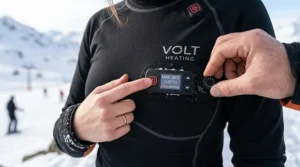
The Volt Resistance Tactical Heated Base Layer is the gateway drug to the heated-shirt category. It’s the most beginner-accessible product on this list — and not because it’s flimsy. It runs on standard 5V USB power, which means any 5V USB power bank you already own (phone charger, camping battery, whatever’s in your drawer) will work with it. The included VB5TEN 10,000mAh battery is a genuine bonus, not a liability.
Two heating panels concentrate heat at the middle of the back. That’s a narrower coverage area than the four-panel Volt model above, but the warmth is still meaningful — and the simplicity of a two-panel system means fewer potential failure points after a season of hard use. Brushed fleece lining over a poly/spandex base fabric keeps it comfortable, and moisture-wicking properties ensure you’re not sitting in sweat on active descents. Available in both men’s and women’s cuts, which is an advantage over some other unisex-only options in the price range.
The selling point here is flexibility: you’re not locked into a proprietary battery system. Use the included bank, use your camping power brick, use the power bank you already carry for your phone. For a skier who’s new to heated gear and doesn’t want to invest in a dedicated battery ecosystem yet, that USB compatibility is genuinely liberating.
Best for: First-time buyers, budget-conscious skiers, and anyone who wants USB-compatible heated gear without a proprietary power system.
✅ Standard 5V USB power — works with any compatible bank
✅ Unisex design in men’s and women’s cuts
✅ Machine washable, brushed fleece comfort lining
❌ Only two heating panels (back-focused) — less coverage than competitors
❌ 5V system won’t match 7V heat intensity on the coldest days
Price range: $70–$100 range — the most flexible entry point in the heated shirt category.
7. AMOVO Heated Thermal Shirt for Men and Women
The AMOVO Heated Thermal Shirt is the wild card on this list — and it earns its spot by doing something different. Designed as a unisex fleece-lined USB-heated thermal top, it targets the skier who also wears heated gear outside the mountain: commuting, dog-walking, working outdoors, going to cold stadiums. The highly elastic fabric stretches in all directions, and the fleece lining adds passive warmth on top of the active heating, so even if your power bank runs low mid-afternoon, you’re still warmer than you’d be in a plain thermal shirt.
The USB 5V power system keeps it compatible with standard power banks (not included), and multiple heat zones distribute warmth across the back and torso. Heat-up time is fast, and the three heat levels give you fine-grained control without fumbling for a complex controller. Machine washable when you remove the power bank — dead simple care.
What AMOVO sacrifices at this price point is the premium engineering feel of a Gerbing or Gobi Heat. This is honest budget performance: it works well, it’s comfortable, and it won’t blow your mind with feature sophistication. But for a recreational skier who does two or three trips per winter and doesn’t want to spend $150+ on a specialized shirt, AMOVO is a genuinely smart choice.
Best for: Casual skiers, versatile outdoor users who want one heated shirt that does many jobs.
✅ Fleece lining adds passive warmth on top of active heating
✅ Highly elastic fabric — excellent freedom of movement
✅ Machine washable, easy care
❌ Power bank not included — you need to source your own
❌ Less specialized heating architecture than branded competitors
Price range: $50–$80 range — the most wallet-friendly heated shirt for skiing on this list.
✨ Don’t Miss These Exclusive Deals!
🔍 Ready to stay warm all day on the mountain? Click any highlighted product name above to check current pricing and availability on Amazon. These picks are the real deal — no fluff, just the best heated base layer shirts for skiing that actually work in real mountain conditions.
How to Layer a Heated Base Layer Shirt for Maximum Skiing Performance
Getting the layering right is where most people mess up — and the heated base layer shirt for skiing actually changes the rules of the traditional three-layer system. Here’s how to use it properly.
Step 1: Wear it directly against the skin. This is non-negotiable. The heating panels need skin proximity to transfer warmth efficiently. A cotton undershirt between you and the heated layer costs you 30–40% of the thermal output. Yes, it’ll feel slightly unusual at first. Give it one run and you’ll understand.
Step 2: Choose your heat level before you get on the chairlift. Chairlift exposure is when you lose the most heat — you’re stationary, windblown, and not generating any muscular warmth. Crank it to High for the lift ride, then dial back to Medium once you’re moving. Most controllers are operable with ski gloves on — look for models with a single large button rather than small multi-button setups.
Step 3: The mid-layer above it should be lightweight. If you’re running a heated base layer at Medium, you don’t need a thick fleece mid-layer. A lightweight softshell or even a thin merino mid-layer is enough. Your outer jacket does the wind and waterproofing work. This is where you reclaim all the bulk you’ve been carrying — drop the heavy fleece, keep the slim heated base, and suddenly your ski jacket fits better than it has in years.
Step 4: Store the battery on the non-dominant side. Most heated shirts have a small battery pocket in the lower front or side area. Put the bank on your non-dominant side — if you’re right-handed, left side — so it doesn’t interfere with your pole grip mechanics.
Step 5: Charge the battery the night before. Every single night you’re on the mountain. Doesn’t take long (most full charges are 3–4 hours), and it eliminates the anxiety of watching the indicator blink at you on run six.
Common mistake to avoid in the first 30 days: Don’t machine-wash the shirt with the battery still plugged in. Every manufacturer on this list offers machine-washable construction — with the battery removed. This seems obvious but accounts for a significant chunk of early product failures and negative reviews.
Which Heated Base Layer Shirt is Right for You? Real Skier Profiles
Generic buying guides tell you what every product does. This section tells you which product is actually right for your specific situation.
Profile 1: The Weekend Warrior (Budget: Under $100, 2–3 ski days/year)
You’re not a serious skier, but you love a mountain weekend and you’re tired of being the cold one in your group. You don’t want to invest heavily in a product you’ll use twice. The AMOVO Heated Thermal Shirt ($50–$80 range) is your answer — especially if you already own a decent USB power bank. Alternatively, the Volt Resistance Tactical 5V ($70–$100) comes with a power bank included, making it a true plug-and-play setup.
Profile 2: The Regular Intermediate (Budget: $70–$130, 8–15 ski days/year)
You’re on the mountain regularly, you know your cold spots, and you’ve graduated from “let’s see if this works” to “I need this to actually work.” The ActionHeat 5V Men’s or Women’s Heated Thermals ($70–$90) with their carbon fiber panels and FAR infrared technology offer a meaningful performance step up. If your back in particular runs cold, invest the extra $20–$40 for the Volt 7V Four-Panel model — the long runtime at Medium/Low is well-suited to your usage pattern.
Profile 3: The Hardcore/Expert Skier (Budget: $130–$200, 20+ ski days/year)
You ski in genuinely cold conditions. You’re on the mountain before the lifts open some mornings and you leave when the patrol does. Heat interruption is not acceptable. Here you’re looking at either the Gerbing 7V for raw heat output and indestructible Microwire durability, or the Gobi Heat Basecamp for the best runtime (8 hours), neck zone coverage, and the most refined all-day comfort. Between these two: if you ski in brutal sub-zero conditions, choose Gerbing. If you need a more versatile shirt that also works off the mountain, the Gobi is the more liveable daily companion.
Profile 4: The Ski Instructor or Mountain Guide
You’re on skis 6–7 hours a day, mostly stationary at times (demonstrating technique, waiting for students), and you literally cannot afford to be cold and distracted. The Gobi Heat Basecamp is purpose-built for this use. The neck zone alone — targeting the cervical spine — is something instructors who’ve tried it describe as a revelation. Budget is secondary to reliability and all-day performance.
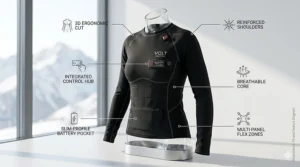
How to Choose a Heated Base Layer Shirt for Skiing: 7 Expert Criteria
Not all heated shirts are equal, and the spec sheet alone won’t tell you what matters. Here’s how to read between the lines.
1. Voltage: 5V vs. 7V
This is the single biggest performance divider. 5V systems are cheaper and USB-compatible, which means flexibility. But 7V systems run meaningfully hotter — the difference is physical and real on the coldest days. If you ski in temperatures below 15°F regularly, budget for 7V. If most of your skiing is in the 20–35°F range, 5V is sufficient.
2. Number and Placement of Heating Zones
Two panels heating your back is a start. Three zones — adding the chest — is noticeably better. Four zones adding the neck (as the Gobi Heat Basecamp does) is the current gold standard for skiing specifically. Wind hits the neck hard on fast descents; heating that zone makes a disproportionate comfort difference.
3. Battery Capacity and Runtime
Bigger mAh doesn’t always mean longer runtime — voltage and heat zone count affect consumption dramatically. Trust the manufacturer’s stated runtime at specific settings rather than the raw battery capacity number. A 10,000mAh 5V bank and a 2600mAh 7V bank might deliver similar real-world heat durations depending on the system.
4. Fabric Construction
You want moisture-wicking, slightly compressive, and stretchy. Polyester/spandex blends dominate this category for good reason — they wick, they stretch, they dry fast. A brushed fleece lining adds passive warmth that continues working even when the battery is off or depleted. Avoid anything cotton in a base layer role.
5. Controller Usability
Can you operate it with ski gloves on? This is the test. Single large button beats multi-button every time for mountain use. LED indicators that communicate heat level clearly (even in bright sunlight) are important — squinting at a tiny light while a chairlift moves isn’t ideal.
6. Machine Washability
Every product on this list is machine washable with the battery removed. This matters for ski trip hygiene and product longevity. Follow the manufacturer’s care instructions — gentle cycle, air dry recommended for most.
7. Battery Included vs. Sold Separately
Always check. ActionHeat and Volt Tactical include a power bank. AMOVO does not. Factor the cost of a quality USB power bank ($20–$40) into the effective price if it’s not included.
Heated Base Layer vs. Regular Thermal Base Layer: The Honest Comparison
A lot of skiers ask whether they need a heated shirt at all, or whether a high-quality passive thermal will do the same job. Let’s be direct about this.
| Feature | Heated Base Layer Shirt | Premium Passive Thermal |
|---|---|---|
| Active warmth generation | ✅ Yes | ❌ No — retains body heat only |
| Adjustable warmth level | ✅ High/Med/Low settings | ❌ Fixed thermal value |
| Weight | ⚠️ Slightly heavier (battery) | ✅ Lighter |
| Bulk | ✅ Slim — replaces 1–2 layers | ✅ Slim on its own |
| Performance in extreme cold | ✅ Superior | ⚠️ Limited by body heat output |
| Price | ⚠️ $50–$200 | ✅ $30–$80 |
| Best For | Cold-sensitive skiers, full-day sessions, sub-zero temps | Moderate conditions, high-output skiers who generate lots of body heat |
The REI Expert Advice on layering systems explains that traditional base layers work by trapping warm air and managing moisture — they rely entirely on your body generating enough heat to trap in the first place. On a chairlift at 5°F, stationary and windblown, your body heat output often isn’t enough. Heated base layers solve precisely that gap: they supply heat when your body can’t keep up with heat loss.
The verdict: For anyone who runs cold, skis in genuinely cold conditions, or spends significant time stationary on chairlifts and at summit ridges, a heated base layer outperforms any passive thermal at the same price point in real-world mountain conditions.
Features That Actually Matter (And Those That Don’t)
The marketing on heated apparel is noisy. Here’s what to focus on — and what to ignore.
Features That Actually Matter
Carbon fiber vs. standard resistance wire elements: Carbon fiber heating elements flex with the garment instead of becoming rigid when heated. This makes a real difference over a 6-hour ski day. Standard wire elements work fine but can feel stiff in certain panel configurations.
Proprietary Microwire (Gerbing): If durability over multiple seasons is your priority — especially if you ski hard and fall frequently — Gerbing’s patented stainless steel microwire system is genuinely the most robust heating technology in consumer heated clothing. It’s been tested in conditions far more demanding than recreational skiing.
Quarter-zip or half-zip collar: A ventilation zip is underrated for skiing. Regulation is everything — being able to crack the collar during a sweaty hike out or a warm afternoon run without removing any layer is a real-world quality-of-life feature.
Included power bank vs. USB-universal compatibility: The included bank model gives you a tested, matched system out of the box. The USB-universal model gives you flexibility. Neither is wrong — it depends whether you want turnkey simplicity or system flexibility.
Features That Don’t Matter Much
Exact heat temperature claims (130°F vs. 140°F): The difference between these ceiling temperatures in real-world wear is minimal. What matters is how efficiently that heat transfers to your skin and how long it’s sustained — not which product lists the highest single-point temperature.
“42-zone heating”: Some lower-cost heated shirts advertise an absurd number of heating zones. More zones doesn’t automatically mean better warmth — it often means thinner, less powerful individual heating elements spread across a larger area. Three targeted, well-engineered zones beat 42 weak ones every time.
Common Mistakes When Buying a Heated Base Layer Shirt for Skiing
These are the pitfalls that generate bad reviews — and all of them are avoidable.
Mistake 1: Sizing down for a “snugger fit.” Heated base layers work best with full contact between the heating element and your skin or underlying clothing. But sizing down too aggressively restricts blood flow and actually reduces warmth distribution. Fit should be close and compressive — not constricting. When in doubt between sizes, choose the larger.
Mistake 2: Buying without a power bank. AMOVO ships without one. Some buyers discover this mid-unboxing on the first ski trip. Always verify whether a power bank is included in the kit before purchase.
Mistake 3: Washing with the battery plugged in. The most common cause of early product failure by a wide margin. Remove the battery, zip the connection port closed, then wash. Every time.
Mistake 4: Running High all day on a short-runtime battery. A 5V 6000mAh bank on High will be empty by mid-morning. The strategic play is High on chairlifts (stationary cold exposure), Medium on groomed runs, and Low on hard physical sections where you generate body heat. This approach can triple your effective warmth duration.
Mistake 5: Wearing it over another base layer. The heating element needs to be close to skin — or as close as possible. An intermediate layer reduces thermal transfer significantly. If you’re cold-sensitive and want an underlayer, use a single ultra-thin moisture-wicking liner at most.
Price Range & Value Analysis: What Your Budget Actually Gets You
| Budget Tier | Price Range | What You Get | Best Pick |
|---|---|---|---|
| Entry-level | $50–$80 | USB power, basic heating zones, decent comfort | AMOVO Heated Thermal Shirt |
| Mid-range | $80–$130 | Carbon fiber elements, included power bank, 3 zones, 4–5 hr runtime | ActionHeat 5V / Volt Tactical |
| Performance | $130–$160 | 7V system, Microwire tech, serious heat output, 8 hrs | Gerbing 7V |
| Premium | $170–$200 | 3 zones + neck, 10,000mAh, 8-hr runtime, conductive thread | Gobi Heat Basecamp |
The sweet spot for most recreational skiers is the mid-range tier — specifically the ActionHeat 5V models ($70–$90 including a power bank). You get carbon fiber elements, FAR infrared technology, three heat zones, and a complete kit without crossing the $100 mark. The investment from mid-range to performance (Gerbing, at $130–$160) is worth it if you ski more than 15 days per year or frequently encounter sub-20°F temperatures. For people who want to forget about battery anxiety entirely, the Gobi Heat Basecamp’s 10,000mAh system at $170–$200 is the only one that covers a full mountain day on a single charge without careful power management.
According to OutdoorGearLab’s research on layering performance, the quality difference between budget and mid-range heated apparel becomes most obvious after multiple washing cycles — cheaper heating elements lose efficiency faster. Spending $20–$40 more upfront often means the shirt performs consistently for two to three seasons rather than one.
✨ Don’t Miss These Exclusive Deals!
🔍 Take your skiing to the next level with these carefully selected heated base layers. Click on any highlighted product to check current pricing and availability on Amazon — and stay warm on the mountain longer than you thought possible!
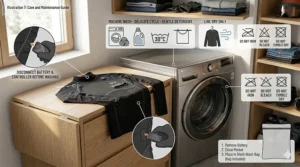
FAQ
❓ How long does a heated base layer shirt for skiing last on a single charge?
❓ Can I wash a heated base layer shirt in the washing machine?
❓ Is a heated base layer shirt for skiing safe to wear?
❓ Do I need to buy a power bank separately for a heated ski shirt?
❓ What is the difference between a 5V and 7V heated base layer for skiing?
Conclusion: The Cold Season Just Became Optional
Here’s the truth about heated base layers for skiing: the technology has crossed a threshold. A few years ago, this was gear for die-hard cold-weather enthusiasts willing to wrestle with clunky battery packs and stiff heating panels. Today — with the products in this guide — you’re looking at slim, flexible, machine-washable shirts that work seamlessly under your existing ski jacket and deliver up to 8 hours of real, adjustable warmth without adding meaningful bulk.
The best heated base layer shirt for skiing for most recreational skiers is the ActionHeat 5V series ($70–$90) — it comes complete with a power bank, uses carbon fiber heating technology, and delivers reliable warmth for a full half-day ski session. Step up to the Gobi Heat Basecamp ($170–$200) if you’re a full-day mountain person who doesn’t negotiate with the cold. Go Gerbing 7V ($130–$160) if you ski in genuinely extreme temperatures and want the most proven heating technology in the business. And if you’re just dipping your toes into heated gear, the AMOVO ($50–$80) lets you test the concept without a significant financial commitment.
Whatever you choose: get on that mountain, run it on High for the first chairlift ride, feel the warmth kick in, and enjoy your longest, most comfortable ski day in years. You’ve earned it.
✨ Don’t Miss These Exclusive Deals!
🔍 Ready to stop cutting your ski days short? Click on any product name in this guide to check current prices and availability on Amazon. Bundle your pick with a spare power bank for backup warmth — your future self at the summit will thank you.
Recommended for You
- Best Heated Camo Pants for Hunting in 2026: 7 Picks That Actually Keep You Warm
- 7 Best Heated Leggings for Winter Running to Stay Warm in 2026
- 7 Best Heated Ski Pants for Women That Actually Work (2026)
Disclaimer: This article contains affiliate links. As an Amazon Associate, I earn from qualifying purchases. If you purchase products through these links, we may earn a small commission at no additional cost to you.
✨ Found this helpful? Share it with your skiing crew! 💬🤗
