

In This Article
Cold doesn’t announce itself at a campsite. It sneaks in around 2 a.m., climbs through your sleeping pad, and settles into your lower back like an unwelcome houseguest. A battery operated heated blanket for camping is the polite way to evict it. There’s no propane, no flame, and no extension cord snaking across a muddy field.
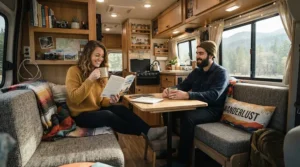
The catch is that this category runs on big numbers. Twenty thousand mAh! Nine heating zones! Sixteen hours! Those claims come from manufacturer listings, and the real answer depends on your heat setting, the outside temperature, and how you read a power bank mAh rating. This guide does the translating, so you end up with the best battery operated heated blanket for camping for your trip rather than the one with the loudest spec sheet.
Some honesty up front. I researched current 2026 listings and independent roundups, but I haven’t personally used these blankets. I also couldn’t verify individual customer-review counts. So every “reviewers say” line below reflects themes repeated across third-party roundups, never invented quotes or star ratings. What I can do is read specs like a skeptic, run the battery math, and match each blanket to a real kind of camper.
Inside: seven real models, a side-by-side table, plain-English battery runtime math, a straight answer on tent safety, and setup advice for tents and RVs. Prices appear as ranges because they shift constantly, so check current price before you buy.
Quick Comparison: 7 Battery Operated Heated Blankets at a Glance
| Blanket | Battery (per listing) | Heating Setup | Listed Runtime | Best For |
|---|---|---|---|---|
| MIMYTH Cordless Heated Blanket with Hood | 20,000mAh | 9 zones, 3 levels | Up to 16 hrs | All-night tent warmth |
| Bedsure Cordless Wearable Heated Blanket Hoodie | 20,000mAh | 8 panels, 4 levels + timer | ~6.5 hrs (one roundup) | Wearing around camp |
| CYCYHEAT 20000mAh Large Heated Blanket | 20,000mAh, 7.4V | 3 levels | ~11.5 hrs on low | Two people sharing |
| Secluded Valley Cordless Heated Blanket with Hood | 20,000mAh | 9 zones, 3 levels | Up to 16 hrs | Weekend car camping |
| Brimekey Graphene Heated Blanket | 20,000mAh, 7.4V | 6 zones | ~5 hrs high / 10+ low | Fast heat on cold mornings |
| ZonLi Z-Walk 3-in-1 Heated Blanket | 5,000mAh | 5V USB | ~3 hrs | Budget starter |
| LITEGUEST Heated Camping Blanket | None included (use a 5V bank) | 3 levels | Depends on your bank | Pairing with a bank you own |
Listed runtimes are manufacturer or roundup claims, almost always measured on low. The three 20,000mAh models claiming 11–16 hours and the Brimekey Graphene Heated Blanket claiming about 5 hours on high are describing the same battery size under different loads. If you only need a few evening hours, the ZonLi Z-Walk 3-in-1 Heated Blanket is the budget entry. For a whole night in a tent, the 20,000mAh group is the safer bet.
💬 Just one click — help others make better buying decisions too!😊
Top 7 Battery Operated Heated Blankets for Camping: Expert Analysis
Every pick below is a real, currently listed product. The specs come from listings and roundups, and the analysis is mine, based on the numbers.
1. MIMYTH Cordless Heated Blanket with Hood — longest listed runtime in this lineup
Nine heating zones fed by a 20,000mAh pack are the recipe behind this hooded wearable’s spot atop so many 2026 camping roundups.
The listing promises up to 16 hours across three heat levels. In practice, 20,000mAh works out to roughly 74Wh of cell energy. A 16-hour figure therefore only holds on low, where the heaters sip a few watts. Plan on one night on low, or an evening on medium plus a shorter night, before you need a charger. The nine zones, which the maker says are individually temperature-sensed, spread heat across chest, shoulders and back instead of roasting one patch.
Based on the spec comparison, this suits tent campers who want a layer for the fire pit that also slides under a sleeping bag. The hood earns its keep, because so much heat escapes through your head and neck that closing that gap often matters more than extra wattage.
Roundups keep praising its battery endurance. The repeated complaint is that the pack feels heavy if you carry it on your back. Treat that as aggregated sentiment, not a rating.
Pros:
- ✅ Longest listed runtime among the 20,000mAh models
- ✅ Nine zones cover chest, shoulders and back
- ✅ Hood traps heat at the neck
Cons:
- ❌ Battery pack is heavy for backpacking
- ❌ Hooded cut feels bulky inside a mummy bag
Price range: roughly $50–$110 for most 20,000mAh cordless models at the time of research. Check current price. For car and tent campers, the value case is strong.
2. Bedsure Cordless Wearable Heated Blanket Hoodie — best full-body wearable with timers
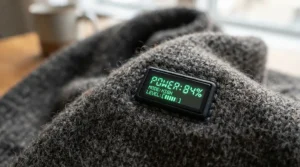
Bedsure’s hoodie (model BS-2501PW) measures 55 by 69 inches and is listed at 4.6 pounds. It pairs a 20,000mAh pack with eight heating panels across the shoulders, chest and back. Some roundups say the panels also reach pockets and legs, so confirm on the current listing.
Four heat levels plus 1–4 hour timers are the standout. A timer means the blanket shuts itself off if you doze mid-evening, which is a sensible safety feature for anything heated near fabric. The shell is 200gsm Sherpa over 200gsm fleece, so it insulates even when switched off. Roundups echo this, noting wearers stay warm without the heat on.
One roundup puts runtime at about 6.5 hours per charge, far below the 16-hour claims elsewhere. That gap is a useful reminder that runtime depends on settings, not just mAh. Higher heat drains the same battery faster.
This is the right choice if you spend more time upright (cooking, stargazing, reading by a lantern) than horizontal. Reviewers also flag the weight, which comes from the pack and the dense fabric. One roundup adds that it can run on AC power for indoor use.
Pros:
- ✅ Four heat levels with 1–4 hour timers
- ✅ Thick Sherpa-fleece insulates unpowered
- ✅ Eight panels give broad torso coverage
Cons:
- ❌ Shorter runtime than the 16-hour rivals
- ❌ Noticeably heavy to carry
Price range: roughly $55–$110, depending on promotions at the time of research. Check current price. Good value for wearers, less so for all-night overlays.
3. CYCYHEAT 20000mAh Large Heated Blanket — roomiest throw for two
At about 62 by 55 inches (listings vary slightly), this is a true shareable throw. It runs a 7.4V, 20,000mAh pack with carbon-fiber heating elements and three levels.
Voltage matters more than most buyers realize. A 5V USB source tops out near 10W (5V × 2A). At 2A, a 7.4V pack can push roughly 15W. That is why 7.4V models heat noticeably faster and hotter, and why roundups call out the quick warm-up. One roundup lists up to 11.5 hours on low and over 6 on medium.
The underrated feature is the LED battery display. Seeing “40%” at midnight beats guessing, and it lets you drop to a lower setting before the battery quits. Roundups also report that the heating concentrates in the upper half of the blanket. For feet, you’ll want wool socks.
Reviewers consistently describe the pack as large and heavy, which suits car camping and tent pairs better than backpacking.
Pros:
- ✅ Generous size shared between two people
- ✅ LED display shows remaining battery
- ✅ 7.4V pack heats faster than 5V rivals
Cons:
- ❌ Heat concentrated in upper half
- ❌ Bulky, heavy battery pack
Price range: roughly $50–$110 at the time of research. Check current price. Strong value for couples.
4. Secluded Valley Cordless Heated Blanket with Hood — weekend car-camping workhorse
The listing reads almost line-for-line like the MIMYTH Cordless Heated Blanket with Hood: 20,000mAh, nine AI-labeled zones, three levels, double-sided flannel, a hood, and “up to 16 hours.” Near-identical spec sheets often point to shared manufacturing, though I can’t confirm that here.
The practical takeaway is that you’re choosing on price, return policy and availability, not performance. The listing also claims heat in about three seconds. Take that as marketing. Surface warmth in seconds still isn’t a warm core in minutes, so budget 10–15 minutes of pre-warming in a cold tent.
The insulation cotton sandwiched in the flannel helps once the heat cycles on and off. Roundups mention outdoor football games and cold car trips as sweet spots, with the sole complaint being a weighty battery that sits in a secure pocket.
Because this one skews toward weekend car camping, I’d shortlist it alongside the MIMYTH Cordless Heated Blanket with Hood and buy whichever is cheaper that day.
Pros:
- ✅ Nine zones with listed overheating safeguards
- ✅ Soft flannel with built-in insulation
- ✅ Battery rides in a secure pocket
Cons:
- ❌ Battery adds noticeable weight
- ❌ Spec claims are manufacturer-only
Price range: roughly $50–$110. Check current price. Value hinges on matching or beating its twin.
5. Brimekey Graphene Heated Blanket — fastest heat-up in shawl form
This is a 70 by 35 inch fleece-lined shawl with graphene heating and a 20,000mAh, 7.4V battery. It runs up to roughly 5 hours on high and 10-plus on low, with six zones and a digital display.
Graphene conducts heat quickly and evenly, which explains the fast warm-up reviewers mention. The shawl format is the trade-off. It wraps shoulders and torso brilliantly but won’t cover your legs like a throw. Treat it as a heated layer, not a replacement for a sleeping bag.
The high-versus-low gap is the lesson here. Five hours on high means a night in a tent at 30°F will drain it unless you drop the setting once you’re warm. The digital display helps you pace it.
Roundups praise its fast, even heating and flag the heavy battery pack as the recurring negative. For cold mornings with coffee and a camp chair, it’s an easy recommendation.
Pros:
- ✅ Fast, even graphene heating
- ✅ Digital display tracks remaining power
- ✅ Fleece lining feels soft against skin
Cons:
- ❌ Shawl cut leaves legs uncovered
- ❌ Heavy battery pack
Price range: roughly $50–$110 at the time of research. Check current price. Good value for cold-morning campers.
6. ZonLi Z-Walk 3-in-1 Heated Blanket — best budget-friendly starter
This blanket, shawl and pillow hybrid is listed at 50 by 60 inches. It ships with a free 5,000mAh power bank rated for about 3 hours of heat. It also works with any 5V/2A USB port, so you can later upgrade to a bigger USB power bank heated blanket setup. The brand lists a one-year warranty and 30-day returns.
The 5,000mAh pack stores about 18.5Wh. Three hours is believable on low and wishful on high. A ZonLi variant with a 10,000mAh bank lists 2–5 hours, which matches the arithmetic. This is a campfire-and-evening blanket, not an all-night one, unless you add capacity.
Roundups call ZonLi’s offerings balanced on price and performance and “respectable” for shorter trips. That fits what the specs suggest.
If you’re curious whether a heated blanket suits your style of camping, this is the low-risk way to find out. Pair it with a 20,000mAh bank later and the blanket becomes an overnight tool.
Pros:
- ✅ Includes a power bank out of the box
- ✅ Works with any 5V/2A USB source
- ✅ Doubles as shawl or pillow
Cons:
- ❌ Only about 3 hours on the included bank
- ❌ 5V power limits maximum heat
Price range: roughly $30–$70 at the time of research. Check current price. Excellent entry value.
7. LITEGUEST Heated Camping Blanket — best for pairing with your own power bank
Here’s the odd one out. It’s a USB-powered blanket with no battery included, built for any 5V power bank. It’s sold in a Regular (about 59 by 28 inches) and an Extra Long (about 71 by 59 inches) size, with three heat levels, a polar-fleece interior and a waterproof nylon exterior.
The waterproof shell is the standout. Frosty grass, tent condensation and damp picnic benches ruin plain fleece, and this solves it. The cost is that runtime is entirely up to the power bank you buy. A 20,000mAh 5V/2A bank gives an overnight option, while a 5,000mAh one gives you a snack-sized evening.
I couldn’t find enough independent buyer commentary to summarize honestly, so I won’t pretend. Verify current reviews before buying.
Pro tip: confirm your bank delivers a steady 2A on one port. Some heated-blanket listings warn that underpowered adapters cause the controller to flash or restart.
Pros:
- ✅ Waterproof nylon outer shell
- ✅ Works with any 5V power bank
- ✅ Foldable, two size options
Cons:
- ❌ Battery not included
- ❌ Few independent reviews to confirm claims
Price range: low-$100s at one retailer I found, plus the cost of a power bank. Check current price. Best value if you already own a bank.
What Is a Battery Operated Heated Blanket for Camping?
A battery operated heated blanket for camping is a blanket with built-in heating elements, powered by a rechargeable lithium battery or USB power bank instead of a wall outlet. It delivers adjustable warmth in tents, cars, RVs and camp chairs where no electricity exists.
The principle isn’t new. Wikipedia’s electric blanket overview traces the idea back more than a century and notes that mains-powered versions typically draw only about 15–115 watts. Cordless versions shrink that further. They use low-voltage heating elements (carbon fiber, graphene or far-infrared film) driven at 5V, 7.4V or 12V, so a pocketable battery can run them for hours.
You’ll meet three forms in the wild: hooded wearables, shareable throws, and shawls. You’ll also meet two power styles: a built-in 7.4V pack, and a 5V USB power bank heated blanket you feed with a bank you choose. The rest of this guide helps you pick between them.
How to Choose a Battery Operated Heated Blanket for Camping
- Pick the form factor first. Wearables suit sitting around camp, throws suit sleeping bags and shared use, and shawls suit light layering.
- Check watt-hours, not just mAh. mAh figures are quoted at about 3.7V cell voltage, so Wh = mAh × 3.7 ÷ 1,000. A 20,000mAh pack is roughly 74Wh.
- Match voltage to your patience. 5V USB blankets cap near 10W and heat gently. 7.4V and 12V systems heat faster but drain faster.
- Count zones and read where they sit. Many roundups note heat concentrated on the upper back and shoulders, so don’t expect warm feet.
- Demand timers and overheat protection. The CPSC warned consumers in 2026 to stop using Melinora electric heated blankets because internal wires could overheat and melt through the polyester. That was a mains-powered product, but fabric plus heating wire always calls for real protections.
- Inspect the shell. Fleece is cozy but soaks up condensation. Water-resistant nylon outers, like the one on the LITEGUEST Heated Camping Blanket, shrug it off.
- Weigh the weight honestly. Roundups repeatedly flag heavy battery packs. If you’re hiking in, favor smaller banks and the lightest throw.
Battery Runtime: What the Numbers Really Mean
Battery runtime claims are the most slippery numbers in this category, so let’s do the arithmetic.
Energy (Wh) divided by the heater’s draw (W) gives hours. A 20,000mAh pack holds roughly 74Wh. Assume about 85% of that survives conversion, so call it 63Wh. If the blanket draws roughly 5W on low, you get about 12 hours. At 15W on high, expect closer to 4. Those assumptions are mine, not measured values, but they explain why listings claiming 16 hours (low) and 5 hours (high) from the same battery size are both plausible.
Cold complicates things. Lithium cells lose capacity as temperatures drop, and one manufacturer analysis puts retention near freezing at roughly 80–85%. More importantly, don’t charge lithium packs below 32°F. Bring the pack inside your jacket or sleeping bag first.
Practical rule: use high to pre-warm, then drop to low once the bag is toasty. That single habit can double your usable Battery runtime.
Power Bank mAh: How Much Capacity Do You Actually Need?
Here’s a quick reference built from the formula above. These are illustrative estimates, not guarantees.
| Power Bank mAh | Approx. Wh | Low (~5W) | High (~15W) | Best For |
|---|---|---|---|---|
| 5,000 | 18.5 | ~3 hrs | ~1 hr | Short evenings |
| 10,000 | 37 | ~6 hrs | ~2 hrs | Campfire nights |
| 20,000 | 74 | ~12 hrs | ~4 hrs | Overnight in a tent |
| 27,000 | ~100 | ~17 hrs | ~6 hrs | Two nights, airline limit |
Estimates assume about 85% conversion efficiency; real draw varies by blanket and temperature.
Notice the jump from 10,000 to 20,000. That’s the difference between “warm until 10 p.m.” and “warm until sunrise.” If your power bank mAh rating is the only number on the box, run the Wh conversion yourself.
One caution on 7.4V packs. If a battery labeled 7.4V and 20,000mAh were taken at face value, the math implies about 148Wh. Most makers rate mAh at cell voltage, so the real figure is likely around 74Wh. Check the Wh printed on the pack before you fly with it.
USB Power Bank Heated Blanket vs Built-In Battery Blankets
A USB power bank heated blanket gives you flexibility, because you can swap banks, share them with phones and lanterns, and replace them cheaply. A built-in 7.4V pack gives you speed and simplicity.
| Option | Heat Output | Runtime Flexibility | Best For |
|---|---|---|---|
| Built-in 7.4V pack (e.g., CYCYHEAT 20000mAh Large Heated Blanket) | Higher (~15W) | Fixed to pack size | Fast heat, overnight use |
| USB power bank heated blanket (e.g., LITEGUEST Heated Camping Blanket) | Gentler (≤10W) | Swap any 5V bank | Multi-device campers |
| 12V car blanket (e.g., Stalwart Heated Car Blanket) | Moderate | Tied to vehicle or station | Car campers with power |
| Hot-water bottle or extra liner | Passive | None needed | Zero-electronics backup |
The pattern is clear. A USB power bank heated blanket trades speed for versatility, which suits people who already carry a bank for phones and headlamps. Built-in packs suit people who want one grab-and-go system. Corded 12V options are great in the car but tether you to it.
Pairing tip: buy a bank with a steady 5V/2A port. The Zireot Cordless Heated Blanket listing warns that insufficient adapter power causes flashing errors and controller restarts.
Is It Safe to Use a Heated Blanket in a Tent?
Generally yes, with sensible precautions. A battery heated blanket has no flame and produces no carbon monoxide. That sidesteps the biggest tent-heating killer. But no heated product is risk-free, and I can’t certify any individual blanket.
The CPSC is blunt that campers should not use portable heaters or lanterns while sleeping in tents, campers or vehicles, since carbon monoxide poisoning can be fatal. A battery blanket is a different animal, but the lesson stands: avoid fuel-burning heat inside shelters.
Electric risks remain real, though. A July 2026 recall of about 178,000 Octrot heated throws cited detaching cords and 555 reports of melting, sparking or smoking. Those blankets were mains-powered, but the takeaway applies here too.
Safety checklist:
- Keep the blanket flat, never bunched or folded on high.
- Use low or a timer when sleeping.
- Keep it away from stoves, lanterns and open flames.
- Stop using any blanket that smells hot, shows burn marks or has damaged wiring.
- Don’t charge a frozen battery.

Portable Heated Blanket for Tent Camping: Setup and First-Night Guide
A portable heated blanket for tent camping works best as part of a system, not a miracle. Here’s a first-night routine built on the specs above, not on tested claims.
Before you leave: charge both the blanket’s battery and any spare to full. Check the cable and controller for damage.
At camp: put your insulated pad down first. A heated blanket on top does little against a cold ground that steals heat from below. Then run the blanket on high for 10–15 minutes before bed to pre-warm your bag.
At bedtime: drop to low or set a timer. Keep the battery in a pocket or inside your bag near your torso, where your warmth helps it and where it won’t touch bare skin.
Cable care: route the cord so it can’t kink under you.
Common mistakes in the first 30 days:
- Sleeping on high all night.
- Folding the blanket tightly while it’s warm.
- Washing it with the battery attached.
- Storing the pack fully drained.
If your tent is a three-season model, remember that condensation is the enemy of fleece and electronics. Keep the controller in a dry spot.
Cordless Heated Blanket for RV Trips: What Works (and What Doesn’t)
A cordless heated blanket for RV trips earns its keep in places an RV’s built-in heat can’t reach. That means the picnic table at dusk, the awning chair during a power outage, and the boondocking campsite with no hookups.
There are corded 12V alternatives, like the Stalwart Heated Car Blanket, the Westinghouse Heated Car Blanket and the Sealy 12-Volt Heated Car Blanket. They plug into a vehicle outlet and are good while driving. They lose out once you step outside, because the cord leashes you to the rig.
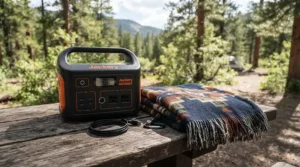
Cordless wins on freedom. Recharge during the drive from a 12V USB adapter, a portable power station or solar. Keep a spare 10,000mAh bank as insurance.
One honest note: a blanket won’t replace your furnace. But targeted warmth can let you tolerate a lower cabin thermostat setting, which is a comfort trade-off rather than a promised saving. And as the CPSC advises, don’t run fuel-burning portable heaters while sleeping in campers.
Real-World Scenarios: Which Blanket Fits Which Camper?
Scenario 1: The weekend couple. Two people, a three-season tent, October lows around 35–40°F, driving to the site. The CYCYHEAT 20000mAh Large Heated Blanket gives shared coverage, and weight doesn’t matter. Budget: mid-range, used a handful of weekends a year.
Scenario 2: The flying backpacker. Solo, carrying everything, flying to a trailhead. The ZonLi Z-Walk 3-in-1 Heated Blanket or the LITEGUEST Heated Camping Blanket, paired with a compact 10,000mAh bank, keeps weight down. Airline rules matter: the FAA’s lithium battery guidance requires power banks in carry-on only, with a 100Wh limit per battery. A 20,000mAh bank at about 74Wh qualifies, but check the label.
Scenario 3: The retired RV couple. Dry camping in the desert, where nights drop into the 40s. A Bedsure Cordless Wearable Heated Blanket Hoodie each, plus a spare bank, handles sitting outside after dark. The timers are a small bonus for evening dozing.
Scenario 4: The budget-conscious student. Occasional trips, under-$60 ceiling. Start with the ZonLi Z-Walk 3-in-1 Heated Blanket, then upgrade the bank later.
✨ Don’t Miss These Cozy Camp Finds!
🔍 Take your next cold-weather trip to the next level with these carefully selected blankets. Click on any highlighted product name to check current pricing and availability. A little planning now means comfortable, cozy nights your whole crew will love!
Cold-Camp Problems and Fixes
Problem: the battery dies by 3 a.m. Drop to low, use a timer, and tuck the pack inside your bag. If it still dies, size up to 20,000mAh.
Problem: cold feet. Many roundups note heat concentrates on the upper body. Add wool socks and a hot-water bottle at the foot of the bag.
Problem: condensation soaks the fleece. Choose a water-resistant shell like the LITEGUEST Heated Camping Blanket, or keep the blanket inside a dry bag until bedtime.
Problem: the power bank won’t charge or shuts off in the cold. Warm it before charging, and never charge it below freezing. Purpose-built cold-weather banks, such as the Nitecore Summit line, exist for harsher trips.
Problem: it’s too hot. Drop a level, or use a timer. Consider a smaller blanket, since overheating can happen when you’re layered under a heavy bag.
Common buying mistakes: judging by mAh alone, ignoring weight, and forgetting that a 5V blanket needs a 2A port. Each of these shows up as a bad night, not a bad review.
Long-Term Cost and Maintenance: What a Heated Blanket Really Costs per Night
| Tier | Typical Battery | Price Range | Cost per Night (30 nights) | Best For |
|---|---|---|---|---|
| Budget (e.g., ZonLi Z-Walk 3-in-1 Heated Blanket) | 5,000–10,000mAh | ~$30–$70 | ~$1–$2.30 | Short evenings, trial runs |
| Mid-range 20,000mAh (e.g., MIMYTH Cordless Heated Blanket with Hood) | 20,000mAh | ~$50–$110 | ~$1.70–$3.70 | Overnight tent use |
| USB-bank setup (e.g., LITEGUEST Heated Camping Blanket) | Your bank | Low-$100s + bank | $3.30+ | Existing bank owners |
The cost-per-night view flips the usual price anxiety. A mid-range blanket used 30 nights costs a couple of dollars per night, less than a cup of camp-store coffee. Even the pricier USB-bank route makes sense if the bank already powers your phone and lantern.
Battery longevity matters too. One retailer lists a 10,000mAh heated-blanket power bank at 400 or more charge cycles, which suggests years of weekend use. Maintenance is simple: wash only with the battery removed (check the label), air dry, and store the pack partially charged in a cool place. That last tip is general lithium practice rather than a manufacturer claim.
FAQ
❓ Can you wash a battery powered heated blanket?
❓ Can a heated blanket power bank also charge my phone?
❓ Are cordless heated blankets allowed on airplanes?
❓ How much does a battery operated heated blanket for camping weigh?
❓ Is a heated blanket better than a sleeping bag liner for camping?
Conclusion
A battery operated heated blanket for camping won’t replace a good sleeping bag or an insulated pad, but it can turn a miserable 3 a.m. into a manageable one. The key is matching the blanket to your trip.
For all-night tent warmth, the MIMYTH Cordless Heated Blanket with Hood and its near-twin, the Secluded Valley Cordless Heated Blanket with Hood, lead on listed runtime. For couples, the CYCYHEAT 20000mAh Large Heated Blanket has the room. For wearers who want timers, the Bedsure Cordless Wearable Heated Blanket Hoodie fits. The Brimekey Graphene Heated Blanket is the fast-heating shawl, the ZonLi Z-Walk 3-in-1 Heated Blanket is the low-risk starter, and the LITEGUEST Heated Camping Blanket suits bank owners.
Remember the three rules: read power bank mAh as Wh, use low and timers for Battery runtime, and keep fuel-burning heaters out of the tent. Prices shift, so check current price before you buy.
Recommended for You
- Dual Control Heated Blanket For Couples: 7 Ultimate Picks 2026
- Heated Throw Blanket For Couch: 7 Cozy Picks To Buy In 2026
- Electric Floor Heating Mat: 7 Best Picks For Warm Tile (2026)
Disclaimer: This article contains affiliate links. As an Amazon Associate, I earn from qualifying purchases. If you purchase products through these links, we may earn a small commission at no additional cost to you.
✨ Found this helpful? Share it with your friends! 💬🤗
