
In This Article
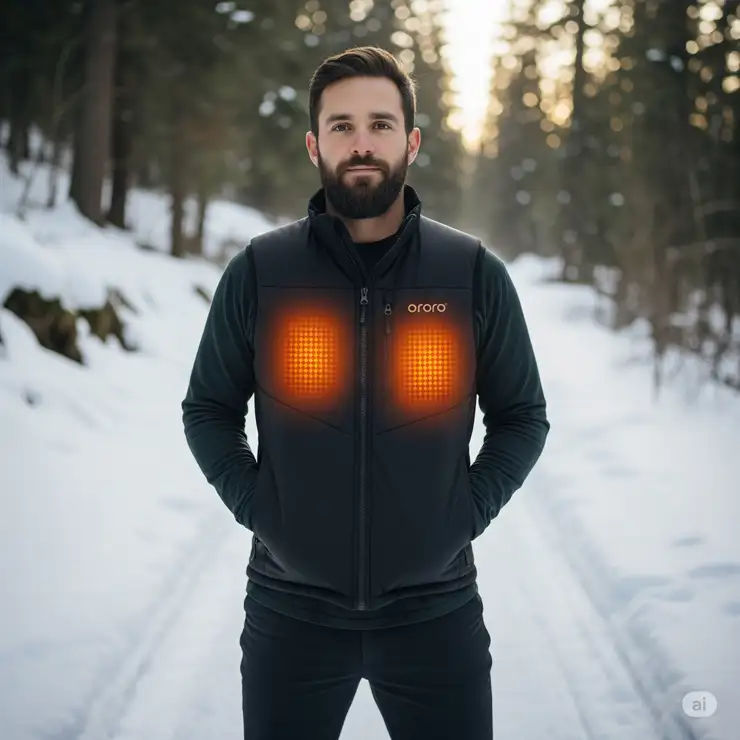
Winter has a way of sneaking up on you. One morning it’s a crisp 50 degrees. Next thing you know you’re scraping ice off the windshield, bundled like a marshmallow, and still shivering at the bus stop. A heated vest is the cheat code for that exact moment.

So what is an ororo heated vest review, and why should you care? It’s a close look at how Ororo’s battery-powered vests perform on heat output, runtime, comfort, washability, and value. It tells you which model suits which kind of winter. A good one separates real warmth from marketing noise.
One note on method. This ororo heated vest review is built from manufacturer specifications, published editorial reviews such as Mumsnet’s hands-on test of the Ororo vest, and aggregated buyer feedback from retail and review platforms. I’m not claiming to have worn these myself. What I can do is read the spec sheets closely, cross-check them against what real owners report, and tell you what it all means for your cold-weather life.
Here’s the short version. Ororo has built its reputation on carbon fiber heating elements, a compact rechargeable battery, and machine-washable construction. The differences between models come down to zone count, battery capacity, and the fabric wrapped around it all. Below you’ll find five Ororo vests and two respected rivals, plus buying guidance, care tips, and safety context.
Ororo Heated Vest Review: Quick Comparison Table
Before the deep dive, here’s the whole lineup at a glance. Runtimes are the figures reported in manufacturer and retailer listings or published reviews, and they shrink on the higher heat settings.
| Vest | Heating Setup | Reported Runtime | Best For |
|---|---|---|---|
| Ororo Women’s Heated Vest | 4 carbon fiber zones, 3 settings | Up to 10 hours (low) | Everyday women’s warmth |
| Ororo Men’s Lightweight Heated Vest | 3 settings, neck and back focus | Roughly 4-5 hours in the cold | Slim layering under a jacket |
| Ororo Heated Fleece Vest for Men | 4 zones (pockets, mid-back, collar) | Up to 8 hours | Cold hands plus a soft base layer |
| Ororo Women’s Fleece Heated Vest | 3 zones (chest, upper back) | Up to 10 hours | Cozy, soft-feel warmth |
| Ororo SureWarm Classic Pro Heated Vest | 6-7 zones, dual control | Varies, larger PD 5K battery | Extreme cold, long days |
| Gobi Dune Heated Vest | Heated panels (verify on listing) | Verify on listing | Camping and casual outdoor use |
| TIDEWE Men’s Heated Vest | Heated panels (verify on listing) | Verify on listing | Stationary hunting and field use |
Looking at the table, the Ororo Women’s Heated Vest and Ororo Women’s Fleece Heated Vest stretch their battery furthest on paper, while the Ororo SureWarm Classic Pro Heated Vest trades simplicity for coverage. The runtime numbers are best-case, low-setting figures, so treat them as a ceiling rather than a promise. If you plan to run on high all day, think seriously about a spare battery.
💬 Just one click — help others make better buying decisions too!😊
Top 7 Heated Vests: Expert Analysis
Every entry below follows the same logic: what the spec means in practice, who it suits, what buyers consistently say, and where it falls short. Prices are given as ranges only because they change constantly, so check current price before you buy.
1. Ororo Women’s Heated Vest — best all-round everyday pick
This is the vest most people picture when they search for an ororo heated vest review, and it earns that spot by doing the basics well.
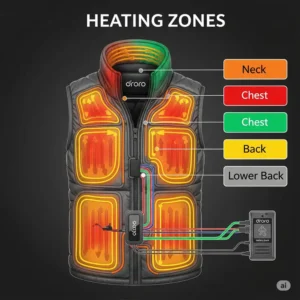
It uses four carbon fiber heating elements across the core, three heat settings, and a 7.4V UL-certified battery. Carbon fiber matters because it’s thin and flexible, so the panels don’t feel like a heating pad stitched into your clothes. The listing claims up to 10 hours on low, but expect far less on high. Ororo’s own listings for similar vests show roughly 3 hours on high, 6 on medium, and 10 on low.
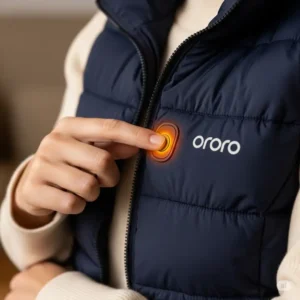
On the analysis side, this vest fits someone who wants steady, unfussy warmth for school runs, dog walks, and chilly offices. The Type-C charging port and USB output (which can top up a phone) add everyday convenience. Mumsnet’s review team named the Ororo its best heated gilet overall, noting the simple three-setting control from a single logo button and easy machine washing.
Aggregated buyer sentiment is strongly positive, with a retail listing rating of roughly 4.8 stars across several hundred ratings. Owners praise the lightweight, stylish look. Longer-term, some Trustpilot reviewers describe a button or unit failing after about a year, though many also credit Ororo customer service with arranging replacements.
Pros:
- ✅ Four heating zones cover the core effectively
- ✅ Lightweight, layers easily under or over jackets
- ✅ Strong buyer ratings and machine-washable
Cons:
- ❌ Charger may not be included on some listings
- ❌ Some owners report button failures after a year
Expect this to sit roughly in the $100-$150 range. For everyday wear it’s a strong value pick.
2. Ororo Men’s Lightweight Heated Vest — slimmest layering option
If bulk is your enemy, this is your friend. It’s designed to disappear under a jacket while pushing heat into your neck and back, the two spots where cold bites hardest.
A TL;DR roundup of professional and user reviews reports quick heat-up and three adjustable settings, with effective warmth tested in conditions as cold as 4°F with wind chill. In practice, that means it can handle a real winter commute, not just a cool autumn morning. The same roundup reports battery life of roughly 4-5 hours in the cold, and notes that keeping the battery tucked inside the vest helps preserve its capacity when temperatures plunge.
Here’s the honest analytical take. Four to five hours covers a commute plus a lunch walk, but it won’t carry a full day outside on high. If you’re standing still on a ski lift or a job site, a second battery is the smart add-on. Earlier coverage of a related Ororo classic vest on The Gadgeteer praised its simple long-press power button and compact Mini 5K battery, though that reviewer found the fit a little snug.
Buyers frequently highlight the clean stitching, smooth zippers, and the easy-to-read heat-level indicator. The main complaints are charging time and battery access when you’re heavily layered.
Pros:
- ✅ Slim profile that layers without bulk
- ✅ Reported effective heat in very cold wind
- ✅ Clear heat-level indicator, easy controls
Cons:
- ❌ Battery life limited for all-day outdoor use
- ❌ Battery access is awkward under heavy layers
Likely in the $100-$150 neighborhood. Worth it for commuters who value low bulk.
3. Ororo Heated Fleece Vest for Men — best for cold hands and core
This one adds a twist: heat in the hand pockets alongside the mid-back and collar. That’s a thoughtful design choice, because chilled fingers ruin a cold day faster than a chilly chest.
The listing describes four carbon fiber zones, three settings, a 7.4V UL-certified battery, and up to 8 hours of runtime. What does that mean for you? The collar heat warms the blood flowing to your head and neck, while pocket heat lets you park your hands and recover feeling between tasks. The fleece construction also makes it a comfortable standalone layer on cool days.
My analytical read: this suits people who stand around outside, like parents at weekend sports, dog owners, or anyone who works in an unheated garage. It’s less suited to athletes, because fleece holds heat and moisture when you’re sweating.
Retail listings show about 4.6 stars across a modest pool of ratings. One buyer reported the battery lasting longer than expected and the fleece feeling genuinely warm. Another gave it as a Christmas gift after liking their own so much, though one reviewer wished for different heating placement around the pockets. That’s a fair reminder that no vest suits everyone’s preferences.
Pros:
- ✅ Pocket heating warms hands directly
- ✅ Soft fleece works as a standalone layer
- ✅ Type-C charging and phone-charging USB port
Cons:
- ❌ Fleece traps moisture during hard exercise
- ❌ Smaller review pool than the bestsellers
Probably in the $90-$130 range. Solid value for stationary cold.
4. Ororo Women’s Fleece Heated Vest — softest, coziest layer
Think of this as the wearable equivalent of a warm blanket. The fleece lining is the star, with a foldable neckline and stand collar that seal in extra warmth around your neck.
Its three heating zones sit at the left and right chest and the upper back, powered by the same 7.4V UL/CE-certified battery. Chest and upper-back heat is smart placement, because that’s where your body’s core temperature is easiest to maintain. The listing claims up to 10 hours, again on the lowest setting. The anti-static polyester lining and cold-wash care instructions are small details that signal sensible everyday design.
If you spend your winter in a drafty house, an unheated office, or on the sidelines, this is the more comfortable choice. If you want a vest to wear over a thick sweater while hiking, the slimmer quilted or softshell styles make more sense. Mumsnet has also reviewed an Ororo heated fleece vest in its heated gilet round-up, which supports the idea that the brand’s fleece range is a reliable crowd-pleaser.
Buyer sentiment is warm, with a listing average around 4.7 stars across a couple hundred ratings and plenty of short, happy notes recommending it. Detailed critical feedback is thinner than for the bestsellers, so factor that into your confidence.
Pros:
- ✅ Ultra-soft fleece lining feels cozy fast
- ✅ Foldable collar adds neck warmth
- ✅ Up to 10 hours on low setting
Cons:
- ❌ Only three zones versus four elsewhere
- ❌ Charger not included on listing
Roughly the $100-$130 range. A comfort-first bargain.
5. Ororo SureWarm Classic Pro Heated Vest — maximum coverage for brutal cold
This is the heavy artillery. The SureWarm line pushes beyond the standard core zones, with six- and seven-zone versions that add shoulders, collar, lower back, and hand pockets.
The dual-control system lets you adjust body heat and pocket heat separately. That’s a genuinely useful feature, because your torso and your fingers rarely want the same temperature. The vest also ships with the upgraded PD 5K battery, which Ororo positions as larger in capacity and faster in charging than its standard Mini 5K. The retailer listing also cites a 3-year warranty on heating elements and 1-year on the battery, which is more reassuring than most budget heated gear offers.
What does that mean in practice? If you ice fish, shovel snow, or work outdoors for hours, more zones plus a bigger battery equals fewer cold spots and fewer mid-day recharges. If you only need a commuter vest, you’d be paying for capability you’ll never use.
I couldn’t verify a deep pool of independent buyer reviews for this specific model, so the case for it rests mostly on its spec sheet and warranty rather than a long track record. That’s a real limitation worth stating plainly.
Pros:
- ✅ Six to seven zones eliminate cold spots
- ✅ Dual control for body and pockets
- ✅ Larger PD 5K battery and longer warranty
Cons:
- ❌ Priciest tier in the Ororo lineup
- ❌ Fewer verified reviews to lean on
Expect it to land above the basic models, likely in the $150-$250 range. Best for serious cold, overkill for casual use.
6. Gobi Dune Heated Vest — the editor-endorsed rival
No honest ororo heated vest review should ignore the competition, and this one has serious credentials. Outdoor Life named it best overall in its roundup of the best heated vests of 2026.
The reviewer field tested multiple vests during camping and skiing, and notably checked battery life by powering each vest on fully charged and monitoring it hourly. The Gobi Dune earned the top spot after a windy, dark desert camping trip where several people wore the vests while setting up camp and cooking dinner. Price point, color choices, and easy care instructions rounded out the case.
Here’s how to interpret that. Outdoor Life’s methodology is more rigorous than most affiliate roundups, and its overall conclusion was that all the vests on the list will keep you warm, especially layered. So the Gobi Dune isn’t a “magic” product that makes Ororo obsolete. It’s a strong alternative for campers and general outdoor use, and a useful sanity check against Ororo’s pricing and features.
I haven’t been able to confirm exact zone counts or runtime figures here, so verify those on the current listing. If you’re comparing it directly against the Ororo Women’s Heated Vest or men’s fleece models, make a spec-by-spec checklist before deciding.
Pros:
- ✅ Named best overall by Outdoor Life
- ✅ Tested in real camping conditions
- ✅ Easy care and several color options
Cons:
- ❌ Exact specs need verifying on listing
- ❌ Less clear women’s fit information
Typically mid-range, likely around $100-$150. A credible, editor-backed alternative.
7. TIDEWE Men’s Heated Vest — built with hunters in mind
Hunters know a special kind of cold: the motionless, hours-long chill of a tree stand at dawn. That’s the use case where this vest gets recommended.
A 2026 roundup tags the TIDEWE Men’s Heated Vest as a pick for hunting, and a separate guide lists the TIDEWE camo heated vest as the top hunting option. The reasoning is straightforward. When you aren’t moving, your body generates almost no heat, so you rely on external warmth and a battery that lasts.
My analytical take: if you’re largely sedentary outdoors, prioritize battery capacity, quiet fabric, and camouflage options over style. Standing still means you’ll lean on higher heat settings, which drains batteries faster. In that scenario, a spare battery isn’t optional.
I’ll be upfront that I couldn’t gather a large body of verified owner reviews for this model, so I’m leaning on how it’s positioned rather than a deep complaint-and-praise history. That means you should read current buyer reviews on the listing before committing, particularly regarding long-term reliability.
Pros:
- ✅ Recommended for stationary hunting use
- ✅ Camo styling suits field conditions
- ✅ Competitive alternative to Ororo
Cons:
- ❌ Limited verified review data gathered here
- ❌ Less brand support information available
Likely in the $100-$150 range. Worth considering for hunters, with research first.
How to Choose a Heated Vest
Picking the right vest isn’t complicated if you work through it in order. Here’s a simple framework, each step with the reasoning behind it.
- Decide your activity level. Stationary use (hunting, spectating) demands more heat and battery. Active use (hiking, skiing) demands breathability and lighter fabric.
- Count the heating zones. Four core zones suit most people. Extra zones for pockets, collar, or shoulders matter in extreme cold or when you stand still.
- Check realistic runtime. Ignore the headline hours. Look at the high-setting figure, because that’s what you’ll use on a truly cold day.
- Match the fabric to the use. Fleece is cozy but holds moisture. Quilted or softshell suits wind and light rain.
- Verify the safety certifications. Look for UL or CE-certified batteries, which Ororo’s listings highlight.
- Confirm washability. Ororo states its heated clothing is machine washable, but always remove the battery first.
- Plan for a spare battery. If you’ll be outside more than four hours, a second battery is the cheapest upgrade you can buy.
If you follow those seven steps, the “best” vest usually reveals itself. It’s rarely the most expensive one. It’s the one that fits your day.
Setting Up Your Heated Vest: A Practical Usage Guide
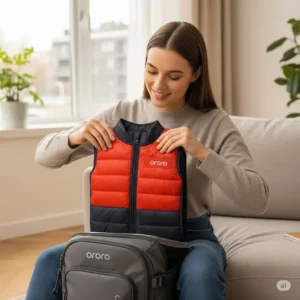
Amazon-style listings won’t walk you through the first month. Here’s how to get the most from a new vest.
Day one: charge fully before first use. Ororo listings suggest roughly four hours to fully charge with a 5V/3A charger via the Type-C port. Use a quality charger, and don’t leave the battery plugged in unattended overnight.
First wear: test indoors. Spend ten minutes at each heat setting so you learn how warm “low” actually feels on your body. Most people are surprised how effective low is, which is great news because low gives you the longest runtime.
Layering order matters. A thin, breathable base layer works best against your skin, with the vest next, and a shell on top. Heat travels inward, and the outer layer traps it. A vest worn outside everything else leaks warmth into the wind.
Battery placement. Keep the battery inside a pocket close to your body in freezing weather. Cold dramatically reduces lithium-ion battery performance, and body heat helps preserve capacity.
Washing routine. Remove the battery, close any zippers, use cold water, and air dry. This preserves the heating elements and the fabric.
Common first-30-day mistakes: running on high all day, forgetting to charge the night before, and stuffing the battery into a cold outer pocket. Avoid those three and your vest will behave far better.
✨ Don’t Miss These Exclusive Deals!
🔍 Take your winter comfort to the next level with these carefully selected heated vests. Click on any highlighted product name to check current pricing and availability. These picks will help you stay warm and enjoy every cold-weather moment!
Real-World Scenarios: Which Ororo Vest Fits Which Life?
Specs are abstract. Lives are specific. Here are three realistic buyer profiles and the vest that fits each, with the reasoning.
Scenario 1: The commuting college student. Picture an 8-mile daily bike or bus commute on a tight budget, with winter mornings near freezing. The Ororo Men’s Lightweight Heated Vest (or the Ororo Women’s Heated Vest for a different fit) works well. The slim profile slides under a jacket, and the 4-5 hour reported runtime covers a commute with room to spare. Charge nightly and you’re set. Budget: roughly $100-$150.
Scenario 2: The sideline parent. Two hours at a youth soccer game in 35-degree wind means standing still. The Ororo Heated Fleece Vest for Men (or the Ororo Women’s Fleece Heated Vest) shines here. Pocket heat warms your hands, the fleece feels cozy, and low-to-medium settings stretch the battery across the whole game.
Scenario 3: The outdoor worker. A contractor or ice fisherman spends eight hours in biting cold. The Ororo SureWarm Classic Pro Heated Vest makes the most sense, with extra zones, dual control, and a bigger battery. Add a spare battery for the full shift.
The pattern is clear. Match the vest to your hours outside and how much you move, and the decision gets easy.
Common Problems and Practical Fixes
Even good heated vests hit snags. Here are the issues owners report and what to do about them.
Problem: the vest feels lukewarm. Check that the battery is fully charged and the connector is seated firmly. Then try the next heat setting up. Also check your layers, since a loose outer shell lets heat escape.
Problem: battery dies faster than advertised. That’s normal in the cold. Cold weather reduces lithium-ion capacity, so carry the battery inside the vest and lower the heat setting when you’re moving.
Problem: the power button stops responding. Several Trustpilot reviewers describe button issues appearing after roughly a year. Contact customer service, since Ororo has a reputation among reviewers for arranging replacements, and keep your proof of purchase.
Problem: heating seems uneven. Fit is often the culprit. A vest that’s too loose leaves the elements floating away from your body. A snug but comfortable fit puts the carbon fiber panels where they need to be.
Problem: worry about washing. Remove the battery, wash cold, and air dry. Ororo states its heated clothing is machine washable, so don’t be paranoid, just be careful.
Features That Actually Matter (And Those That Don’t)
Heated vest marketing loves a big number. Here’s what’s worth caring about.
Matters: zone placement, realistic battery runtime, UL-certified batteries, durable zippers, and a snug fit. These decide whether you stay warm.
Matters a little: extra zones, dual controls, and a USB port for charging your phone. Great if you need them, wasted if you don’t.
Doesn’t matter much: an extra hour on a “maximum runtime” claim that only applies to the lowest setting, or the number of color options. Pretty is nice. Warm is better.
One underrated detail is the controls. A single logo button, as in the vest Mumsnet reviewed, keeps things simple and glove-friendly. A vibrating or indicator-lit button helps when you’re layered. If you can’t find the button with cold fingers, the best heating elements in the world won’t help.
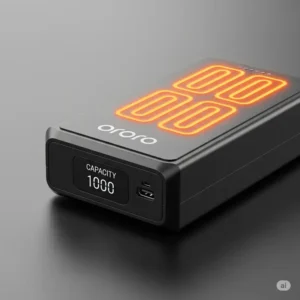
Another underrated detail is the battery’s ecosystem. Ororo uses its Mini 5K battery across most apparel and the PD 5K on its high-zone models, so a spare battery may work across several garments. That’s useful if you own a vest and a jacket.
Ororo Heated Vest Review: Brand vs. Other Heated Vests
How does Ororo stack up against alternatives? Based on the research, here’s the comparison.
| Option | Strength | Trade-off | Best For |
|---|---|---|---|
| Ororo Women’s Heated Vest | Strong ratings, simple controls | Some long-term button reports | Everyday wearers |
| Ororo SureWarm Classic Pro Heated Vest | Most zones, dual control, longer warranty | Highest cost | Extreme cold |
| Gobi Dune Heated Vest | Editor-endorsed, tested outdoors | Specs need verifying | Campers |
| TIDEWE Men’s Heated Vest | Hunting-focused positioning | Thin review data here | Hunters |
Reading the table, the Ororo Women’s Heated Vest wins on reputation and everyday usability, while the Gobi Dune Heated Vest earns respect from a rigorous outdoor test. If you need maximum coverage, the Ororo SureWarm Classic Pro Heated Vest is the clear specialist. Hunters should weigh the TIDEWE Men’s Heated Vest but read current reviews carefully.
Worth noting too: a 2026 round-up named an Ororo model best overall, and Outdoor Life’s testers concluded that most vests on their list will keep you warm. That suggests the real differentiators are fit, battery, and support, not raw heat.
Heated Vest vs. Traditional Winter Layers
Is a heated vest actually better than just wearing a bigger coat? Sometimes. Here’s the honest comparison.
| Option | Warmth | Bulk | Cost | Best For |
|---|---|---|---|---|
| Ororo Men’s Lightweight Heated Vest | On-demand, adjustable | Very low | Moderate | Commuters |
| Down vest | Passive, steady | Moderate | Moderate | Mild cold |
| Heavy parka | Strong passive | High | High | Extreme still cold |
| Extra sweater layers | Limited | High | Low | Indoor drafts |
The advantage of a heated vest like the Ororo Men’s Lightweight Heated Vest is control. You can dial warmth up or down without adding bulk, which matters when you move between a heated car and a freezing sidewalk. A heavy parka gives strong passive warmth but traps sweat indoors. If your life swings between warm and cold spaces, heated layers win; if you’re always outside in extreme cold, combine a heated vest with an insulated shell.
Long-Term Cost and Maintenance
A vest’s sticker price is only part of the story. Here’s the total cost of ownership reasoning.
Start with the purchase price, typically $100-$150 for most Ororo vests and higher for the premium tier. Add a spare battery if you spend long hours outside, since that’s the most common upgrade. Then consider durability. The Ororo SureWarm Classic Pro Heated Vest lists a 3-year heating warranty and 1-year battery warranty, while Trustpilot reviewers describe a few units failing around the one-year mark and being replaced.
Cost per use is the clearest lens. If you wear a $120 vest on 60 cold days a year for three winters, that’s roughly 180 wears, or well under a dollar a wear. Compare that to turning up the home thermostat all winter. Heated vests are among the cheapest ways to stay warm, since you heat your body instead of your house.
Maintenance is simple: wash cold, remove the battery, avoid pressing or crushing the heating panels, and store the battery at a partial charge in a cool, dry place during the off-season. Charge it every month or two so it doesn’t sit fully discharged.
Safety, Batteries, and Regulations
A battery strapped to your torso deserves a moment of seriousness. Ororo’s listings describe 7.4V UL-certified batteries, which is a reassuring starting point, but there are good habits worth knowing.
The U.S. Consumer Product Safety Commission has warned consumers against using loose lithium-ion cells separated from battery packs, because they lack protection circuits and can be hazardous. That’s a warning about DIY and unprotected cells, not about properly built, certified packs, but the lesson holds: stick to the manufacturer’s battery and charger.
Practical safety habits:
- Use only the supplied battery or an official replacement.
- Never charge a swollen, damaged, or hot battery.
- Don’t leave batteries charging unattended or under pillows.
- Keep the battery out of extreme heat and don’t crush it.
- If you notice a problem, report it to CPSC through SaferProducts.gov.
If you fly with a vest, remember a Mini 5K battery works out to around 37 watt-hours (5,000 mAh at 7.4V), which is typically within common carry-on limits, but always confirm with your airline. People with pacemakers or sensory conditions should talk to a doctor before using any heated garment.
Common Mistakes When Buying a Heated Vest
Plenty of buyers regret their purchase for avoidable reasons. Watch out for these.
Mistake one: buying on headline runtime. “Up to 10 hours” is almost always the lowest setting. Look for the high-setting number instead.
Mistake two: ignoring fit. A loose vest leaves the heating elements floating away from your body, so heat leaks. Check the size guidance and consider sizing carefully if you plan to layer.
Mistake three: skipping the review reading. Aggregated review themes tell you more than marketing copy. Look for patterns, such as long-term button or battery complaints, rather than single glowing or angry notes.
Mistake four: overbuying zones. Six or seven zones are wonderful in brutal cold but unnecessary for a mild commute.
Mistake five: forgetting the ecosystem. Check whether the battery is shared across other garments, and whether the brand offers warranty support. Buying a vest with a proprietary, hard-to-replace battery can turn into an expensive headache.
Mistake six: ignoring the return policy. Fit and warmth are personal, so buy from a seller with a clear return window and test the vest indoors first.
Ororo Heated Vests for Specific Audiences
Different bodies and lifestyles want different things. Here’s tailored advice.
Beginners: Start with the Ororo Women’s Heated Vest or the Ororo Men’s Lightweight Heated Vest. They’re simple, well reviewed, and forgiving. The three-setting control is easy to learn.
Seniors and the cold-sensitive: Prioritize softness and simple controls. The Ororo Women’s Fleece Heated Vest and Ororo Heated Fleece Vest for Men are comfortable, and low-setting runtime is generous. Check with a doctor if you have circulation or sensory issues.
Outdoor workers and hunters: Look at the Ororo SureWarm Classic Pro Heated Vest or the TIDEWE Men’s Heated Vest. Add a spare battery and consider your sitting-still heat demand.
Campers and hikers: The Gobi Dune Heated Vest earned editor praise, and quilted Ororo styles also suit layering. Keep the battery inside the vest at night in freezing temperatures.
Gift buyers: The Ororo Women’s Heated Vest is a safe choice, and several reviewers describe buying one for a spouse or parent after loving their own. Include a size exchange note, because Trustpilot reviewers mention sizing mix-ups.
FAQ
❓ Does an Ororo heated vest come with a charger?
❓ Can I charge my phone from an Ororo heated vest battery?
❓ Are Ororo heated vests worth the money?
❓ Is an Ororo heated vest allowed on a plane?
❓ Which Ororo heated vest is best for extreme cold?
Conclusion
So where does this ororo heated vest review land? Ororo’s vests deliver what most people actually want: reliable, adjustable warmth in a washable, lightweight package. The Ororo Women’s Heated Vest is the safest all-round choice, the Ororo Men’s Lightweight Heated Vest wins on slim layering, and the two fleece models bring comfort and pocket or chest warmth. When winter gets truly serious, the Ororo SureWarm Classic Pro Heated Vest brings extra zones and warranty reassurance.
The honest caveats matter too. Headline battery hours are best-case numbers, and some owners report button failures around the one-year mark, though customer service generally gets praise. Rivals like the Gobi Dune Heated Vest and TIDEWE Men’s Heated Vest are worth a look if you camp or hunt, so compare specs before you commit.
My simple advice: match the vest to how long you’re outside and how much you move, buy a spare battery if you’ll be out for hours, and always check current price and the return policy before you click.
✨ Ready to stay warm all winter? 🔥 Pick the vest that fits your life, check current pricing and availability through the highlighted product names above, and turn those freezing mornings into something you actually enjoy. Your future, toasty self will thank you! 🧥
Recommended for You
- 10 Best Heated Golf Vest Options For Ultimate Warmth on Course in 2025
- 7 Best Doace Heated Vest Options That’ll Transform Your Winter Experience in 2025
- 7 Best Arris Heated Vest Models That Will Transform Your Winter Experience in 2025
Disclaimer: This article contains affiliate links. As an Amazon Associate, I earn from qualifying purchases. If you purchase products through these links, we may earn a small commission at no additional cost to you.
✨ Found this helpful? Share it with your friends! 💬🤗
