
In This Article
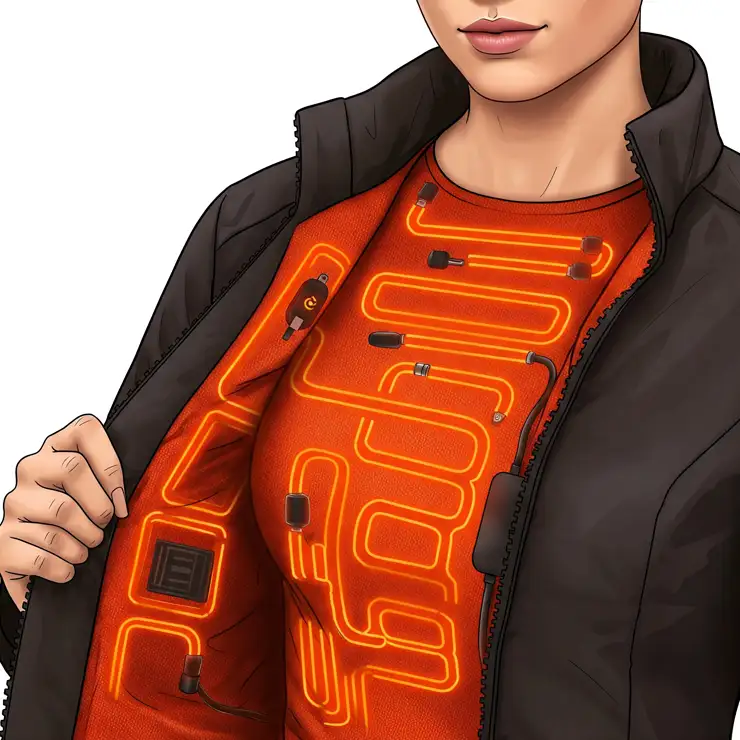
Women’s heated jackets are insulated coats with thin carbon fiber heating panels wired to a rechargeable battery, usually tucked into a pocket. Press a button and the panels warm your chest, back, and sometimes your collar or hands. Think of it as a thermostat you can wear. You get warmth on demand without piling on bulky layers.
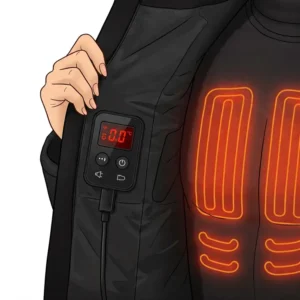
Here’s the thing about winter: the cold doesn’t care how good your puffer looks. A regular coat only traps the heat your body already makes. A heated jacket for women makes some extra, which matters on a 20°F school pickup line, a frozen soccer sideline, or an office where the thermostat is basically a political issue.
The idea isn’t new. According to Wikipedia’s overview of heated clothing, the heating elements are thin carbon fiber or metal-composite wires sewn into a fabric layer, and a 7.4-volt rechargeable battery is the most common setup. What has changed is everything around that core: lighter batteries, USB-C charging, better women’s cuts, and run times that now stretch through a full workday on the low setting.
A quick note on how this guide works. Everything below comes from manufacturer specs, published expert roundups, and aggregated buyer feedback. It does not come from hands-on wear-testing, and I won’t pretend otherwise. What I can do is read those specs the way a skeptical friend would and tell you what they mean in real life.
You’ll get seven real women’s heated jackets from budget to premium, three comparison tables, step-by-step buying advice, and fixes for the problems owners actually run into. Let’s warm up.
Quick Comparison: Women’s Heated Jackets at a Glance
Before the deep dives, here’s the whole field on one screen. Run times are the “up to” figures that brands and reviewers cite, almost always measured on the low setting. Treat them as best-case numbers.
| Jacket | Heat Zones | Power | Reported Run Time (Low) | Price Tier | Best For |
|---|---|---|---|---|---|
| ORORO Women’s Classic Heated Jacket 2.0 | 4, including collar | 7.4V Mini 5K-class pack | Up to ~10 hrs | Mid-range | Daily commuting |
| ORORO Women’s Heated Parka Jacket | 3 (2 chest, 1 back) | 7V-class rechargeable | Up to ~10 hrs | Upper-mid | Hip-length coverage, dog walks |
| Milwaukee M12 Women’s Heated Axis Jacket | Carbon fiber panels (varies by model) | 12V REDLITHIUM | Up to ~12 hrs | Mid-to-premium | Job sites, M12 tool owners |
| Venustas Women’s Fleece Heated Jacket | 5 per listing | 7.4V | Check listing | Budget-to-mid | Budget layering |
| Venustas Women’s 3-in-1 Heated Jacket | 3 (1 back, 2 front) | 7.4V | Up to ~9-12 hrs | Mid-range | Wet-snow versatility |
| TIDEWE Women’s Heated Softshell Jacket | 2 (chest, back) | 5V, 10,000mAh | Up to ~10 hrs | Budget | Value, USB charging |
| ORORO Women’s Heated Down Jacket | 8 | PD 5K, USB-C | Check listing | Premium | Packable, lightweight warmth |
Looking at the comparison above, the ORORO Women’s Classic Heated Jacket 2.0 and the Venustas Women’s 3-in-1 Heated Jacket sit in the sweet spot for most buyers. They balance zone coverage, run time, and price. If run time on low is your top priority, the Milwaukee M12 Women’s Heated Axis Jacket leads on paper at up to 12 hours, though you carry a bulkier 12V battery to get it. Budget shoppers should note that the TIDEWE Women’s Heated Softshell Jacket trades faster heat-up for a lower price and built-in USB charging.
💬 Just one click — help others make better buying decisions too!😊
Top 7 Women’s Heated Jackets: Expert Analysis
1. ORORO Women’s Classic Heated Jacket 2.0 — best all-around daily driver
The standout here is the heated collar, a warming strip right where winter drafts sneak in and where many women’s heated jackets leave you exposed.
The Classic 2.0 uses four carbon fiber heating zones, including that collar. It is typically bundled with ORORO’s 7.4V Mini 5K-class battery (about 4,800 mAh). Roundups cite up to roughly 10 hours of warmth on low, which on paper covers a full workday plus both commutes. High is a different story. Every heated jacket drains faster there, so treat it as a ten-minute “get me warm” button, not an all-day setting. The care label calls for line drying rather than machine drying, a small but real maintenance detail.
Based on the spec comparison, this is the jacket for commuters, dog walkers, and anyone who spends more time standing still than moving. The collar zone works best over a hoodie or crew neck rather than bare skin, a point one ORORO reviewer makes about neck heating. Reviewers on retailer listings consistently praise the neck heater and battery staying power. Star averages skew high, though some listings have small sample sizes, so treat them as directional.
Pros:
- ✅ Heated collar targets the draftiest spot
- ✅ Up to roughly 10 hours on low
- ✅ Three-year limited warranty on heating elements (brand-listed)
Cons:
- ❌ Care label rules out machine drying
- ❌ No heated hand pockets on this version
Expect roughly the $150-$200 range with a battery, depending on bundle and promotions (check current price). That is fair value for the collar alone.
2. ORORO Women’s Heated Parka Jacket — best hip-length coverage
Field & Stream named this its best pick for women, and the reason is simple: it is a real parka, not a heated hoodie in disguise.
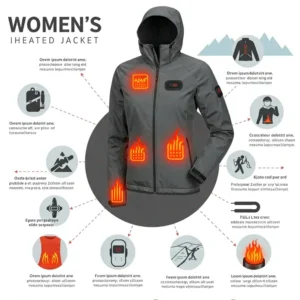
You get three carbon fiber zones (two on the chest, one on the back), three heat settings, and a battery rated at roughly 3 hours on high and up to 10 on low. The thigh-length body, Thermolite insulation, fleece-lined collar, and detachable faux-fur hood do real work when the heat is off. The shell is water-resistant rather than fully waterproof, an important distinction if your winters are wet. Field & Stream also reports it is machine-washable.
What most buyers overlook is that those zones heat the torso, so the parka’s extra length keeps your hips and thighs warm only through insulation, not heat. Think of it as a heated core inside a long, windproof blanket. That makes it ideal for school pickup, tailgating, and slow winter walks.
Reviewers like the big hood and the long low-setting run time. Recurring critiques are short battery life on high, a bulky fit that suits travel poorly, a heavier battery, and sizing that doesn’t run true. Some reviewers found the hood oversized.
Pros:
- ✅ Hip-length cut blocks wind below the waist
- ✅ Detachable faux-fur hood with generous coverage
- ✅ Machine-washable, per Field & Stream
Cons:
- ❌ Battery drains quickly on high
- ❌ Sizing reportedly not true to size
No stable price range surfaced in my research because bundles vary, so check the current price. It sits in the upper-mid tier, and the value hinges on whether you want parka length.
3. Milwaukee M12 Women’s Heated Axis Jacket — fastest heat from a tool-grade battery
Bob Vila’s testers named a Milwaukee M12 women’s jacket their best women’s pick. The reviewer judged it the quickest to warm up of everything in the roundup.
It runs on a 12V REDLITHIUM battery, and the reported run time reaches up to 12 hours on low. The ripstop shell is wind- and water-resistant, the quilting is light, and there are four zippered pockets. The reviewer noted it feels warm even with the heat switched off, and it compresses enough to layer under a bigger outer jacket. A pass-through pocket lets you move the battery from front to back.
Here is what the spec sheet won’t tell you: Milwaukee sells several women’s M12 jackets. SlashGear notes two different models both called the Women’s M12 Heated Axis Jacket, so verify the model number and whether the kit includes a battery. If you already own M12 tool batteries, a bare-tool purchase can save real money.
The recurring complaint is battery bulk. Reviewers of the wider Axis line also mention battery positioning can be uncomfortable.
Pros:
- ✅ Quick heat-up, per Bob Vila’s testers
- ✅ Up to roughly 12 hours on low
- ✅ Battery shared with the M12 tool ecosystem
Cons:
- ❌ Battery is bulky to carry
- ❌ Multiple similar model names cause confusion
Pricing swings widely between kit and bare tool, so check current price. It’s mid-to-premium as a kit, and a smart buy if you already own M12 batteries.
4. Venustas Women’s Fleece Heated Jacket — most affordable five-zone option
If you want the lowest-risk entry into women’s heated jackets, this is the one that keeps showing up in budget roundups.
The retailer listing describes five heating zones powered by a 7.4V battery. Some roundups count six, so confirm on the product page. The soft fleece makes it a comfortable indoor-outdoor layer for walking the dog or sitting through a chilly game. Fleece has one built-in weakness, though. It breathes freely, which means wind slices straight through. Pair it with a shell on blustery days, or treat it as a mid-layer under a rain jacket.
In the roundups I found, Venustas women’s jackets generally land around 4.2 to 4.4 out of 5 on Amazon, and reviewers describe them as affordable and warm for hours. Because specific models and sample sizes vary, check the live rating for this exact jacket.
Pros:
- ✅ Five zones at a budget-friendly price
- ✅ Soft fleece suits indoor-outdoor wear
- ✅ Lightweight compared with insulated shells
Cons:
- ❌ Fleece offers little wind protection
- ❌ Needs a shell in truly cold weather
Expect around the $130-$150 range (check current price). Value is strong as a layering piece, weaker as a standalone winter coat.
5. Venustas Women’s 3-in-1 Heated Jacket — shell and heated fleece in one
This one solves the “it’s snowing and I’m sweating” problem by splitting into two layers.
You get a waterproof nylon outer shell that can be worn alone and a heated fleece inner layer with three zones (one on the back, two on the front). A 7.4V battery powers it, with sources reporting up to 9 hours or, at the extreme, up to 12 hours on low. Different sources disagree here, so plan on the lower number. Zip it all together for deep cold, or wear the shell in milder weather.
Broke Backpacker flags real trade-offs: no pocket heaters, a hood only on the outer layer, and a battery heavier than many rivals. That heavier battery is the price of the longer run time.
Retail listings show a solid low-4-star average, and reviewers like the versatility. If you ski, snowshoe, or live somewhere with wet snow, this is the stronger fit over a fleece-only jacket.
Pros:
- ✅ Waterproof shell works as a standalone jacket
- ✅ Long reported run time on low
- ✅ Multiple color options
Cons:
- ❌ No heated pockets for cold hands
- ❌ Heavier battery than many competitors
Expect roughly the $180-$200 range (check current price). Value is good if you’ll actually use both layers separately.
6. TIDEWE Women’s Heated Softshell Jacket — best budget pick with built-in USB
Bob Vila named TIDEWE its best bang for the buck, and the 5V battery is a big reason why.
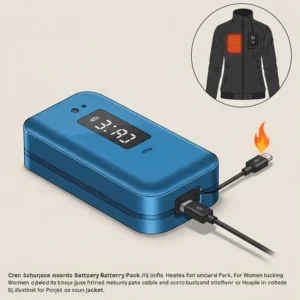
The jacket uses a 10,000mAh, 5V battery pack with two USB ports, so it doubles as a phone charger. Heating covers the chest and back, and the shell is waterproof and wind-resistant over an anti-static fleece lining. A detachable hood, adjustable Velcro cuffs, and five pockets round it out. Run time reaches up to 10 hours. The reviewer stayed comfortable at 20°F.
The catch is heat-up speed. The reviewer noted the 5V pack warms more slowly than the 7.4V and 10V options tested. Practically, that means switching it on early and starting on a higher setting before dropping down.
I found strong editorial praise here but limited verifiable aggregated buyer data in what I could access, so check the live Amazon rating before buying.
Pros:
- ✅ Strong value at a budget-friendly price
- ✅ Waterproof, wind-resistant shell
- ✅ Two USB ports charge a phone
Cons:
- ❌ 5V battery heats up slightly slower
- ❌ Heating limited to chest and back
Bob Vila gives no price figure, so check current price. It sits in the budget tier, and it is one of the best value plays on the list.
7. ORORO Women’s Heated Down Jacket — best packable premium warmth
When the heat is off, this jacket still works, because it is filled with 800-fill-power down.
You get eight heating zones, a packable build, and ORORO’s PD 5K battery with USB-C charging. The zones include low front panels, and one retailer reviewer said those panels keep your hands warm inside the pockets. The same reviewer liked the neck zone and called the fit roomy and stylish enough to wear unheated.
That “heat optional” quality is the real selling point. Down handles mild days on its own, and the battery adds a boost when temperatures plunge. The same reviewer was surprised by the battery’s weight. That is a trade-off you accept for even heat distribution. Check the care label before washing, since down and electronics both need gentle handling.
Pros:
- ✅ Eight zones including hand-warming pockets
- ✅ 800-fill down insulates with the heat off
- ✅ Packable for travel and layering
Cons:
- ❌ Premium pricing compared with fleece options
- ❌ Battery heavier than some buyers expect
It sits in the premium tier, so check current price. It’s worth the stretch for cold-weather commuters and travelers who value a jacket that packs small.
Practical Guide: Setting Up and Caring for Your Heated Jacket in the First 30 Days
A heated jacket is part clothing, part gadget, and the first month decides whether it becomes your favorite coat or a closet ornament. Here’s the routine that dodges the usual stumbles.
Week one: learn the controls. Charge the battery fully before the first wear. Then test all three heat levels indoors for a few minutes each so you know what “low” actually feels like. Most jackets need a couple of minutes to warm up, so switch on before you leave the house, not at the bus stop.
Layer smart. Wear a thin, snug base layer under the jacket so heat reaches you instead of escaping. Skip bulky mid-layers between you and the panels. They work like a blanket between you and a space heater.
Care basics. Always remove the battery before washing, and follow the care label to the letter. ORORO’s Classic line, for example, calls for line drying. Venustas recommends storing heated jackets somewhere with good airflow. Lithium batteries generally prefer to be stored partially charged and cool, but check your manufacturer’s guidance.
Mistakes to avoid in the first 30 days:
- Running high all day, which drains the pack fast and is rarely necessary
- Forgetting to charge overnight
- Washing with the battery still connected
- Parking a dead battery in a drawer for months

Real-World Scenarios: Which Women’s Heated Jackets Fit Which Life?
Specs only matter when they meet a real routine. Here are three hypothetical profiles, with budget, environment, and frequency spelled out.
The early-shift commuter (budget around $150-$200, 20 minutes outdoors, five days a week). Waiting at a bus stop is the perfect heated-jacket scenario: long, still, cold exposure. The ORORO Women’s Classic Heated Jacket 2.0 fits because its collar and torso zones hit exactly the spots that get cold when you aren’t moving, and the low-setting run time covers the shift.
The weekend skier who flies to the mountains (budget around $180-$200, several trips per winter). The Venustas Women’s 3-in-1 Heated Jacket gives you a waterproof shell plus heated layer in one package. For flights, the FAA’s Airline Passengers and Batteries guidance treats spare lithium-ion batteries as carry-on only, with a baseline limit of 100 watt-hours per battery. ORORO likewise tells customers to keep its batteries in carry-on bags. A 7.4V, 4,800 mAh pack works out to about 35 Wh, well under the limit. Airlines can be stricter, so check yours.
The job-site worker who already owns M12 batteries (budget flexible, daily use outdoors). The Milwaukee M12 Women’s Heated Axis Jacket makes financial sense as a bare tool, since your existing batteries power it. The up-to-12-hour low setting handles a long shift, and the pass-through pocket lets you reposition the battery so it doesn’t dig in while you work.
Problem → Solution: Fixing the Most Common Heated Jacket Headaches
Even good jackets have quirks. Here are the complaints that surface most, with fixes.
- “My battery died by lunch.” Run the low setting, use high only for a brief warm-up, and carry a spare. ORORO itself recommends buying a spare battery if you’ll spend long stretches in sub-zero temperatures.
- “My core is warm but my hands are freezing.” Look for pocket zones. The ORORO Women’s Heated Down Jacket has low front panels that one reviewer says keep hands warm. Otherwise, add heated gloves or hand warmers.
- “It won’t fit over my sweater.” Sizing is a known weak spot. The ORORO Women’s Heated Parka Jacket is reported not true to size, and some other brands run small. Read the size chart and decide how many layers you’ll wear.
- “The battery pocket digs in.” Use the pass-through pocket on the Milwaukee M12 Women’s Heated Axis Jacket to shift the weight, or choose a lighter pack.
- “It heats too slowly.” Slower 5V packs like the TIDEWE Women’s Heated Softshell Jacket need a head start. Switch it on early and begin on a higher setting.
✨ Ready to Warm Up Your Winter?
🔍 Take your cold-weather routine to the next level with these carefully researched women’s heated jackets. Click on any highlighted product name to check current pricing and availability. The right jacket will help you stay comfortable on the coldest mornings, from the bus stop to the ski lift! 🧣🔥
How to Choose Women’s Heated Jackets: 7 Steps That Actually Matter
Choose women’s heated jackets by matching zones, voltage, and run time to your coldest realistic day, then confirming fit and care. Work through these steps in order:
- Define your coldest realistic day. A 35°F commute and a 10°F ski day need different jackets. Buy for the cold you actually face.
- Check zone placement, not just zone count. Core coverage (chest and back) comes first. Collar and pocket zones are bonuses.
- Pick a voltage you understand. Per Wikipedia, 7.4V is the most common rechargeable system, 5V works with a standard power bank, and 12V systems draw higher power. Tool-battery systems like Milwaukee’s use 12V.
- Read run time on the low setting. High-setting numbers are often just a few hours.
- Check the shell. “Water-resistant” is not “waterproof.” Match it to your climate.
- Test fit with layers in mind. Check the size chart and the battery pocket location.
- Confirm warranty and care. A multi-year warranty on heating elements signals confidence. Line-dry-only care labels signal maintenance work.
Features That Actually Matter (And Those That Don’t)
Marketing copy loves big numbers. Here is how to filter it.
What matters:
- Zone placement. Heat on your core beats heat on your elbows.
- Battery capacity relative to voltage. A 10,000mAh 5V pack and a 4,800mAh 7.4V pack are different animals. Compare watt-hours when listed.
- Low-setting run time. It is the number that decides your day.
- Shell and insulation. Roughly half of your warmth still comes from the garment itself, which is why the ORORO Women’s Heated Down Jacket and quilted Milwaukee M12 Women’s Heated Axis Jacket stay warm unpowered.
- Warranty. ORORO lists a three-year warranty on heating elements and one year on the battery for models I checked.
What doesn’t:
- Giant zone counts. Some listings advertise 15 heating zones. More isn’t automatically better if the battery can’t feed them.
- Peak temperature claims. Few listings publish methodology.
- Gimmick controls. Simple buttons are more reliable in gloves.
Common Mistakes When Buying Women’s Heated Jackets
Most regrets come from five avoidable errors.
- Judging by high-setting hours. Always check low-setting numbers, and expect high to be much shorter.
- Buying “apparel only” by accident. ORORO sells some jackets without the battery, and the battery is a separate purchase. Read the listing’s “what’s included” section.
- Ignoring size. Women’s sizing varies widely. Roundups flag the ORORO Women’s Heated Parka Jacket as not true to size and another jacket in one roundup as running small.
- Assuming heated means waterproof. Many shells are only water-resistant. The Venustas Women’s 3-in-1 Heated Jacket and TIDEWE Women’s Heated Softshell Jacket are marketed with waterproof shells, but verify each listing.
- Over-buying zones, under-buying battery. A five-zone jacket with a small battery will disappoint.
What to Expect: Real-World Performance
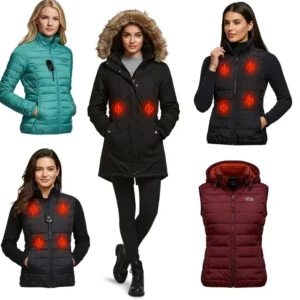
Heated jackets feel different from what the marketing photos imply. Heat is zone-based, so you feel warm patches against your torso, more like a hot water bottle against your core than a sauna.
Warm-up takes time. One reviewer of a Venustas vest noted the garment needs a couple of minutes to heat after you press the power button, and Bob Vila’s tester found the 5V TIDEWE Women’s Heated Softshell Jacket slower than 7.4V and 10V options. Plan to switch on before heading out.
Temperature matters too. Bob Vila’s tester stayed comfortable at 20°F in the TIDEWE. Lithium batteries typically lose some capacity in the cold, so keep the pack in an inner or side pocket close to your body when you can.
Activity changes the equation. Standing at a bus stop makes heat feel essential. Brisk walking or shoveling snow may need only the low setting. And on a windy day, shell quality matters as much as battery capacity, because wind strips heat away from any garment.
Women’s Heated Jackets vs. Traditional Winter Coats
Heated jackets are not a replacement for good outerwear. They’re an upgrade for the moments when insulation alone isn’t enough.
| Factor | Heated Jacket | Traditional Coat | Best For |
|---|---|---|---|
| Warmth control | Adjustable on demand | Fixed by insulation | Heated: variable activity |
| Bulk and weight | Battery adds weight, thinner shells | Heavier insulation | Traditional: no-battery simplicity |
| Upfront cost | Higher (battery, electronics) | Lower for similar insulation | Traditional: tight budgets |
| Maintenance | Charging, care labels | Minimal | Traditional: low-effort wearers |
The table makes the trade-off clear. A traditional coat wins on simplicity, but a heated jacket wins any time your activity level swings between standing and moving. Models such as the ORORO Women’s Heated Down Jacket blend both by pairing down insulation with powered zones.
One safety note: heated clothing is a comfort tool, not medical protection. The CDC’s guidance on preventing hypothermia and frostbite stresses staying dry, layering, and limiting time outdoors in extreme cold. A battery that dies in a blizzard is still a cold situation.
Safety Guide: Batteries, Power Banks, and Cold-Weather Health
Heated jackets are built around lithium-ion batteries, so a few precautions are worth the effort.
Buy from reputable brands. The U.S. Consumer Product Safety Commission has issued warnings about defective lithium-ion power banks sold online. One CPSC warning on Yiisonger power banks sold on Amazon describes cells that can overheat and ignite. That is a good reason to be careful if you plan to power a 5V jacket from a generic third-party power bank.
Charge sensibly. Use the supplied charger, charge on a hard surface, and don’t leave packs charging unattended overnight.
Check for damage. Swollen, hot, or damaged batteries should be retired and disposed of through hazardous-waste channels.
Fly with batteries in the carry-on. The FAA baseline is carry-on only for spares, and airlines may be stricter.
Stay realistic about cold. Heat from a jacket is a boost, not a guarantee. Dress in layers and keep a spare power source when conditions are severe.
Long-Term Cost & Value: What Women’s Heated Jackets Really Cost per Winter
Sticker price is only half the story. Cost-per-wear is where heated jackets get interesting.
Say you buy a jacket in the $150-$200 range and wear it 60 days a winter for three winters. That is 180 wears, or roughly $0.80 to $1.10 a day. Add a spare battery for extended days and the math barely shifts. ORORO states its batteries can be recharged up to 800 times, though calendar aging will end a pack’s life before that count.
Warranty coverage is part of value. ORORO lists three years on heating elements and one year on batteries. Replacement batteries and charger costs matter more than most buyers expect.
| Tier | Jackets | What You Pay For | Best For |
|---|---|---|---|
| Budget | TIDEWE Women’s Heated Softshell Jacket, Venustas Women’s Fleece Heated Jacket | Core heat, USB or fleece comfort | First-time buyers |
| Mid-range | ORORO Women’s Classic Heated Jacket 2.0, Venustas Women’s 3-in-1 Heated Jacket | Collar zone, shell versatility, longer run times | Daily commuters, skiers |
| Premium | ORORO Women’s Heated Parka Jacket, Milwaukee M12 Women’s Heated Axis Jacket, ORORO Women’s Heated Down Jacket | Longer cuts, 12V power, down insulation | Cold climates, frequent users |
Budget buyers get the best entry value, mid-range buyers get the most balanced feature set, and premium buyers pay for insulation and power that work even when the battery is off. If your winters are mild, the budget tier will do. Heavy-duty cold justifies stepping up.
FAQ: Women’s Heated Jackets Questions Answered
❓ Are women's heated jackets safe to wear in rain or snow?
❓ How many hours can women's heated jackets run on one charge?
❓ What size should I order in a heated jacket for women?
❓ Can I power a women's heated coat with a power bank?
❓ Do women's heated jackets come with a battery included?
The Bottom Line on Women’s Heated Jackets
After weighing specs, run times, and published reviews, the pattern is clear: women’s heated jackets reward buyers who match the jacket to their routine.
If you want one safe recommendation, the ORORO Women’s Classic Heated Jacket 2.0 is the best all-rounder, thanks to its collar zone, roughly 10-hour low setting, and warranty. If wet weather is your reality, the Venustas Women’s 3-in-1 Heated Jacket adds a waterproof shell. For parka-length coverage, the ORORO Women’s Heated Parka Jacket fits. If you want to spend as little as possible, the TIDEWE Women’s Heated Softshell Jacket and Venustas Women’s Fleece Heated Jacket deliver the core feature at the lowest cost. The Milwaukee M12 Women’s Heated Axis Jacket is the smart pick if you already own M12 batteries, and the ORORO Women’s Heated Down Jacket is the one to splurge on if packable down and pocket heat matter.
Whatever you choose, remember the basics. Check the low-setting run time, confirm the battery is included, read the size chart, and treat your jacket as a boost that works best over smart layers. Winter isn’t going anywhere, but being cold doesn’t have to be the default.
Recommended for You
- Top 5 DeWalt Women’s Heated Jackets Compared to Leading Brands in 2025
- Best Women’s Heated Fleece Jackets: Ultimate Comfort Guide for Outdoor Adventures [2025 Reviews]
- 10 Best Men’s DeWalt Heated Jacket Options for Ultimate Winter Warmth in 2025
Disclaimer: This article contains affiliate links. As an Amazon Associate, I earn from qualifying purchases. If you purchase products through these links, we may earn a small commission at no additional cost to you.
✨ Found this helpful? Share it with your friends! 💬🤗
