
In This Article
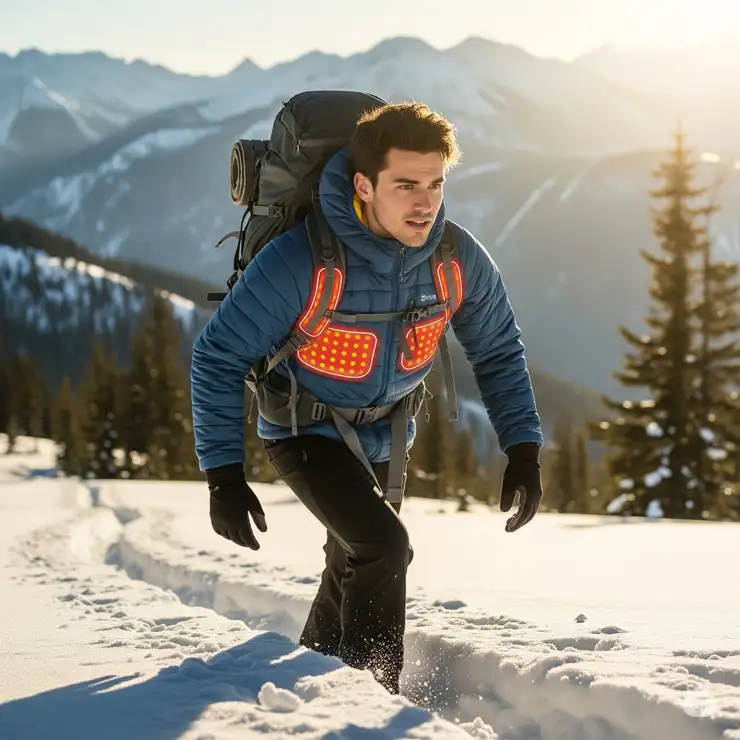
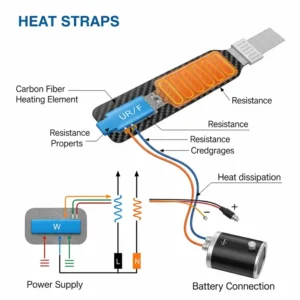
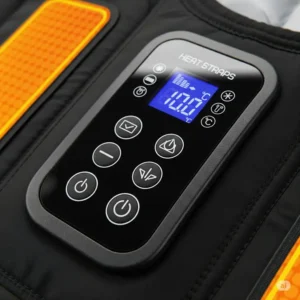
What is a heat straps jacket? It is a battery-powered jacket with built-in heating panels or carbon-fiber elements, usually across the chest and back, that you switch on with a button. Think of those panels as warm bands wrapped around your core. Most models run three heat levels from a small rechargeable lithium-ion pack tucked in a pocket.
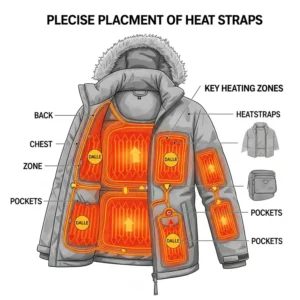
Here’s the thing about cold. It rarely attacks your hands first. It goes for your core, and once your torso loses the battle, everything else follows. According to the National Weather Service wind chill guidance, wind chill is about how fast exposed skin loses heat in cold, windy air. A heat straps jacket tackles that loss from the inside, which is why people who stand around in the cold swear by one: dog walkers, hunters, parents on bleacher duty, anyone waiting on a freezing platform.
A quick note on terminology. “Heat straps jacket” is a loose shopping phrase, and in practice it lands you on battery-heated jackets. Some models add adjustable cuffs and waist cords that act as literal straps to trap warmth, which makes the name fitting.
This guide covers seven real models across budget, mid-range and premium tiers. I synthesized published expert testing, spec sheets and retailer listings. I haven’t worn any of these jackets myself, so everything below is analysis, not personal testing. No jacket is perfect, and I’ll point out the trade-offs.
Heat Straps Jacket Quick Comparison Table
Short on time? This table puts the seven picks side by side. Price tiers are relative, so check current price on the listing before you decide.
| Product | Heat Zones | Heat Settings | Runtime (Low) | Price Tier | Best For |
|---|---|---|---|---|---|
| Milwaukee M12 Heated Toughshell Jacket | Chest, back, front pockets | 3 | Up to 12 hrs | Premium | Job sites, tool owners |
| Ptahdus 5-Zone Heated Softshell | Chest, back, hand pockets | 3 | Up to 8 hrs | Budget | Cold-hands commuters |
| Ororo Men’s Classic Softshell | Chest, back | 3 | Up to 10 hrs | Mid-range | Office-to-outdoors wear |
| Venustas 5V Heated Jacket | Chest, back, neck | 3 | 8-11 hrs (sources differ) | Mid-range | Windy, neck-chilling days |
| TideWe Softshell Heated Jacket | Chest, back | 3 | Up to 10 hrs | Budget | Value hunters, phone chargers |
| Fieldsheer Mobile Warming Ranch Jacket | Chest, upper back, lower back | 4 | Up to 12 hrs | Premium | Style-conscious ranch and yard work |
| iHood Heated Jacket | Front, back, lumbar, collar | 4 | Varies; about 2.5 hrs on high | Mid-range | Sitting still in the cold |
Look at the table and one pattern jumps out. The Milwaukee M12 Heated Toughshell Jacket and Fieldsheer Mobile Warming Ranch Jacket lead on runtime, but you pay for it. The TideWe Softshell Heated Jacket and Ptahdus 5-Zone Heated Softshell keep costs down by trimming extras. If you plan to sit still outdoors, the iHood Heated Jacket has the most zones, including collar and lumbar heat. In short, runtime, zone count and price pull in different directions, and the right heat straps jacket depends on which one you refuse to compromise.
💬 Just one click — help others make better buying decisions too!😊
Top 7 Heat Straps Jacket Picks: Expert Analysis
One transparency note before the picks. I couldn’t verify a fresh, representative sample of customer reviews for each product while researching. So the sentiment below comes from published testing by outlets such as Bob Vila and Outdoor Life, plus retailer spec sheets. Treat star ratings on Amazon as a live signal, and read the newest reviews yourself.
1. Milwaukee M12 Heated Toughshell Jacket — longest runtime, shared tool batteries
Bob Vila named this its best overall heated jacket, and the headline is battery life. The 12-volt RedLithium pack is the same one that powers many Milwaukee M12 tools. If you already own them, a spare battery is a pocket swap away.
The heating coils run across the chest, the back and the front pockets, with three adjustable levels. Runtime reaches up to 12 hours on the lowest setting, and “lowest” is the number that matters. Low heat plus a high-loft insulated shell is how most people actually wear one of these.
The stretch Toughshell polyester is wind- and water-resistant, and the jacket is safe for both washer and dryer once the battery is out. On paper, that makes it the least fussy to maintain. Reviewers do flag one catch: some wearers say it doesn’t get hot enough on the top setting. If you run cold, weigh that carefully.
Pros:
- ✅ Up to 12 hours of runtime on low
- ✅ Durable stretch shell, washer and dryer safe
- ✅ Battery fits other Milwaukee M12 tools
Cons:
- ❌ Some users say it runs cooler than expected
- ❌ Premium kit pricing versus budget rivals
Premium tier; check current price. Great value if you already live in the M12 ecosystem, harder to justify otherwise.
2. Ptahdus 5-Zone Heated Softshell — five zones at a budget-friendly tier
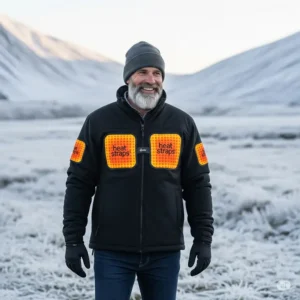
The Ptahdus 5-Zone Heated Softshell earned Bob Vila’s “best bang for the buck” nod, and the zone count explains why. You get heat on both sides of the chest, a back panel and two hand-warmer pockets. Body heat and pocket heat have separate controls, a feature jackets costing noticeably more often skip.
Here’s what that means in practice. When you’re walking into a headwind, you can crank the body zones and leave the pockets off. When you’re standing at a bus stop with bare hands, you can do the reverse. That flexibility saves battery and keeps you from overheating.
The 7.4-volt battery delivers up to about 8 hours on low. The softshell blends polyester and spandex for stretch, with a fleece lining. Adjustable sleeve cuffs and a waist cord are the real “straps” here, cinching in warmth instead of letting it leak out. Reviewers’ main complaints are practical: it’s air-dry only, and there’s no hood.
Pros:
- ✅ Five heat zones with separate pocket controls
- ✅ Adjustable cuffs and waist trap heat well
- ✅ Also offered in a women’s version
Cons:
- ❌ Air-dry only after washing
- ❌ No hood included
Budget tier; check current price. Strong value for commuters who care most about warm hands.
3. Ororo Men’s Classic Softshell — clean look, sensible runtime
Style matters when a heated jacket doubles as a work jacket, and the Ororo Men’s Classic Softshell leans into that. Bob Vila picked it as best for work, praising its neat black look and detachable hood. Pull the hood off and it passes in an office parking lot.
Two heat zones (chest and back) and three settings sound modest. Yet reviewers consider that layout enough for most days, and the 10-hour runtime on low covers a standard shift. Retailer listings describe a 7.2-volt lithium-ion pack. A USB port on the battery charges your phone, which quietly doubles as a power bank during long days outside.
The trade-off is weather. The jacket is water- and wind-resistant but not waterproof, so a heavy downpour is its limit. If your forecast says sleet, think twice, or layer a shell over it.
Pros:
- ✅ Polished look suits work settings
- ✅ Detachable hood adds flexibility
- ✅ USB port charges your phone
Cons:
- ❌ Not waterproof for heavy rain
- ❌ Only two heat zones, no collar or pockets
Mid-range tier; check current price. Good value for people who want one jacket for work and weekends.
4. Venustas 5V Heated Jacket — neck heating plus a reflective lining
Neck warmth is the sleeper feature here. The Venustas 5V Heated Jacket heats the chest, back and collar, and Outdoor Life’s tester noted that collar heat warms her up fastest. That makes sense: cold air sneaks in at the neckline, so warming it feels disproportionately good.
Beyond the elements, the jacket is insulated from hem to hood, and a Mylar thermal lining reflects body heat back toward you. In plain terms, it stays warm even when the heater is off. That’s useful insurance when the battery runs low.
One honest flag: published runtime figures disagree. Bob Vila’s write-up lists 11 hours in its spec bullet but 8 hours in the body text, so treat roughly 8 hours as the conservative planning number. The hood also lacks a drawstring, so it won’t cinch in a gale.
Pros:
- ✅ Collar heating warms you quickly
- ✅ Insulated body with reflective lining
- ✅ Battery doubles as a device charger
Cons:
- ❌ Hood isn’t adjustable
- ❌ Published runtime figures are inconsistent
Mid-range tier; check current price. A smart pick for windy climates where your neck takes the abuse.
5. TideWe Softshell Heated Jacket — waterproof shell with two USB ports
Bob Vila’s 2026 testing named the TideWe Softshell Heated Jacket best bang for the buck. Its biggest surprise is the 10,000mAh battery with two USB ports, a perk some pricier jackets in the same test didn’t offer. You can top up a phone and a second device while staying warm.
The shell is waterproof and wind-resistant, with an anti-static fleece lining, a detachable hood and adjustable Velcro cuffs. Five pockets and a clean profile make it work as a standalone jacket or a mid-layer. Runtime is up to 10 hours on the chest and back zones.
The trade-off is speed. Bob Vila’s tester noted the 5-volt battery warms up a little slower than the 7.4- and 10-volt jackets in the same test. Still, the tester stayed comfortable in 20-degree Fahrenheit weather, which is the benchmark that counts. Think of it as the reliable slow-burner of the group.
Pros:
- ✅ Waterproof, wind-resistant shell
- ✅ Two USB ports for charging devices
- ✅ Detachable hood and adjustable cuffs
Cons:
- ❌ Heats up slower than higher-voltage rivals
- ❌ Only chest and back zones
Budget tier; check current price. Excellent value if you want a weatherproof shell without premium pricing.
6. Fieldsheer Mobile Warming Ranch Jacket — app control and four heat levels
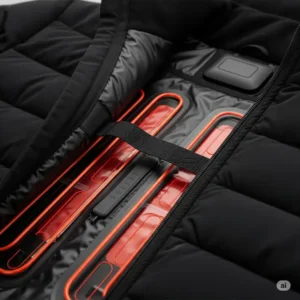
Bob Vila’s 2026 test crowned the Fieldsheer Mobile Warming Ranch Jacket best overall, and the details show why. The shell blends hemp, recycled polyester and organic cotton with a DWR finish, so it looks like a classic ranch coat. A high-pile sherpa lining adds warmth even with the heater off.
Three zones (chest, upper back and lower back) deliver up to 12 hours per charge. It was the only jacket in Bob Vila’s test with four settings instead of three, and the only one adjustable through a mobile app. That app is more useful than it sounds. Outdoor Life points out that jacket controls buried under a hardshell can cause “panic” when you overheat, and sweating makes you colder. Phone control solves that.
Six pockets, metal hardware and corduroy trim give it a premium feel. The pockets aren’t heated, which is the one place it trails the Ptahdus 5-Zone Heated Softshell.
Pros:
- ✅ Four heat levels with app control
- ✅ Up to 12 hours of runtime per charge
- ✅ Premium materials and sherpa lining
Cons:
- ❌ Pockets aren’t heated
- ❌ Premium price versus softshell rivals
Premium tier; check current price. Worth it if you want a jacket you’d happily wear even when the battery is unplugged.
7. iHood Heated Jacket — the hottest panels, six heat zones
Outdoor Life picked the iHood Heated Jacket as best overall in its test. It has panels across the front, back, lumbar and collar, and each zone can be controlled independently, plus the button light can be turned off to save power. In the tester’s probe measurement, an element reached about 148 degrees Fahrenheit.
What does that mean for you? If you sit outdoors, whether at a ball game, on a fishing bank or waiting by a trailhead, this is the pick. Collar and lumbar heat go where most jackets don’t, and nine pockets plus a retractable rain flap round out the package.
The catch is battery life. Outdoor Life measured only about 2.5 hours with every zone on the highest setting. The tester also noted she couldn’t imagine anyone needing that setting in such a warm coat, so the real-world number on low will be far better. It’s also strictly an outer layer.
Pros:
- ✅ Six heating panels including collar and lumbar
- ✅ Independent zone controls and removable hood
- ✅ Weather-resistant and machine washable
Cons:
- ❌ Only about 2.5 hours on the highest setting
- ❌ Works as an outer layer only
Mid-range tier; Outdoor Life measured around $150 at test time, so check current price. Strong value for anyone who sits more than they move.
Heat Straps Jacket Specs Side by Side
Numbers can mislead, so here’s how to read the spec sheet. This second table covers the details that actually separate these jackets.
| Product | Hood | Washable | Notable Extra | Best For |
|---|---|---|---|---|
| Milwaukee M12 Heated Toughshell Jacket | Not included | Washer and dryer safe | Shared M12 battery platform | Tool owners |
| Ptahdus 5-Zone Heated Softshell | None | Air-dry only | Separate pocket heat controls | Cold-handed commuters |
| Ororo Men’s Classic Softshell | Detachable | Remove heating pack, then wash | USB charging port | Work wear |
| Venustas 5V Heated Jacket | Fixed, not adjustable | Check care label | Mylar reflective lining | Windy weather |
| TideWe Softshell Heated Jacket | Detachable | Check care label | Two USB ports | Value shoppers |
| Fieldsheer Mobile Warming Ranch Jacket | Not featured | Check care label | App-controlled four levels | Style-driven buyers |
| iHood Heated Jacket | Removable | Machine washable | Independent zone control | Sitting outside |
Notice that no jacket wins every category. The Milwaukee M12 Heated Toughshell Jacket is the easiest to clean, while the iHood Heated Jacket gives the most control over where heat goes. The Fieldsheer Mobile Warming Ranch Jacket is the only one with phone control, which matters if your jacket will sit buried under outer layers. Match the column to your biggest annoyance, and the choice gets easier.
How to Set Up and Maintain Your Heat Straps Jacket
Amazon listings tell you what a jacket can do. They rarely tell you how to get the most from it. Here’s a practical routine, built from care guidance in the published reviews and general lithium-ion best practice.
Before the first wear: charge the battery fully with the supplied cable, then run the jacket on each setting indoors for a few minutes. You’re checking that every zone warms evenly.
Dress smart: wear a thin moisture-wicking base layer. Heat travels through thin fabric well and gets blocked by thick wool. Put the battery in the pocket that sits flattest against your body, since several reviewers mention bulk or awkward placement.
On the move: start on medium, then drop to low once you warm up. Outdoor Life’s tester warns that overheating causes sweating, which makes you colder.
Washing: always remove the battery first. Bob Vila notes air-drying is the gentlest option, and some models, like the Ptahdus 5-Zone Heated Softshell, specifically forbid the dryer.
Storage: disconnect the battery from the cord when not in use, because Outdoor Life says a connected cord slowly drains it. Keep the pack indoors at room temperature.
Common first-month mistakes: forgetting to charge the night before, running every zone on high all day, and tossing the jacket in a hot dryer. Avoid those three and a heat straps jacket will serve you for many winters.
Real-World Scenarios: Which Heat Straps Jacket Fits Your Life?
Specs mean little until you picture your own cold. Here are three profiles, with budget, setting and weekly usage included.
The college commuter. Eight miles a day on a bike or a cold bus stop, five days a week, on a tight budget. The TideWe Softshell Heated Jacket is my pick. The waterproof shell handles slush, the two USB ports keep your phone alive for lectures, and the budget tier suits a student wallet. Run it on low and the 10-hour rating covers a full day.
The weekend hunter or angler. Long, still hours outside, often before sunrise. The iHood Heated Jacket suits that, since collar and lumbar heat counter the cold that creeps in when you aren’t moving. Carry a spare battery or a charged power bank, because high-setting runtime is short.
The tradesperson. Ten-hour shifts, power tools nearby, a rough environment. If your crew already runs Milwaukee tools, the Milwaukee M12 Heated Toughshell Jacket lets you share batteries and shrugs off washing. If you’d rather not invest in a new platform, the Ororo Men’s Classic Softshell is sturdy and presentable for client-facing days.
Notice the pattern: movement level, rain exposure and battery logistics decide the winner far more than brand name.
Common Problems with a Heat Straps Jacket (and How to Fix Them)
Even the best heated jacket has bad days. Here are the five most common complaints and what typically helps.
- “It doesn’t feel hot enough.” Some reviewers say the Milwaukee M12 Heated Toughshell Jacket runs cool at its top setting. Layer a thin base underneath so the panels sit close to your body, and preheat for five minutes before heading out.
- “The battery dies mid-afternoon.” Drop to low once you’re warm. Bob Vila’s guidance puts typical low-setting runtime at 6 to 8 hours and high at only 2 to 3.
- “The battery pocket digs into my hip.” Try the other pocket, or choose a design with a pass-through pocket. One tester specifically liked that flexibility on a Milwaukee women’s model.
- “I’m sweating.” Turn it down or off. A model with app control like the Fieldsheer Mobile Warming Ranch Jacket makes this painless.
- “One zone feels dead.” Check the connector, re-seat the battery and test indoors. If the problem persists, contact the seller under warranty rather than opening the jacket yourself.
How to Choose a Heat Straps Jacket
Searching “how to choose” turns up endless feature lists. Here are seven steps, in the order that actually matters.
- Decide your activity. Moving or sitting? Active wearers need less heat and more breathability; sitters need more zones.
- Check heat zones. Chest and back are the baseline. Collar, lumbar and pocket zones are upgrades that earn their keep in wind or stillness.
- Read the runtime on low. Manufacturers quote the lowest setting. High-setting figures run far shorter.
- Match voltage and battery to your habits. Higher-voltage packs, like 7.4-volt, tend to heat faster, as Bob Vila’s tester noted when comparing against the 5-volt TideWe Softshell Heated Jacket.
- Confirm weather protection. Waterproof, water-resistant and merely “softshell” are three different promises.
- Look at controls. Buttons are fine until your jacket is buried under a shell; then an app helps.
- Plan for washing. Is it machine washable? Dryer safe? Cleaning rules vary widely.
Quick rule of thumb: pick one priority from the list, then let the rest fall into place.
Common Mistakes When Buying a Heat Straps Jacket
Shoppers repeat the same errors every winter. Learn from them.
Mistake one: shopping by maximum heat. The temperature on the box is a peak number. Outdoor Life measured element temperatures only as a ballpark, and noted that panel size and location matter as much as raw heat. A hot but tiny panel can feel weaker than a mild, large one.
Mistake two: ignoring runtime on low. A jacket that lasts 2.5 hours on high may still last many more on low, as the iHood Heated Jacket shows. Compare like with like.
Mistake three: skipping the care label. The Ptahdus 5-Zone Heated Softshell is air-dry only, and the Milwaukee M12 Heated Toughshell Jacket isn’t. That’s a daily-life difference.
Mistake four: trusting the jacket as your only layer in the backcountry. Outdoor Life warns that batteries fail, and a heated jacket isn’t an excuse to layer badly. Dress as if the heat might quit.
Mistake five: forgetting spare power. If your outings run long, a second battery is cheaper than a ruined afternoon. Most brands sell them separately.
Heat Straps Jacket vs Traditional Winter Jacket
Is a heated jacket really better than a thick coat? The honest answer: it depends on what you’re doing.
| Feature | Heat Straps Jacket | Traditional Winter Jacket |
|---|---|---|
| Warmth when still | Adjustable, active heat | Depends on insulation only |
| Weight and bulk | Slimmer for the same warmth | Bulkier for high warmth |
| Upkeep | Battery charging, careful washing | Simple wash and wear |
| Failure mode | Battery dies, insulation remains | Rarely fails |
| Best for | Sitting outside, long cold waits | Everyday, low-maintenance use |
Reading the table, the biggest difference is control. A traditional coat is always the same warmth, so you overheat while walking and freeze while standing. A heat straps jacket lets you dial it up or down. The trade-off is maintenance: you must charge a battery, and washing takes thought. Outdoor Life also notes that a heated vest layers better than a jacket, so if you already own a good shell, a vest might suit you more.
My read: buy a heated jacket if you spend long, stationary stretches in the cold. If you mostly walk briskly, a good traditional coat may be enough.
What to Expect: Real-World Performance of a Heat Straps Jacket
Spec sheets promise a lot. Real winter delivers a more nuanced story, and published testers help fill in the gaps.
Warm-up time. Heated panels reach noticeable warmth within minutes on most models. Bob Vila’s tester noted the TideWe Softshell Heated Jacket, with its 5-volt pack, warmed more slowly than higher-voltage rivals, yet stayed comfortable at 20 degrees Fahrenheit.
Runtime reality. Outdoor Life’s testing found jackets lasting roughly two to five and a half hours on the highest setting. Low settings stretch that to the 8 to 12 hours most listings quote.
Heat feel. Outdoor Life’s tester found the collar warms the body quickest. That fits why the Venustas 5V Heated Jacket and iHood Heated Jacket feel so effective despite modest panel counts.
Weather handling. Softshells shrug off light rain. Heavy rain needs a truly waterproof shell, and Outdoor Life stresses keeping the battery dry and never wearing electric clothing while soaked through.
The takeaway. Expect a heat straps jacket to take the edge off, not turn winter into summer. Used on low with sensible layers, it is genuinely transformative on a bitter morning.
✨ Ready to Gear Up for Winter?
🔍 Take your cold-weather comfort to the next level with these carefully selected jackets. Click on any highlighted product name to check current pricing and availability. Pick the one that matches your routine and enjoy warmer mornings!
Heat Straps Jacket Safety, Battery Care and Travel Rules
Wearing electronics may sound alarming. Reputable models include safeguards, and Bob Vila notes that quality jackets protect their heating elements with waterproof membranes and built-in overheat protection. Your habits still matter.
Charging. Lithium-ion batteries hold lots of energy in a small package. New York State’s lithium-ion battery consumer safety guide advises against leaving devices unattended while charging and suggests checking the CPSC recall database before buying. Use the supplied charger and cable. One Bob Vila tester reported a heated vest battery overheating with an included wall adapter, which stopped when switched to a USB outlet.
Temperature. Fire marshals recommend avoiding charging or using lithium-ion batteries in extreme temperatures. Charge indoors, not in a freezing car.
Certification. Look for UL or similar listing on the battery and charger.
Travel. Guidance summarized by Venustas and others says heated jackets themselves can travel in carry-on or checked bags. Spare lithium-ion batteries and power banks must go in carry-on only, and the heating function shouldn’t be used mid-flight. Rules change, so check tsa.gov and your airline before flying.
Care. Remove the battery before washing, and retire any pack that swells, leaks or gets unusually hot.
Long-Term Cost and Value of a Heat Straps Jacket
Is a heated jacket worth the money over several winters? Here’s a way to think about total cost of ownership.
| Cost Factor | Budget Tier | Mid-Range Tier | Premium Tier |
|---|---|---|---|
| Example picks | Ptahdus 5-Zone Heated Softshell, TideWe Softshell Heated Jacket | Ororo Men’s Classic Softshell, Venustas 5V Heated Jacket, iHood Heated Jacket | Milwaukee M12 Heated Toughshell Jacket, Fieldsheer Mobile Warming Ranch Jacket |
| Upfront cost | Lowest | Moderate | Highest |
| Spare battery | Usually sold separately | Usually sold separately | Often sold separately or shared |
| Best For | First-time buyers | Daily wearers | Heavy users |
Looking at the table, the premium picks don’t add much heat. They add runtime, materials and convenience. If you wear your jacket three or four months a year for many winters, spreading the cost over that time makes a premium jacket look more reasonable. If you only need it for a few weekend outings, a budget pick like the TideWe Softshell Heated Jacket is the smarter spend. Add the cost of a spare battery if you plan long days, and remember that a washable shell cuts upkeep headaches.
FAQ About Heat Straps Jacket
❓ What size battery do I need for a heat straps jacket?
❓ Can I use a power bank with a heat straps jacket?
❓ Will a heat straps jacket keep me warm without the battery?
❓ Is a heat straps jacket good for women?
❓ How should I store a heat straps jacket in summer?
Conclusion: Choosing Your Heat Straps Jacket
Winter doesn’t care how tough you are. A well-chosen heat straps jacket gives you control, and control is the difference between enduring the cold and enjoying your day. Here’s how the field breaks down.
For all-day runtime and tool-sharing batteries, the Milwaukee M12 Heated Toughshell Jacket leads. For stylish ranch-coat looks with app control, the Fieldsheer Mobile Warming Ranch Jacket stands out. For the lowest cost with real features, the TideWe Softshell Heated Jacket and Ptahdus 5-Zone Heated Softshell both deliver. For neck warmth, look to the Venustas 5V Heated Jacket. For work-friendly looks, the Ororo Men’s Classic Softshell fits. For sitting still in brutal cold, the iHood Heated Jacket is hard to beat.
My honest advice: start with how you’ll actually use it, pick runtime over raw heat, and always layer as if the battery could fail. Do that, and your jacket will repay you every cold morning.
Recommended for You
- 15 Best Heated Hunting Jackets That Will Transform Your Winter Hunts in 2025
- 7 Best High Visibility Heated Jacket Options For Extreme Cold Weather Protection in 2025
- 10 Best Heated Dog Jacket Options To Keep Your Furry Friend Warm in 2025
Disclaimer: This article contains affiliate links. As an Amazon Associate, I earn from qualifying purchases. If you purchase products through these links, we may earn a small commission at no additional cost to you.
✨ Found this helpful? Share it with your friends! 💬🤗
