
In This Article
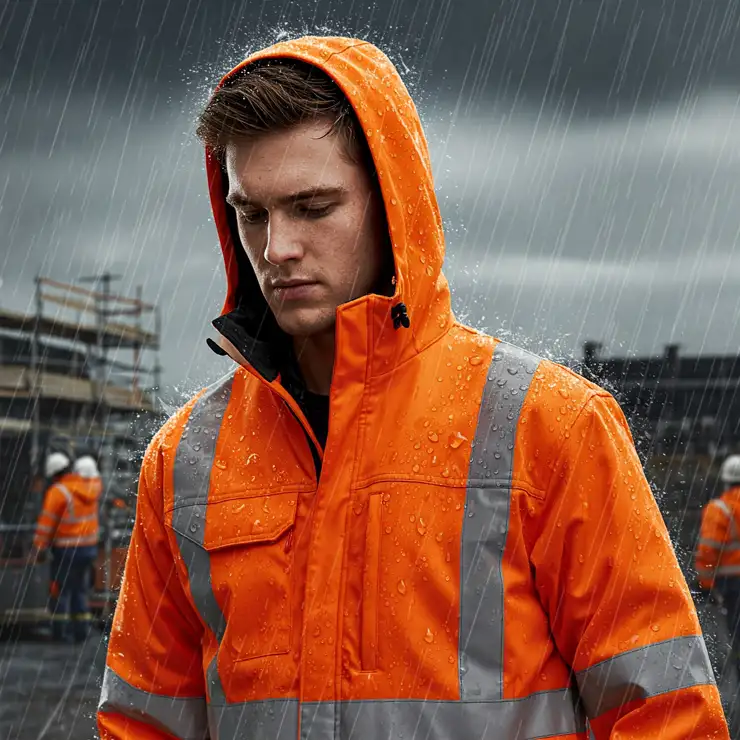
A hi vis heated jacket is a high-visibility work coat with built-in electric heating panels, usually carbon fiber, run by a rechargeable battery. It combines fluorescent fabric and reflective striping, often rated ANSI/ISEA 107 Class 3, with adjustable warmth, so you stay visible to traffic and warm enough to keep your hands working.
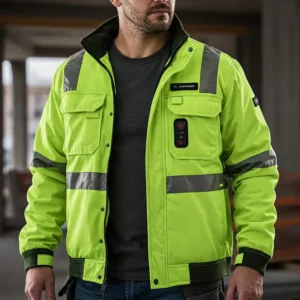
Cold doesn’t announce itself at 5 a.m. on a highway shoulder. It seeps in through the wrists, the lower back, and the gap where a bulky parka fights a harness. By hour three your fingers are clumsy and your patience is gone. That isn’t just misery. OSHA’s cold stress guide lists wetness, dressing improperly and exhaustion among the risk factors, and all three tend to pile up on a long winter shift.
The classic fix is more insulation. The smarter fix is a hi vis heated jacket: let a battery make the warmth and let the fabric do the shouting. Heat and visibility in one garment means fewer layers, better range of motion, and one less thing to forget in the truck.
This guide covers seven real options, from tool-battery platforms to all-in-one kits with the battery in the box. Everything comes from spec sheets, independent bench testing and published review sentiment, not from hands-on ownership. Where verified review data runs thin, I say so instead of papering over it. Prices appear as ranges because they move constantly, so check current price before you buy. Along the way you’ll get a buying framework, safety context, and fixes for problems the listings never mention.
Quick Comparison: Hi Vis Heated Jacket Options at a Glance
| Product | Power Source | Hi-Vis Rating (as listed) | Best For | Price Range |
|---|---|---|---|---|
| Makita DCJ206ZL | 18V LXT tool battery (sold separately) | ANSI Class 3 | Crews already on 18V packs | Around $210–$240 (jacket only) |
| DEWALT DCHJ070 | 20V MAX battery (kit or bare) | ANSI Class 3, 3-in-1 with hood | 20V MAX tool owners | Line spans roughly $100–$240; check current price |
| INNOWARM Heated Hi-Vis Parka | Included 15,000mAh pack | ANSI/ISEA 107-2020 Class 3 | Night and roadside work | Check current price |
| Pioneer Heated Hi-Vis Nano Bomber | Included battery | ANSI/ISEA 107 Class 3, Type P and R | Compliance-driven crews | Check current price |
| Pyramex RJ31H | Battery per listing | Type R, Class 3 (107-2020) | Crews needing radio tabs and logo space | Around $200–$215 |
| DPSAFETY Heated Jacket | Included battery | Class 3 (as listed) | Budget everyday wear | Roughly $120–$150 |
| KEMIMOTO Hi-Vis Heated Jacket | Included 20,000mAh pack | ANSI Class 3 | Budget buyers wanting a big battery | Check current price |
Reading across the table, the Makita DCJ206ZL and DEWALT DCHJ070 make the most sense when you already own the matching batteries, because the jacket is the cheap part of that deal. If you want to buy once and be warm tonight, the INNOWARM Heated Hi-Vis Parka, DPSAFETY Heated Jacket and KEMIMOTO Hi-Vis Heated Jacket ship with power included. The Pioneer Heated Hi-Vis Nano Bomber and Pyramex RJ31H sit in the crew-and-compliance corner, where labels and logo space matter as much as heat.
💬 Just one click — help others make better buying decisions too!😊
Top 7 Hi Vis Heated Jackets: Expert Analysis
Each pick below gets honest analysis built on real specs and whatever review evidence could be verified. Ordering runs roughly from platform-based picks to bundled-battery budget picks.
1. Makita DCJ206ZL — best for 18V crews who want marathon runtime
The headline here is endurance. Pair this jacket with a 6.0Ah 18V pack and published listings quote roughly 35 hours or more on low. 🔋
You get five heat zones: both chest panels, the upper back and both front hand pockets. There are three settings and a control button on the left breast. It’s rated ANSI Class 3, the hood is removable and sized to fit over a hard hat, and a clear pocket holds site credentials. The pocket heaters matter more than they sound, because numb fingers are usually what slows a cold job first.
Here’s the catch. Pro Tool Reviews bench-tested the hi-vis version and found it slow off the line. It took about 75 seconds to reach 100°F and over three minutes to hit its top temperature, while nearly everything else in their roundup crossed 100°F in 20 seconds or less. Once warm, it held heat efficiently, at roughly 10 minutes per watt-hour. Based on that, this is a “switch it on while the truck warms up” jacket, not an instant-heat one. The testers also suggested clipping the battery to your belt instead of leaving it in the rear pocket.
On reviews, the evidence is expert bench testing (the outlet scored it 9.3), not crowd consensus. I couldn’t verify a large pool of buyer reviews for this exact hi-vis variant.
Pros:
- ✅ Five zones, including heated hand pockets
- ✅ Class 3 with a hood that fits over a hard hat
- ✅ Exceptional runtime on large 18V packs
Cons:
- ❌ Slow warm-up compared with rival jackets
- ❌ Battery and charger sold separately
The jacket alone runs around $210–$240 before you add a battery, so check current price. It’s a bargain if you already own 18V packs and a stretch if you don’t.
2. DEWALT DCHJ070 — best 3-in-1 flexibility for 20V MAX crews
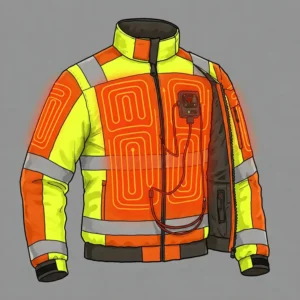
The standout is versatility: the listing describes a Class 3 hi-vis shell with a 3-in-1 design, so one garment can cover several weather windows. Confirm exactly which layers detach on the listing you’re buying. 🧥
It carries three core heat zones (left chest, right chest and mid-back), a built-in hood with drawstrings, a water- and wind-resistant shell and six pockets. Three zones with no heated pockets means the warmth is concentrated on your core. That’s fine if you wear gloves most of the day and less ideal if your hands are bare for detail work.
On paper, the appeal is standardization. One 20V MAX battery runs your drill, your saw and your jacket, and kits include a battery and charger while bare versions come with a USB power source. A word of caution from the same Pro Tool Reviews roundup: a DEWALT heated jacket posted the lowest efficiency in their comparison, about 4.5 minutes per watt-hour against roughly 10 for the Makita hi-vis. That was a different DEWALT model, but it suggests carrying a spare pack for long shifts.
On reviews, I couldn’t verify rating data for this specific model number, and DEWALT’s heated lineup has been renumbered over the years. Match the model number before trusting any star rating you see.
Pros:
- ✅ Class 3 rating with a built-in hood
- ✅ Shares batteries with 20V MAX tools
- ✅ Kits include battery and charger
Cons:
- ❌ Only three zones, no pocket heating
- ❌ Listing details vary by retailer
The line launched at roughly $100–$240 depending on style, so check current price for this model. Value is strong for existing platform owners.
3. INNOWARM Heated Hi-Vis Parka — best bundled kit for night and roadside work
The standout is the all-in-one package: a 15,000mAh battery in the box, 3M reflective tape and an ANSI/ISEA 107-2020 Class 3 rating. 🚧
A waterproof, windproof Oxford shell wraps the heating panels, and advertised runtime sits around 8–8.5 hours. Zone counts differ by source. The brand’s site says five, while one Amazon listing says seven, so read the exact listing you’re buying. Zone count matters less than total battery energy, and here’s what the spec sheet won’t tell you: “mAh” figures on bundled packs are often quoted at cell voltage. Ask for watt-hours before comparing runtimes.
The parka-length cut suits people who stand still, such as flaggers, spotters and tow operators, because lower backs and thighs bleed heat when you’re not moving. That makes it a sensible choice for night work in wind.
Review sentiment comes from the brand’s own site, where it averages 4.81 across 27 reviews, so treat that as directional. Reviewers praise the warmth but describe a trade-off. One reported roughly 3.5 hours on high for a 10-hour shift, while low got through a full day. Another noted a full recharge takes over four hours.
Pros:
- ✅ Class 3 tape and a waterproof shell
- ✅ Battery included, ready out of the box
- ✅ Low setting reportedly lasts a full shift
Cons:
- ❌ High setting drains in about 3.5 hours per one reviewer
- ❌ Recharging takes more than four hours
Pricing varies by version, so check current price. It sits in the budget-to-mid tier of a category that broadly spans roughly $90–$250, and it’s good value if you live on low-to-medium heat.
4. Pioneer Heated Hi-Vis Nano Bomber — most compliance paperwork in the group
The standout is the label: ANSI/ISEA 107 Class 3 Type P and R, plus a CSA Z96 Class 2 Level 2 listing on some versions. 📋
The shell is 300D Oxford polyester with a polyurethane coating, and it’s waterproof and windproof. It has a removable hood with a concealment pouch and carbon-nanotube heating in three panels. Where it differs is control. Four heat settings run from about 100°F to 127°F, which gives finer steps than the usual high-medium-low. Seams are heat-sealed, which matters more in sleet than any zone count.
Type R covers roadway work and Type P covers public-safety work, so one jacket can serve crews that move between traffic control and emergency response. Listings cite both the 2015 and 2020 editions of the standard, so confirm the edition on the sewn-in label before ordering for a whole crew. One caveat: the insulation is a light 120GSM fill, so if the battery dies you’re underdressed.
I couldn’t verify independent review sentiment for this jacket. One roundup lists an 18-hour battery figure, but that’s a vendor claim, not a test result.
Pros:
- ✅ Class 3 with both Type R and Type P labels
- ✅ Four heat settings from 100°F to 127°F
- ✅ Waterproof shell with sealed seams
Cons:
- ❌ Often sold through industrial suppliers, so check Amazon availability
- ❌ Runtime claims lack independent testing
Price wasn’t verifiable during research, so check current price. It’s worth it when your employer demands the paperwork.
5. Pyramex RJ31H — best for crews needing radio tabs and logo space
The standout is the workwear detailing: two mic tabs, a clear-panel radio and phone pocket, and an interior access zipper meant for print customization. 📻
It’s rated Type R Class 3 under ANSI/ISEA 107-2020, with a waterproof test cited on the listing. Three warming zones (two front, one back) run on three temperature settings. A zip-out polar fleece liner and eight pockets round out the build. The detachable liner turns it into a true three-season jacket, since you can run the shell alone in shoulder weather and add warmth only when needed. The listing doesn’t spell out battery capacity, so confirm what’s in the box.
The crew features suggest this is aimed at fleet buyers, since a print shop can reach the logo area from inside the jacket. A solo buyer will mostly care about the liner and the radio tabs. If you don’t use a radio, that part of the price tag buys you little.
I found no deep pool of independent reviews, so this entry rests on specs alone.
Pros:
- ✅ Zip-out fleece liner extends the season
- ✅ Radio tabs and clear chest pocket
- ✅ Type R Class 3 per the 2020 standard
Cons:
- ❌ Thin battery details on the listing
- ❌ Only three heat zones
Expect around $200–$215 based on one retailer during research, so check current price. Value is fair, but you’re paying for crew features you may not need.
6. DPSAFETY Heated Jacket — budget Class 3 parka that goes in the wash
The standout is accessibility: a Class 3 hi-vis heated parka at a price that undercuts the tool brands. 💸
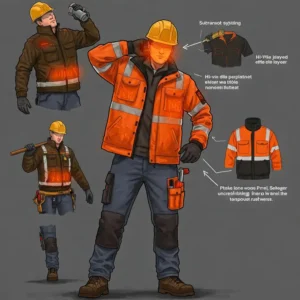
The Amazon listing advertises 3M reflective striping, a waterproof outer and a Class 3 rating. A third-party buying guide describes an included battery, three heat modes and machine-washable construction. Washability matters more than it sounds. Grime dulls fluorescent fabric, and a dull jacket is a less visible jacket. Weigh that against the thin detail on zone count and battery capacity.
With no tool-platform ecosystem behind it, your safety net is the seller’s return window and warranty terms. Read them before you buy, and read the most recent critical reviews for battery longevity and zipper durability, since those are the typical failure points on budget heated gear.
I couldn’t verify a consolidated rating for this listing, so I’m leaving a number out rather than guessing.
Pros:
- ✅ Class 3 listing at an entry-level price
- ✅ Battery included in the package
- ✅ Described as machine washable
Cons:
- ❌ Limited independent testing data
- ❌ Less established brand support than tool makers
Roughly $120–$150 at the time of research, with coupons changing it, so check current price. It’s the best entry ticket here.
7. KEMIMOTO Hi-Vis Heated Jacket — biggest included battery on a budget
The standout is raw capacity: a 20,000mAh pack in the box. 🔌
Listings point to ANSI Class 3 and three heat settings. Variants exist, including a 3-in-1 detachable build with seven heating elements across four zones and app control, plus an extended-length version with heated cuffs. Check which variant you’re ordering. If that 20,000mAh figure is quoted at a typical 3.7V cell rating, it works out to roughly 74Wh. That’s in the neighborhood of a 4.0Ah 18V tool pack, which is genuinely respectable for a bundled battery.
Who is it for? Someone who wants long runtime without buying into a tool platform. The app control is more convenience than necessity, though it can save you from unzipping layers just to change a setting.
A UK buying guide flags it as battery-included and ANSI-rated, but I couldn’t verify deep US review sentiment, so evidence here is limited to listings.
Pros:
- ✅ Large included battery
- ✅ Class 3 listing at a budget tier
- ✅ Variants with app control or heated cuffs
Cons:
- ❌ Multiple versions create listing confusion
- ❌ A big pack adds weight in the pocket
It’s a budget-tier pick, so check current price. Value is good if you verify the exact version.
Side-by-Side: Zones, Runtime Claims and Evidence
| Product | Heat Zones | Runtime Claim | Evidence Behind It | Best For |
|---|---|---|---|---|
| Makita DCJ206ZL | 5 | Roughly 35+ hrs on low (6.0Ah) | Independent bench test | Tool-platform pros |
| DEWALT DCHJ070 | 3 | Depends on battery | Manufacturer launch specs | 20V MAX crews |
| INNOWARM Heated Hi-Vis Parka | 5–7 (varies) | About 8–8.5 hrs | Brand-site reviews | Night and roadside work |
| Pioneer Heated Hi-Vis Nano Bomber | 3 | Up to 18 hrs (vendor claim) | Spec sheet only | Compliance-driven crews |
| Pyramex RJ31H | 3 | Not stated | Spec sheet only | Radio-using crews |
| DPSAFETY Heated Jacket | Not stated | Not stated | Listing only | Budget everyday wear |
| KEMIMOTO Hi-Vis Heated Jacket | 4 (on 3-in-1) | “Several hours” | Third-party guide | Budget plus big battery |
The evidence column tells the honest story: only the Makita DCJ206ZL has independent bench data behind it, so the rest lean on manufacturer claims. That doesn’t make them bad. It means you should favor sellers with clear return policies and treat every runtime number as a best case. If battery life is your top concern, platform jackets win, because you can buy bigger or spare packs, while bundled-battery jackets cap you at whatever’s in the box.
✨ Ready to Stay Warm and Visible?
🔍 Take your winter shifts to the next level with these carefully selected picks. Click on any highlighted product name to check current pricing and availability. The right hi vis heated jacket turns brutal mornings into manageable ones!
How to Set Up and Run Your Hi Vis Heated Jacket: The First 30 Days
Getting the most from a hi vis heated jacket has less to do with the jacket than with how you run it.
Day one. Charge the battery fully before your first shift. Then test all three settings indoors so you know where the controller sits with gloves on, and learn the battery pocket before you’re standing on a cold road.
Week one. Fit is everything. Heating elements work best close to a base layer, but NIOSH’s cold stress guidance advises layers of loose clothing because tight clothing restricts circulation. The compromise is a close-fitting thermal base, a loose mid-layer, and the heated jacket on top. Start the jacket five minutes before you leave the truck, since some models take over three minutes to reach full temperature. Run high only to take the edge off, then drop to low.
Common first-month mistakes:
- Running high all shift and killing the battery by lunch
- Never testing the jacket in rain before you depend on it
- Forgetting a spare battery on a long job
- Washing the jacket with the battery or controller still attached
Monthly check. Inspect the wiring and connectors, look for cracked or faded reflective tape, and store the battery somewhere cool and dry between seasons. Most battery makers recommend partial charge for storage, so check yours. A jacket with fading tape is no longer doing its main job, regardless of how warm it is.
Which Hi Vis Heated Jacket Fits Which Job? Three Real-World Scenarios
These hypothetical profiles show how the reasoning plays out. Match your own budget, environment and frequency of use.
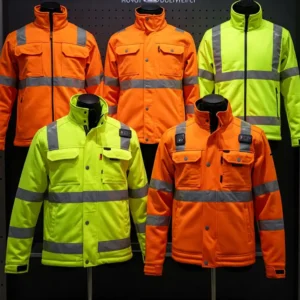
Profile 1: The night-shift flagger. Ten-hour shifts, five nights a week, mostly standing still in sub-freezing wind. You need Class 3 and sustained warmth without constant movement to generate body heat. The INNOWARM Heated Hi-Vis Parka fits, with its parka length, bundled battery and low setting that lasts a full shift. If your employer wants Type P and R paperwork too, look at the Pioneer Heated Hi-Vis Nano Bomber. Buy a spare pack either way.
Profile 2: The tool-platform tradesperson. Eight-hour shifts, constant movement, a truck full of 18V or 20V batteries already charging. Movement generates heat, so you’ll live on low, which makes the Makita DCJ206ZL a natural fit for 18V owners. The DEWALT DCHJ070 fits 20V MAX owners. You’re buying the jacket for far less than a bundled kit, since the batteries are already paid for.
Profile 3: The budget-conscious seasonal worker. Snow removal and parking-lot shifts, three days a week, a firm spending ceiling. Washability and a battery in the box matter more than brand cachet. The DPSAFETY Heated Jacket and KEMIMOTO Hi-Vis Heated Jacket both fit this slot, with the KEMIMOTO offering the bigger pack. Read return policies carefully.
A fourth option: if you’re outfitting a whole crew, the Pyramex RJ31H gives you radio tabs and logo space in one garment.
Hi Vis Heated Jacket Problems and Fixes
Problem: the battery dies mid-shift. Drop a heat setting, pre-warm in the truck, and carry a spare. Compare watt-hours rather than mAh before you buy, since mAh claims can mislead.
Problem: cold hands despite a warm core. Jackets with core-only zones leave hands exposed. The Makita DCJ206ZL heats its front pockets, which helps between tasks. Otherwise, add liner gloves and tuck hands away when you can.
Problem: the hood won’t fit over a hard hat. Check hood specs before you buy. The Makita DCJ206ZL has a removable hood designed to fit over a hard hat, and the Pioneer Heated Hi-Vis Nano Bomber has a removable hood with a concealment pouch.
Problem: reflective tape fades or cracks. Visibility is the point of a hi vis heated jacket, so inspect tape regularly. One tool-brand hi-vis heated garment was reportedly backed for only around 25 washes before visibility could drift out of spec, so ask about wash limits for yours.
Problem: you overheat while active. Heated gear rewards restraint. Run low, wear a thinner base layer, and switch heat off during heavy exertion.
How to Choose a Hi Vis Heated Jacket
- Confirm the rating your job demands. Type R Class 3 covers high-speed roads and night work, while Class 2 may suffice at lower speeds. Ask your employer or site rules first.
- Pick your power model. Tool-platform jackets save money if you own the batteries and give you spare packs. Bundled kits are easier but cap your runtime.
- Compare watt-hours, not hype. A listing without Wh is a yellow flag, and mAh figures can be quoted at cell voltage.
- Count zones, then check where they are. Chest and back heat is the baseline. Pocket heat is a bonus that protects your hands.
- Check the shell and seams. Waterproof construction with sealed seams beats “water-resistant” in sleet.
- Test fit over your real layers and hard hat. Size up if you’re unsure, since heating panels need to sit close to a base layer.
- Read warranty and return terms. Coverage ranges from a few years on heating electronics for the Makita DCJ206ZL to one year on the DEWALT DCHJ070 line.
Hi Vis Heated Jacket Ratings Explained: ANSI/ISEA 107, Class 3 and OSHA
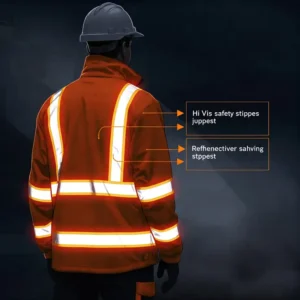
ANSI/ISEA 107-2020 is the current American standard for high-visibility apparel, and the International Safety Equipment Association publishes it. It replaced the 2015 edition. It sorts garments by Type (O for off-road, R for roadway, P for public safety) and by Class (1, 2 or 3). Class 3 carries the most fluorescent background and reflective material, roughly 1,240 square inches of background fabric in most sizes, which is why it’s the default for high-speed roads and night shifts.
A compliant garment should carry a label stating the standard, the class and the type. Treat a listing that only says “reflective” with suspicion. Also note that older listings sometimes cite older editions, so check the label on the garment, not just the product page.
One more distinction: the standard covers visibility materials, not the battery or heating system. Look separately for battery safety certification on the pack itself.
As for OSHA, it has no dedicated cold-weather standard, but employers must provide a workplace free from recognized hazards, including cold stress. ANSI/ISEA 107 is a voluntary consensus standard, and enforcement runs through OSHA, state transportation agencies and site rules. In practice that means your employer decides which class you need, and a hi vis heated jacket should meet that requirement first and keep you warm second.
Hi Vis Heated Jacket vs Traditional Winter Hi-Vis Gear
| Option | Warmth Control | Visibility | Bulk | Best For |
|---|---|---|---|---|
| Hi vis heated jacket | Adjustable, battery-powered | Class 3 available | Lower | Mixed temps and long shifts |
| Insulated hi-vis parka, such as the Ergodyne GloWear 8390 | Fixed insulation (rated to about -55°F) | Class 3 | Higher | Extreme cold, no batteries |
| Heated vest plus hi-vis vest | Adjustable core heat | Depends on the vest | Moderate | Mild cold, flexible layering |
| Layered fleece plus hi-vis rain shell | Manual layering | Class 2–3 shells | Moderate | Wet, variable weather |
The tradeoff is clear: a heated jacket gives you adjustable warmth with less bulk, while an insulated parka like the Ergodyne GloWear 8390 gives you reliable warmth with no battery to fail. In spec terms, the Ergodyne GloWear 8390 carries 180g insulation on the body and 140g on the sleeves, while a heated jacket like the Pioneer Heated Hi-Vis Nano Bomber uses a lighter 120GSM fill. If the battery dies, the heated jacket leaves you underdressed.
A good rule: choose a hi vis heated jacket for variable weather, active work and long shifts where adjustability matters. Choose an insulated parka when you’ll be motionless in extreme cold and can’t risk a dead battery.
Features That Actually Matter in a Hi Vis Heated Jacket (And Those That Don’t)
What matters:
- Watt-hours. This is the honest measure of runtime.
- Where the heat sits. Chest, back and pockets beat sheer zone counts.
- Controller feel. You’ll be adjusting it with gloves on.
- Sealed seams and a waterproof shell. Wet is what turns cold into dangerous.
- Hood fit over a hard hat. A hood that doesn’t fit is a hood you’ll never use.
- Washability. Dirty tape is less visible tape.
What doesn’t matter as much:
- Zone counts. Seven zones versus five tells you little without knowing how much power each gets.
- Maximum temperature claims. What counts is how the jacket feels against a base layer, not a number on the box.
- App control. Convenient, but rarely decisive.
- Fancy heating-element labels. Carbon fiber and carbon nanotube both heat you up, so judge by tested results, not terminology.
Long-Term Cost and Maintenance of a Hi Vis Heated Jacket
Think in cost per shift. Say a $150 jacket serves 100 shifts a winter: that’s roughly $1.50 per shift. A $230 jacket on the same schedule costs about $2.30 per shift, but a better build may last more seasons and keep you warmer when it counts.
If you’re not already on a tool platform, add the cost of a battery and charger to a bare jacket, which can nearly double your outlay. Bundled-battery jackets hide that cost in the sticker price. Spare packs, whichever route you choose, are the real long-term expense, so factor one in.
Maintenance is mostly about washing and storage. Check the label, remove the battery before washing, and avoid heavy detergent that can dull reflective tape. Lithium-ion packs lose capacity gradually, so don’t be surprised by shorter runtimes after a few seasons. Warranty terms vary: the Makita DCJ206ZL carries a three-year warranty on heating elements and electronics, while the DEWALT DCHJ070 line comes with a one-year limited warranty. Budget brands often leave you to the seller’s return policy, which is another reason to read it before you commit.
Common Mistakes When Buying a Hi Vis Heated Jacket
Assuming “reflective” means ANSI-rated. Reflective strips alone don’t prove compliance. Look for the type, class and standard on the label.
Ignoring the standard’s edition. The Milwaukee M12 High Visibility Heated Jacket, for example, cites the older 2010 edition of ANSI/ISEA 107, and Milwaukee’s own product page lists it as no longer available. Check the label and current availability rather than trusting an old listing.
Buying on mAh alone. Without watt-hours, you’re comparing apples to oranges.
Sizing too small. Heating panels need to sit close to a base layer, but a jacket that restricts movement is a hazard. Size up if you’re between sizes.
Forgetting the dead-battery scenario. A lightly insulated shell leaves you exposed if the pack dies, so carry a spare or choose more insulation.
Skipping the return policy. For lesser-known brands especially, the seller’s policy is your protection when a listing overpromises.
Hi Vis Heated Jacket Price Range and Value Analysis
| Tier | Typical Range | What You Get | Best For |
|---|---|---|---|
| Budget | Roughly $90–$150 | Bundled battery, Class 3 claims, such as the DPSAFETY Heated Jacket and KEMIMOTO Hi-Vis Heated Jacket | Seasonal and occasional use |
| Mid-range | Roughly $150–$250 | Better build and brand support, such as the INNOWARM Heated Hi-Vis Parka and DEWALT DCHJ070 | Regular daily use |
| Premium and platform | Around $200–$240+ (jacket only for platform models) | Brand ecosystem and crew features, such as the Makita DCJ206ZL and Pyramex RJ31H | Professionals and crews |
These tiers come from category guidance published by one manufacturer’s buying guide plus listing positioning, not verified prices for each product, so check current price on every listing. Value doesn’t track price neatly here. A bare Makita DCJ206ZL is a strong buy for 18V owners and an expensive one for everyone else, while a budget bundle beats a platform jacket if you’d have to buy batteries from scratch. Spend more only when the extra buys something you’ll actually use, such as better warranty coverage, tested runtime or crew features.
FAQ
❓ Can you wear a hi vis heated jacket in the rain?
❓ How long does a hi vis heated jacket battery last on a 10-hour shift?
❓ Is a hi vis heated jacket OSHA approved?
❓ Can you wash a hi vis heated jacket?
❓ What size should I buy in a hi vis heated jacket?
Conclusion: Which Hi Vis Heated Jacket Should You Buy?
The right hi vis heated jacket is the one that matches your job, your batteries and your budget. If you already own 18V packs, the Makita DCJ206ZL offers the strongest evidence base, with independent testing, pocket heating and a hood that fits over a hard hat. If you run 20V MAX tools, the DEWALT DCHJ070 gives you a Class 3 jacket on a battery you already own.
If you want a complete kit, the INNOWARM Heated Hi-Vis Parka suits night and roadside work, and the KEMIMOTO Hi-Vis Heated Jacket gives you the biggest bundled pack at a budget tier. The DPSAFETY Heated Jacket is the easiest entry point, and the Pioneer Heated Hi-Vis Nano Bomber and Pyramex RJ31H suit crews that need labels, radio tabs and logo space.
Whatever you choose, verify the rating on the label, compare watt-hours, and carry a spare battery. Warmth you can adjust and visibility you can trust are worth more than another bulky layer.
Recommended for You
- 10 Best Heated Camo Jacket Innovations That Will Transform Your Outdoor Experience in 2025
- 7 Best Heated Work Jacket Options To Boost Productivity in Cold Environments
- 10 Best Women’s Heated Jackets For Ultimate Winter Comfort in 2025
Disclaimer: This article contains affiliate links. As an Amazon Associate, I earn from qualifying purchases. If you purchase products through these links, we may earn a small commission at no additional cost to you.
✨ Found this helpful? Share it with your friends! 💬🤗
