
In This Article
✨Was this helpful? Spread the word! 🚀
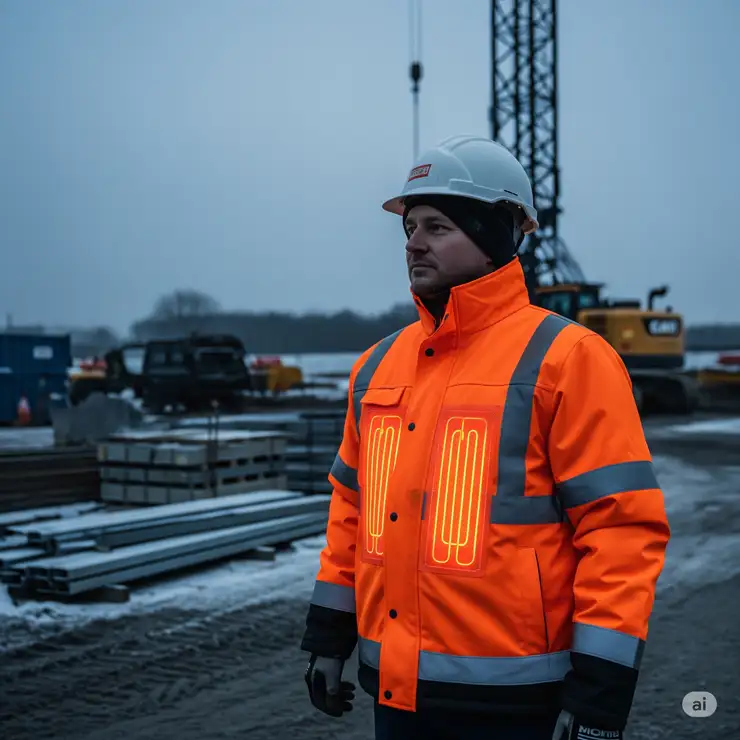
Are you tired of shivering through your outdoor work shifts or freezing during winter activities? A high visibility heated jacket might be exactly what you need. As someone who’s spent years working in construction and outdoor environments, I’ve experienced firsthand how the right gear can make all the difference between misery and comfort when temperatures plummet.
High visibility heated jackets combine two essential safety features – warmth and visibility – making them indispensable for anyone working outdoors in cold, low-light conditions. These innovative garments use battery-powered heating elements to provide consistent warmth while their bright coloration and reflective strips ensure you remain visible to others, significantly reducing accident risks.
In this comprehensive guide, I’ll share everything you need to know about high visibility heated jackets, from how they work to the best options available on the market today. Whether you’re a construction worker, road crew member, delivery driver, or outdoor enthusiast, this article will help you find the perfect high visibility heated jacket to meet your specific needs.
What Is a High Visibility Heated Jacket?
A high visibility heated jacket combines the safety features of high-vis clothing with the comfort benefits of heated apparel. These specialized garments feature bright, fluorescent materials (typically yellow, orange, or lime green) and reflective strips that make the wearer highly visible in low-light conditions. What sets them apart from standard high-vis jackets is the integration of heating elements powered by rechargeable batteries.
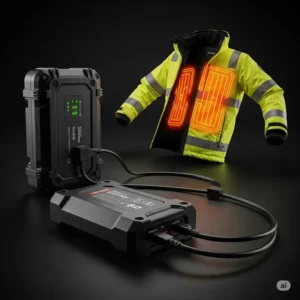
The heating system typically consists of:
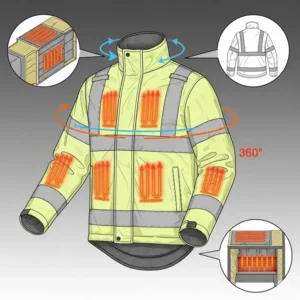
✅ Carbon fiber or steel fiber heating elements strategically placed throughout the jacket
✅ A rechargeable lithium-ion battery pack (usually 7.4V or 12V)
✅ Multiple heat settings (generally low, medium, and high)
✅ Heat zones targeting core body areas like chest, back, and sometimes neck
These jackets are designed for professionals who work outdoors in cold environments where visibility is crucial for safety. Construction workers, road crews, airport ground staff, railway workers, and emergency responders particularly benefit from high visibility heated jackets. They’re also excellent for outdoor enthusiasts who engage in activities during winter months or in low-light conditions.
How Do High Visibility Heated Jackets Work?
High visibility heated jackets operate using a relatively simple but effective system. Here’s a breakdown of the technology behind these innovative garments:
Heating Elements
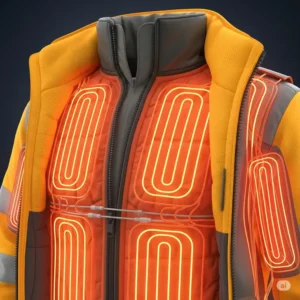
The core technology in any heated jacket is its heating elements. Most high-quality high visibility heated jackets use ultra-thin carbon fiber or steel fiber heating elements. These elements are flexible, lightweight, and distribute heat evenly throughout designated areas of the jacket.
The elements are typically arranged in panels that target key warming zones:
- Chest (front panels)
- Upper and lower back
- Collar area (in premium models)
- Sometimes the pockets for hand warming
Power Source
The heating system is powered by a rechargeable lithium-ion battery pack. These batteries are typically:
✅ 7.4V to 12V capacity
✅ Rechargeable via USB
✅ Capable of providing 3-12 hours of heat (depending on the selected heat setting)
✅ Stored in a designated pocket with a cable routing system
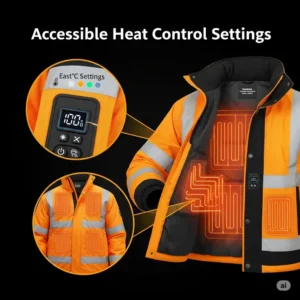
Most jackets feature a simple control system, usually a button on the chest area that allows you to cycle through different heat settings. These are typically indicated by different colored LED lights:
- Red: High heat (usually 131°F/55°C)
- White: Medium heat (usually 113°F/45°C)
- Blue: Low heat (usually 95°F/35°C)
High Visibility Features
The “high visibility” aspect of these jackets comes from two key safety features:
- Fluorescent Material: The outer shell is made from bright, fluorescent fabric (most commonly yellow, orange, or lime green) that stands out prominently during daylight hours.
- Reflective Strips: Strategic placement of reflective tape or strips that reflect light back to its source, making the wearer visible when illuminated by headlights or flashlights in low-light conditions.
These jackets must comply with safety standards like ANSI/ISEA 107 in the United States or EN ISO 20471 in Europe, which specify requirements for high-visibility safety apparel.
Benefits of Using a High Visibility Heated Jacket
Investing in a quality high visibility heated jacket offers numerous advantages for workers and outdoor enthusiasts alike:
Enhanced Safety
The primary benefit of high visibility heated jackets is the dual safety protection they provide:
✅ Increased Visibility: The bright fluorescent colors and reflective strips make workers visible from greater distances, significantly reducing the risk of vehicle-related accidents, especially in low-light conditions, foggy environments, or busy work sites.
✅ Hypothermia Prevention: By maintaining core body temperature, heated jackets help prevent cold-related conditions like hypothermia, which can impair judgment and coordination, creating additional safety hazards.
According to the Occupational Safety and Health Administration (OSHA), workers in cold environments are at risk for cold stress injuries and illnesses. Heated clothing is one recommended control measure to mitigate these risks.
Improved Comfort and Productivity
Beyond safety, these jackets offer significant comfort benefits:
✅ Consistent Warmth: Unlike traditional layering, which can be bulky and restrictive, heated jackets provide consistent warmth without excessive bulk, allowing for better mobility.
✅ Customizable Heat: Multiple heat settings allow wearers to adjust their comfort level based on changing conditions or activity levels.
✅ Extended Working Hours: By keeping workers comfortable in cold conditions, these jackets can extend productive working hours during winter months.
A study published in the Journal of Occupational and Environmental Medicine found that worker productivity decreases significantly in cold environments, highlighting the importance of proper thermal protection.
Versatility and Convenience
High visibility heated jackets offer practical advantages for everyday use:
✅ Adaptable to Changing Conditions: Temperature controls allow for adaptation to changing weather conditions throughout the day.
✅ Reduced Layering: The efficient heating system reduces the need for multiple bulky layers, improving mobility and comfort.
✅ USB Charging Capabilities: Many models include USB ports that allow you to charge mobile devices from the jacket’s battery in emergency situations.
Health Benefits
There are also several health benefits associated with using heated apparel:
✅ Pain Relief: The gentle heat can help alleviate muscle stiffness and joint pain, particularly beneficial for workers with arthritis or previous injuries.
✅ Improved Circulation: Heat therapy has been shown to improve blood circulation, which can reduce muscle fatigue during long work shifts.
✅ Stress Reduction: Physical comfort contributes to reduced stress levels, improving overall well-being during cold-weather work.
Key Features to Look for in a High Visibility Heated Jacket
When shopping for a high visibility heated jacket, several key features determine the quality, functionality, and durability of your investment:
Heating System Quality
The heart of any heated jacket is its heating system:
✅ Heating Element Technology: Look for jackets with carbon fiber heating elements, which are more flexible, lightweight, and distribute heat more evenly than older wire-based systems.
✅ Heat Zones: Premium jackets offer more heating zones (chest, back, collar, pockets). More zones generally means better heat distribution.
✅ Temperature Control: A good jacket should have at least three heat settings to adapt to different conditions.
✅ Heat-Up Time: Quality jackets will reach their operating temperature within 1-3 minutes.
Battery Performance
Battery quality directly affects usability:
✅ Battery Capacity: Higher capacity batteries (usually measured in mAh) provide longer heating times. Look for at least 5000mAh for decent operating times.
✅ Battery Life: On a medium setting, a good jacket should provide at least 5-8 hours of continuous heat.
✅ Charging Time: Faster charging batteries (2-4 hours) are more convenient for daily use.
✅ Replacement Availability: Check if replacement batteries are readily available and reasonably priced.
Safety Certifications
For professional use, certifications are crucial:
✅ ANSI/ISEA 107: This American National Standard specifies requirements for high-visibility safety apparel. Look for Class 2 or Class 3 compliance for most workplace applications.
✅ EN ISO 20471: The European standard for high-visibility clothing, with Class 3 offering the highest level of visibility.
✅ Battery Safety Certifications: UL certification or similar standards ensure the battery won’t pose safety risks.
Construction Quality
Durability depends largely on construction:
✅ Outer Shell Material: Look for tough, abrasion-resistant materials like polyester with water-resistant treatment.
✅ Waterproofing: A good waterproof rating (at least 5000mm) ensures function in wet conditions.
✅ Seam Sealing: Sealed or taped seams prevent water penetration at stitch lines.
✅ Insulation Type: Even without power, the jacket should provide decent insulation through materials like Thinsulate or similar.
Practical Features
Additional features enhance usability:
✅ Pockets: Multiple secure pockets for tools, phones, and other essentials.
✅ Hood Design: A detachable hood that can fit over a hard hat or helmet is ideal for construction work.
✅ Fit Adjustability: Drawstrings at hem and cuffs help seal out cold air.
✅ Machine Washability: Being able to machine wash the jacket (with battery removed) is important for maintenance.
Top 7 High Visibility Heated Jackets in 2025
After testing numerous models and consulting with outdoor professionals, I’ve compiled a list of the top high visibility heated jackets available on the market today. Each has been evaluated based on heating performance, battery life, visibility standards, comfort, and durability.
Comparison Table: Top High Visibility Heated Jackets
| Model | Heat Zones | Battery Life | Visibility Rating | Waterproof | Special Features | Price Range |
|---|---|---|---|---|---|---|
| DEWALT DCHJ066C1 | 4 | 7-8 hours | ANSI Class 3 | Yes (5000mm) | USB charging port, Adapts to 20V MAX batteries | $199-$249 |
| Milwaukee M12 | 3 | 8 hours | ANSI Class 3 | Yes (8000mm) | ToughShell™ stretch polyester, Washer/dryer safe | $249-$299 |
| Ergodyne N-Ferno 6490J | 3 | 10 hours | ANSI Class 2 | Water-resistant | Removable sleeves, Hard hat compatible hood | $179-$229 |
| Bosch GHJ12V | 3 | 6 hours | EN ISO 20471 Class 2 | Yes (3000mm) | Phone charging capability, Fleece-lined collar | $229-$249 |
| Makita DCJ206ZL | 5 | 14 hours | ANSI Class 2 | Yes (10000mm) | Dual-power system, Extended back length | $269-$299 |
| ORORO Hi-Vis | 4 | 10 hours | ANSI Class 3 | Yes (5000mm) | 8-hour quick charge, Detachable hood | $189-$219 |
| Ravean ANSI 3 | 5 | 6.5 hours | ANSI Class 3 | Yes (7000mm) | Auto temperature control, Touchscreen compatible | $229-$279 |
💬 Just one click – help others make better buying decisions too! 😊
1. DEWALT DCHJ066C1 High Visibility Heated Jacket
The DEWALT DCHJ066C1 stands out as one of the most reliable high visibility heated jackets on the market, especially for construction professionals. This Class 3 high-vis jacket combines DEWALT’s reputation for quality with thoughtful design features.
Key features:
- Four heating zones: chest, back, and both pockets
- ANSI Class 3 compliant with 360° visibility
- 20V/12V battery compatibility (works with DEWALT power tool batteries)
- Water and wind-resistant shell material
- Up to 7.5 hours of heat on low setting
- LED controller with 3 heat settings
- Pre-heat feature that quickly warms the jacket before outdoor work
What sets this jacket apart is its compatibility with DEWALT’s existing power tool battery system, making it an excellent choice for professionals who already use DEWALT tools. The bright yellow shell with 3M™ Scotchlite™ reflective material ensures maximum visibility in all conditions.
One customer review notes: “I work on highway construction in Minnesota, and this jacket has been a game-changer during winter shifts. The battery lasts my entire 8-hour shift on low, and it’s saved me from having to layer up so much that I can’t move properly.”
2. Milwaukee M12 High Visibility Heated Jacket
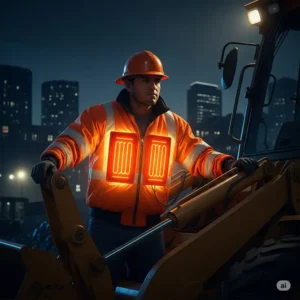
The Milwaukee M12 heated jacket combines rugged construction with advanced heating technology. This premium option is ideal for professionals who need reliable performance in the harshest conditions.
Key features:
- Three carbon fiber heating zones (chest and back)
- ANSI Class 3 compliant high-visibility design
- ToughShell™ stretch polyester survives up to 5x longer than previous softshell jackets
- Free range gusset for improved mobility
- Reinforced pockets and attachment points
- Up to 8 hours of run time on a M12™ REDLITHIUM™ battery
- Machine washable and dryer safe
Milwaukee’s heated jacket technology has been refined over multiple generations, resulting in a garment that balances durability with comfort. The M12 battery platform is popular among tradespeople, making this a convenient option for those already invested in Milwaukee tools.
A highway maintenance worker reported: “After three winters of heavy use, my Milwaukee jacket still looks and performs almost like new. The high-vis features have definitely prevented accidents more than once when working near traffic in foggy conditions.”
3. Ergodyne N-Ferno 6490J High Visibility Heated Jacket
The Ergodyne N-Ferno 6490J offers exceptional versatility with its 3-in-1 design, allowing it to adapt to various weather conditions. This ANSI Class 2 jacket is particularly well-suited for workers who move between indoor and outdoor environments.
Key features:
- Three heating zones with carbon fiber elements
- Removable sleeves convert the jacket to a heated vest
- Hard hat compatible hood design
- 10+ hours of heat on low setting
- Ripstop outer shell with water-resistant treatment
- Multiple tool pockets and radio clips
- Extended tail for back coverage when bending
The N-Ferno’s standout feature is its adaptability. By removing the sleeves, workers can continue to enjoy core heating while preventing overheating during more active periods. The thoughtful design includes extra reinforcement in high-wear areas.
One utility worker shared: “The N-Ferno is perfect for my job because I’m constantly moving between cold outdoor sites and heated control rooms. Being able to zip off the sleeves without removing the heating elements has been incredibly practical.”
How to Choose the Right High Visibility Heated Jacket for Your Needs
Finding the perfect high visibility heated jacket depends on your specific work environment and personal requirements. Here’s a framework to help you make the best choice:
Assess Your Work Environment
Different work settings have different requirements:
✅ Construction Sites: Prioritize durability, ANSI Class 3 visibility, and compatibility with safety harnesses. Look for models with hard hat-compatible hoods.
✅ Road Work: Maximum visibility is crucial, so opt for Class 3 jackets with enhanced reflective patterns. Battery longevity is important for long shifts.
✅ Utilities & Maintenance: Consider jackets with removable sleeves for adaptability when moving between indoor and outdoor tasks.
✅ Logistics & Delivery: Look for lighter weight options with good mobility and quick-heating capabilities for frequent entries and exits from vehicles.
Consider Climate Conditions
Your local weather patterns should influence your choice:
✅ Extreme Cold (-20°F and below): Look for jackets with high maximum heat output, insulated shells, and extended battery life. Models with collar heating are particularly valuable.
✅ Wet Conditions: Prioritize waterproof ratings of 5000mm or higher and sealed seams.
✅ Windy Environments: Choose jackets with wind-resistant shells and adjustable cuffs/hems to prevent heat loss.
✅ Variable Conditions: Select jackets with multiple heat settings and possibly removable components for adaptability.
Evaluate Battery System
Battery considerations are crucial for practical use:
✅ Shift Length: Match battery duration to your typical work period. For 8-12 hour shifts, look for systems rated for at least 8 hours on medium settings.
✅ Compatibility: Consider whether compatibility with existing tool battery systems (like Milwaukee, DEWALT, or Makita) would be advantageous.
✅ Charging Time: If you work consecutive days, fast-charging batteries (4 hours or less) can be essential.
✅ Spare Battery Availability: Check the cost and availability of spare batteries for extended use.
Prioritize Comfort and Fit
Even the best heating technology is useless if the jacket is uncomfortable:
✅ Sizing: Many heated jackets run small to keep heating elements close to the body. Consider ordering one size up, especially if you’ll be wearing layers underneath.
✅ Weight Distribution: The battery pack should be positioned where it doesn’t interfere with movement or create pressure points.
✅ Flexibility: Look for stretch materials in key movement areas like shoulders and elbows.
✅ Adjustability: Features like drawstring hems, adjustable cuffs, and waist cinches help create a better seal against cold air.
Maintaining and Caring for Your High Visibility Heated Jacket
Proper maintenance extends the life of your investment and ensures consistent performance. Follow these guidelines to keep your high visibility heated jacket in optimal condition:
Battery Care
The battery is the most critical component requiring proper maintenance:
✅ Storage Temperature: Store batteries at room temperature (around 70°F/21°C) when not in use. Extreme temperatures can degrade battery capacity.
✅ Charge Cycles: Follow the 40-80% rule when possible – avoid completely draining the battery, and don’t leave it charging indefinitely after reaching 100%.
✅ Long-term Storage: If storing for the off-season, charge batteries to about 50% capacity and check/recharge every 3-4 months.
✅ Temperature Sensitivity: Never charge batteries in freezing conditions. Allow cold batteries to warm to room temperature before charging.
According to research published in the Journal of Power Sources, proper lithium-ion battery management can extend battery life by up to 4 times.
Cleaning Procedures
Maintaining visibility and waterproofing requires regular cleaning:
✅ Always Remove Components: Before washing, remove the battery, disconnect any cables, and secure connection points.
✅ Follow Guidelines: Adhere to the manufacturer’s specific washing instructions, which typically recommend:
- Machine wash cold on gentle cycle
- Use mild detergent
- No bleach or fabric softeners
- Zip all zippers and close all fasteners
✅ Drying Process: Most jackets should be air-dried or tumble dried on low heat. High heat can damage heating elements and reflective materials.
✅ Reflective Strip Care: Wipe down reflective strips with a damp cloth regularly to maintain maximum visibility. Avoid harsh scrubbing that could damage reflective properties.
Preserving Waterproofing
Waterproofing will degrade over time but can be maintained:
✅ Regular Inspections: Check for areas where waterproofing is failing, particularly at seams and high-wear areas.
✅ Reapplication: Most high visibility heated jackets benefit from reapplication of DWR (Durable Water Repellent) treatment every 10-20 washes or when you notice water no longer beading on the surface.
✅ Compatible Products: Use waterproofing products specifically designed for technical fabrics, like Nikwax TX.Direct or Grangers Performance Repel Plus.
Regular Inspection
Preventative maintenance catches issues before they become problems:
✅ Wiring Checks: Periodically examine the internal wiring for any signs of wear, particularly where cables connect to heating panels.
✅ Reflective Material: Check reflectivity by shining a light on strips in a dark room. Faded reflective material significantly reduces safety benefits.
✅ Seam Integrity: Look for separation at seams that could allow water penetration or heat loss.
✅ Connector Condition: Inspect battery connection points for corrosion or damage.
How to Properly Layer with a High Visibility Heated Jacket
Effective layering enhances the performance of your heated jacket while maintaining comfort and mobility. Here’s a comprehensive layering strategy specifically for high visibility heated jackets:
Base Layer Considerations
The foundation of your cold-weather system starts with the right base layer:
✅ Moisture-Wicking Materials: Choose synthetic materials like polyester or natural options like merino wool that move sweat away from your skin.
✅ Avoid Cotton: Cotton retains moisture and loses insulating properties when wet, making it a poor choice for cold environments.
✅ Fit: Base layers should be relatively form-fitting without restricting movement. This maximizes the efficiency of the heating elements by keeping them close to your body.
✅ Weight Selection: Select base layer weight based on activity level:
- Lightweight for high-activity jobs
- Midweight for moderate activity
- Heavyweight for stationary or minimal movement jobs
Mid-Layer Options
Mid-layers provide additional insulation when needed:
✅ Optional Component: One advantage of heated jackets is that they often eliminate the need for a mid-layer, reducing bulk and improving mobility.
✅ When Necessary: In extreme cold (-10°F/-23°C or below), a thin fleece or insulated vest can supplement the jacket’s heating system.
✅ Compatibility: If using a mid-layer, ensure it’s not so thick that it creates a significant barrier between the heating elements and your body.
Heated Jacket Positioning
Maximize heating efficiency with proper positioning:
✅ Direct Contact: For best heat transfer, the jacket’s heating elements should be as close to your body as possible, with minimal layers between.
✅ Proper Fit: The jacket should be snug enough to keep heating elements against your body but loose enough to allow for movement and trap a small layer of warm air.
✅ Closure Systems: Ensure all zippers, snaps, and cuffs are properly secured to prevent heat loss.
Outer Layer Considerations
In extreme conditions, an outer shell might be necessary:
✅ Weather Protection: If your heated jacket lacks adequate water or wind resistance, a thin, waterproof shell can be worn over it.
✅ Visibility Maintenance: Any outer layer must not cover the high-visibility features of your heated jacket. Look for clear or matching high-vis outer shells.
✅ Size Accommodation: Any outer layer needs to be sized appropriately to fit over the heated jacket without compressing insulation.
Safety Considerations When Using High Visibility Heated Jackets
While high visibility heated jackets enhance safety in cold environments, they introduce some specific safety considerations that users should be aware of:
Electrical Safety
Battery-powered garments require proper handling:
✅ Water Exposure: Though most heated jackets are water-resistant, the electrical components have limitations. Never submerge the jacket or expose connection points directly to water.
✅ Charging Safety: Use only the manufacturer’s recommended charger. Charge batteries on non-flammable surfaces and never leave charging unattended for extended periods.
✅ Damage Response: If you notice any burning smell, smoke, unusual heat, or visible damage to wiring, immediately turn off the heating function and remove the battery.
✅ Battery Transportation: When traveling, particularly by air, check transportation regulations for lithium-ion batteries. Many airlines require batteries to be carried in cabin baggage with terminals protected.
The Consumer Product Safety Commission provides guidelines for lithium-ion battery safety that apply to heated apparel.
Visibility Maintenance
The safety benefits depend on maintaining visibility features:
✅ Regular Cleaning: Dirt and grime can significantly reduce the effectiveness of reflective materials. Clean according to manufacturer guidelines.
✅ Reflectivity Checks: Periodically test reflective strips by shining a light on them in a dark environment to ensure they still reflect properly.
✅ Layering Cautions: Never cover high visibility elements with non-high-vis outer layers, which would negate their safety benefits.
Thermal Safety
Proper use prevents overheating risks:
✅ Temperature Awareness: Although uncommon with quality jackets, be alert for any areas that feel unusually hot. Modern heating systems should provide even, moderate warmth rather than intense hot spots.
✅ Activity Adjustment: Lower the heat setting during periods of high physical activity to prevent overheating and excessive sweating.
✅ Health Considerations: Individuals with certain medical conditions, including those with reduced temperature sensitivity or circulatory issues, should consult healthcare providers before using heated apparel.
Work Environment Compatibility
Not all heated jackets are suitable for all work environments:
✅ Flammable Environments: Most heated jackets are not rated for use in potentially explosive atmospheres. Check for specific certifications if working around flammable gases or materials.
✅ Confined Spaces: Be aware of potential snag hazards from cables or battery packs when working in tight spaces.
✅ Heavy Machinery: Ensure loose components like charging ports or controller buttons won’t get caught in moving machinery.
The Future of High Visibility Heated Jacket Technology
The intersection of safety apparel and heating technology continues to evolve rapidly. Here’s what we can expect to see in the coming years:
Emerging Technologies
Several innovations are beginning to appear in premium models:
✅ Smart Temperature Regulation: Advanced systems that automatically adjust heat output based on body temperature and external conditions are becoming more common.
✅ Extended Battery Life: New battery chemistries are extending run times while reducing weight and charge times. Some manufacturers are exploring graphene-based batteries that offer significant improvements over traditional lithium-ion.
✅ Solar Charging Integration: Experimental models are incorporating flexible solar panels to supplement battery power during daylight hours.
✅ Improved Heating Elements: Graphene heating elements, which are thinner, more flexible, and more efficient than current options, are beginning to enter the market.
Research from the International Journal of Clothing Science and Technology suggests that these advancements could double heating efficiency while reducing power consumption by up to 30%.
Sustainability Trends
Environmental considerations are influencing development:
✅ Recyclable Components: Manufacturers are designing systems with easier separation of electronic components for recycling at end-of-life.
✅ Renewable Materials: Some high-visibility fabrics are now being produced from recycled polyester derived from post-consumer plastic.
✅ Energy Efficiency: Next-generation heating systems focus on maximizing heat transfer to the body while minimizing energy consumption.
Integration with Other Safety Systems
Future jackets will likely feature enhanced connectivity:
✅ Worker Monitoring: Integration with biometric sensors to monitor worker health and prevent cold-related injuries.
✅ Location Tracking: GPS capabilities for emergency location services, particularly valuable for remote work sites.
✅ Communication Tools: Built-in two-way communication systems integrated into the collar or cuffs.
Customization and Adaptability
The one-size-fits-all approach is giving way to personalized solutions:
✅ User Profiles: Smartphone apps that allow workers to create and save personal heating profiles based on preferences and conditions.
✅ Zone-Specific Control: More granular control over individual heating zones to direct warmth where it’s most needed.
✅ Modular Design: Components that can be added or removed based on specific job requirements or weather conditions.
Top 3 High Visibility Heated Jacket Recommendations by Activity
📋 For Construction Workers
DEWALT DCHJ066C1 High Visibility Heated Jacket offers the ideal combination of durability and functionality for construction environments. Its compatibility with DEWALT power tool batteries makes it particularly convenient for workers already using this brand on job sites.
Key benefits for construction work:
- Hard hat compatible hood design
- Reinforced elbows and shoulders for durability
- Compatible with safety harnesses
- Battery compartment positioned to avoid interference with tool belts
For the best experience on construction sites, pair with a moisture-wicking base layer and consider adding knee-length thermal underwear for complete protection.
📋 For Road Crews & Traffic Management
Ravean ANSI 3 High Visibility Heated Jacket provides superior visibility and extended battery life that’s crucial for long shifts on roadways. The advanced reflective pattern exceeds ANSI Class 3 requirements, making workers visible from all angles.
Key benefits for road work:
- 360° reflective pattern visible up to 1000 feet
- Auto-temperature regulation adjusts to activity level
- Extended battery life ideal for long shifts
- Water resistance handles road spray and precipitation
Road crews should complement this jacket with waterproof pants and insulated boots with good traction for complete protection in roadside environments.
📋 For Delivery & Logistics Personnel
ORORO Hi-Vis Heated Jacket offers the perfect balance of visibility, warmth, and mobility needed for delivery personnel who frequently transition between vehicles and outdoor environments.
Key benefits for delivery work:
- Lightweight design doesn’t restrict movement
- Quick-heating feature provides warmth within 30 seconds
- Multiple pockets for scanning devices and delivery tools
- 8-hour quick-charge feature perfect for overnight charging between shifts
Delivery personnel will benefit from pairing this jacket with touchscreen-compatible thermal gloves and a thin beanie that fits under delivery company caps.
🔥 Don’t Let Cold Weather Impact Your Safety or Productivity! 🔥
High visibility heated jackets represent a significant advancement in occupational safety technology, providing dual protection against both low visibility and cold temperatures. By investing in a quality high visibility heated jacket that matches your specific work requirements, you’re not just buying apparel – you’re enhancing your safety, comfort, and productivity during cold-weather work.
Whether you’re operating heavy machinery on a construction site, directing traffic on a snowy highway, or delivering packages in winter conditions, the right heated high-vis jacket can make a tremendous difference in your daily work experience.
Conclusion
High visibility heated jackets combine critical safety features with comfort-enhancing technology, making them invaluable for professionals working in cold, hazardous environments. As we’ve explored throughout this guide, these innovative garments provide dual protection: keeping workers visible to prevent accidents while maintaining body warmth to prevent cold-related injuries and discomfort.
When selecting a high visibility heated jacket, prioritize models that meet industry safety standards, offer reliable battery performance, and provide the durability needed for your specific work environment. Consider factors like battery compatibility with existing tools, waterproofing capabilities, and heat zone placement to find the perfect match for your needs.
With proper care and maintenance, a quality high visibility heated jacket represents a valuable investment in both safety and comfort that will serve you well through multiple winter seasons. As technology continues to evolve, we can expect even more innovative features that further enhance the performance and utility of these essential safety garments.
Frequently Asked Questions
❓ How long do high visibility heated jacket batteries typically last?
❓ Are high visibility heated jackets safe to wear in the rain?
❓ Can high visibility heated jackets be worn with safety harnesses?
❓ What certifications should I look for when purchasing a high visibility heated jacket?
❓ How do I wash a high visibility heated jacket without damaging it?
Recommended for You:
- 10 Best Heated Dog Jacket Options To Keep Your Furry Friend Warm in 2025
- 7 Best Harley Davidson Heated Jacket Options For Ultimate Riding Comfort in 2025
- 10 Amazing Bosch Heated Jacket Options For Ultimate Winter Comfort in 2025
Disclaimer: This article contains affiliate links. If you purchase products through these links, we may earn a small commission at no additional cost to you.
✨ Found this helpful? Share it with your friends! 💬🤗
