
In This Article
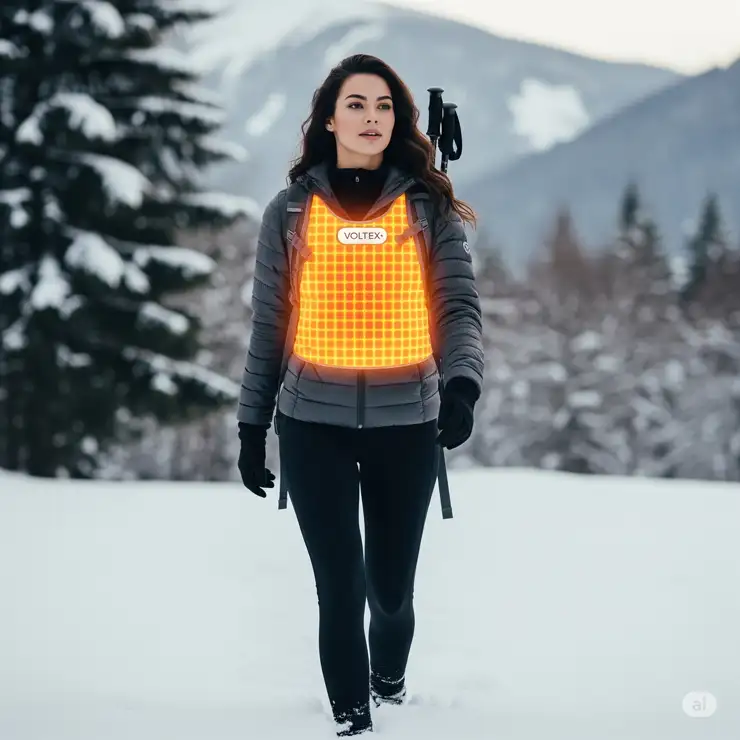
Winter has a way of finding the gap between your jacket and your patience. One minute you’re fine. The next, you’re standing at a bus stop doing the shiver-shuffle, wondering why you ever left the couch. That’s the moment a battery-powered vest starts to look like genius, and it’s exactly why so many people are typing “voltex heating vest” into a search bar this month.

Here’s the thing, though. The voltex heating vest is a strange creature. Search for it and you’ll find a swarm of near-identical sites, breathless “NASA-inspired” claims, and glowing “best of” pages. Then you’ll find a pile of unhappy buyer reports. That contrast is the whole story of this article.
I’m not going to pretend I strapped one on and braved a blizzard. I haven’t, and nobody should write that without doing it. What I can do is lay out the claims, check them against basic physics, read what buyers are reporting, and compare the vest with models that have independent testing behind them. If you want the background on how this tech works, Wikipedia’s overview of heated clothing is a solid primer: tiny wires sewn into fabric, powered by a low-voltage battery.
By the end, you’ll know whether the voltex heating vest deserves a spot in your cart, which six alternatives are safer bets, and how to use any heated vest without frying your battery or your budget. Let’s get into it.
Quick Comparison Table: Voltex Heating Vest vs. Six Tested Alternatives
Before the deep dive, here’s the cheat sheet. Runtimes are on the highest setting as reported by the manufacturer or by independent testing, and they vary with temperature, setting, and battery age.
| Vest | Heat Zones | Reported Runtime (High) | Price Range | Best For |
|---|---|---|---|---|
| Voltex Heated Vest | 8 claimed (varies by seller site) | Claims conflict: roughly 3 to 8 hours | Under $100 | Shoppers who read fine print carefully |
| Gobi Dune Heated Vest | Chest, back | Up to about 5 hours | High-$100s | Long, simple, hot sessions |
| Venture Heated Puffer Vest with HeatSync | Chest, back, collar | About 3 hours | High-$100s | Bluetooth control and collar heat |
| iHood Heated Vest | Hood, back, front | About 4.5 hours | Under $100 | Cold ears and snowy days |
| Kemi Moto Thermal-Reflective Heated Vest | Collar, back, hand warmers | About 3.5 hours | Around $100 | Budget buyers |
| Venustas Upgraded Quilted Vest | Back, lumbar, stomach | About 5.5 hours | High-$100s | Stationary winter activities |
| Muddy Nucleus Heated Vest | Collar, shoulders, back, stomach | About 4 hours | Mid-$100s | Base-layer warmth |
Look at the table with a skeptical eye. The Voltex Heated Vest is cheapest on paper, but it’s also the only row where the runtime claim and the zone count shift depending on which website you read. Every other vest has a consistent spec sheet and, in most cases, an independent tester’s measurements behind it. The Venture Heated Puffer Vest with HeatSync and Venustas Upgraded Quilted Vest cost more, but the numbers you’re paying for are verifiable. If budget is the constraint, the iHood Heated Vest and Kemi Moto Thermal-Reflective Heated Vest show you can spend near the Voltex price range and still get documented performance.
💬 Just one click — help others make better buying decisions too!😊
Top 7 Heated Vests: Expert Analysis
A note on method. Everything below comes from published specs, manufacturer claims (flagged as claims), and a field tester’s published measurements at Outdoor Life, whose guide was last updated in late 2024. I haven’t verified Amazon review counts for these models, so “reviewer sentiment” below reflects the testing and buyer reports I could actually find. Prices are ranges from the time of research and may vary.
1. Voltex Heated Vest — cheapest ticket in, loudest red flags
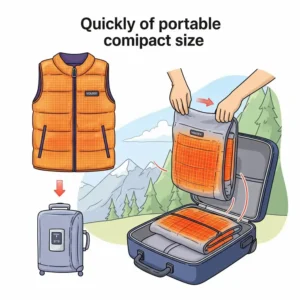
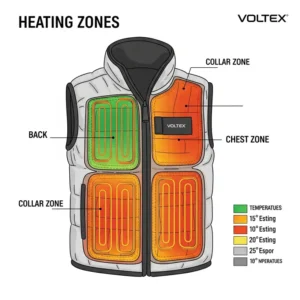
Marketing for the Voltex Heated Vest centers on carbon-fiber heating elements, a one-button control, and “up to 8 hours” of warmth. The zone count, though, depends on the site: some pages say eight pads, another says six, another says four areas. That isn’t a small discrepancy. Heating coverage is the single most important spec on a heated vest, and the seller can’t agree with itself on it.
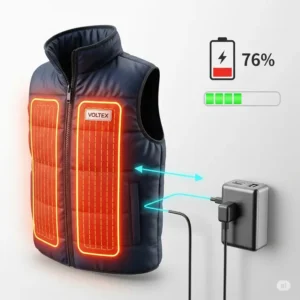
The runtime claim deserves a back-of-envelope check. One seller lists a 10,000mAh battery. At typical cell voltage, that’s roughly 37 watt-hours. Spread across eight hours, that’s under five watts on average, which is believable on low heat and optimistic on high. Another page admits the top setting lasts about three hours. Both can be true, but “8 hours” without naming the setting is a marketing sentence, not a spec.
Then there’s what buyers say. On Trustpilot, the getvoltex.com review page showed 237 reviews at the time of research, and the visible themes were troubling: vests heating for only a couple of hours, units cutting out, slow refunds, and a claim that the on-site testimonials looked manufactured. These are individual opinions, not verdicts, but the pattern matters.
My analysis: this vest suits nobody who needs reliability. If you buy it anyway, use a payment method with strong dispute protection.
Pros:
- ✅ Lightweight, USB-style power design
- ✅ Multiple heat zones advertised
- ✅ Low entry price range
Cons:
- ❌ Specs and runtime claims contradict each other
- ❌ Buyer reports cite short runtime and support trouble
Price range: under $100. Value verdict: the discount only counts if the vest works for a full season.
2. Gobi Dune Heated Vest — the hottest vest in the field test
In Outdoor Life’s testing, the Gobi Dune Heated Vest was the standout for raw heat. The tester’s probe thermometer read about 157°F on a panel, roughly 30°F above the next-warmest vest. Heat alone isn’t comfort, but for sitting in a duck blind or around a campfire, it’s the quality you want.
The spec sheet is simple: chest and back heating, three heat settings, machine-washable fabric, and five color options. What the spec sheet won’t tell you, but the tester’s results do, is that it fell short of its six-hour claim. It reached roughly five hours on high, yet it was still the last vest running in a head-to-head battery test. On a windy desert camping trip, it outlasted the others by hours.
Who is it for? Anyone who wants a no-fuss vest with serious heat and doesn’t care about apps. The missing collar panel is a real gap, because collar heat warms you fastest when you first step outside. Based on the published testing, this is the vest I’d steer a practical, set-it-and-forget-it buyer toward.
Pros:
- ✅ Hottest surface temperature in the field test
- ✅ Lasted longest in the battery comparison
- ✅ Machine washable with five colors
Cons:
- ❌ No collar heating panel
- ❌ No Bluetooth control
Price range: high-$100s. Value verdict: strong if raw heat matters more than features.
3. Venture Heated Puffer Vest with HeatSync — Bluetooth and collar heat
The Venture Heated Puffer Vest with HeatSync is the gadget lover’s pick. It heats the chest, back, and collar, and it pairs with a phone app that unlocks up to ten heat levels versus three on the chest button. That matters more than it sounds. When you’re overheated on a ski lift with three layers on, fishing for a hem button is miserable, while a thumb-swipe on your phone isn’t.
The tester measured about 128.7°F on a panel, and the vest met its stated runtime claims: around three hours on high, six on medium, and ten on low. Meeting claims is rarer than you’d think, so that deserves credit. Three hours on high isn’t marathon territory, though, so plan on the medium setting for a full day.
The collar panel is the quiet star. Neck warmth reaches your whole body faster than almost any other zone, which is why it showed up on several vests in the testing. I’d steer commuters, skiers, and anyone who runs hot-and-cold toward this model, as long as they’re comfortable with an app.
Pros:
- ✅ Bluetooth app with ten heat levels
- ✅ Collar heating for fast warm-up
- ✅ Machine washable
Cons:
- ❌ Only about three hours on high
- ❌ Higher price than basic button-only models
Price range: high-$100s. Value verdict: worth it if you value control and the collar panel.
4. iHood Heated Vest — the only one that warms your ears
The iHood Heated Vest has a trick the others skip: a retractable, heated hood with panels over the ears. It also lets you control each heat zone (hood, back, and front) with separate buttons, which is rare. If you only need back heat on a mild morning, you can shut off the rest and stretch your battery.
Tested runtimes were respectable: about 4.5 hours on high, 6 on medium, and 8.5 on low, with the tester saying it nearly lived up to the claims. The battery is listed at 14,400mAh, one of the larger capacities in this roundup. Panel temperature read about 127°F. The vest is also water resistant, which suits snowy walks.
The trade-off is bulk. It’s puffy, so layering it under a shell feels tight. Treat it as an outer layer and it shines. For anyone whose ears go numb first, or who spends time outside in falling snow, it’s a clever, budget-friendly choice.
Pros:
- ✅ Heated hood with ear panels
- ✅ Individual zone controls
- ✅ Longest battery in its price class
Cons:
- ❌ Bulky for layering
- ❌ No dedicated collar panel
Price range: under $100. Value verdict: excellent for the money, especially in snow.
5. Kemi Moto Thermal-Reflective Heated Vest — budget warmth with built-in hand warmers
Outdoor Life named the Kemi Moto Thermal-Reflective Heated Vest its budget pick, and the logic holds up. The lining reflects body heat back toward you, the collar and upper back heat quickly, and soft hand warmers are built into the pockets. You get heat in places most vests ignore.
Controls are another plus. You can toggle zones, heat modes, and the indicator light from the chest button, which also means you can stop the pocket warmers from toasting a snack. A heat-free chest pocket is a thoughtful touch.
The downsides are practical. The tester found the fit long and awkward, particularly in a small, which hurts layering, and the runtime on high is about 3.5 hours. There’s no Bluetooth. So who is it for? Dog walkers, commuters, and anyone who wants “toasty before I leash the dog” speed without a big spend. It’s not a hardcore outdoor tool, and that’s fine.
Pros:
- ✅ Built-in hand warmers in the pockets
- ✅ Collar and back heat warm up fast
- ✅ Zone, mode, and light control from one button
Cons:
- ❌ Long, awkward fit when layering
- ❌ Only about 3.5 hours on high
Price range: around $100. Value verdict: a smart budget pick if you accept the fit quirk.
6. Venustas Upgraded Quilted Vest — big battery for sitting still
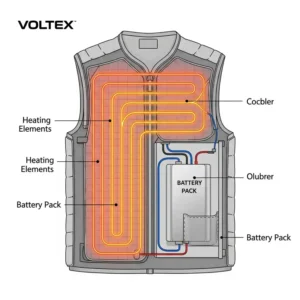
The Venustas Upgraded Quilted Vest is built for stationary winter life. Its heating zones cover the back, lumbar area, and stomach, and its quilted shell traps heat well. Testing showed over five hours on high, the second-longest runtime among the vests with strong results.
That endurance comes from a large battery, and the trade-off is weight. The tester called the pack heavy and bulky, impractical for backpacking or long hikes, but ideal for tailgates, bonfires, ice fishing, and tree stands. The control button sits on the chest, which makes it easy to adjust under bibs.
Venustas also publishes useful battery guidance, including its advice to choose power banks with recognized safety marks like UL, ETL, CE, or FCC. That kind of documentation is a trust signal. As a buyer, I’d weigh it positively. This vest is for people who sit, wait, and watch the thermometer drop.
Pros:
- ✅ Over five hours on high in testing
- ✅ Heats the lumbar area, good for back comfort
- ✅ Machine washable with a chest-mounted control
Cons:
- ❌ Large, heavy battery
- ❌ No Bluetooth control
Price range: high-$100s. Value verdict: worth it for long, stationary stretches outdoors.
7. Muddy Nucleus Heated Vest — a heated tank top in vest’s clothing
The Muddy Nucleus Heated Vest flips the usual design. It looks more like a heated tank top and is meant to be worn against your skin or over a base layer. The logic is smart: your other layers trap the heat instead of fighting it, so you don’t wait for warmth to push through insulation.
Four zones cover the collar, shoulders, back, and stomach. The tester noted the panels are large but don’t get too hot, and the material is comfortable. Battery life reached about four hours on high.
The catch is control. You can only adjust heat with a button, and it’s buried under your outer layers. If you overheat, you’ll be unzipping a jacket to turn it down. For cold sits and early mornings, though, it’s an elegant solution. Hunters and photographers who stay put should shortlist it.
Pros:
- ✅ Designed as a next-to-skin base layer
- ✅ Four large heating zones including shoulders
- ✅ Comfortable, thin material
Cons:
- ❌ Button-only control, hard to reach under layers
- ❌ About four hours on high
Price range: mid-$100s. Value verdict: a niche winner for layered, low-bulk warmth.
Setup and Care Guide: Your First 30 Days With a Heated Vest
Buying the vest is the easy part. Getting reliable heat for years takes a few habits, and none of them are in the marketing copy.
Week one: charge and calibrate. Fully charge the battery before first use, then run it on low indoors for an hour. You’re checking two things: that all zones warm evenly and that the button responds. If anything feels uneven or the battery gets uncomfortably hot, stop and contact the seller.
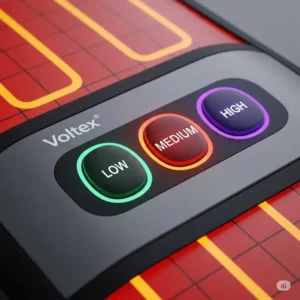
Learn your setting ladder. Most vests offer three levels. High is a sprint, not a marathon. Use it for the first ten minutes, then drop to medium. As the Outdoor Life tester noted, runtimes on high typically land around three hours, so plan accordingly.
Layer smartly. Wear a thin base layer under the vest and an insulating or windproof layer over it. Heat trapped between layers works harder than heat leaking into open air. Avoid wearing a heated vest under bibs or waders where you can’t reach the controls, because overheating leads to sweat, and sweat leads to chill.
Disconnect the battery after use. Some vests keep drawing a small trickle when plugged in, so unplug the cable at the end of the day. Store the battery at room temperature, not in a hot car or an unheated garage.
Wash correctly. Check the label. Many vests are machine washable with the battery removed, but some are hand-wash only. Never submerge the battery or connector.
Mistakes to avoid in the first month: leaving the battery charging overnight on a couch, using a random phone charger instead of the one specified, and relying on the vest as your only warmth in the backcountry. Treat it as a bonus layer, never a substitute.
Real-World Scenarios: Matching a Vest to Your Winter
Specs are abstract. Winter is specific. Here are three realistic profiles and what the published data suggests.
Scenario 1: The commuter. You walk 15 minutes to the train and stand on a windy platform. You want fast warm-up and easy adjustment. The Venture Heated Puffer Vest with HeatSync fits because of its collar panel and app control, so you can lower heat once you’re aboard. If the budget is tight, the Kemi Moto Thermal-Reflective Heated Vest gets hot quickly and includes hand warmers, though its long fit might bother you under a coat.
Scenario 2: The tree-stand hunter. You sit still for hours at dawn, so runtime and raw heat matter more than weight. The Gobi Dune Heated Vest or Venustas Upgraded Quilted Vest make sense. Both lasted over five hours on high in testing, and both are easy to run under a jacket. If you prefer a next-to-skin layer, the Muddy Nucleus Heated Vest works, provided you set the temperature before you climb up.
Scenario 3: The snow-day parent. You’re pushing a sled, shoveling the driveway, and wiping noses in falling snow. The iHood Heated Vest earns its place with a hood that warms the ears and water-resistant fabric. It’s bulky, but you’ll wear it over everything anyway.
Where does the voltex heating vest fit? Honestly, none of these profiles. A vest whose runtime claims fluctuate between sites can’t be trusted on a commute, on a stand, or in the snow. The scenarios that reward reliability punish guesswork.
💬 Just one click — help others make better buying decisions too!😊
Problem → Solution: Fixing the Most Common Heated Vest Headaches
Heated vests are simple machines, but they fail in predictable ways. Here’s how to diagnose and prevent each one.
Problem 1: The vest dies way sooner than the label promised. Cold weather shrinks battery capacity, and “up to X hours” usually describes the lowest setting. Solution: use medium after the first warm-up, keep the battery in an inside pocket where body heat helps it, and carry a spare if you’ll be out all day. Outdoor Life’s tester also found several vests didn’t hit their advertised runtimes, so budget conservatively.
Problem 2: One zone feels colder than the others. Heating panels sit in fixed spots, and gaps between your body and the fabric reduce contact. Solution: size down if you’re between sizes, close the zipper fully, and wear a thin base layer for better thermal contact. Pay attention to panel placement before buying. The tester specifically cautioned against ignoring where heating zones sit.
Problem 3: You overheat and start to sweat. Sweat is the real enemy of winter warmth. Solution: pick a vest you can control easily, whether through Bluetooth or a reachable chest button, and turn it down before you feel hot. Motion-sensing models can do this automatically.
Problem 4: The battery won’t charge or won’t power on. Check cable seating, try a different outlet, and make sure you’re using the cable that came with the battery. If you’re using a third-party power bank, confirm it matches the vest’s required output. Venustas notes that standard USB-C banks may not wake a vest as smoothly as a purpose-built battery.
Problem 5: The vest stopped heating after washing. Moisture in the connector is the usual culprit. Let everything dry completely before reconnecting power, and follow the wash instructions to the letter.
What Is a voltex heating vest?
A voltex heating vest is a battery-powered vest marketed under the Voltex name that uses carbon-fiber heating elements sewn into the fabric to warm the chest, back, and collar. Sellers advertise multiple heat zones, a single-button control, and up to eight hours of warmth, though specifications vary across sites.
That definition is the easy part. The hard part is that “Voltex” isn’t a household brand with a single, authoritative home page. Several websites present similar copy and similar claims, and some of that copy describes the product as inspired by NASA technology. I couldn’t verify a NASA connection, and the claim reads as marketing language rather than documented engineering. Carbon-fiber heating elements are common across the whole category, and they’re not unique to this vest.
Different seller pages mention different battery details, too. One lists a 10,000mAh battery and says a power bank isn’t included. Another describes a preheat phase of about five minutes with a color-coded button, and a different one claims the heating pads warm in three seconds. These descriptions can’t all be right at once.
Keep the useful takeaway in mind: a voltex heating vest is a perfectly ordinary type of product. Heated clothing has existed in some form for decades, and the technology is mature. What isn’t mature, in this case, is the transparency around the specific product you’d be buying.
Is the Voltex Heating Vest Legit? A Reality Check on the Reviews
Let’s be fair and careful here. “Scam” is a strong word and I’m not going to throw it around. What I can do is separate three kinds of evidence.
Seller claims. These are the sites that sell the vest. They’re enthusiastic, they overlap heavily, and they contradict each other on specs. Treat them as advertising.
Promotional “reviews.” Some pages rank the vest first on “best heated vest” lists with near-perfect scores and tester counts that sound impressive. These pages often use language copied from the seller, push readers toward the official store, and name no verifiable testing methodology. One Trustpilot reviewer wrote that they found the company through exactly this type of list. Don’t treat those rankings as independent.
Buyer reports. These are messy, but they’re the most honest signal. The Trustpilot page for getvoltex.com showed 237 reviews at the time of research, and the visible comments leaned toward complaints about short runtime, faulty units, and difficulty getting warranty help. Individual experiences can be outliers, but a cluster of the same complaints is a pattern.
What about the “85 percent satisfaction” figures that appear on some blog-style pages? I couldn’t trace them to a transparent dataset, so I’m setting them aside.
The practical conclusion: if you decide to buy any voltex heating vest, confirm the seller’s return policy in writing, pay by credit card, and test the battery immediately. If it fails the first-week check, return it. Otherwise, the alternatives above are much safer bets.
How to Choose a Heating Vest: 6 Steps That Actually Work
Whether you’re comparing a voltex heating vest or anything else, these six steps will save you money and frustration.
- Decide where you’ll wear it. Sitting in a blind, commuting, skiing, and shoveling all demand different trade-offs. Stationary use favors long runtime and heavy batteries. Active use favors light packs and easy controls.
- Check heat zone placement, not just count. Eight zones in the wrong places lose to four in the right ones. Collar heat warms you fastest, and lumbar heat soothes tired backs.
- Read runtime on high, not low. Manufacturers love quoting the lowest setting. Outdoor Life’s tester found that most vests last about three hours on their highest level.
- Match the control style to your layers. Buttons are reliable but hard to reach under bibs. Bluetooth is convenient but requires a charged phone. The Venture Heated Puffer Vest with HeatSync shows how a hybrid approach can work.
- Verify battery safety and charging. Look for recognized safety marks (UL, ETL, CE, FCC) on the battery and use only the specified charger.
- Test the return policy. Know the window, who pays for return shipping, and how warranty claims work before you pay.
A fast decision rule: if you want maximum heat with minimum fuss, choose the Gobi Dune Heated Vest. If you want control, choose Bluetooth. If you’re on a tight budget, choose the iHood Heated Vest or Kemi Moto Thermal-Reflective Heated Vest. And if a seller can’t give you consistent specs, walk away.
Features That Actually Matter (And Those That Don’t)
Marketing for heated vests loves buzzwords. Here’s what deserves your attention and what doesn’t.
Features that matter:
- Collar and lumbar panels. They warm the places your body notices cold first. Several testers favored vests with collar heating for this reason.
- Verified runtime. A vest that meets its claims, like the Venture Heated Puffer Vest with HeatSync did in testing, is worth more than one with a flashy number it can’t reach.
- Machine-washable construction. Daily wear gets sweaty, and a vest you can wash is a vest you’ll keep using.
- Easy-to-reach controls. If you can’t adjust heat without stripping layers, you’ll overheat or freeze.
- Battery safety features. Overcurrent, short-circuit, and temperature protections aren’t optional for something worn against your body.
Features that don’t matter as much:
- “NASA technology” language. Carbon-fiber heating is standard across the category. The label tells you nothing about quality.
- Zone count alone. More panels sound better, but placement, coverage, and wiring quality matter more.
- Raw surface temperature. The Outdoor Life tester measured vests from roughly 117°F to 157°F, but even the tester cautioned that temperature doesn’t map directly to how warm you feel. Panel size and location count too.
- Fancy colors. Pretty, but irrelevant to warmth.
If you remember one thing, make it this: verified performance beats impressive adjectives every time.
Common Mistakes When Buying a Heated Vest
Even savvy shoppers trip over the same few mistakes. Avoid these and you’ll be ahead of most buyers.
Mistake 1: Trusting “best of” lists without checking who wrote them. Anonymous pages with perfect scores and copy-paste seller language aren’t independent reviews. Look for named testers, described methods, and honest drawbacks, like the cons listed in the Outdoor Life guide.
Mistake 2: Buying on price alone. A vest under $100 can be a bargain, as the iHood Heated Vest shows. But the cheapest option isn’t automatically the best value if it quits halfway through a cold evening.
Mistake 3: Ignoring the battery. Some vests ship without a battery, so the real price is higher than it looks. One tested model required a separate battery and a Bluetooth dongle to operate at all. Always check what’s in the box.
Mistake 4: Forgetting about fit. The tester found the Kemi Moto Thermal-Reflective Heated Vest long and awkward in a small. A heated vest that doesn’t touch your body heats the air, not you.
Mistake 5: Relying on it as your only layer. Batteries die, cords snag, and gear fails. Dress as if the vest might shut off.
Mistake 6: Skipping the return policy. The most frustrating buyer stories involve people stuck with a dead vest and a seller who stopped answering. Policies matter more than promises.
Safety, Batteries and Compliance: What to Know Before You Plug In
A heated vest is a lithium-ion battery strapped near your ribs. That’s perfectly manageable, but it deserves respect.
According to the U.S. Consumer Product Safety Commission, as cited by the Washington State Patrol, there were over 25,000 incidents of fire or overheating involving lithium-ion batteries between 2017 and 2022. Those figures cover many device types, not heated vests specifically, but the lessons apply directly. Fire marshals recommend choosing devices certified by a reputable testing laboratory, using only the cord and battery designed for the device, and unplugging once fully charged. They also advise avoiding charging on beds or sofas and keeping batteries between roughly 32°F and 105°F during charging.
A few vest-specific points:
- Use the right voltage. Heated apparel typically runs on 5V, 7.4V, or 12V systems. The 7.4V battery is the most common in heated clothing, and 12V is common for vehicle-powered gear. Mixing systems can overheat or damage a garment.
- Check recalls. The CPSC publishes recalls at its recalls page. A quick search before buying takes a minute.
- Don’t sleep in it. Manufacturer manuals for heated vests warn against wearing them while asleep.
- Know your limits. One retailer’s manual warns that people who can’t feel heat normally, including some with diabetes or nerve damage, should avoid heated products. Ask your doctor if that applies to you.
- Stop at warning signs. Odd smells, swelling, unusual heat, or a damaged cable mean stop using the battery.
Buying from a seller with unclear identity and inconsistent specs makes these checks harder. That’s one more reason to favor brands with published safety guidance.
Heated Vests vs. Traditional Cold-Weather Layers
Is a heated vest actually better than a good puffy jacket? Sometimes, and sometimes not.
| Option | Warmth Control | Bulk | Ongoing Cost | Best For |
|---|---|---|---|---|
| Heated vest (e.g., Gobi Dune Heated Vest) | Adjustable, on demand | Low to moderate | Battery wear, charging | Variable cold, long still periods |
| Insulated puffer vest | Fixed | Moderate | None | Mild cold, active movement |
| Disposable hand warmers | Limited, short-lived | Very low | Ongoing purchases | Emergencies, hands only |
| Heated jacket | Adjustable | Moderate to high | Battery wear | Extreme cold, full coverage |
| Extra base layers | Fixed | High when stacked | None | Dry, steady cold |
The table points to a clear pattern: a heated vest wins when your activity level swings between active and still, because you can dial heat up and down instead of adding and removing layers. A regular puffer wins on simplicity and zero maintenance. The tester at Outdoor Life also reminds readers to layer a heated vest like a normal vest, because the heat source can fail.
A heated vest is also a core-first tool. Warm blood flowing from your torso helps your hands and feet, which is why a vest often feels warmer than its small footprint suggests. But it won’t fix cold toes by itself, and it won’t replace a proper shell in wet, windy weather.
Long-Term Cost & Value Analysis
Price tags only tell half the story. A better question is how much each winter day of warmth costs you.
Say a vest in the $150 range gets worn about 60 days per winter for three winters. That’s roughly 180 uses, which works out to under a dollar per wear. A vest under $100 worn the same way costs even less per day, but only if it lasts the full three seasons. If it fails after one cold snap, the math collapses.
| Vest | Price Range | Value Verdict | Best For |
|---|---|---|---|
| iHood Heated Vest | Under $100 | Best bang for the buck, especially in snow | Budget buyers who want a hood |
| Kemi Moto Thermal-Reflective Heated Vest | Around $100 | Solid entry-level warmth, fit quirks | Commuters and dog walkers |
| Muddy Nucleus Heated Vest | Mid-$100s | Niche layering advantage | Hunters and photographers |
| Gobi Dune Heated Vest | High-$100s | Strong heat and endurance | Simple, hot, long sessions |
| Venustas Upgraded Quilted Vest | High-$100s | Best for stationary runtime | Tree stands and tailgates |
| Venture Heated Puffer Vest with HeatSync | High-$100s | Pays off if you use the app | Skiers and tech fans |
Look at the pattern: the mid-priced models cluster between $100 and $200 and offer documented performance, while the cheapest options trade away features like Bluetooth or collar heat. Hidden costs matter too. A spare battery, a compliant power bank, or a Bluetooth add-on can add real money. The Venustas Upgraded Quilted Vest and Gobi Dune Heated Vest include enough battery to skip a second purchase, while some other brands sell packs separately.
The cheapest sticker price is rarely the cheapest total cost. Factor in warranty reliability, battery lifespan, and your own usage before deciding. And because prices change constantly, check current pricing on the seller page before you buy.
FAQ
❓ Is the voltex heating vest worth buying?
❓ How long does a voltex heating vest battery last?
❓ Can I use any power bank with a heated vest?
❓ Are heated vests safe to wash?
❓ Which heated vest has the longest battery life?
Conclusion: Skip the Hype, Buy the Heat
Here’s the bottom line on the voltex heating vest. The idea is sound, heated vests really do keep your core warm without bulk, and the carbon-fiber heating tech is well established. The execution, at least as far as the public record shows, is the problem. Specs shift from site to site, “NASA” branding can’t be verified, the glowing rankings look like affiliate marketing, and buyer complaints about runtime and support are hard to ignore.
The better move is to shop among vests with consistent specs and independent measurements. The Gobi Dune Heated Vest wins for simple, serious heat. The Venture Heated Puffer Vest with HeatSync wins for control. The iHood Heated Vest and Kemi Moto Thermal-Reflective Heated Vest cover the budget end. The Venustas Upgraded Quilted Vest is made for sitting still, and the Muddy Nucleus Heated Vest is a clever base layer.
Whichever you choose, layer smart, charge safely, and never let a battery be your only line of defense against the cold. Winter is long, but with the right vest, it doesn’t have to feel that way.
Recommended for You
- Heat Straps Jacket: 10 Revolutionary Heated Jackets That Will Transform Your Winter in 2025
- 15 Best Heated Hunting Jackets That Will Transform Your Winter Hunts in 2025
- 7 Best High Visibility Heated Jacket Options For Extreme Cold Weather Protection in 2025
Disclaimer: This article contains affiliate links. As an Amazon Associate, I earn from qualifying purchases. If you purchase products through these links, we may earn a small commission at no additional cost to you.
✨ Found this helpful? Share it with your friends! 💬🤗
